

The fashion industry is always in high demand with millions of shoppers seeking the latest styles, high-end items, or affordable casual clothes. You can earn big commissions by joining a fashion affiliate program from some of the most recognized brands.
Whether you’re a fashion blogger, influencer, or content creator, there’s a perfect program for you. In this post, we’ve collected the top 24 fashion affiliate programs to help you make an informed decision.
Quick Comparison
| Program Name | Commission (%) | Cookie Duration (Days) | Niche Suitable |
|---|---|---|---|
| PrettyLittleThing | 10% | 30 days | Fast fashion, Women 16–24 |
| Crocs | 6% | 30 days | Casual shoes, family footwear |
| Lululemon | 5% | 30 days | Fitness fashion, yoga, gym |
| Zappos | 7% | 14 days | Sports fashion, multi-brand footwear |
| River Island | 1% | 30 days | High-street fashion |
| Levi’s | 4% | 5 days | Denim, casual fashion |
| REVOLVE | 5% | 7 days | High-end fashion, Gen Z trends |
| Saledress | 8–10% | 15 days | Wholesale fashion, boutique owners |
| Shopbop | 1% | 14 days | Designer fashion, luxury brands |
| THE ICONIC | 10% | 30 days | Fashion e-commerce (AU/NZ) |
su_box title=”Disclaimer” box_color=”#096d9b” radius=”5″]Affiliate program terms can change frequently. The figures below are based on general information and may vary based on specific campaigns or affiliate tiers.[/su_box]
Affiliate Earnings Calculator
Estimate your affiliate income based on Traffic, CTR, AOV, and Commission rate. Drag the sliders below to explore different scenarios.
Estimated Results
These figures are for illustrative purposes – feel free to adjust them to fit your specific niche.
- Conversion Rate here is defined as the percentage of traffic that buys.
- Does not account for refunds, cancellations, or varying commission rates by product.
24 Fashion Affiliate Programs for Clothing Lovers
1. PrettyLittleThing
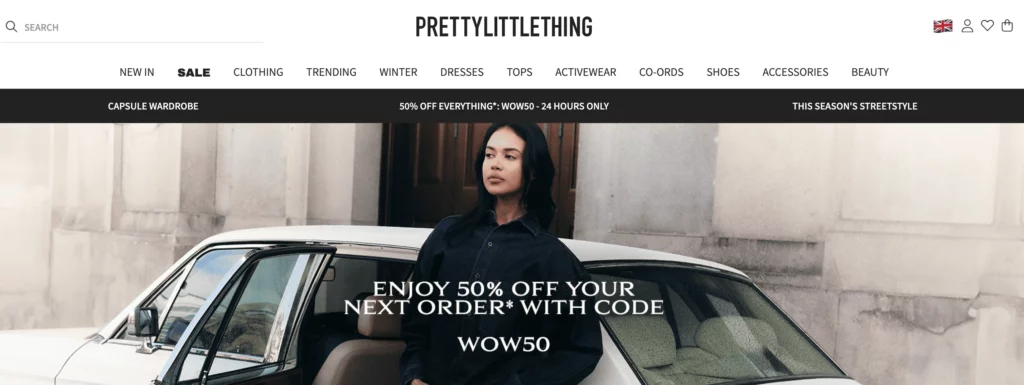
PrettyLittleThing sells fast-fashion clothes and accessories for women aged 16 to 24. They collaborate with top celebrities like Kim Kardashian, Hailey Bieber, and Kylie Jenner to create trendy collections.
Managed through Awin, their fast fashion affiliate program offers a 10% commission on every qualified sale. Once customers click on your link, the cookie will stay on their devices for 30 days to track actions.
You can utilize the brand’s eye-catching banners to enhance your content quality and engagement. You can also place as many links as you can across all platforms to increase click-through rates. Plus, you should ask the brand for exclusive codes to encourage more sales from potential customers.
|
2. Crocs
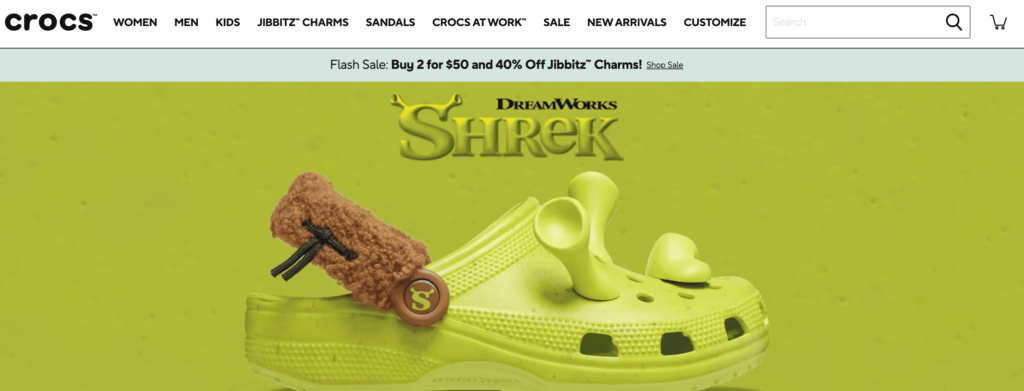
Crocs offers colorful and stylish casual shoes designed for young women, men, and children. Users can customize their “crocs” with characters, jewels, letters, and glitter jibbitz charms.
You can join their fashion affiliate program and enjoy a default 6% commission on every successful order. You’ll earn a credit for any purchase within 30 days from customers’ first click on your link.
You can place banners on your website highlighting limited-time offers or special product discounts. Plus, you can embed engaging buttons to lead users directly to the brand’s product page.
|
3. Lululemon
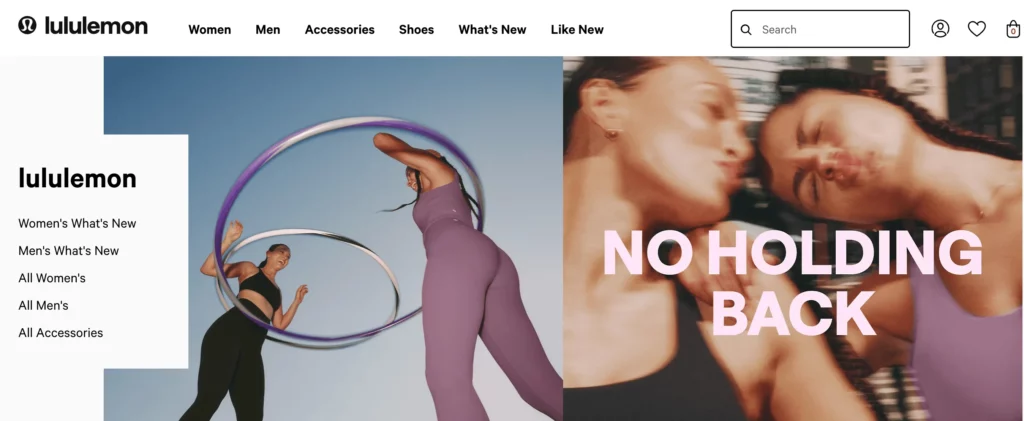
Lululemon designs technical athletic clothes for yoga, running, working out, swimming, and other fitness activities. Their unique and well-developed fabrics like Luon, Nubu, Luxtreme, and Everlux help boost users’ overall performance and comfort.
You must sign up for Awin to join the fitness fashion affiliate program. After successfully joining their program, you can enjoy a 5% commission on a completed order. You’ll earn $5 per sale with an average order value of $100.
The cookie lasts 30 days from customers’ first click on your link. That means you’ll earn a credit if customers make a purchase within this time.
|
4. Zappos
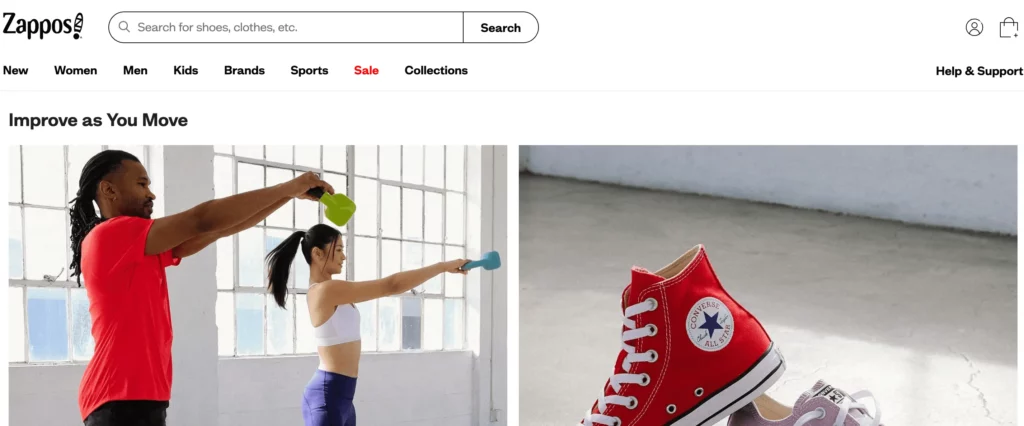
Zappos stocks fashionable sports items from over 1,000 brands like UGG, Crocs, Brooks, Adidas, and more. They also create exclusive fashion catalogs to follow the latest women’s trends and special holiday themes.
This sport fashion affiliate program allows affiliates to earn a 7% commission across all qualified sales. You’ll earn around $10 on each sale with an average order value of $150. The cookie duration starts from customers’ initial click on your link and remains active for 30 days.
You can access their product feed to find suitable items for your audience. One thing to note is that Zappos doesn’t encourage the use of discounts, coupon codes, or exclusive offers in promotions.
|
5. River Island
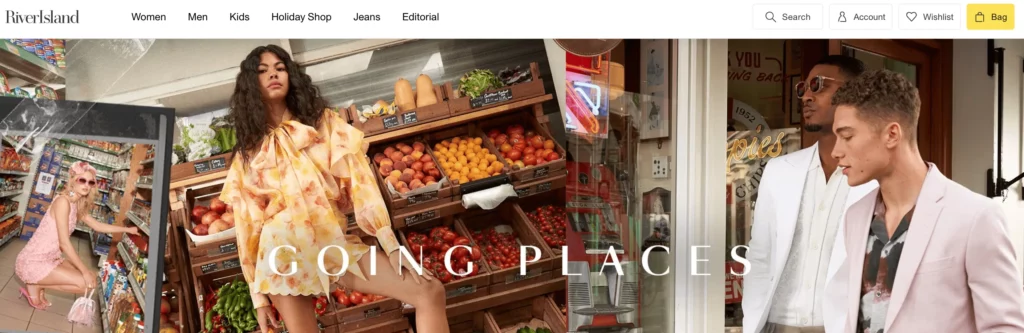
River Island is a top British high-street fashion brand in over 60 years. Their clothes collections combine the latest trends and classic British heritage styles.
Fashion affiliate marketers can join the River Island affiliate program via Awin and earn a 1% commission on each sale. If customers place an order within 30 days from their first click on your link, you’ll get a commission.
River Island will regularly send newsletters with upcoming activities and best-seller products to help you create effective promotional campaigns. You should also visit their product feed to select suitable items for your target audience.
|
6. Levi’s
Levi’s revolutionizes American style with their premium denim and cowboy-inspired clothing. Their iconic blue jeans have been a cultural icon in the fashion industry for over 170 years.
After joining their denim fashion affiliate program, you can earn a 4% commission for each sale made via your affiliate link. The cookie lasts only 5 days from the moment customers click on your link.
You can withdraw your payouts on a monthly basis. However, Levi’s only pays global affiliates in USD, so you must have an international wallet.
|
7. REVOLVE
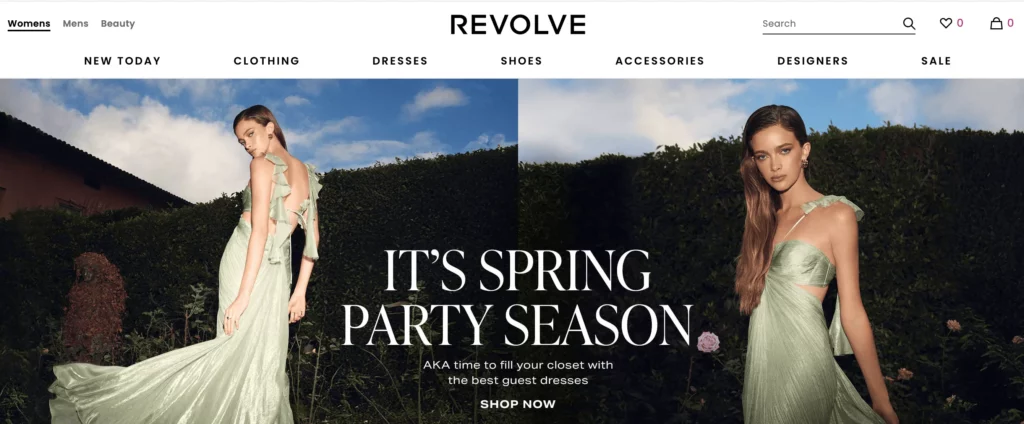
REVOLVE sells over 49,000 fashion products from emerging and high-end brands. Additionally, they manage over 24 private labels to provide trendy, budget-friendly items for Gen Z.
You’ll receive a 5% commission on each sale when joining the REVOLVE affiliate program via CJ Affiliate. You can only get a credit for purchases made within a 7-day cookie duration from customers’ first click on your link.
You can access their product feed to collect new launches’ images for your upcoming promotions. You can also embed banners and links across all blog and social media posts to boost conversions.
|
8. Saledress
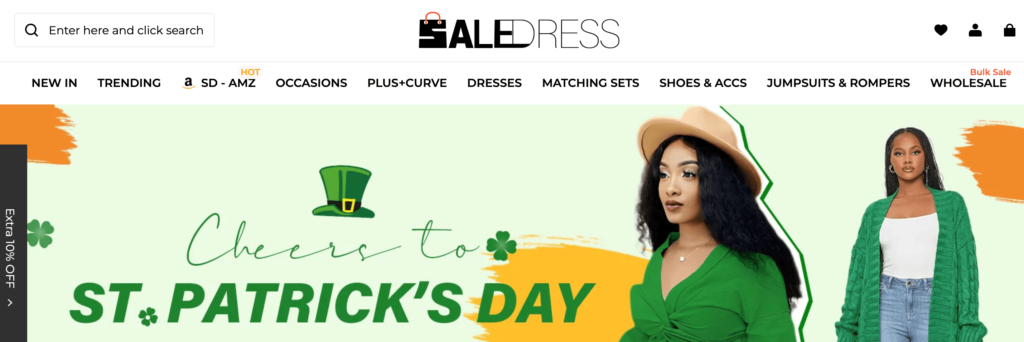
Saledress sells high-quality fashion products at wholesale prices for both individuals and boutique owners. They partner with over 5,000 Amazon sellers to offer discounts on unsold products.
Managed via the affiliate tracking software UpPromote, their fashion affiliate program offers 8% to 10% commission per sale based on your affiliate tiers.
- Gold tier: 8% commission
- Platinum tier ($50 of status commission): 9% commission
- Diamond tier ($200 of status commission): 10% commission
The cookie lasts 15 days from the moment customers click on your link. You’ll receive payouts via different methods, such as PayPal, Venmo, and store credit when having a $20 payment threshold.
You can put their authorized logos in blog content or social media posts to gain the audience’s trust. You should also integrate banners in your website to make your promotions more impressive.
|
9. Shopbop
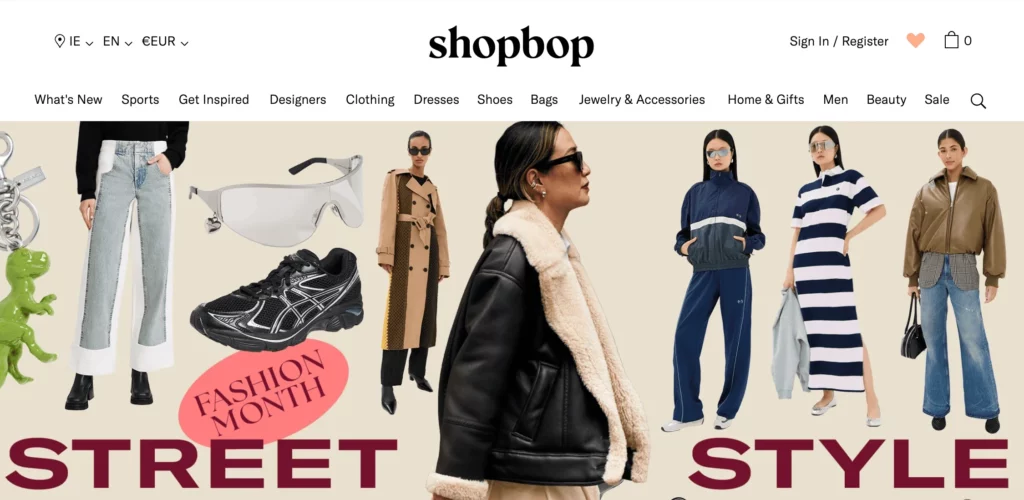
Shopbop distributes ready-to-wear and trendy fashion products from over 1,000 independent designers and brands. Their AI-powered algorithms can quickly recommend products based on individual shopping habits.
As their affiliate, you can earn a solid 1% commission on every qualified product order. The cookie remains on customers’ devices for exactly 30 days from their initial click on your affiliate link.
You can create relevant context for different text links to make your recommendations more reliable. Moreover, you should put appealing banners of fashion styles to boost audience engagement.
|
10. THE ICONIC
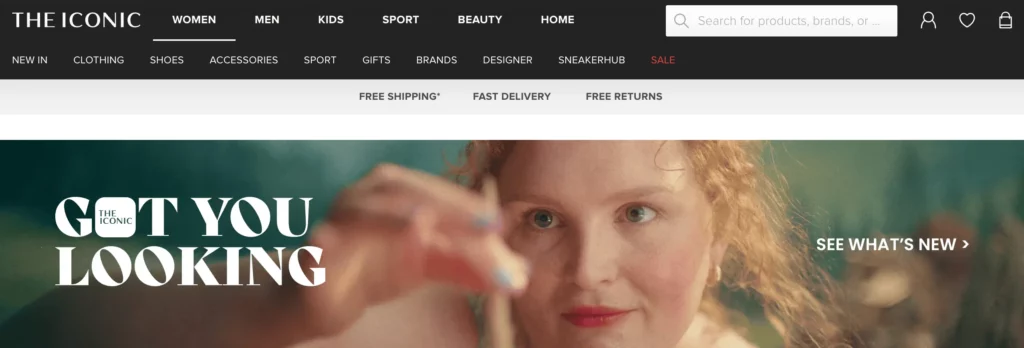
THE ICONIC is one of the largest fashion e-commerce platforms in Australia and New Zealand. They carry over 165,000 items from 1,500 local and international brands like PE Nation, Sass & Bid, Nike, Levi’s, Adidas, and so on.
Once you join their fashion affiliate program, you can enjoy a 10% commission across all completed sales. You’ll benefit from purchases made in less than 30 days from customers’ initial click on your link.
You can ask for customized and high-converting landing pages to increase conversions. You should also use various text links and attractive product images to improve your content quality. Moreover, you can select eye-catching banners to put on your social media accounts and websites.
|
11. Dynamic Clothing
- Commission rate: 3-8%
- Cookie duration: 30 days
Dynamic Clothing provides daily and night-out clothes exclusively for young women. They mainly design clothing in neutral colors to maintain a trendy look over time.
12. Gerber Childrenswear
- Commission rate: 2%
- Cookie duration: 30 days
Gerber Childrenswear specializes in clothing and accessories for babies, infants, and toddlers. They also distribute officially licensed baby products for NFL, New Balance, Jockey for Kids, and Lamaze.
13. Hanes
- Commission rate: 4%
- Cookie duration: 7 days
Hanes manufactures high-quality basic apparel like underwear, hosiery, and activewear. They only operate in the US and some European countries like the UK, Italy, Germany, France, and Spain.
14. Acne Studios
- Commission rate: 5%
- Cookie duration: 30 days
Acne Studios stands out as a top Stockholm-based luxury fashion brand of denim designs. They combine minimalist Scandinavian design and bold elements in both ready-to-wear and limited-edition collections.
15. Adore Me
- Commission rate: 5-50%
- Cookie duration: 30 days
Adore Me designs colorful and well-designed lingerie in over 67 sizes. They adopt fast-fashion models to release new collections of over 50 items every month.
16. YesStyle
- Commission rate: 15%
- Cookie duration: 30 days
YesStyle has one of the largest collections of Asian-inspired fashion, lifestyle, and beauty products. They are an authorized global retailer of over 300 brands in Korea, Japan, China, Taiwan, and more.
17. AETHER
- Commission rate: 10%
- Cookie duration: 45 days
AETHER designs premium outerwear, sweaters, and accessories for outdoor acitivities. They follow the quiet luxury trend among fashion lovers to create minimalist and durable clothes.
18. ATP Atelier
- Commission rate: 8%
- Cookie duration: 30 days
ATP Atelier provides luxurious Scandinavian-inspired leather shoes, handbags, and accessories. They adapt traditional Italian-crafted techniques to maintain the products’ condition for long-term use.
19. Bebe
- Commission rate: 10%
- Cookie duration: 45 days
Bebe sells chic, modern, and sensual designs for young trend-conscious women. They combine traditional aesthetic and current trends to regularly update new high-end collections.
20. BloomChic
- Commission rate: 6-15%
- Cookie duration: 30 days
BloomChic introduces exclusive fashion collections for curvy, mid-size, and plus-size women. Their affordable and high-quality designs are suitable for casual wear, workwear, special occasions, and more.
21. SHEIN
- Commission rate: 20%
- Cookie duration: Not mentioned
SHEIN is one of the world’s largest online retailers for fashion, home goods, and beauty products. Their on-demand production model quickly brings the latest global trends to market within days.
22. Net-A-Porter
- Commission rate: 6%
- Cookie duration: Not mentioned
Net-A-Porter is the authorized distributor of over 800 premier luxury fashion brands like Gucci, Chloe, Balenciaga, Saint Laurent, and Prada. Their multi-channel ecosystem makes it easy for millions of global users to buy high-end items.
23. Indya
- Commission rate: 15%
- Cookie duration: Not mentioned
Indya is a fashion brand known for modern festive wear tailored to Indian women’s popular body types. They collaborate with renowned Indian designers like Rohit Gandhi, Rahul Khanna, and Nikhil Thampi to introduce exclusive capsule collections.
24. Zaful
- Commission rate: 30%
- Cookie duration: Not mentioned
Zaful sources fashion-forward designs for Gen Z and millennial consumers from over 100 manufacturers worldwide. They mainly sell affordable and high-fashion-inspired looks with frequent seasonal offers.
How to Choose the Right Fashion Affiliate Programs for Your Specific Audience
The best way to select fashion affiliate programs is to analyze your audience’s demographics, values, and shopping habits.
Then, align your partnerships with the brands they’re already looking for.
Don’t just chase the highest commission rates or promote your personal favorites.
Through UpPromote, we’ve worked with over 1,500 fashion affiliates and seen this pattern repeatedly: success comes from matching your content and traffic sources to your followers’ actual budgets and lifestyles—not their aspirational ones.
Analyzing Age Demographics
Age determines which brands convert and which fall flat. Here’s how audience age drives your brand tier strategy.
🎒 Target the 18–24 demographic where conversion peaks with affordable, trend-driven platforms. Brands like Shein and ASOS work best because their average order values of $30–60 match limited student budgets.
👠 Shift toward contemporary brands like Revolve and Everlane for the 25–34 demographic as audiences mature. Spending power increases here, with average order values rising to $80–150.
🛍️ Focus on established retailers like Nordstrom and J.Crew for the 35–49 demographic. These well-known department stores perform best with this experienced group.
💎 Lean toward trusted names like Talbots and Chico’s for the 50+ demographic. This group prefers brands they have known and relied on for years.
Use Google Analytics to find your audience’s age. This data is essential for picking the right retail tier.
Determining Income Capabilities
Beyond age, income indicators predict purchasing power.
These come from location data, education levels, or engagement with budget versus luxury content.
Households earning under $40,000 align best with accessible programs like H&M or Target.
The $40,000–$80,000 bracket is the sweet spot for mall brands such as Banana Republic and Madewell.
Once income exceeds $80,000, you can introduce premium labels like Shopbop and Revolve.
However, the $150,000+ tier is required to convert high-end luxury platforms like Net-a-Porter or Farfetch.
We once worked with an UpPromote partner who promoted Net-a-Porter to her primarily college-age audience for 6 months straight.
Zero sales—not even one.
Her content was beautiful, her audience loved her style, but they couldn’t afford $500 dresses on student budgets.
When we helped her pivot to ASOS with similar styles at $50–80, she earned $2,400 in the first month.
It was a painful but clear lesson for everyone: your audience’s reality beats their aspiration every time.
Sound familiar? This is the #1 mistake new fashion affiliates make in their first 3 months.
Aligning with Audience Values
Brand ethics matter more than commission percentage when your audience cares about values.
If your content focuses on sustainability, promoting fast-fashion giants creates distrust and kills conversion.
This happens even if those programs offer high payouts. Instead, partners like Reformation, Everlane, ThredUP, and Pact resonate with conscious consumers because the brand values mirror the audience’s values.
On the other hand, a deal-seeking audience that prioritizes price over ethics will scroll past a $200 sustainable basic.
Values alignment drives revenue, not commission percentage.
Here’s what separates six-figure fashion affiliates from those stuck at $500/month: successful ones treat audience budget and values as non-negotiable.
They’d rather earn 5% on products that convert at 12% than 25% on products with 0.5% conversion.
Struggling affiliates do the opposite—they chase commission rates and wonder why nobody buys.
Earning a 5% commission on a product that converts at 5% beats a 20% commission on a product with near-zero conversion every single time.
Matching Content Categories
Your specific content niche should guide your program selection.
Through UpPromote marketplace, we’ve seen this clearly: specialized expertise drives higher conversions than a generalist approach.
For workwear-focused creators, brands like Ann Taylor and MM.LaFleur is staple. Maternity content thrives with partners like Seraphine or Hatch.
Niche categories require precise targeting:
- Petite audiences look to Petite Studio
- Fitness enthusiasts convert on Lululemon or Gymshark
- Bridal audiences seek out BHLDN or Azazie
The fashion affiliates earning $15K+ monthly in UpPromote all follow this pattern: they dominate one specific niche rather than covering “fashion.”
A blog about “plus-size workwear for teachers” will always outperform “women’s fashion” with the same traffic.
Specificity wins.
Tailoring your affiliate links to these categories proves to your audience that you understand their needs. This leads to higher trust and sales.
Optimizing for Traffic Sources
The platform delivering your traffic heavily influences purchasing behavior. Each platform has a distinct buyer psychology:
Pinterest: Users plan months in advance. Success requires programs with long cookie windows (30–90 days), such as Zappos or luxury platforms.
Google Search: This traffic shows high intent. Users want specific details and easy returns found on major retailer sites.
Social Platforms: These drive impulse buys. Instagram requires visually striking brands like Free People. TikTok’s rapid trend cycle demands fast-fashion partners like Shein or ASOS that can stock viral items before the trend expires.
Testing and Data Review
Check your choices by reviewing performance data after 90 days.
High click-through rates with zero sales usually indicate a price mismatch or poor user experience on the merchant’s site.
If you see 100 clicks but no conversions, try a similar product from a different brand.
Track your average order value (AOV).
If your audience’s AOV is much lower than the brand’s average—for example, spending $40 at a retailer where the norm is $150—it suggests they’re only shopping sales due to budget limits.
Use this data to double down on winners and cut links that fail to generate revenue.
Bottom line: Don’t choose affiliate programs based on commission rates alone.
The highest-converting program is the one where your audience’s budget, values, and shopping habits align perfectly with the brand’s positioning.
Get this match right, and a 5% commission can outperform a 20% commission by 10x.
How Much Money Can You Make with Fashion Affiliate Programs?
Fashion affiliate earnings vary widely based on influence and optimization strategy.
Here’s what we see from our fashion-related affiliates breakdown:
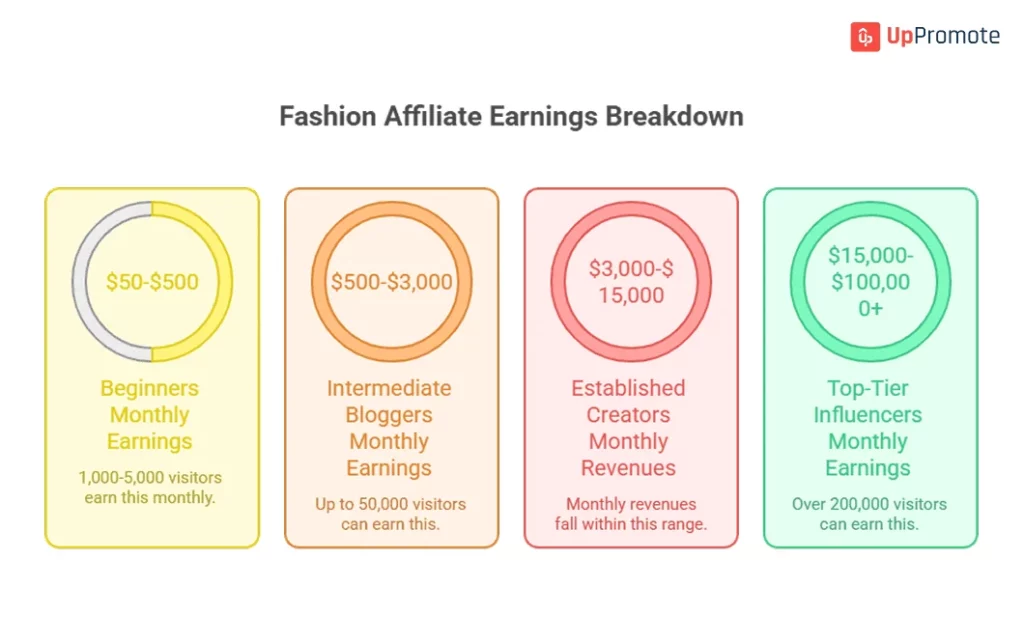
- Beginners (1,000–5,000 visitors): Often make $50–$500 monthly
- Intermediate Bloggers (up to 50,000 visitors): Can earn $500–$3,000
- Established Creators: Often see monthly revenues between $3,000 and $15,000
- Top-Tier Influencers: With high engagement or over 200,000 monthly visitors, earnings can range from $15,000 to over $100,000
But here’s what most fashion affiliate guides get wrong: they focus on traffic numbers.
Want to know what separates $500/month affiliates from $5,000/month affiliates? It’s not traffic volume.
The Earnings Formula and Key Variables
To realistically estimate potential income, look beyond simple traffic counts. You must apply the earnings formula:
Monthly Visitors × Click-Through Rate (CTR) × Conversion Rate × Average Order Value (AOV) × Commission Rate
For example, take a blog with 10,000 visitors, a low 3% CTR, and a 2% conversion rate on $100 items. This generates roughly $36 a month.
However, you can transform that same traffic by:
- Increasing the CTR to 5% through targeted content
- Boosting conversion to 4% by capturing high-intent readers
- Promoting premium brands with a $150 AOV
With these changes, monthly earnings jump to $240.
This shows how variables like audience intent and brand alignment can create a 5–10x difference in revenue without a single new visitor.
Early at UpPromote, we believed traffic volume was everything. We pushed partners to focus on growing visitors above all else.
We were wrong.
We’ve now seen countless 5,000-visitor niche blogs (like “petite professional workwear”) out-earn 50,000-visitor general “women’s fashion” sites by 3–5x.
The data forced us to completely change how we advise partners.
Precision beats scale.
The Impact of Niche on Revenue
Your niche is the strongest predictor of high earnings. Focused content performs dramatically better than general fashion topics.
A blog dedicated to “plus-size workwear for teachers” will convert 10–15 times better than a generic “women’s fashion” site. Why? The audience has specific needs and fewer quality resources.
| Niche | Why It’s Profitable |
| Petite professional workwear | Solves difficult fit issues |
| Sustainable fashion for minimalists | High value, ethical buyers |
| Modest fashion | Underserved, loyal community |
| Adaptive clothing | Low competition, high necessity |
| Specific brand reviews | High purchase intent traffic |
A general fashion blog might need 100,000 monthly visitors to earn $3,000. A highly targeted niche blog can reach that same goal with only 10,000 to 20,000 visitors.
Income Levels by Blog Size
Revenue grows with your audience as long as your strategy evolves.
Micro-blogs (1,000–5,000 visitors): Earn $50–$500. Success comes from focusing on high-commission programs that match the audience’s budget.
Small Tier (5,000–15,000 visitors): Earnings rise to $500–$2,000 through content optimization and working with more programs.
Medium Publications (15,000–50,000 visitors): Often reach $2,000–$8,000 monthly by using email lists to drive repeat traffic.
Large Tier (50,000–150,000 visitors): Income can hit $8,000–$25,000. At this stage, display ads and sponsored content add to affiliate revenue.
Major Publications (150,000+ visitors): Often command $25,000 to over $100,000 monthly. These are usually supported by dedicated teams and advanced SEO strategies.
Social Media Earnings: Instagram and TikTok
On social platforms, engagement creates revenue more effectively than follower counts.
After working with thousands of Instagram fashion creators through UpPromote marketplace, we’ve learned this: an Instagram account with 10,000 highly engaged followers (4–8% engagement rate) will outperform an account with 100,000 passive followers.
There’s a clear pattern we see: influencers with 100K passive followers (0.5% engagement) struggle to earn $500/month.
Meanwhile, creators with 10K engaged followers (6% engagement) consistently hit $3,000–5,000 monthly.
The difference? One built an audience. The other built a community.
Creators with 10,000 to 50,000 engaged followers typically earn $500–$3,000 monthly through Stories links and link-in-bio tools.
TikTok offers similar potential through its Shop affiliate features and bio links.
Haul videos that convert at 1–3% can generate $200–$2,000 monthly for videos with 50,000–200,000 views.
This works especially well when promoting fast-fashion brands like Shein or ASOS that fit the platform’s younger demographic.
YouTube Fashion Channel Potential
YouTube offers a double revenue stream: creators earn from affiliate links plus AdSense revenue.
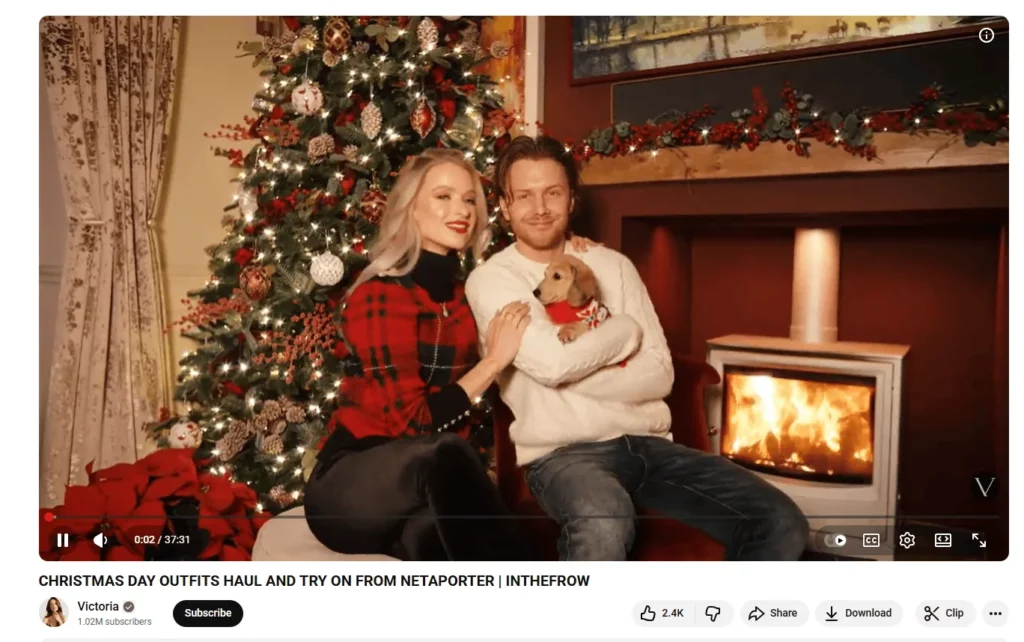
Channels with 10,000–50,000 subscribers typically generate $500–$3,000 monthly just from affiliate links in descriptions and comments.
Content formats like try-on hauls, seasonal lookbooks, and in-depth reviews drive these sales. Long-form videos (10+ minutes) perform better than YouTube Shorts.
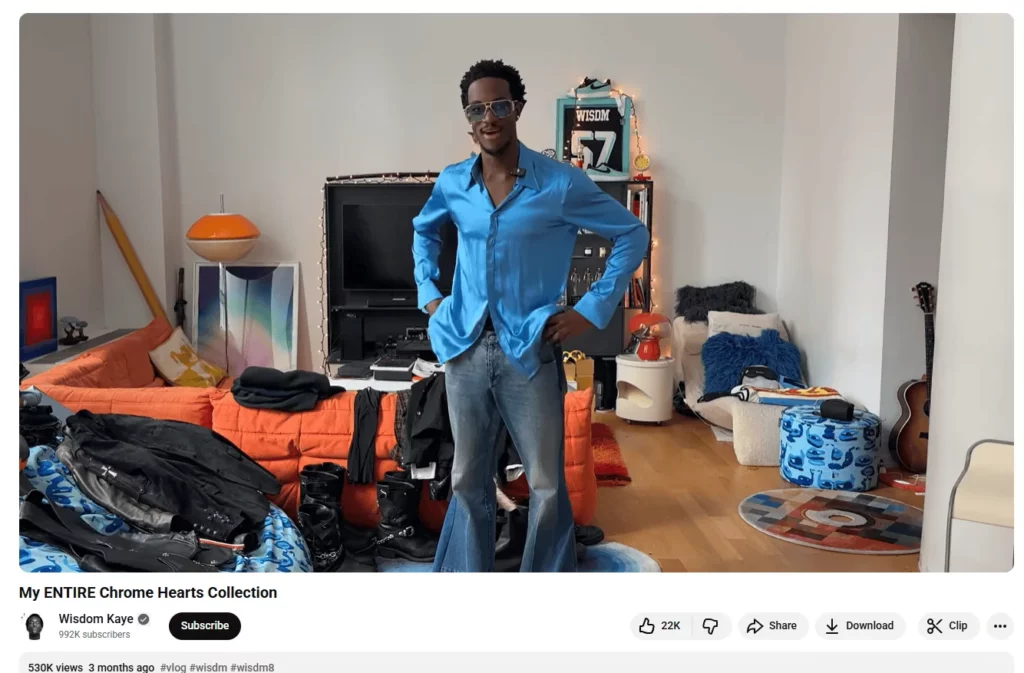
Viewers willing to invest 20 minutes watching a review show much higher purchase intent than those scrolling through quick entertainment clips.
Navigating Seasonal Income Patterns
Fashion affiliate income is highly seasonal. Understanding these patterns is key for financial planning.
- Holiday Season (Nov–Dec): Generates 40–50% of a creator’s total annual income
- Back-to-School (Aug–Sep): Accounts for 15–20%
- Wedding Season (Apr–Jun): Another key revenue period
Months like January and July often see revenue drops of 30–40%.
That’s the seasonal reality every fashion affiliate faces.
To maximize earnings, plan content calendars 6–8 weeks in advance.
Publishing holiday gift guides in early October rather than late November ensures you capture early shoppers before competition peaks.
My take: Traffic is overrated.
Through UpPromote, we’ve seen 5,000-visitor niche blogs out-earn 50,000-visitor general fashion sites consistently. Focus on audience precision, not just volume.
How to Effectively Promote Fashion Products on Instagram
To promote fashion products well on Instagram, you need a visual strategy that bridges the gap between inspiration and purchase.
Success comes from using link-in-bio tools to combine your recommendations, using Instagram Stories for direct linking, and crafting detailed captions that guide followers to your bio.
Prioritizing video content through Reels grows your reach, while carousel posts allow for styling versatility.
Audiences buy based on how items look on real people—not static, professional product photos.
Optimizing Your Link-in-Bio Strategy
Instagram restricts users to a single clickable link in their bio.
This is where most creators lose sales.
Making the most of this space is crucial for conversion. Tools like Linktree, Beacons, or the fashion-centric LTK let you put multiple shoppable links under one URL.
To keep this user-friendly, organize links by:
- Seasonal themes (e.g., “Holiday Dresses” or “Winter Coats”)
- Evergreen categories (e.g., “Workwear Essentials”)
Update these links at least weekly. During promos, update them daily to match your latest posts. Use trackable shortened URLs to measure which content drives traffic.
Always include a clear call-to-action in your captions, like “Shop details via link in bio.” This guides your audience from the post to the checkout page.
That’s your conversion path.
Leveraging Instagram Stories for Direct Sales
Instagram Stories let you share products quickly and take viewers directly to purchase pages using link stickers.
This is where impulse purchases happen.
Effective formats include:
- “Get Ready With Me” sequences: Tag each item you use
- “Try-On Sessions”: Offer honest reviews of recent purchases
Stories disappear after 24 hours.
However, you can save your best recommendations into categorized Highlights—such as “Shoes” or “Date Night.” This creates a permanent, shoppable resource on your profile.
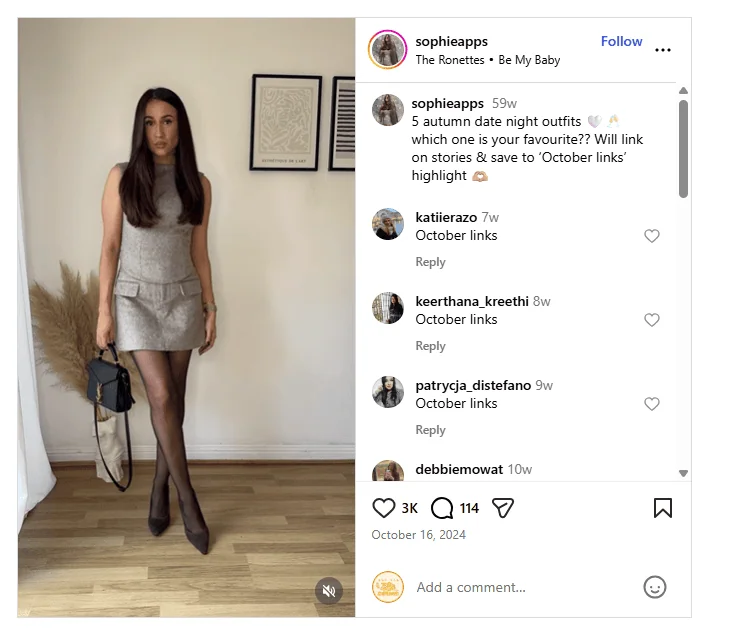
For creators with under 10,000 followers, consistent use of link stickers and well-organized.
Highlights ensure your audience can always find the products they see (and trust me, they’re looking for them).
Simple, right? Not quite.
Here’s where most fashion creators miss the mark: they treat Stories like throwaway content. But your most engaged followers check Stories first. That’s where trust—and sales—happen.
Writing Captions That Drive Interest
A good caption turns passive scrolling into active interest.
Instagram cuts off text after the first 125 characters. You must start with a strong hook or a relatable problem you’ve solved, like “finally found jeans that don’t gap at the waist.”
Authenticity is key. Share your personal experience with the item. Provide clear sizing details, such as your height and weight, to help followers judge the fit.
Avoid generic descriptions or too many emojis. Instead, explain why the product is worth buying now. End with a clear instruction to shop via your link in bio.
Limit your hashtags to 5–10 relevant terms. This avoids looking spammy, which can hurt your reach.
Creating Visual Content That Converts
How you present your products visually determines their appeal. Audiences prefer authentic content, such as:
- Mirror selfies that show real proportions
- Flat-lays that show how pieces work together
Carousel posts work exceptionally well. They let you show a full outfit on the first slide, followed by close-ups or a “day-to-night” transition.
Reposting professional brand photos often fails. It lacks the personal touch followers crave.
Make sure your photos show you wearing the clothes in simple, clean settings. Heavy editing or busy backgrounds distract from the outfit. They can also create false expectations about color and fit.
Using Reels for Maximum Reach
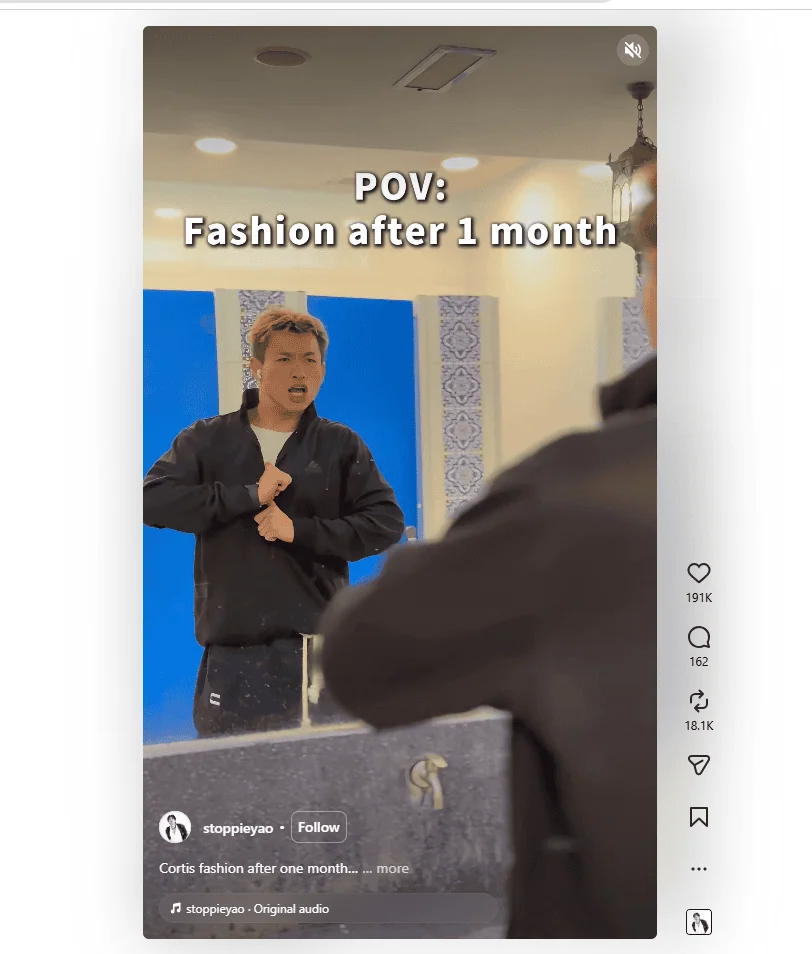
Instagram Reels create 3–5 times more visibility than static posts, according to Instagram’s 2024 Creator Insights report. They’re essential for product discovery.
But here’s what most fashion creators miss—do you know what it is?
Engagement beats follower count every single time.
High-performing concepts include:
- Quick try-on hauls
- “Style this piece 5 ways” tutorials
- Price comparisons between luxury and budget items
To maximize engagement, keep Reels between 15 and 30 seconds. Use trending audio to boost your placement on the “For You” page.
Many users watch without sound. Always include text overlays that hook viewers in the first few seconds. Clearly mention where to find the product link to turn views into site traffic.
Product Tagging and Shopping Features
For eligible accounts, Instagram Shopping allows product tagging. This creates a smooth path to purchase without leaving the app.
This requires connecting a product catalog via Facebook Commerce Manager or platforms like Shopify. You can tag up to five products per image, turning your feed into a digital storefront.
If you don’t use Instagram Shopping, you can still boost visibility by tagging the specific brands in your photos.
This increases the chance of the brand resharing your content, which provides valuable exposure for both you and the products.
Key insight: Instagram success isn’t about perfection—it’s about consistent, authentic presentation of products you’d genuinely recommend. Your audience can tell the difference between a paycheck post and a real recommendation.
How to Promote Fashion Products on Pinterest Strategically
Promoting fashion products on Pinterest requires treating the platform not as a social network, but as a visual search engine where aesthetics meet SEO strategy.
Why does Pinterest work so differently from Instagram? Because users aren’t scrolling for entertainment—they’re actively searching for solutions.
Pinterest isn’t social media—it’s Google for visual inspiration.
Success comes from creating high-quality vertical pins (at least 1000×1500 pixels) with clear text overlays—like “10 Winter Coats Under $200″—that immediately show value.
Rather than dumping content into a single generic “Fashion” board, you must organize pins into niche categories.
Labels like “Workwear” or “Sustainable Fashion” align with how users actually search.
A strong strategy involves:
- Scheduling 10–20 pins daily
- Prioritizing “Fresh Pins” (new images), which the algorithm favors
- Joining active group boards to expand your reach
Every pin description must be optimized with specific keywords—like “petite winter coats”—to ensure your content shows up when users look for solutions.
Optimizing Pin Design for Clicks
Pinterest heavily favors vertical images. This makes a 2:3 aspect ratio (optimally 1000×1500 pixels) essential for visibility.
To drive clicks, designs should be clean and uncluttered.
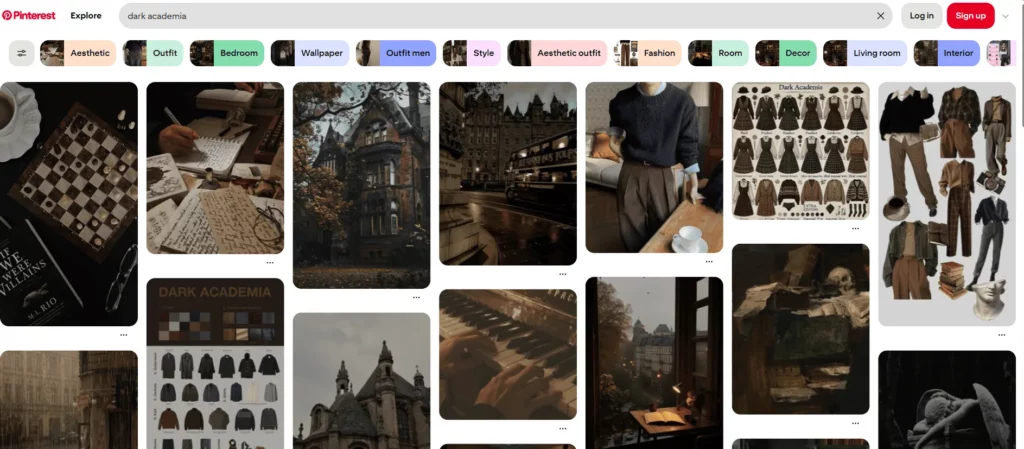
Focus on 1–3 high-quality product images paired with bold text overlays that clearly state the value.
Including your blog or brand name adds professional authority without overwhelming the look.
Lifestyle images that show products styled in real-world settings consistently beat plain, white-background shots.
Avoid horizontal images, which are cropped poorly in the feed.
Also avoid dark color schemes that fail to stand out.
Create 3–5 design variations for each product article to see what works best. Test a mix of:
- Lifestyle shots
- Flat-lays
- Product close-ups
Strategic Board Organization
Organize your profile by specific product categories rather than relying on a generic “Fashion” or “Style” board.
Niche boards perform much better because they match specific search queries. Examples include:
- “Petite Fashion and Styling Tips”
- “Sustainable Fashion Brands”
- “Business Casual Work Outfits”
By curating 15–30 distinct boards, you build authority in these niches. When pinning, save your content to 3–5 highly relevant boards.
Don’t spam every board you own, as Pinterest penalizes this.
Ensure every board description is rich with keywords to help people find you.
Mastering Pinterest SEO
Because Pinterest is a visual search engine, keyword optimization is the main driver of discovery.
Find effective keywords by:
- Typing your topic into the Pinterest search bar and noting autocomplete suggestions (e.g., “petite fashion tips”)
- Checking the “related searches” bubbles
- Using the Pinterest Trends tool to find seasonal patterns
Once found, use these keywords naturally in your pin descriptions.
A description like “10 petite-friendly winter coats under $200, perfect for women 5’4″ and under,” tells the algorithm exactly who the content is for.
Put the most critical keywords in the first 100 characters. However, avoid unnatural “keyword stuffing,” which can lead to penalties.
The Fresh Pin Strategy
The Pinterest algorithm loves “Fresh Pins”—new images that have not been pinned before.
What’s the pattern we see with successful Pinterest users? They treat it like SEO, not social media.
To use this, create 3–5 unique pin designs for every product article. Schedule them over several months rather than posting them all at once.
A consistent schedule is more effective than random bursts. Aim for 10–20 pins daily using scheduling tools like Tailwind.
Your content mix should ideally consist of:
- 70% unique Fresh Pins linking to your own content
- 20% high-quality content from others in your niche
- 10% repins of your own top-performing older content
Pinterest users are planners. Schedule seasonal content 60–90 days in advance—like pinning fall fashion in July—to capture early search traffic.
Expanding Reach with Group Boards
Group boards are shared spaces that show your pins to the followers of all contributors. This expands your reach significantly.
To find active boards, search for “[your niche] group board” or use tools like PinGroupie. Look for boards active within the last week.
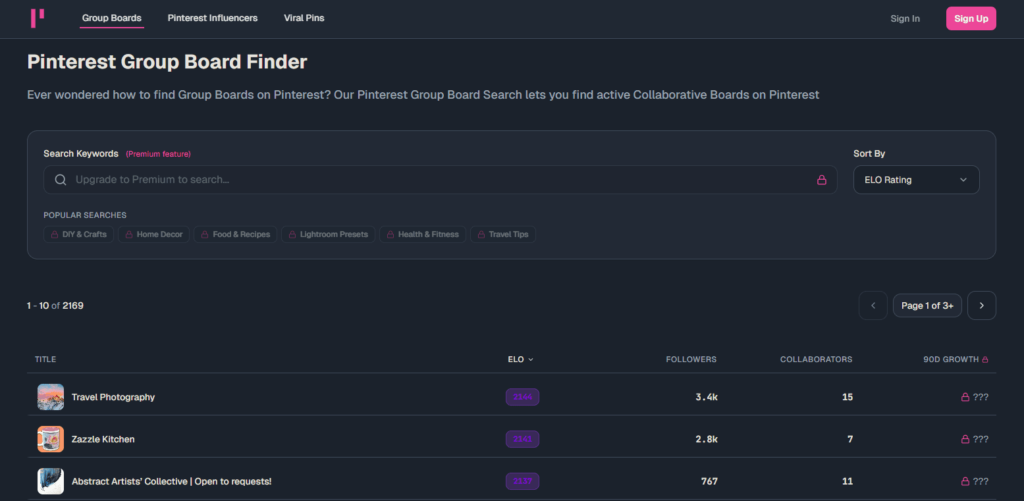
Once accepted, contribute by pinning your Fresh Pins 2–3 times weekly. Don’t spam; the goal is to add value.
Aim to join 10–20 active group boards. Regularly review your analytics to see which boards drive actual traffic, and leave the ones that have gone quiet.
Leveraging Video for Demonstrations
Video content breaks up the static feed and grabs attention. According to Pinterest’s 2024 data, video pins increase engagement by 2–3 times compared to images.
Standard Video Pins are excellent for:
- Quick outfit styling transformations
- “Pack with me” guides
- “Three ways to wear this item” demos
Idea Pins (multi-page stories) get a big algorithmic boost. They’re great for building brand awareness, though they lack direct links.
While video takes more effort, dynamic content like closet organization tips stops the scroll and establishes your authority in ways static images cannot.
Bottom line: Pinterest success comes from treating it as a search engine, not social media. Optimize for keywords, prioritize Fresh Pins, and plan seasonal content 60–90 days ahead. Do this consistently, and Pinterest will become your highest-quality traffic source.
FAQs
1. What is a fashion affiliate program?
A fashion affiliate program allows you to earn commissions by promoting clothing, footwear, accessories, or lifestyle brands through tracked affiliate links. You earn when users purchase via your referral.
2. Which fashion affiliate programs pay the highest commission?
Luxury and DTC brands usually pay higher commissions (10%–30%), while large marketplaces like Amazon or Zalando typically pay 2%–10%.
3. Is fashion affiliate marketing profitable?
Yes. Fashion has high repeat purchases, strong seasonal demand, and high impulse-buy behavior, making it one of the most profitable affiliate niches.
4. Do I need a fashion blog to join fashion affiliate programs?
No. You can use TikTok, Instagram, Pinterest, YouTube, or email marketing — as long as the platform complies with the program’s policy.
5. Which platform is best for fashion affiliate marketing?
Pinterest and TikTok perform best for organic fashion traffic, while SEO blogs work well for long-term passive income.
6. What is the biggest mistake in fashion affiliate marketing?
Promoting too many products without building trust or personal brand authority.
7. What is the average cookie duration for fashion affiliate programs?
Most fashion brands offer cookies from 7 to 30 days. Some premium programs offer 60–90 days.
8. Can beginners join fashion affiliate programs?
Yes. Many programs accept beginners as long as you show traffic potential or content quality.
9. Do fashion affiliate programs allow coupon traffic?
Some do, some don’t. Always check the program’s traffic policy before promoting discount codes.
10. Can I build a full business from fashion affiliate programs?
Yes. Many affiliates earn full-time income by combining SEO, social media, and email marketing.
11. Are fashion affiliate programs suitable for men?
Absolutely. Men’s fashion, streetwear, watches, sneakers, and accessories convert extremely well.
12. Can I promote multiple fashion affiliate programs?
Yes. In fact, combining multiple programs increases conversion opportunities and protects your income.
13. What commission model do fashion affiliates use?
Most use CPS (Cost Per Sale). Some also offer CPA for sign-ups or app installs.
14. Is Instagram still good for fashion affiliate marketing?
Yes, but TikTok currently delivers higher organic reach and faster growth.
15. Do fashion affiliate programs pay monthly?
Most programs pay monthly or bi-monthly after a validation period.
16. Can I use paid ads for fashion affiliate links?
Some programs allow it, but many restrict brand bidding. Always read PPC rules carefully.
Conclusion
The world of fashion affiliate marketing offers a powerful path to growth, whether you’re a creator monetizing your influence or a brand expanding its reach.
We’ve highlighted 24 top programs to help affiliates find their perfect match, with commissions and perks to fit any niche.
For Shopify brands, building a high-impact program is crucial for driving sales.
By selecting the right partner and using the right tools to manage your campaigns, you can forge authentic connections with new audiences.
Seize these opportunities to turn your passion for fashion into a thriving venture.

Ellie Tran, a seasoned SEO content writer with three years of experience in the eCommerce world. Being a part of the UpPromote team, Ellie wants to assist Shopify merchants in achieving success through useful content & actionable insights. Ellie's commitment to learning never stops; she's always eager to gain more knowledge about SEO and content marketing to create valuable content for users. When she's not working on content, Ellie enjoys baking and exploring new places.