











The global baby clothes market is expected to hit $45.13 billion by 2026 (Statista), showing a strong consumer interest in high-quality baby apparel. If you’re a mom and dad blogger, a parenting blogger, or a lifestyle influencer, you can make some cash by promoting baby clothing items.
We’ve compiled the top 19 children’s clothing affiliate programs with key details like commission rates, cookie durations, and special promotions. Let’s choose the best match to join and start your marketing strategies today!
Quick Comparison
| Program Name | Commission (%) | Cookie Duration (Days) | Niche Suitable |
|---|---|---|---|
| Carter’s | 2% | 14 | Baby clothes, kids clothing, accessories |
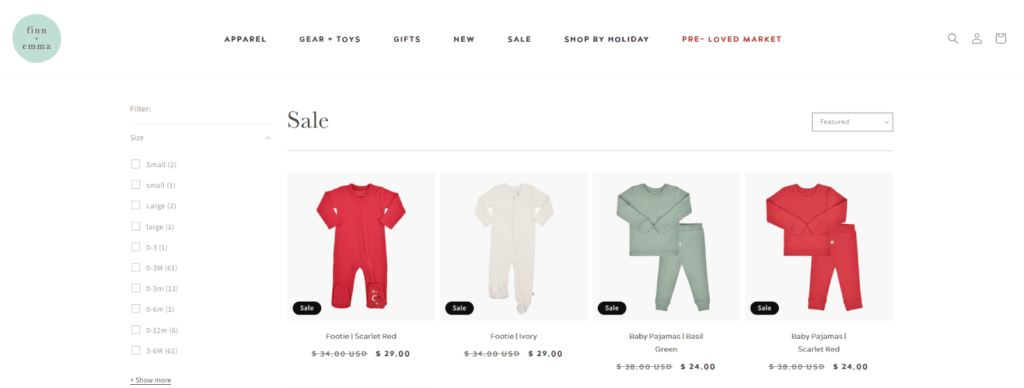
| Finn + Emma | 10% | 30 | Eco-friendly baby clothes, organic products |
| La Coqueta Kids | 3% | 30 | Premium artisanal kids fashion |
| Childsplay Clothing | 5% | 30 | Luxury designer kids fashion |
| Gerber Childrenswear | 2% | 30 | Affordable baby essentials |
| Found by Flynn | 10% | ~15 | Eco-friendly boutique kids products |
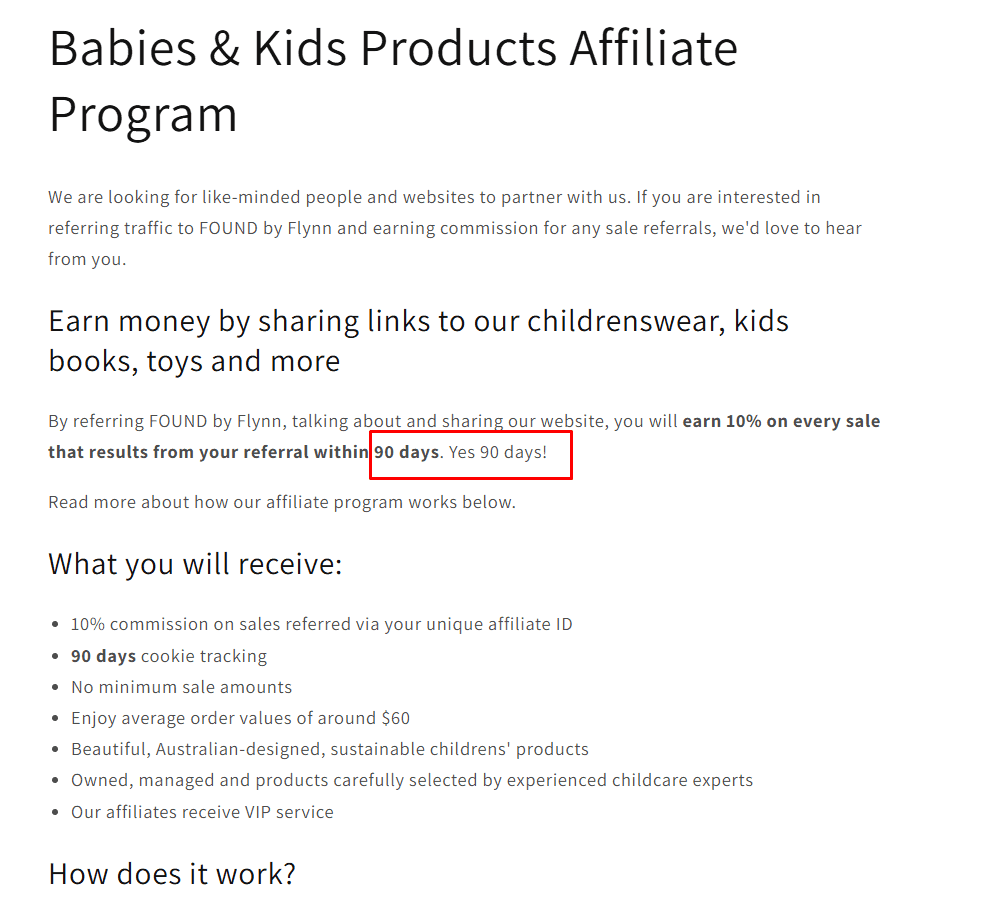
| Mabel’s Labels | 10% | 90 | Kids label products, school supplies |
| Lucky + Me | 10–20% | 30 | Kids underwear, basics, activewear |
| Babysprouts | 15% | 30 | Sustainable & stylish kids apparel |
| KidsBaron | 20% | 30 | Kids toys, clothing, parenting niche |
Affiliate Earnings Calculator
Estimate your affiliate income based on Traffic, CTR, AOV, and Commission rate. Drag the sliders below to explore different scenarios.
Estimated Results
These figures are for illustrative purposes – feel free to adjust them to fit your specific niche.
- Conversion Rate here is defined as the percentage of traffic that buys.
- Does not account for refunds, cancellations, or varying commission rates by product.
Top 19 Children’s Clothing Affiliate Programs Every Mom or Dad Blogger Should Know
1. Carter’s
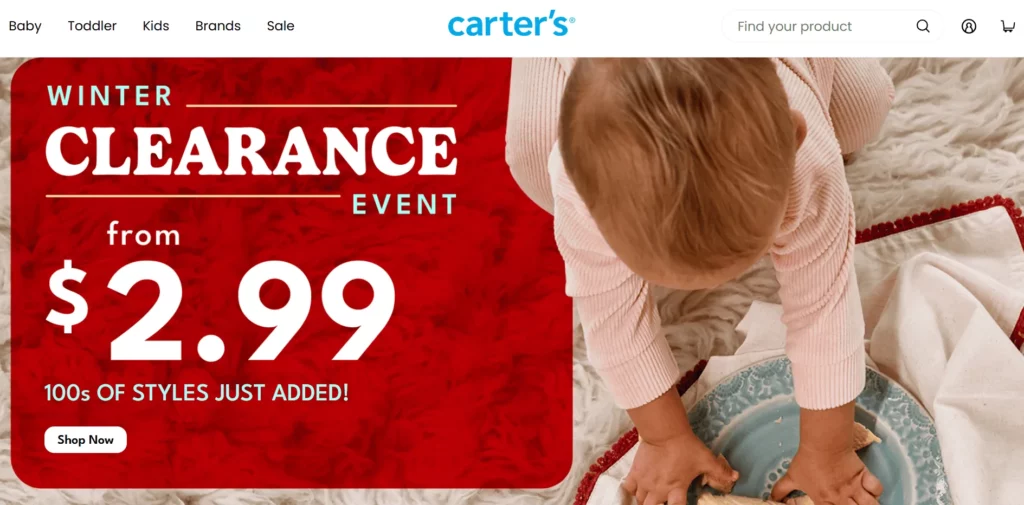
Carter’s is the leading brand of baby and young children’s clothing in the United States. Shoppers will find everything from everyday clothing and seasonal collections to accessories like shoes, socks, diaper bags, and even toys.
You’ll receive a 2% commission rate on every successful sale when joining their children’s clothing affiliate program. The cookie window starts from the customer’s first click on your affiliate link and remains valid for 14 days.
The brand gives you access to their collection of colorful banners, links, and creative assets. You can also get expert guidance from their dedicated affiliate managers to optimize your promotions and boost sales.
|
2. Finn + Emma
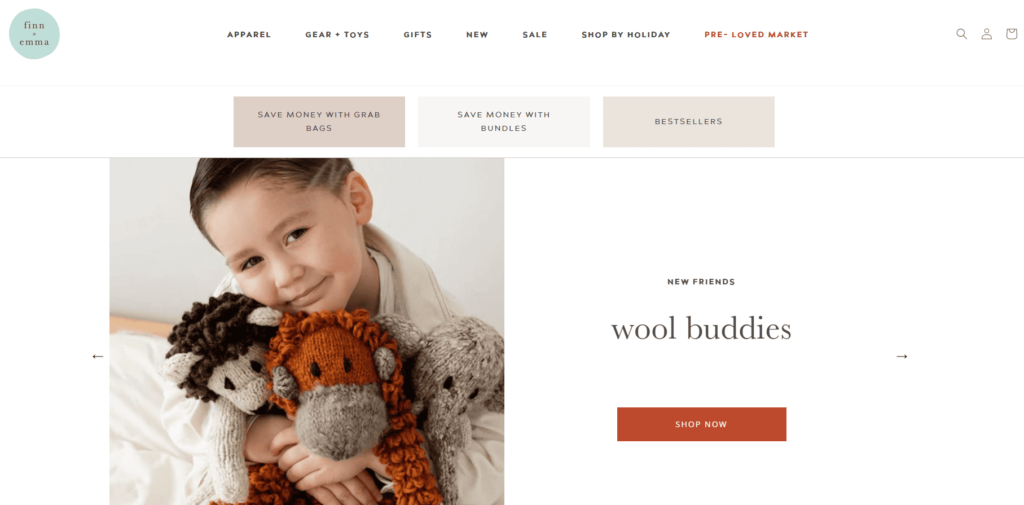
Finn + Emma produces eco-friendly and sustainable baby and toddler products. Parents can find a wide range of clothing, toys, bedding, and accessories, all made from organic materials and non-toxic dyes.
The brand pays you a 10% commission for each qualified sale you drive. You may earn about $9 with an average order value of $90. The cookie remains valid for 30 days from the visitor’s initial click on your affiliate link.
Once joining their children’s clothing affiliate program, you can leverage the brand’s regularly updated banners, links, and logos to create attractive promotions. Moreover, their regularly updated data feed helps you quickly find products that match your audience’s preferences.
|
3. La Coqueta Kids
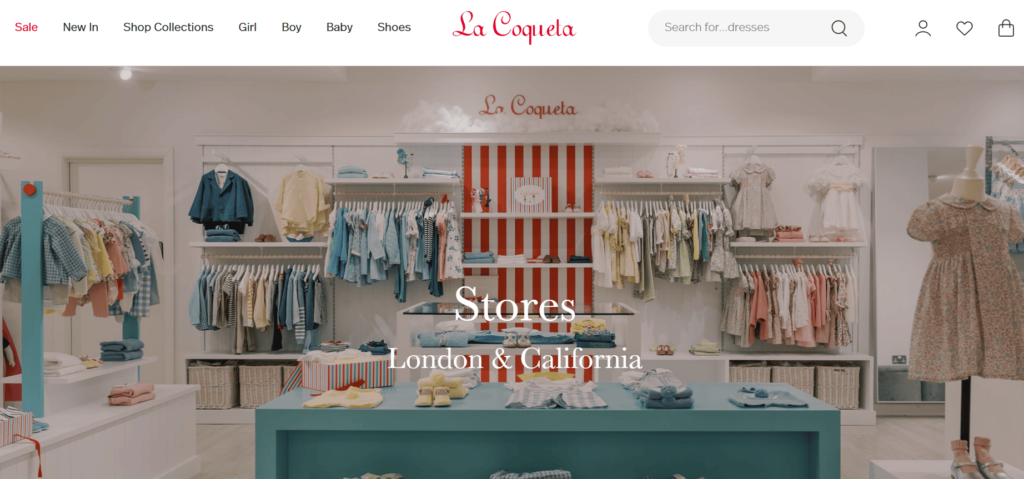
La Coqueta Kids designs high-quality, artisanal clothing for children aged 0 months to 10 years. Their products are crafted by skilled Spanish artisans in family-run ateliers, using time-honored techniques passed down through generations.
When joining their children’s clothing affiliate program, you can get a 3% commission on sales through your link. The cookie window is 30 days from the customer’s initial click on your affiliate link.
Their affiliate program is managed through the global affiliate marketing network Awin. By logging in to your Awin account, you can access the brand’s collection of ready-to-use creatives and affiliate links.
|
4. Childsplay Clothing
Childsplay Clothing sells high-end designer fashion for newborns to teenagers. Their collections come from well-known luxury labels, such as Gucci, Burberry, Dolce & Gabbana, and Versace.
Their children’s clothing affiliate program offers a 5% commission rate on each completed sale you generate. You have a full month to earn money on purchases from the customer’s initial click on your affiliate link.
The brand partners with the Rakuten Linkshare network to run their affiliate program. You can access the platform to receive visually appealing banners, text links, and product links.
|
5. Gerber Childrenswear

Gerber Childrenswear is a prominent supplier of infant and toddler apparel and related products. Customers can pick from an extensive range, including onesies, sleepwear, bibs, socks, and everyday essentials.
The company allows you to earn a 2% commission on each successful order made through your unique link. The cookie window starts when someone clicks on your link and remains active for 30 days.
You can join their children’s clothing affiliate program and access vibrant banners, text links, and content to create engaging promotional campaigns. Additionally, their helpful affiliate team is always on hand to assist you with clear guidance and expert support whenever you need.
|
6. Found by Flynn

FOUND by Flynn is an Australian-based retailer selling children’s clothing, accessories, and gifts. The brand works closely with Australian designers and small businesses to offer thoughtful and eco-friendly kids’ products.
The FOUND children’s clothing affiliate program offers a 10% commission on every completed order. You can earn approximately $9 per sale, based on an average order value of $90. The cookie window will stay valid for just 15 days after the visitor’s initial click on your link.
The brand pays your commission through PayPal when your balance reaches a minimum amount of $10. You can utilize the brand’s pre-designed banners and links to attract potential customers and encourage more sales.
|
7. Mabel’s Labels
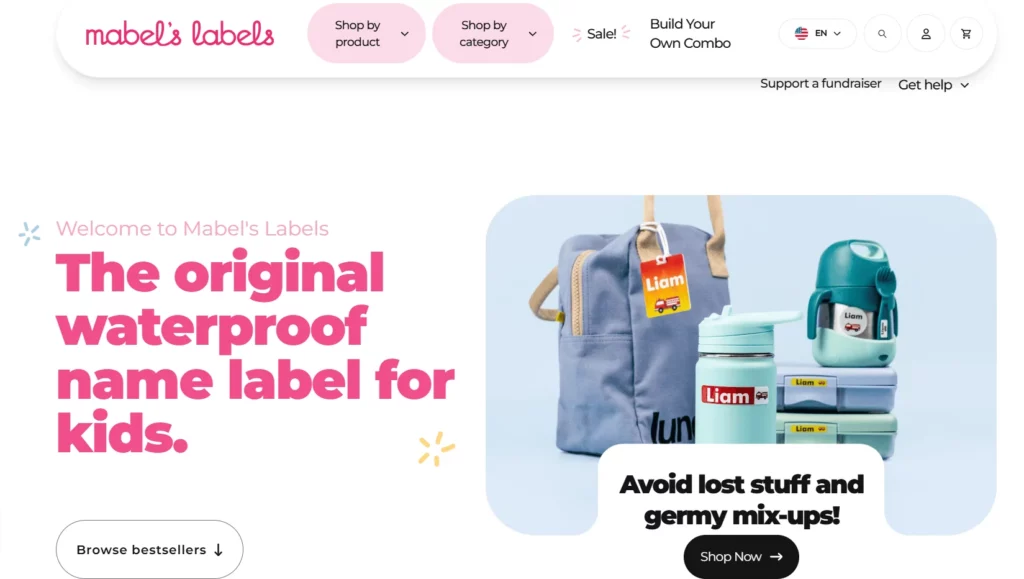
Mabel’s Labels designs custom name labels and tags for kids’ clothing, shoes, and other belongings. Their products are durable, waterproof, dishwasher-safe, microwave-safe, and UV-resistant to ensure long-lasting use and convenience.
You may earn up to 10% commission on all successful purchases through your affiliate link. The brand gives you a 90-day cookie period to earn money on successful orders.
Once your application is approved, you’ll gain full access to promotional links, logos, and banners in their children’s clothing affiliate program. Their weekly newsletters will also keep you updated with the latest promotions and program changes.
|
8. Lucky + Me
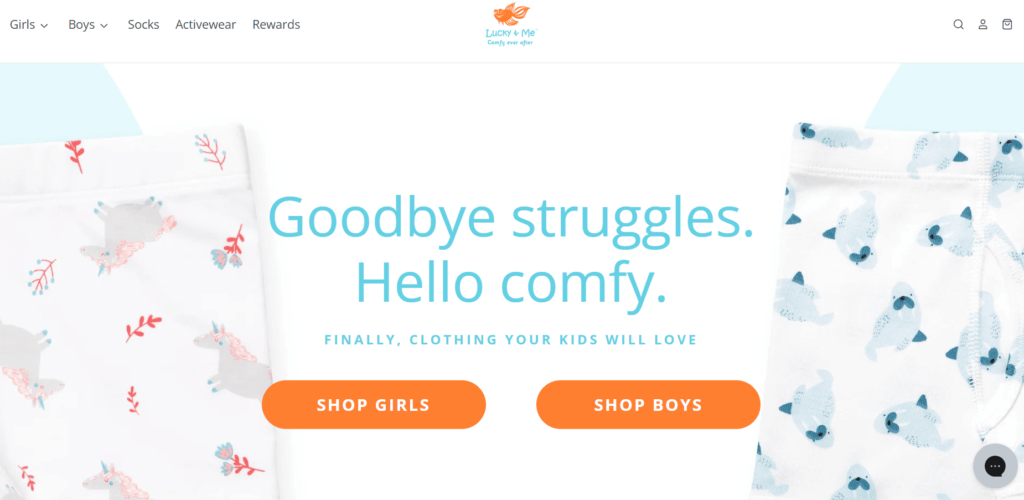
Lucky + Me produces high-quality, comfortable underwear, leggings, socks, and activewear for boys and girls. Their products are made from soft, breathable fabrics like organic cotton and modal blends to ensure a perfect fit and all-day comfort for children.
As a partner of the Lucky + Me children’s clothing affiliate program, you’ll earn a 10% commission on every qualified sale, with the opportunity to boost your commission to 20% based on your performance. The cookie window will remain active for 30 days from the visitor’s first click on your link.
The brand uses the reliable affiliate software UpPromote to manage their program. You can offer your audience a 10% site-wide discount when they make a purchase through your affiliate link.
|
9. Babysprouts
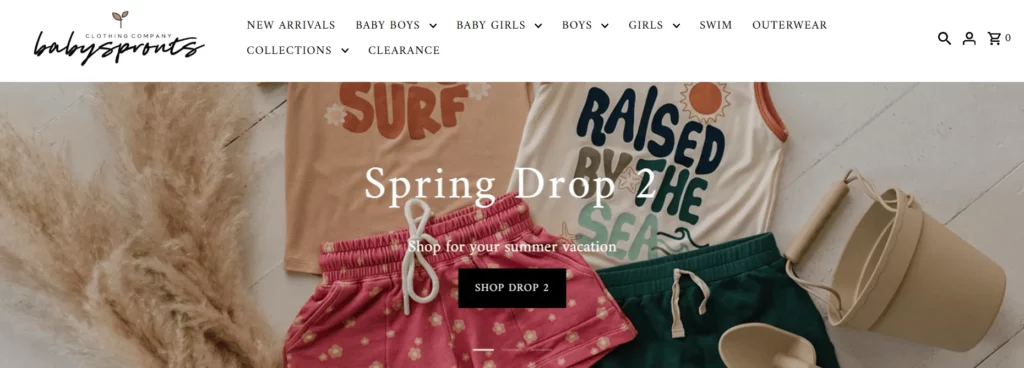
Babysprouts helps parents find sustainable and stylish apparel for babies and young children. Their items are soft, simple, and easy to wear, aligning with modern children’s fashion trends.
By becoming a Babysprouts affiliate, you will receive a competitive commission of 15% for all approved orders. That means you can get $15 per sale with the $100+ average order size. They give you 30 days from the customer’s first visit to your link to earn extra money.
The brand teams up with the Avantlink network to manage their affiliate program. By joining their children’s clothing affiliate program, you can utilize their banners and text ads to create eye-catching promotions to engage your audience.
|
10. KidsBaron
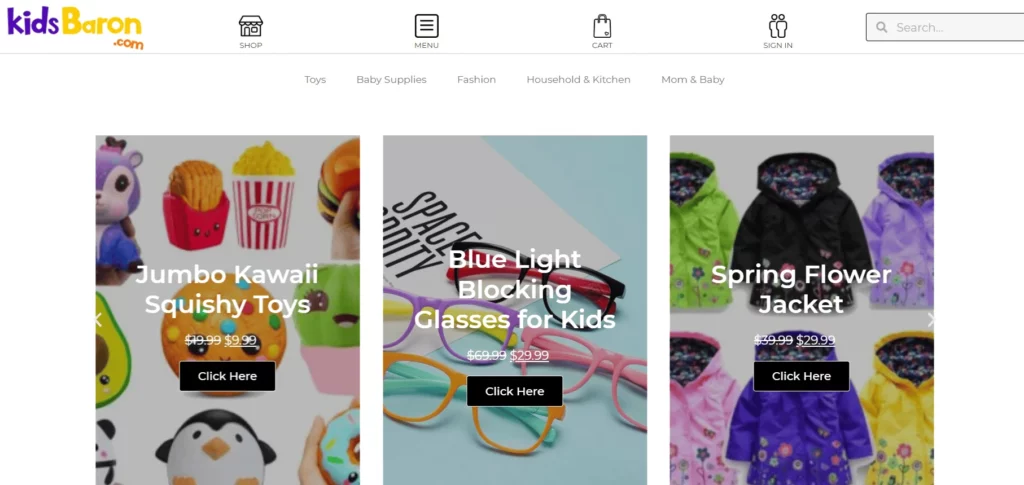
KidsBaron manufactures children’s educational toys, creative play kits, stylish clothing, and essential baby items. Customers will also find valuable parenting guides and courses covering key topics like sleep training, tantrum management, and breastfeeding support.
When joining the KidsBaron children’s clothing affiliate program, you can enjoy a 20% commission rate on every successful sale. You have a month to earn money on purchases from the visitor’s initial click on your affiliate link.
The brand pays your commission through PayPal for a safe and convenient transaction. You can access their user-friendly tracking dashboard to check your promotional results whenever you want.
|
11. Old Navy
- Commission: 2%
- Cookie duration: 1 day
Old Navy offers clothing for men, women, and children, footwear, activewear, and accessories. Customers can shop at over 1,100 Old Navy stores worldwide or easily browse their online store and mobile app for exclusive deals and home delivery.
12. Petite Maison Kids
- Commission: 10%
- Cookie duration: 30 days
Petite Maison Kids provides high-quality, elegant clothing for children aged newborn to 10 years. They create their products in small batches to maintain the uniqueness and individuality of each item.
13. The Children’s Place
- Commission: 0.8%
- Cookie duration: 15 days
The Children’s Place is a leading American retailer of children’s clothing for newborns to pre-teens. Their products are available under several brands, including The Children’s Place, Gymboree, Sugar & Jade, and PJ Place.
14. Janie and Jack
- Commission: 2%
- Cookie duration: 7 days
Janie and Jack sells luxury clothing for newborns up to 24 months and stylish apparel for boys and girls up to 18 years old. They create timeless designs with modern touches and seasonal themes, such as florals, nautical prints, and playful patterns on their classic pieces.
15. Tea Collection
- Commission: 8%
- Cookie duration: 30 days
Tea Collection draws inspiration from global cultures to create unique, high-quality apparel for kids. They offer a diverse collection of dresses, outerwear, sleepwear, and accessories for both boys and girls.
16. Young Days
- Commission: 10%
- Cookie duration: 30 days
Young Days creates a curated collection of gender-neutral, mix-and-match basics for children aged 0-5. Parents can purchase their bundles in various sizes and colors and enjoy a 10% discount on the total price.
17. Bonds
- Commission: 6%
- Cookie duration: 30 days
Along with men’s and women’s clothes, Bonds sells comfortable and stylish apparel for kids and babies. Customers can visit their website to explore frequently updated seasonal offers and discounts on various items.
18. Mamas & Papas
- Commission: 5%
- Cookie duration: 30 days
Mamas & Papas is a well-known UK-based nursery brand and manufacturer. Customers can shop for high-quality baby prams, pushchairs, nursery furniture, clothing, and maternity wear.
19. Lighthouse Kids Co
- Commission: 5%
- Cookie duration: 30 days
Lighthouse Kids Co sells high-quality reusable cloth diapers for babies and toddlers. Their products are made with OEKO-Tex-certified fabrics to prioritize both baby safety and environmental sustainability.
How Do You Choose Which Children’s Clothing Affiliate Programs to Promote?
Choosing the most profitable children’s clothing affiliate programs requires balancing audience alignment and performance metrics.
You need to match factors like income and values to the right brand fit. You must also weigh commission rates against the likelihood that people will buy.
But here’s what most affiliates miss: the details that actually determine your earnings.
Cookie duration, return rates, and product quality matter more than the commission percentage on paper.
A 12% program with a 7-day cookie often earns less than an 8% program with a 60-day window.
Audience-Program Matching
Your audience’s profile is the main filter for choosing a program. Get this wrong, and even a 20% commission won’t save you.
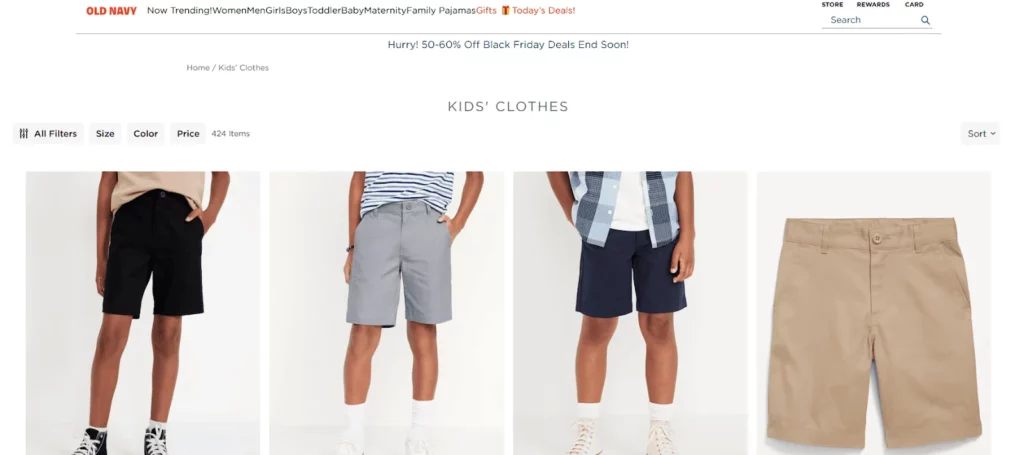
For budget-conscious followers with household incomes under $75,000, high-volume retailers work best. They are affordable and well-known. These include:
- Carter’s
- The Children’s Place
- Old Navy
- Target
As you move up to the mid-market bracket ($75,000–$150,000), a mix of value and quality performs best. Look for brands like Gap Kids, Nordstrom, and Hanna Andersson.
For premium audiences earning over $150,000, focus on boutique programs like Mini Boden, Tea Collection, or Maisonette.
Beyond income, consider values and shopping habits. Eco-conscious parents lean toward sustainable brands like Primary or Monica + Andy.
Deal-seekers respond best to programs that run frequent sales.
Conversion Rate Analysis
A high commission rate is useless if the traffic does not convert. You must analyze earnings using real data over a 30- to 60-day period.
To find this, use the conversion formula: (Sales ÷ Clicks) × 100.
Compare the actual Earnings Per Click (EPC) rather than just the commission percentage.
For instance:
- A mass-market program with 5% commission, 2.5% conversion rate, and $50 average order earns you $6.25 per 100 clicks.
- A boutique program with 12% commission, 0.8% conversion rate, and $85 order value yields $8.16 for the same traffic.
So which program wins?
The boutique program—despite lower conversion—because the math favors higher order value.
Track these metrics in a spreadsheet with columns for Clicks, Sales, Conversion Percentage, and Average Order Value. This helps identify which partner truly maximizes your income.
Cookie Duration Impact
The cookie length is vital in the parenting niche. Parents often shop in short bursts.
Research shows they add items to cart during nap times or late at night, but delay purchase until payday or a weekend sale.
A standard 7-day cookie captures only about 40% of these sales.
That’s frustrating—you’re leaving 60% of your income on the table.
A 30-day window typically secures around 75% of sales.
A 45 to 90-day window can capture up to 90% of conversions, including those delayed purchases.
The difference is massive.
This means a program with slightly lower commission but longer cookie window often earns more total revenue than a competitor with a short cookie.
Common mistake:
Affiliates chase the highest commission rate without checking the cookie duration.
UpPromote affiliates have reported cases where programs with 12% commissions get lower payout than 8% programs.
The higher rate had a 7-day cookie while the lower rate offered 60 days.
You can lose 50% of conversions chasing a 4% higher commission rate.
Return Rate Considerations
You must also consider the “clawback” risk. Many programs allow commissions to be refunded on returned items. This is a big challenge in children’s clothing.
According to industry data, children’s clothing has a much higher return rate (15–25%) compared to adult clothing (8–12%). This is due to:
- Uncertainty about fit
- Buying multiple sizes
- Gift exchanges
Ask for return rate data when applying to programs. Adjust your expected income accordingly.
For example, an attractive 8% commission drops to a 6.4% effective rate if the brand has a 20% return rate.
That’s a 20% hit to your income.
Ignoring this factor can lead to high revenue expectations that don’t translate into your final payout.
Product Quality Assessment
Before promoting heavily, check the product quality yourself to protect your reputation. Promoting poor-quality goods damages audience trust far more than a missed commission.
Treat this as a business expense. Order two or three items from potential partners to check:
- Fabric quality
- Sizing accuracy
- Packaging standards
- Shipping speed
If your budget doesn’t allow personal testing, rely on detailed customer reviews and the retailer’s return policy.
A generous, easy return window is often a strong sign that the company stands behind its quality.
Program Diversification Strategy
But how do you balance all these factors—audience fit, conversion rates, cookie duration, and return risk?
Use a “portfolio approach” for your partnerships.
This balances income stability with high earning potential. UpPromote affiliates who use the platform’s segmentation feature to create distinct programs report more consistent revenue across market cycles.
A strong strategy splits your promotional effort like this:
- 40% to “Anchor Programs”: Mass-market retailers with proven conversion rates
- 30% to “Growth Programs”: Mid-tier brands you are actively building authority with
- 20% to “Premium Programs”: High commissions on boutique items
- 10% to “Experimental Programs”: Niche or new brands to test
This mix ensures steady income while letting you profit from higher-paying opportunities. It also stops you from relying too much on a single seller.
Bottom line: Program selection isn’t just about commission rates. Balance audience fit, conversion data, and cookie duration.
Then use the 40/30/20/10 portfolio approach to ensure steady income while testing high-potential programs. Cookie length beats commission percentage every single time.
When Should You Promote Children’s Clothing Affiliate Programs for Maximum Earnings?
You’ve identified the right programs. But when do you actually promote them?
Timing matters more than most affiliates realize.
To maximize earnings, time your promotions carefully. Start 4 to 6 weeks before major shopping seasons to catch early planners. But keep pushing through the peak buying periods.
The primary windows are:
- Back-to-school rush: July through September
- Holiday and winter season: October through December
- Spring wardrobe refreshes: March through May
- Summer preparation: May through early July
According to National Retail Federation data, back-to-school and holiday seasons together account for 55–60% of annual sales.
They generate a massive 65–70% of total affiliate commissions.
This window makes or breaks your year.
The revenue is driven by a mix of direct product links and exclusive coupon codes.
Back-to-School Season (Peak: Late July – Mid-September)
Back-to-school is the second-largest shopping event of the year for children’s clothes. Parents typically spend between $250 and $500 per child.
To capitalize on this, publish complete guides in mid-July to capture early birds. Then update these posts in early September with “last-minute” angles for parents who waited.
Your content should focus on practical topics such as:
- Bulk buying guides for complete wardrobes on a budget
- Uniform-specific lists for schools with dress codes
- Durability reviews for active wear
Many programs release exclusive back-to-school coupon codes offering 15–25% off during this window. Featuring these discounts next to your links is vital for boosting conversion rates.
Get those tracked links sorted out first. You’re not scrambling to update links when the rush hits.
Holiday/Winter Season (Peak: November – December)
The holiday season generates nearly one-third of annual commissions. You need to treat this as two specific sub-seasons:
- The “Winter Wardrobe” Phase (Peaks Oct–Nov): Focus on practical needs like coats, boots, and layering for cold weather.
- The “Holiday Gifting” Phase (Mid-Nov – Dec 20th): Shift focus to dressy outfits for family photos and gifts.
Effective content strategies include publishing holiday outfit guides in early October and “best gifts by age” lists in November.
During this period, brands often allow “stacking” promotions. This means combining public site-wide sales (20–40% off) with exclusive codes for extra discounts.
This strategy can increase conversion rates by 30–50% compared to normal times.
Spring Wardrobe Building (Peak: March – May)
As winter fades, spring triggers a natural wardrobe update. Children have likely outgrown their fall clothes and worn out their winter gear.
This is the ideal time to produce content around:
- Spring capsule wardrobes
- Transitional layering pieces
- Durable rain gear
Position these purchases as investments that will last through the summer. Specific events like Easter also drive traffic. Aim to publish outfit guides six to eight weeks in advance.
You can also use the clearance season in March and April.
Request exclusive coupon codes for sales. Promoting these 50–70% discounts encourages parents to stock up for next year. This drives sales volume even on lower-priced items.
Summer Preparation (Peak: Late April – Early July)
Summer preparation shifts the focus to specialized needs. Key items include:
- Swimwear
- UPF-rated sun protection
- Durable camp clothing
Timing is critical here. Publish swimwear guides in late April before swim lessons begin. Share camp packing lists in May. Post summer wardrobe guides in early June.
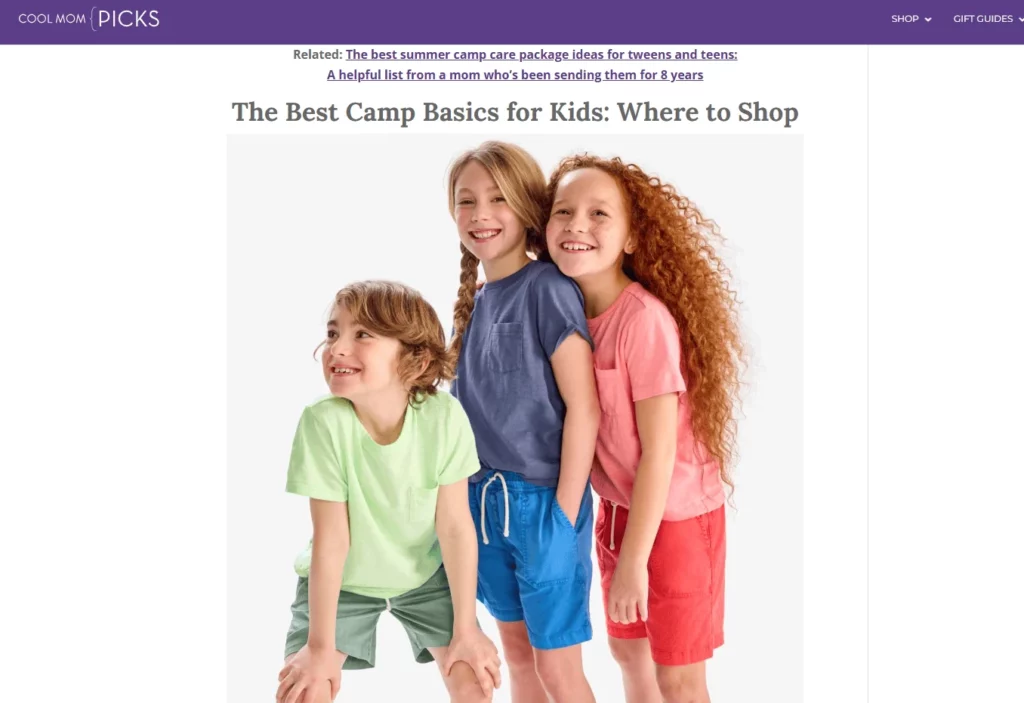
Summer items often have a lower average order value ($15–30) than winter gear.
But parents typically buy more items at once. To keep earnings high, highlight volume-based deals—such as “buy 4 items, get 30% off”—to encourage larger cart sizes.
Year-Round Opportunities
Beyond the seasonal peaks, you can generate consistent revenue through year-round opportunities.
And here’s what most people miss—unexpected growth spurts provide constant demand.
- Clearance Sales: Use January and July sales to market deep discounts as smart planning.
- Gift Guides: Birthday guides organized by age are evergreen performers.
- New Baby Guides: Since 40% of infant clothing purchases are gifts, pair product links with “new customer” coupon codes to attract first-time buyers.
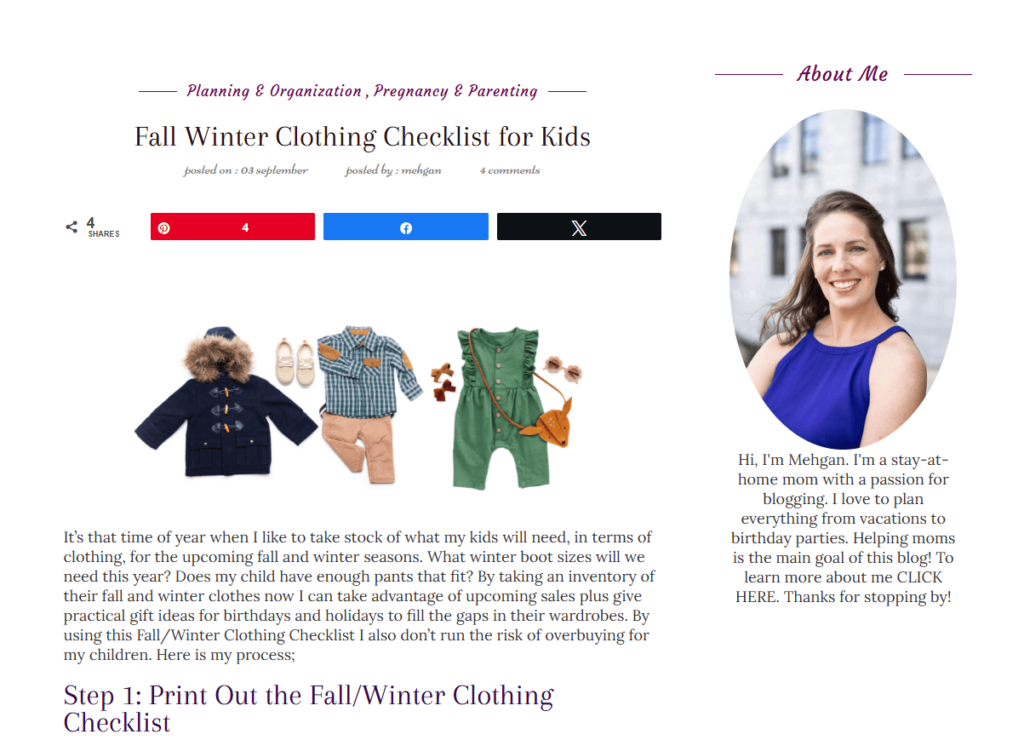
Maintain two or three “complete wardrobe” guides to ensure steady income regardless of the calendar. To keep these effective, regularly update links and refresh coupon codes monthly.
Promotional Calendar Strategy
To do this successfully, create a content calendar in December or January. Map all publication dates 4 to 6 weeks ahead of every major season.
Coordinate with your managers at least two to three weeks before major promotions to secure exclusive codes.
These often work better than public offers. You can save time by batch-creating content during slower months like June and January.
Try updating high-performing articles from previous years rather than starting from scratch.
Track your performance. Check the difference between link clicks and coupon code usage to see which method works best for your audience. This allows you to refine your strategy for the next season.
My take:
Seasonal timing makes or breaks earnings in children’s clothing. Publish 4-6 weeks early, secure exclusive codes from managers, and track which windows work best for your audience.
Miss back-to-school or holiday, and you’ve lost 60% of your annual commissions.
What Content Types Convert Best for Children’s Clothing Affiliate Programs?
Here’s what most children’s clothing affiliates get wrong: they promote year-round without a strategy.
But the highest-converting content is laser-focused on specific moments and needs.
The best content for children’s clothing links focuses on specific needs rather than general topics.
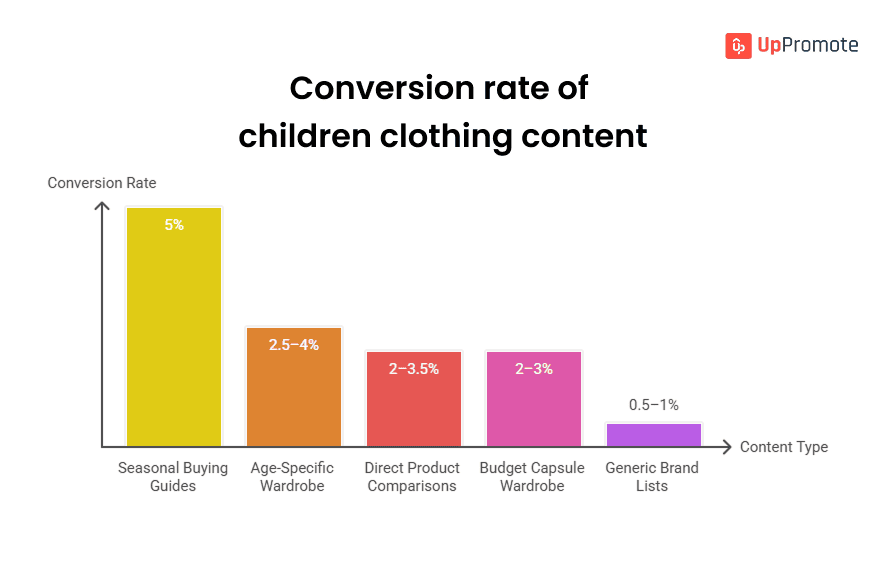
Seasonal buying guides (like back-to-school) lead the pack with conversion rates of 3–5%.
This is followed by age-specific wardrobe essentials at 2.5–4% and direct product comparisons at 2–3.5%.
Budget capsule wardrobe guides also work well, converting at 2–3%. All these targeted formats beat generic “top 10 kids clothing brands” lists.
Those general articles often struggle to pass a 0.5–1% conversion rate because readers aren’t ready to buy yet.
Seasonal Buying Guides
Seasonal buying guides are the “heavy hitters” of content, but success depends on timing and structure.
- Back-to-school guides: Publish by mid-July to catch early planners. Focus on bulk buying checklists like “5 pants, 10 shirts, and 7 pairs of socks.”
- Holiday and winter content: Publish in early November. Focus on gifts and nice outfits for family photos.
- Spring and summer guides: Publish in April. Highlight weather changes and UV-protective swimwear.
- Winter clearance: Don’t miss this window in February. Position sales as a “stock up for next year” chance to save parents 50–70%.
For best results, write detailed guides of 2,000 to 3,000 words with 15 to 25 carefully placed links.
Age-Specific Wardrobe Guides
Age-specific wardrobe guides convert well because they solve a real problem: confusion about sizing and growing kids.
Parents often search for “clothes for a 4-year-old girl” rather than generic terms.
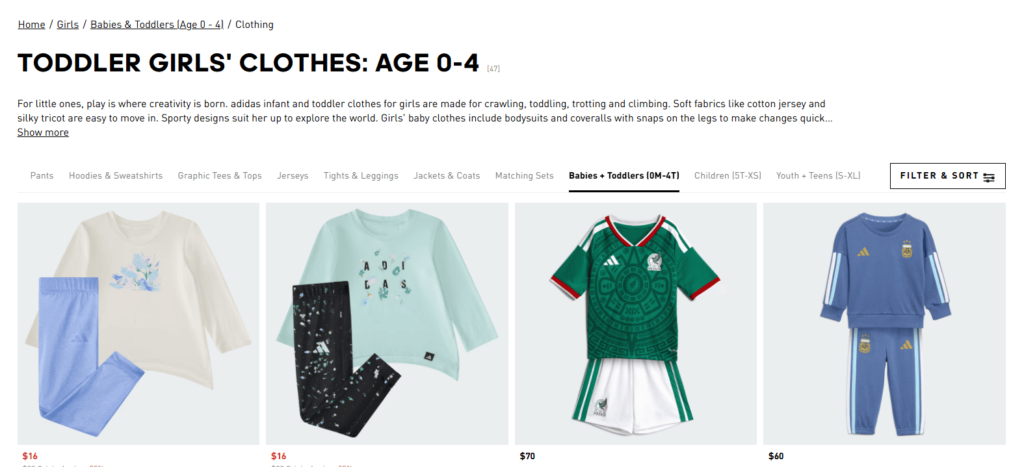
They need to know if they should buy a size 4T, a standard 4, or an XS. They also look for features like elastic waists for toddlers or durable knees for school-age kids.
An effective article structure starts with these growth factors. Follow with specific quantity tips, then product suggestions.
End with a total cost summary and a printable shopping list. This adds value that drives clicks. A 1,500 to 2,000-word article becomes a highly profitable asset.
Product Comparison Content
Product comparison articles build trust and convert well. They give a clear answer to “best X” searches.
To create a winning comparison, test 5 to 7 products in the same category. Think organic baby pajamas or winter coats.
Measure them against strict standards like fabric quality, sizing accuracy, and price per wear.
Use a consistent testing method. For example, wash every item ten times to check for shrinking and pilling. Then show the results in a clear table followed by detailed reviews.
By picking a clear winner while noting which products are best for specific needs, you help the reader feel confident enough to buy.
Budget Capsule Wardrobe Guides
Budget capsule wardrobe guides are great for overwhelmed parents who want a simple, mix-and-match approach.
The best structure explains the concept—usually 15 to 20 pieces that create over 30 outfits—and lists every linked product.
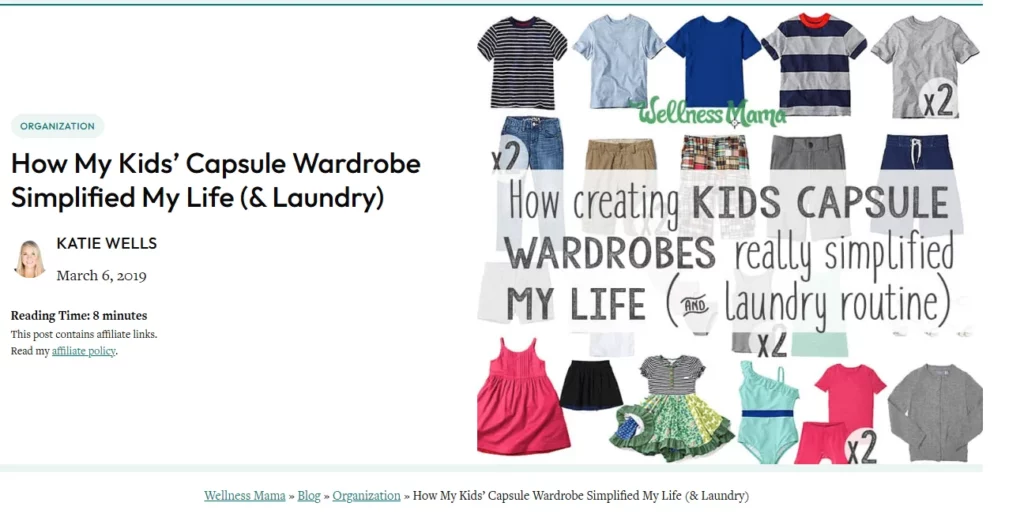
Show 10 to 15 of these outfit combos using photos or graphics. Calculate the total cost and “cost-per-wear” to prove the value. Aiming for a total budget of $150–$300 makes the capsule feel doable.
Adding a “shopping timeline” that suggests buying some items now and others later helps spread the cost. This makes it easier for parents to buy.
Size and Fit Guides
Brand-specific size guides may have lower direct conversion rates (1–2%). But they are vital for building authority. This boosts your site’s overall performance.
Articles that answer specific questions solve a major problem for online shoppers: the fear of returns. Examples include:
- “Carter’s vs. Gap Kids sizing”
- “Does Primary run large or small?”
- “Children’s Place size chart by age”
Include comparison charts, tips for “between-sizes” kids, shrinkage warnings, and review summaries. You give parents the confidence to buy. These guides naturally use product examples and show you are an expert. This helps improve sales across all your content.
Video and Visual Content
Here’s where it gets interesting.
Adding video and visual content can hugely boost your results. “Show, don’t tell” is powerful in fashion.
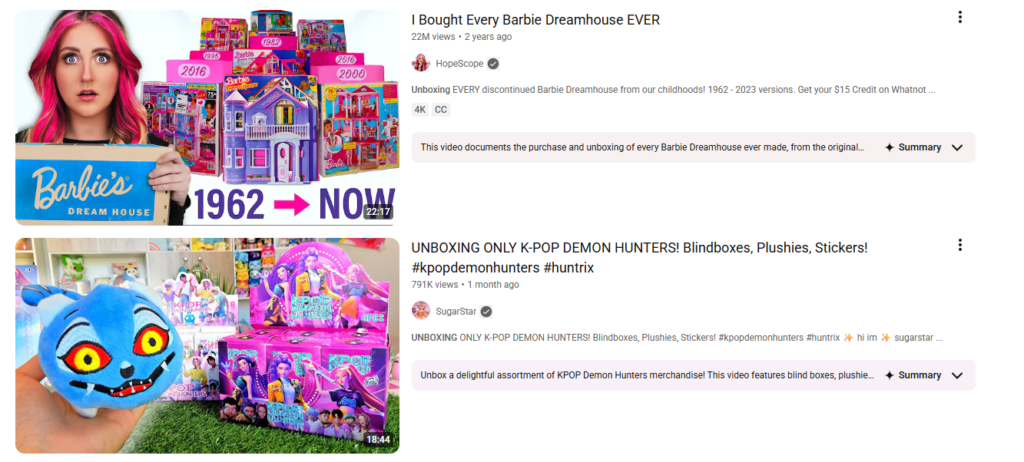
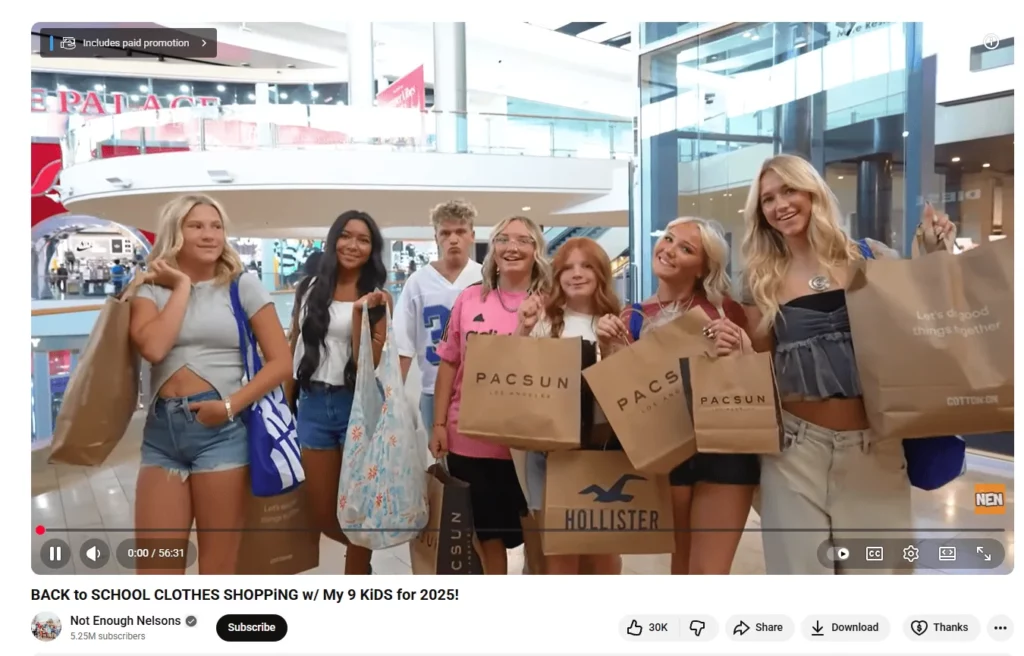
Clothing haul videos, unboxing clips, and “one month later” reviews often convert 3 to 5 times higher than text alone. They offer real proof of quality and fit.
Since most programs limit direct links on social media, the best strategy is a hybrid one.
Create engaging videos on platforms like YouTube or Instagram to spark interest. Then send that traffic to a detailed blog post with your links to close the sale.
Bottom line: Seasonal buying guides convert at 3-5%, but only if published 6-8 weeks before the season.
Age-specific wardrobes and product comparisons build year-round authority. Skip the generic “top 10 brands” lists—they don’t convert.
How Should You Promote Children’s Clothing Affiliate Programs on Instagram and Pinterest?
Creating the right content is just the foundation. The real leverage comes from knowing where to promote it. And the strategies are completely different for each platform.
To effectively promote children’s clothing programs, tailor your strategy to each platform. Instagram thrives on engagement through Stories, bio link tools, and shoppable posts.
Pinterest acts as a search engine where users actively look for ideas, driving traffic to detailed blog content.
Although both are essential, according to social commerce data, Pinterest typically generates three to five times more revenue than Instagram. This is because Pinterest users are actively planning purchases. Instagram users are mostly browsing for visual inspiration.
Instagram Strategy Overview
Instagram presents unique challenges and opportunities. The main hurdle is that you cannot put clickable links in standard feed posts. You have to direct traffic to your bio or Stories. Plus, Stories disappear after 24 hours.
Sounds limiting, right?
However, the platform is a “visual powerhouse.” It is perfect for styling demos and outfit showcases.
These can convert highly engaged viewers at a rate of 2–3% through Story links. It is also great for sharing time-sensitive coupon codes.
You can paste these codes into captions. This makes Instagram ideal for building brand relationships and creating urgency.
Instagram Story Strategy
For maximum impact, structure your Stories into a narrative arc of five to seven frames per product. Follow this flow:
- Identify a clothing problem
- Introduce the product as the solution
- Highlight its features
- Show how to style it
- End with a clear call to action using a link sticker
While link stickers are available to everyone, dedicate the final frame to a large, clear text overlay of your coupon code.
Use something like “SAVE20” along with instructions on how to use it.
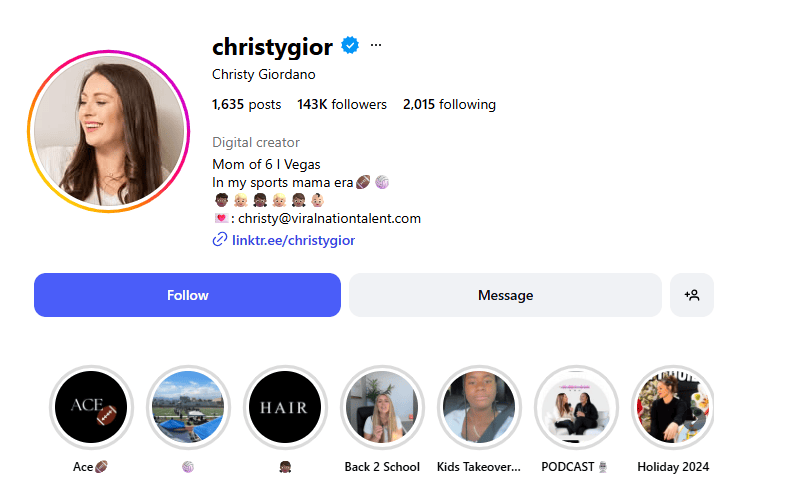
To keep this content alive longer, save these sequences to Highlights organized by season (e.g., “Fall Kids Fashion“).
Aim to post three to five product-focused Stories weekly to stay consistent without overwhelming your audience.
Instagram Post and Caption Strategy
Since regular posts don’t support clickable links, your captions are your main tool.
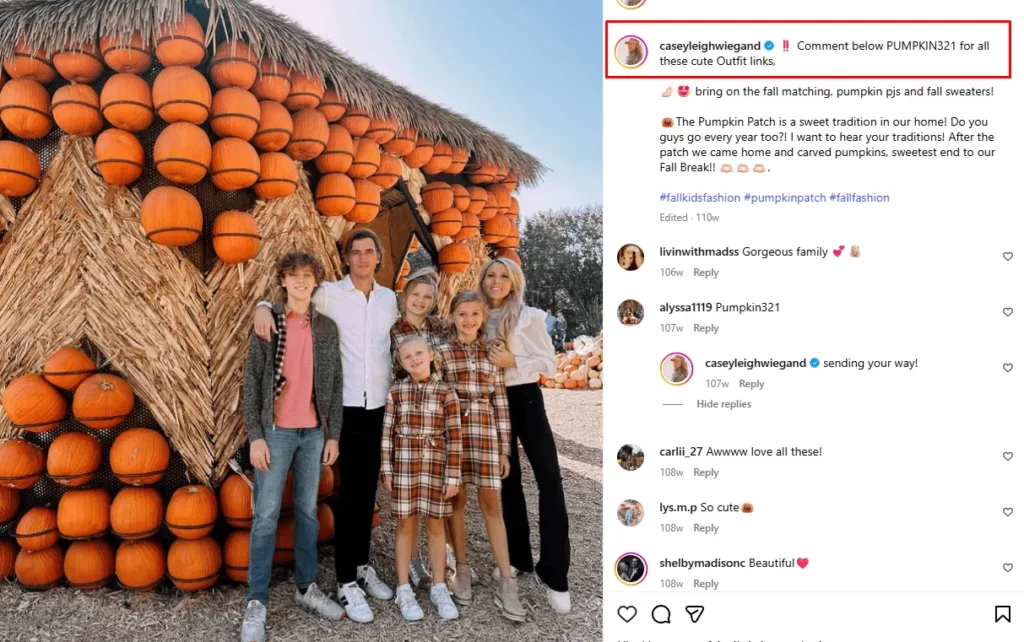
Clearly show coupon codes in the text—for example, “Get 25% off with code STYLE25” and set up automation that DM the commenter directly with your tracked link.
This works well for “outfit of the day” posts or product flatlays.
Try using carousel posts to boost engagement. Use the first few slides for styling. Use the final slides to display the coupon code and instructions.
This encourages users to save the post for later. This signals value to the algorithm and makes it easier for them to find the code when they are ready to buy.
Bio Link Optimization
Your bio link is the central hub for your Instagram traffic. Use tools like Linktree, LTK, or Beacons to organize your offers.
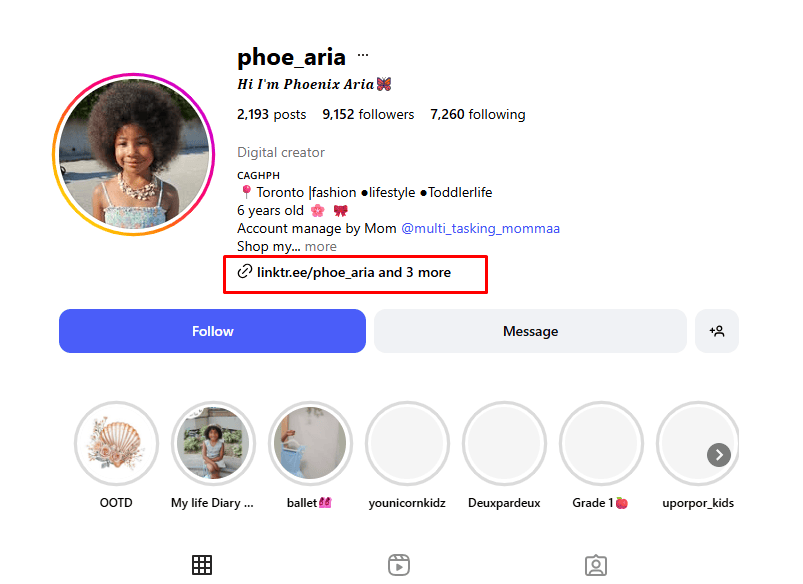
A high-converting structure looks like this:
- Top: Your newest seasonal guide (with coupon codes)
- Middle: Evergreen content
- Bottom: A link to a “Current Coupon Codes” page on your blog
Update this link weekly to match the current season and remove expired offers. For fashion creators, LTK is powerful because it offers detailed analytics and a shopping-focused audience. Tools like Beacons allow for visual customization. You can highlight specific discount codes directly in the menu.
Pinterest Strategy Overview
Pinterest offers a big advantage because it is search-based. Users actively look for terms like “toddler winter coat” or “back to school outfits.”
Because Pins last for months rather than hours, a single piece of content can drive traffic to your blog for up to a year.
According to Pinterest’s internal data, 75% of Pinterest users are actively planning purchases. This leads to higher earnings.
Based on benchmark data, 10,000 Pinterest viewers often generate $200–$500 in income. Compare that to just $50–$150 from the same number of Instagram followers.
This platform is also excellent for coupon promotion. Users frequently search for specific queries like “Gap Kids promo code.”
Pinterest Content Strategy
To succeed on Pinterest, use a mix of content types:
- Product Roundups: Link these to detailed blog posts
- Single-Product Highlights: Focus on one item
- Idea Pins: Visually tell a story about a capsule wardrobe before revealing a coupon code
- Coupon-Focused Pins: Use text overlays like “20% off Children’s Clothing” that link to a list of active deals
- Utility Infographics: Share helpful resources like size charts
To maximize reach, pin each blog post three to five times using different images and headlines. Create seasonal boards six to eight weeks early to catch early planners.
A dedicated “Deals” board updated weekly ensures you capture bargain hunters.
Pinterest Profile Optimization
Your Pinterest profile is the SEO foundation for your traffic. Treat it as a searchable catalog rather than a social feed.
The High-Visibility Structure:
- Name & Bio: Inject high-volume keywords directly into your display name and bio (e.g., “Sarah | Sustainable Kids Fashion”).
- The Claim: Verify your website to earn the “Verified Merchant” blue check. This signals legitimacy and boosts algorithm trust.
- The Showcase: Organize your top 5 boards by current season (e.g., “Winter Coats 2024”).
Crucial Tactic: Enable the “Shop” tab on your profile header. This filters out inspiration-only pins and presents your audience with a direct catalog of buyable items, reducing the path to purchase.
Utilizing Pinterest’s Shopping Features
To convert browsers into buyers, you must move beyond standard pins to “Rich Pins” that carry real-time metadata.
The Shopping Ecosystem:
- Catalog Ingestion: Upload your full product feed. This automatically turns standard images into Product Pins with live pricing and availability.
- Product Tagging: On lifestyle images, use the tagging tool to link up to 8 specific items per pin. This allows users to “shop the look” instantly.
The “Collections” Strategy:
Create pins that feature one large hero image (lifestyle) paired with three smaller product images (flatlays) below it.
This format drives higher basket sizes by visually connecting the concept with the purchasable components.
Tracking Coupon Code vs. Link Performance
A smart strategy involves tracking link clicks and coupon code usage separately. Most dashboards provide analytics for both.
By calculating the conversion rate for each, you can see what your audience prefers.
- Your Instagram followers might prefer copying codes from captions
- Your Pinterest audience might prefer clicking through to blog reviews
- Budget items may convert better with percentage-off codes, while premium items perform better with flat-rate discounts
Using this data allows you to refine your approach.
Perhaps lead with codes on social media while relying on direct links within your blog content.
Social Media Disclosure Requirements
Following FTC guidelines is non-negotiable. You must avoid fines and keep your account safe.
- On Instagram: Include clear disclosures like #ad or #affiliate in the first lines of your caption. Place them on Story text so they are visible without clicking “more.”
- On Pinterest: Include disclosures in the Pin description and ideally on the image text itself.
The language must be clear. Phrases like “I earn a small commission if you use my code” are better than vague hashtags.
This transparency ensures legal compliance and builds trust with your audience. This is essential for long-term success.
Key insight: Pinterest drives 3-5x more revenue than Instagram because users are actively planning purchases, not just browsing.
Use Instagram for urgency (Stories, coupon codes), Pinterest for long-term traffic to your blog. And always disclose—FTC compliance isn’t optional.
FAQs
1. What is a children’s clothing affiliate program?
A children’s clothing affiliate program allows publishers to earn commissions by promoting kidswear brands, baby apparel, and children’s fashion products through tracked affiliate links.
2. How much commission do kids clothing affiliate programs pay?
Most programs pay between 5%–20% per sale, depending on the brand, product category, and affiliate network.
3. Are children’s clothing affiliate programs profitable?
Yes. Kidswear has high repeat purchase frequency due to growth stages, seasonal changes, and school needs, making it ideal for long-term affiliate income.
4. Which platforms offer children’s clothing affiliate programs?
Popular platforms include Amazon Associates, ShareASale, CJ Affiliate, Rakuten, Impact, and brand-direct affiliate programs.
5. Can affiliates promote children’s clothing on TikTok and YouTube?
Yes. Short-form video reviews, outfit try-ons, and sizing comparisons perform extremely well on TikTok, YouTube Shorts, and Instagram Reels.
6. Can beginners succeed with children’s clothing affiliate marketing?
Yes. The niche is beginner-friendly because parents actively search for reviews, size guides, and price comparisons before buying.
7. Do kids clothing affiliate programs offer cookie tracking?
Most programs provide cookie durations from 7 to 60 days, with some premium brands offering longer tracking periods.
Conclusion
Creating an affiliate program can be a powerful way to grow your Shopify children’s clothing store. With the right strategy and tools, your affiliates can become a strong team that helps your brand reach more customers and boost sales.
When managing children’s clothing affiliate programs, remember that every brand is unique, so don’t hesitate to test, adjust, and improve your program along the way.

Ellie Tran, a seasoned SEO content writer with three years of experience in the eCommerce world. Being a part of the UpPromote team, Ellie wants to assist Shopify merchants in achieving success through useful content & actionable insights.Ellie's commitment to learning never stops; she's always eager to gain more knowledge about SEO and content marketing to create valuable content for users. When she's not working on content, Ellie enjoys baking and exploring new places.