

Footwear is a must-have in everyone’s life. The global market is projected to reach $412.90 billion in revenue by 2024 (Statista).
With such high demand, it’s a lucrative niche for affiliate marketers, right?
In this article, we’ll explore the 25 best shoes affiliate programs and the earnings you can expect. Later, we’ll also cover how to get started with your own shoes affiliate program.
Quick Comparison
| Program Name | Commission (%) | Cookie Duration (Days) | Niche Suitable |
|---|---|---|---|
| Nike | 15% | 7 days | Sportswear, athletic shoes, lifestyle fashion |
| Puma | 5–7% | 14 days | Athletic shoes, casual wear, sports fans |
| Zappos | 7% | 14 days | Multi-brand shoes, lifestyle, accessories |
| Brooks Running Shoes | 1.25% | 7 days | Running shoes, marathon niche, fitness blogs |
| Origo Shoes | 10% | 30 days | Eco-friendly footwear, sustainable fashion |
| Shoeaholics | 5% | 30 days | Boots, heels, fashion footwear |
| Public Desire | 8% | 30 days | Trendy women’s shoes, fast-fashion style |
| Indestructible Shoes | 10% | 30 days | Safety shoes, work gear, construction niche |
| Road Runner Sports | 6% | 30 days | Running footwear, fitness enthusiasts |
| Converse | 8% | 7 days | Sneakers, casual fashion, youth audience |
Affiliate Earnings Calculator
Estimate your affiliate income based on Traffic, CTR, AOV, and Commission rate. Drag the sliders below to explore different scenarios.
Estimated Results
These figures are for illustrative purposes – feel free to adjust them to fit your specific niche.
- Conversion Rate here is defined as the percentage of traffic that buys.
- Does not account for refunds, cancellations, or varying commission rates by product.
25 Best Shoes Affiliate Programs (Sneakers, Running Shoes, And Others)
1. Nike
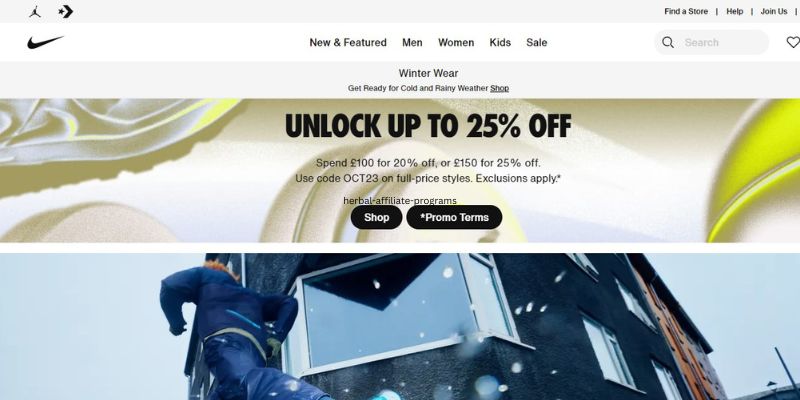
Nike is an American athletic footwear and apparel corporation. They are among one of the biggest shoe brands in the world and is the exclusive sponsor of superstar players and big games.
Nike’s shoe affiliate program is managed by CJ Affiliate. They offer up to a 15% commission rate and a 7-day cookie duration.
As a Nike affiliate partner, you can access the full range of category-specific affiliate banners and regular product feeds. Additionally, their affiliate management team will send you newsletters on new offers and products annually.
|
2. Puma
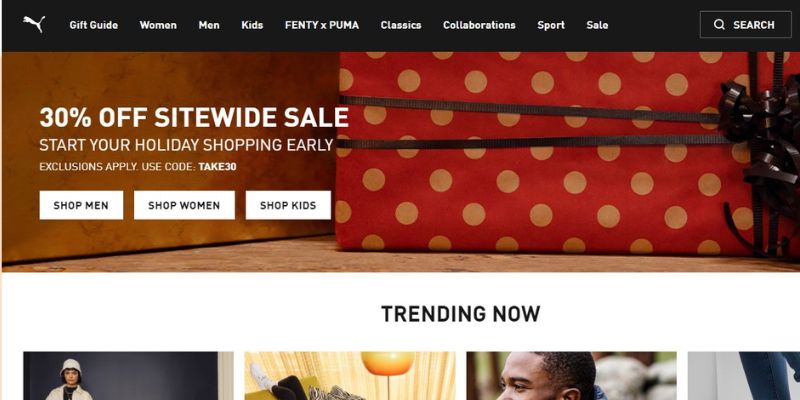
Puma is the third largest sportswear manufacturer in the world. The company is well-known for its high-quality and sporty athletic and casual footwear.
The commission rates of Puma are different for each type of purchase:
- 5% per sale
- 7% per in-app purchase
- 7% per app install purchase
Puma has a 14-day cookie duration for affiliates to promote their link and earn a commission. Plus, the brand provides their partners with affiliate-exclusive offers, product feeds, special sales, and promotions.
|
3. Zappos
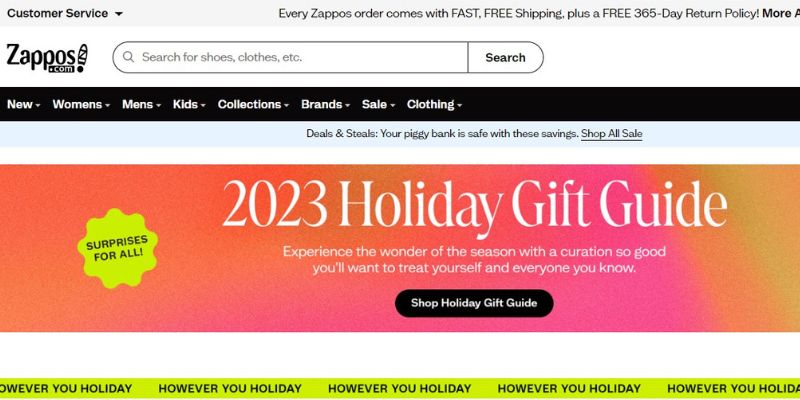
Zappos carries over 1,500 trusted brands in shoes, apparel, handbags, and housewares. They are authorized to sell every brand you need with fast and free shipping orders.
Zappos offers affiliate partners a 7% commission rate and a 14-day cookie duration. This brand’s average order value is $150, which means you can earn up to $10.5 per sale.
For their partners, Zappos allows them to promote through banner ads, text links, and various unique methods. Moreover, they also update an exclusive product catalog on a daily basis.
|
4. Brooks Running Shoes
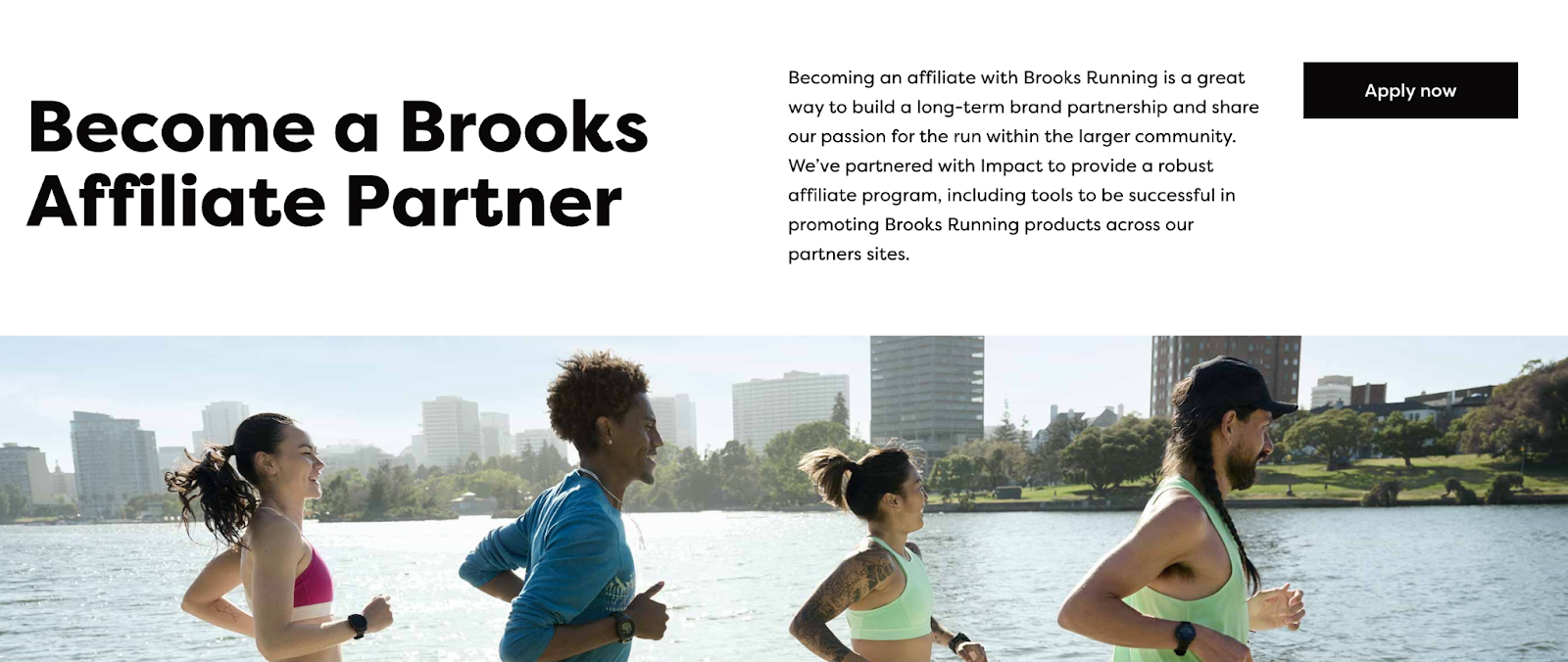
Brooks Running Shoes is a shop specializing in running shoes and apparel for men and women. This brand’s products are famous for their cushioning technology, which enhances the lightweight experience.
Brooks Running Shoes offers affiliates a 1.25% commission rate for each item sold. The cookie duration is allowed for clicks within 7 days.
When signing up for their running shoe affiliate program, you can get exclusive coupons and promotional codes to help increase sales.
|
5. Origo shoes
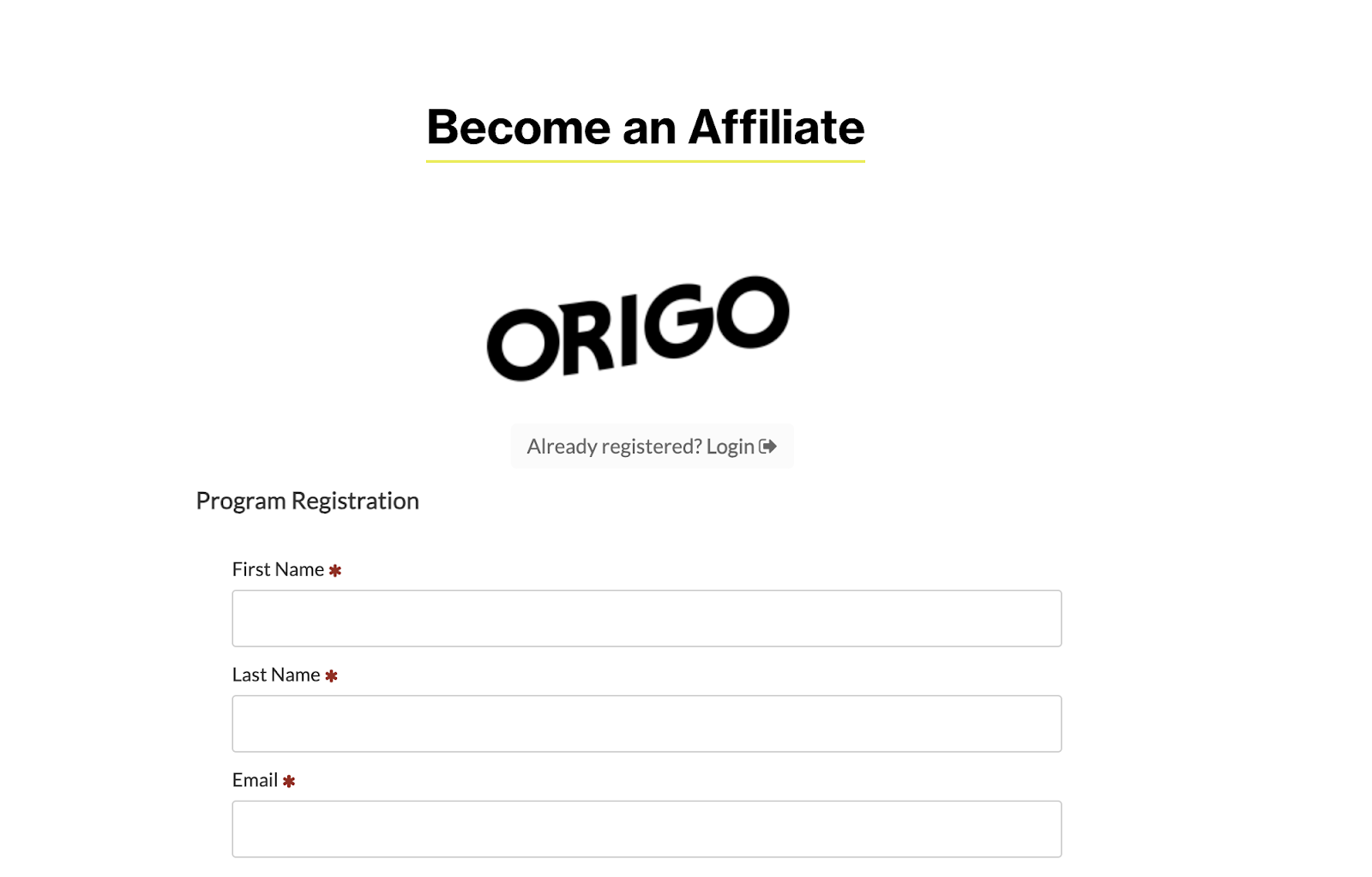
Origo Shoes offers eco-friendly footwear with natural, close-to-earth designs. They have a wide range of shoes in flexible sizes for men, women, and children.
Origo Shoes provides affiliates with a 10% commission rate and a 30-day cookie duration. Payments are made via PayPal, typically processed 45 to 60 days after an order is placed.
As their partner, you can receive exclusive coupons (5-10%) for your audience and promotional codes. Origo Shoes also gives a one-time 60% discount for affiliates who want to try their shoes for up to 3 pairs.
|
” background=”#1d85e8″ size=”6″ center=”yes” radius=”5″]Join Affiliate Program Now[/su_button]
6. Shoeaholics
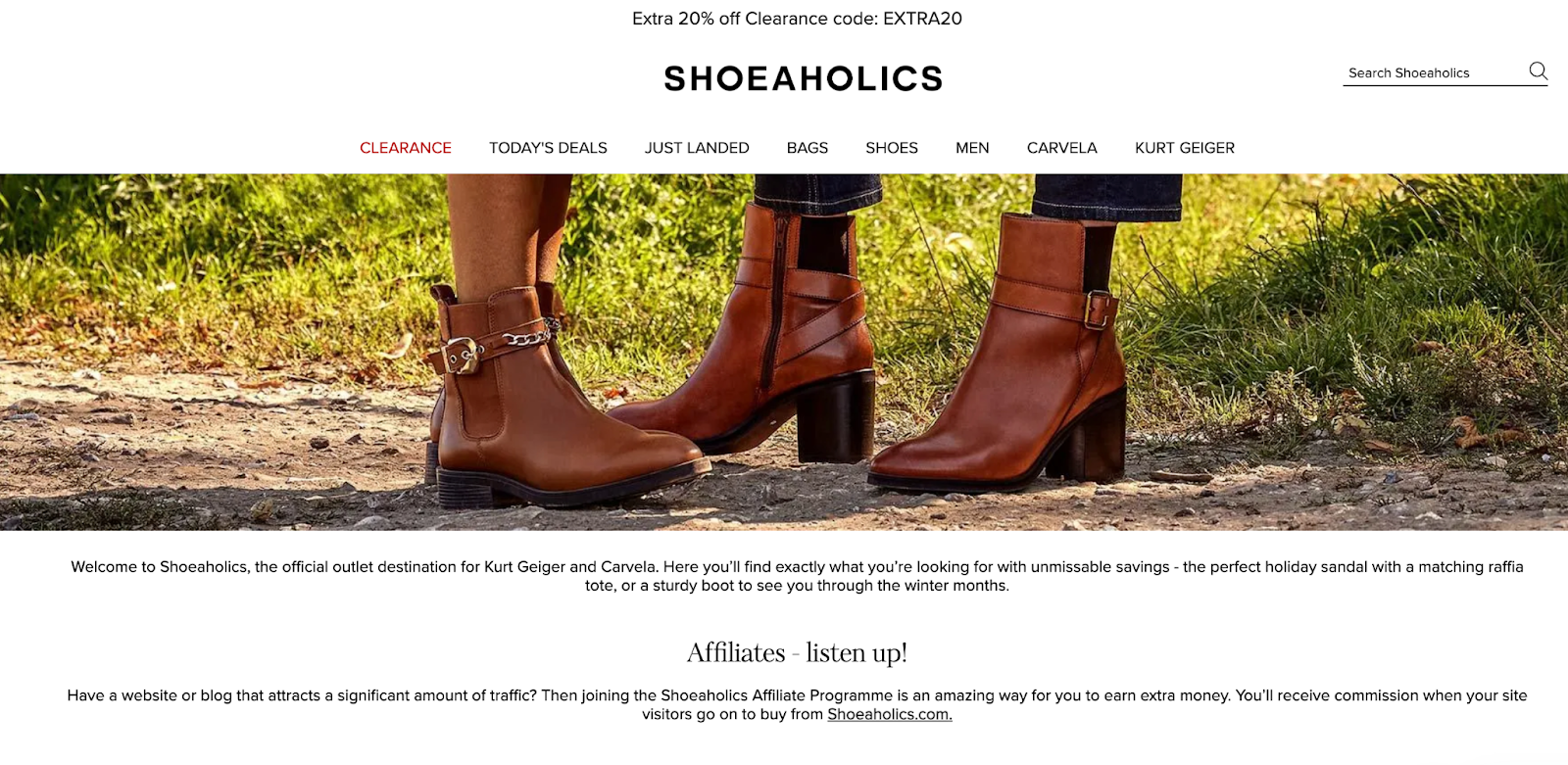
Shoeaholics is where you can find suitable footwear, especially boots. They offer shoes, including holiday sandals, sturdy boots, and heels.
Their shoe affiliate program is powered by Partnerize. Through the Shoeaholics affiliate program, affiliates can earn up to 5% commission. Their cookie duration is 30 days from the first click.
This brand provides many exclusive offers and promotions to promote products. They also regularly update banners and text links to help increase sales. For high-performing affiliates, gaining more customers to the site will earn you more.
|
7. Public Desire
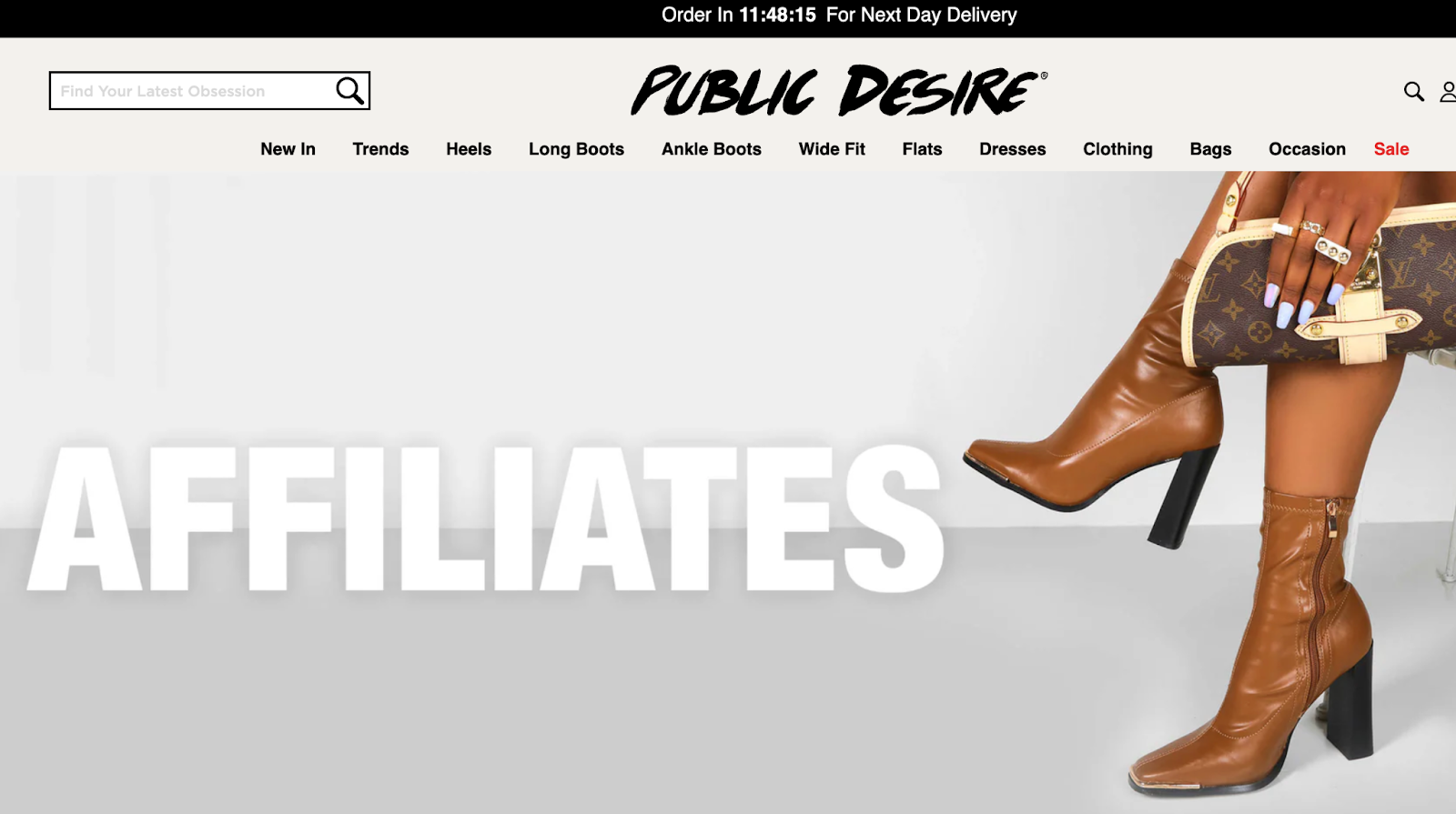
Public Desire is a global online footwear brand that sells stylish shoes at a reasonable price. Their various collections include heels, long boots, flats, and more.
This brand’s affiliate program is managed by Awin. Public Desire provides 8% of the commission rate for affiliates and a 30-day cookie duration.
For affiliates, they offer updated feeds on products, exciting banners, and new offers. Additionally, affiliates will have a chance to run exclusive partnerships with Public Desire.
|
8. Indestructible Shoes
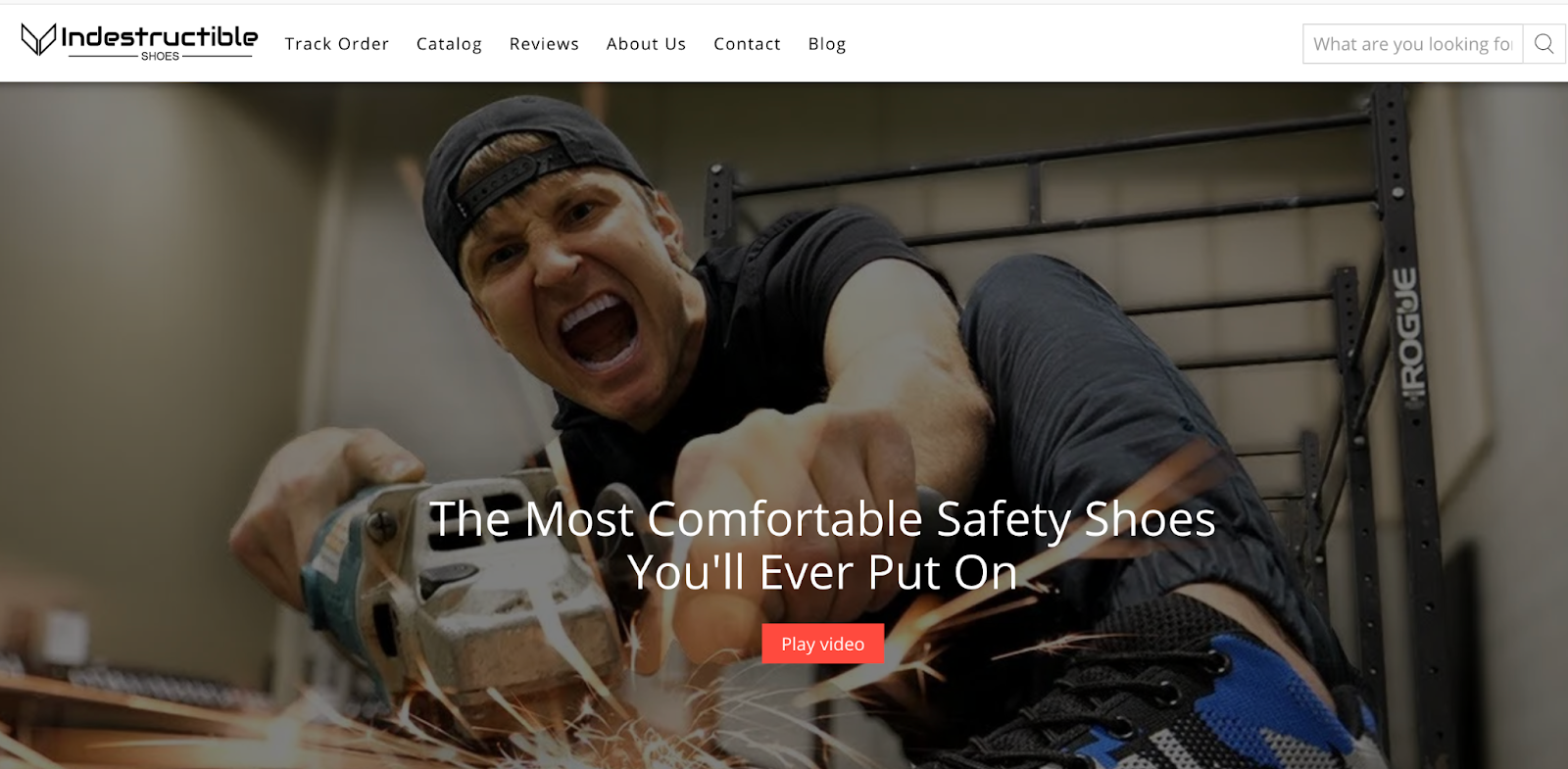
Indestructible Shoes provides the lightest and most comfortable safety shoes. This brand creates all-in-one shoes with stylish, safe work designs that are suitable for any environment.
The Indestructible Shoes affiliate program is managed through ShareASale. They allow affiliates to earn up to 10% commission and provide a 30-day cookie duration. In addition, Indestructible Shoes offers a 10% discount for your followers when they buy through your affiliate link.
Indestructible Shoes offers banners and text links for promotion upon request. Their account management team is highly active, with regular updates on new launches for partners. They also give their partners bonus plans, contests, and gift cards.
|
9. Road Runner Sports
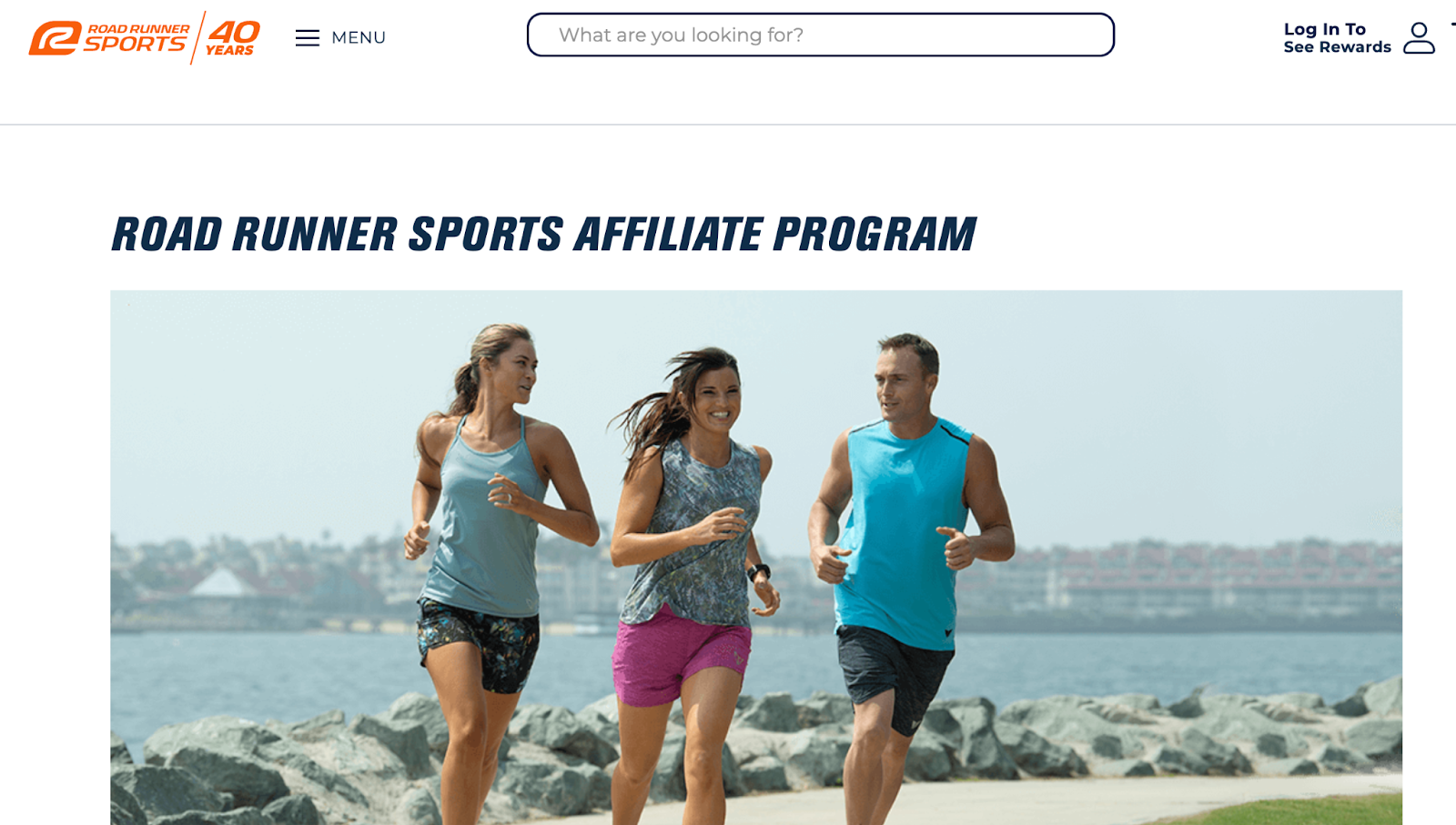
Road Runner Sports is among the world’s largest running and walking stores. They will help you find the perfect fitting shoes and gear for your running.
This brand offers a 6% commission rate for its shoe affiliate program. The cookie remains active for 30 days from the customer’s first click.
There will be a dedicated support team to answer all your problems. The brand also regularly provides special offers and discounts for visitors, updated banners, and links with specific data feeds.
|
10. Converse
Converse is one of the most popular shoe brands in the world, with the iconic “Chuck All Star.” They offer complete collections of Chuck Taylor All Stars, Jack Purcell, and Cons, including sneakers and apparel.
The Converse sneakers affiliate program has an 8% commission rate. With an average order value of $100-125, you can earn up to $10 per item sold through your affiliate links.
The cookie duration of this affiliate program is only active for 7 days. Therefore, your affiliate links will not expire after 7 days from the first click.
|
11. Koio
- Commission rate: 10%
- Cookie duration: Not mentioned
Koio is an Italian brand that produces high-quality sneakers. Their sneakers are made of the finest leather and designed to be comfortable. Koio affiliate program offers a 10% commission rate for their partners to promote their products.
12. Finish Line
- Commission rate: 4%
- Cookie duration: 6 days
Finish Line is a top retailer of various shoe brands with over 640 stores in the US. They offer the hottest shoes and clothing from Nike, Adidas, New Balance, and more, along with many special deals.
13. Hoka
- Commission rate: 3-14%
- Cookie duration: Not mentioned
Hoka is well-known for their cushioning shoes and apparel. Their products are lighter, more responsive, and faster than regular shoes.
14. Pashion Footwear
- Commission rate: 12%
- Cookie duration: Not mentioned
Pashion Footwear is a brand dedicated to women’s closets. It creates unique and fashionable products for women daily and meets their clothing needs.
15. Ahinsa shoes
- Commission rate: 12%
- Cookie duration: 30 days
The Ahinsa Shoes affiliate program offers a 12% commission rate with a 150 EUR payment threshold. This brand provides barefoot and comfortable shoes that are 100% vegan-friendly.
16. Chamaripa Shoes
- Commission rate: 10-20%
- Cookie duration: 60 days
Chamaripashoes is a top online elevator shoe retailer that offers affordable footwear. They have over 500 items in stock and 50 new arrivals every month so that customers can maximize their options for shoes and items.
17. Nina Shoes
- Commission rate: 12%
- Cookie duration: 30 days
Nina Shoes features footwear, shoes, sandals, pumps, wedges, and boots for every important occasion and daily use. This brand provides exclusive collections of kid shoes for girls with a wide range of styles and colors.
18. Shoe Zone
- Commission rate: 7%
- Cookie duration: 30 days
Shoe Zone is a British brand that sells shoes for all the family at a lower price than the market. They lead the retail market with approximately 30 million pairs sold annually, which means 57 pairs per minute.
19. Just Shoes For Kids
- Commission rate: 10%
- Cookie duration: 45 days
Just Shoes For Kids was founded by a mother who wanted to find properly fitting shoes for her children. This brand provides various collections of stylish, quality kids’ shoes.
20. Yami Dance Shoes
- Commission rate: 10%
- Cookie duration: 30 days
Yami Dance Shoes is a popular Atlanta-based dance footwear brand. They have a wide range of footwear, including salsa, bachata, Latin, ballroom, and hip-hop dance footwear.
21. Crocs
- Commission rate: 6%
- Cookie duration: 30 days
Crocs is a world leader in innovative casual footwear for women, men, and children. The brand has sold their shoes in more than 85 countries through wholesale and direct-to-consumer channels.
22. AllSole
- Commission rate: 8%
- Cookie duration: 30 days
At Allsole, you can find a huge range of shoes, sandals, boots, and more from leading footwear brands. They provide luxury footwear with an easy, laid-back style.
23. Spring Step Shoes
- Commission rate: 2%
- Cookie duration: 30 days
Spring Step Shoes sells comfort, fashion, and exquisite footwear that fit European comfort lives. The Spring Step Shoes collections are made with the quality and skill of real European tradition.
24. Journeys
- Commission rate: 8%
- Cookie duration: 30 days
Journeys provides fast-paced footwear and accessories for young people between 13 and 22 years old. Their retail stores include Journeys, Journeys Kidz, Shi by Journeys, Underground by Journeys, and Little Burgundy.
25. Calvin Klein
- Commission rate: 2.4%
- Cookie duration: 30 days
Calvin Klein is a leading brand that sells minimal and premium fashion products. They offer products that include apparel, footwear, underwear, and home furnishings.
What Types of Shoes Should You Promote as an Affiliate?
Not all shoes are created equal when it comes to earning commissions. You should pick specific styles that solve a problem or meet a need for your audience.
These top footwear categories will help you find the right products to grow your income. 👟✨
Running & Athletic Shoes (Highest Volume)
Running shoes are the “bread and butter” of the footwear affiliate world. Unlike fashion shoes, these are tools that wear out quickly. In fact, serious runners usually need to replace their shoes every 300 to 500 miles.
This constant need for new gear creates a massive market for affiliates. 📈
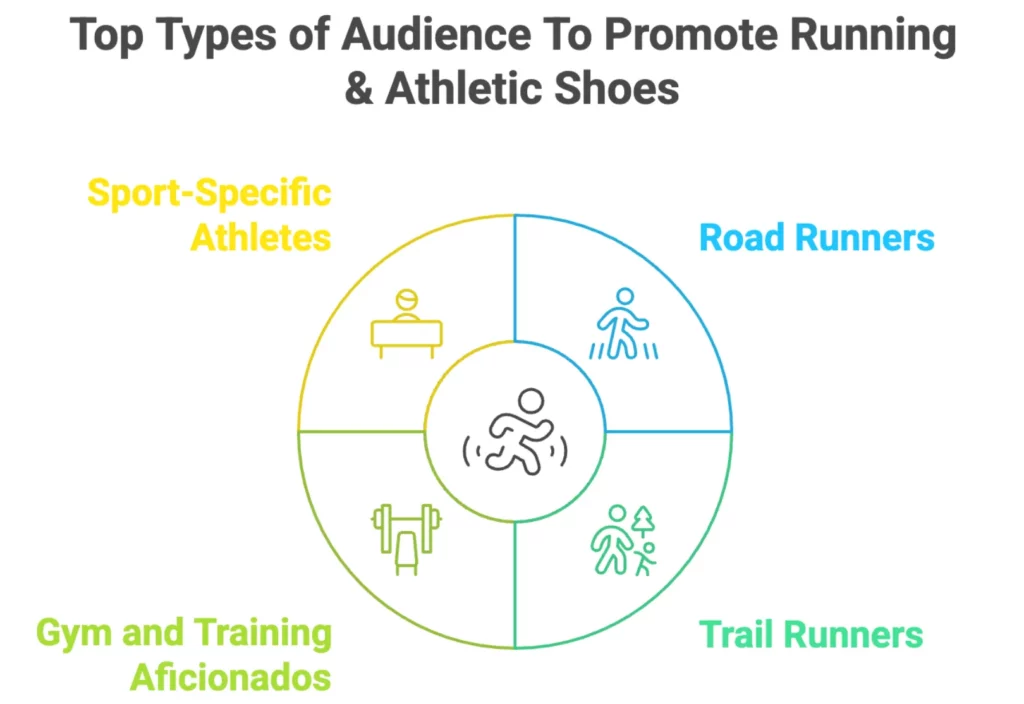
Data shows that athletic shoes make up nearly 40% of all footwear searches. While the commission rates are moderate, the high volume of buyers makes this a very steady source of income. To make the most of this traffic, you can target several specific sub-niches:
🛣️ Road Running: This is the largest group, featuring popular shoes like the Brooks Ghost or Nike Pegasus.
🌲 Trail Running: This is a fast-growing group with very loyal buyers who love brands like HOKA and Salomon.
🏋️ Gym & Training: These are shoes built for lifting weights or HIIT classes, such as the Nike Metcon.
⚽ Sport-Specific: This includes cleats and court shoes for soccer, basketball, and tennis.
While the market is large, you should also understand the basic economics of these sales. 💸
You likely won’t retire on a single sale, but the income is very reliable. On average, customers spend between $90 and $180 per pair. With a typical commission of 8% – 10%, you can expect $7 to $14 per sale.
To maximize those earnings, you need to time your promotions correctly.
Unlike high-fashion items, athletic shoes have two major sales peaks based on when people actually use them.
The first peak is from January to March, driven by New Year’s resolutions and spring training. The second peak occurs in August and September, marking the start of fall marathons and back-to-school sports.
When you are ready to start, you’d better look for the industry’s most trusted brands.
Most major brands run their own affiliate programs or use networks like Impact and CJ. Stick to big names that runners already trust, such as Nike, ASICS, HOKA, Brooks, and New Balance.
Fashion Sneakers & Lifestyle (The “Instagram” Niche)
While athletes care about how a shoe performs, lifestyle shoppers care mostly about how it looks. In this niche, style always wins over function.
Buyers aren’t looking for arch support or “energy return”—they are looking for the right color, the right brand, and the right “hype.”
If you have a following on Instagram, Pinterest, or TikTok, this category is for you. There are different styles driving the market, including:
👟 Retro Classics: These are shoes that never go out of style, like the Nike Air Force 1 or Converse Chuck Taylor.
✨ Minimalist & Clean: High-end leather sneakers for people who want a “quiet luxury” look.
👟 Chunky “Dad” Shoes: Bold, trendy styles like the New Balance 9060 or FILA Disruptor.
🔥 Hype & Collabs: Limited releases and designer collaborations that drive massive amounts of traffic.
This category has a very wide range of prices. For mainstream brands like Vans or Converse, prices usually stay between $70 and $150
However, if you target the luxury market, designer sneakers can cost 300 to $800 or more. While luxury sales pay a much higher commission per pair, you will likely sell a higher volume of mainstream shoes.
Moreover, you also need to know when people are ready to shop.
Demand for fashion sneakers follows the social calendar rather than a sports season.
Interest usually spikes during Fashion Weeks in February and September when new trends are announced.
Additionally, the Holiday season in November and December is a massive time for sales, as sneakers are a top-tier gift item.
Once you have your timing right, your last step is to pick the right partner programs. 🤝
For mainstream styles, you should look at big names like Nike, Adidas, and Puma.
If you want to tap into the high-ticket luxury market, you should join marketplace programs like Farfetch, SSENSE, or Mr Porter.
Hiking & Outdoor Footwear (The Growing Category)
The “Great Outdoors” has become a massive lifestyle trend. This category is growing fast as more people take up hiking and backpacking. Much like work boots, these shoes need special technical features.
However, unlike work boots, these buyers are shopping for fun adventures rather than just for their jobs.
There are many ways to explore nature, so you can target several different groups.
🥾 Hiking Boots: These range from light shoes for day trips to heavy boots for long backpacking treks.
🏃♂️ Trail Runners: This is the fastest-growing segment. These runners need extra grip to handle dirt, mud, and rocks.
🩴 Outdoor Sandals: Brands like Chacos and Tevas are massive sellers during the summer months.
🧗 Approach Shoes: These are hybrid shoes built specifically for climbers and hikers.
Since this gear must withstand the elements, it usually comes with a higher price tag.
Outdoor gear is pricey because buyers want high-quality features. They are happy to pay more for waterproofing or special rubber soles that won’t slip on wet rocks. Because of these high standards, the average order value is usually between $120 and $250.
The high price point also creates a great opportunity for your content. ✍️
This audience loves to read detailed reviews before they spend their money. If you can explain why a certain tread pattern is better for mud than for rock, you will build trust. That trust is what turns a casual reader into a buyer who uses your affiliate link.
To capture these sales, you should also time your promotions with the seasons.
🌷 April – June: This is the biggest sales peak as people plan their summer hiking and camping trips.
🍂 September – October: There is a second rush for hikers who want to see the fall colors.
❄️ January – February: Early planners start buying high-ticket items for their big summer adventures.
Once you have your timing right, the final step is choosing where to send your traffic. You have two main paths in this niche.
You can work directly with brands like Merrell, Salomon, and HOKA.
Alternatively, you can join a major retailer program like REI. REI is often the best choice for affiliates because customers often add socks, packs, and tents to their orders.
Sustainable/Eco-Friendly Shoes (Premium Storytelling)
This isn’t just about selling footwear; it’s about selling a set of values. Sustainable shoes have grown from a small niche into a massive market. Today, buyers want their purchases to reflect their ethics.
For affiliates, this category has a huge advantage: storytelling power. You aren’t just pushing a product. You are telling a story about cleaning up the ocean, fair labor, or reducing carbon emissions. That emotional connection often leads to higher sales.
The “Green” Angles That Work To market this niche, you need to highlight the specific features that buyers care about:
- Recycled Materials: Brands like Rothy’s (turning water bottles into flats) and Adidas Parley (using ocean plastic) turn waste into high-quality gear.
- Biodegradable Options: The PUMA Re:Suede project is testing shoes that can be composted, which appeals to zero-waste fans.
- Vegan Production: Companies like Veja and Native Shoes use corn waste and organic cotton to create leather alternatives without animal products.
- Carbon Neutrality: Allbirds labels products with their specific carbon footprint. This appeals to shoppers who want to track their impact.
- Circular Economy: Programs that offer repair or recycling build trust. It shows the brand cares about the product’s entire life, not just the sale.
The Economics: Higher Prices for Better Values Don’t let the “eco” label fool you—this is a premium category. The Average Order Value (AOV) usually sits between $95 and $160. Consumers expect to pay more for fair labor wages and innovative materials.
Top Programs to Promote:
- Allbirds & Rothy’s: The giants of the space with huge brand recognition.
- Vessi: Famous for 100% waterproof knit shoes (great for video demos).
- Nisolo: Focuses heavily on the “living wage” story.
- Veja: A celebrity favorite that balances style with ethical sourcing.
Luxury/Designer Shoes (Premium Commissions)
While sustainable shoes are about personal values, luxury shoes are about high profits.
This is a high-stakes game where you do not need a lot of traffic to succeed. Instead of thousands of clicks, you just need a few of the right clicks.
The math in this niche is very exciting for any affiliate. 💰
Order values often range from $300 to over $1,500. With a standard 5% to 8% commission, you can earn between $20 and $100 for a single sale. In fact, you can make the same amount of money from ten luxury sales as you would from hundreds of budget shoe sales.
To find these big-ticket buyers, you should focus your content on specific luxury styles. 👟
Luxury isn’t all the same, so you should target these distinct groups:
👟 Designer Sneakers ($400 – $1,200): This is a very popular category. It includes “hype” brands like Balenciaga and minimalist brands like Common Projects.
🥾 Premium Boots ($200 – $400): These buyers care about quality and history. Brands like Thursday Boot and Red Wing are perfect for this audience.
👞 High-End Dress Shoes ($300- $500): These are “career investments” for professionals. Brands like Allen Edmonds are the top choice here.
👠 Ultra-Premium Fashion ($700+): These are iconic names like Christian Louboutin. People often buy these for major life events, such as weddings or galas.
As many of these brands are exclusive, you need the right platforms to access them.
Most luxury brands do not run their own small affiliate programs. Instead, you should join a luxury “aggregator” that carries multiple brands.
Platforms like SSENSE and Farfetch are excellent because they give you access to hundreds of designers with one account.
Beyond the big platforms, you can also look for direct partnerships.
Major stores like Nordstrom are great for bridging the gap between professional dress shoes and high-end fashion. Additionally, “direct-to-consumer” brands like Beckett Simonon often have their own programs.
How Do You Choose the Right Shoes Affiliate Program?
Picking the right partner is just as important as choosing the right shoes to promote. You should look closely at the commission rates, cookie durations, and how often you get paid.
In the section below, we’ll help you find a program that turns your hard work into a steady income.
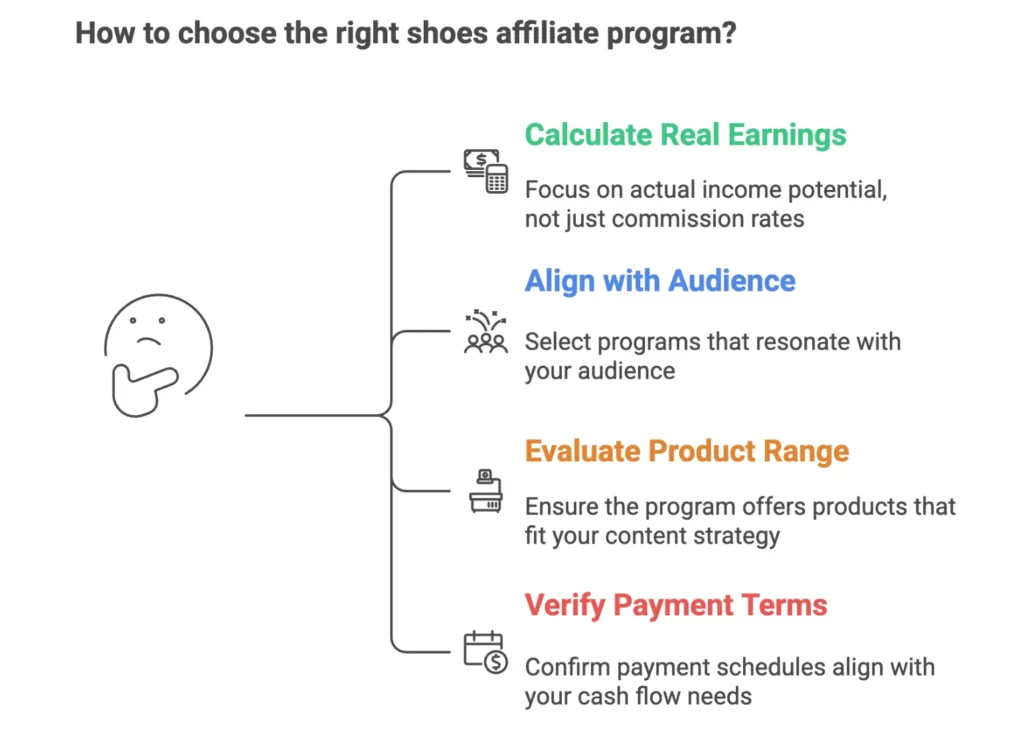
Calculate Real Earnings, Not Just Commission Percentages
The biggest trap for new affiliates is chasing the highest commission percentage.
You might see “20% commission” and get excited, but 20% of a $10 pair of laces is only $2. You need to look at the full picture.
To find the true winner, you need to calculate the Earnings Per Sale by multiplying the Commission Rate by the Average Order Value (AOV).
To see how this works, let’s compare two different examples:
Scenario A (The Big Retailer): You join DSW’s program at 5% commission. Their average order is around $100. You earn $5.00 per sale.
Scenario B (The Niche Brand): You join Thursday Boot Co. at 15% commission. Their average order is roughly $200. You earn $30.00 per sale.
In this case, the niche brand pays you 6x more per sale, even though the commission percentage is only 3x higher.
Additionally, you have to factor in Conversion Rate to predict your income. A high-paying offer is useless if nobody buys it.
You can use the simple formula to see the potential before joining any program.
(Commission % × AOV × Est. Conversion Rate) = Earnings Per 100 Clicks
Align Programs with Your Audience Demographics and Values
Once the math makes sense, you must ask one vital question: “Will my specific audience actually buy my recommendation?”
Misalignment is the fastest way to ruin an affiliate campaign. You should never force a product on your readers just because the payout is high.
To reach your goals, you should first look at your audience’s age.
Matching products to age groups is called demographic alignment. Different generations trust different brands. If you promote a label that does not fit a reader’s stage of life, they will likely ignore your links.
Gen Z: Younger buyers love authenticity. Brands like Vans, Converse, Vessi, and Allbirds perform very well with the youth market.
Millennials: These shoppers often seek a blend of style and ethics. Nike, Adidas, Rothy’s, and Thursday Boot are strong choices for them.
Gen X & Boomers: Mature customers tend to prioritize comfort and established trust. New Balance, ASICS, and HOKA are consistent winners here.
However, age is only half of the story. You also need to understand the motives behind a purchase.
If your content contradicts their personal beliefs, you will lose their trust.
🌿 The Eco-Conscious: If you write about sustainability, promoting a cheap “fast fashion” shoe will hurt your brand. Stick to Allbirds, Rothy’s, or PUMA’s eco-friendly lines.
⏱️ The Performance Athlete: If your readers run marathons, they care about technical specs, not trends. Nike, ASICS, and Brooks are the best plays for these users.
🔨 The “Buy It For Life” Crowd: If you review high-quality goods, avoid bargain bins. Focus on heritage quality like Thursday Boot or Red Wing.
Ultimately, focusing on relevance leads to a core rule of marketing.
Experts call the idea of matching products to a specific group the “Conversion Principle.”
For example, promoting a $180 sustainable shoe to an eco-conscious audience will almost always convert better than a $90 generic sneaker. Even though the $90 shoe might appeal to “more people,” it does not speak to your followers.
Evaluate Product Range Against Your Content Production Needs
Your choice of affiliate program depends on your specific content style.
Do you want to cover many different topics, or do you want to become a niche expert? Answering that question will help you pick the right partner.
If you choose a “Breadth” strategy, you need massive inventory.
A breadth strategy involves publishing daily roundups, “Top 10” lists, or style guides.
As these posts cover many different brands, you cannot manage 50 separate logins for every shoe company.
In such cases, large retailers like Zappos or Amazon are essential. These platforms let you link to almost any shoe without slowing down your workflow.
However, if you prefer a “Depth” strategy, you need specialized expertise.
A “Deep Dive” model works best for niche sites, such as trail running blogs or boot review channels.
You do not need millions of products for a niche site. Instead, you need direct access to specific brands like HOKA or Thursday Boot.
These specialist programs often offer more detailed product information and marketing tools than a general store could ever provide.
Most top affiliates use a “Hybrid Approach” to get the best results. Rather than picking just one style, you can use a “1 + 3” model to cover all your bases:
🏛️ One Major Retailer: Join a site like Zappos or Amazon to handle general needs and quick product comparisons.
🥇 Three Specialized Brands: Join three direct programs for your most detailed reviews. These direct links usually offer much higher commissions.
Verify Payment Terms Match Your Cash Flow Needs
If you treat affiliate marketing as a business, you must watch your cash flow. Payment terms vary wildly between programs. This can make or break a beginner who needs to see returns to stay motivated.
Here are some key factors to verify:
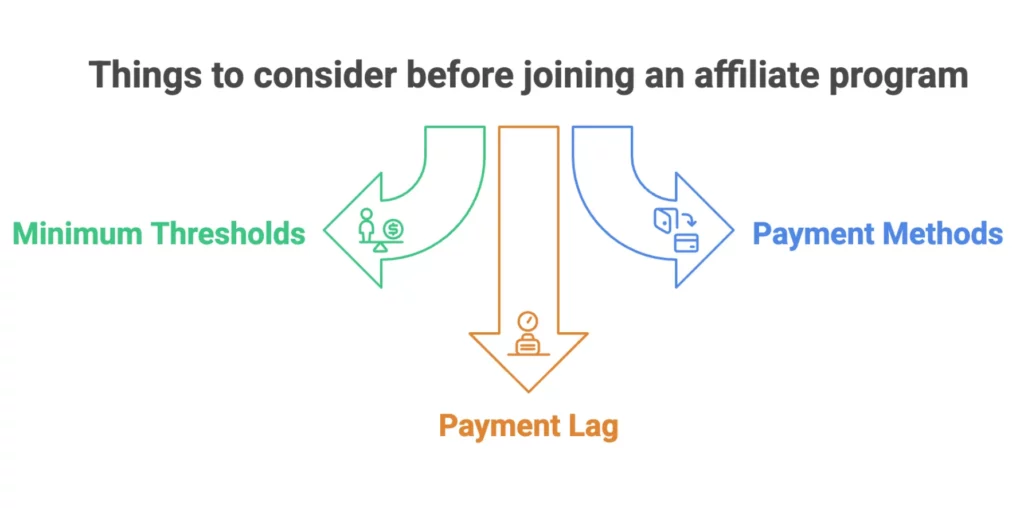
Minimum Thresholds
This is the amount you must earn before they send you a check. Look for low thresholds like $25 or $50.
If a program has a $100 threshold and you earn $90, that money sits locked in their account. For beginners, getting that first $25 payment is a huge win.
Payment Methods
How do they pay? PayPal and Direct Deposit are fast and standard. Be careful with programs that only pay via paper check or wire transfer, especially if you live outside the US. High bank fees can eat your profits.
Payment Lag
Most programs pay on a “Net-30” or “Net-60” basis. This means money earned in January might not hit your bank account until March or April.
Our recommendation is to prioritize programs with $25 minimums and monthly PayPal payments.
What Types of Content Work Best for Promoting Shoes?
You’ve chosen your niche and your affiliate partners. Now comes the actual work: creating content that gets clicks.
The mistake most beginners make is trying to force the same content style onto every platform. But what works on a blog (long text) will fail on YouTube (visual video). To save you from “what should I create?” paralysis, this section gives you proven templates you can use immediately.
Blog/Website Content Formats (SEO-Optimized Written Content)
On a blog, your goal is to rank in search engines and answer specific questions. Written content lets you go deep into the technical details that serious buyers seek.
There are five core formats you can consider. 👇
🏢 The “Best X for Y” Roundup
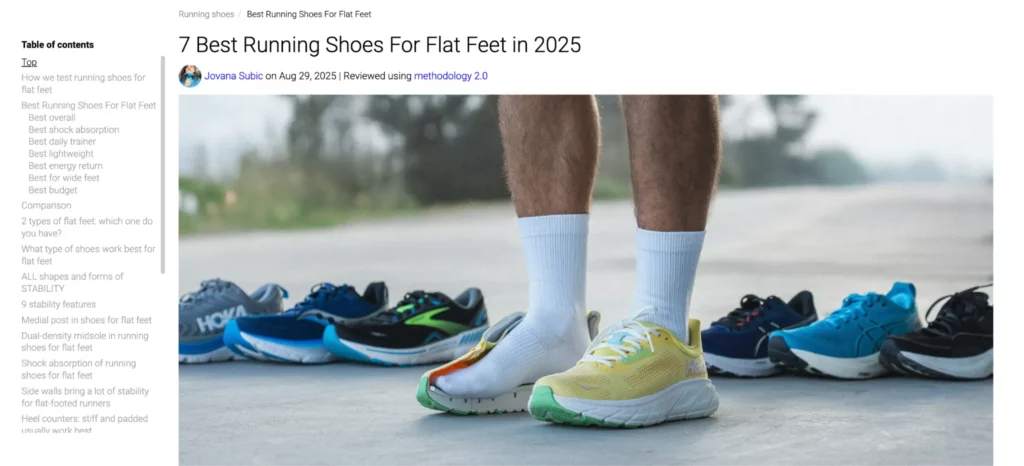
Roundups are the foundation of any successful affiliate site. These posts target specific searches like “Best Running Shoes for Flat Feet.” You provide a curated list of options so the reader does not have to do the research themselves.
- The hook: Start by explaining the specific problem, such as foot pain.
- The shortcut: Include a comparison table with affiliate links for quick shoppers.
- The details: Review five to ten products and rank them.
- The extra value: Add an FAQ section to answer common questions and boost your search traffic.
Once you have covered the top options in a list, you can focus on individual models.
🕵️♂️ The Detailed Single-Product Review
Single reviews target shoppers who are searching for a specific shoe name. These articles build massive trust because they show you have actually tested the product.
- The specs: List the weight, materials, and heel drop in a clear box.
- The real test: Share your experience after wearing the shoes for a few months.
- The sizing fix: Tell readers if the shoe runs small or large. This is the number one question buyers have.
- The verdict: Clearly state who should buy the shoe and who should skip it.
Sometimes, buyers start with a physical problem instead of a brand name.
💡 The Problem-Solution Article
These articles focus on a specific pain point. For example, you might write about “The Best Shoes for Plantar Fasciitis.” Instead of just listing products, you explain why certain features help the reader’s condition.
- The problem: Explain the medical or physical issue in simple terms.
- The solution: Describe what features to look for, such as extra arch support.
- The picks: Recommend three to five shoes that meet those specific needs.
As buyers get closer to a purchase, they often narrow their choices down to two favorites.
⚖️ The “Versus” Comparison
Shoppers often get stuck between two similar shoes, like a Nike versus an ASICS model. Your job is to help them choose the winner for their specific situation.
- Side-by-side: Use a table to compare the data directly.
- Feature breakdown: Compare the price, comfort, and durability of both options.
- The decision: Give a clear recommendation. For example: “Buy the Nike for speed, but buy the ASICS for comfort.”
Finally, you can bring all of these topics together to prove you are an expert.
📚 The Ultimate Buying Guide
These are “pillar pages” that establish your authority in the niche. A guide like “How to Choose the Right Running Shoes” covers everything a beginner needs to know.
- The basics: Explain key concepts like foot rotation and heel height.
- The process: Give a step-by-step plan for picking a shoe.
- The top picks: Provide quick links to your favorite models in every category.
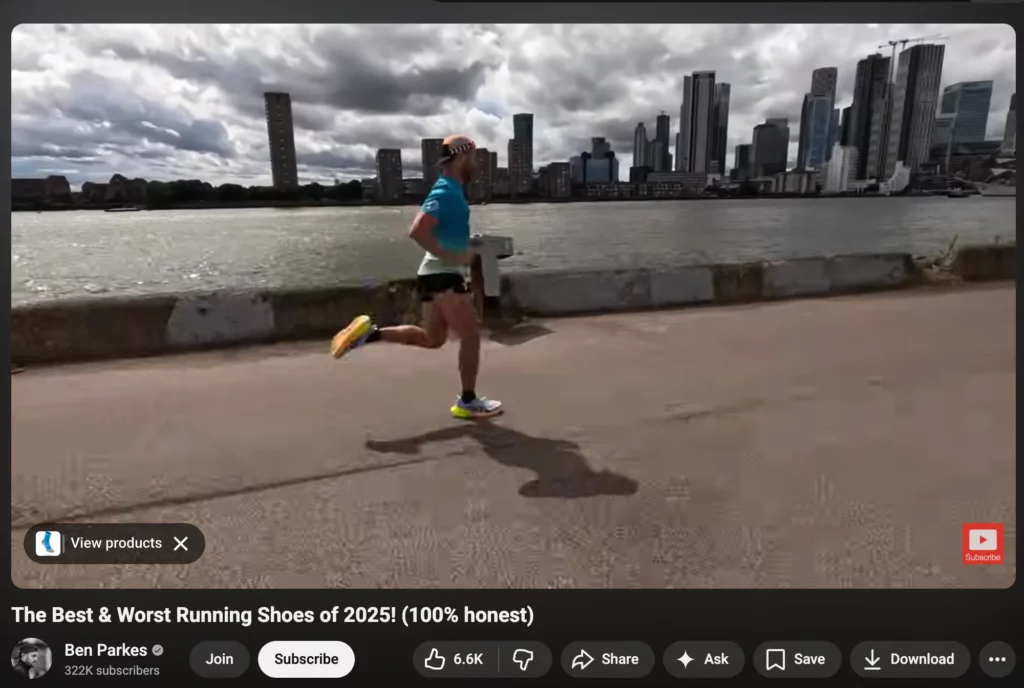
YouTube Content Formats (Visual Authority Building)
YouTube offers something text cannot: proof.
When you show a shoe bending, scuffing, or getting muddy, you prove you actually own it. This visual evidence builds authority fast.
Here are the six formats that work best on video:
The Detailed Review (8–15 Minutes): The video version of your blog review.
- On-Foot Footage: Show how they look worn with different pants/socks.
- Sizing Section: Dedicate 60 seconds strictly to fit.
- Pros & Cons: Be honest about the flaws to build trust.
The “Head-to-Head” Comparison (10–18 Minutes): Take 2-4 similar shoes and test them against specific criteria.
The “Top 5” Roundup (12–20 Minutes)
You can use Timestamps in the description. Viewers can easily navigate and you can place affiliate links for each specific shoe in the description box.
The Long-Term Update (6–12 Minutes): Come back to a shoe after 100 miles or 6 months, then show the wear patterns on the sole.
Unboxing + First Impressions (5–10 Minutes): Great for new releases where speed matters.
You should cover the specs, the initial feel, and the price. Be clear that it’s a “first look,” not a full review.
Educational Content (8–15 Minutes): Teach a concept while linking to products.
For example: “Why Your Heel Slips (And How to Fix It).” Teach the “Runner’s Knot” lacing technique, then recommend shoes with good heel lockdown in the description.
Instagram Content Formats (Visual Lifestyle Integration)
On Instagram, you aren’t just selling a shoe; you’re selling the lifestyle. The goal is to “stop the scroll.” Your content needs to be polished, aspirational, and integrated into daily life.
You can try some formats below to create better shoe promotions.
| Content Format & Length | Strategy & Execution |
| “Outfit” Reel (15–60s) | Style 1 shoe with 3–5 different looks. Use trending audio, quick cuts, and a “Link in Bio” CTA. |
| Styling Carousel (4–10 Slides) | Swipeable “mini-magazine”: Hook shot → Flat lays → Lifestyle context → “Link in Bio” to shop. |
| Interactive Stories | Use “Poll” or “This or That” stickers (e.g., Left vs. Right) to boost reach and learn audience preferences. |
| “Before & After” Reel (30–60s) | Visual proof of durability (Day 1 vs. Day 30). Pair with an honest review about comfort and wear. |
| Shoe Care / Education (60–90s) | Build expert authority with satisfying cleaning tutorials or custom lacing techniques for better fit. |
| “Haul” Video (60–90s) | Quick unboxing and try-on of multiple pairs. Rank each as: “Keep, Return, or Wait for Sale.” |
TikTok Content Formats (Authentic & Viral-Optimized)
TikTok’s algorithm prioritizes watch time over follower count.
To win here, you need content that feels unscripted and “real.” Authenticity beats high production value every time.
There are the six formats that go viral on TikTok:
The Quick Honest Review (15–45 seconds): No script. No fancy lighting. Just you holding the shoe and talking.
For instance: “I bought these so you don’t have to.” You can hit 2-3 key points (Comfort, Fit, Price) and end with a definitive “Buy” or “Pass.”
Styling Hacks (20–60 seconds): Fast tips that solve a problem.
For example, “How to tie your laces so they never come undone” or “How to style chunky sneakers.”
Split-Screen Comparisons (30–90 seconds): Use the “Green Screen” effect to put two shoes behind you.
The right format is point to Shoe A (Top) and Shoe B (Bottom). Then, use text overlays to show the difference. “Get the top one for running, bottom one for walking.”
Educational “Did You Know?” (45–90 seconds): Share a surprising fact or tip.
For example, you can show the wrinkles on the foam. This is highly shareable because it saves the viewer money or pain.
The “Shoe Fail” (30–60 seconds). Admitting a mistake builds massive trust.
You can show a pair you regret buying. “Everyone hyped these up, but they gave me the worst blisters.” This honesty makes your positive reviews much more believable.
Trend Hijacking (15–45 seconds): Take a trending sound or meme and make it about shoes.
f there’s a trend about “Red Flags in Dating,” you can make a video about “Red Flags in Sneaker Buying.” It taps into viral momentum while staying relevant to your niche.
FAQs
What is a shoes affiliate program?
A shoes affiliate program allows you to earn commissions by promoting footwear products—such as sneakers, running shoes, boots, sandals, or luxury shoes—using unique tracking links. When a visitor purchases through your link, you earn a percentage or fixed commission.
How much can you earn from shoes affiliate programs?
Earnings vary by brand and shoe type. Most programs offer 5%–15% per sale, while premium or direct-to-consumer brands may pay higher commissions. Because shoes often range from $60 to $300+, even modest rates can generate solid revenue.
Are shoes affiliate programs good for beginners?
Yes. Shoes are an evergreen product with broad demand, making them ideal for beginners. Niches like running shoes, casual sneakers, kids’ shoes, or orthopedic footwear are especially beginner-friendly due to high search intent and repeat purchases.
Do shoe affiliate programs offer long cookie durations?
Most shoe affiliate programs have cookie durations between 7 and 30 days, though some brand-direct programs extend cookies to 45–60 days. Longer cookies improve conversion chances, especially for buyers who compare multiple brands.Seasonal footwear (winter boots, summer sandals)
Can you promote shoes through Amazon affiliate links?
Yes. Amazon is popular for shoe affiliates due to trust, fast shipping, and massive selection. However, commission rates are usually lower compared to brand-specific affiliate programs.
Do shoes affiliate programs allow paid ads?
Some do, but many restrict Google Ads, brand bidding, or trademark usage. Always review the affiliate program’s terms before running paid traffic to avoid account termination.
Can social media be used for shoes affiliate marketing?
Absolutely. Platforms like TikTok, Instagram, Pinterest, and YouTube perform well—especially for sneaker culture, styling videos, unboxings, and before-after comfort demonstrations.
Do shoe affiliate programs allow international traffic?
Many global brands accept international traffic, but shipping regions and payout eligibility vary. Always confirm geo-restrictions before targeting non-US audiences.
Are shoes affiliate programs profitable long-term?
Yes. Shoes are a repeat-purchase product with strong brand loyalty. Once your content ranks or your social channels grow, shoe affiliate sites can generate stable, long-term income.
Conclusion
It’s crucial to partner with affiliates who target similar audiences and show strong engagement. A successful affiliate strategy combines real-time tracking, fair commission rates, and a variety of quality shoe products.
UpPromote offers an excellent affiliate solution to streamline these processes. View our pricing options to see what works best for your store.

Ellie Tran, a seasoned SEO content writer with three years of experience in the eCommerce world. Being a part of the UpPromote team, Ellie wants to assist Shopify merchants in achieving success through useful content & actionable insights. Ellie's commitment to learning never stops; she's always eager to gain more knowledge about SEO and content marketing to create valuable content for users. When she's not working on content, Ellie enjoys baking and exploring new places.