

Skincare is forecasted to maintain its top position, with revenues reaching nearly 211 billion U.S. dollars by 2028. People are increasingly willing to pay for products that improve skin quality and youthfulness.
Bloggers & content creators can earn big by promoting the right skincare products and programs. That’s why we’ve compiled the best skincare affiliate programs in this article.
If you have any concerns, we’ll also offer a roundup of top beauty affiliate programs in related niches, such as makeup and perfume.
In the next section will explain how to get started with affiliate marketing for skincare brands.
Quick Comparison
| Program Name | Commission (%) | Cookie Duration (Days) | Niche Suitable |
|---|---|---|---|
| Obagi | 40% | 30 | Skincare, anti-aging, dermatologist-grade beauty |
| Paula’s Choice | 7% | 30 | Skincare for all skin types, dermatologist-backed products |
| Liomen | 60% | 180 | Men’s skincare, anti-aging for men |
| SkinCeuticals | 5% | 30 | Premium skincare, clinical treatments |
| IMAGE Skincare | 12% | 45 | Clinical skincare, professional beauty |
| Jenette Skincare | 8–10% | 30 | Organic skincare, natural ingredients |
| The Organic Skin Co | 12% | 30 | Organic, vegan, clean beauty |
| Apoterra Skincare | 15% | 30 | Handcrafted, natural skincare, clean beauty |
| Manuka Doctor | 8% | 30 | Honey-based skincare, natural treatments |
| Bubble Skincare | 10% | 30 | Affordable skincare, teen-friendly, gentle formulas |
Affiliate Earnings Calculator
Estimate your affiliate income based on Traffic, CTR, AOV, and Commission rate. Drag the sliders below to explore different scenarios.
Estimated Results
These figures are for illustrative purposes – feel free to adjust them to fit your specific niche.
- Conversion Rate here is defined as the percentage of traffic that buys.
- Does not account for refunds, cancellations, or varying commission rates by product.
27 Best Skincare Products Affiliate Programs Of 2026
1. Obagi
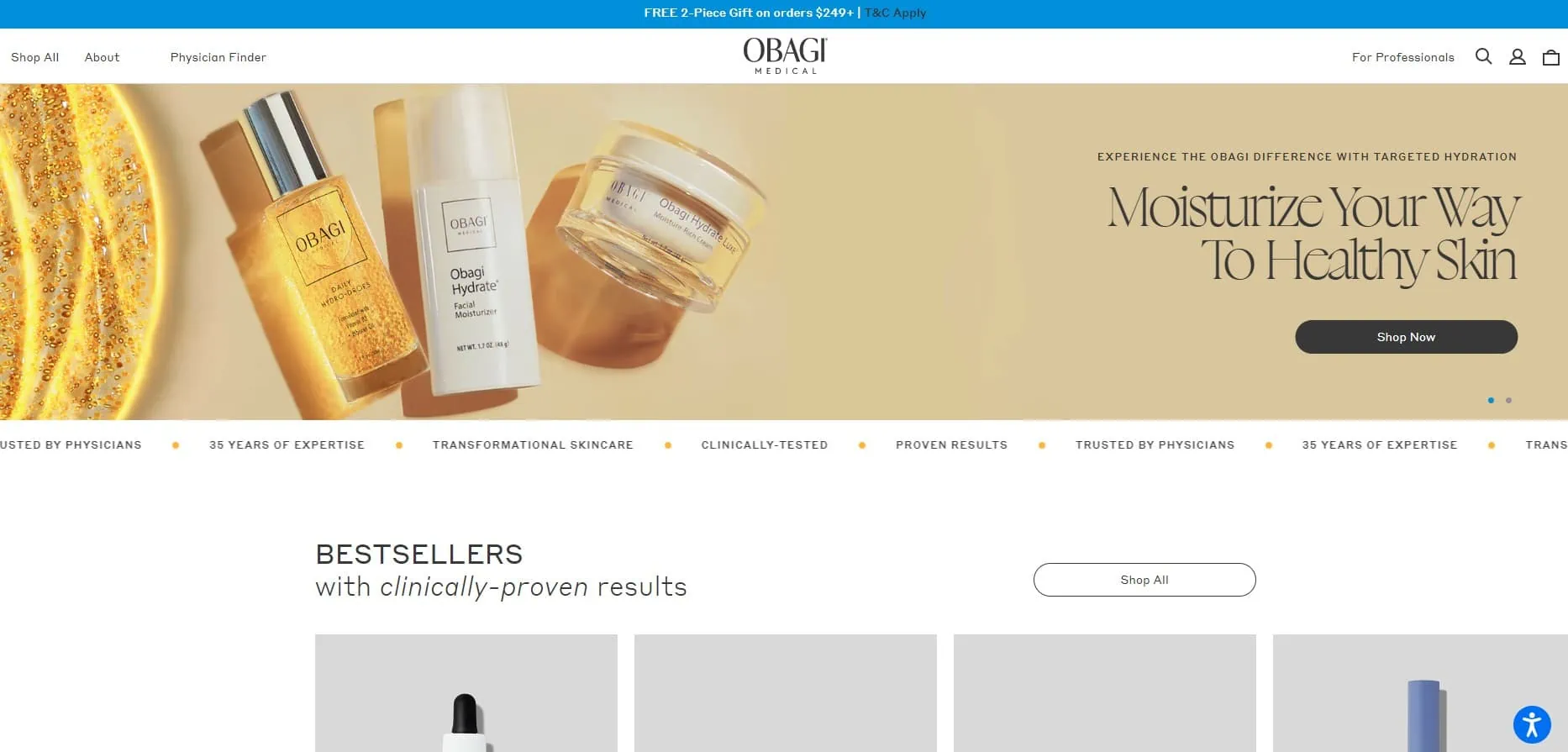
Many beauty bloggers trust Obagi skincare products for their science-backed formulas. Obagi collections focus on minimizing skin problems like aging, sun damage, and acne.
The Obagi affiliate program offers a 40% commission rate and a 30-day cookie duration for their partners. The payout is paid quarterly only through PayPal. Therefore, you must have a PayPal account to receive a payout and join the program.
Obagi will share various marketing tools for affiliates to promote their skincare products. These tools include banners, logos, and other promotional materials.
Obagi uses UpPromote, the top-favorite affiliate software on Shopify, to run and manage the program. This ensures affiliates receive accurate, real-time tracking and payment for credited sales.
|
2. Paula’s Choice
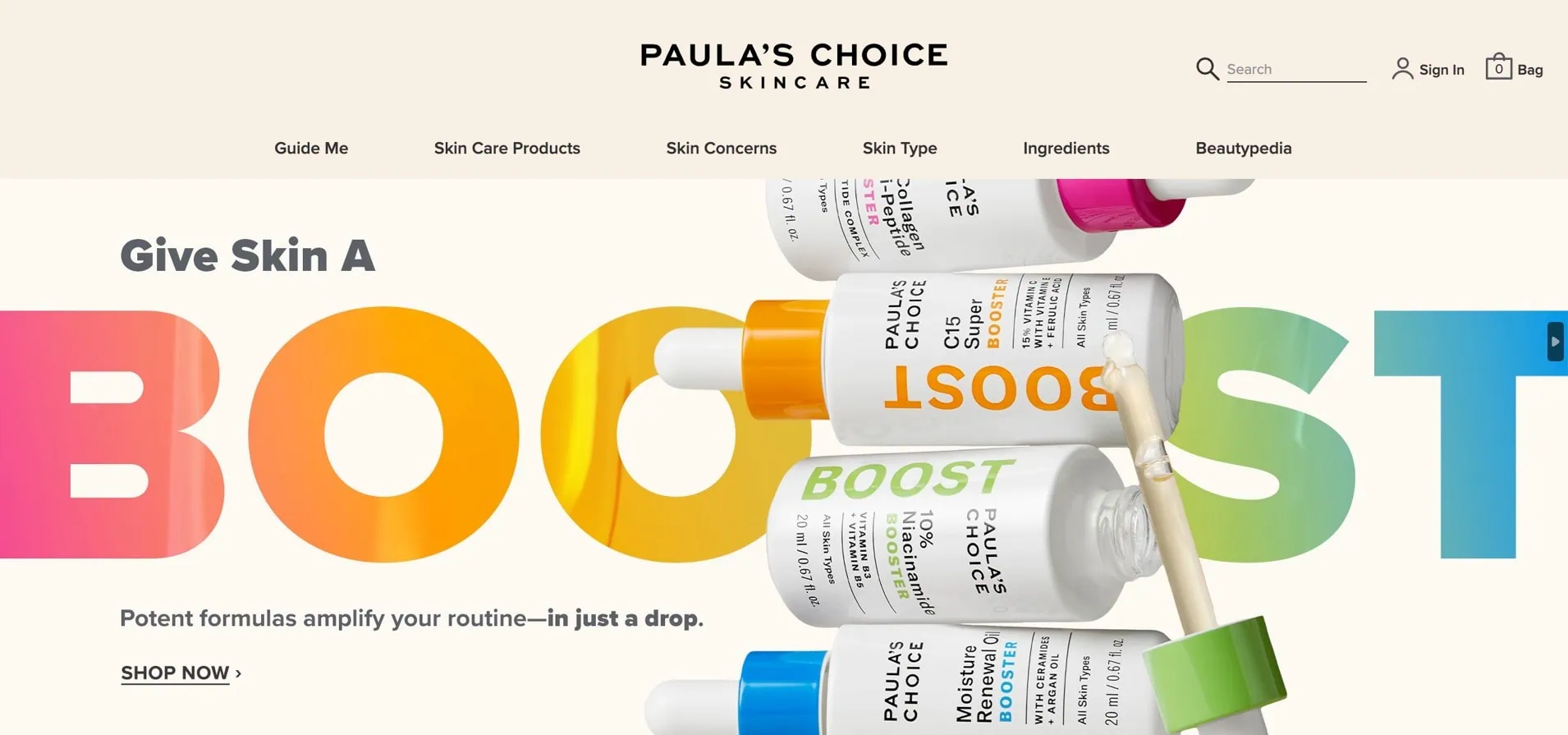
Paula’s Choice is famous for their adaptable skin products, which are good for every skin type. They have various effective products for skincare routines, including serums, toners, and more.
Managed by CJ Affiliate, Paula’s Choice afffiliate program provides a 7% commission rate for their affiliates. The cookie duration is 30 days from the first click of the customer.
Affiliates can enjoy access to private offers from Paula’s Choice. They also send exclusive newsletters about new launches and regularly give affiliates product seeding.
|
3. Liomen
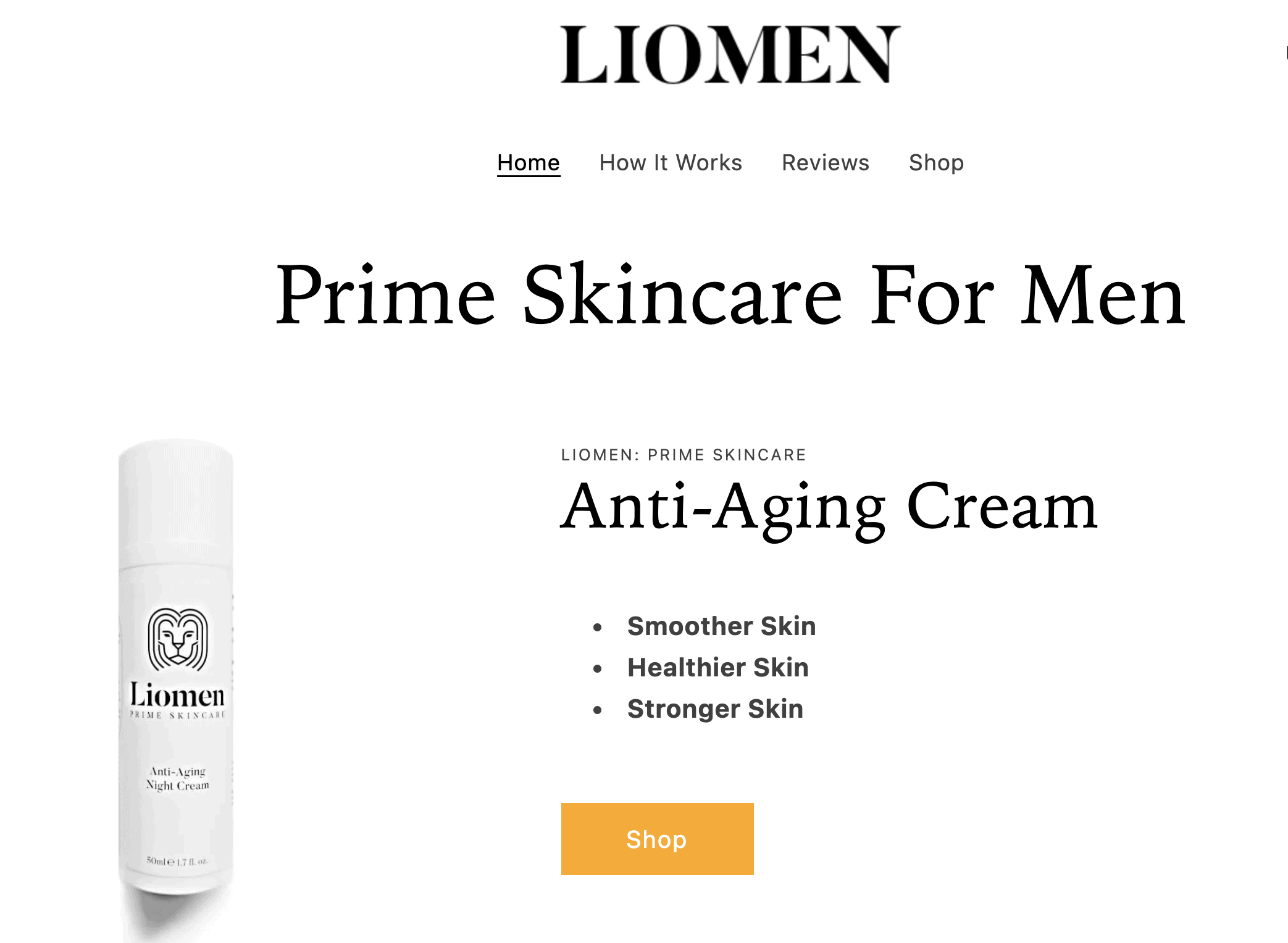
Liomen is a luxurious men’s skincare brand with a unique 3-step process. Their prime product is an anti-aging cream that can smoothen wrinkles, flatten fine lines, and erase dark spots on our faces.
When joining the Liomen skincare affiliate program, you can get paid up to 60% commission per sale. You can even receive $81 for every successful order for their most popular product bundle. The cookie duration lasts for 6 months, which means you can earn a commission within 180 days.
Liomen supports their partners with customized marketing tools, including unique images and copy.
|
4. SkinCeuticals
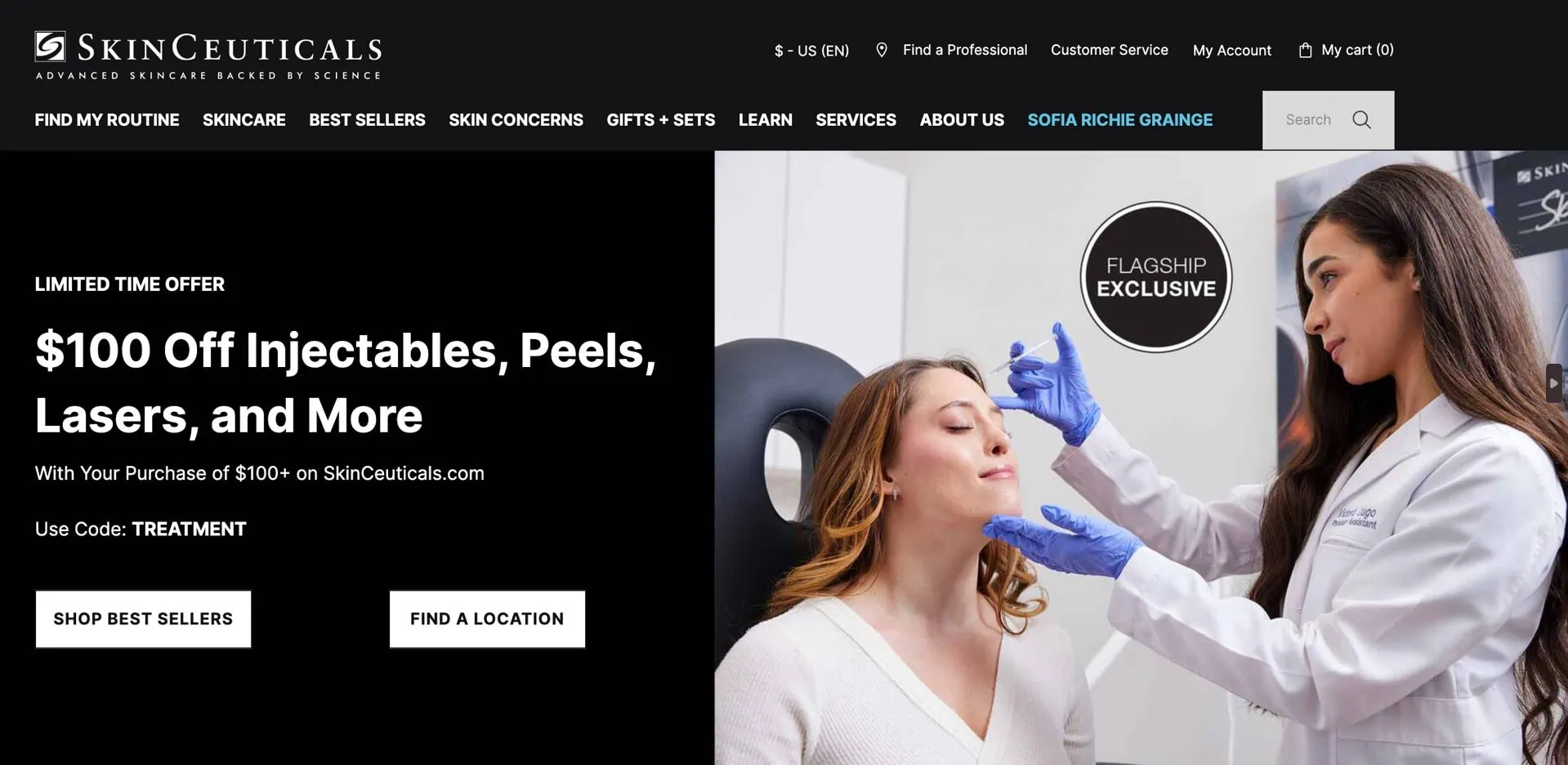
SkinCeuticals offers scientific skincare products that are user-friendly for every skin. Their best sellers include C E Ferulic, Phloretin CF, Hydrating B5, and more.
SkinCeuticals pays their affiliates 5% of the commission on all sales. The cookie remains active for 30 days to track your referrals.
If you become their partner, SkinCeuticals will offer your followers exclusive limited-time offers. They will also provide banners, advance notice of new products, and sales to support your promotion.
|
5. IMAGE Skincare
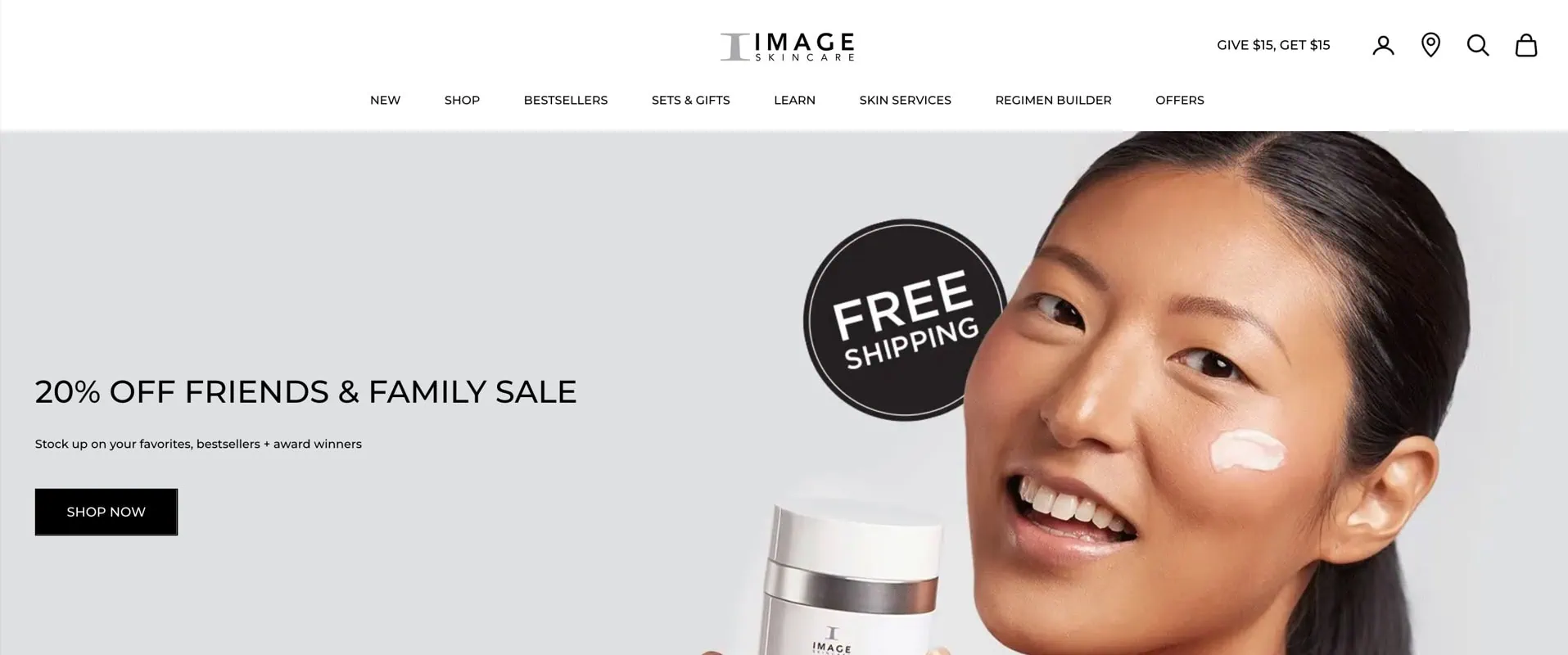
IMAGE Skincare is an award-winning skincare brand with clinical approval for their products. Additionally, they give advice on building a healthy skincare routine for customers through their skincare collections.
The IMAGE affiliate program is powered by ShareASale. They offer a 12% commission rate and a 45-day tracking period for affiliates.
To support your promotion, IMAGE has various monthly promotions, such as gifts and free shipping. They also have many banners and text links to improve your marketing efforts.
|
6. Jenette Skincare
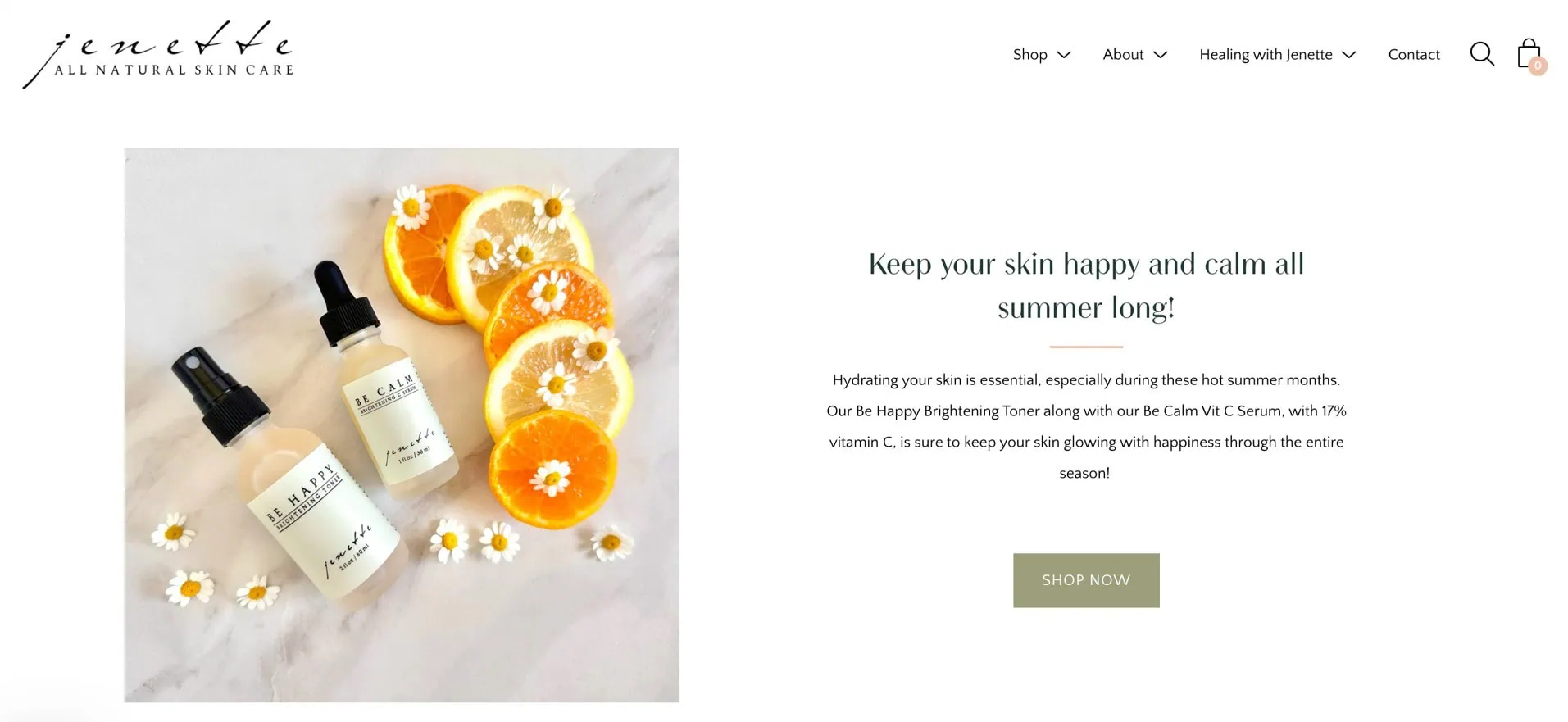
Jenette Skincare is famous for their handmade skincare products with 100% natural ingredients. Their natural skincare line includes serum, toner, soap, and other treatments.
Powered by ShareASale, Jenette Skincare offers commission rates for each site:
- 10% for shopping mall and product listing
- 10% for SEO and SEM
- 8% for coupon and deal
With an average order value of $130, affiliates can earn up to $13 per order. The tracking period is 30 days, which means customers’ purchases made within 30 days will be credited.
Jenette Skincare will create various marketing tools, such as coupons and offers for your followers. Once you’re signed up, you can access their links, logos and banners as well.
|
7. The Organic Skin Co
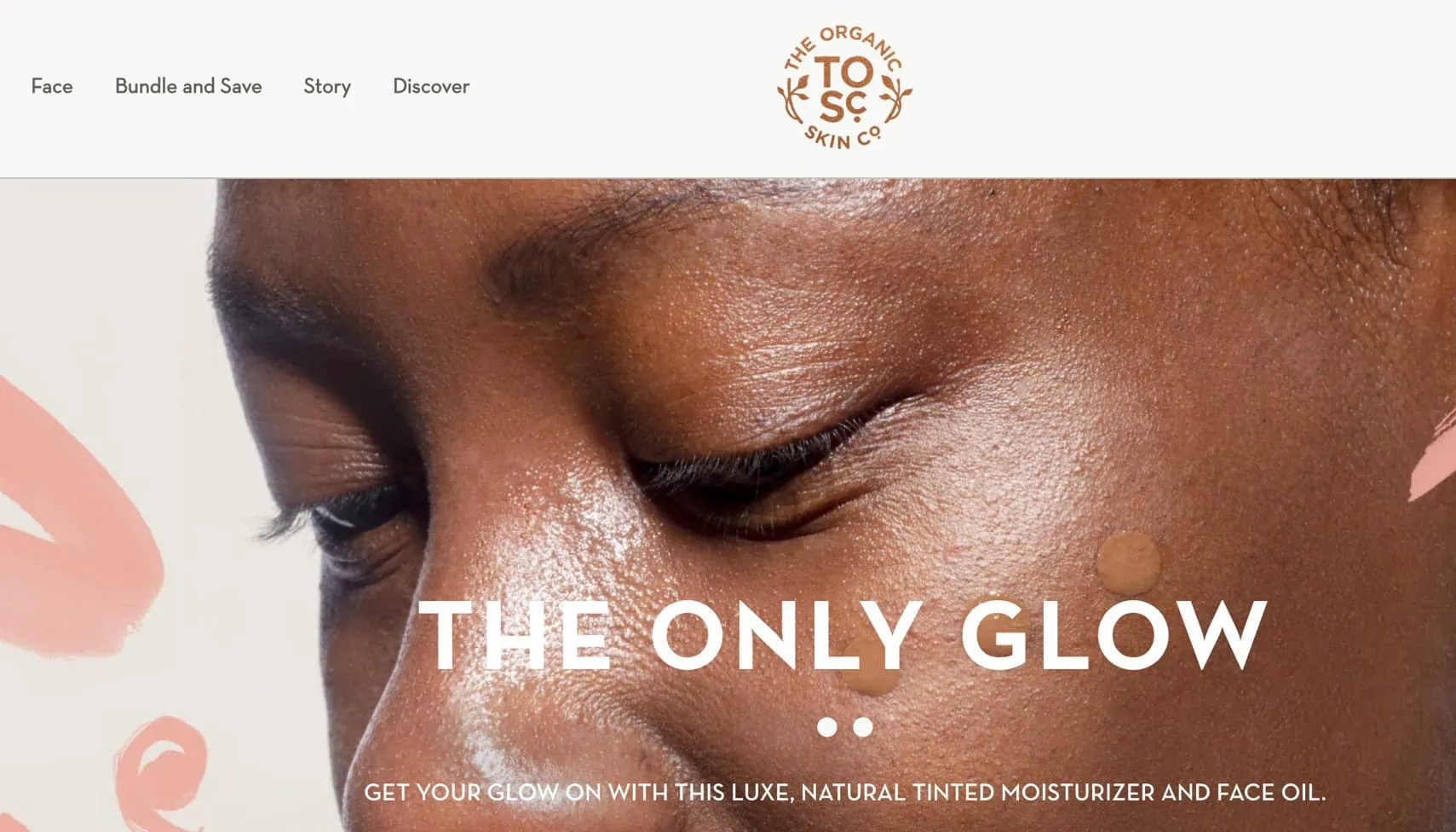
The Organic Skin Co delivers organic and certified vegan solutions for your skin. They produce hydrating and calming skincare products, such as moisturizers and serums.
The Organic Skin Co affiliate program is managed through Impact. They pay a 12% commission on all sales, including repeat purchases.
The cookie duration is 30 days. Therefore, it will track referrals for a period of 30 days before getting expire.
|
8. Apoterra Skincare
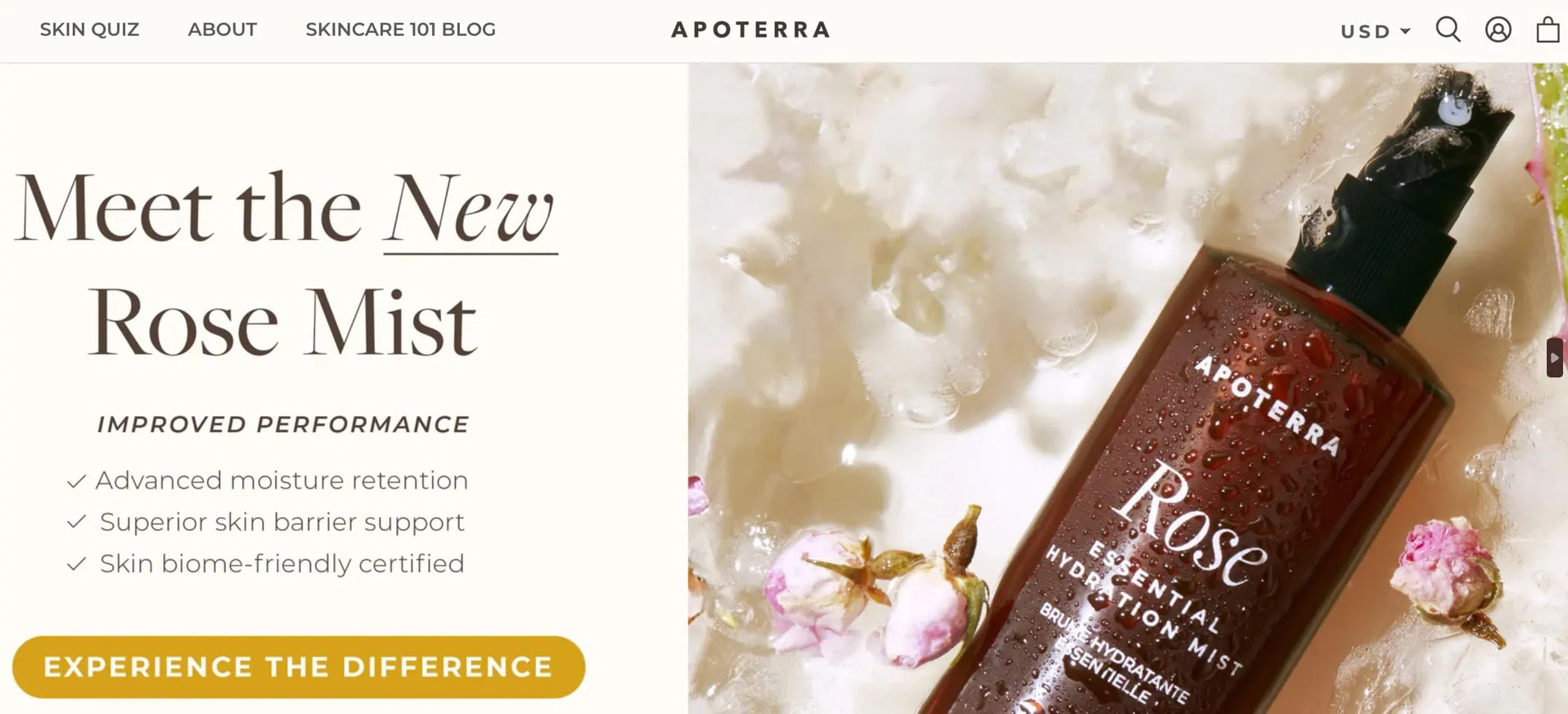
Apoterra Skincare has always worked on providing handcrafted small-batch skincare. They prioritize supporting their customers in each step of their skincare routine rather than selling products.
When becoming their partner, you will receive a 15% base commission on all orders. Payments will be made via PayPal on the 5th of each month. The cookie duration lasts for 30 days.
Apoterra Skincare gives every customer a unique 15% discount code on the first purchase through your link. As an Apoterra affiliate, you can access monthly campaigns and gifted products.
|
9. Manuka Doctor
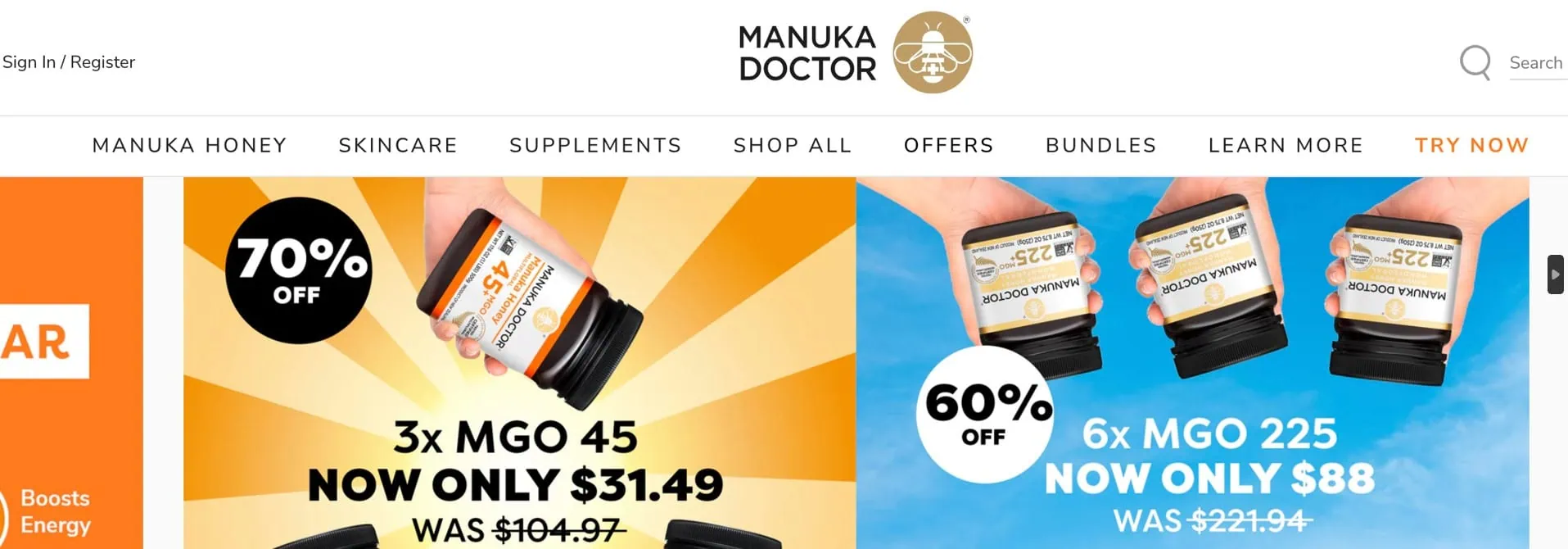
Manuka Doctor’s skincare products are 100% bee-friendly, using honey as the main ingredient. You’ll find items like face serum, blemish cream, facial cleanser, and face wash.
The Manuka Doctor affiliate program is managed through Awin. The commission rate is 8%, and the cookie has 30 days of tracking.
Manuka Doctor will issue their affiliates with annual discount codes for promotion. Affiliates will also have access to vouchers and offers throughout the year.
|
10. Bubble Skincare
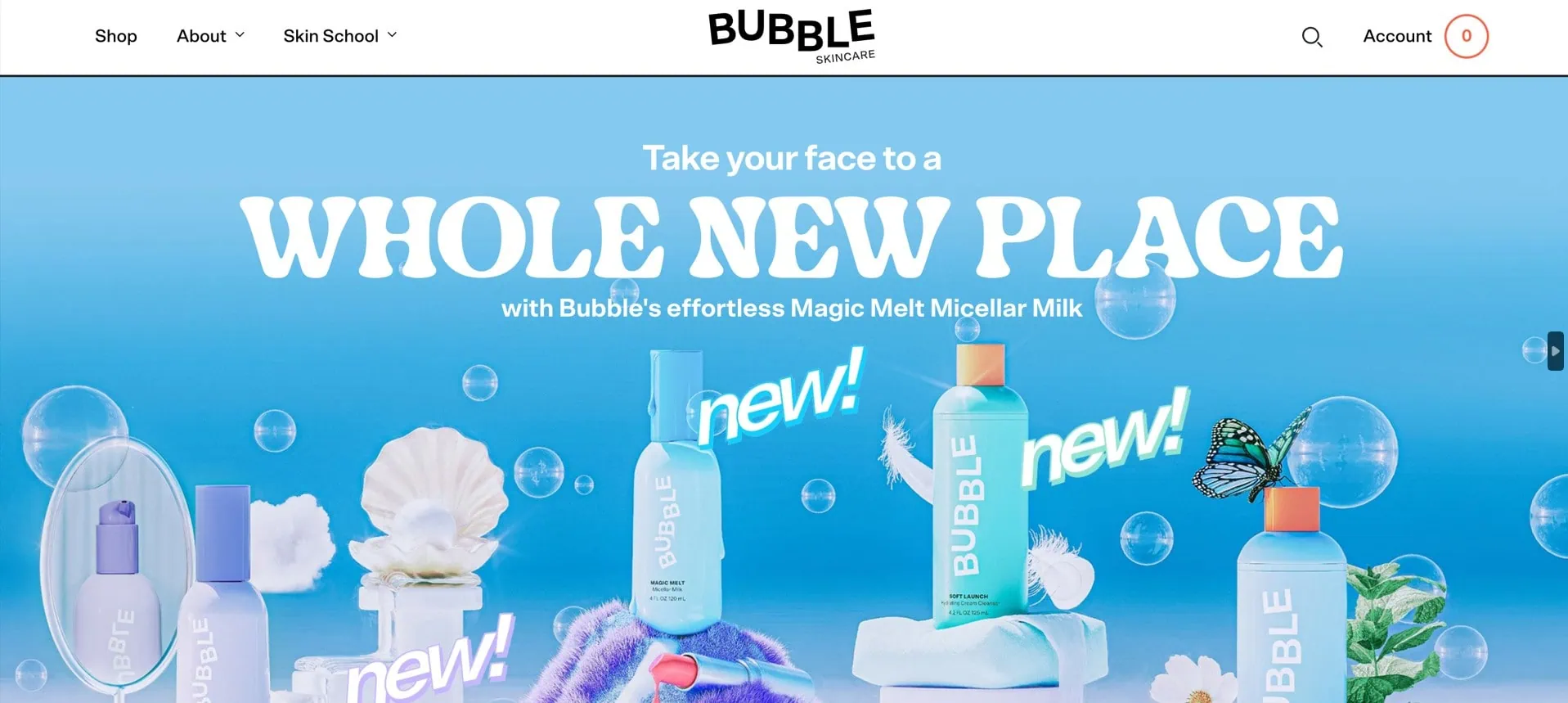
Bubble Skincare is an affordable skincare brand with effective and non-chemical products. Not only skincare products, but Bubble Skincare also focuses more on the mental healthcare of their customers.
The commission rate for their affiliates is 10% per sale. Bubble Skincare will pay affiliates their payouts on the 1st of each month via PayPal. The cookie duration is 30 days for the referrals to be counted.
When joining the Bubble skincare affiliate program, affiliates receive a discount code to promote products. The discount code is up to 10% for customers who buy the products through your affiliate link.
|
11. Kiehl’s
- Commission rate: 8%
- Cookie duration: 30 days
Kiehl’s is a pioneer in the skincare industry with their Dermatologist Solutions collection. Their products are known for their ultra-hydrating effect on the skin.
12. ZO skin health
- Commission rate: 10%
- Cookie duration: Not mentioned
Zo Skin Health’s products take a simple, systematic approach to maintaining the youth of our skin. The categories include advanced skincare routines and skin-protecting products.
13. Juice Beauty
- Commission rate: 6%
- Cookie duration: Not mentioned
Juice Beauty offers clinically verified skincare products with organic ingredients. Their offerings target anti-wrinkle, brightening, firming, microbiome glow, and more.
14. Circcell Skincare
- Commission rate: 15%
- Cookie duration: Not mentioned
Circcell Skincare provides skincare products for women over 40 to solve skin aging. Their products combine cutting-edge biotech and natural features, creating a non-harmful solution for the skin.
15. Dermstore
- Commission rate: 15%
- Cookie duration: 30 days
Dermstore is an authorized online retailer of authentic skincare and cosmetics products. The shop sells famous skincare brands, such as Obagi, SkinCeuticals, SkinMedica, and more.
16. SkinStore
- Commission rate: 15%
- Cookie duration: 30 days
You can discover over 16,000 products from 350 famous skincare brands at SkinStore. They are known as a trustworthy retailer for their competitive pricing, exclusive free gifts, and member rewards.
17. 100% Pure
- Commission rate: 15%
- Cookie duration: 30 days
100% Pure makes sure to offer the purest, healthiest products to help your skin from the inside out. Their collection of products is natural, cruelty-free, and free of artificial colors, fragrances.
18. Kate Somerville
- Commission rate: 6.4%
- Cookie duration: 30 days
Kate Somerville Skincare has worked for 20 years to provide advanced skin treatment and clinically proven skincare products. Most customers believe in their product’s ability to create visible results on their skin.
19. 111Skin
- Commission rate: 1-8%
- Cookie duration: 30 days
111Skin is a premium skincare brand from the UK that focuses on scar reduction. Most people use their products to reduce redness and build skin’s resilience.
20. eCosmetics
- Commission rate: 8%
- Cookie duration: 30 days
eCosmetics was created in 2019 to offer up to 50% savings for skincare products. From high-end brands to fresh new products, you can find any suitable product for your skin in their shop.
21. Think
- Commission rate: 15%
- Cookie duration: 30 days
Think’s products are the right choice if you are looking for a long-lasting sun cream with effective suncare. They create safe and clinical suncare formulas in every product without including chemical ingredients.
22. Erborian
- Commission rate: 13%
- Cookie duration: 60 days
Erborian has a different approach to your skin with easy-to-use, benefit-oriented products. They are inspired by plants, herbs, and fruits in Korean skincare routines to improve your skin.
23. WOW Skincare
- Commission rate: 1-10%
- Cookie duration: 30 days
WOW Skincare is a leading Indian brand in creating plant-powered solutions for the skin. The combination of natural remedies and modern science makes their products work on every skin type.
24. Perricone MD
- Commission rate: 2-10%
- Cookie duration: 30 days
Perricone MD creates three-tier skincare procedures for skin that are approved by clinical specialists. Their procedure consists of diet, essential dietary supplements, and potent topical skincare solutions.
25. Antipodes
- Commission rate: 6-8%
- Cookie duration: 30 days
Antipodes delivers new ingredients in skincare products by combining avocado oil, manuka honey, and rich kiwi. These natural ingredients are mainly used in Antipodes’ anti-aging, bioactive skincare.
26. Rodial
- Commission rate: 4-7%
- Cookie duration: 30 days
Rodial uses high-tech and innovative formulas to make high-performing products for protecting our skin. Their targeted products have instant and long-lasting effects and are trusted in more than 35 countries.
27. SKINFOOD
- Commission rate: 10%
- Cookie duration: 30 days
Rather than skin care products, SKINFOOD offers nutritive food for healthier skin. They use the best fresh fruits, vegetables, and botanical extracts that benefit our skin.
Why Should You Promote Skincare Products as an Affiliate?
The skincare market is huge and continues to grow every year.
People use these products every day, so they often buy them again and again. This steady demand makes it a great way for affiliates to earn a reliable income.
The Recurring Revenue Advantage: How Consumable Products Create Passive Income
Imagine selling a mattress or a high-end camera. You get a big commission check – but only once.
That customer won’t need a new mattress for another ten years. To keep making money, you have to find new customers every single day. It feels like running on a hamster wheel.
Unlike a camera, skincare products run out. A standard bottle of face serum lasts about two or three months.
When the bottle is empty, the customer needs more to keep their skin looking good. Their daily routine forces them to buy again.
Let’s look at how the numbers add up. Imagine you earn a 20% commission on a $60 face cream.
The first sale: The customer buys one jar. You earn $12.
The habit: The customer loves the results and reorders it 5 times over the next year.
The total: You have now earned $72 from that same single customer. 💰📈
Many skincare brands offer “lifetime commissions.” This means once you refer a customer, you get paid every time they shop there.
Superior Commission Economics: Why Skincare Pays 2-5× More Than Other Niches
Many beginners start by selling electronics, such as laptops or cameras. They see the high price tags and expect big checks.
However, they are often shocked when they see the actual commission. Most tech stores only pay a tiny 1% to 4%.
Skincare is different because of “Profit Margins.”
It is much cheaper to make a face cream than a computer. A luxury cream might sell for $100, but it only costs the brand $15 to make.
As the brand makes a high profit, they can afford to pay you much more. In the skincare world, commissions are typically 15% to 40%.
Let’s compare the two side-by-side. Suppose that you sell $100 worth of products in each category:
| Average Commission | 3% – 5% | 15% – 30%+ |
| Sale Amount | $100 (Headphones) | $100 (Skincare Bundle) |
| Your Earnings | $3.00 – $5.00 | $15.00 – $30.00 |
| Volume Needed | High (Hard to scale) | Moderate (Easier to scale) |
To earn $1,000 in commissions selling electronics at a 4% rate, you need to drive $25,000 worth of sales.
To earn that same $1,000 in skincare at a 20% rate, you only need to drive $5,000 in sales.
This means you need 5x less traffic to achieve the same income goal.
Massive Addressable Market Across Multiple Demographics
One of the biggest fears for new affiliates is running out of people to sell to. In niche hobbies like “underwater basket weaving,” you hit a ceiling quickly. In skincare, the ceiling is almost non-existent.
Recent data shows that 73% of US consumers use skincare products daily.
Skincare allows you to target highly specific problems that demand solutions. Here is where the money is moving right now:
Anti-Aging (45+)
This group has the most money to spend. They aren’t looking for cheap; they are looking for results.
Men’s Skincare
This is the current “gold rush.” While the women’s market is crowded, the men’s personal care market is exploding, growing at 15-20% annually.
Men are finally moving beyond “3-in-1” soaps and looking for specific solutions for razor burn and aging.
Problem-Specific Needs
From hormonal acne to dark spots, these users are desperate for a solution. They often ignore price tags if the product works.
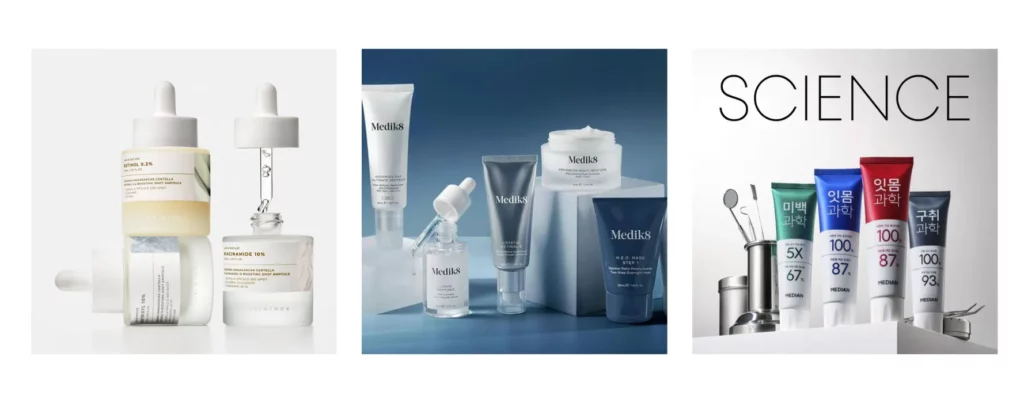
High Purchase Intent Traffic: Skincare Buyers Actively Research Before Buying
In skincare, the customer is usually already convinced they have a problem—they are just hunting for the right solution.
Skincare products, especially those over $30, are rarely impulse buys. Shoppers typically spend 1 to 3 weeks researching ingredients, reading reviews, and watching tutorials before buying.
This behavior creates a “high purchase intent” environment.
When a user searches on Google, they are usually in one of two modes: “Learning” or “Buying.” Skincare traffic leans heavily toward the latter.
- Low Intent (Informational): “What causes wrinkles?” (The user is just curious. Conversion rate: ~1-2%)
- High Intent (Commercial): “Best retinol serum for deep wrinkles” or “Sunday Riley Good Genes dupe.” (The user has their wallet out. Conversion rate: 5-10%)
As an affiliate, you position yourself at the very end of the buyer’s journey. You don’t need to create demand; you just need to guide it.
When you write a review for a specific acne cream, you catch the user at the exact moment of decision. You provide the “helpful curation” that gives them the confidence to click “Buy.”
As you solve a specific pain point, the trust factor is higher, and conversion rates are much better than in generic lifestyle niches.
What Are the Best Skincare Products to Promote by Product Category?
Not all skincare products are created equal. As an affiliate, you need to assess products not just by their popularity, but by their “Economic Profile.”
A $5 lip balm might sell fifty units a day but barely buy you a coffee in commissions. Conversely, a $400 LED mask pays well but converts rarely.
The “best” products to promote sit in the sweet spot: they solve a painful problem, cost enough to earn you a real commission, and run out every few months.
We have ranked the top categories based on earnings potential, conversion rates, and purchase frequency.
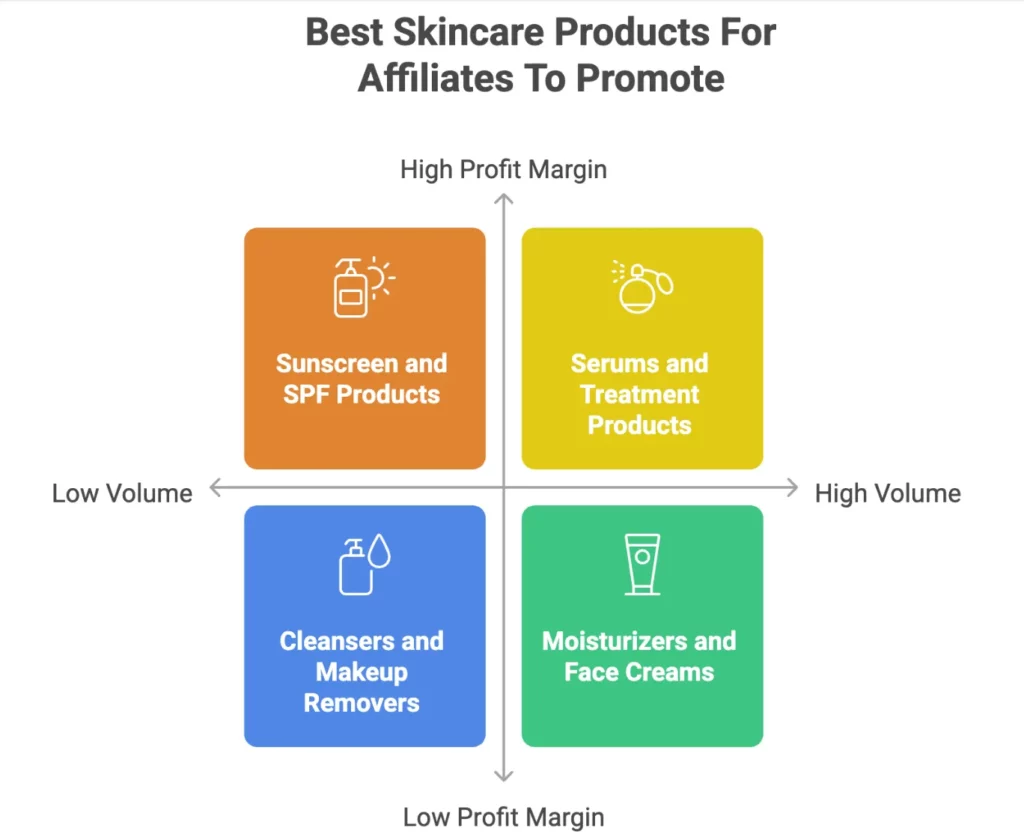
Serums and Treatment Products: The Highest-Earning Category
If you want to maximize your revenue, start here. Serums are the “heavy lifters” of the skincare world.
Whether it’s Vitamin C, Retinol, or Hyaluronic Acid, these are the products customers buy to fix specific problems like dark spots or wrinkles.
As serums contain potent ingredients, they cost the most per ounce.
The range is typically $45 to $95 for standard brands, climbing to $182+ for luxury brands like SkinCeuticals.
Selling a single bottle of a $160 serum at a 15% commission may earn you $24. You would need to sell 40 tubes of lip balm to match that.
If you decide to promote serum products, you should break your content down by specific concern.
The Budget Play: Promote brands like The Ordinary ($7–$18) to capture high volume.
The Investment Play: Promote clinical brands like Obagi or SkinCeuticals for older buyers willing to pay for results.
Moisturizers and Face Creams: High Volume With Moderate Margins
If serums are the “specialists,” moisturizers are the “general practitioners.” Almost everyone, regardless of age or gender, uses a moisturizer.
Moisturizers offer a massive range of prices, making them easy to sell to anyone.
The price range is $12 drugstore staples (CeraVe) to $265+ luxury creams (La Mer).
These products are used day and night. A standard jar typically empties every 2 to 3 months, creating a reliable stream of repeat orders.
While the commission on a $25 moisturizer is lower ($2–$4), the search volume is huge. “Best moisturizer for dry skin” is one of the most searched terms in the entire beauty industry.
Because the market is crowded, you’d better help your readers choose based on budget. The most effective format here is the high-low comparison:
- “Is the $300 La Mer Cream Worth It? Comparing it to Nivea ($8)”
- “Best Gel Moisturizers Under $30”
By covering both ends of the spectrum, you reach both luxury and budget buyers at once.
Cleansers and Makeup Removers: Highest Volume, Lower Per-Sale Margins
If serums are the “profit drivers,” cleansers are the “traffic drivers.” Every single person with a skincare routine—whether they spend $10 or $1,000 a month—needs a cleanser.
Cleansers are typically the cheapest item in a routine, between $12 and $28.
At a 15% commission rate, a $15 cleanser only nets you $2.25. You are not going to retire on cleanser sales alone.
So, why promote them? This is because they are the easiest way to get a new customer to click your link.
Cleansers run out faster than any other product (every 1 to 2 months). They also require very little research; a user might agonize over a serum for weeks, but they will buy a cleanser on impulse.
Sunscreen and SPF Products: Evergreen High-Performance Category
For years, sunscreen was a seasonal product sold only in summer. Today, it is a year-round essential.
It is the only skincare product that is a medical necessity (for cancer prevention) rather than just a cosmetic desire.
The market has shifted from sticky, white pastes to elegant lotions that people actually want to wear.
The sunscreen prices start at $10 for drugstore options and up to $68+ for high-end formulas. If used correctly, a bottle of sunscreen runs out every 2 to 3 months, guaranteeing repeat orders.
The big money in this niche is currently in Tinted SPFs. These products double as makeup (foundation), justifying higher price points ($40–$60).
As sunscreen is non-negotiable, search volume is consistent year-round. However, users are picky; they hate grease and “white cast” (the white residue left by mineral sunscreens).
You can consider some content ideas below to promote sunscreens better.
💡 The Problem/Solution Angle
Content like “Best Mineral Sunscreens That Won’t Leave a White Cast” or “Best SPFs That Sit Well Under Makeup” addresses the exact fears that stop people from buying.
💡 The Anti-Aging Angle
Remind your readers that UV rays cause 80% of skin aging. This frames sunscreen not just as safety, but as the ultimate anti-aging investment.
What Social Media Content Performs Best for Skincare Affiliate Products?
Many affiliates master the art of the blog post but freeze when they open TikTok or Instagram. The question is always the same: “How do I sell a serum in 15 seconds?”
The mistake most people make is trying to treat social media like a commercial. Viewers scroll past commercials. To stop the scroll and drive a commission, you need to create content that feels like a discovery, not an ad.
We have identified the top-performing formats specifically optimized for TikTok, Reels, and YouTube Shorts.
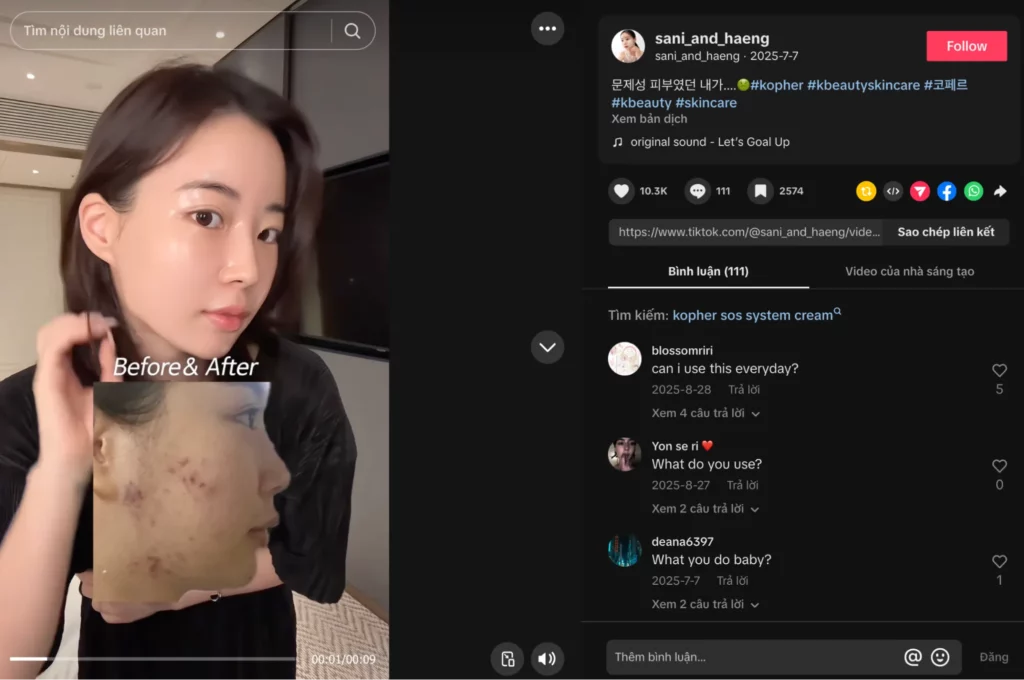
Before-and-After Transformations: The Highest-Converting Visual Format
In the skincare world, seeing is believing. A pretty photo of a bottle is nice, but it rarely makes people want to buy.
However, a side-by-side photo showing a face actually getting clearer is different. These “before-and-after” shots can double your sales by instantly erasing doubt.
But a great photo only works if your audience trusts it. To build that trust, you must be very careful with how you take your pictures.
Always use the same lighting and the same camera angle. If the “after” photo is simply brighter than the first one, people will think it is a trick.
Beyond taking clear photos, you also need to show the full journey.
Real skincare takes time to work. Never promise a “3-day miracle,” because people know that isn’t true. Instead, you should show your progress over one to three months.
While showing this timeline, don’t be afraid to talk about the “bad days.”
If your skin gets a little worse before it gets better, tell your audience. Sharing the struggle makes you look like a real person, not just a salesperson.
Once you have your honest story and clear photos ready, you need to share them where they fit best.
On Instagram: Use a “carousel” post. Put your best result on the first slide to grab attention. Then, let people swipe to see the “before” photo and your weekly diary. 📱
On TikTok and Reels: Use the green screen feature. Talk over your photos and point out exactly how your skin changed, such as less redness or a smoother feel. 🎥
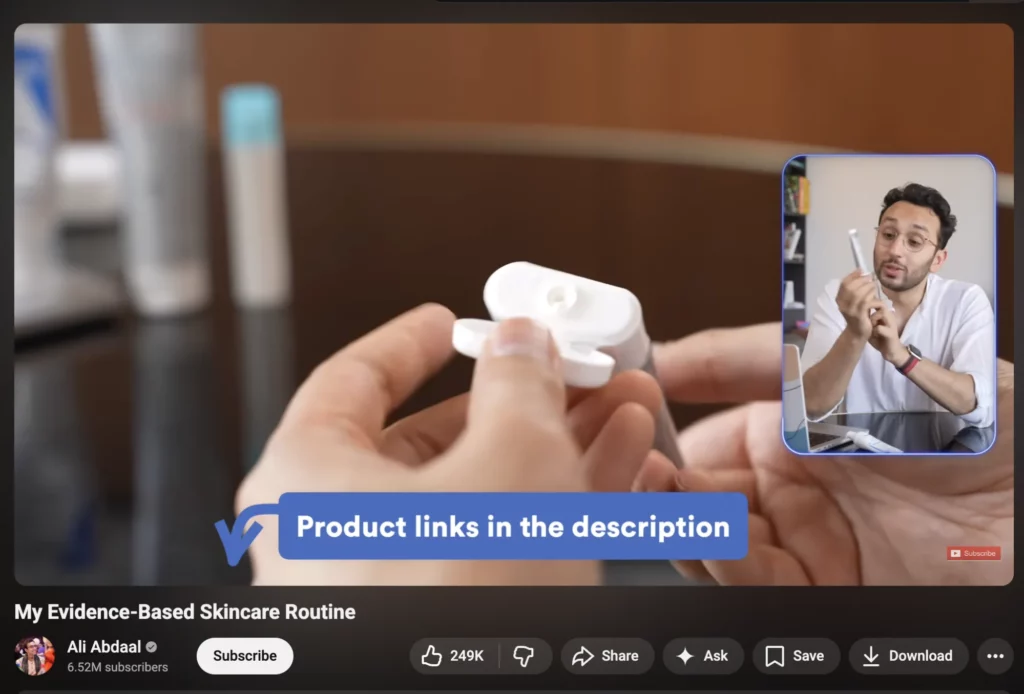
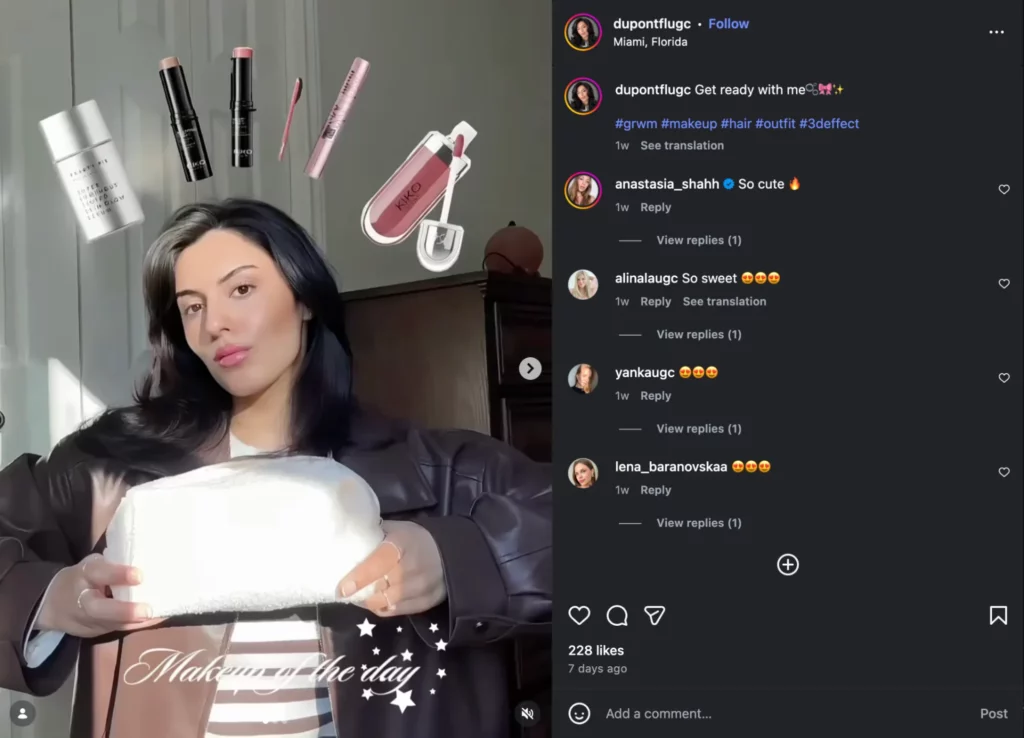
“Get Ready With Me” (GRWM) Routine Videos: Building Connection Through Application
If transformation photos answer “Does it work?”, GRWM videos answer “How do I use it?”
These videos are powerful because they build a personal connection. Instead of acting like a salesperson, you are just a friend chatting in your bathroom. This “real life” feel makes people trust your advice.
The ideal length will be 30–60 seconds for TikTok/Reels and 5–10 minutes for YouTube. You don’t even need a studio light. A messy bun and normal bathroom lighting often work better because they feel real.
While you are filming your routine, try to “educate” and “entertain” at the same time.
The “Why”: As you apply the product, explain why you chose it. “My skin feels tight today, so I’m using this heavy cream.”
The “How Much”: Visually show the amount of product on your finger. Beginners often use too much or too little.
Sensory Feedback: Describe the feeling. “It tingles for a second,” or “It feels like a cool drink of water.”
Once the video is filmed, you can add a few simple touches to make it more helpful.
For instance, you add the name of each product on the screen as you use it or a clear command: “Full routine with links is in my bio” or “Comment ‘ROUTINE’ and I’ll DM you the link.”
Product Comparison Carousels: Serving the Comparison-Shopping Phase
While a video is great for “vibes,” it is terrible for comparing specs. You can’t pause a TikTok and easily compare the price-per-ounce of three different serums.
This is where the Carousel (on Instagram) or Photo Mode (on TikTok) wins.
Data shows that carousels get 1.4x more reach than single-image posts. More importantly, they help the user at the “Comparison Shopping” phase – the moment right before they buy, when they are trying to decide between Brand A and Brand B.
To make a great comparison, you can use a simple “scorecard” style.
| Slide | Key Elements & Data Points | Objective |
| Slide 1: The Hook | Title: “The Ultimate Vitamin C Battle: $20 vs. $160.” | Grab immediate attention by pitting budget against luxury. |
| Slides 2–4: Contenders | Comparison Points: Price/Size, Actives (e.g., 15% Acid), Texture, and Ideal User. | Build trust through fair, consistent data for each product. |
| Final Slide: Verdict | Winners: Categorize by “Best Value,” “Best Splurge,” and “Best for Sensitive Skin.” | Drive the sale by providing a definitive recommendation. |
Beyond making sales, these posts are “save magnets.” Even if a reader isn’t ready to buy today, they will save your post to look at it later.
When many people save your content, the app realizes your post is helpful. It will then show your advice to thousands of new people for free.
Ingredient Education Content: Building Authority Through Expertise
Educational content is the foundation of your authority. By teaching your audience why an ingredient works, you promote the products effectively without being “salesy.”
There are some education content you can consider:
Myth-Busting: Stop the scroll by challenging common beliefs.
Example: “Stop putting pure lemon juice on your face (and here is the science why).”
Ingredient Deep Dives: Break down complex science into simple concepts.
Example: “Retinol is like a personal trainer for your skin cells – it makes them work faster.”
Mixing Guides: The most common question in skincare is “Can I mix X with Y?” A simple graphic showing “Do’s and Don’ts” (e.g., Don’t mix Retinol with Vitamin C) is highly shareable.
Empty Product Reviews: Demonstrating Long-Term Commitment and Authenticity
In an industry flooded with influencers unboxing new packages every day, the most radical thing you can do is show an empty bottle.
“Empties” reviews are the ultimate trust signal. They prove you didn’t just test a cream on your hand once; you committed to it for months. You lived with it. You finished it.
A standard review says, “I think this is good.” An empty bottle says, “I used this every single day until it was gone.”
This format allows you to discuss the details that only come from long-term use:
- How long did the bottle actually last? (Cost-per-use)
- Did the pump break halfway through?
- Did the results stop improving after month two?
You can turn this into a recurring series (e.g., “October Empties”). Gather 5-8 finished products and run through them with a simple “Repurchase or Pass?” framework.
For example, “This 30ml serum lasted me exactly 10 weeks of daily use.” Then, give your final verdict “I am absolutely repurchasing this,” OR “I’m switching to [Alternative Brand] because the smell bothered me eventually.”
No matter how you style your series, make sure to tailor the message to the platform you use. ✋
Instagram Stories / TikTok: Keep it casual. Hold up the empty bottle, tap it (ASMR style), and give a 10-second verdict. This raw vibe signals honesty.
YouTube / Blog: Go deep. This is where you calculate the “Cost Per Day” and provide a comprehensive final review.
FAQs
What is a skincare affiliate program?
A skincare affiliate program lets you earn commissions by promoting skincare products or brands using tracked affiliate links. You get paid when users purchase through your link.
How much can you earn from skincare affiliate programs?
Commissions typically range from 5% to 30% per sale, depending on the brand. Premium skincare brands and subscription products often offer higher payouts.
Are skincare affiliate programs beginner-friendly?
Yes. Skincare is a highly visual, evergreen niche with strong demand, making it ideal for beginners using blogs, TikTok, Instagram, or YouTube.
Do skincare affiliate programs offer recurring commissions?
Some do—especially brands with subscription boxes, auto-refill skincare, or membership models, allowing affiliates to earn recurring income.
Which traffic sources work best for skincare affiliates?
Top-performing channels include SEO blogs, TikTok reviews, Instagram Reels, Pinterest pins, and YouTube skincare routines.
Is skincare affiliate marketing saturated?
The niche is competitive, but sub-niches like acne care, anti-aging, sensitive skin, men’s skincare, vegan skincare, and dermatologist-approved products still offer strong opportunities.
Do skincare affiliate programs provide marketing materials?
Most programs offer banners, product images, discount codes, and deep links, though high-performing affiliates often create their own content.
How long are skincare affiliate cookie durations?
Cookie durations usually range from 7 to 30 days, with some premium brands offering longer tracking windows.
Can you promote skincare affiliate links on social media?
Yes. Most programs allow promotion on blogs, TikTok, Instagram, YouTube, and email, but paid ads may require approval.
Is it better to promote luxury or budget skincare products?
Both can work. Luxury skincare offers higher commissions per sale, while budget skincare converts faster and appeals to a wider audience.
Do skincare affiliate programs accept international affiliates?
Many global skincare brands accept affiliates worldwide, though shipping regions and payout methods may vary.
What content converts best for skincare affiliate marketing?
High-converting formats include before–after reviews, ingredient breakdowns, skincare routines, dermatologist-style explanations, and honest pros/cons comparisons.
Can you build passive income with skincare affiliate programs?
Yes. Evergreen SEO articles and viral social videos can generate long-term passive affiliate income with minimal ongoing maintenance.
Conclusion
In 2023, the US had around 2.5 million beauty influencers (Statista). That’s a massive number, representing a vast pool of potential affiliates for you to partner with. The key is to create an attractive skincare affiliate program to catch their attention.
UpPromote – the top recommended affiliate software will save you from hard work. Our basic to advanced features cater to businesses of all sizes. Explore our scalable pricing plans to find the best for your skincare store.

Ellie Tran, a seasoned SEO content writer with three years of experience in the eCommerce world. Being a part of the UpPromote team, Ellie wants to assist Shopify merchants in achieving success through useful content & actionable insights. Ellie's commitment to learning never stops; she's always eager to gain more knowledge about SEO and content marketing to create valuable content for users. When she's not working on content, Ellie enjoys baking and exploring new places.