


According to Statista, over 10% of the US population has practiced yoga to seek relaxation. Therefore, you’ll always have a broad audience to promote your yoga-related content and earn money.
We’ve made a list of 23 top yoga affiliate programs to help you consider more easily. Read through every program’s highlighted information to find the most suitable one.
Quick Comparison
| Program Name | Commission (%) | Cookie Duration (Days) | Niche Suitable |
|---|---|---|---|
| Lululemon | 5% | 30 days | Yoga, activewear, lifestyle apparel |
| Alo Yoga | Up to 16% | 30 days | Yoga, activewear, celebrity-endorsed fashion |
| Gaiam | 8% | 7 days | Yoga gear, yoga clothing, recovery tools |
| prAna | 5% | 4 days | Yoga, outdoor gear, sustainable fashion |
| Beyond Yoga | 5% | 30 days | Yoga apparel, comfort wear |
| Yoga Download | 12–30% | 90 days | Online yoga classes, digital products |
| Body by Yoga | Up to 15% (20% on Amazon) | 30 days | Online yoga courses, fitness |
| Barefoot Yoga Co | 10% | 60 days | Yoga mats, blocks, accessories |
| Mukha Yoga | 8% | 60 days | Yoga gear, meditation accessories |
| Everyday Yoga | 8–10% | 60 days | Yoga apparel, yoga gear & classes |
Affiliate Earnings Calculator
Estimate your affiliate income based on Traffic, CTR, AOV, and Commission rate. Drag the sliders below to explore different scenarios.
Estimated Results
These figures are for illustrative purposes – feel free to adjust them to fit your specific niche.
- Conversion Rate here is defined as the percentage of traffic that buys.
- Does not account for refunds, cancellations, or varying commission rates by product.
23 Best Yoga Affiliate Programs for Health & Fitness Bloggers
1. Lululemon
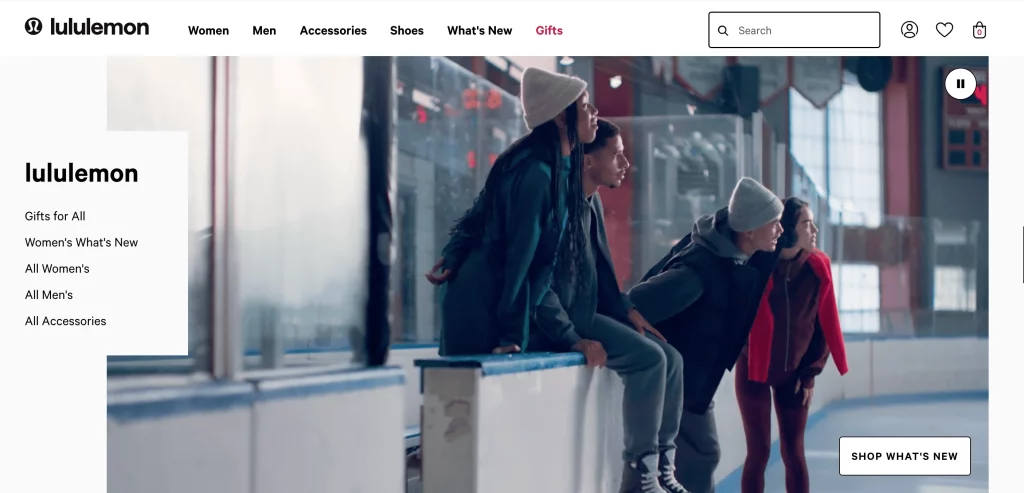
Lululemon produces activewear and lifestyle apparel, focusing mainly on yoga, running, and training. They use exclusive in-house fabrics like Luon, Nulu, and Luxtreme to enhance clothes’ durability.
Managed by Awin, the Lululemon affiliate program offers affiliates a 5% commission rate on every sale. You can easily earn $5 for each successful sale via your affiliate link with an average order value of $100.
The cookie duration lasts for 30 days from customers’ first click on your unique link. If they purchase within a month, you can get a credit.
|
2. Alo Yoga
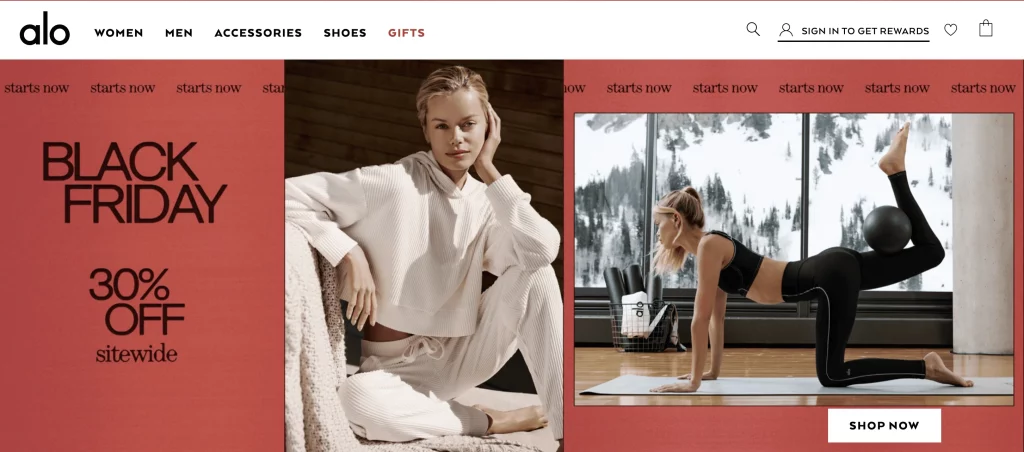
Alo Yoga is among the top choices for yoga clothing, with high-quality fabrics and diverse sizes. Their clothing collection is trusted by top celebrities like Taylor Swift, Gigi Hadid, Kendall Jenner, and more.
You can join the Alo Yoga affiliate program via FlexOffers and enjoy up to 16% commission rate per sale. You’ll get credit for purchases within 30 days from customers’ first click on your link.
After creating a FlexOffers account, you can apply for the Alo Yoga affiliate program. You should wait for 5 days to get your approval for their program.
|
3. Gaiam
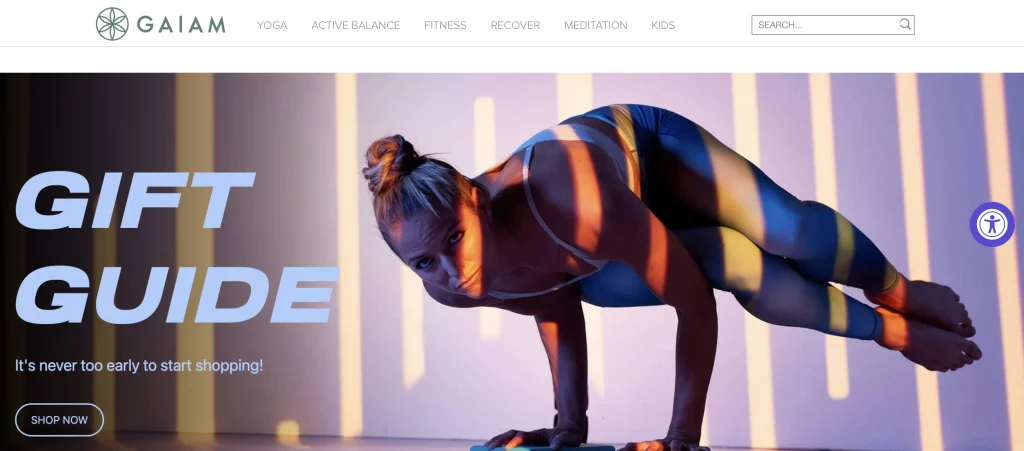
Gaiam develops a wide range of yoga clothes and gear with innovative features and unique designs. They also offer recovery products to help users relax contracted muscles and improve blood circulation.
After joining the Gaiam affiliate program, you can earn an 8% commission rate on each successful order. The cookie duration is 7 days, starting from the moment customers click on your affiliate link.
Gaiam offers various links and banners to help you create engaging and appealing content. Plus, you can ask their dedicated affiliate team for any tips and advice on boosting marketing efforts. You’ll also receive newsletters and announcements on offers and new launches from the brand.
|
4. prAna

prAna designs yoga and training activewear and accessories with a nature-inspired style. Their famous Stretch Zion pants can last up to 10 years, even in harsh outdoor terrains.
prAna runs their yoga affiliate program via CJ Affiliate, offering a 5% commission rate across all product sales. The cookie duration remains active for only 4 days, beginning from the first click of customers on your link.
You can choose to promote any suitable products for your target audience from their data feed Moreover, you’ll get support anytime from their affiliate manager team on boosting product sales.
|
5. Beyond Yoga
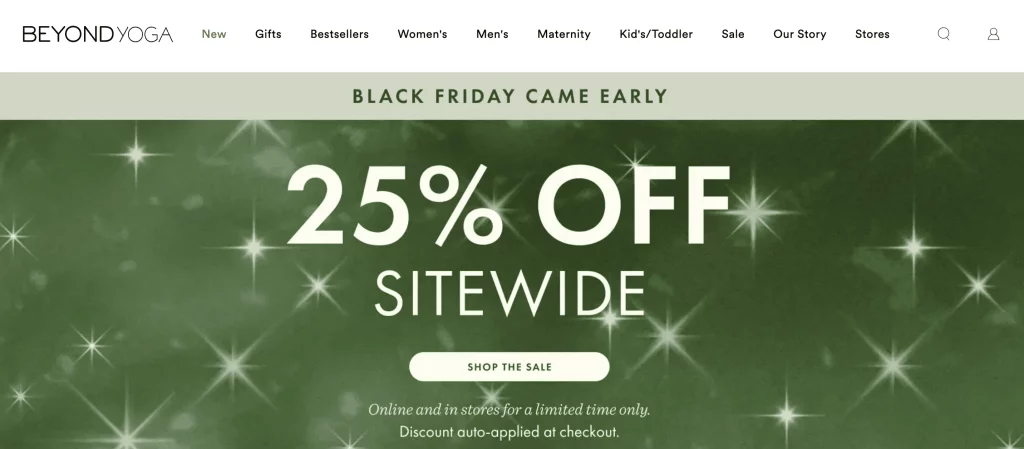
Beyond Yoga sells soft-focused yoga and athletics activewear for all body types. They design products with a minimalist style and comfortable materials to boost yogis’s performance.
Once you join their affiliate program, you’ll earn a 5% commission on all qualified sales made via your affiliate link. You can get your commission if customers purchase within 30 days of their first click.
The Beyond Yoga affiliate team provides support for you to enhance your performance. Plus, you should check their newsletters to stay updated with new promotions, upcoming sales, and affiliate contests.
|
6. Yoga Download
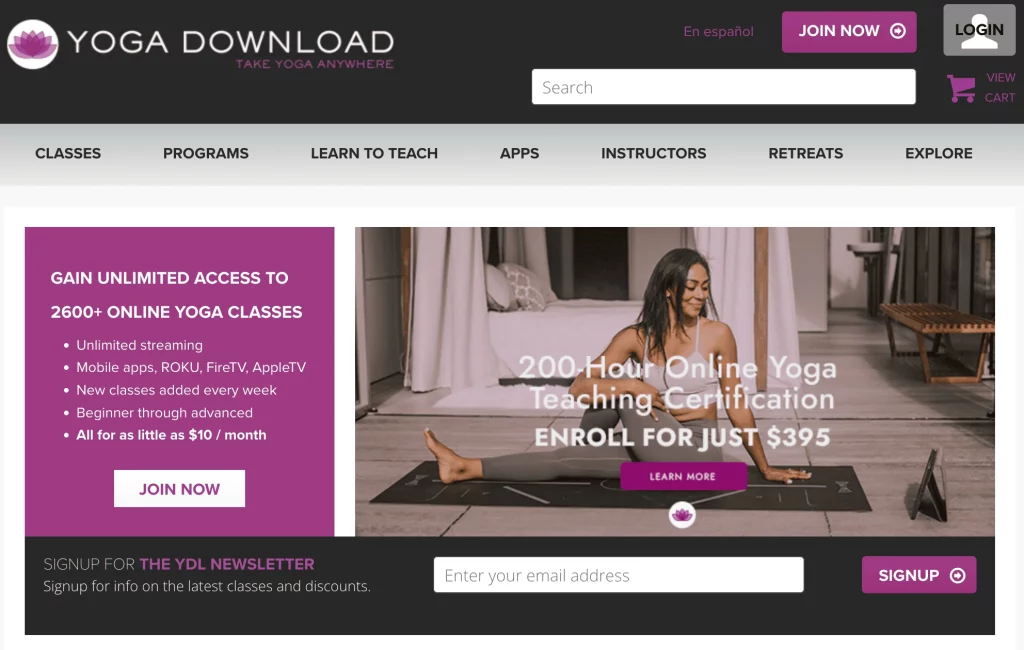
Yoga Download creates thousands of online yoga classes at all levels for beginners and professional yogis. Their courses are taught by world-class yoga teachers and high-profile instructors with years of experience.
Affiliates can earn a base 12% commission when joining the Yoga Download affiliate program. If you’re their partnered studio or teacher, you’ll earn up to a 30% commission per sale. You can also earn a $20 bonus for creating an introductory article to attract new partners.
The cookie duration lasts for 90 days from customers’ first click. Therefore, any purchases within those 3 months will be counted toward your account balance.
Yoga Download updates various effective marketing tools and high-converting landing pages for affiliates. If you have any problem using these tools, you can immediately ask their dedicated affiliate team for solutions and tips.
|
7. Body by Yoga
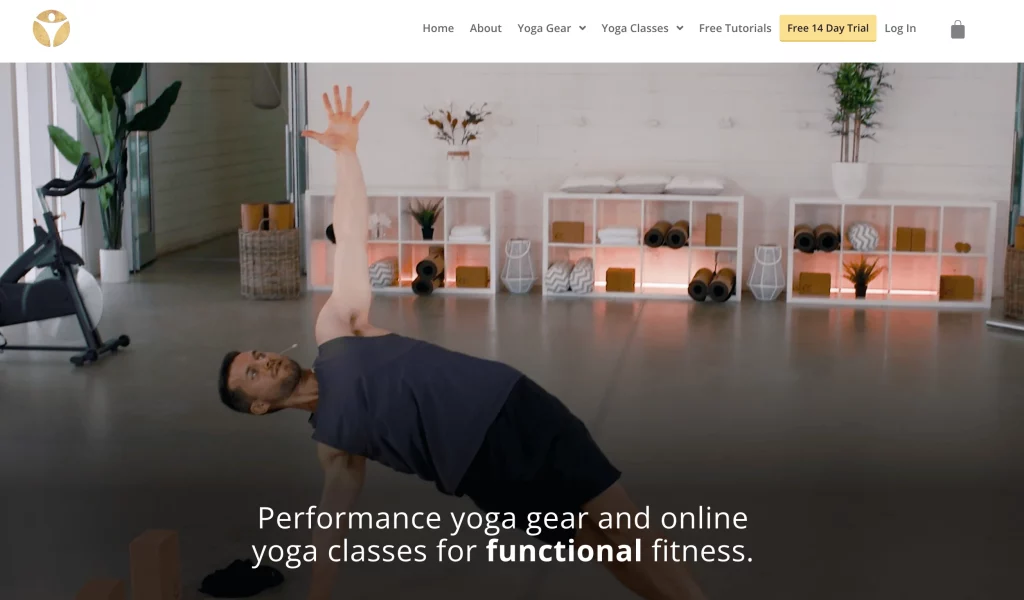
Body by Yoga creates different levels of online yoga classes for both beginners and advanced practitioners. They teach the unique “Slow Burn Power Yoga” method to help users boost physical strength and cure mental illnesses.
You can join their affiliate program for free and earn up to 15% commission rate on each sale. If you promote their products on Amazon, you can earn a 20% commission for a qualified order.
You’ll have 30 days from customers’ first click to benefit from their purchases. Body by Yoga pays affiliates via PayPal only, so you must provide your account when applying to receive earnings.
To drive more sales, you can use their exclusive 10% coupon code for all audiences. If you have any trouble, you can ask their team anytime for immediate support.
|
8. Barefoot Yoga Co
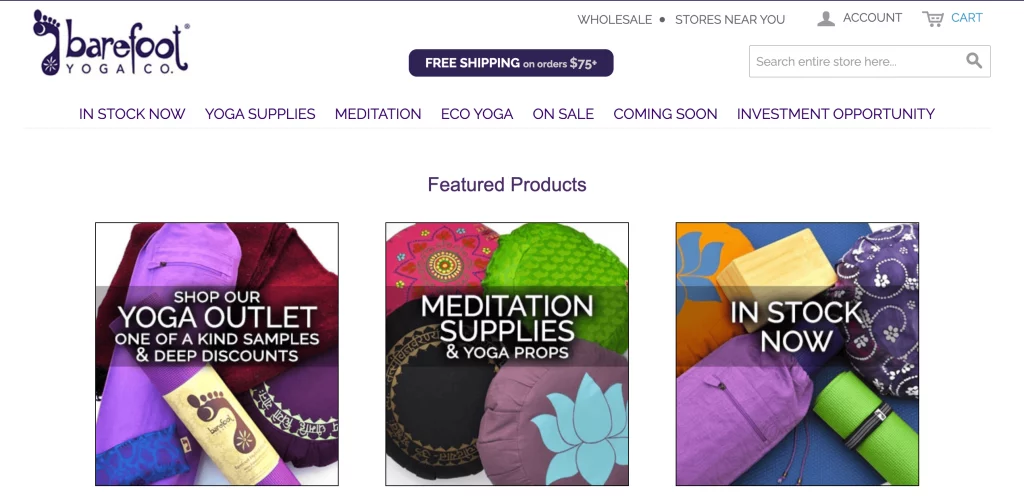
Barefoot Yoga Co was among the first to produce high-quality yoga mat bags and blocks. They design mats with alignment lines to help users position their bodies correctly.
Managed by ShareASale, the Barefoot Yoga Co affiliate program allows affiliates to earn a 10% commission on each product order. The cookie duration remains active for 30 days, counting once customers click on your link.
You can select suitable products for your audience from their extensive collections. You should also put their pre-made banner ads on websites or social media platforms to boost clicks and conversions.
|
9. Mukha Yoga
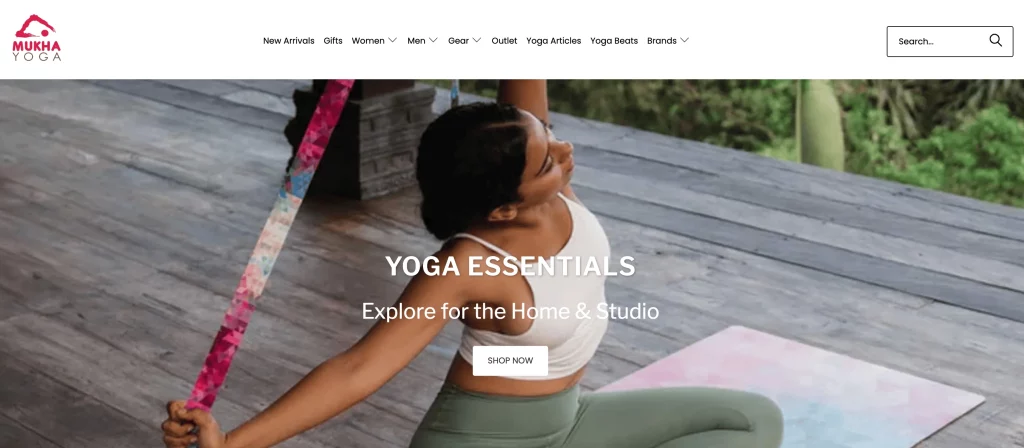 Mukha Yoga sells high-performance yoga gear from renowned brands like Manduka, Halfmoon, Glyder, and more. Additionally, they create yoga beats for meditation and fitness practice.
Their affiliate program provides an 8% commission rate on every successful sale made through your affiliate link. A 60-day cookie duration allows you to earn credit for purchases within this time only.
You can use any suitable banners and text links to boost your campaign’s efficiency. The brand will send newsletters with promotions and tips to help you increase sales.
|
10. Everyday Yoga
Everyday Yoga is a top yoga retailer with a large collection of gear from top brands such as Alo Yoga, Chirp, Gaiam, and more. Additionally, they offer various free online classes for all yoga styles and levels.
You can choose between receiving an 8% cash commission or a 10% store credit commission on each sale. If customers purchase via your link within a 60-day cookie duration, you’ll earn a commission.
Everyday Yoga only uses PayPal as their payment method to pay affiliates. You must reach a $15 payment threshold to withdraw your earnings.
You can place digital banners on your marketing channels to boost engagement. You’ll have early access to new promotions, affiliate contests, and sales tips to enhance your performance.
|
11. Manduka
- Commission rate: 10%
- Cookie duration: 14 days
Manduka ranks among the leading brands in the yoga niche for their renowned PRO yoga mats. They have expanded their product line with high-performance towels, bags, props, and apparel.
12. Electric Yoga
- Commission rate: 10%
- Cookie duration: 45 days
Electric Yoga produces stylish and on-trend yoga and fitness activewear with bright colors. The brand only uses natural rubber with high elasticity to enhance users’ comfort and performance.
13. Yoga Burn
- Commission rate: 30%
- Cookie duration: Not mentioned
Yoga Burn designs a fitness program combining yoga and bodyweight practices for women. In addition, the brand sells in-house nutritional products and accessories for yogis.
14. Jade Yoga
- Commission rate: 10%
- Cookie duration: Not mentioned
Jade Yoga makes high-quality yoga mats with natural rubber to enhance grip and comfort. Their yoga kits for beginners include a yoga mat, blocks, straps, and mat wash.
15. Uplift Active
- Commission rate: 10%
- Cookie duration: Not mentioned
Uplift Active provides aerial fitness products like aerial yoga hammocks, aerial silks, rigging accessories, and more. They also customize equipment to match users’ styles and yoga lessons.
16. Wai Lana Yoga
- Commission rate: 15%
- Cookie duration: Not mentioned
Wai Lana Yoga offers everything a yogi needs to start their yoga practice with various TV series. Besides educational resources, they also sell nutrition snacks and yoga clothes.
17. Mother Trucker Yoga
- Commission rate: 15%
- Cookie duration: Not mentioned
Mother Trucker Yoga creates exclusive yoga lessons for truck drivers to enhance their overall health and fitness. They use simple techniques to help drivers practice in less than 15 minutes per day.
18. Yoga Design Lab
- Commission rate: 10%
- Cookie duration: Not mentioned
Yoga Design Lab designs their yoga gear in an aesthetic style with colorful elements. Most of their products use eco-friendly materials to absorb sweat and enhance yogis’ comfort.
19. BookYogaRetreats
- Commission rate: 35-50%
- Cookie duration: Not mentioned
BookYogaRetreats is a leading booking platform for discovering yoga retreats globally. They offer different types of retreats based on users’ levels and favorite destinations.
20. CRZ YOGA
- Commission rate: 10%
- Cookie duration: Not mentioned
CRZ YOGA develops activewear for yogis with innovative fabrics and new construction techniques. Their gear enhances softness and comfort for practitioners to enhance their performance.
21. Loka Yoga School
- Commission rate: 40%
- Cookie duration: Not mentioned
Loka Yoga School is a top yoga training center for teachers and experts who want to achieve qualified teaching certifications. They combine traditional yoga teachings and modern techniques in both online and in-person classes.
22. Yoga Class Plan
- Commission rate: 15-20%
- Cookie duration: Not mentioned
Yoga Class Plan helps yoga teachers reach more students for their instruction classes. Teachers can build their lessons using customizable templates and pre-designed class plans.
23. Bulldog Online
- Commission rate: $2
- Cookie duration: Not mentioned
Bulldog Online’s diverse yoga lessons suit every yogi’s goal of building strength, losing weight, or seeking relaxation. The classes mainly use upbeat playlists to boost yogis’ energy while doing yoga alone.
What Factors Should Yoga Buyers Consider When Choosing Products?
Before you click “buy” on that floral-print mat or those high-tech leggings, pause. It’s easy to focus on looks.
But the difference between a prop that helps your practice and one that distracts you comes down to seven factors.
We are going to start with the two biggest ones: understanding the real cost of ownership and matching the gear to your specific style.
Price-Value Assessment Framework
Staring at a $120 foam roll feels absurd—until you calculate Cost Per Practice (CPP).
Like work boots, cheap pairs wear out fast while quality ones last years. Let’s run the numbers:
Budget Choice ($30 Gaiam PVC):
- Lifespan: 1-2 years with regular use
- 10-year cost: 5-6 replacements = $150-$180
Investment Choice ($120 Manduka PRO):
- Lifespan: 10+ years (often lifetime guaranteed)
- 10-year cost: $120
At three practices weekly, that premium mat costs roughly $1 monthly. The “cheap” option actually costs more through replacements and frustration.
🤓 Dabblers (1-2x/month): Budget options ($20-$40). Limited use doesn’t justify premium pricing.
😎 Regulars (1-2x/week): Mid-range ($50-$80). Hunt sales on premium brands or quality TPE mats.
🙏 Devotees (3+x/week): Premium ($100+). Lowest CPP, best joint protection and performance.
“Treat your mat like a musical instrument. You don’t need a Stradivarius for scales, but once you’re playing daily, cheap instruments fight you. Cheap mats do the same.” — Elena Brower, Yoga Teacher and Author
The sticker shock fades when you measure value per practice, not just upfront cost.
Use Case Specificity
The second factor is even more important than price: Alignment.
A $150 mat is a waste of money if it doesn’t fit your style of yoga. I learned this the hard way during a hot yoga class in mid-July.
I brought my thick, cushioned mat—perfect for gentle stretching—into a 105-degree room. Within ten minutes, I wasn’t doing yoga; I was playing slip-n-slide.
Different styles put very different demands on your gear. You cannot buy a “one-size-fits-all” product.
| Yoga Style | The Problem | Key Requirement | Top Examples |
| The Sweater (Hot/Vinyasa) | Sweat creates slippery, dangerous surfaces. | High grip via moisture-absorbing materials. | Liforme Mat or Jade Harmony. |
| The Restorer (Yin/Hatha) | Hard floors hurt joints during holds. | Thick cushioning, at least 6mm depth. | Manduka PRO or Manduka BEGIN. |
| The Nomad (Travel) | Heavy mats are difficult to transport. | Foldable, lightweight, and highly portable design. | Yogo Ultralight or Manduka SuperLite. |
Before you buy, ignore the “Best Seller” tag. Ask yourself: Where will this product actually live? In a heated room, a suitcase, or your living room floor?
Durability Projections
Once you pick the right type of mat, you need to ask the uncomfortable question: When will this thing die?
Marketing claims often use vague words like “long-lasting.” But in the studio, we measure lifespan in years and months, not adjectives.
Durability isn’t just about quality. It is about setting realistic expectations so you don’t feel cheated when wear and tear happens.
Here is the honest timeline you can expect based on tier and material:
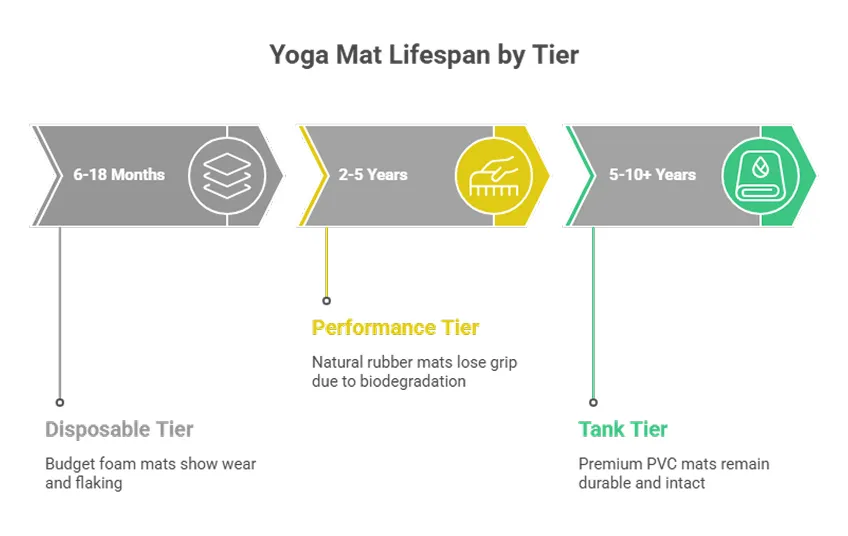
The “Tank” Tier (5-10+ Years):
Premium PVC mats like the Manduka PRO are nearly indestructible.
They don’t peel, flake, or fade. In fact, they often need a “break-in” period of a few months to reach their prime.
The “Performance” Tier (2-5 Years):
Natural rubber mats like Jade or Liforme offer incredible grip, but nature eventually wins.
Because they are eco-friendly and biodegradable, they will dry out and lose traction over time. This isn’t a defect; it’s the trade-off for the materials.
The “Disposable” Tier (6-18 Months):
Budget foam mats (Gaiam, Amazon Basics) work fine at first. But after a year of regular use, you will likely see “divots” where your hands and feet go.
You might even find little bits of plastic flaking off after a class.
This logic applies to apps, too. When buying a subscription (like Glo or Alo Moves), durability is about your consistency, not the software.
💎 The Value Zone: If you take 8-12 classes a month, a $20 subscription is a steal compared to studio drop-in rates ($20+ per class).
🗑️ The Waste Zone: If you only log in 1-2 times a month, that subscription is dead weight. You are better off paying per class or sticking to free YouTube channels like Yoga with Adriene.
Feature Differentiation Clarity
Durability keeps gear intact, but features determine if you’ll actually use it. Don’t compare feature lists blindly—match them to your specific problems.
Etched lines and circles guide hand/foot placement.
✅ Essential for: Home practitioners and beginners lacking in-studio adjustments. Visual cues self-correct your Down Dog symmetry.
❌ Skip if: You’re an advanced yogi with established muscle memory. Lines become visual clutter.
Save videos directly to your device.
✅ Essential for: Travelers dealing with spotty hotel Wi-Fi. Streaming 4K classes with poor connectivity means buffering through half your practice.
❌ Skip if: You practice at home with reliable high-speed internet. You’re paying for unused capability.
Extra padding protects joints.
✅ Essential for: Those with knee issues or practicing on hard floors.
❌ Skip if: You prefer ground feel for balance poses or practice on carpet.
Don’t ask “Does this have feature X?” Ask “Does X solve a problem I faced last week?”
Features only add value when they address your actual practice challenges, not hypothetical scenarios.
How Do I Choose the RIGHT Yoga Affiliate Programs for My Audience?
Now that you understand the products, we need to shift gears to your business strategy. It is tempting to sign up for every affiliate program with a “Join Now” button. Don’t do it.
A dashboard full of random links doesn’t make money; it just confuses your readers. To build a steady income, you need to pick a portfolio that fits your audience perfectly.
This section outlines the step-by-step framework to find your match.
Step 1: Audit Your Current Audience and Content Ecosystem
The biggest affiliate mistake? Promoting $3,000 Teacher Training courses to audiences still learning basic poses.
Check your analytics. Review your top 10 posts from the last six months:
- “How to do Crow Pose”: Audience wants skill-building
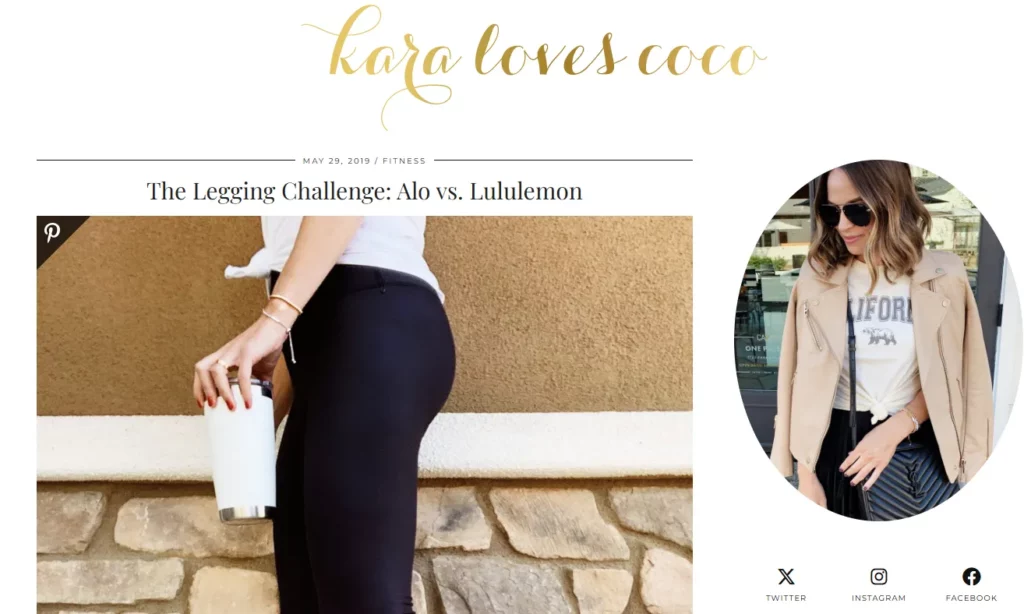
- “Lululemon vs. Alo reviews”: Audience ready to buy gear
- “Yoga Sutras explained”: Audience seeks philosophy and depth
This reveals what your audience trusts you for.
Equipment Seekers (new practitioners needing basics)
Promote: Amazon Associates, Manduka, Gaiam
Knowledge Learners (improving practice frequency/quality)
Promote: Monthly apps (Glo, Alo Moves), beginner courses
Aspiring Pros (serious students/future teachers)
Promote: Teacher Trainings (YTTs), anatomy courses, business coaching
Lifestyle Devotees (living yoga off the mat)
Promote: Supplements, essential oils, sustainable clothing
If 80% of your traffic is Equipment Seekers, remove Teacher Training banners. They’ll be ignored, wasting valuable space.
Match promotions to audience intent, not aspirational thinking. Data-driven alignment converts; mismatched promotions don’t.
Step 2: Map Programs to Your Content Strengths and Traffic Sources
Know your audience, then align your content style with compatible programs. Selling software in 15-second Stories or luxury leggings in text posts rarely works.
| Platform | Main Strength | Best Programs | Why It Works |
| YouTube Tutorials | Visual demonstration of movement and gear. | Physical goods, mats, and apparel. | Shows tangible performance and product value. |
| Long-Form Blogs | Deep research and detailed comparisons. | Apps and high-ticket digital courses. | Answers complex questions and builds trust. |
| Instagram / TikTok | Visual inspiration and aesthetic appeal. | Apparel and trendy lifestyle brands. | Encourages impulse buys through aesthetics. |
For example:
Sarah (Blogger): Writes SEO articles like “Best Eco-Friendly Mats.” Use Amazon Associates or Jade Yoga direct—readers have buying intent.
Mike (Teacher): Email list of trusted students. Promote online memberships or retreats—personal connection drives deeper purchases.
“Never chase high commission rates alone. If the landing page doesn’t convert or the product mismatches your content, 50% of zero is still zero.”
Play to your platform’s strengths to maximize conversions.
Step 3: Evaluate Commission Structures Against Your Traffic Reality
You’ve identified your audience and content style. Now comes reality: percentages don’t pay bills—dollars do. Many new affiliates get excited about a 20% commission but ignore product prices and traffic numbers. Before joining any program, run a simple calculation.
🗳️ The “Napkin Math” Formula
Use this to estimate what a program is actually worth:
(Monthly Traffic × Click-Through Rate × Conversion Rate) × Average Commission = Monthly Earnings
Let’s look at a realistic scenario for a smaller blog with 1,000 monthly visitors, a 5% click-through rate (50 clicks), a 2% conversion rate (1 sale), and a $10 commission per yoga mat.
The result? You make $10 per month.
🛣️ Two Paths to $500/Month
This math reveals completely different strategies.
The “High Volume” path means selling $50 yoga mats at 10% commission ($5 per sale).
You need 100 sales monthly, which requires massive traffic—10,000+ visitors. This works for SEO bloggers and YouTubers with viral reach.
The “High Trust” path means selling a $2,000 Teacher Training course at 5% commission ($100 per sale).
You need only 5 sales monthly, but this requires deep trust, not high traffic. This works for email list owners and community leaders.
💡 The Critical Insight
Small audience under 1,000 followers? Stop promoting $20 socks—you’ll never sell enough to justify your time.
Focus instead on high-ticket education or recurring subscriptions where trust converts better than volume. Run this calculation for every program before you commit.
Step 4: Vet Program Reputation, Payment Terms, and Support Quality
boutique yoga brand, only to discover their $500 payment threshold meant I waited three months for a check that never arrived.
💸 Payout Terms
Look for “Net-30” or “Net-60” (payment 30-60 days after sale). Avoid “Net-90” or longer—companies can collapse in 90 days.
Check the threshold: programs requiring $100+ minimum payouts trap your earnings. New affiliates should seek $20-$50 thresholds to access money faster.
🕒 Cookie Duration
Seek 30-day cookies or longer, giving readers time to decide. Avoid 24-hour cookies (except Amazon) for high-ticket items like retreats—nobody buys $2,000 experiences in 24 hours.
You’ll do the work but lose the commission.
⛔ Program Restrictions
Read the Terms of Service carefully.
Many programs ban affiliates instantly for bidding on brand names in Google Ads, putting affiliate links in emails without approval (Amazon forbids this), or using coupon/discount sites.
📝 The “Test Drive” Tactic
Before promoting, email the Affiliate Manager with a simple question like “Do you have high-res images I can use?”
If they reply within 24 hours, that’s a good sign—they want you to succeed. If they never reply, run. Non-responsive managers won’t help when commissions go missing.
Proven Strategies to Actually Make Money with Yoga Affiliate Marketing
You have picked your niche and signed up for the right programs. Now comes the hard part: getting people to click.
The uncomfortable truth is that most affiliates fail here. They paste a link into a generic post and wait for money that never comes.
To generate real income, you need to stop acting like a billboard and start acting like a trusted advisor.
Here are the battle-tested strategies to promote products without looking like a spammer.
Strategy 1: Create In-Depth, SEO-Optimized Comparison and Review Content
The most profitable content on the internet is the “Best X for Y” guide.
Why? Because the reader isn’t browsing for fun. They are holding their credit card and trying to decide between Product A and Product B. Your job is to be the final nudge.
But a 300-word summary isn’t enough. To rank in Google and earn trust, you need deep, “hands-on” reviews.

Don’t reinvent the wheel. Use this structure for your reviews (e.g., “Alo Moves vs. Glo: Which is Right for You?”):
The “Lab” Intro: Explain exactly how you tested the products. (e.g., “I used both apps for 30 days, taking 15 classes each…”)
The Honest Negatives: Start with a flaw. It sounds weird, but admitting a product isn’t perfect makes your praise believable.
The Comparison Table: A side-by-side view of Price, Features, and Best For. This helps scanners decide instantly.
The “Who It’s For” Verdict: Instead of saying “Buy this,” say “Buy Product A if you want structure; buy Product B if you want variety.”
You aren’t trying to rank for “Yoga Mat” (too competitive). You want to rank for specific searches like “Best yoga mat for hot yoga 2025.”
Traffic Reality: These articles might only get 500 clicks a month.
Income Reality: Because these readers are ready to buy, conversion rates often hit 2-5%. That is 10x higher than a general post.
Strategy 2: Leverage Email Marketing for High-Intent Affiliate Promotions
SEO drives traffic, but email builds trust. Your list is the only asset you truly own—algorithms change, but emails hit inboxes directly.
Email audiences convert 5-10x higher than cold blog traffic. A list of 5,000 engaged subscribers often out-earns blogs with 50,000 monthly views.
Treat that inbox with respect.
Don’t create a coupon book. For every sales email, send four pure-value emails (tips, sequences, philosophy) with zero pitch. This maintains trust while monetizing strategically.
Build stories around products, especially during sales events.
Email 1 highlights the problem: “Why my home practice felt stale last month.”
Email 2 introduces the solution naturally: “The one change I made to get back on the mat.”
Email 3 delivers the pitch with honesty: “Alo Moves is 40% off this week—here’s my honest take on if it’s worth it,” including pros and cons.
Remember the Mismatch Trap? Use email tags to filter your list. Send Teacher Training offers only to your “Aspiring Pro” segment. Send Beginner Mat offers only to “Newbies.”
When you send relevant recommendations, readers thank you instead of unsubscribing. Relevance converts; spam destroys trust.
Strategy 3: Use Social Proof and Personal Story to Drive Instagram/Social Conversions
While email builds trust quietly, social media is about visible authenticity.
On Instagram or TikTok, your followers don’t want a commercial.
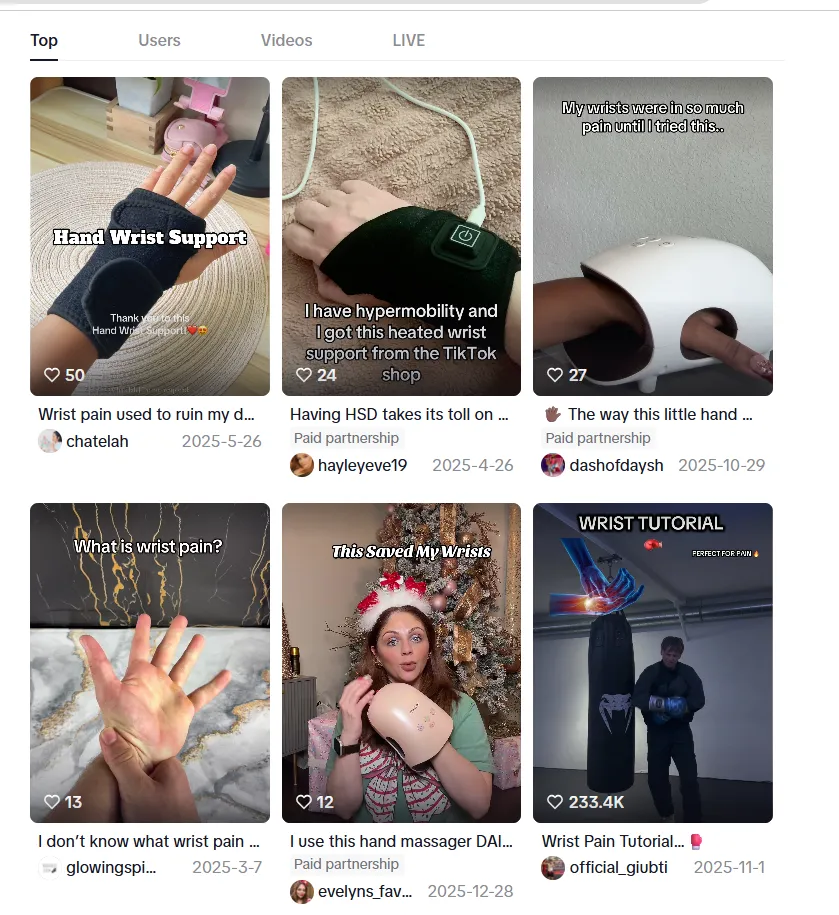
They want to see your practice. They want to know that the mat you recommend is the actual mat you sweat on every Tuesday morning.
Forget the perfectly lit studio photos. The content that converts best is raw and real.
Show the Struggle: Post a photo of your mat covered in sweat after a tough session. Caption it: “This grip saved me today.”
Show the Journey: Share a story about a problem you solved. “I struggled with wrist pain for two years until I switched to this prop. Here is why it worked for me.”
Posts that tie a product to a personal transformation story (e.g., “This block helped me finally nail Crow Pose”) generate 3-5x more clicks than a standard product photo.
The “Save-Worthy” Carousel: Create a slide-deck post comparing 3 products (e.g., “Lululemon vs. Alo vs. Vuori Leggings”). People save these for later, which boosts your reach.
The “Urgency” Story: Use your Stories for time-sensitive deals. If a brand has a 24-hour sale, hop on camera and explain why you love them. Use the Link Sticker clearly.
Never promote a product you haven’t used for at least 30 days. Your audience can smell a “cash grab” from a mile away. One bad recommendation can destroy years of trust.
Strategy 4: Create Video Tutorials and Product Demonstrations on YouTube
If a picture is worth a thousand words, a video is worth a thousand clicks.
YouTube is the second-largest search engine in the world. Unlike Instagram, where posts vanish in 24 hours, a YouTube video is an evergreen asset.
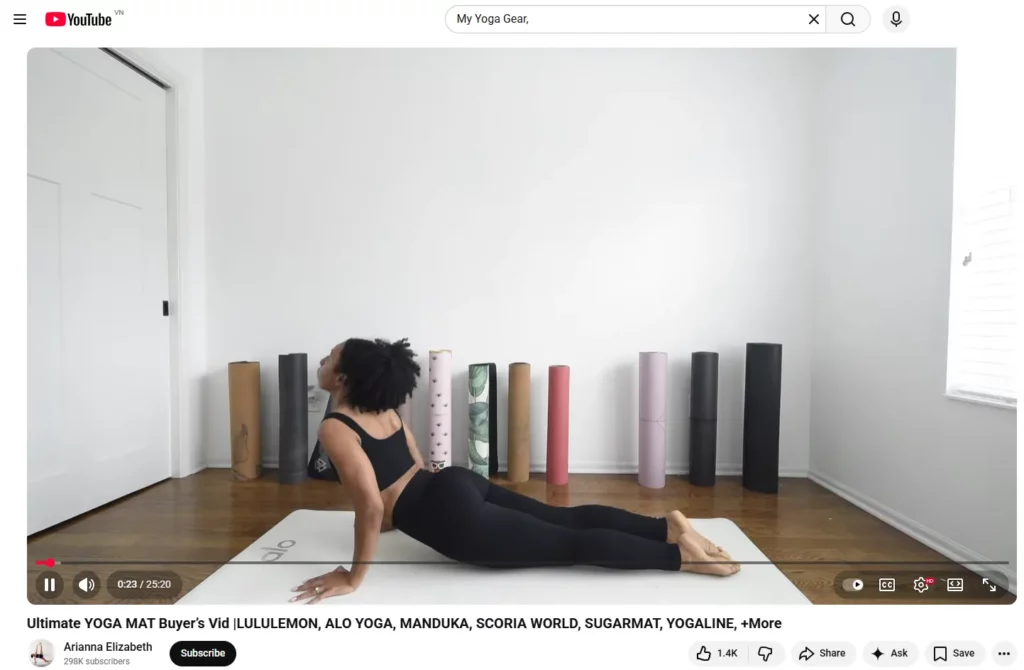
One well-ranking review can generate $50-$300/month passively for 2-3 years with zero maintenance.
In yoga, visual proof is everything.
Don’t just talk about the mat.
Do a Vinyasa flow on it.
Let the viewer hear the squeak of the grip. Zoom in on the wear and tear after six months.
Don’t just describe the app.
Screen-share the interface. Walk them through the search filters. Show them exactly what they get for their money.
To get views, you need to think like a search engine:
- Title for Intent: Use specific keywords. Instead of “My Yoga Gear,” try “Manduka ProLite Review | 6 Month Test for Hot Yoga.”
- Timestamps are Mandatory: Add chapters (e.g., 0:00 Intro, 2:30 Grip Test, 5:00 Price). This helps Google index your video’s key moments.
- The “Clickable” Thumbnail: Use high-contrast text and a visual “hook,” like a split-screen comparison or a close-up of a product flaw.
By combining the trust of email, the authenticity of social, and the search power of YouTube, you build a system where clicks happen naturally.
Conclusion
We hope that this guide has provided everything you need to know about building an affiliate program. It’s your right time to start your affiliate marketing journey to scale your Shopify yoga brand success.
The key to a successful affiliate program is to build strong relationships with affiliates and manage real-time data carefully.
With the help of UpPromote, you can handle these tasks seamlessly and effectively.
Let’s explore our pricing plans to see which plan best suits your program!

Ellie Tran, a seasoned SEO content writer with three years of experience in the eCommerce world. Being a part of the UpPromote team, Ellie wants to assist Shopify merchants in achieving success through useful content & actionable insights. Ellie's commitment to learning never stops; she's always eager to gain more knowledge about SEO and content marketing to create valuable content for users. When she's not working on content, Ellie enjoys baking and exploring new places.