

Are you looking to monetize your website by promoting restaurant-related services and products? Check out our list of the 22 top restaurant affiliate programs, offering everything from restaurant reservations and meal delivery services to cookware and dining accessories.
The global food service industry is booming, and more people than ever are exploring new dining experiences, both in-person and online. This creates a great opportunity for you to tap into a profitable market and earn commissions by promoting top brands and services.
We’ve rounded up the 22 best restaurant affiliate programs, complete with commission details, cookie durations, and other key benefits. Let’s dive in and discover the perfect addresses to share with your audience today!
Quick Comparison
| Program Name | Commission (%) | Cookie Duration (Days) | Niche Suitable | Affiliate’s Rating* |
|---|---|---|---|---|
| Restaurant Rockstars | 50% | 180 days | Restaurant owners, F&B training, restaurant startups | ⭐⭐⭐⭐⭐ |
| Tundra Restaurant Supply | 5% | 30 days | Restaurant equipment, chefs, kitchen supply blogs | ⭐⭐⭐⭐ |
| Snake River Farms | 10% | 30 days | Food bloggers, luxury meat reviewers, gourmet cooking | ⭐⭐⭐⭐ |
| Culinary Depot | 2% | 30 days | Commercial kitchen equipment, restaurant operators | ⭐⭐⭐ |
| 360 Training Restaurant | 15% | 60 days | Restaurant training, food safety courses, certification sites | ⭐⭐⭐⭐ |
| Olma Caviar | 3% | 7 days | Gourmet food, luxury cuisine, high-end ingredient blogs | ⭐⭐⭐ |
| ZWILLING | 6% | 14 days | Kitchen tools, cooking blogs, chef influencers | ⭐⭐⭐⭐ |
| Eating Europe | 6% | 30 days | Travel bloggers, food tourism, restaurant guide creators | ⭐⭐⭐⭐ |
| Station Casinos | 5% | 30 days | Casino + hotel dining, travel, entertainment content | ⭐⭐⭐ |
| Caesars Palace | 5% | 1 day | Luxury hotel & restaurant reviews, casino tourism | ⭐⭐⭐ |
Best Restaurant Affiliate Programs: 22 Best Options in 2025
1. Restaurant Rockstars
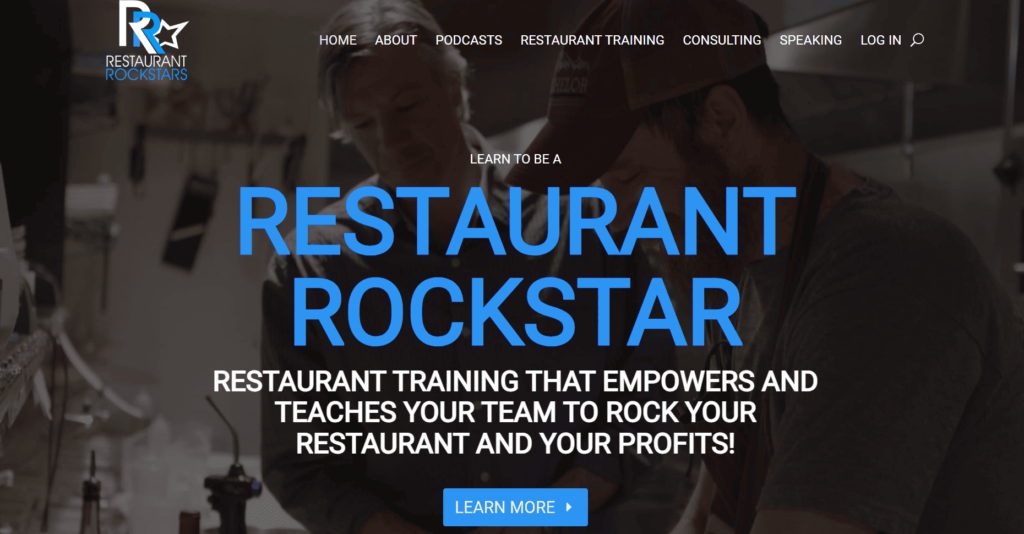
Restaurant Rockstars provides a curriculum on restaurant management, covering startup planning, financial management, and staff training. They also offer tailored advice to help restaurant owners enhance their operations and boost profitability.
The Restaurant Rockstars affiliate program gives you a competitive commission rate of up to 50% for each new customer you refer. The referral window remains active for 180 days from the customer’s initial click on your unique link.
Affiliates receive commissions through PayPal, ensuring a fast and secure payment process. So remember to create a PayPal account before signing up to join their affiliate program.
|
2. Tundra Restaurant Supply
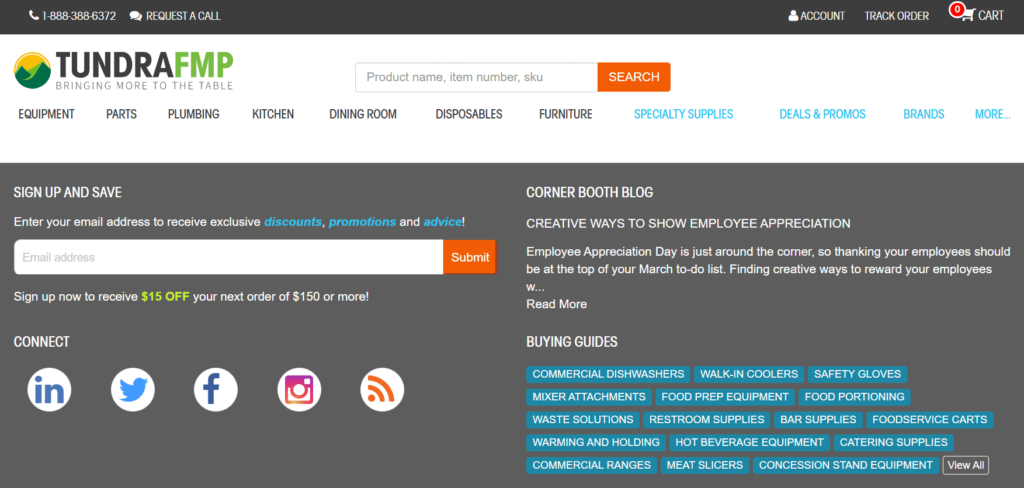
Tundra Restaurant Supply sells various restaurant supplies, equipment, parts, furniture, and food safety essentials. They have served the food service industry for over 100 years and cater to chains and eateries across the US.
With the Tundra Restaurant Supply affiliate program, affiliates will receive a 5% commission on every successful sale. Once a customer clicks your link, you have 30 days to earn commission on their purchases.
Their affiliate program is managed through Rakuten LinkShare. Affiliates can log into their accounts and access easy-to-use tracking and reporting tools on the network.
|
3. Snake River Farms
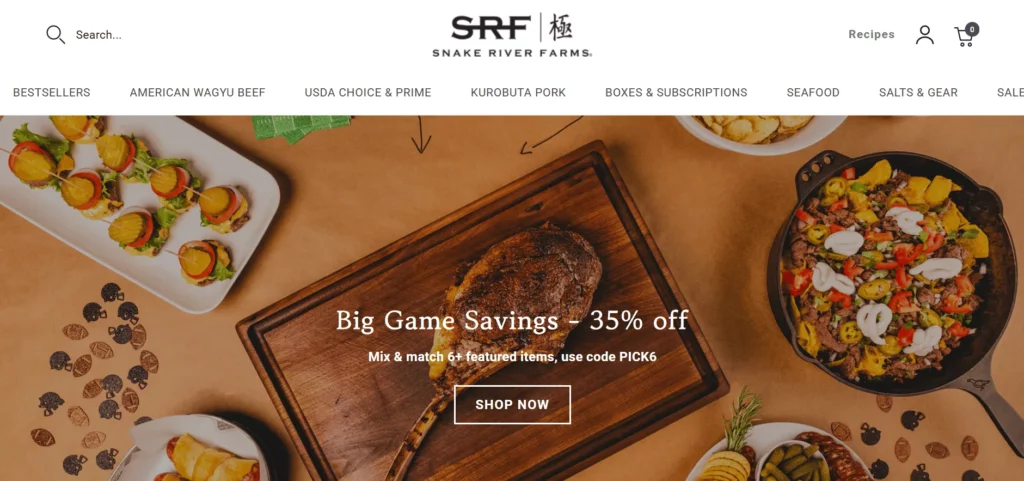
Snake River Farms is the largest producer of American Wagyu beef in North America. In addition to beef cuts, customers can buy high-quality Kurobuta pork and wild-caught seafood from their website.
You will get a 10% commission for each successful sale when joining their restaurant affiliate program. The 30-day cookie duration allows you to earn money for qualified purchases within this timeframe.
The brand provides a broad range of simple text links for you to promote their products. Additionally, their affiliate managers are always willing to help you with any promotional concerns.
|
4. Culinary Depot
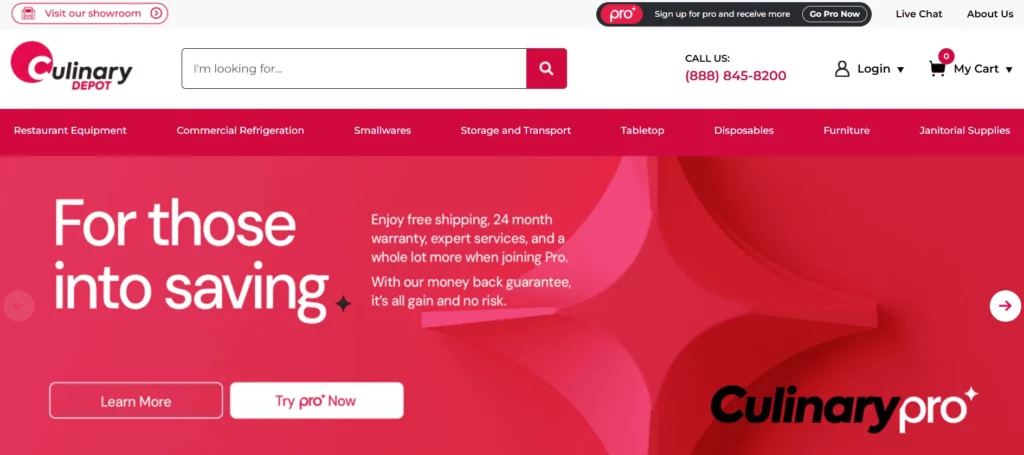
Culinary Depot is a leading provider of commercial kitchen equipment and supplies. Shoppers can explore and buy refrigeration units, cooking appliances, dishwashers, small wares, and other restaurant essentials.
Managed through Impact, this restaurant equipment affiliate program offers a 2% commission on each approved sale. You can earn about $13 per sale with an average order size of $638. The cookie period lasts 30 days from the customer’s initial click on your unique link.
You can earn exclusive payouts and additional rewards based on your performance through their bonus program. Their affiliate managers are always available to support you with any promotional questions or challenges you may encounter.
|
5. 360 Training Restaurant
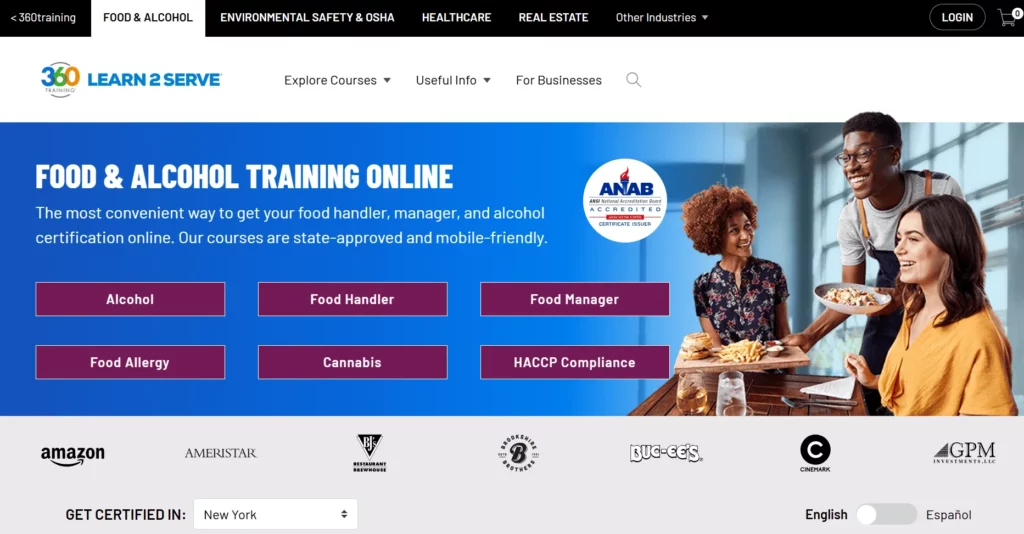
360 Training Restaurant provides courses and certifications for restaurant professionals and food service businesses. Their training programs cover key topics such as food safety, alcohol training, employee management, and restaurant operations.
The 360 Training Restaurant affiliate program allows publishers to earn a 15% commission on every sale. The average order value is $80, so you may earn about $12 for each purchase. You’ll receive credit for any successful order made within 2 months of the customer’s first click.
You can share exclusive coupon codes with your audience to drive more sales. Plus, their affiliate managers will assist you every step of the way in creating promotional campaigns.
|
6. Olma Caviar
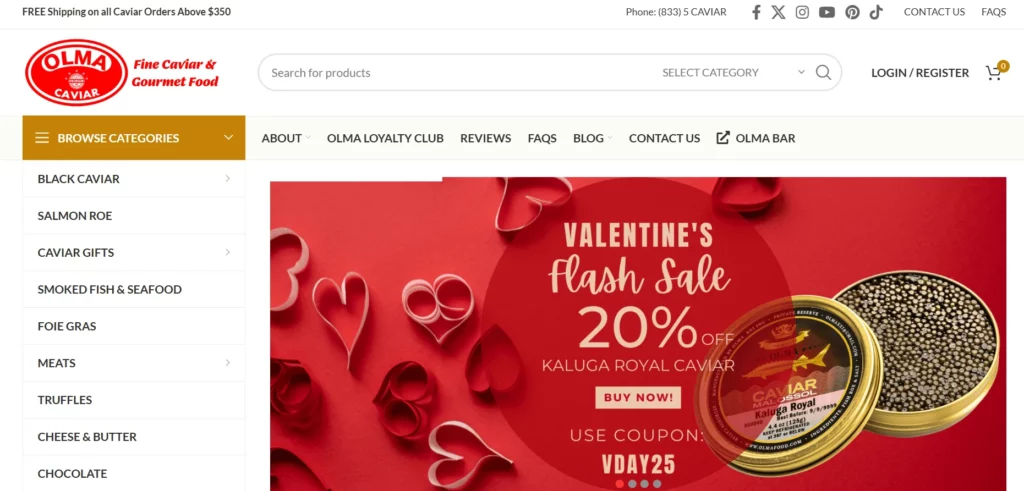
Olma Caviar produces and distributes premium caviar and gourmet foods. They source a wide variety of both black and red caviar from top regions around the world, including Italy, Israel, South Korea, Russia, and Alaska.
You can earn a 3% commission on each order when joining this restaurant ingredients affiliate program. The tracking cookie stays active for 30 days from the customer’s first click on your unique link.
The brand rewards you an extra $5 for every new customer sale made within your first 30 days in their affiliate program. They also support your promotions with well-designed banners, logos, and links.
|
7. ZWILLING
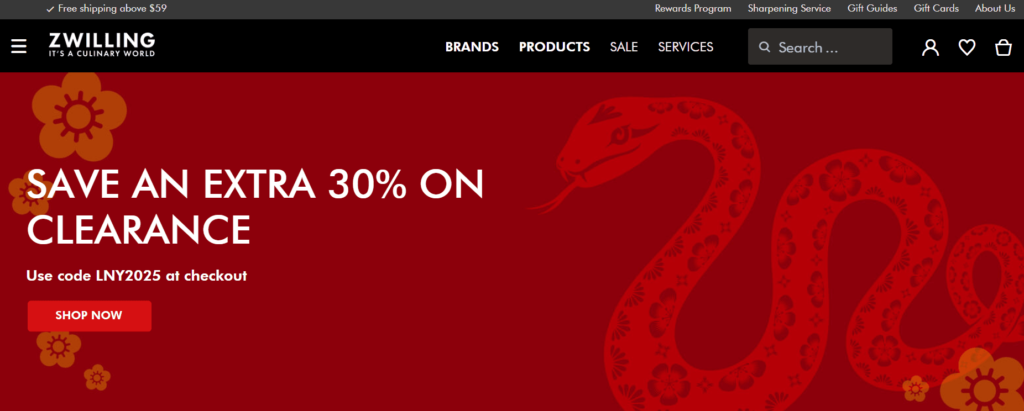
ZWILLING is one of the oldest and largest manufacturers of kitchen products in the world. Their products are designed for both professional chefs and home cooks, including cutlery, pots, pans, utensils, and food preparation tools.
The ZWILLING affiliate program gives you a 6% commission rate on successful sales. The cookie will remain valid for 14 days following the customer’s first click on your unique link.
Their affiliate program is managed via CJ Affiliate. You can access the network to get your unique tracking link and start promoting their products.
|
8. Eating Europe
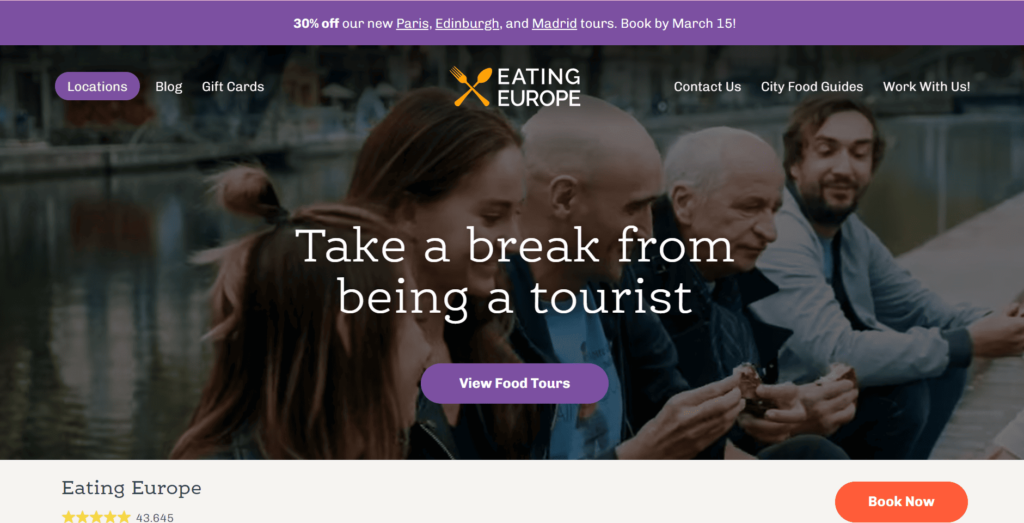
Eating Europe offers guided food tours across a variety of European cities. They connect travelers with local cuisine and culture by showcasing authentic restaurants, street food spots, and hidden culinary gems.
You can earn a 6% commission on all successful purchases when participating in their restaurant affiliate program. The brand gives you 30 days from the customer’s first click to receive commissions on their purchases.
This restaurant suggestion affiliate program gives you a collection of eye-catching creatives to support your promotional efforts. You can add these to your site to engage your audience and drive more sales.
|
9. Station Casinos
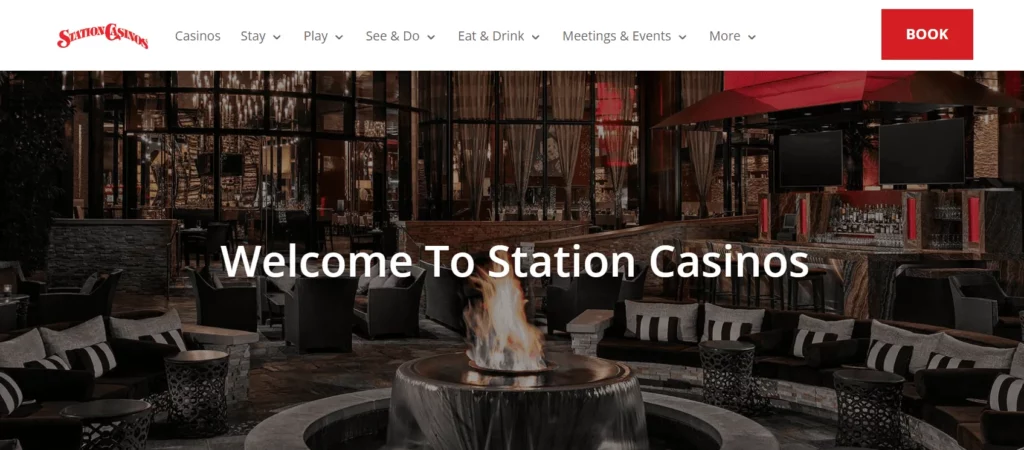
Station Casinos is a leader in the hotel and casino market in Las Vegas. They offer slots, table games, poker, sports betting, and bingo alongside hotels, dining, entertainment, and other amenities like spas.
The Station Casinos affiliate program allows you to earn a commission rate of 5%. The cookie window lasts 30 days from the consumer’s first click.
You will receive your commission payouts on a monthly basis. The brand also rewards affiliates who hit specific sales goals with bonuses and incentives.
|
10. Caesars Palace
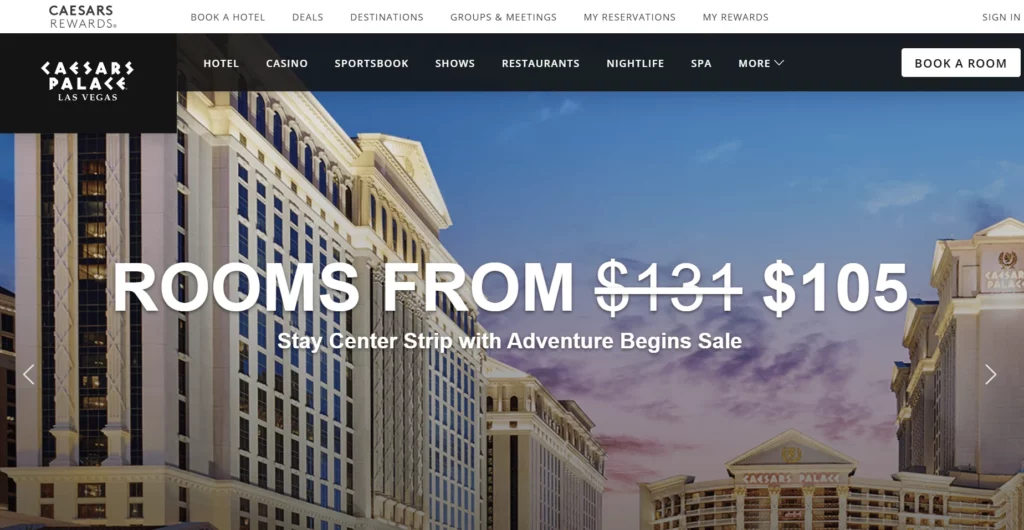
Caesars Palace is one of the most iconic luxury hotels and casinos in Las Vegas. They offer diverse amenities, including a massive casino, high-end restaurants, world-class entertainment, and luxurious hotel rooms and suites.
The Caesars Palace affiliate program allows you to get a 5% commission on each successful sale. However, you can only earn commissions if customers click your link and make a purchase within 1 day.
They provide you with appealing creatives and video widgets to display on your site and attract more customers. You’ll have the opportunity to participate in hotel familiarization tours to create detailed review content.
|
11. Groupon
- Commission rate: 3.2 – 5.6%
- Cookie duration: 7 days
Groupon is a global e-commerce marketplace offering discounts on dining, spas, fitness, events, electronics, home goods, and getaways. They currently operate in 13 countries, serving over 500 cities and millions of active users.
12. UpMenu
- Commission rate: 20%
- Cookie duration: 60 days
UpMenu helps restaurant owners build and manage their own online food ordering systems across websites, apps, and social platforms. They also offer tools for customer engagement, loyalty programs, and promotional campaigns to boost the restaurants’ online presence.
13. Chef’s Deal
- Commission rate: 2%
- Cookie duration: 45 days
Chef’s Deal is a commercial kitchen and restaurant supply store based in Nashville, Tennessee. Shoppers can choose from various cooking appliances, refrigeration units, food preparation tools, and small wares.
14. Restaurant.com
- Commission rate: 20%
- Cookie duration: 30 days
Restaurant.com connects diners with local restaurants by offering discounted dining certificates and deals. They partner with over 20,000 restaurants across the United States, providing customers with a diverse range of dining options.
15. Grubhub
- Commission rate: $5
- Cookie duration: 1 day
Grubhub helps users order food for delivery or pickup through their website and mobile app. They provide an easy-to-navigate interface where customers can browse menus, customize orders, and make payments seamlessly.
16. The Signature at MGM Grand
- Commission rate: 3%
- Cookie duration: 5 days
The Signature at MGM Grand is a luxury hotel located within the MGM Grand complex in Las Vegas. Guests can enjoy fine dining at their renowned restaurants, including signature spots like Joël Robuchon and L’Atelier de Joël Robuchon.
17. LollicupStore
- Commission rate: 3-7%
- Cookie duration: 45 days
LollicupStore supplies food service products for restaurants and other businesses in the beverage industry. Their featured line includes tapioca pearls, drink powders, jellies, syrups, and other ingredients.
18. Tripadvisor
- Commission rate: 50%
- Cookie duration: 14 days
Tripadvisor provides travelers with reviews and recommendations for hotels, restaurants, attractions, and more. They also offer booking options, travel guides, and community forums to help users plan their ideal trips.
19. Darden Restaurants
- Commission rate: 2%
- Cookie duration: 14 days
As a major player in the American restaurant industry, Darden Restaurants owns several well-known brands like Olive Garden, LongHorn Steakhouse, The Capital Grille, and more. They operate a full-service model, serving different dining experiences, from casual to fine dining.
20. TouchBistro
- Commission rate: $100-1000
- Cookie duration: Not mentioned
TouchBistro is a point-of-sale and restaurant management system for the food service industry. They offer many features to streamline restaurant operations, including order management, payment processing, staff management, and inventory tracking.
21. Chownow
- Commission rate: $25-100
- Cookie duration: Not mentioned
As an online ordering and delivery platform, ChowNow enables restaurant owners to set up branded ordering systems directly on their websites and mobile apps. They also provide valuable insights to help restaurants improve marketing strategies and customer engagement.
22. Everytable
- Commission rate: $40
- Cookie duration: Not mentioned
Everytable Everytable strives to make healthy meals affordable and accessible to all, especially in underserved communities. They distribute meals through grab-and-go storefronts, subscription delivery, and SmartFridges across multiple locations.
Which Restaurant Affiliate Programs Should You Choose Based on Your Audience?
Selecting the right affiliate program isn’t just about the commission rate—it’s about the match.
A high-paying B2B software offer will fail with a budget-conscious family, just as a grocery coupon will get ignored by a luxury dining enthusiast.
Success comes down to mapping. You need to know exactly who is reading your content—their budget, their struggles, and their dining habits. Then, you match them with the offer that solves their specific problem.
Below, we break down the five most common audience types and the specific programs that convert best for each.
Budget-Conscious Families: Meal Kits and Grocery Delivery Programs
If your audience consists of busy parents or families on a budget, your content needs to solve two massive problems: lack of time and high food costs.
This group looks for deals. They want to feed their family healthy meals without spending hours cooking or breaking the bank on takeout.
Therefore, you should focus on reliability and cost-efficiency when choosing affiliate programs.
HelloFresh & EveryPlate: The gold standards here. EveryPlate specifically markets itself as the affordable option, often costing less per serving than grocery shopping.
Instacart: Position this not just as delivery, but as a budget tool (it prevents impulse buys in the checkout aisle).
A generic banner ad won’t work for this type of audience. Instead, you better write comparison guides like “Is HelloFresh actually cheaper than grocery shopping for a family of four?”
Data Insight: Recent reports show the average family throws away nearly 30% of the food they buy. Use this stat to position meal kits as a waste-reduction tool that actually saves money.
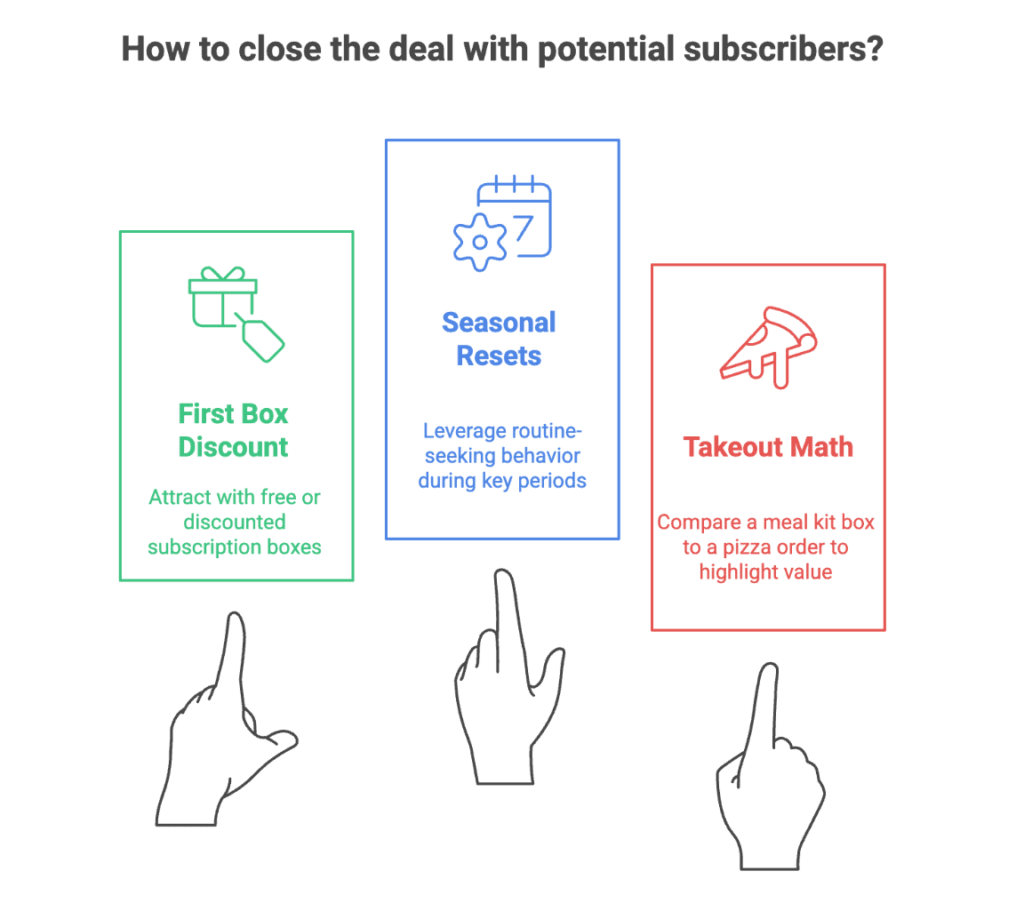
Once you have their attention, here is how you close the deal:
💡Push the “First Box” Discount
Families are often scared to try new subscriptions. Aggressively promote the “first box free” or “$100 off” offers these programs provide.
💡 Seasonal Resets
Promote these heavily during “reset” periods like Back-to-School (September) and New Year (January) when parents are desperate for a routine.
💡 The “Takeout Math” Analogy
Remind them that one meal kit box (4 meals for 4 people) often costs less than a single Friday night pizza order.
Urban Professionals and Young Singles: Food Delivery and Premium Dining Apps
While families are often driven by budget constraints, the urban professional operates on a completely different currency: time.
For young singles and career-focused city dwellers, food is a lifestyle choice.
To convert this audience, you must pivot your strategy from “saving money” to “saving time,” recognizing that they are willing to pay a premium for the fastest or best option available.
Here are some programs you can consider.
Uber Eats and DoorDash serve as the absolute staples for everyday volume, as most users already have these apps installed.
However, you should differentiate your content by introducing Caviar for higher-end audiences.
Additionally, you can mention OpenTable and Resy when creating “Best of” lists and reservation guides.
This audience suffers from decision fatigue. They are overwhelmed by choice and don’t want to browse 500 restaurants.
Therefore, you should act as a strict curator by providing specific, value-driven content like “The Top 5 Sushi Spots in [Neighborhood] that Deliver in Under 30 Minutes.”
There are also some notes for your call-to-action (CTA).
Speed is the Hook ⚡: Use CTA buttons that emphasize immediacy, such as “Order lunch in 2 clicks” or “Get it delivered before your meeting ends.”
Hyper-Local SEO 📍: Drill down into micro-geographies. Target specific neighborhoods (e.g., “Best Thai food in Williamsburg”) rather than broad city terms (e.g., “Food in NYC”). The competition for these keywords is lower, but the intent to purchase is incredibly high.
Contextual Targeting 🌧️: If you are running paid ads, timing is everything. Target delivery offers specifically during bad weather or late-night hours. When it’s raining or it’s 11 PM, the urge for convenience peaks, and price sensitivity drops to zero.
Food Enthusiasts and Culinary Hobbyists: Premium Meal Kits and Unique Dining Experiences
Moving away from the budget hunters and the time-starved professionals, we reach the “quality over quantity” segment.
For the food enthusiast and culinary hobbyist, the kitchen is a sanctuary. These readers watch Chef’s Table, care deeply about ingredient provenance, and view cooking as a creative outlet.
The key here is that you cannot sell on “cheap and fast.” You must sell on skills, stories, and experiences.
Your recommendations need to reflect a higher standard.
Blue Apron 🍷: Move beyond the basic meal pitch and focus on their specific differentiators, such as their curated wine pairings and collaborations with Michelin-star chefs.
Goldbelly 📦: This is a powerhouse for high-ticket commissions. It allows users to order iconic regional foods—like genuine Chicago deep-dish pizza or Maine lobster rolls—directly to their door.
MasterClass 🎓: Promoting a Gordon Ramsay or Thomas Keller cooking class often pays a higher commission than a standard $10 food order because you are selling a lifetime skill.
So how can you persuade these food enthusiasts and culinary hobbyists?
The financial upside of this niche is significant.
Food enthusiasts have a much higher Average Order Value ($80+ compared to the standard $30), meaning you need less traffic to generate significant revenue.
“Date Night In” Positioning
Frame premium services like Goldbelly as a savvy alternative to dining out.
Remind them that a $100 luxe meal kit is still cheaper and more intimate than a $200 restaurant bill.
Visual Storytelling
Finally, remember that this audience eats with their eyes. High-quality photography is non-negotiable.
If you review a kit, capture the unboxing experience and the final plating details to prove the quality matches the price tag.
Health and Wellness Focused Audiences: Specialized Meal Services and Clean Eating Options
This group has specific biological goals in mind, such as weight loss, muscle gain, or adhering to a strict Keto regimen.
Because their health is on the line, trust is the only currency that matters.
If you recommend a product with hidden sugars or bad ingredients, you will lose this audience forever.
You must understand that your readers check the nutrition label before they ever look at the price tag. Therefore, your content should do the heavy lifting for them.
For example, your reviews should act as a filter. Instead of offering generic praise, you’d better include macro breakdowns (Protein, Fat, Carbs) directly in your comparison tables.
One thing to note is that you cannot use aggressive sales tactics. Instead, your marketing needs to be educational, explaining exactly why a service supports their specific physiological goals.
❌Never send a Keto dieter to a generic homepage where they have to search for food. Instead, you can link directly to the partner’s “Keto Menu” page to prove you understand their needs.
✅ You can run a “30-Day Clean Eating Challenge,” positioning your affiliate partner as the essential tool they need to succeed.
Restaurant Owners and Food Service Professionals: B2B Technology and Management Solutions
This is the hidden gem of the restaurant niche. While consumer audiences buy $20 meals, restaurant owners buy $5,000 software systems.
This is a B2B (Business to Business) play. The volume is low, but the commissions are huge—often ranging from $200 to $2,000 per sale.
There are some programs you may consider:
- Toast POS: The leader in restaurant management software.
- 7shifts: Employee scheduling software (essential for managers).
- TouchBistro: Another major POS competitor.
This audience cares about ROI (Return on Investment), labor costs, and efficiency.
A restaurant owner might click your link today but close the deal 60 days later. Ensure you choose programs with long cookie durations (60-90 days).
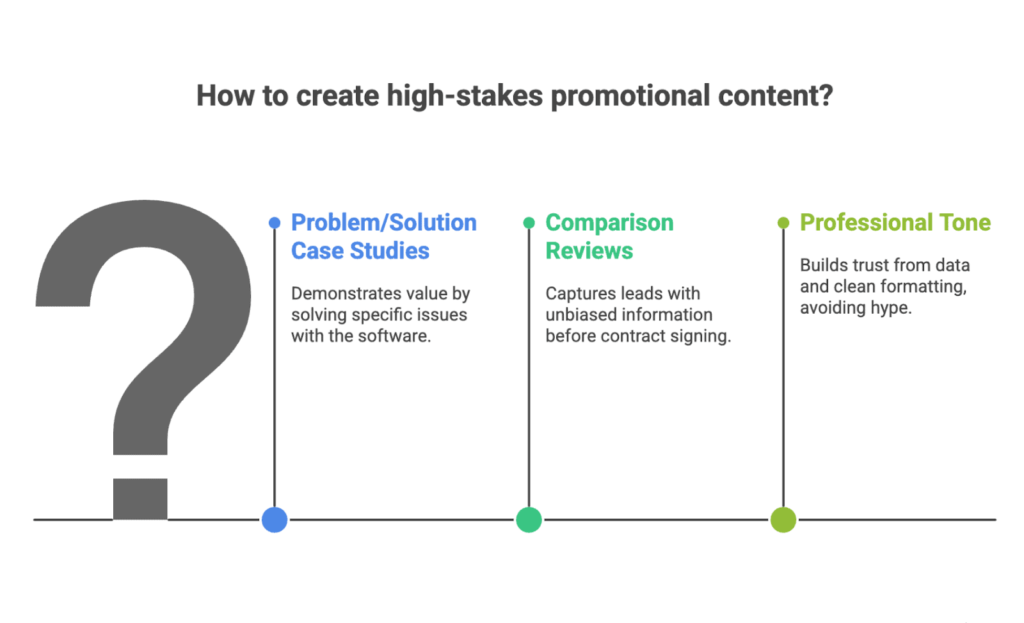
Since these are high-stakes decisions, your content must demonstrate serious professional value.
Problem/Solution Case Studies: Write detailed guides like “How to Cut Your Front-of-House Labor Costs by 15%.” Present the software as the solution.
Comparison Reviews: Search volume for terms like “Toast vs. Square for Restaurants” is low but valuable. A detailed, unbiased comparison can capture leads right before they sign a contract.
Professional Tone: Avoid hype. Use data, charts, and clean formatting. If you promise a “Demo,” ensure the affiliate landing page delivers exactly that.
What Are the Best Ways to Promote Restaurants?
Knowing who to target is only half the battle. Now you need to know how to reach them.
Most affiliates fail because they treat restaurant programs like banner ads—they slap a generic link on a sidebar and hope for the best. That strategy is dead.
To generate real revenue, you need to be where the decision is made: in the Google search bar before a date night, on the Instagram feed during lunch hour, or in the inbox right before a holiday.
Here are the six most effective, high-conversion channels to promote your restaurant offers.
Create Hyper-Local “Best Restaurants” Guides for SEO-Driven Discovery
You cannot compete with The Infatuation or Eater for broad keywords like “Best Restaurants in NYC.” But you can dominate hyper-local searches.
When someone searches “Best brunch in Williamsburg Brooklyn,” they have high intent. They are hungry, they are in a specific area, and they are ready to book.
You can try some strategies below:
Go Granular: Skip the city-level guides. Drill down to the neighborhood or even street level.
Curate, Don’t List: A list of 50 places is useless. Curate the top 10-15 with specific categories (e.g., “Best for Date Night,” “Best Cheap Eats”).
Embed the Conversion: Don’t just list the name. Embed your affiliate links to OpenTable, Tock, or delivery apps directly in the listing with a clear CTA like “Book a Table” or “Order Delivery.”
One more important thing is to implement SEO tips and tricks.
Pin It: Embed a Google Map with your recommendations pinned.
Internal Linking: If you write a guide for Williamsburg, link it to your guides for Greenpoint and Bushwick to create a “neighborhood cluster” that Google loves.
Performance Benchmark: For neighborhoods with a population under 100,000, high-quality local guides typically hit Page 1 rankings within 60–90 days.
Leverage Instagram and TikTok for Visual Food Content with Swipe-Up Links
Food is inherently visual. A 10-second video of a cheese pull or a sizzling steak sells a reservation faster than any written review ever could.
The challenge on social media is the link. So, how can you optimize your affiliate links?
First, you can use tools like Linktree or Beacons. Create a button that says “Restaurant Links from TikTok” so users can easily find the specific place you just reviewed.
For meal kits, the “transformation” video is king. Show the messy box → the cooking process → the plated masterpiece. It validates that the kit is actually easy to use.
Additionally, your 30-second review should follow a simple arc: The Vibe (Ambiance) → The Food (Close-ups) → The Verdict (Is it worth it?).
Disclosure Rule: You must be transparent. Hiding your affiliate status can get you banned.
- Visual: Put #ad or #affiliate in the caption where it is visible without clicking “more.”
- Verbal: Simply say, “I’ve linked this in my bio if you want to try it.”
- Reality Check: Social media is a volume game. Expect a 1-2% click-through rate from profile visits.
Build Email Sequences Targeting Specific Dining Occasions and Seasonal Events
Email is your most profitable asset because it lets you control the timing. People don’t book Valentine’s Day dinner in July. They book it in early February.
For major events like Mother’s Day, Valentine’s, or New Year’s Eve, a single email is not enough.
Instead, you can build a “waterfall” series that captures different types of customers as the deadline approaches:
- Email 1 (3 Weeks Out): “Book now before tables fill up” (Link to OpenTable/Resy).
- Email 2 (1 Week Out): “Forgot a reservation? Here are the best delivery options for a premium night in” (Link to Caviar/Goldbelly).
- Email 3 (2 Days Out): “Last minute save: The DIY Date Night Kit” (Link to a meal kit or grocery delivery).
To maximize the effectiveness of these sequences, you need to refine your messaging and targeting.
👥 Segmentation: If someone clicked a HelloFresh link last month, put them in a “Home Cook” segment. If they clicked a reservation link, put them in a “Diner” segment. Send them different offers.
📊 Metric to Watch: Seasonal occasion emails often see open rates of 20–28%, significantly higher than generic newsletters. Timing is everything.
Develop YouTube Restaurant Reviews and Food Experience Videos
While blog posts and photos are powerful, YouTube is the ultimate trust engine.
If a viewer watches you eat a meal and critiques it for 10 minutes, they develop a genuine connection with your palate.
This deep level of engagement makes video the perfect medium for selling “high consideration” items—such as premium meal kit subscriptions or exclusive fine dining reservations.
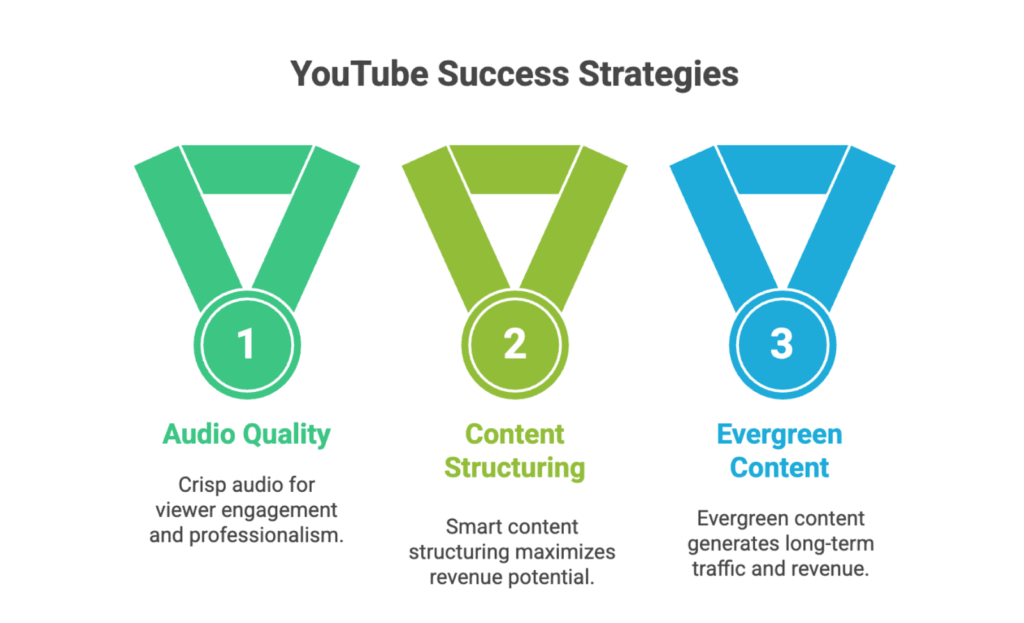
To succeed on YouTube, you need to balance technical quality with smart content structuring.
Audio is King 🎙️
Bad audio kills food vlogs faster than bad lighting. If you are filming a review in a loud, bustling restaurant, record your voice-over later in a quiet room to ensure your commentary is crisp and professional.
The “Day in the Life” Approach 📹
To maximize revenue, you can try to incorporate multiple affiliate types naturally into a single video.
For example, show your morning routine with Trade Coffee, your busy workday lunch via DoorDash, and your evening dinner reservation via OpenTable.
Create Evergreen Assets 🌲
Unlike Instagram Stories which vanish after 24 hours, YouTube content compounds over time. A high-quality review titled “The Best Pizza in Chicago” can generate search traffic and affiliate clicks for years after you upload it.
Once you have the views, you need to ensure they convert into income.
📝Place your affiliate URLs in the first 3 lines of the description so they are visible immediately without the user having to click “Show More.”
📝Use a Call to Action (CTA) at natural pause points in the video, such as: “I’ve left a link to their reservation page right below if you want to grab a table for yourself.”
Utilize Pinterest for Recipe-to-Restaurant Content Funnels
Pinterest is not social media; it is a visual search engine.
Users go there to plan meals, parties, and events. They are in “planning mode,” which makes them highly receptive to affiliate offers.
You need to provide solutions for both the home cook and the person seeking convenience.
First, you create a pin for a popular restaurant dish (e.g., “Copycat Cheesecake Factory Pasta”).
In the blog post, you include the recipe and an affiliate link to order the real thing for delivery on nights they don’t feel like cooking.
If a recipe calls for a hard-to-find ingredient (like truffle oil or saffron), link directly to it on Amazon or a specialty food site via your affiliate link.
Since Pinterest is predominantly a mobile experience, your visuals must dominate the screen to drive clicks.
Stick to the 2:3 ratio (1000x1500px). Horizontal images get lost in the feed.
Additionally, use clear text overlays like “30-Minute Weeknight Dinner” to capture attention immediately.
Moreover, Pinterest rewards consistency over virality. Schedule 10–15 pins per day (mostly reposts of others, with 3-4 of your own) using a tool like Tailwind.
5 Common Mistakes Restaurant Affiliates Make (And How to Avoid Them)
You can have great traffic and perfect content, but one structural mistake can torch your commissions.
Affiliate marketing in the restaurant space is about navigating strict rules, building trust, and tracking data.
Many beginners spend months building an audience only to get banned from a major program for a rule violation they didn’t even know existed.
Here are the critical errors that derail new affiliates and exactly how to fix them.
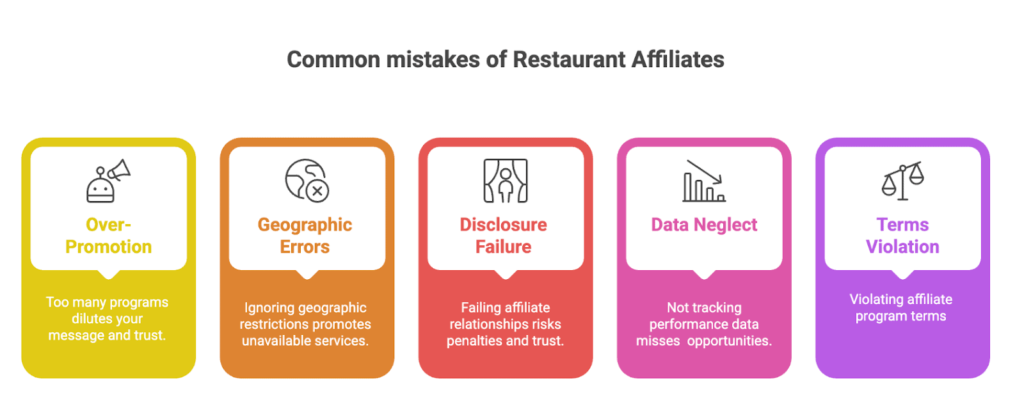
Promoting Too Many Programs at Once, Diluting Your Message and Trust
It is tempting to join every program available—DoorDash, Uber Eats, Grubhub, Postmates—and splash them all over your page.
You might think, “More options mean more chances to earn, right?”
Wrong.
If you give a reader five different options for food delivery, they often get overwhelmed and choose none.
Worse, it makes you look like a directory rather than an expert.
What you need to do is to simplify the decision-making process for your audience.
The “Rule of One”: For every piece of content, have one primary recommendation. If you are writing about “Fast Lunch Delivery,” pick the single app that does it best in that context.
Clear Use Cases: If you must mention multiple competitors, differentiate them clearly.
“Use DoorDash for the widest selection of fast food.”
“Use Caviar when you want a high-end dinner from a local bistro.”
Data Insight: Affiliates who promote just 1-2 focused services per post typically see 40–60% higher conversion rates than those offering 5+ generic options.
Ignoring Geographic Restrictions and Promoting Unavailable Services
Nothing kills trust faster than a broken promise.
Imagine a reader in rural Montana reading your glowing review of a specific food delivery service.
They get excited, click your link, and are immediately hit with a “Service Not Available in Your Area” screen.
They won’t click your next link because they assume it won’t work for them either.
Here are some things you can do to fix the problem:
Know the Map: Before you promote a niche app (like Tock or Caviar), check their coverage map. If they only serve NYC and LA, state that clearly at the top of your post.
Geo-Targeting: If you are running paid ads or have sophisticated site tools, use geo-targeting to show specific offers only to visitors in those cities.
The “National Safety Net”: For broad content that reaches everyone, prioritize programs with massive national footprints (like Uber Eats or HelloFresh) to ensure the link works for 99% of your readers.
Failing to Disclose Affiliate Relationships, Risking FTC Penalties and Audience Trust
Hiding your affiliate links or burying your disclosure in a tiny font can land you in serious trouble with the FTC (Federal Trade Commission).
Beyond the legal risk, hidden links look shady. Readers are smart. If they realize you are selling to them without being honest about it, your credibility evaporates.
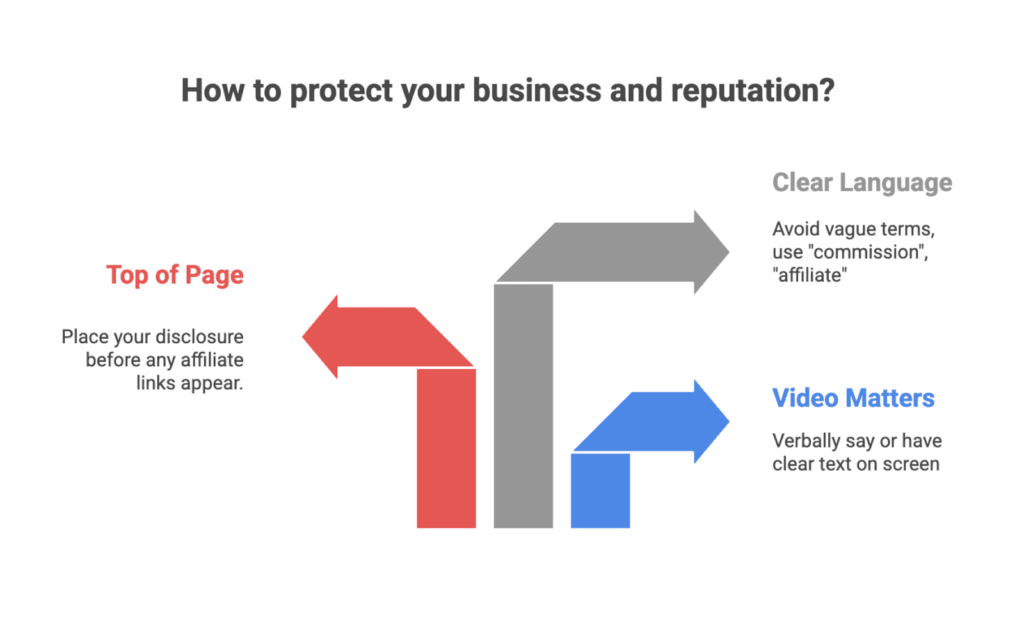
To protect your business and your reputation, you must be upfront about your partnerships.
📍 Top of Page: Place your disclosure before any affiliate links appear. A standard sentence like “This post contains affiliate links. If you use these links to buy something, we may earn a commission.” is perfect.
🗣️ Clear Language: Don’t use vague terms like “partner links” or “supported by.” Use the word “commission” or “affiliate.”
🎥 Video Matters: If you are on YouTube or TikTok, you must verbally say it or have clear text on screen.
Not Tracking Performance Data, Missing Optimization Opportunities
Setting up links and never checking the data is like driving with your eyes closed. You might get there, but you’ll probably crash first.
If you don’t track your performance, you won’t know that your “Best Pizza” article is driving 1,000 clicks but zero sales, or that a forgotten sidebar link is generating 80% of your revenue.
For your first 90 days, you should check your dashboard every Friday. Look for high clicks with low conversions (which means your content promises something the landing page doesn’t deliver).
- CTR (Click-Through Rate): Target 2-4%. If it’s lower, your link placement is bad.
- Conversion Rate: Target 3-5%. If it’s lower, the offer isn’t right for your audience.
- EPC (Earnings Per Click): Target $0.50+. This tells you the true value of your traffic.
Violating Affiliate Program Terms of Service (Especially Paid Search Bidding)
This is the “Capital Offense” of affiliate marketing. Most major restaurant programs (DoorDash, Uber Eats, etc.) strictly prohibit bidding on brand keywords in Google Ads.
You cannot run a Google Ad targeting the keyword “DoorDash Coupon” that links to your blog.
If you get caught (and they will catch you), you face immediate termination. Even worse, they will often take back all unpaid commissions in your account.
Thereby, before you join any program, search the Terms of Service document for “PPC,” “Paid Search,” or “Trademark Bidding.”
If you are allowed to run broad ads (e.g., targeting “food delivery”), you must add the brand name (e.g., “DoorDash”) as a Negative Keyword to ensure your ad never accidentally shows up for their brand name.
What’s more, never use scripts that automatically drop an affiliate cookie on a user’s browser without them clicking. This is fraud, plain and simple.
Conclusion
Running a good affiliate program is like growing your restaurant family. It starts with clear rules, the right partners, and tools that help everyone win.
When you team up with people who love what you offer – whether it’s your meals, cooking classes, kitchen tools, or special ingredients – they’ll share that passion with others.
Bit by bit, your biggest fans turn into your best promoters, bringing more customers, more trust, and more buzz to your brand.

Ellie Tran, a seasoned SEO content writer with three years of experience in the eCommerce world. Being a part of the UpPromote team, Ellie wants to assist Shopify merchants in achieving success through useful content & actionable insights. Ellie's commitment to learning never stops; she's always eager to gain more knowledge about SEO and content marketing to create valuable content for users. When she's not working on content, Ellie enjoys baking and exploring new places.