

According to Grand View Research, the global self-defense products market, valued at USD 3.03 billion in 2024, is expected to grow at a 6.5% CAGR from 2025 to 2030.
This growth presents a prime opportunity for affiliates in the personal safety niche to earn high commissions by promoting self-defense products and training courses.
We’ve compiled a list of the top 16 self-defense affiliate programs, offering great commissions and attractive benefits. Find the best match for you and start earning today!
Quick Comparison
| Program Name | Commission (%) | Cookie Duration (Days) | Niche Suitable | Affiliate’s Rating |
|---|---|---|---|---|
| Byrna | 5% | 45 | Self-defense gear, non-lethal weapons, personal security | ★★★☆☆ |
| Taser | 7% | 30 | Electrical self-defense devices, personal protection | ★★★★☆ |
| The Home Security Superstore | 9% | 60 | Home security, personal safety products, surveillance | ★★★★☆ |
| Little Viper | 20–30% | 120 | Wearable self-defense, women’s safety, lifestyle accessories | ★★★★★ |
| Self Defense Keychain Store | 10% | Not listed | Fashion self-defense keychains, women’s safety | ★★★☆☆ |
| Streetwise Defence | 50% | 365 | Self-defense training, online courses, workshops | ★★★★★ |
| Gorilla Ammunition | 2.5% | 30 | Ammunition, firearms components, tactical niche | ★★☆☆☆ |
| Defense Divas | 5% | Not listed | Women-focused self-defense tools | ★★☆☆☆ |
| Defender Ring | 10% | Not listed | Self-defense jewelry, lifestyle accessories | ★★★☆☆ |
| Pretty Loaded | Up to 50% | Not listed | Self-defense training, situational awareness courses | ★★★★★ |
16 Best Affiliate Programs for Self-Defense Products and Gear
1. Byrna
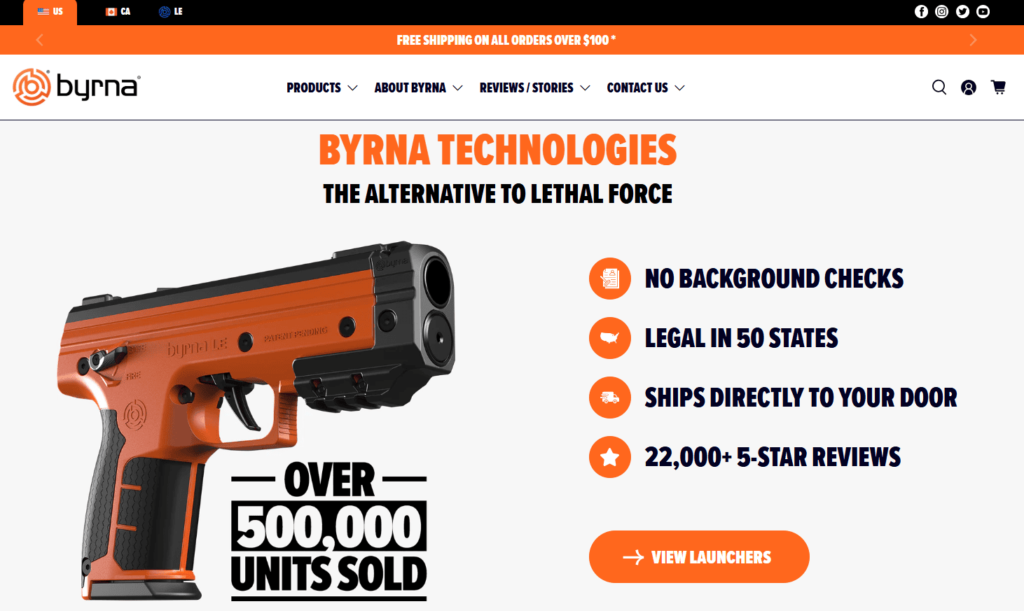
Byrna develops innovative personal security solutions, such as projectiles, self-defense aerosol sprays, and other accessories. Their flagship product, the Byrna Launcher, is a CO2-powered device that shoots pepper balls, rubber balls, and other non-lethal rounds.
This self defense affiliate program offers you a 5% commission rate for every successful sale made via your link. The cookie lasts 45 days from the customer’s first click.
The Byrna affiliate program is managed via CJ Affiliate, so you need to create an account on the platform to get started. You’ll also get access to many promotional codes and special offers to share with your audience.
|
2. Taser
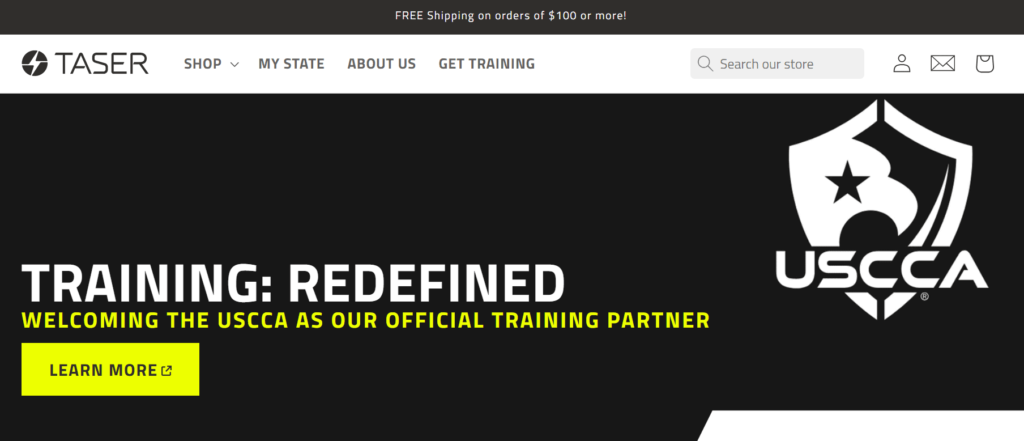
Taser produces less-lethal personal protection devices for civilian use. Their devices use electrical pulses to temporarily disable an attacker by disrupting muscle control.
The brand pays you a 7% commission for each qualified purchase made through your link. The 30-day cookie window allows you to earn on sales completed within that period.
Their self defense affiliate program is managed through the Avantlink network. They provide a variety of eye-catching banners for your promotions. Their automated data feed will also keep you up-to-date with the latest product information.
|
3. The Home Security Superstore
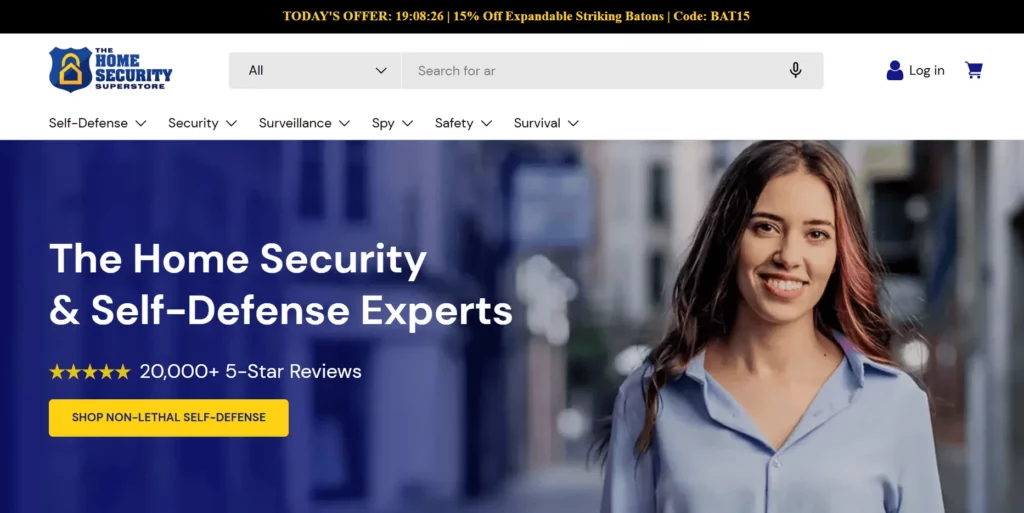
The Home Security Superstore provides self-defense tools like Tasers, pepper sprays, wireless motion alarms, and security cameras. They also offer product reviews, safety tips, and detailed guides to help customers make informed decisions about personal and home security.
Affiliates can receive a 9% commission on each successful order when joining their self defense affiliate program. You also have a long cookie period of 60 days to earn on purchases from the customer’s first click.
The brand issues payouts via PayPal once your earnings reach a $50 minimum. You’ll have a chance to be featured on the brand’s social media or email list, helping you reach a broader audience and attract more potential customers.
|
4. Little Viper
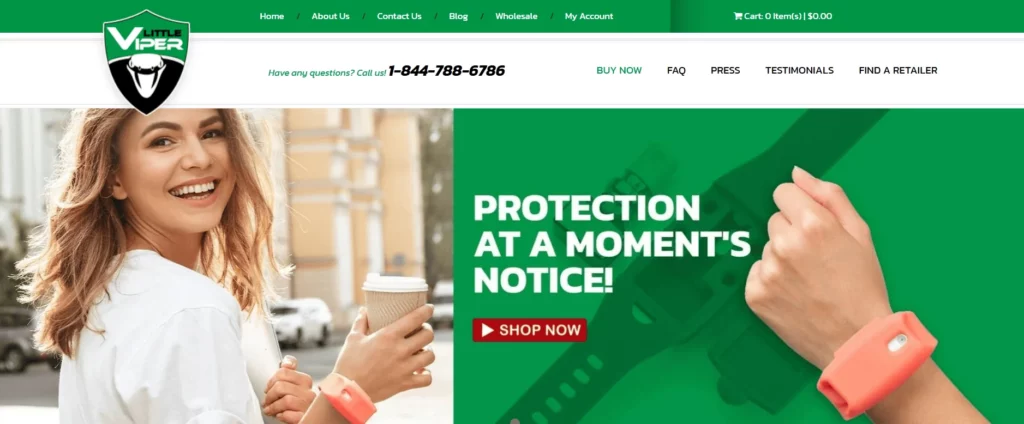
Little Viper manufactures pepper spray self-defense bracelets. Their product is designed like a fitness tracker or watch and can be easily accessed in emergency situations.
When joining this self defense bracelets affiliate program, affiliates will earn a 20% commission for every qualified referral. This rate can increase to 30% during the launch promotion, which runs until May 31st. You can earn money on purchases made within 4 months of the customer’s initial click.
You can choose to receive your payouts monthly via PayPal or as a store discount coupon. However, a minimum balance of $50 is required for domestic transfers and $100 for international ones.
The brand provides various appealing product images, banners, and videos to support your promotions. They also send you product samples to create detailed content and video reviews to engage a larger audience.
|
5. Self Defense Keychain Store
Self Defense Keychain Store supplies over 200 styles of self-defense keychains and related safety products, such as pepper spray, stun guns, kubatons, personal alarms, and more. They aim to blend safety and everyday fashion with designs in pastel colors, animal patterns, and trendy add-ons like pom-poms and wristlets.
You can earn up to 10% commission on all successful purchases through your affiliate link. Your payouts will be processed via PayPal with a minimum threshold of $100.
The brand uses the Goaffpro software to manage their self defense affiliate program. They provide you with a smart tracking dashboard to monitor your promotional data. In addition, you can share coupon codes with your audience to increase engagement and drive more sales.
|
6. Streetwise Defence
Streetwise Defence provides self-defense classes, workshops, and courses both in-person and online. Their training programs help learners identify threats, avoid danger, de-escalate tense situations, and apply basic self-defense techniques.
You can get a high commission of up to 50% on every successful sale. This self defense affiliate program lets you receive credit for purchases made within 12 months of the customer’s first click on your link.
Being their affiliate, you can promote any or all of their on-demand online courses. Your commissions from all sales will be tracked and paid to your PayPal account once a month.
|
7. Gorilla Ammunition
Gorilla Ammunition produces high-quality ammunition and firearm components for training, target shooting, hunting, and self-defense. They are one of the few ammunition manufacturers in the U.S. with an in-house ballistics laboratory.
You’ll receive a 2.5% commission on every successful order when joining their self defense affiliate program. You can earn around $4 per sale with an average order size of $150. The cookie period lasts 30 days from the customer’s first click.
Affiliates will have access to various eye-catching ad creatives designed by their skilled graphics team. You’ll also receive the latest product details and promotional resources from their affiliate coordinators.
|
8. Defense Divas
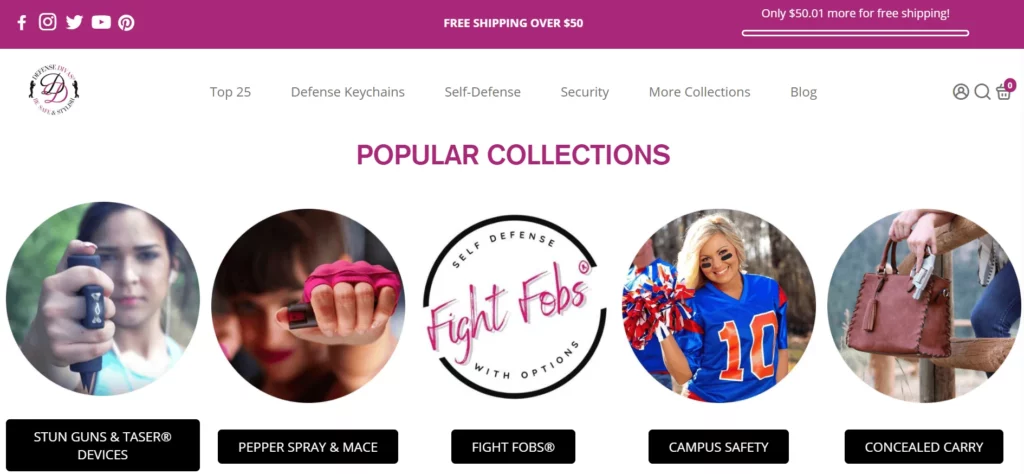
Defense Divas sells self-defense products tailored for women, such as stun guns, pepper sprays, keychain knives, and more. Their “Pink Ink Self-Defense & Safety Awareness” blog shares practical tips to help women protect themselves from physical, emotional, sexual, and psychological abuse.
With the Defense Divas self defense affiliate program, you can earn a 5% commission on each sale. You must set up a Venmo account to receive your payouts. They will process your commission payment if your balance reaches $50.
|
9. Defender Ring
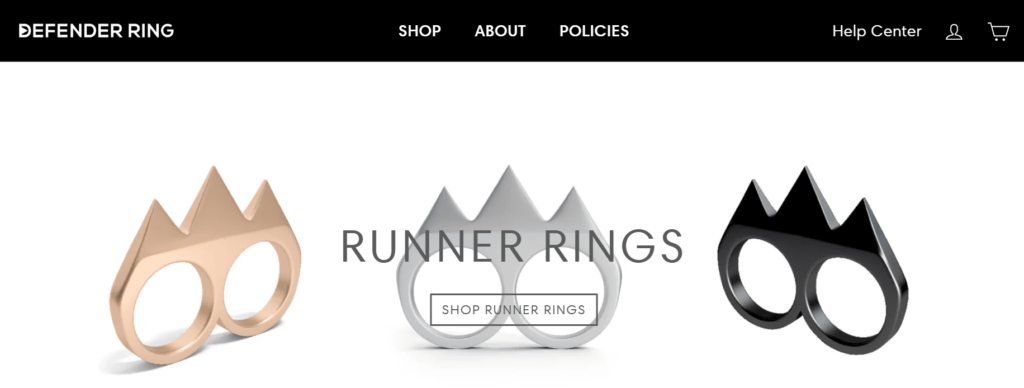
Defender Ring is well-known for their unique personal protection jewelry. Their items are equipped with concealed blades, quickly deployed for self-defense or everyday tasks like cutting rope.
This self defense jewelry affiliate program offers a 10% commission for every completed purchase. They pay your commission via PayPal for a secure and convenient payment process.
Once approved as their affiliate, you’ll receive all the necessary links, logos, and media to promote Defender Ring’s products. You can also share unique coupon codes with your audiences to drive more sales.
|
10. Pretty Loaded
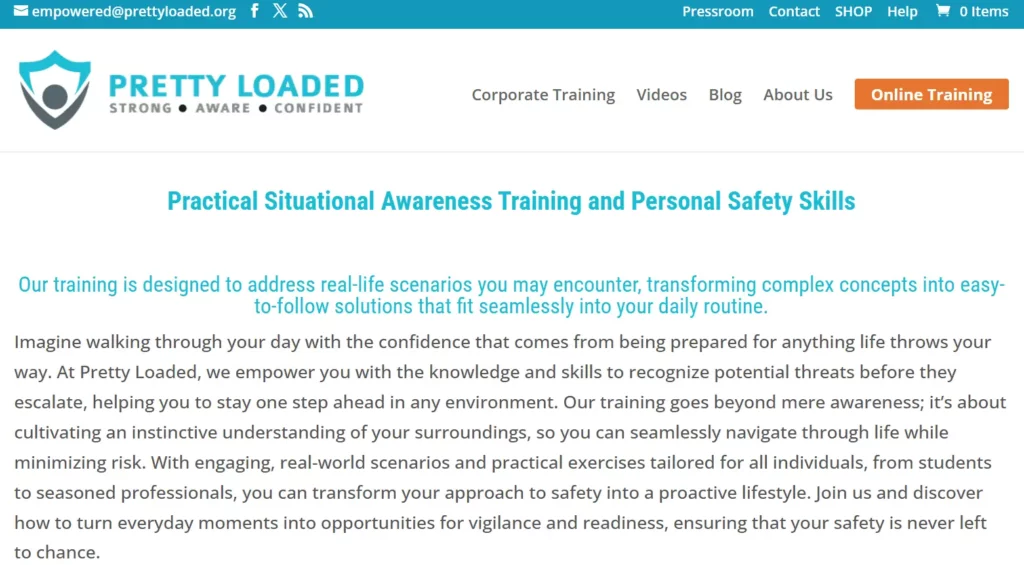
Pretty Loaded is a well-known personal safety and situational awareness training platform in the U.S. Their training covers identifying criminal behaviors, navigating high-risk areas, practicing safe driving, avoiding carjacking, and staying safe during food and alcohol delivery.
This self defense training affiliate program allows you to get up to 50% commissions on all online training purchased through your link. You’ll need a PayPal account since that’s how commissions are sent monthly.
You can leverage the brand’s logo in your promotions to build credibility and attract more attention. They also create a custom landing page to connect your audience directly to your Pretty Loaded email. Plus, you’ll receive a Facilitator’s Guide, folders, business cards, and other gifts to support your work.
|
11. Real Self-Defense
- Commission rate: 10%
- Cookie duration: 10 days
Real Self-Defense provides a curated selection of discreet, dual-purpose self-defense tools. They also offer free tips via articles and videos, covering topics like mental toughness, physical conditioning, improvised weapons, and realistic threat responses.
12. Unbreakable Umbrella
- Commission rate: 5-10%
- Cookie duration: 10 days
Unbreakable Umbrella sells highly durable, wind-resistant umbrellas for both everyday use and self-defense purposes. They also create detailed videos and articles showing how to use their products effectively, along with general safety tips.
13. Olight
- Commission rate: 8%
- Cookie duration: 30 days
Olight provides premium portable lighting solutions, including EDC gear, tactical lights, headlamps, and other accessories. Their tactical flashlights release an intense light that can briefly blind or confuse an attacker, giving users an important moment to escape or defend themselves.
14. The Self-Defense Company
- Commission rate: 40%
- Cookie duration: Not mentioned
The Self-Defense Company offers live, expert-led programs to teach practical personal protection skills. Members can access over 400 on-demand video lessons and drills, downloadable manuals, live online support, and a wide range of additional resources.
15. Wonder Hoodie
- Commission rate: 10%
- Cookie duration: Not mentioned
Wonder Hoodie is a pioneering brand in protective clothing, designing bulletproof and stab-proof apparel. They also donate one protective item to a teacher or student in at-risk communities for every 10 sold through their Safe Schools Program.
16. SABRE
- Commission rate: 10%
- Cookie duration: Not mentioned
SABRE is the leading pepper spray manufacturer in the United States. They support users with training videos and practical tips to ensure confident and effective use of their products.
Who Buys Self-Defense Products And What Do They Search For?
The market for self-defense products is defined by specific demographic groups and distinct motivations.
| Category | Key Insight |
| Primary Buyers | Women 18-45 (65% sales) |
| Secondary Market | Students, parents (40% alarms) |
| Top Geography | Cities with 500k+ residents |
| Urban vs. Rural | Urban buys 3x more |
| Main Motivator | Past trauma or theft |
| Key Statistic | 78% act on experience |
| Sales Psychology | Fear beats product features |
| Niche Demand | Martial arts practitioners |
The primary customers are women aged 18 to 45, accounting for 65% of all tactical gear purchases.
College students and their parents drive another 40% of personal alarm sales. Geography also plays a huge role.
Urban residents in cities with over 500,000 people buy these products at more than three times the rate of those in rural areas.
Past experience is a major driver. In fact, 78% of first-time buyers say a recent personal experience with assault or theft—or knowing a victim—is their main reason for buying.
Fear sells better than features ever will.
Finally, martial arts practitioners provide a steady demand, split between men buying equipment and women enrolling in courses.
As a result, search habits vary dramatically. They range from broad questions like “best self-defense products” to hyper-specific needs like “pepper spray for runners with an armband holder.”
Sound familiar? That’s the difference between traffic and actual buyers.
Primary Buyer Personas
We once worked with a self-defense e-commerce brand on UpPromote whose affiliate revenue jumped 340% during back-to-school season.
Their secret was recruiting college safety bloggers in July—8 weeks before competitors—and equipping them with content kits that addressed legal concerns.
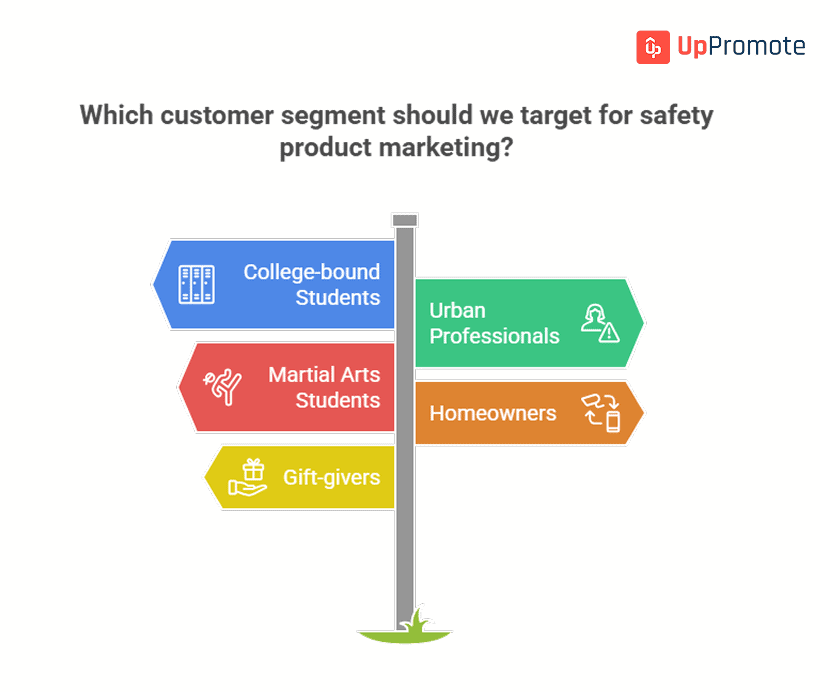
Here is what we learned about the five dominant buyer personas.
aaaaaaaaaaaaaaaaaaaaaaaaaa
🛡️ Target College-bound students and parents who buy dorm safety bundles during peak enrollment months. You should focus your marketing efforts heavily in August and September to catch this seasonal wave.
🛡️ Market to Urban female professionals aged 25–40 who seek portable protection for daily commutes. These buyers prioritize compact items they can easily carry while traveling or walking to work.
🛡️ Identify New martial arts students who need training equipment immediately after joining a gym. This group is looking for specific gear to help them practice techniques safely at home.
🛡️ Reach out to Homeowners looking to upgrade security following local break-ins or neighborhood incidents. They are often reactive buyers seeking immediate peace of mind for their property.
🛡️ Don’t forget Gift-givers, a large segment purchasing safety products for loved ones during holidays or graduations. Their motivation is care and protection, making them highly receptive to emotional messaging.
Understanding these differences is vital for content creation.
A student might search for “best pepper spray for dorms,” while a concerned parent types “self-defense package for daughter.” It is the same product, but a completely different emotional trigger.
High-Intent Search Queries
Think of high-intent queries like a customer standing in the checkout line. They’ve already grabbed the product—they just need one final nudge.
High-intent searches combine a specific product with a specific use case. These queries convert at 3–8%, compared to the industry average of 1–2%.
Terms like “pepper spray with clip for running” or “best self-defense keychain for college” show the user has moved past general research. They’re ready to buy.
Educational queries like “how to use a tactical pen for self-defense” or location-specific searches like “best door lock for apartment” also signal strong intent to solve an immediate problem.
This is where the money lives.
Here’s what most affiliate guides won’t tell you: Chasing keywords like “best pepper spray” (50,000 monthly searches) is backwards.
We’ve seen UpPromote affiliates dominating ultra-specific queries like “pepper spray gel for runners” (just 400 searches) earn MORE revenue than those fighting for broad terms.
Why? 400 high-intent buyers beat 50,000 researchers every time.
Seasonal and Trigger-Based Buying
Buying patterns in this niche depend heavily on season and external events.
The “back-to-school” window (July to September) sees a 60% jump in sales. The holiday gift-giving season (November and December) drives a 40% increase.
Smart affiliates build entire content calendars around these peaks.
Beyond the calendar, local news coverage of assaults or rising crime rates can cause immediate demand spikes of 80% to 120%.
One UpPromote merchant told us their affiliate sales tripled within 48 hours after a campus safety alert review went viral on TikTok.
Martial arts fans and security-conscious people provide a steady baseline.
But the real money? It comes from timing your content to capture these predictable and unpredictable spikes.
Bottom line: Publish your “College Safety Gift Guide” in July, not December. By the time competitors wake up, you’ve already captured 8 weeks’ worth of parent searches.
Decision Factors and Objections
Want to know what kills 50% of potential sales before visitors even scroll?
Legal uncertainty.
To convert visitors, your content must address five critical factors that influence purchase decisions:
- Legality: This is the top concern. Nearly half of potential buyers abandon carts because they’re unsure about local laws.
- Ease of Use: Buyers fear they won’t be able to use the product without training.
- Portability: Buyers prioritize items that fit easily into a purse or pocket.
- Price Sensitivity: 62% of first-time buyers hesitate to spend over $50 without prior experience.
- Social Proof: 71% of customers read verified reviews before committing.
Content that directly addresses these objections can double or quadruple conversion rates compared to standard product descriptions.
This means using clear legal disclaimers, usage demos, size comparisons, price filtering, and curated reviews.
Bottom line: If you’re not addressing legal objections in your first 100 words, you’re losing 50% of potential buyers before they even scroll.
How Do You Promote Self-Defense Affiliate Programs Effectively?
Understanding buyers is step one. But here’s where most affiliates stumble: actual promotion.
Effective promotion relies on a strategic mix of five content types. Each serves a specific stage of the buyer’s journey:
| Content Type | Conversion Rate | Best For | Why It Works |
| Product Reviews | 3-5% | Bottom-funnel buyers | Demonstrates actual usage with proof |
| Comparison Articles | 4-7% | Decision-ready shoppers | Targets users actively choosing between options |
| Scenario Guides | 2-4% | Problem-aware audience | Matches products to specific situations |
| Educational Content | 1-3% | Authority building | Builds trust, drives long-term value |
| Listicles | 3-6% | Research phase | Serves buyers gathering options |
But which content type should you actually start with?
My take: Comparison articles (4-7% conversion) beat reviews (3-5%) because they target decision-ready buyers.
One well-crafted comparison post comparing 3 pepper sprays will outearn 5 individual reviews—with half the writing required.
Review Content Strategy
High-converting product reviews go beyond basic descriptions. They include eight essential elements that establish authenticity and practical value.
A successful review begins with the unboxing experience to prove you actually own it.
Follow this with size comparisons against common objects (smartphones, credit cards) to show how portable it really is.
You must test the product’s function—spray distance, flashlight brightness, alarm volume. Always include visual proof like photos or videos.
Use tools like Loom or Canva to create quick 30-second demo clips. Even basic smartphone footage beats a thousand words.
Analyze ease of use from a non-expert perspective. Specifically, answer whether the item can be used under stress.
Outline legal rules for different regions.
Finally, conclude with specific use-case recommendations and price comparison.
Think of a product review without visual proof like a recipe without photos. Readers simply won’t trust it’s real.
Reviews with these elements achieve 4–6% conversion rates, significantly beating the 1–2% rate of generic Amazon-description rewrites.
Comparison Article Structure
We’ve seen this pattern across 50+ UpPromote blogging affiliates in this niche: Comparison articles consistently outperform single-product reviews by 40% to 60%.
Why? They target buyers who are already deciding between options.
To be effective, limit the scope to three to five similar products.
This avoids overwhelming the reader. Focus on “apples-to-apples” comparison—various pepper sprays, not mixing in stun guns.
Anchor the article with a table detailing key specs (size, weight, capacity, legal restrictions).
After a 200–300 word analysis of each item’s strengths, declare clear winners for specific scenarios: “Best Overall,” “Best Budget,” “Best for Runners.”
Adding a FAQ section to address common doubts further guides readers toward purchase.
One UpPromote affiliate running a college safety blog hit $4,200 monthly by month 14.
Her approach? She published just 3 ultra-detailed comparison posts targeting variations of “best pepper spray for dorms.” Those 3 posts generated 80% of her annual affiliate revenue.
Scenario and Persona Targeting
Scenario-based content makes choosing easier by matching products directly to the reader’s specific situation.
High-performing themes include:
- College Students: Prioritizing portable and legal options
- Runners: Emphasizing visibility and hands-free carrying
- Seniors: Focusing on ease of use
- Renters: Highlighting no-drill installation for apartment security
- Travelers: Featuring TSA-compliant options
By recommending three to five products that fit these unique scenarios, you address exact needs and drive targeted sales.
Depth beats breadth every time.
Educational Content as a Funnel
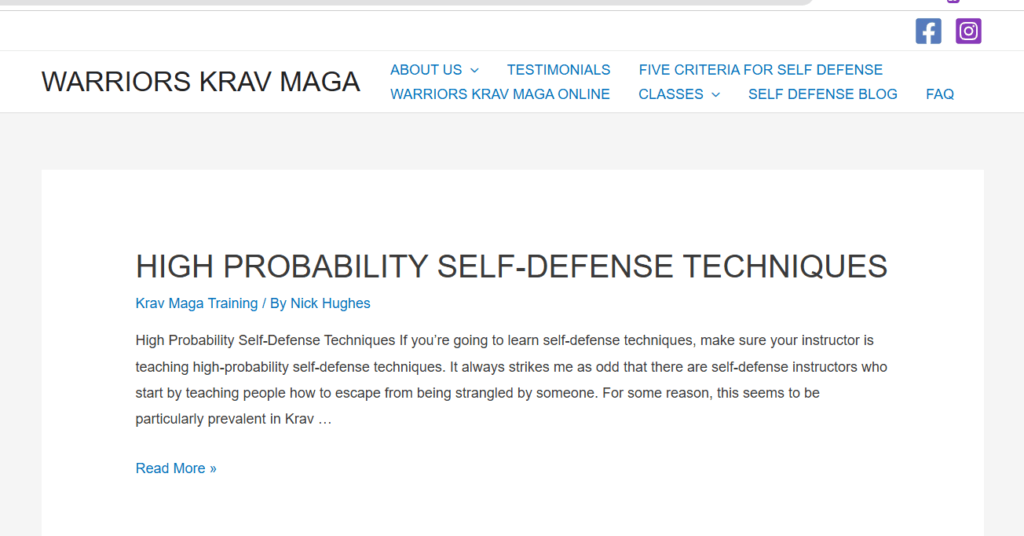
Educational content about self-defense techniques, safety statistics, and situational awareness usually converts at lower rates (1–3%).
However, it’s essential for building an audience that trusts you.
The strategy is to create authoritative “pillar” content—like a complete guide to self-defense basics—that naturally weaves in product recommendations as tools.
For instance, an article explaining escape techniques can logically recommend pepper spray to create an escape window.
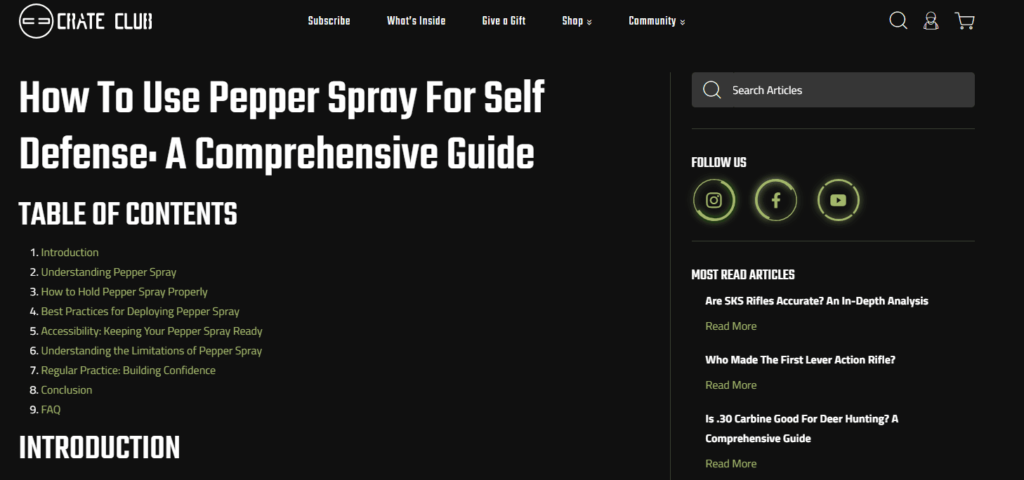
A discussion on home security concepts can link to specific door reinforcement hardware.
This approach builds authority. It dramatically boosts conversion rates when these educated readers eventually click through to product pages.
Platform-Specific Tactics
Success in this niche requires tailoring tactics to each platform’s strengths.
🚀 Focus Blogs on long-form, SEO-optimized content ranging from 1,500 to 3,500 words.
You should include detailed comparison tables, original photography, and clear call-to-action buttons to guide the reader.
🚀 Use YouTube for demonstrations and “best of” roundups because they drive conversions like crazy.
Be sure to verbalize your affiliate links clearly and place them right at the top of your video descriptions.
🚀 Leverage TikTok and Instagram for quick, shocking demos that prove effectiveness instantly.
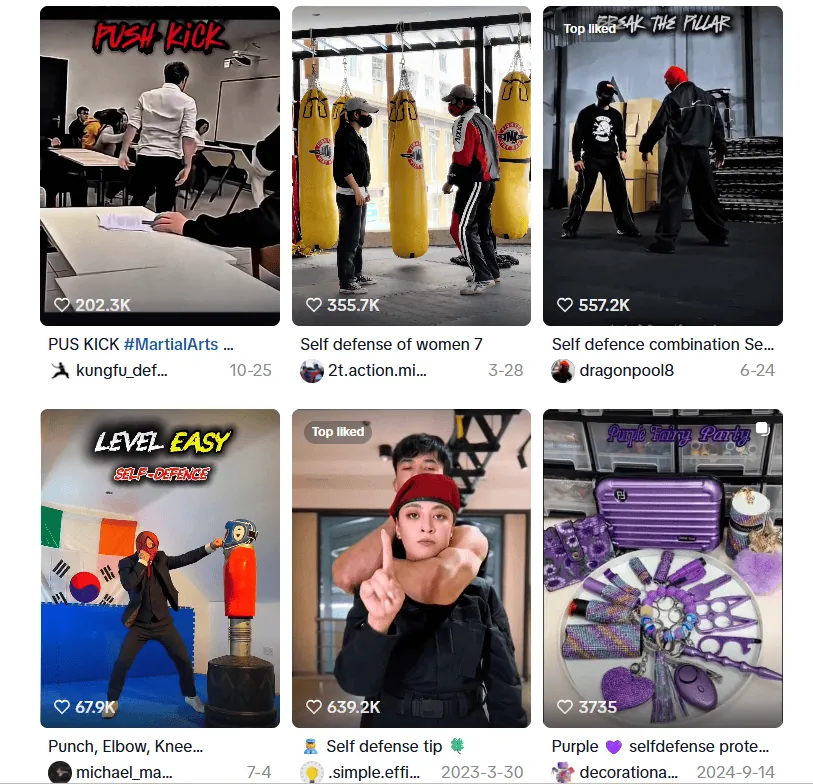
Since links aren’t clickable in captions, use a link-in-bio tool to direct traffic where it needs to go.
🚀 Create vertical Pinterest pins linking to reviews to capture high-intent traffic.
One affiliate we know built her entire business this way, using just 47 pins to drive 22,000 monthly visits and earn $4,800.
🚀 Prioritize value over hard selling in Email Marketing by sending weekly safety tips with product recommendations.
This approach builds relationships and yields 5–10% conversion rates from engaged subscribers.
Key insight: Most affiliates spread themselves thin across platforms. Pick one, dominate it for 6 months, then expand. Focus beats fragmentation.
How Much Can You Earn From Self-Defense Affiliate Marketing?
You’ve learned what to create and how to promote it. Now the question everyone asks: How much can you actually make—and how long does it take?
The earning potential follows a clear path based on site age and authority:
Year 1: $500–$1,500 monthly (building traffic)
Year 2: $1,500–$5,000 monthly (SEO rankings improve)
Year 3+: $5,000–$15,000+ monthly (diverse traffic, recurring)
Exact earnings depend on traffic volume and quality—specifically, the ratio of buyer-intent searches (“best pepper spray”) versus informational searches (“self-defense statistics”).
First Year: Realistic Expectations
Wondering why 80% of new affiliates quit before month 12?
Because the first year is brutal.
The first year is best seen as the investment phase.
Focus on content creation, not immediate revenue. New affiliates typically publish 40 to 60 articles—averaging 3 to 5 posts monthly—to reach 3,000 to 8,000 monthly visitors by year’s end.
Since SEO rankings take 6 to 9 months to kick in, the first six months bring minimal income—often $0 to $300 monthly.
You’re publishing consistently, checking Google Analytics obsessively, and earning basically nothing.
It’s demoralizing.
Most quit right here.
But here’s what we’ve learned working with affiliates on UpPromote: Every successful affiliate we’ve tracked has questioned whether to quit during this phase.
The ones who made it? They published through the silence.
We once worked with an affiliate who quit at month 7 after earning just $340 total.
“Complete waste of time,” he told us.
Three months later, his abandoned site was generating $2,800 in monthly autopilot income.
He missed the inflection point by 90 days.
That painful conversation taught us something we now tell every new affiliate: Months 8-12 is when Google rewards consistency.
Quitting at month 7 is like walking out of a movie 5 minutes before the twist ending.
By year’s end, a site with 5,000 monthly visitors can generate approximately $1,500 monthly (assuming 3% conversion and $10 average commission).
This requires 10 to 20 hours weekly of consistent effort.
The market rewards patience with compound interest.
Second Year: Growth Phase
Entering year two, you see the “compounding effects” of SEO. Older articles keep ranking while new content expands your reach.
But months 8-12? That’s when the magic happens.
Rankings suddenly jump. Traffic doubles. You wake up to sales notifications from posts you wrote 6 months ago. It’s incredibly rewarding—and exactly when most people have already quit.
During this growth phase, traffic often reaches 10,000 to 25,000 monthly visitors without a significant increase in workload.
Earnings get a boost from better conversion rates (3–5%). You achieve this by identifying which programs convert best and cutting underperforming offers.
Many affiliates also expand beyond blogging into YouTube, Pinterest, or email marketing.
Mathematically, this growth leads to peak months earning over $7,000, with stable averages of $3,000 to $4,000 per month—driven by higher earnings-per-visitor rates of $0.40 to $0.70.
Year Three and Beyond: Scaling
By year three, successful affiliates operate as established businesses with 30,000 to 80,000 monthly visitors. Traffic comes from search engines, email lists, and social media.
Revenue becomes more stable thanks to recurring commissions from subscription products (like safety monitoring services or martial arts course memberships).
This adds significant passive income.
While a site with 50,000 visitors could theoretically earn $37,500 monthly, realistic take-home for top performers lands between $18,000 and $22,000 monthly.
This accounts for refunds, cancellations, and seasonal drops.
Reaching this level requires treating affiliate marketing as a serious business, not a hobby.
Realistic Timeline and Effort
Achieving a stable monthly income of $3,000 or more generally takes 12 to 18 months of consistent effort.
This path involves:
- A startup investment of $500 to $2,000 (hosting, products for testing, software)
- The discipline to work through the “silent” first six months, where returns are minimal
- Publishing 3-5 posts monthly without fail
There’s a pattern we see repeatedly: Affiliates who publish 3-5 posts monthly for 12 straight months hit the $3,000/month mark.
Those who publish sporadically? They plateau under $500.
A major pitfall is quitting around month 8, just before traffic typically spikes.
However, those who stick it out for 18 to 24 months often secure a reliable income of $2,000 to $5,000 per month.
At that point, you can maintain this with reduced effort—just one or two articles monthly.
Key insight: The $3,000/month inflection point happens between months 12-18. Every successful UpPromote affiliate we’ve worked with has one thing in common: they didn’t quit at month 7.
How Do You Differentiate Your Self-Defense Affiliate Content From Competitors?
Great. You’re promoting the same products as 200 other affiliates. So, how do you actually stand out?
Standing out in the crowded self-defense market requires a strategic mix of five approaches:
- Add unique personal experience that competitors lack
- Focus on underserved sub-niches to avoid broad, crowded keywords
- Use high-effort content formats that are hard to copy
- Offer value beyond the sale through resources and community
- Build a real personal brand with authenticity and transparency
In a niche where dozens of affiliates promote identical products using similar descriptions, your authority and unique perspective are your only advantages.
They separate successful businesses from generic “list factories.”
Leverage Unique Personal Experience
Most self-defense content is made by general marketers who’ve never studied martial arts or tested the products they recommend.
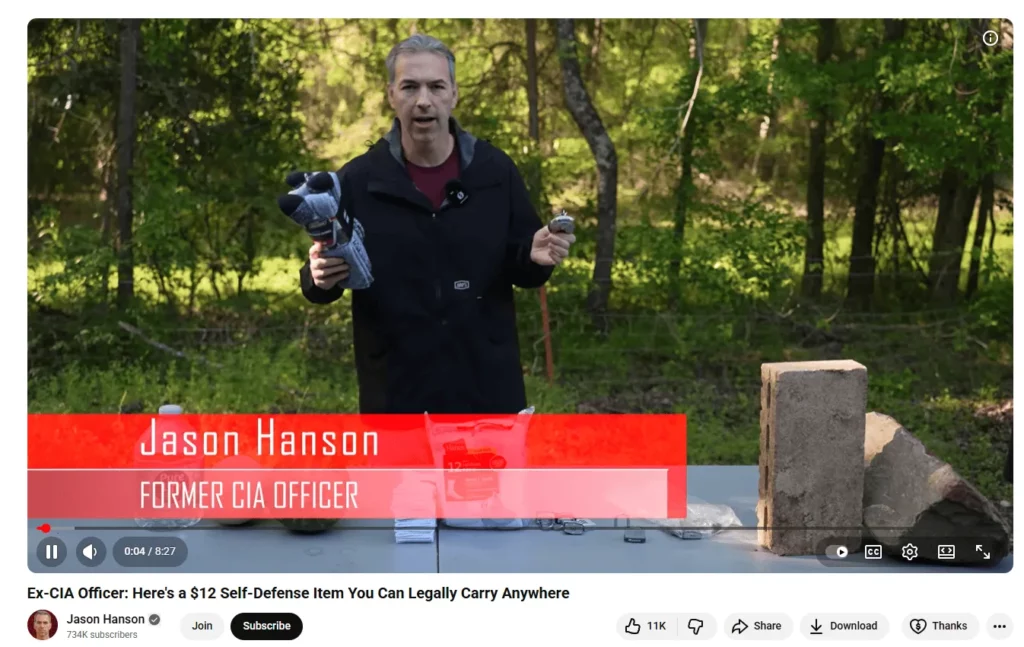
This creates a huge opportunity.
You can differentiate yourself by highlighting specific experience:
- Being a certified Krav Maga instructor
- Background in law enforcement or military
- Professional work as a security consultant
Unpopular opinion: “Authentic personal experience” beats “professional product testing.”
A college student sharing what she actually carries in her backpack converts better than a “reviewer” who’s scientifically tested 47 pepper sprays over three years—complete with spending records and photos—instantly beats competitors who rewrite Amazon reviews.
One affiliate we worked with spent $680 testing 11 pepper spray brands over 6 months.
She documented spray distance (8-25 feet variation), stream patterns (mist vs. stream), and temperature effects (-10°F to 95°F testing).
That $680 investment created a testing library competitors would need $680 and 6 months to replicate.
Spending $680 on pepper spray testing feels absurd at first.
But when that testing series drives $14,000 in first-year commissions? Best investment you ever made.
By documenting the journey through a series like “Testing Tactical Pens: Day 1,” you create unique content that competitors cannot copy without spending time and money.
Think they’ll invest $680 and 6 months just to copy your testing?
Target Underserved Sub-Niches
Most affiliate sites follow a predictable pattern of listing products followed by links. To stand out, you must embrace formats that are hard to copy.
🎥 Use Video demonstrations to show exactly how a pepper spray stream works. Letting the audience hear the actual volume of a personal alarm provides details that text simply cannot.
🧪 Add Scientific testing to your reviews to provide hard data. This means actually measuring flashlight brightness with a lux meter or testing alarm decibels with a sound level app.
⚖️ Create Legal guides that break down complex state-by-state laws. This is crucial content that helps users verify they can legally own the product you are recommending.
🛡️ Write Scenario-based walkthroughs to explain how a product fits into a complete defense strategy. This contextualizes the gear, showing a buyer exactly when and how they would use it.
🧩 Build Interactive tools like a “Self-Defense Product Selector” quiz or a compliance checker. These features personalize the experience and are incredibly difficult for competitors to replicate.
These high-effort formats signal quality. They are nearly impossible for low-effort competitors to outsource.
Content Format Innovation
Most affiliate sites follow a predictable pattern: list of products, followed by links.
To stand out, embrace formats that are hard to copy.
Video demonstrations are powerful. Showing exactly how a pepper spray stream works, or letting the audience hear the actual volume of a personal alarm, provides details text cannot.
Beyond video, scientific testing adds hard data. This means measuring flashlight brightness with a lux meter or alarm decibels with a sound level app.
Other innovative formats include:
- Legal guides breaking down state-by-state laws
- Scenario-based walkthroughs explaining how a product fits into a defense strategy
- Interactive “Self-Defense Product Selector” quizzes
- Legal compliance checkers
These high-effort formats signal quality. They’re nearly impossible for low-effort competitors to outsource.
Additional Value Creation
To turn visitors into loyal followers, offer help beyond the sales pitch.
Visitors are more likely to return to sites providing free, actionable resources, namely: downloadable personal safety checklists, emergency contact templates, and home security audit worksheets.
Interactive tools like a “Self-Defense Product Selector” quiz or legal compliance checker encourage engagement.
Building community is vital. This happens through active comment sections, forums, or Facebook groups.
By offering educational value—like a free email course on situational awareness—you build relationships based on trust.
When visitors view your site as a helpful resource rather than just a catalog, they’re much more likely to trust recommendations and buy.
Personal Brand Building
Generic affiliate sites feel soulless.
Building a personal brand creates loyalty that protects your business from becoming just another commodity.
This involves using a consistent voice reflecting who you really are—whether technical, serious, or empowering.
Transparency is key. Clearly explain your review process, testing standards, and how you select products.
A strong author presence bridges the gap between screen and human connection.
Use photos and videos of yourself actually handling products. Interact with your audience by replying to comments and using their suggestions.
Stand for specific values like non-violent defense or accessibility. This turns you into a trusted figure, not just another website.
Bottom line: In a niche where everyone promotes identical products from identical affiliate programs, your unique perspective is your only sustainable competitive advantage.
Don’t outsource it. Don’t bland it up trying to appeal to everyone.
The riches are in the niches—and in having the courage to take clear stances.
Conclusion
Setting up a high-trust affiliate program is one of the best things you can do for your self-defense brand. By following these steps, you can connect with authentic experts who will share your products with the people who need them most.
You have the game plan. Now, let’s go build your program and watch your community grow.

Ellie Tran, a seasoned SEO content writer with three years of experience in the eCommerce world. Being a part of the UpPromote team, Ellie wants to assist Shopify merchants in achieving success through useful content & actionable insights. Ellie's commitment to learning never stops; she's always eager to gain more knowledge about SEO and content marketing to create valuable content for users. When she's not working on content, Ellie enjoys baking and exploring new places.