


The woodworking market is going steadily in the coming years with increasing demand for quality tools and supplies. This is a great opportunity for professional woodworkers, hobbyists, and content creators to tap into this thriving industry. You can earn generous commissions by promoting top brands and high-quality woodworking products.
We’ve compiled the 15 best woodworking affiliate programs, including information on commissions, cookie durations, and other key benefits. Let’s dive in and find the perfect products to share with your audience today!
Quick Comparison
| Program Name | Commission (%) | Cookie Duration (Days) | Niche Suitable | Affiliate’s Rating |
|---|---|---|---|---|
| Rockler | 5% | 14 | Woodworking tools, hardware, DIY | ⭐⭐⭐⭐ (4.0/5) |
| Woodworkers Guild of America (WWGOA) | 25% | 60 | Woodworking courses, tutorials, digital learning | ⭐⭐⭐⭐⭐ (4.8/5) |
| KC Tool | 10% | 30 | Premium German tools, hand tools | ⭐⭐⭐⭐ (4.3/5) |
| Hardware World | 6% | 30 | DIY, hardware, home improvement | ⭐⭐⭐⭐ (4.1/5) |
| Furniture & Wood Craft Plans | Up to 75% | 60 | Woodworking plans, DIY project guides | ⭐⭐⭐⭐⭐ (4.9/5) |
| Cucamonga Woodworking | 8% | 30 | Woodworking accessories, silicone mats, hobbyist tools | ⭐⭐⭐⭐ (4.2/5) |
| Wood Finishes Direct | 2% | 30 | Wood oils, stains, varnishes, finishers | ⭐⭐⭐ (3.5/5) |
| Enjoy The Wood | Up to 14% | 30 | Wooden décor, wall maps | ⭐⭐⭐⭐ (4.4/5) |
| Ted’s Woodworking | 75% | 60 | Woodworking plans (digital) | ⭐⭐⭐⭐⭐ (4.7/5) |
| Stone Coat Countertops | 2% | — | Epoxy kits, countertops refinishing | ⭐⭐⭐ (3.6/5) |
Top 15 Woodworking Affiliate Programs in 2025
1. Rockler
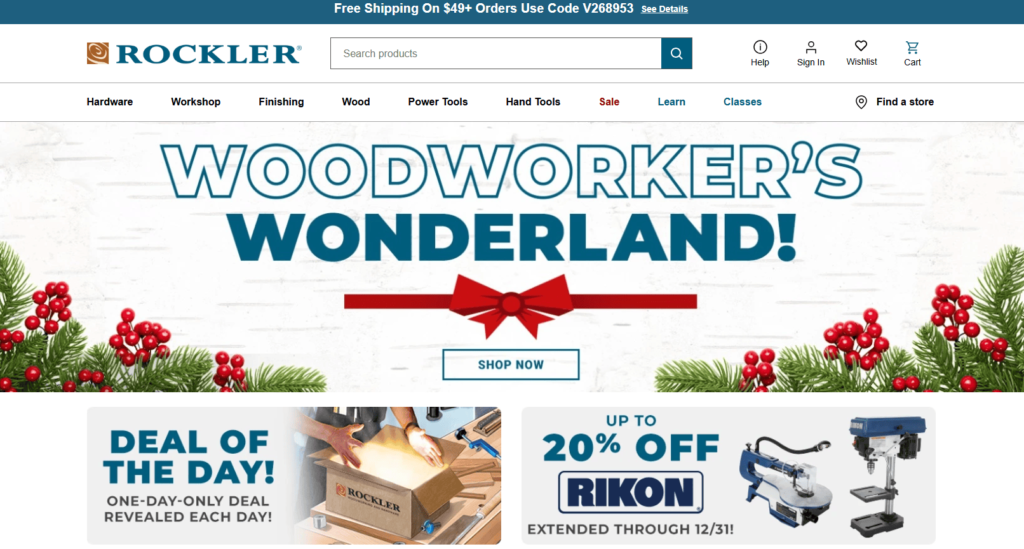
Rockler is a leading provider of woodworking tools, hardware, and supplies. They operate over 30 stores across the U.S. and also provide a well-stocked online store for woodworkers and DIYers.
The Rockler woodworking affiliate program offers a commission rate of 5% on every successful order you refer. The cookie window lasts 14 days from the customer’s first click on your link.
You’ll receive payouts if your earnings reach a $25 minimum balance. The brand provides a range of ready-made banners, buttons, images, and content to help you create engaging promotions and drive more sales.
|
2. Woodworkers Guild of America
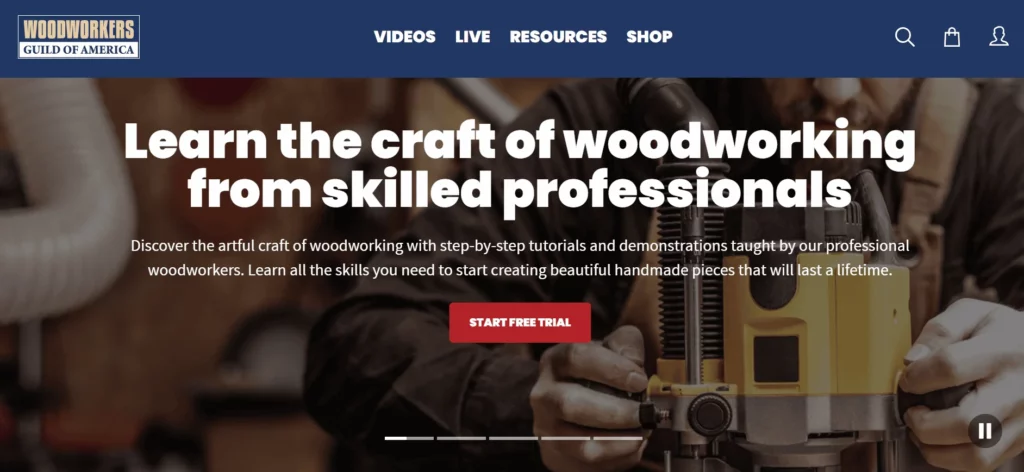
Woodworkers Guild of America (WWGOA) helps woodworkers improve their skills through video tutorials, articles, project plans, and expert guidance. In addition, their members can gain access to recorded live events and enjoy special discounts on store products.
You can receive a competitive 25% commission on every sale made through your unique referral link. The 60-day referral window allows you to collect commissions on purchases completed within two months of the customer’s first click.
Their woodworking affiliate program runs on ShareASale, so you’ll need to register on the platform before joining. Once you’re in, you can track your clicks, referrals, sales, and commissions in real time.
|
3. KC Tool
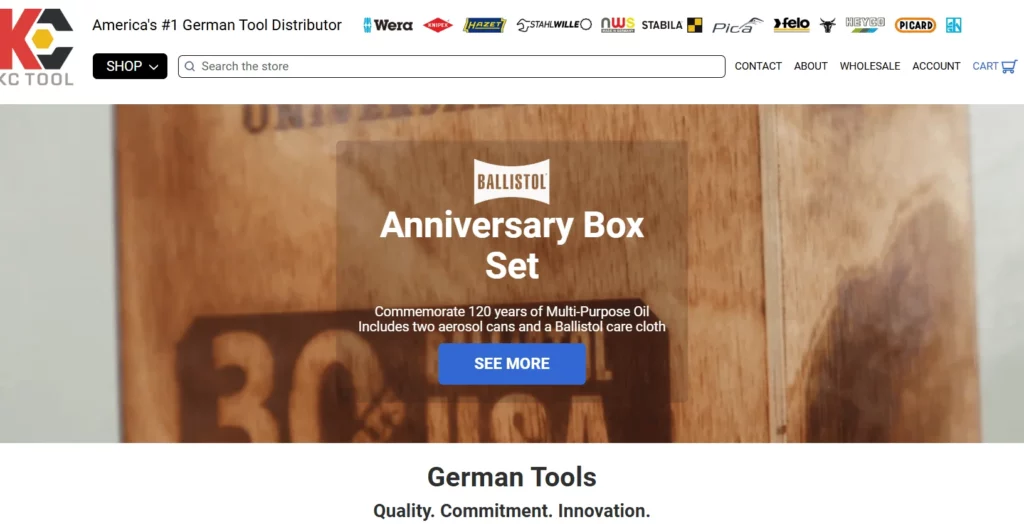
KC Tool is a leading distributor of high-quality German hand tools in the United States. They stock over 10,000 tools from top-tier brands such as Felo, Gedore, Halder, Hazet, Heyco, Knipex, NWS, Picard, Stabila, Stahlwille, and Wera.
When joining this woodworking affiliate program, you’ll receive a 10% commission on every order placed through your link. Their program offers a 30-day cookie window, so you can earn commissions on purchases within a month of the customer’s first click.
You can choose from different payment methods, such as PayPal, Trolley, or gift cards. You can leverage their ready-to-use banners to make your promotion more impressive and attract a larger audience.
|
4. Hardware World
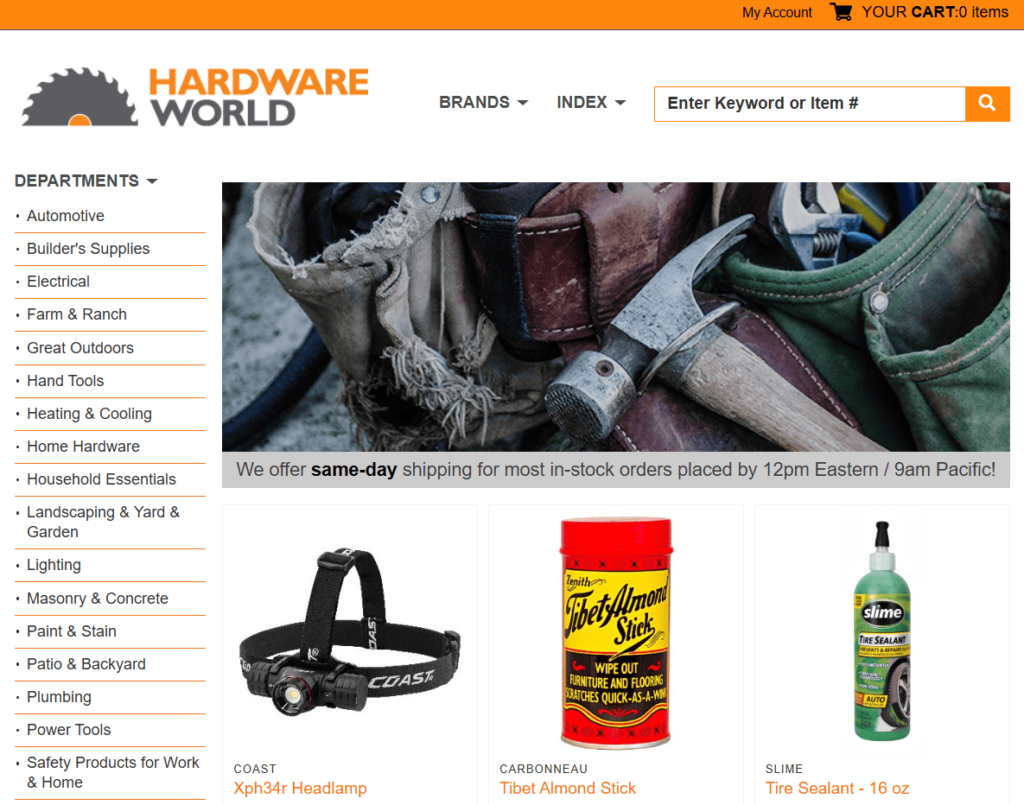
Hardware World sells over 40,000 products for home improvement and repair projects, such as electrical supplies, plumbing fixtures, fasteners, lighting, paint, and woodworking tools. The brand is popular among DIY enthusiasts thanks to competitive pricing, same-day shipping, and a 30-day return policy.
With this woodworking tools affiliate program, you can a commission rate of 6% for every sale through your link. The cookies are valid for 30 days, so that you can earn money for purchases within a month of the customer’s first click.
Their regularly updated data feed will keep your promotion up-to-date with the latest product line and information. You can monitor your promotional results via your personalized tracking dashboard.
|
5. Furniture and Wood Craft Plans
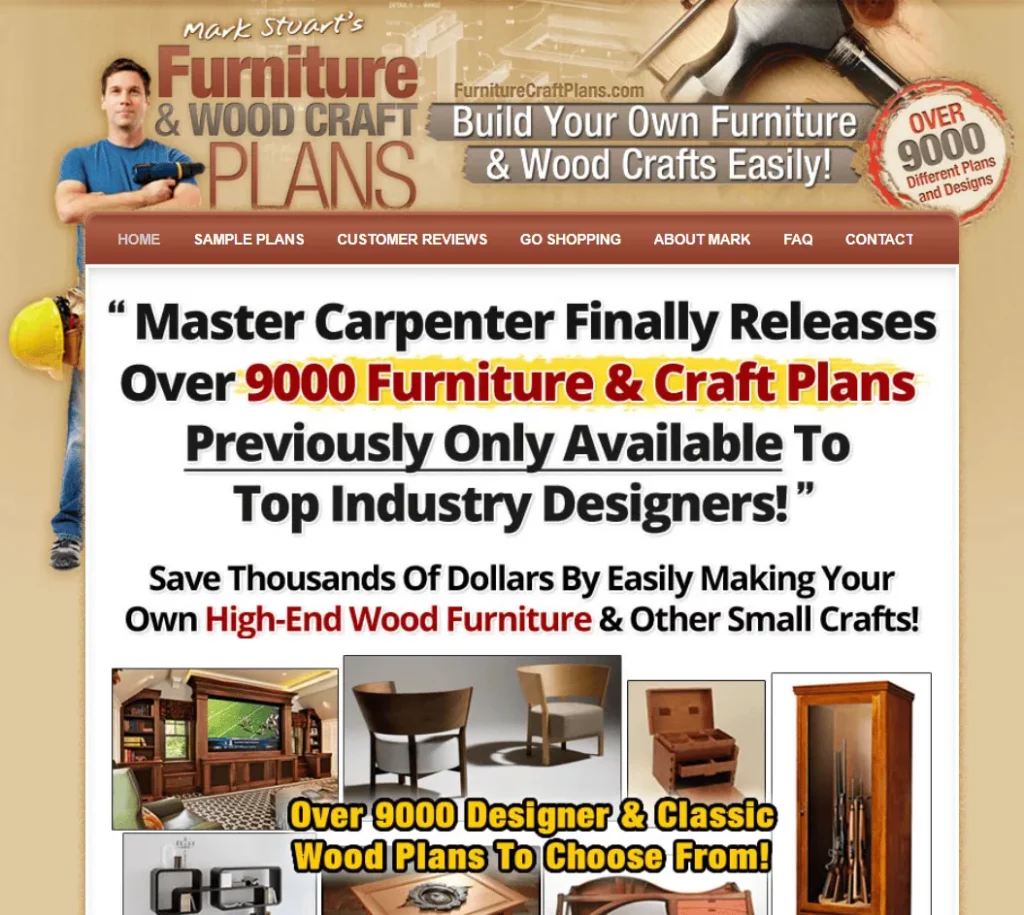
Furniture and Wood Craft Plans provides woodworking hobbyists and professionals with detailed blueprints to create their own furniture pieces. Each plan includes step-by-step instructions, material lists, and diagrams for building functional items like tables, chairs, cabinets, and beds.
You will have a chance to earn a high commission of up to 75% as their affiliate. The cookie will remain valid for 60 days following the customer’s first click on your unique link.
This woodworking affiliate program supports your promotion with many tools, such as banners, images, videos, and content. You can add them to your website to attract your audience’s attention.
|
6. Cucamonga Woodworking
Cucamonga Woodworking sells high-quality tools and accessories for woodworking hobbyists and professionals. They are widely recognized for their silicone workbench mats designed for woodworking tasks like glue-ups and sanding.
The Cucamonga Woodworking affiliate program allows affiliates to earn 8% for each completed order. The 30-day cookie ensures you get rewarded for purchases made up to a month after someone clicks your link.
They pay out your commission through PayPal for convenience. You can request a withdrawal when your balance reaches a minimum of $25.
|
7. Wood Finishes Direct
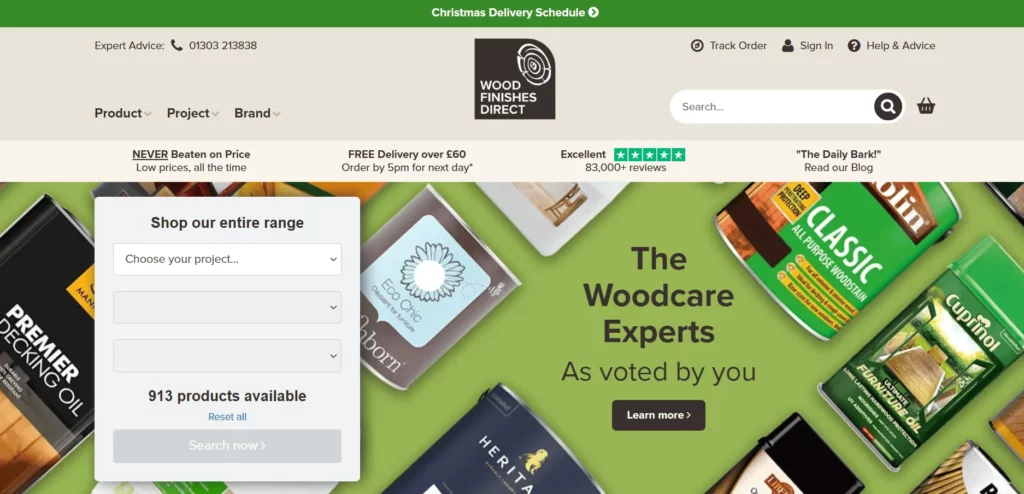
Wood Finishes Direct is a UK-based online retailer of wood finishing products. Customers can find over 8,000 wood care items like oils, stains, varnishes, and preservatives from more than 60 brands.
Affiliates can receive a 2% commission on successful purchases when joining their woodworking affiliate program. The cookie will remain valid for 30 days from the customer’s first click on your link.
You can make your website stand out by adding engaging banners, videos, and content provided by the brand. Their dedicated affiliate managers are ready to support you with technical guidance and product knowledge to help you optimize your promotions.
|
8. Enjoy The Wood

Enjoy The Wood creates high-quality wooden wall decor, especially known for their wooden world maps. Customers can personalize their items with various colors, sizes, and designs to match their personal style and home design.
Their woodworking affiliate program offers a high commission rate of up to 14% for each approved sale. You have a full month from the customer’s first click on your link to earn money on purchases.
The brand will process your payouts through PayPal, a secure and widely used online payment platform. You can place their vibrant banners and links on your site or blog to create engaging promotional content.
|
9. Ted’s Woodworking
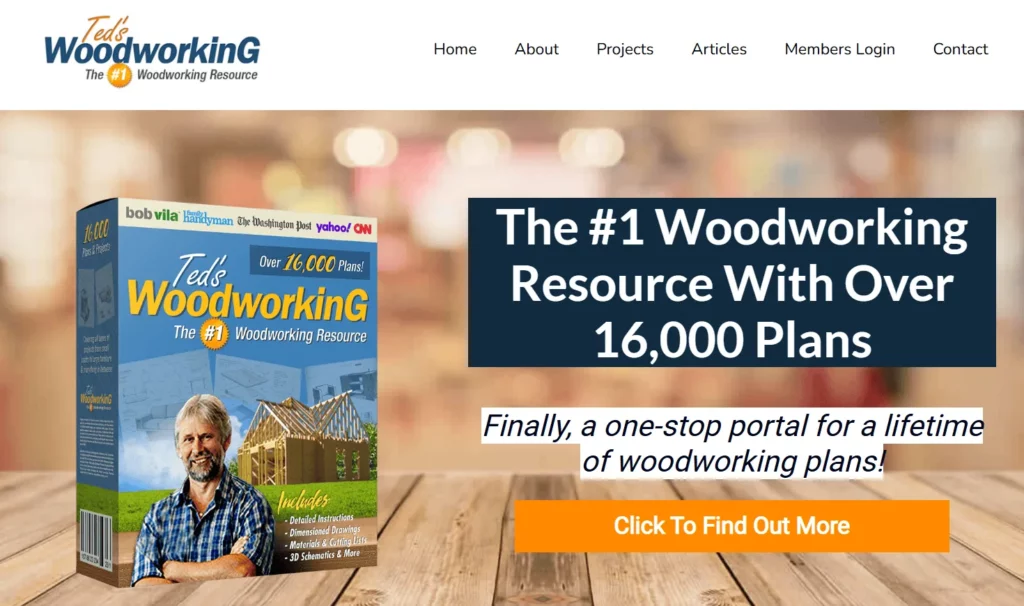
Ted’s Woodworking offers over 16,000 woodworking plans for all skill levels. These projects range from simple crafts to complex furniture builds, with in-depth blueprints, step-by-step instructions, and a full list of required materials and tools.
You will get a generous 75% commission on all sales made through your link when joining the Ted’s Woodworking affiliate program. The referral window will stay active for 60 days from the customer’s first click.
The brand supports your promotions with a vast selection of attractive graphics, email swipes, and other resources. You can simply place them on your website or blog to start promoting their products.
|
10. Stone Coat Countertops
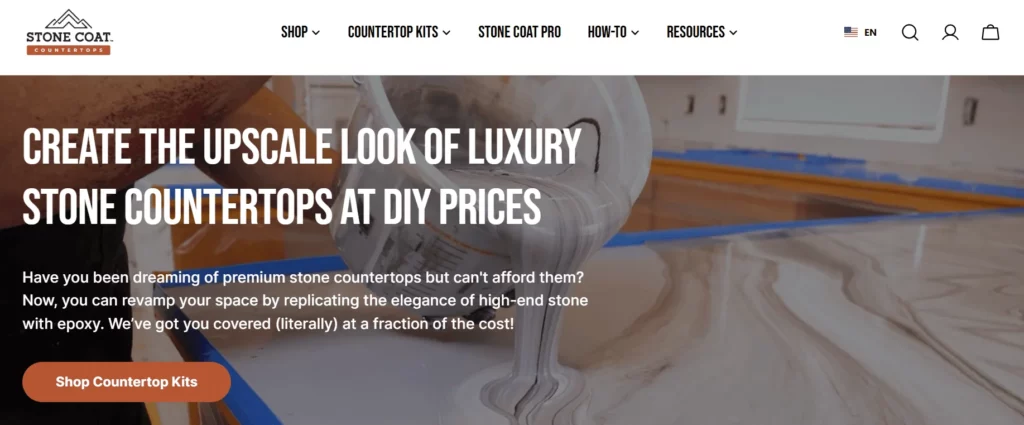
Stone Coat Countertops is renowned for DIY epoxy kits and supplies for creating and refinishing countertops, tables, and other wooden or composite furniture surfaces. They also provide practical tutorials to guide users on how to develop professional-grade finishes with their products.
The brand gives you a 2% commission on each successful purchase made through your link. You will receive your earnings through PayPal when your balance hits $50.
By joining this woodworking affiliate program, you can share their special discount codes on your site to encourage quick purchases.
|
11. Advanced Machinery
- Commission rate: 5-7%
- Cookie duration: 30 days
Advanced Machinery sells high-quality woodworking machinery and tools for professionals and craftsmen worldwide. They are best known in the industry for their Hegner scroll saws and Tormek sharpening machines.
12. Axminster Tools
- Commission rate: 1%
- Cookie duration: 30 days
Axminster Tools is a leading manufacturer and retailer of woodworking tools and machinery, serving millions of buyers. They also offer workshops and learning resources for woodworkers of all skill levels.
13. Tools Today
- Commission rate: 5%
- Cookie duration: Not mentioned
Tools Today supplies more than 8,000 cutting tools, power tools, and CNC machinery for professional and industrial use. They also share high-quality tutorials and project inspiration for hobbyists and skilled workers working with wood, plastic, aluminum, and composite materials.
14. Rustic Lumber Store
- Commission rate: 5%
- Cookie duration: Not mentioned
Rustic Lumber Store is a family-owned business providing reclaimed and sustainable wood products for home and commercial projects. They offer various live-edge slabs, rustic boards, siding, timbers, and handcrafted furniture pieces.
15. Kenny’s Yard
- Commission rate: 50%
- Cookie duration: Not mentioned
Kenny’s Yard offers outdoor woodworking plans with step-by-step blueprints for DIYers. Each plan is in PDF format, so users can download and follow the instructions easily.
Should You Promote Specialty Woodworking Retailers or Amazon Associates?
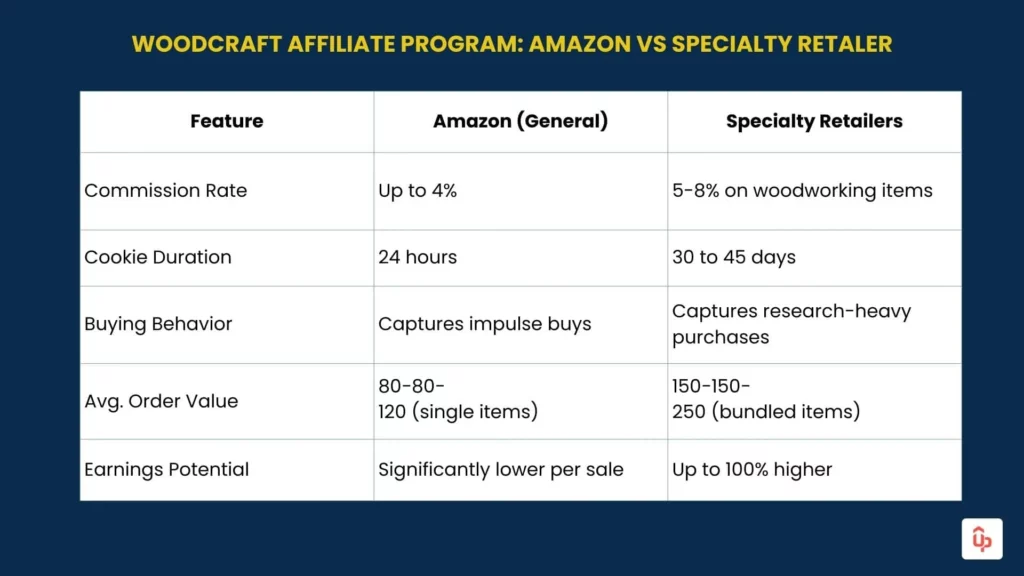
Specialty woodworking retailers like Rockler outperform Amazon Associates for dedicated woodworking content.
Rockler offers 3% commission, 30-day cookies, and a $180 average order value. Woodcraft offers the same deal with their affiliate program running on CJ.
Compare that to Amazon’s 3-4% commissions, 24-hour cookies, and $80-120 average orders.
But here’s when Amazon makes sense: mixed-niche blogs or international audiences that specialty retailers can’t serve.
Here’s a quick comparison table for you.
Now, let’s dive in.
Commission Rate Reality
The math heavily favors specialty retailers.
Amazon offers up to 4% on tools and home improvement. Specialty retailers pay 5-8% on woodworking-specific items.
Consider a $400 planer purchase. Cucamonga’s 8% gives you $32. Amazon’s 4% gives you just $16.
That’s a 100% income difference from the exact same traffic.
If you generate 100 tool sales monthly, that gap translates to an extra $1600 every single month. Just by switching affiliate programs.
Cookie Duration Advantage
Amazon’s 24-hour cookie window captures impulse buys. But it misses the mark for research-heavy woodworking investments.
Think about how you buy a $2,000 table saw. You click a review, spend two weeks reading competing opinions, watch YouTube videos, check warranty details, then finally purchase.
Rockler’s 30-day window and Woodcraft’s 45-day window let you earn commissions from this natural buying behavior.
Here’s the data we’ve tracked across UpPromote users: 40-60% of specialty retailer conversions happen 3 to 14 days after the initial click.
Amazon? Over 80% convert within the first 24 hours.
Those two weeks are where your money lives.
Average Order Value
Specialty woodworking retailers consistently report average order values between $150 and $250.
Why? Customers bundle items—clamps, router bits, and lumber in one transaction.
Amazon woodworking orders average just $80-120. Usually single-item purchases.
These higher cart values amplify commission differences. A $200 specialty order at 5% earns you $10. A typical $90 Amazon order at 3% nets you only $2.70.
Do the math.
When Amazon Makes Sense
Despite lower rates, Amazon wins in specific scenarios.
You should use Amazon links when:
Your audience is international. Rockler and Woodcraft generally ship only to the US and Canada. If 30% of your traffic comes from Europe or Asia, you’re leaving money on the table with US-only programs.
You’re reviewing budget tools under $50. Shipping convenience outweighs specialty branding for small purchases.
You’re promoting consumables. Sandpaper, batteries, blades, glue, finishes—Amazon offers competitive pricing and fast shipping.
You run a mixed-niche blog. If woodworking is one of many topics, managing multiple affiliate programs becomes impractical.
The Hybrid Strategy
The most successful woodworking affiliates don’t pick sides.
They use specialty retailers for high-ticket tool reviews—table saws, planers, router tables, major machinery. They use Amazon for consumables and accessories.
Here’s how this works in practice: In a single article reviewing a $600 bandsaw, you link to Rockler for the main tool. But you link to Amazon for the $15 replacement blades mentioned in the same text.
Bottom line: Don’t choose one over the other. Use specialty retailers for high-ticket reviews, Amazon for accessories. The 5% vs. 3% difference compounds fast when you’re driving hundreds of sales monthly.
How Should You Promote Woodworking Affiliate Programs?
You should promote woodworking affiliate programs by creating a mix of high-value content formats.
Focus on comprehensive buying guides (2,500+ words comparing 7–10 products), detailed product reviews with real-world testing (1,500–2,000 words), data-driven brand comparisons, project tutorials with embedded tool recommendations, and organized resource hubs.
Comprehensive Buying Guides (Highest Converting Format)
Your most effective strategy? Create “[Tool Category] Buying Guide” posts.
Think “Best Table Saws 2025” or “Top Router Tables for Small Workshops.”
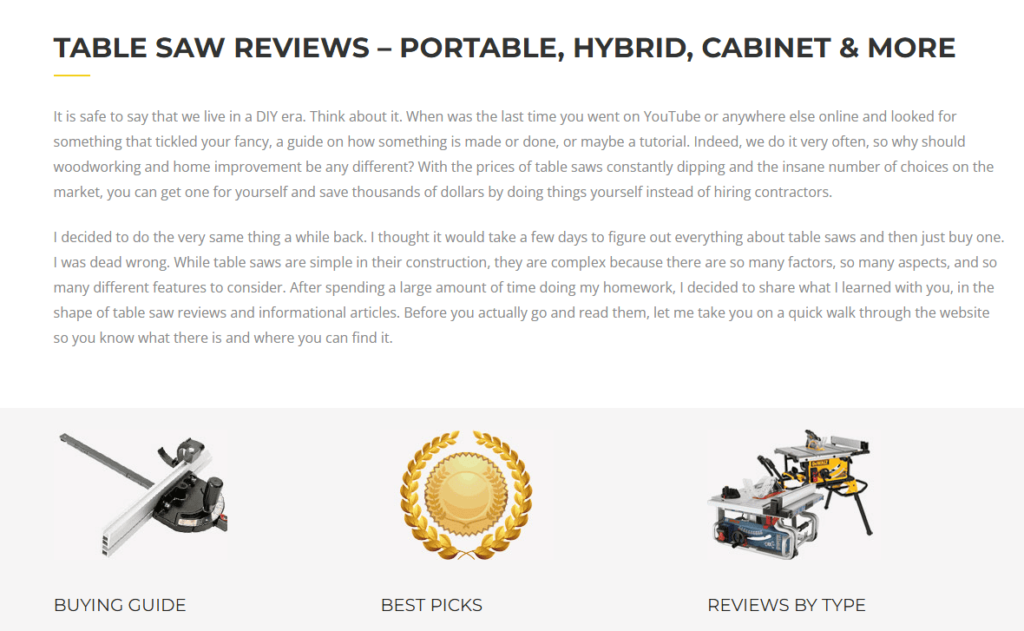
These articles should compare 7–10 products organized by budget: $300 entry-level, $800 mid-range, $2,000+ premium models.
What makes them convert?
Your guide needs three essential elements:
Comparison tables showing specs like horsepower, blade size, weight capacity, and warranty terms at a glance.
Clear pros and cons lists for quick scanning. Your reader is comparing five tabs. Make your content the easiest to digest.
Specific use-case recommendations. Don’t just say “best overall.” Tell them: “Best for small workshops with limited power” vs. “Best for professional furniture makers running 8+ hours daily.”
These posts capture high-intent traffic—people searching “best [tool].” They convert at 3–5% because your reader is already at the buying stage.
Detailed Individual Product Reviews
For individual products, publish deep-dive reviews focused on one tool tested through actual usage.
Target 1,500–2,000 words. Format example: “DeWalt DW745 Review: 6 Months of Daily Use.”
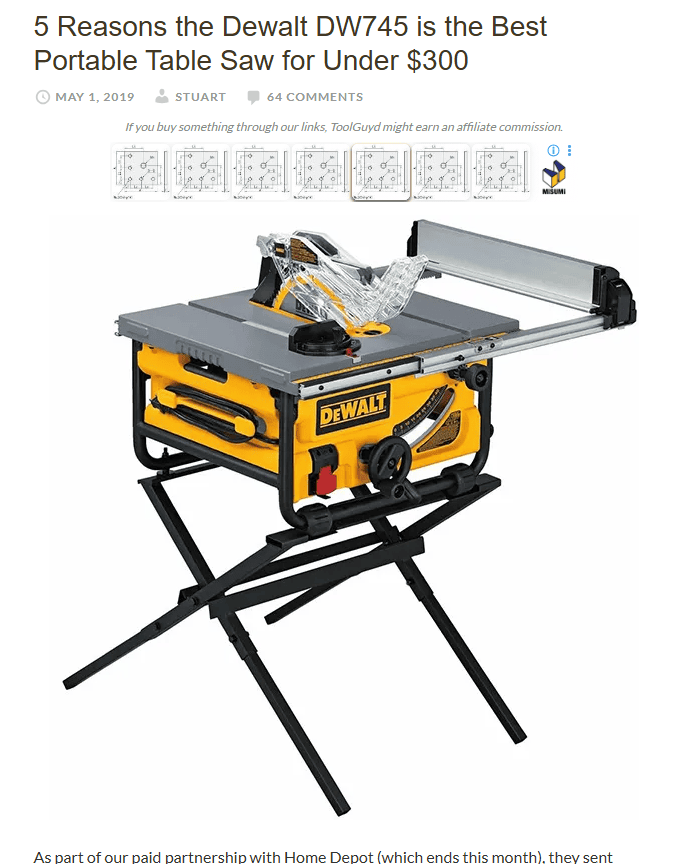
Your review should cover:
Unboxing and setup. Include photos. Did anything surprise you? Was assembly difficult? This builds trust through transparency.
Performance testing across multiple tasks. Don’t just say “cuts well.” Show crosscuts, rip cuts, dado cuts, bevel cuts. Include photos of the results.
Comparison to alternatives. “I previously owned a Craftsman contractor saw. This DeWalt cuts 40% faster and the fence stays square—no more constant adjustments.”
Specific verdict. End with “You should buy this if [X criteria]” and “Skip this if [Y criteria].”
Add schema markup to get your review featured in Google’s product review rankings.
Head-to-Head Comparison Posts
To capture buyers in the final decision stage, create “[Brand A] vs. [Brand B]” posts.
Examples: “Festool vs. SawStop Table Saws” or “Lie-Nielsen vs. Veritas Hand Planes.”
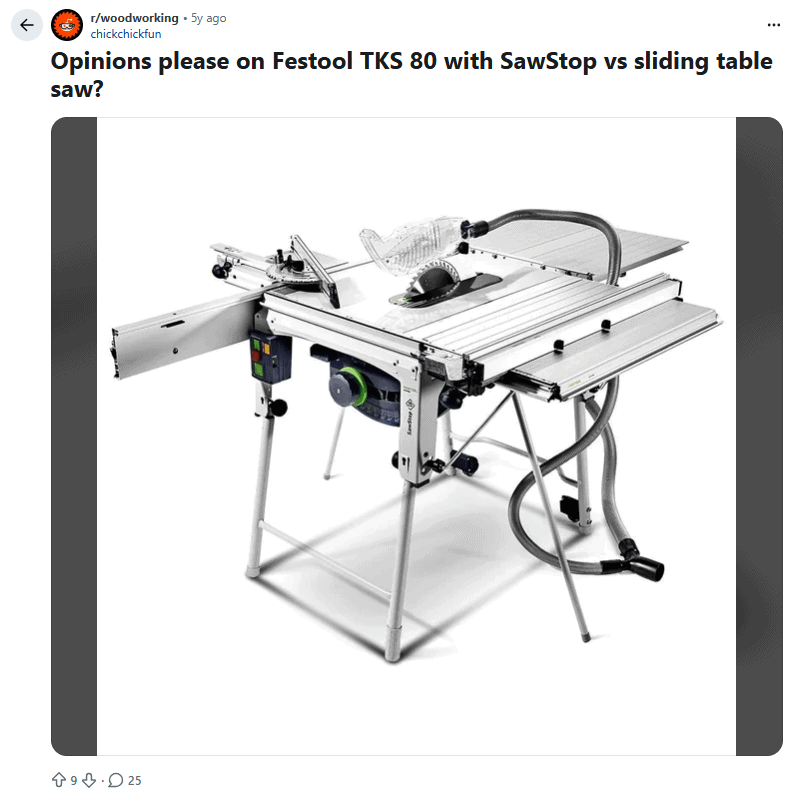
These articles need side-by-side specification tables, photo comparisons, and price-to-feature value analysis.
But here’s what separates good comparisons from great ones: decisive advice.
Don’t end with “both are good options.” Tell your reader: “Choose Brand A if you focus on dust collection and have 220V power. Choose Brand B if you need portability and work in a garage with standard 110V outlets.”
These posts convert at 5–8% because your reader has narrowed their choice to two options. You’re making the final decision easier.
Project Tutorials with Contextual Integration
Affiliate links work naturally within “How-to” workflow tutorials.
Example: “How to Build a Farmhouse Table” guide.
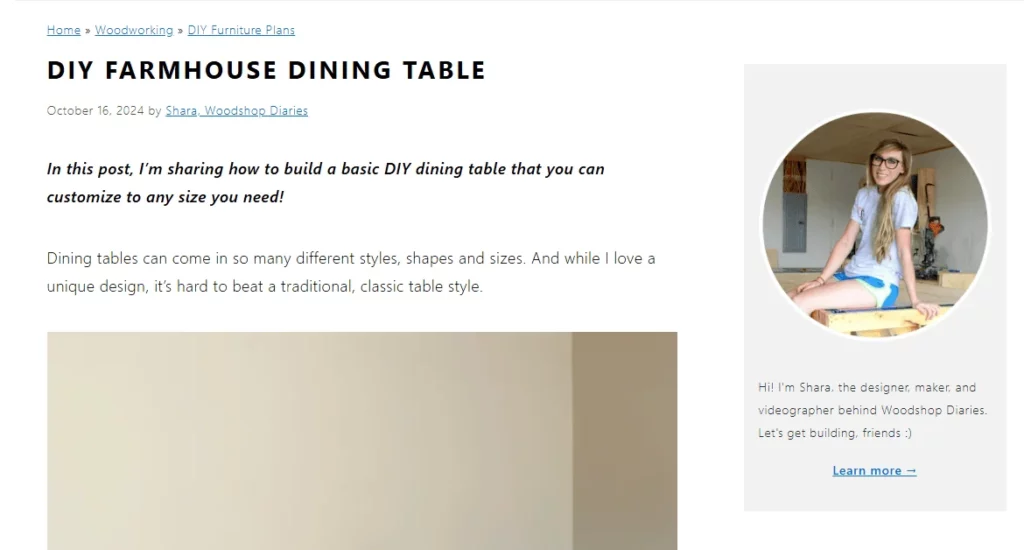
You mention tools as solutions to specific steps in the process. Step 3: “Mill lumber to thickness—I used my DeWalt DW735 planer, which handles this in 15 minutes versus 2+ hours of hand-planing.”
And here’s why this works: readers engaged in a project are more receptive to tools solving immediate pain points than standalone product ads.
They’re not browsing. They’re building. They need solutions now.
Resource Hub Architecture
Build a centralized “Complete Woodworking Tool Guide” page to structure your affiliate content.
This hub links to all your buying guides, reviews, and tutorials. Organize by category (Power Tools, Hand Tools, Safety, Lumber) or skill level (Beginner, Intermediate, Advanced).
The SEO benefit is significant. Your hub captures broad search terms like “woodworking tools” and distributes that traffic to specific monetized pages.
Hubs convert at just 1–2%, but they drive about 10 times the traffic volume of individual review posts.
SEO Strategy: Targeting Bottom-Funnel Keywords
Focus on low-volume, high-intent keywords over broad informational queries.
You should target phrases like:
– “Best [tool] 2025”
– “[Brand] review”
– “Is [tool] worth it?”
– “Which table saw for small workshop?”
These convert at 3–7%.
Compare that to “How to use [tool]” queries that convert at less than 1%.
Use tools like Ahrefs or SEMrush to find specific user questions, then create dedicated posts answering them.
Strategic Internal Linking
Your affiliate strategy needs a structured internal linking funnel.
Here’s how this works: Your “how-to” tutorials attract the most organic search traffic. They’re educational. But they rarely generate direct sales.
You bridge this gap with contextual linking.
In your “Hand-cut Dovetails Tutorial,” don’t just list tools at the bottom. Weave links into the narrative where pain points occur.
When discussing the difficulty of making straight cuts, link to your “Best Dovetail Saw Review.” When explaining how to clean out pins and tails, link to your “Chisel Buying Guide.”
Include 3–5 contextual links per post. You’re guiding readers from learning to buying.
Transition to Video Strategy
YouTube promotion requires a fundamental shift from blog strategy.
Your blog focuses on SEO, static comparison tables, and technical specifications. YouTube requires visual storytelling and personality-driven content.
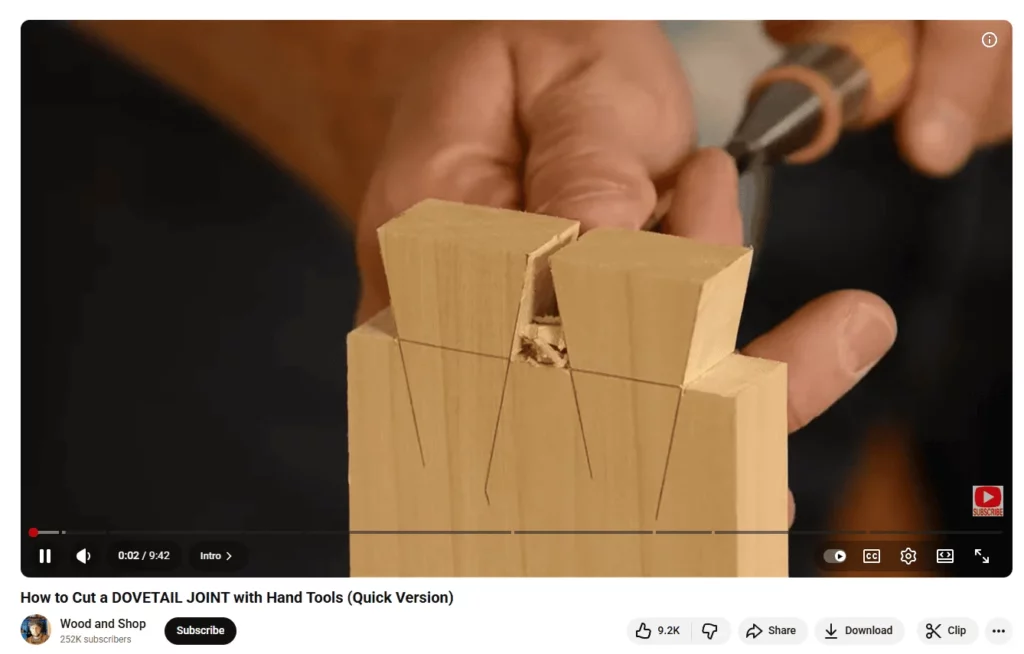
Text is excellent for analyzing data. Video is superior for building trust through demonstration.
Your audience wants to hear the motor of a table saw, see the dust collection in action, watch you struggle with (or master) a tool in real-time.
Think of it this way: Video is your emotional hook and visual proof. Your blog provides the technical details and affiliate purchase link.
My take: YouTube isn’t replacing your blog—it’s the emotional validation that sends viewers back to your detailed written reviews for the final purchase decision.
How Much Traffic Do You Need to Make Meaningful Affiliate Income?
Woodworking affiliate income becomes meaningful—surpassing $500 monthly—at about 5,000 to 10,000 monthly visitors.
At this level, assuming a 3–5% conversion rate and $200 average order value with 5% commission, your site generates $0.30 to $0.50 per visitor. That’s $2,400 to $4,000 in monthly earnings.
But here’s what most people miss: highly targeted content can hit that $500 milestone with just 1,500 to 2,000 visitors.
How? Conversion rates of 5–8% and readers purchasing multiple tools in a single session.
Quality beats quantity every time.
Revenue Per Visitor Math
Understanding this formula is crucial for setting realistic goals.

The math: Total visitors × Conversion rate × Average order value × Commission percentage = Total revenue
Example: 10,000 visitors at 3% conversion (300 buyers) with $200 average orders at 5% commission generates $3,000 monthly.
Here’s the power of this formula: increasing any single variable boosts total income.
Raise your conversion rate to 4%? You jump to $4,000. Increase average order value to $250? You hit $3,750.
Focus on improving conversion rates and selecting high-ticket programs. These are easier to control than raw traffic growth.
Traffic Levels and Income Expectations
Income scales non-linearly with traffic. Results vary based on specialty retail programs (5-8% commission) versus Amazon (3-4% commission).
Assuming specialty retailer model:
1,000 monthly visitors: $200–$400/month
Income driven by high-conversion content focused on workshop setups or specific project needs.
3,000 monthly visitors: $600–$1,200/month
Your blog has a mix of informational and commercial content. Consistent revenue begins.
5,000 monthly visitors: $1,000–$2,000/month
Sustainable part-time income. Traffic compounds with established authority.
10,000 monthly visitors: $2,000–$4,000/month
Full-time income potential with optimization.
25,000+ monthly visitors: $5,000–$10,000/month
Established authority site.
(Important Note: Amazon-focused strategies run 30–50% lower.)
Content Quality vs. Traffic Volume
Raw traffic volume matters less than content quality and user intent.

We’ve seen this pattern on UpPromote marketplace repeatedly: One creator with 2,000 monthly visitors and laser-focused workshop setup guides consistently earns $800–$1,200 monthly.
Another with 15,000 visitors and generic “tool mention” posts struggles to break $500.
The difference? Conversion rate: 8% vs. 1%.
A single high-quality workshop setup guide converting at 8% generates $400–$640 monthly from just 1,000 visitors. That’s about $8 per visitor.
Ten mediocre product mention articles converting at 1% require 10,000 visitors to generate similar $500–$700.
Strategic, high-converting content consistently outperforms high-volume, low-quality approaches.
Email List Multiplier Effect
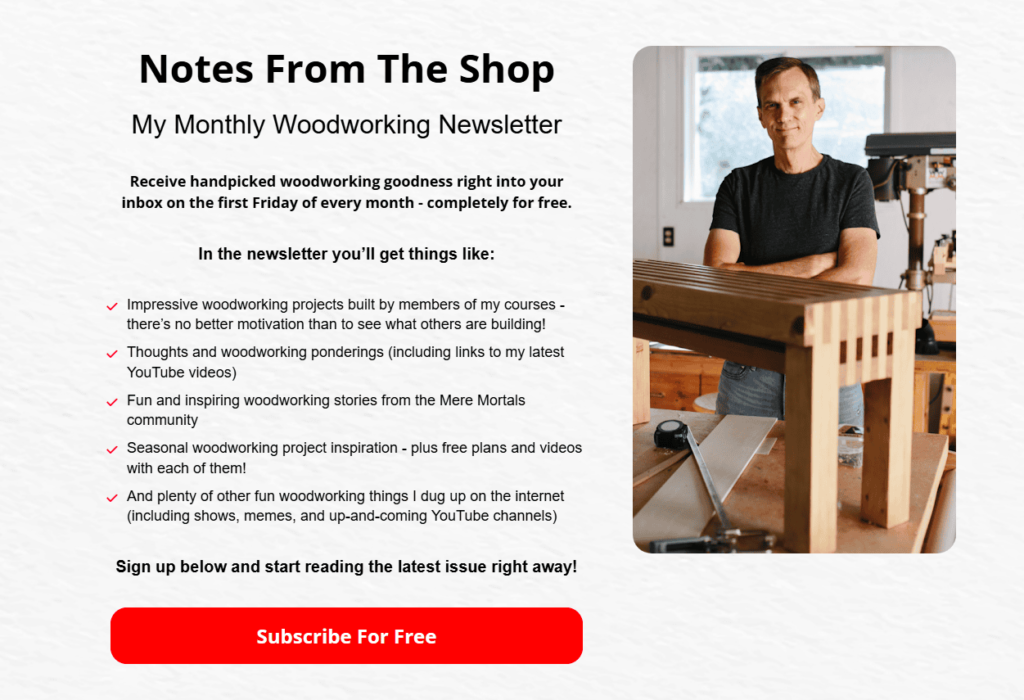
Building an email list adds 20–40% to your bottom line beyond organic search.
A monthly newsletter linking to your best affiliate content drives hundreds of additional visitors to high-converting pages.
Targeted Black Friday or holiday emails promoting tool deals generate $500 to $2,000 in additional seasonal income.
Why start from zero every month?
Build this asset from day one. Offer lead magnets like free project plans or tool buying checklists.
Email subscribers convert at 5–10%—significantly higher than the 2–5% conversion rate of cold search traffic.
Seasonal Traffic Patterns
Woodworking traffic follows distinct seasonal patterns that significantly impact earnings.
Activity peaks during Q4 and spring months (March–May). You often earn 40–60% of total annual income in November and December.

Why? Holiday project seasons, gift buying, and workshop upgrades funded by year-end bonuses converge.
Summer sees a 20–30% decrease as outdoor activities compete for hobby time.
Plan your editorial calendar around these cycles. Publish holiday gift guides and major workshop articles by October to maximize Q4 revenue.
Traffic Growth Timeline
For blogs publishing 2–3 quality articles weekly, realistic growth follows a predictable timeline.
Pure SEO requires patience. Meaningful income typically starts around months 8 to 12.
Months 1–3: 100–500 monthly visitors
The “sandbox” phase. Google indexes content and establishes initial rankings.
Months 4–6: 500–1,500 monthly visitors
Articles gain traction. You rank for long-tail keywords.
Months 7–12: 1,500–5,000 monthly visitors
Content compounds. Domain authority builds. Faster indexing.
Year 2: 5,000–15,000 monthly visitors
Established authority. Aged content holds stable rankings.
This timeline accelerates with YouTube content, Pinterest for project visuals, or existing audiences from other platforms.
Bottom line: 5,000 monthly visitors with great content beats 25,000 visitors with mediocre content. Focus on conversion first, traffic second.
How Do You Choose the Best Woodworking Affiliate Programs for Your Content?
Your most effective strategy? Align the merchant’s product catalog with your specific content niche—traditional hand tools, heavy power machinery, or finishing supplies.
Beyond product alignment, focus on programs offering minimum 30 to 45-day cookie duration. This accommodates the research-heavy buying cycle for expensive tools.
Evaluate potential earnings by calculating commission rates against average order value (AOV). Remember: 5% of a $500 table saw yields more than 10% of a $100 accessory.
Vet the program’s payment reliability and conversion performance before committing to large-scale content creation.
Match Programs to Content Niche
Success begins with specializing your affiliate focus.
Authentic alignment builds trust.
If you focus on traditional hand tool joinery, partner with premium retailers like Lie-Nielsen, Lee Valley, or Highland Woodworking. Average order value runs $150 to $400 with 5% commission. These audiences value craftsmanship over speed.
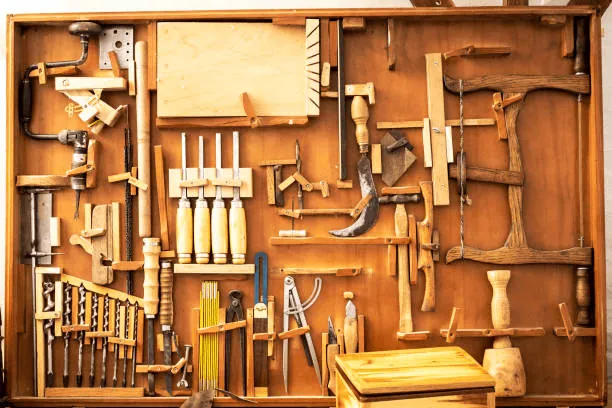
If you review power tools, align with Rockler, Acme Tools, or brand-specific programs catering to machinery purchases. AOV ranges $200 to $800.
If you produce project tutorials, promote lumber suppliers or digital plans. Digital products offer exceptionally high commissions—50–75% on lower-priced items.
Here’s the trap: trying to promote everything dilutes your brand voice and creates low-performing content.
Think of your affiliate focus like building a workshop. A master craftsman chooses specialized tools for specific jobs. An amateur buys the “everything in one” kit and masters nothing.
Focus on Cookie Duration for Research Products
Cookie duration—the window you get credit for a sale after a click—is often more critical than commission percentage.
Why? High-ticket woodworking tools require a 2 to 4-week research period.
Buyers rarely purchase a $2,000 cabinet saw on impulse. They read multiple reviews, compare specs, check warranty details, watch videos.
Programs offering only 7 to 15-day cookies miss attribution for delayed conversions. You potentially lose 40–60% of sales compared to programs with 30 to 45-day tracking.
Here’s the financial impact: If a $500 tool generates a $25 commission, losing half your sales to short cookie windows costs you $1,250 monthly for every 100 referrals.
One of our most successful UpPromote marketplace’s affiliates tracks this carefully. He found his woodworking tool reviews with 30-day cookies generated $2,800/month. Identical content promoting 7-day cookie programs? Just $1,100/month.
Same traffic. Same quality. 60% revenue loss due to cookie duration alone.
Focus on programs with minimum 30-day duration to ensure you’re rewarded for influencing the final purchase decision.
Commission Rate vs. Average Order Value
New affiliates chase high commission percentages without considering average order value (AOV).
This is the #1 mistake I see.
A lower percentage on high-ticket items often yields more actual revenue.
Example: 8% commission on a $150 order yields only $12. But 4% on a $500 machinery order yields $20.
The lower percentage program is nearly twice as profitable per sale.
Which would you rather have?
This explains why many professional woodworkers prefer specialized programs over Amazon Associates. Amazon offers vast inventory and high conversion rates, but its 24-hour cookie forces reliance on low-value impulse buys—clamps, glue, $80–$150 purchases.
Specialized programs with longer cookies enable researched, high-value machinery purchases—$300–$800 AOV.
Focus on actual “commission per sale” rather than raw percentage.
Program Reputation and Payment Terms
Before joining, research the program’s reliability regarding payment thresholds, frequency, and methods.
Ideal programs offer monthly payouts via PayPal or direct deposit with low $25 to $50 minimums.
Programs requiring $100+ minimums or quarterly checks via mail tie up your capital for months.
Search for affiliate reviews of the specific program. Look for red flags: declined commissions (“shaving”), payment delays, unfair account terminations.
We’ve seen creators on UpPromote marketplace face this exact challenge. They applied for a program and built content around it for three months, generated $1,800 in tracked commissions, then had their account terminated for “policy violations” (never specified). They never saw a dollar.
One bad program can wipe out months of work.
Test Before Committing Content
Rather than producing dozens of articles for a new partner, run a pilot test to verify conversion rates.
Create just two or three pieces—a blog post, a YouTube video, a social media post. Drive 200 to 500 clicks to the offer via paid traffic or an email broadcast.

Calculate your cost per acquisition (CPA) or earnings per click (EPC).
If you spend $30 to acquire traffic that generates $100 in commissions, the program is profitable. Scale it.
If your CPA exceeds 50% or traffic doesn’t convert, find an alternative program before investing significant time building a content library around a non-performing partner.
Evaluate Promotional Materials and Support
The level of support a merchant provides signals their commitment to the affiliate channel.
High-quality programs treat you as a partner by providing:
High-resolution product images and video assets for content creation
Professional banner ads and creative materials
Sales calendars detailing upcoming events so you can plan content schedules
Dedicated affiliate manager answering questions and negotiating commission increases for top performers
Exclusive coupon codes giving your audience unique value
A lack of these materials signals low merchant investment. You’re competing at a disadvantage against affiliates promoting better-supported brands.
Consider Audience Geography
Audit your audience’s geography to ensure you’re not sending traffic to a dead end.
Some major woodworking retailers like Rockler or Woodcraft primarily serve the U.S. market. Others like Lee Valley ship extensively to Canada and the U.S. European suppliers serve the EU.

If 30% of your traffic comes from international sources and you only promote U.S.-domestic programs, you’re giving up 30% of potential revenue.
Check program shipping terms beforehand. Use geo-targeting tools like GeniusLink to automatically route international readers to appropriate stores for their region.
My take: The best program pays on time, tracks accurately, and sells products your audience actually wants. Everything else is noise.
When Are the Best Times to Promote Woodworking Affiliate Programs?
To maximize revenue, align your content calendar with five seasonal peaks:
November: 30–40% traffic surge from Black Friday tool sales
December: 25–35% conversion rate jump from holiday gift buying
January: 20–30% traffic spike from New Year’s workshop resolutions
June: 15–20% revenue increase centered on Father’s Day
April–May: 10–15% engagement rise from spring project planning
November: Black Friday and Cyber Monday
November represents the absolute peak of the woodworking affiliate calendar.
You see a massive 30–40% annual traffic spike as enthusiasts delay purchases to research deals before Black Friday (November 28 in 2025).
To capitalize on this “Super Bowl of Retail,” publish “Best Black Friday Woodworking Tool Deals 2025” roundup posts and videos by November 15. You’ll catch early search traffic.
Update these posts daily from November 20–30. Live deals change rapidly. Stock runs out quickly.
During this week, Amazon Associates and specialty retailers often see 50–70% commission volume increases.
Focus your content on high-ticket items—cabinet saws, planers, jointers priced $300 to $2,000. The deep 20–40% discounts on major investments create the strongest buyer urgency.
December: The Holiday Gifting Rush
After Black Friday, December shifts the demographic from woodworkers buying for themselves to friends and family buying gifts.
Conversion rates jump 25–35% higher than average months.
These buyers often lack technical knowledge. Create gift guides heavily segmented by budget (“Under $50,” “$50–$150,” “$150+”) and recipient experience level (“Gifts for Beginner Woodworkers” vs. “Gifts for Advanced Craftsmen”).
Content focused on fathers, husbands, and grandfathers performs exceptionally well.
Peak traffic window: December 1–20. Buyers rush to beat shipping deadlines. Push “ready-to-ship” recommendations.
January: Workshop Resolutions and New Beginnings
As holiday dust settles, January brings a 20–30% traffic increase driven by “New Year, New Me” thinking.
Aspiring makers commit to starting a hobby. Veterans resolve to upgrade workshops.
Shift your content strategy to comprehensive guides: “Complete Beginner Workshop Setup 2025,” “Upgrade Your Workshop,” “Woodworking Goals Starter Kit.”

Unlike November’s individual tool focus, January readers want complete solutions.
They’re emotionally committed to their resolution. They’ll often invest $500 to $2,000 in one sitting to acquire a fully functional shop setup.
Prime month for high-value bundles.
June: Father’s Day Quality Gifting
Mid-year revenue resurges in June with a 15–20% increase focused on Father’s Day (June 15, 2025).
Unlike December’s broad, quantity-focused gifting, Father’s Day is about sentiment and legacy.
Publish gift guides and tool recommendations 2 to 3 weeks prior, starting June 1.
The most successful promotions focus on premium, “buy-it-for-life” hand tools—Lie-Nielsen bronze planes ($150–$400) or Japanese chisel sets ($200–$600). Position these as meaningful, heirloom-quality gifts honoring the craft.
Not disposable $30 gadgets ending up in junk drawers.
April–May: The Spring Project Season
As weather warms, April and May drive 10–15% engagement increases.
Woodworkers emerge from winter hibernation to tackle outdoor projects—decks, pergolas, patio furniture.
Shift your content naturally toward seasonal builds: “How to Build an Outdoor Bar,” “Patio Furniture Plans.” Integrate tool recommendations into the workflow.

This is your best time to promote outdoor-focused power tools—miter saws, circular saws, cordless drills.
Contrast with winter’s emphasis on hand tools and indoor shop projects.
Weekly and Daily Timing Optimization
Beyond seasonal trends, optimize for weekly micro-cycles.
Woodworking content sees peak traffic on Saturday and Sunday—often 30% higher than weekdays. Hobbyists are active in workshops.
Evening hours between 7:00 PM and 10:00 PM show 20% higher engagement. Makers check phones between project steps or wind down for the night.
Schedule email newsletters for Saturday mornings (8:00–10:00 AM) to catch readers during coffee and planning routines.
Social media posts perform best Sunday evenings (6:00–8:00 PM).
YouTube uploads? Wednesday through Friday. The algorithm gets time to index and push videos just in time for weekend viewing.
Managing the Summer Slump
Anticipate the “Summer Slump” during July and August. Traffic typically decreases 15–25%.
Readers are on family vacations. Workshops sit unused in summer heat.
Don’t fight this natural downtrend with heavy promotion.
Smart move: Use this slower period for content creation. Build a reserve of reviews and tutorials to launch during high-traffic fall season.
The only exception? Promote portable tools or small, quick projects suitable for vacation cabins or outdoor carving.
Bottom line: Plan your calendar around November and December. Build content in summer, dominate Q4, and bank 60% of your annual income in eight weeks
Conclusion
Starting to do affiliate marketing for your Shopify woodworking brand can be a smart investment.
You can reach a larger audience and partner with dedicated affiliates in the niche without spending too much money.
However, the first phase can be difficult with so many new tasks. Don’t worry about feeling overwhelmed since UpPromote has your back.
Let’s discover our pricing plans and build your affiliate program today.

Ellie Tran, a seasoned SEO content writer with three years of experience in the eCommerce world. Being a part of the UpPromote team, Ellie wants to assist Shopify merchants in achieving success through useful content & actionable insights. Ellie's commitment to learning never stops; she's always eager to gain more knowledge about SEO and content marketing to create valuable content for users. When she's not working on content, Ellie enjoys baking and exploring new places.