











According to Zippia reports, the technology industry makes up 35% of the total world market. An individual can spend money on various technology devices like desktops, headphones, or smartphones. That means you have a massive potential audience when joining a technology affiliate program.
In this article, we’ve gathered the top 25 technology affiliate programs in the industry for you. Read through our list and compare each program to find the best suit for your audience.
Quick Comparison
| Program Name | Commission (%) | Cookie Duration (Days) | Niche Suitable |
|---|---|---|---|
| Udacity | 20% | 30 days | Online courses, tech education, programming, data science |
| Semrush | $200–$350 per sale + $10 per trial | 120 days | SEO tools, marketing, SaaS, agencies |
| HP Store | 1% | 30 days | Laptops, electronics, office gear |
| Amazon Associates | 2–4% | 1 day (24h) | General tech, electronics |
| Sonos | 4% | 1 day (24h) | Home audio, smart speaker, sound systems |
| Kinsta | 10% | 60 days | Hosting, WordPress, SaaS |
| My Choice Software | 8% | 89 days | Software licenses, Microsoft, Apple OS |
| GoPro | 3% | (Not specified, typically 30 days) | Cameras, accessories, travel, lifestyle |
| Logitech | 4–10% | 30 days | Tech gadgets, gaming gear, PC accessories |
| Trackimo | 20% | 7 days | GPS tracking devices, security |
Affiliate Earnings Calculator
Estimate your affiliate income based on Traffic, CTR, AOV, and Commission rate. Drag the sliders below to explore different scenarios.
Estimated Results
These figures are for illustrative purposes – feel free to adjust them to fit your specific niche.
- Conversion Rate here is defined as the percentage of traffic that buys.
- Does not account for refunds, cancellations, or varying commission rates by product.
25 Best Technology Affiliate Programs for Tech Enthusiasts
1. Udacity
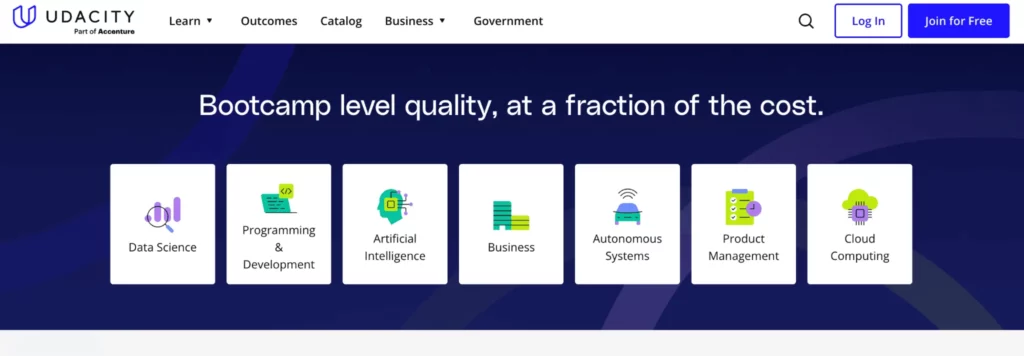
Udacity is a for-profit educational online course platform for technology learners at all levels. Their primary courses teach practical skills like programming, data science, AI, and cloud computing.
Managed by FlexOffers, the Udacity technology learning affiliate program offers a 20% commission rate for each successful sale through your affiliate link. You’ll earn credit for purchases within 30 days from customers’ first click on your link.
FlexOffers will issue affiliate payouts on a net 60 basis. You can receive your payouts via check, bank transfer, and ACH once your account balance reaches $25 or $1000 for wire transfer.
|
2. Semrush
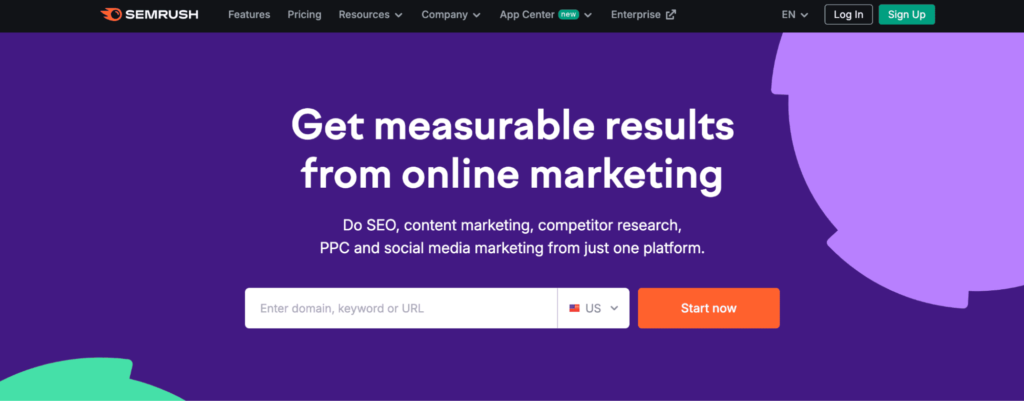
Semrush collects data from major search engines to create online marketing solutions for businesses. They use AI-driven technology to enhance productivity and streamline team tasks only in one platform.
This technology affiliate program offers competitive commission tiers based on affiliates’ quarterly performance.
- Basic (0-4 sales/quarter): $200
- Silver (5-19 sales/quarter): $250
- Gold (20-49 sales/quarter): $300
- Platinum (50+ sales/quarter): $350
Plus, Semrush pays affiliates $10 for every free trial signup via their affiliate link. The cookie duration lasts 120 days from customers’ first click on your affiliate link. They will lock your payouts for 27 days and make transactions after the next 21 days.
You can use their banners and widgets on your website to boost click-through rates from visitors. Moreover, you can share your unique links on various platforms to reach a larger target audience.
|
3. HP Store
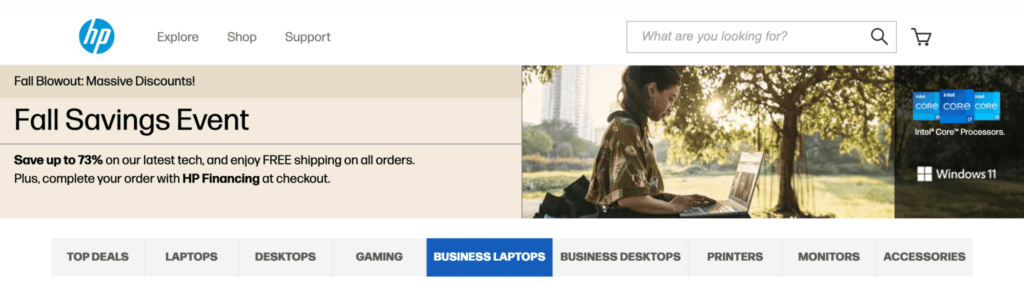
HP Store develops a wide range of technology products, especially powerful and affordable laptops. HP also customizes high-tech products based on users’ specific needs to boost working performance.
HP Store manages their technology affiliate program through CJ Affiliate. Affiliates can enjoy a 1% commission rate across all product sales. Plus, the program offers a 30-day cookie duration, starting from the first click of customers.
You can put their promotions in your campaigns to drive more attention and boost sales. They also give you full access to their product feed to select suitable items for promotional campaigns based on the target audience.
|
4. Amazon
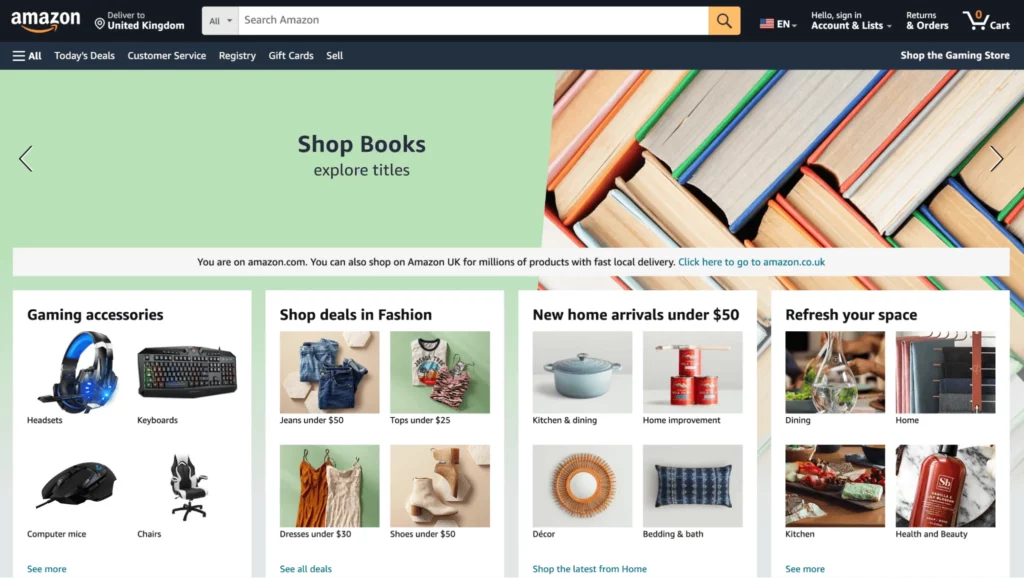
Amazon offers one of the largest product selections across all markets for millions of global buyers. Their diverse technology categories stock top brands’ products like computers, smart electronics devices, houseware, and more.
You can join Amazon Associates – their affiliate program to earn a 2% to 4% commission rate on each sale, depending on the type of technology items. But you only have 24 hours from customers’ first click to get credit for their purchases through your link.
Amazon will pay affiliates via bank transfer, check, or directly send Amazon Gift Certificate. However, you must reach a payment threshold of $10 (Amazon Gift Certificate, bank transfer) or $100 (check) to get your monthly payouts.
You can use any available banner and text links with the Amazon logo to gain more trust from your audience. Amazon also creates native shopping ads to help affiliates increase their click-through rates and conversions.
|
5. Sonos
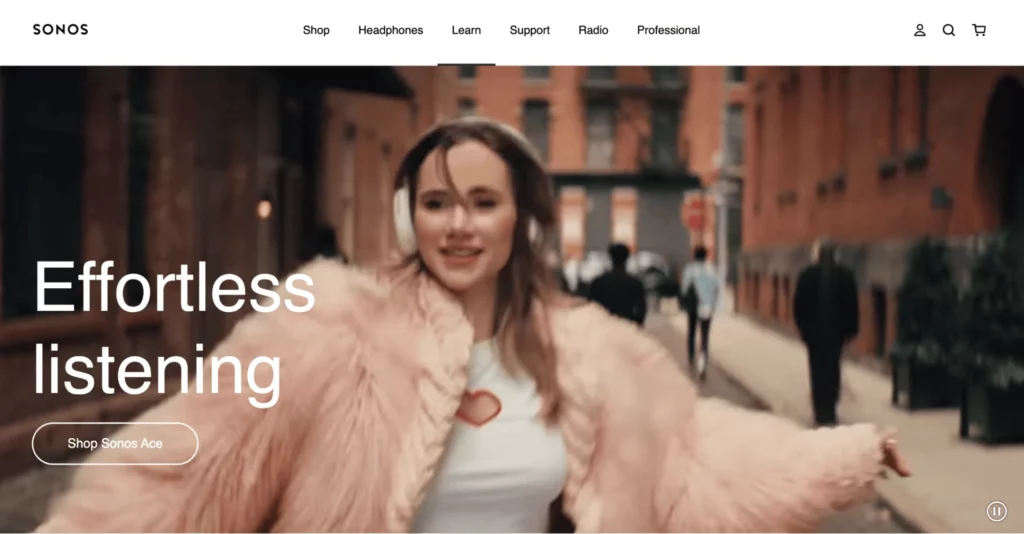
Sonos produces wireless home audio devices with multi-room sound systems. Their products integrate with major AI assistants like Amazon Alexa and Google Assistant to simplify voice management.
After joining the Sonos audio technology affiliate program, you can earn a base 4% commission rate on all online sales. You’ll only earn a commission if customers purchase within 24 hours from their first click on your link.
Sonos consistently updates their banners and text links to help affiliates improve their campaign quality. Moreover, you can ask their affiliate manager to get customized banners upon request. You can also access their product feed to get detailed information on your promotional products.
|
6. Kinsta
Kinsta manages high-performance WordPress hostings for thousands of brands worldwide. They use Google Cloud Platform to optimize the hosting environment for a longer lifespan.
The Kinsta technology affiliate program offers a 10% commission on each qualified sale. You’ll earn a commission if customers purchase within 60 days from their first click on your affiliate link.
Kinsta only uses PayPal as their payment method to issue affiliate earnings. However, you can only withdraw payouts if your account balance is at least $50.
You can put eye-catching banners on your promotional campaigns to boost engagement. You can also customize links with keywords to generate more sales on different platforms.
|
7. My Choice Software
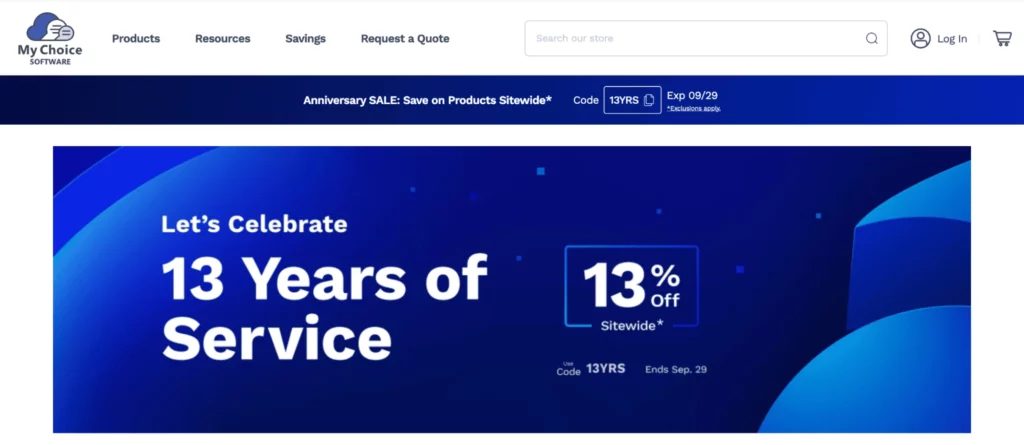
My Choice Software provides cheap licensed software for Microsoft and Apple operating systems. They offer authentic product keys along with downloadable versions to ensure users’ experience.
The My Choice Software affiliate program offers an 8% commission for every successful order. With average sales of over $200, you can earn approximately $16 per sale. You can get your approved commission as long as customers purchase within an 89-day cookie duration.
Their affiliate manager team will update banners and pre-made content to help you save time creating promotional campaigns. You should also access their product feed to get detailed information on the latest launches for your promotions.
|
8. Gopro
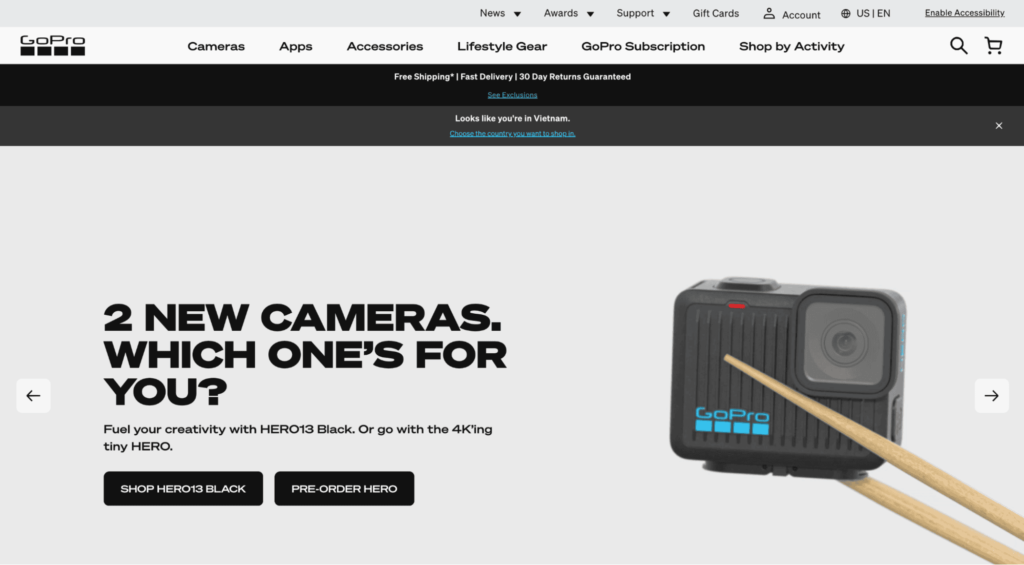
GoPro is among the top manufacturers of waterproof action cameras for professional filming. They also provide integrated software to help users edit and share footage from cameras quickly.
You can sign up for this camera technology affiliate program through the Partnerize network. This program allows you to earn a 3% commission on every sale made through your affiliate link.
You will be the first to know about their product launches and newest promotions. Additionally, You can use deep links to direct your audience to specific products instead of GoPro’s homepage to increase sales.
|
9. Logitech
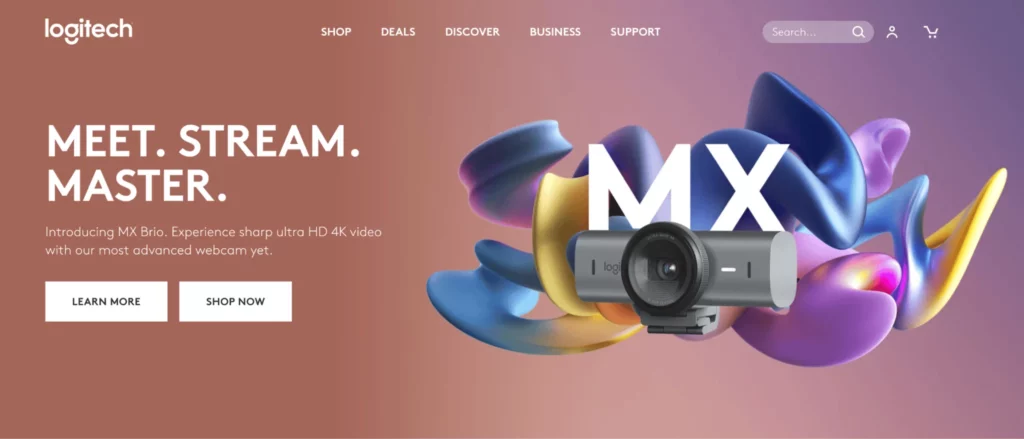
Logitech innovates input and interface devices for personal computers and smart digital products. They also distribute an exclusive G Series of high-performance devices for professional gamers.
Managed by Impact, this technology affiliate program offers up to a 10% commission rate based on product brands.
- Logitech: 4% commission
- Logitech G: 5% commission
- Astro: 5% commission
- Blue: 5% commission
- Ultimate Ears: 10% commission
You’ll earn up to $12.5 per sale with an average order value of $125. The cookie stays on customers’ devices for 30 days once they click on your link.
You can put banners and text links on different platforms to boost engagement from your audience. You should also utilize their seasonal promotions for high-demand products to boost conversions.
|
10. Trackimo
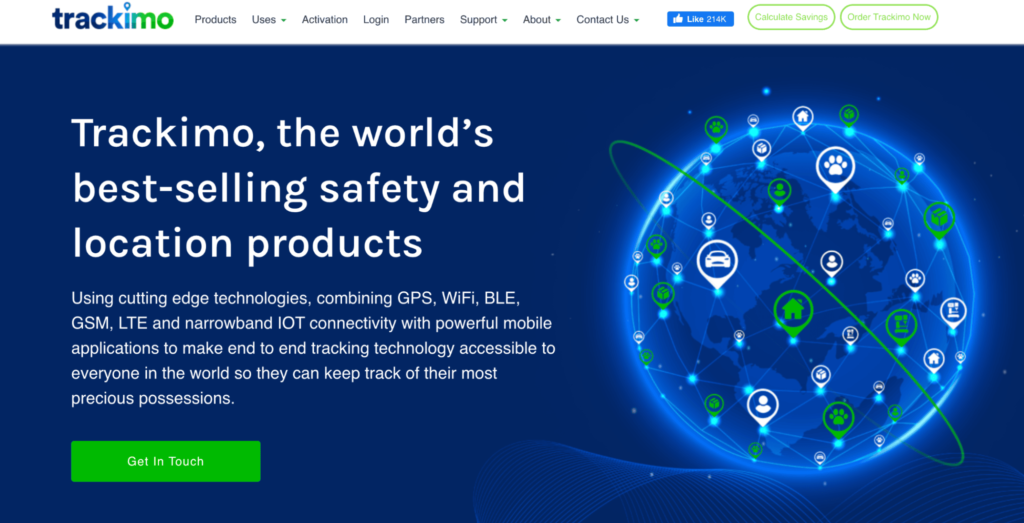
Trackimo develops GPS and GSM-based tracking solutions for both individuals and enterprises. Their devices are equipped with SOS buttons to help users send emergency alerts with real-time locations.
After joining their tracking technology affiliate program, you can enjoy up to a 20% commission rate for every qualified sale. The cookie duration lasts for only 7 days from customers’ first click on your affiliate link.
You’ll have full assets of banners and text links to create better promotional content for their key products. You can also get detailed product information from their data feed to create reliable and attractive campaigns.
|
11. EcoFlow
- Commission rate: 5%
- Cookie duration: 7 days
EcoFlow develops portable power stations and smart devices with high capacities for all appliances. They use solar energy and advanced X-Stream technology to speed up charging times and enhance longevity.
12. GameByte
- Commission rate: 3%
- Cookie duration: 30 days
GameByte creates a gaming community for gamers to seek news, reviews, and features of top games such as Xbox, Pokemon, and PS5. They also collect detailed guidance on improving performance from professional gamers.
13. Urban Armor Gear
- Commission rate: 4-15%
- Cookie duration: 30 days
Urban Armor Gear creates lightweight rugged protective cases for technology devices. Their cases meet US military standards for drop and shock protection even in harsh conditions.
14. Codecademy
- Commission rate: 5-7%
- Cookie duration: 14 days
Codecademy is an interactive online platform for professional code learning. Their courses allow users to learn with realistic exercises and real-time feedback to improve their skills faster.
15. Autodesk
- Commission rate: 7%
- Cookie duration: 60 days
Autodesk customizes software solutions for various industries like architecture, engineering, construction, manufacturing, and media. They also create cloud technology to help businesses collaborate on projects in real time.
16. OtterBox
- Commission rate: 8%
- Cookie duration: 30 days
OtterBox manufactures protective products for technology devices in modern and lightweight designs. Their accessories can withstand military-grade drop tests like drops, scuffs, and other impacts.
17. AEJuice
- Commission rate: 30%
- Cookie duration: Not mentioned
AEJuice offers tools and resources to enhance motion graphics in Adobe After Effects and Premiere Pro. Their tools can help simplify the visual effects and animation creation process.
18. Withings
- Commission rate: Up to 4.8%
- Cookie duration: 10 days
Withings is among the first companies to launch high-tech and digital health monitoring devices. Their products can sync with smart devices to provide accurate real-time data on patients’ health conditions.
19. edX
- Commission rate: 5-10%
- Cookie duration: 60 days
edX offers over 3,500 online learning courses about business, sciences, and technology from Harvard and MIT professors. The platform integrates video lectures, interactive labs, quizzes, and discussion forums to enhance learners’ experience in all lessons.
20. Simplilearn
- Commission rate: 10%
- Cookie duration: 30 days
Simplilearn partners with world-leading technology universities and companies to create numerous courses and online boot camps. Users can get qualified certifications as professionals after completing their lessons.
21. Dell Outlet
- Commission rate: 1.6%
- Cookie duration: 3 days
Dell Outlet sells Dell’s refurbished and open-box products at discounted prices. Their store mainly stocks best-seller products like laptops, desktops, monitors, and more.
22. The Linux Foundation
- Commission rate: 20%
- Cookie duration: 60 days
The Linux Foundation runs as a non-profit organization for developing the Linux operating system. They also promote various open-source technology projects like cloud computing, networking, blockchain, and hardware.
23. Samsung
- Commission rate: 3.2%
- Cookie duration: 14 days
Samsung has been among the world’s largest tech companies along with Apple and Microsoft. They’ve developed various outstanding technology devices such as TVs, smartphones, laptops, smart home appliances, and more.
24. DJI
- Commission rate: Up to 5%
- Cookie duration: Not mentioned
DJI is one of the world’s largest consumer drone manufacturers with a series of high-tech devices. Their drones ensure image quality in all situations, such as filmmaking, wildlife rescue, or outdoor searching.
25. Cricket Wireless
- Commission rate: 10%
- Cookie duration: Not mentioned
Cricket Wireless provides fast and reliable 4G LTE and 5G coverage to over 99% of US citizens. They utilize AT&T’s extensive network to offer unlimited high-speed data plans in all areas.
How Do You Choose the Right Tech Affiliate Program for Your Audience?
Most new affiliate marketers make the same fatal mistake: they choose a program based on the commission rate alone.
They see “50% commission” and sign up immediately, ignoring whether the product actually fits their audience.
This “commission-first” approach is the fastest way to kill your conversions. If you promote a bad tool just because it pays well, your audience will stop trusting you entirely.
To build a steady income, you need a system to evaluate partners. You need to look at four key areas: audience fit, how you get paid, product reputation, and support. This section gives you the framework to do exactly that.
The Audience-Product Fit Analysis Framework
Affiliate strategy is like building a custom PC—you can’t force incompatible parts together. High-paying enterprise software won’t sell to budget-conscious students. The pieces must fit.
Run every program through this four-part test:
Content Audit (Relevance)
Offers must feel natural, not forced.
WordPress tutorials → hosting and plugins
SEO guides → keyword tools and rank trackers
The Rule: If you need an unrelated article just to include a link, it’s wrong.
Audience Skill Level
Match tool complexity to reader expertise.
Beginners: “Done-for-you” tools (Canva, Wix)
Advanced: Power and customization (Adobe Creative Cloud, Webflow)
Budget Reality Check
Often overlooked but critical.
Students won’t buy $500/month tools
Agency owners expect premium pricing and ignore cheap options
Problem-Solution Alignment
“You’re a matchmaker finding the tool that solves your reader’s specific headache right now.” — James T., Senior Affiliate Manager
Good Fit: Photography guide on “Fixing Underexposed Photos” links to Lightroom—solves the immediate problem
Bad Fit: Same blog links to Mailchimp—irrelevant to their photography problem
When products match skill, budget, and immediate need, sales feel helpful, not pushy.
Evaluating Commission Structures Beyond the Headline Rate
Don’t chase high percentages blindly. I once promoted hosting for a $150 one-time payout, ignoring a competitor’s “low” 20% recurring commission.
Mathematical disaster.
The 20% program retained customers for three years average. The flashy one-time payout looked good initially, but recurring would’ve paid nearly triple over time.
🆚 Recurring vs. One-Time Commissions
In SaaS, check retention rates (how long customers stay).
- One-Time: High upfront ($100)—great for immediate cash, but you restart at zero monthly
- Recurring: Lower upfront, builds income “snowball”
Rule: Long retention products (CRM, hosting, email marketing)? Choose recurring. One-time purchases (themes, hardware)? Take the high one-time fee.
🍪 Cookie Duration
Cookies determine credit duration after clicks. B2B buyers rarely purchase instantly.
- 7-Day Cookie: Risky—CTO reads Monday, discusses Wednesday, buys next Tuesday (8 days)? You earn $0
- 90-Day Cookie: Standard for expensive tech, allows decision time
Reality: For $100+/month software, 60% of sales happen 24+ hours post-click. Short cookies steal commissions.
🧮 Calculating “Effective Commission”
Compare annual earnings, not percentages. Ten sales:
- Program X: $10/month, 25% = $2.50/month = $300 yearly
- Program Y: $500/month, 5% = $25/month = $3,000 yearly
Program Y pays 10x more despite the “worse” percentage. Always calculate total dollars, not percentages.
Product Quality Verification Through Testing and Research
You’ve found a well-paying product that fits your audience. One final non-negotiable question: Is it actually good?
Your reputation is your most valuable asset—years to build, one bad recommendation to destroy. Recommend a crashing tool with terrible support, and they’ll blame you, not the product.
Verify quality before grabbing any affiliate link.
Never promote untested tools.
Use Free Trials: 90% of SaaS offers 14-30 day trials
Test Core Features: Don’t just log in—actually build landing pages, send emails, export videos. If the interface frustrates you, it’ll frustrate readers
Test Support: Pro move—open a support ticket with a basic question. Four-day responses or rude replies? Major red flag. Don’t send followers into customer service nightmares
Skip 5-star testimonials on company homepages. Visit G2 or Capterra and filter for 2-3 star reviews.
Why? One-star reviews are angry rants; 5-stars can be fake.
Two-star reviews offer honest, detailed feedback from real users who wanted to like the product but found specific flaws.
Threshold: Ratings below 4.0/5.0 require extreme caution.
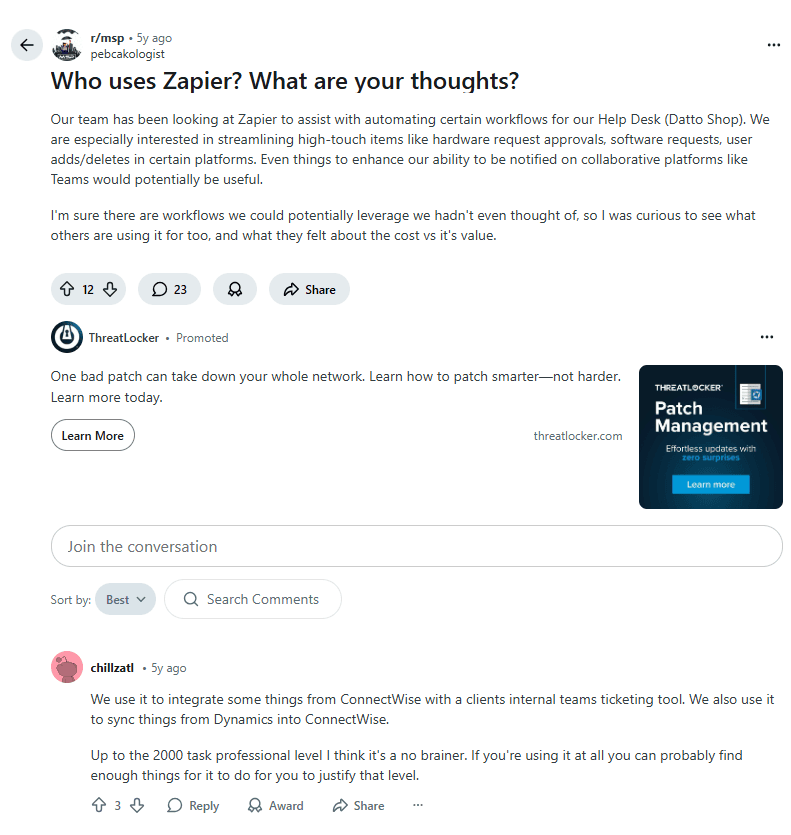
Marketers lie; Reddit users generally don’t. Search:
- “[Product Name] sucks”
- “[Product Name] horror story”
- “[Product Name] vs [Product Name]”
Dozens of threads about billing issues or lost data? Run away.
Some programs display refund rates. Pay attention.
Danger Zone: Rates over 10-15% signal serious problems.
The Cost: Refunds reverse your commission. High-refund products mean free work on 1 in 5 sales.
Assessing Promotional Resources and Marketing Support
Strong affiliate programs don’t just hand you a link—they equip you with resources that make promoting easier and more effective.
Look for programs offering ready-made promotional materials: professional banners for your site, high-quality product screenshots, and demo videos for your reviews.
Programs like Shopify and Kinsta excel here, providing extensive asset libraries that save you time and elevate your content quality.
The best programs provide research tools including competitor comparison sheets (perfect for “X vs. Y” articles), customer case studies you can reference to build credibility, and persona guides explaining exactly who buys and why.
These resources eliminate guesswork and strengthen your content strategy.
Generic affiliate links underperform. Exclusive deals drive action.
An extended trial period or custom discount code makes readers feel valued and dramatically improves conversion rates.
A simple “Click here” pales compared to “Use my link for an extended 30-day trial (normally 14 days).”
Don’t hesitate to ask your affiliate manager for custom coupon codes.
Even a modest 10% discount creates a sense of special treatment that boosts engagement.
Programs offering only bare tracking links treat you as expendable.
Those providing training, marketing materials, and exclusive promotions recognize you as a genuine business partner.
Your success directly impacts theirs, so they invest in helping you win.
Always choose programs that demonstrate this partnership mindset—they’re far more likely to generate meaningful income.
How Do You Promote Tech Affiliate Products Effectively?
You have picked the right product. You have verified it’s high quality. Now comes the part where most affiliates fail: promotion.
Many beginners think promotion means spamming links on social media or hiding them in random blog posts. This “spray and pray” method results in zero sales and annoyed followers.
To make real money, you need to think like a sniper, not a machine gunner. You need to focus on the four highest-converting channels:
SEO content targeting specific buyers, email sequences that build trust, YouTube tutorials that show the product working, and strategic retargeting.
This section breaks down exactly how to spend your time for maximum revenue, focusing on quality of traffic over quantity.
SEO Content Strategy for Buyer-Intent Keywords
Not all visitors convert equally. Someone searching “what is email marketing” is researching.
Someone searching “best email marketing for Shopify” is ready to buy. Prioritize buyer intent over raw traffic numbers.
High-Intent keywords have modest search volume but conversion rates of 5-8%.
These “buy now” searches use formats like “best [tool] for [use case]” or “[tool] alternative.”
Example: “best CRM for real estate agents.” Users already know they need a solution—they’re just choosing which one.
Medium-Intent keywords capture comparison shoppers at the decision point, converting at 2-4%.
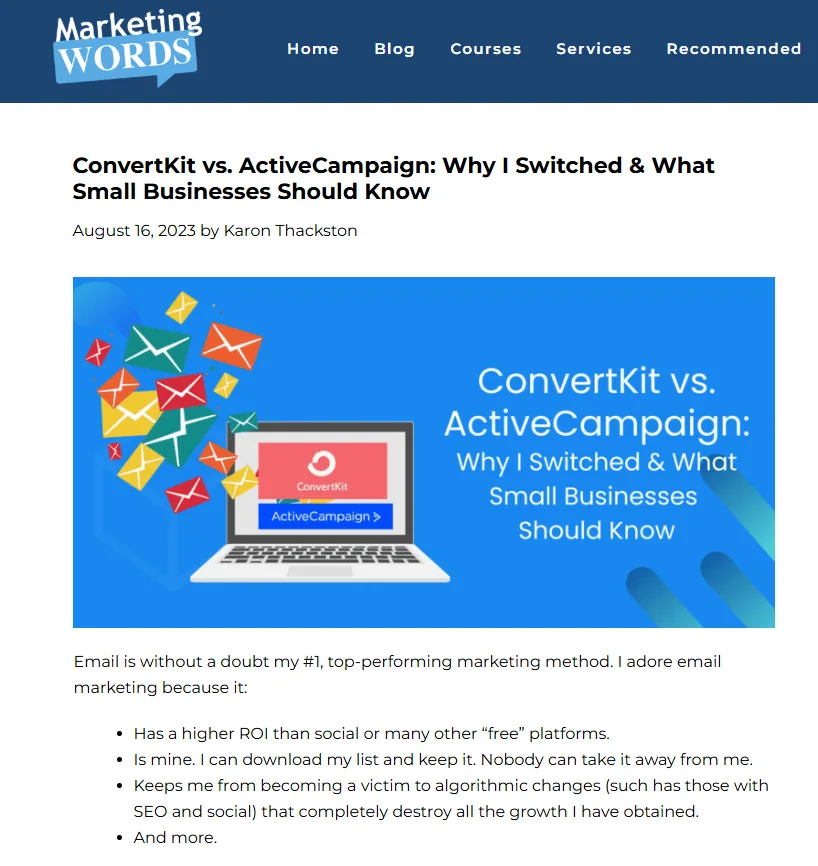
Format: “[Tool A] vs [Tool B].” Example: “ActiveCampaign vs ConvertKit.”
You’re providing the final tie-breaker.
Low-Intent keywords are broad educational terms with massive traffic but under 1% conversion.
Format: “what is [concept]” or “how to [skill].” Example: “what is marketing automation?”
You must educate before you can sell.
Dedicate 70% of your effort to high and medium-intent content.
It attracts less traffic but generates 80% of revenue.
Use the remaining 30% on low-intent content to build authority and grow your email list.
If promoting email tools, structure content as:
- Top of funnel: “Beginner’s Guide to Email Marketing” (links to comparison content)
- Middle: “How to Choose an Email Platform” (links to best-of roundup)
- Bottom: “7 Best Email Tools for Bloggers” (contains affiliate links)
This funnel moves readers from awareness to purchase efficiently.
Email List Leveraging for Conversion Multiplication
SEO attracts visitors, but email builds relationships. Subscribers who trust you before seeing an offer convert dramatically better than random site visitors.
Turn new subscribers into buyers with this structured approach:
Day 0: Deliver your lead magnet. Establish credibility without selling.
Day 3: Highlight a specific pain point (e.g., “Why your emails land in spam”). Emphasize the problem without solving it yet.
Day 7: Teach the solution method, naturally mentioning your tool: “I use [Tool Name] to automate this.”
Day 10: Share a case study with specific results: “How I increased open rates 20% using [Tool Name].” Link to your full review.
Day 14: Make a clear recommendation with an exclusive incentive: “Use my link for an extended trial.”
Track who clicks your affiliate links but doesn’t purchase. After 48 hours, send a personal follow-up: “Saw you checked out [Tool]. Have questions?
Reply and I’ll help you decide.” This simple touch recovers 15-30% of otherwise lost sales.
During Black Friday or partner sales events, your email list becomes your highest-earning asset.
While blog updates might generate $200-$500, targeted email sequences can produce $2,000-$20,000 in 48 hours.
Keep emails 80% helpful, 20% promotional.
Treat subscribers like a VIP club, not an advertising target. When you consistently provide value, they’ll welcome your recommendations and reward you with conversions.
YouTube Video Content for Visual Demonstration
Text tells, but video sells.
When a user reads a review of a complex tool like a video editor or a CRM, they still have a nagging doubt: “Is this going to be too hard for me to use?” This doubt kills conversions.
YouTube removes that barrier instantly.
By showing the actual interface, you prove the tool is usable. This is why video viewers often convert at 2-3x the rate of blog readers.
Blog Post: The average reader skims for 3 minutes.
YouTube Video: The average engaged viewer watches for 8-12 minutes.
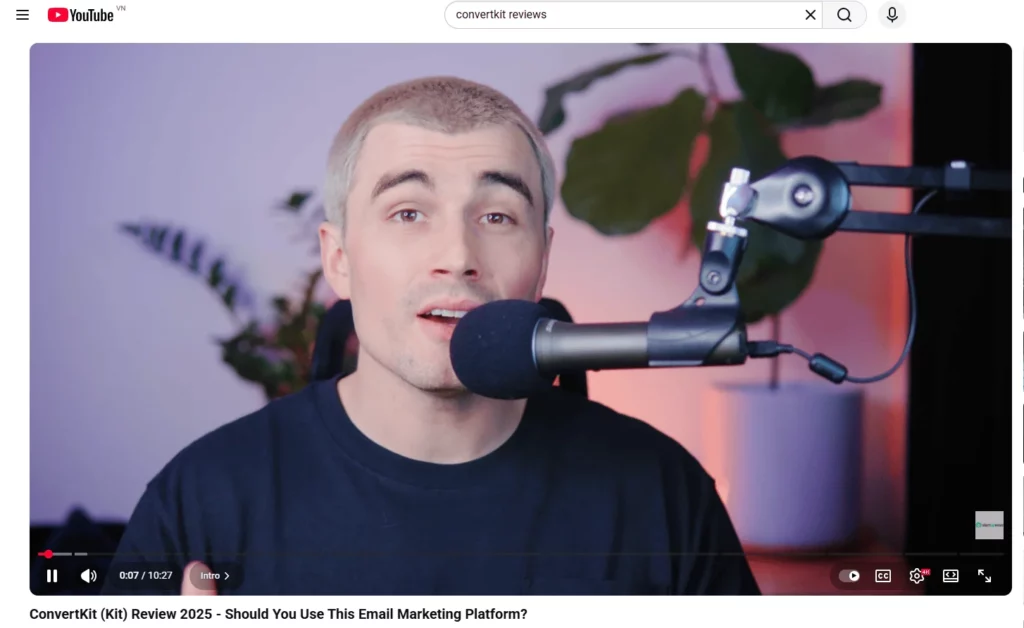
You have 4x the time to build trust. Plus, hearing your voice and seeing your face creates a connection that text simply cannot match.
Don’t just make random vlogs. Stick to these three formats:
| Strategy | Est. Conversion | Core Concept | Why It Converts | Key Strategy / Tip |
| The “Follow-Along” Tutorial | 5–8% | “How to Build [Outcome] in [Tool Name]” | You are selling the outcome; the tool is simply the required key to get there. | Include affiliate links and tell viewers to “Grab the free trial to follow along.” |
| The “Side-by-Side” Comparison | 4–6% | “[Tool A] vs. [Tool B]: Which is Better for 2024?” | Viewers are in the final decision phase; they just need help choosing. | Declare a clear winner for specific scenarios (e.g., “If you are a beginner, pick X”). |
| The Deep-Dive Review | 3–5% | “Is [Tool] Worth It? My Honest 6-Month Review.” | It provides validation and answers specific, lingering questions before purchase. | Focus on long-term honesty to address the buyer’s final objections. |
A great video with no clicks is useless. Optimize every video with this checklist:
📌 Pinned Comment: Post your affiliate link as the very first comment and pin it. Viewers check comments while watching.
🤝 The “Verbal Handshake” (Disclosure): Be transparent. Say, “I am an affiliate for this tool, so I earn a commission if you use my link. But I only recommend it because I actually use it.” This honesty builds more trust than hiding it.
⏱️ Timestamps: Add chapter markers in the description. It helps Google find your video and lets users jump to the features they care about.
Social Media Platform-Specific Promotion Strategies
Each platform requires a tailored approach. What succeeds on Twitter fails on LinkedIn.
Twitter/X: The Thread Method
Skip simple link posts. Build 8-12 tweet threads that deliver value:
- Tweet 1: Hook readers (“How I save 10 hours weekly…”)
- Tweets 2-10: Provide actionable tips with screenshots
- Tweet 11: Make your ask (“Want to try this? Grab [Tool] here…”)
This converts 1-3% of strangers and up to 10% of followers because you lead with value.
LinkedIn: The B2B Case Study
Target professionals with purchasing power using mini case studies:
Headline: “How we used [Tool] to automate onboarding”
Body: Show the transformation—chaotic “before” versus efficient “after,” emphasizing time and cost savings
Link placement: Post affiliate links in comments or the featured section, as LinkedIn penalizes immediate off-site links
Instagram/TikTok: Quick Discovery
Create 60-90 second vertical videos for rapid attention:
- “5 Canva features you didn’t know existed”
- “The one tool that saved my freelance business”
Since caption links don’t work, use “Link in Bio” tools like Linktree. Keep your bio organized by category for easy navigation. Clear call-to-action: “Link in bio to try it free.”
Don’t act like a walking advertisement. Respond to comments, answer questions, and have real conversations. In the beginning, those one-on-one DM interactions generate your first 50 sales.
Social success comes from building relationships, not broadcasting links.
Paid Advertising for High-Ticket Products (Advanced)
Organic traffic is free but slow. Paid traffic is instant but risky.
Think of ads as gasoline—they amplify a flame (converting an offer) into an explosion, but drown out nothing (unproven offer) while draining your budget.
You can’t profitably run ads for low-commission products.
Acquiring a customer via Google or Facebook typically costs $20-$50 in tech. Spending $40 to earn a $30 commission means losing $10 per sale.
Only advertise products paying $100+ per sale or offering substantial recurring income.
Never send ad traffic directly to affiliate links—platforms will ban you immediately. Use this compliant approach:
The ad: Target specific searches (“ActiveCampaign vs Mailchimp”)
The content: Direct clicks to a high-quality comparison article on your site, building trust while protecting your account
The offer: Embed affiliate links within the article
Real profit comes from follow-up, not first clicks. Most visitors won’t purchase initially, but you paid for that visit—don’t waste it.
- Install Facebook/Google tracking pixels on your content pages
- Show reminder ads only to article readers who didn’t convert
- Message: “Still deciding between X and Y? Here’s why I chose X”
Paid ads accelerate success, they don’t create it. Build your organic foundation first. Once content converts at 5%+, then introduce paid advertising to scale proven winners.
How Do You Build Trust as a Tech Affiliate?
In affiliate marketing, trust is your currency. If your audience trusts you, they will buy almost anything you recommend. If they don’t, you couldn’t sell them a life jacket on a sinking ship.
Many new affiliates burn this trust instantly. They hype up every product as “perfect” because they are desperate for a commission. This is short-term thinking that kills long-term businesses.
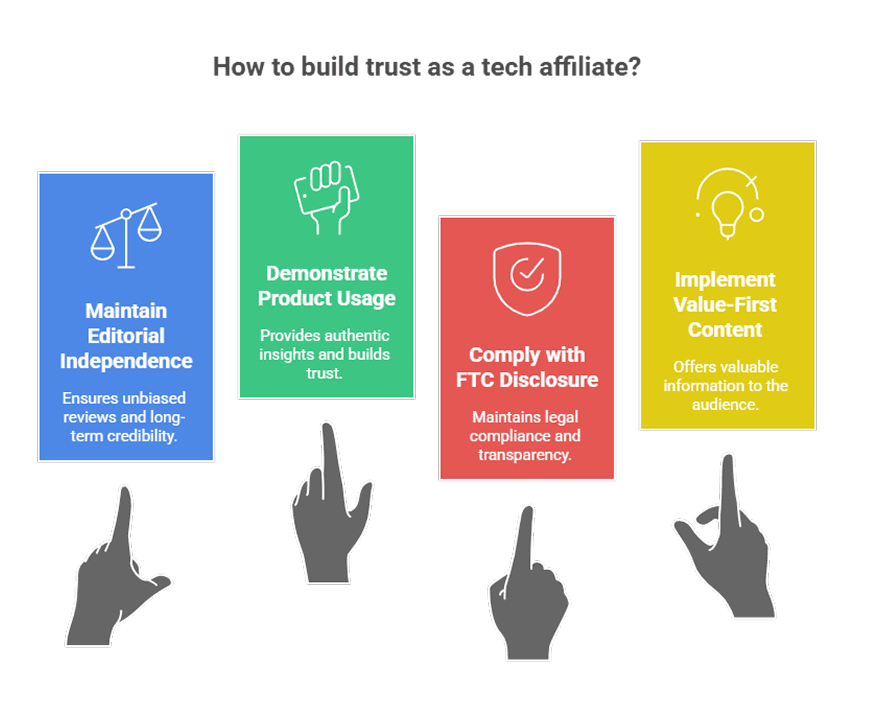
To build a sustainable income, you must operate with Honest Independence. You need to be willing to lose a sale today to keep a reader for life.
This section outlines the five pillars of trust: independence, genuine expertise, clear disclosure, value-first content, and documented results.
Maintaining Editorial Independence for Long-Term Credibility
Readers recognize sales tactics instantly.
The moment you over-hype or hide flaws, you lose credibility. Build trust by doing what salespeople won’t: explain why they shouldn’t buy.
Every review needs clear disqualifications:
“If you need complex visual automation, skip ConvertKit. Its builder is too basic—go with ActiveCampaign instead.”
When you steer someone away from a poor fit, they trust your recommendation for good fits.
Skip fluffy drawbacks like “too powerful!” Give painful, honest downsides:
- Bad: “The free plan is limited”
- Good: “The landing page builder is clunky and frustrating. I build pages in WordPress and only use this for emails”
If another tool genuinely serves them better, say so:
“While Tool A suits beginners, advanced developers will prefer Tool B.”
You might lose one commission but gain authority worth 10 times more in the long term.
Tools deteriorate. Pricing changes. Support declines.
f a formerly recommended tool declines, update your review:
“Update 2024: I previously recommended [Tool X] as my top choice. After their recent price hike and support issues, I’ve switched my business to [Tool Y]. Here’s why…”
This proves loyalty to your audience over affiliate partnerships.
Transparency doesn’t cost sales—it multiplies them by building unshakeable trust that converts readers into lifelong followers.
Demonstrating Real Product Usage and Expertise
The internet is overrun with fake reviews from people who’ve never logged in to the software. Stand out by demonstrating genuine experience.
Skip stock photos and marketing images.
Show messy, authentic screenshots from your actual account—your dashboard, settings, even error messages from complicated tasks.
Your unique setup proves you’re a real user, not just a promoter.
Vague claims are forgettable. Concrete numbers are compelling.
Vague: “ConvertKit has good deliverability”
Specific: “In 12 months with ConvertKit, my list grew from 500 to 8,000 subscribers. My automated welcome sequence generated $15,000 in sales with a 98.5% average open rate”
Specificity creates authority and shows you track meaningful metrics.
A 60-second Loom video doubles credibility.
Don’t just show the dashboard—demonstrate a specific workflow: “Here’s exactly how I set up my abandoned cart automation in three minutes.”
You’re not claiming it’s easy; you’re proving it.
Move beyond feature lists to solution-focused content. Instead of “ConvertKit Review,” write “How I Used ConvertKit Automation to Save 10 Hours Weekly.”
Show the chaotic before and peaceful after. People don’t buy software—they buy transformation.
Fake reviews are shallow and generic.
Real expertise is messy, specific, and impossible to fabricate. Be the expert who brings receipts.
Authentic experience, backed by data and screenshots, converts readers because it’s undeniably genuine.
FTC Disclosure Requirements and Legal Compliance
US affiliates must follow FTC disclosure requirements. UK, EU, and Australian marketers face similar local regulations.
But transparency isn’t just legal compliance—it actually builds trust. Readers respect honesty; hiding commissions suggests something shady.
The FTC requires obvious disclosures, not fine print buried in terms pages. You must disclose before readers click links.
Skip legal jargon. Speak naturally.
Bad: “The user may engage with hyperlinked text which results in remuneration…”
Good: “This post contains affiliate links. If you buy something through these links, I may earn a commission at no extra cost to you.”
Ignoring disclosure requirements risks fines and damages your reputation. Transparency protects your business legally while strengthening reader trust.
When you’re upfront about earning commissions, you demonstrate integrity that converts better than any hidden tactics ever could.
Implementing a Value-First Content Strategy
Friends who only call when they need money eventually get ignored. The same happens to affiliates who only post sales pitches.
If every email and article asks for a purchase, your audience tunes out.
Treat your relationship like a bank account—make deposits (value) before withdrawals (sales).
The Healthy Content Ratio
Maintain this balance for sustainable success:
80% Educational Content: Pure value with no sales pitch—just teaching problem-solving and skills
75% Promotional Content: Reviews, comparisons, and recommendations where you earn commissions
| Platform | Educational / Value Content | Promotional / Review Content | Strategy / Schedule |
| Blog | 8 How-to Guides | 2 Review Articles | Publish educational posts (e.g., “How to Write Better Subject Lines”) before tool lists. |
| YouTube | 16 Skill-building Tutorials | 4 Product Reviews | Focus on high-volume tutorial content to build authority before reviewing products. |
| Weekly Tips (Every Tuesday) | 1 Recommendation or Deal | Provide value 3–4 times for every 1 promotional offer; limit deals to once per month. |
Free teaching proves expertise and positions you as a trusted resource.
How-to keywords (“how to fix high bounce rate”) have vastly more search volume than product searches (“best analytics tool”). You capture people early in their journey.
When you finally recommend something, your audience listens because you’ve already helped them repeatedly for free.
Don’t be the friend who only calls for money. Be the mentor who helps them succeed.
When you lead with genuine value, commissions follow naturally and your audience thanks you for recommendations instead of resenting them.
Conclusion
There are hundreds of technology affiliate programs out there, but we only collect the top potential programs for you. This market is more competitive than other industries so knowing how to make outstanding content is crucial. You need to focus on your target audience and know what they need to achieve success more easily.

Ellie Tran, a seasoned SEO content writer with three years of experience in the eCommerce world. Being a part of the UpPromote team, Ellie wants to assist Shopify merchants in achieving success through useful content & actionable insights.Ellie's commitment to learning never stops; she's always eager to gain more knowledge about SEO and content marketing to create valuable content for users. When she's not working on content, Ellie enjoys baking and exploring new places.