

A lot of people turn to natural skincare products and supplements rather than science-backed ones. This growing trend presents a good chance to join a herbal affiliate program and start monetizing your promotional content about trusted brands.
While there are hundreds of options out there, we’ve collected the 20 most lucrative herbal affiliate programs to help you save time. Let’s dive in to see which one suits your content most.
Quick Comparison
| Program Name | Commission (%) | Cookie Duration (Days) | Niche Suitable | Affiliate’s Rating* |
|---|---|---|---|---|
| Herbal Academy | 15% | 21 days | Herbalism courses, holistic health, foraging | ⭐⭐⭐⭐☆ (4.5/5) |
| iHerb | 5% (1% for coupon sites) | 7 days | Supplements, herbs, beauty, groceries | ⭐⭐⭐☆☆ (3.8/5) |
| Mountain Rose Herbs | 10% | 30 days | Organic herbs, essential oils, DIY herbal products | ⭐⭐⭐⭐☆ (4.4/5) |
| Naturopathica | 3% | 30 days | Herbal skincare, botanical beauty | ⭐⭐⭐☆☆ (3.6/5) |
| Of The Ancients | 50–60% | 60 days | Herbal tinctures, workout performance herbs | ⭐⭐⭐⭐⭐ (4.9/5) |
| Herbal Goodness | 10–15% (tier-based) | 90 days | Superfoods, herbal extracts, smoothie powders | ⭐⭐⭐⭐☆ (4.6/5) |
| Chinese Herbs Direct | 15% | 45 days | TCM herbs, supplements, traditional formulas | ⭐⭐⭐⭐☆ (4.3/5) |
| Plant Therapy | 7.5% | 7 days | Herbal-based home & personal care | ⭐⭐⭐⭐☆ (4.2/5) |
| Alkaline Herb Shop | 15% + $10 bonus | 45 days | Herbal supplements, holistic wellness | ⭐⭐⭐⭐☆ (4.4/5) |
| Wild Rose College of Herbal Medicine | 10% | Not stated | Herbal education, online herbal medicine courses | ⭐⭐⭐⭐☆ (4.1/5) |
20 Herbal Affiliate Programs You Shouldn’t Miss This Year
1. Herbal Academy
Herbal Academy creates online courses about herbalism, botany, foraging, and holistic health practices. They also hold in-person workshops and camps to share valuable learning resources for the herbal enthusiast community.
Affiliates can enjoy a 15% commission after successfully joining the Herbal Academy affiliate program. The cookie stays on customers’ devices for 21 days once customers click on your affiliate link. Herbal Academy only pays affiliates every month via PayPal.
You can ask the brand’s permission to use exclusive linking codes to drive more conversions. You should also integrate banner ads into websites to increase visibility and visitor engagement.
|
2. iHerb
iHerb stocks over 500,000 high-quality herbal products in sports, supplements, beauty, grocery, and more. They build climate-controlled fulfillment centers to preserve the longevity and effectiveness of natural products.
Managed through CJ Affiliate, this herbal affiliate program offers a 5% commission across all sales. However, they only pay a 1% commission per sale made by coupon sites. The cookie only lasts 7 days from the first click of customers on your link.
iHerb gives engaged customers exclusive shopping codes through their Rewards Program. If your audience uses these codes to purchase via your link, you’ll not get a commission. You can use their authorized logos in your banners or images to gain the audience’s trust.
|
3. Mountain Rose Herbs
Mountain Rose Herbs provides premium organic herbs for making teas, essential oils, and other botanical products. They also give free learning resources about herbalism and how to create DIY items.
This organic herbal products affiliate program allows affiliates to earn a 10% commission on every qualified order. The cookie duration is 30 days, starting from the initial click of customers on your link. You can only withdraw monthly payouts if your account balance is at least $50.
One way to increase clicks on your website is to put eye-catching banners in visible areas. You can also use their ready-to-use product graphics in your content to make it more compelling for readers.
|
4. Naturopathica
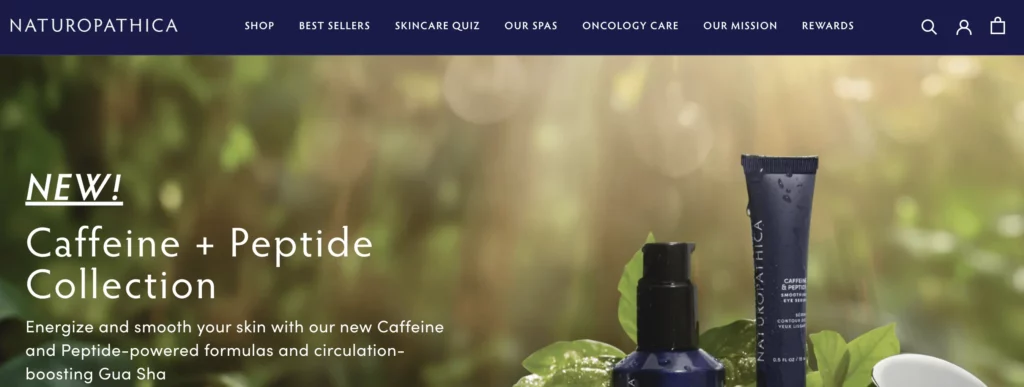
Naturopathica makes skincare products from natural ingredients like herbs, botanicals, and movements. They also offer a holistic spa experience with customized body therapies to heal users from the inside.
You can join their herbal skincare affiliate program via the network Impact and earn a 3% commission on a successful sale. You’ll get an approved commission if customers purchase within 30 days of their first click on your link.
You can choose from various banner sizes in their collection to use on your social media, website, or email content. You’ll also have a unique tracking link to track sales and traffic sources more accurately.
|
5. Of The Ancients
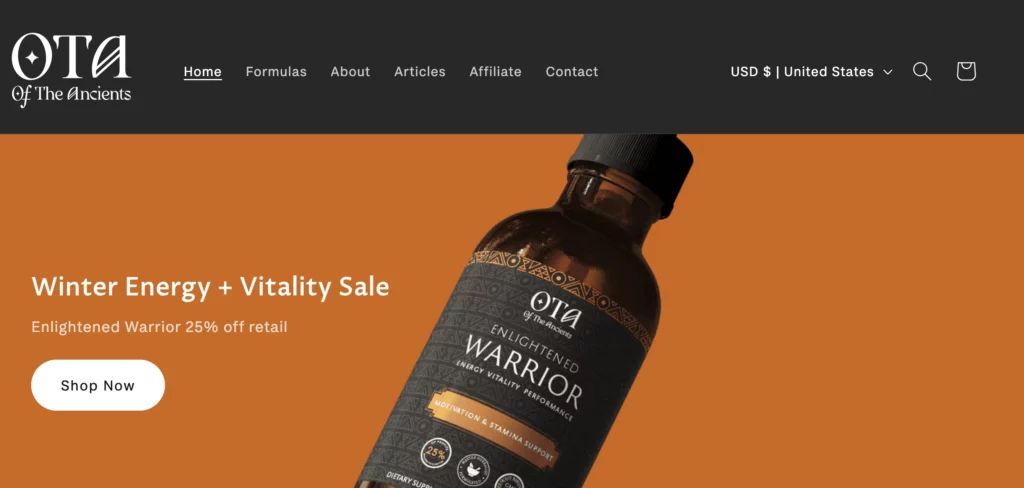
Following unique ancient formulas, Of The Ancients creates herbal tinctures for intense workout enthusiasts. Their supplements blend six wild-harvested herbs to support energy and stamina.
Their herbal tinctures affiliate program offers a 50% to 60% commission on every qualified purchase. The cookie duration starts once customers click on your unique affiliate link and then lasts for 60 days.
You can request customized creative supplies to build high-quality promotional campaigns. Their support team will also provide fresh ideas and promotional tips to help you build effective marketing campaigns.
|
6. Herbal Goodness
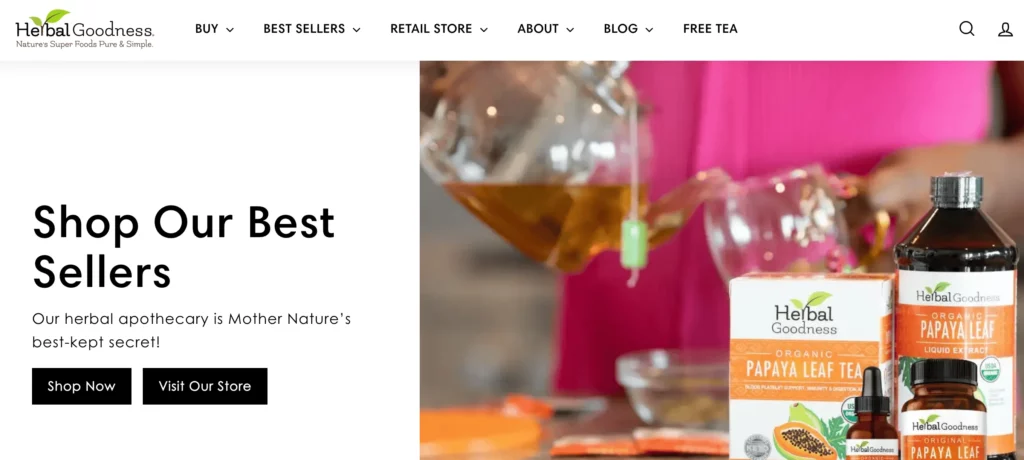
Herbal Goodness manufactures premium superfood products such as herbal extracts, teas, supplements, and smoothie powders. They combine traditional herbal methods with modern scientific research to create effective formulations.
After joining the Herbal Goodness affiliate program, you can enjoy a 10% commission on each sale within a 90-day cookie duration. If customers purchase within the first 30 days, you’ll receive a 15% commission. You may earn from $10 to $15 per sale with an average order value of $100.
You can utilize their editorial content to create reliable review articles or tutorial videos about herbal products. Moreover, you should access their data feed to find suitable products for your followers.
|
7. Chinese Herbs Direct
Chinese Herbs Direct supplies traditional Chinese herbs, supplements, and TCM formulas at low prices. Their products can help treat injuries, manage pain, and promote inner healing.
You can apply for the Chinese herbal affiliate program via ShareASale and earn a 15% commission on every sale. You’ll earn $7.5 per sale with an average order value of $50. The cookie duration is 45 days, starting from the first click of customers on your link.
The brand provides affiliates with an extensive promotional banner collection to choose from. You’ll also have access to their entire data feed to stay up to date on new launches and find the right products for your audience.
|
8. Plant Therapy
Plant Therapy produces plant-based and non-toxic home, beauty, and personal products. Their best-seller items are mainly derived from premium herbs like rosemary, basil, thyme, and more.
You can enjoy a 7.5% commission on every successful order after joining the Plant Therapy affiliate program. The cookie lasts exactly 7 days from customers’ initial click on your affiliate link.
The brand will review your affiliate application and notify you in two to four business days. You’ll receive unique links to put on all marketing channels and track sales more easily. Their dedicated team will send weekly newsletters to keep you informed about the latest product offers.
|
9. Alkaline Herb Shop
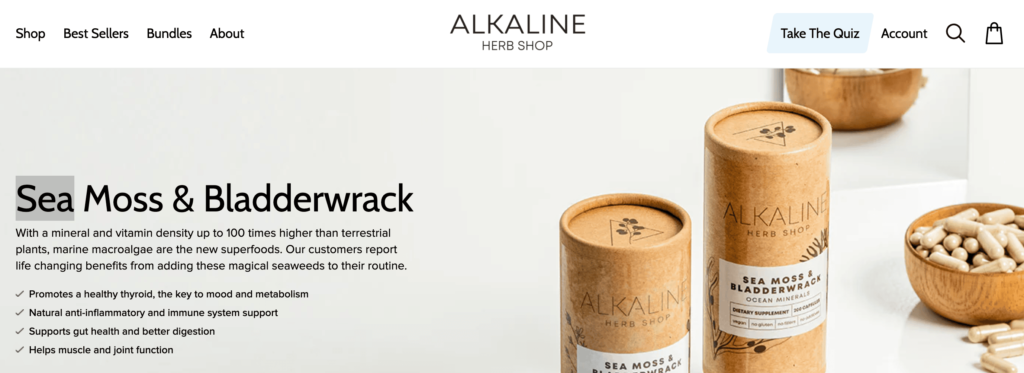
Alkaline Herb Shop sells gluten-free herbal supplements and natural healthcare products. Their products can support users’ long-term organ health and mental health effectively.
You need to sign up for Impact to join this herbal supplements affiliate program. They allow affiliates to earn a 15% commission per sale and a $10 bonus on every free trial sign-up. The cookie lasts 45 days from customers’ initial click on your link.
Their affiliate program opens for global affiliates without charging any application fees. However, you must have at least 5,000 followers on social media or an established website to be qualified for their program.
|
10. Wild Rose College of Herbal Medicine
Wild Rose College of Herbal Medicine offers herbal online education through expert-level courses and in-person clinic intensives. Their lessons teach about herbal originality, medicine making, and the latest extraction techniques.
Their herbal affiliate program offers a 10% commission across all completed course subscriptions. You must reach a $250 payment threshold before withdrawing your monthly payouts via PayPal.
The brand gives affiliates ready-to-use text to create relevant and engaging content for their audience. You should also add banners and images to your content to increase click-through rates and conversions.
|
11. Plant People
- Commission rate: 15%
- Cookie duration: 30 days
Plant People creates premium practitioner-grade herb supplements from CBD and mushrooms. They also sell functional foods to enhance daily energy, skin textures, and sleep quality.
12. Herbs Collection
- Commission rate: 10%
- Cookie duration: Not mentioned
Herbs Collection harvests herbs from South American, African, and Southeast Asian countries to produce wellness products. They also offer a diverse collection of carefully processed herbs for cooking and gardening needs.
13. Global Healing
- Commission rate: 10%
- Cookie duration: Not mentioned
Global Healing offers natural health products like supplements, vitamins, and detox programs. They also create online courses about disease origins and how to cure them with herbs.
14. Herbal Dog Co
- Commission rate: 15%
- Cookie duration: Not mentioned
Herbal Dog Co distributes herbal pet products for health support, anxiety relief, and fur grooming. They also supply monthly subscription boxes with mini-sized trial products at budget-friendly prices.
15. Natural Lab
- Commission rate: 15%
- Cookie duration: Not mentioned
Natural Lab utilizes the latest nutritional science and well-qualified herbs to produce supplements. Their famous powders help enhance the immune system, organ health, and skin texture.
16. Ora’s Amazing Herbal
- Commission rate: 10-25%
- Cookie duration: Not mentioned
Ora’s Amazing Herbal sells different self-care product lines, such as skincare, bodycare, and baby care. Following holistic approaches, their organic herb products promote internal healing to enhance the outer appearance.
17. Home Grown Herbalist
- Commission rate: 10-25%
- Cookie duration: Not mentioned
Home Grown Herbalist launches online courses on how to use herbs for curing anxiety, insomnia, ADHD, and more. They also manufacture premium herbal products for both humans and animals.
18. Just Herbs
- Commission rate: 15%
- Cookie duration: Not mentioned
Just Herbs is the first Indian Ayurvedic beauty brand to produce natural self-care and makeup products. They only use unprocessed plant ingredients to maintain their original attributes.
19. Plum Dragon Herbs
- Commission rate: 15%
- Cookie duration: Not mentioned
Plum Dragon Herbs creates pain relief and injury recovery products from traditional Chinese herbal formulas. Their products support the body’s natural healing process to improve overall comfort.
20. Make Wellness
- Commission rate: 40%
- Cookie duration: Not mentioned
Make Wellness produces science-backed natural herb supplements for boosting energy and hydration. Their products are suitable for maintaining practitioners’ fitness during intense training.
How to Choose the Right Herbal Affiliate Program: The 5-Factor Selection Framework
Many new affiliates make a fatal mistake: they choose the program with the highest commission percentage.
They see “30% commission” and sign up immediately. They ignore the fact that the product costs just $15 and has a terrible website that converts nobody.
In the herbal niche, strategy beats percentage every time.
To build a real income, you need to stop guessing. You need a data-driven plan. This 5-factor framework will help you evaluate programs objectively.
Calculate True Earnings Potential
The most important metric in affiliate marketing EPC (Earnings Per Click) – or as we prefer to call it: True Earnings Potential.
You need to look at the full equation:
True EPC = Commission % × Average Order Value × Conversion Rate
Here is why the “highest commission” is often a trap. Let’s compare two real-world scenarios you might find in the herbal supplement space:
| Criteria | Program A (“The High Percentage Trap”) | Program B (“The High Value Winner”) |
| Commission | 25% (Looks attractive) | 10% (Sounds low) |
| Average Order Value (AOV) | $40 | $150 (Premium bundle) |
| Conversion Rate (CR) | 2% (Generic landing page) | 4% (High-trust brand) |
| Commission per Sale | $40 × 25% = $10 | $150 × 10% = $15 |
| Result (per 100 clicks) | 2 sales → Earnings: $20 | 4 sales → Earnings: $60 |
The math above is undeniable, but there is a catch.
While every program boldly advertises their commission %, they rarely list their Conversion Rate or Average Order Value on the sign-up page.
You cannot calculate the True EPC without these ‘hidden’ numbers. So, where do you find them?
- Ask the Affiliate Manager: “What is your site-wide conversion rate and average order value?”
- Use Industry Benchmarks: If they won’t say, assume a 3-5% conversion rate for quality herbal brands.
- Create a Tracker: Use a simple spreadsheet to calculate the Projected EPC for every program you apply to.
Assess Audience-Product Alignment
In the health and wellness space, trust is your currency.
If you recommend a low-quality product that doesn’t work (or contains shady ingredients), you lose that reader forever.
So, how do you vet a program before putting your reputation on the line?
You map every potential partner on trust and credibility.
☑️Product Quality
- Do they have third-party testing (COAs) visible?
- Are they USDA Organic or Non-GMO Project Verified?
- Is the supply chain transparent?
☑️Brand Story Resonance
- Does their mission match your audience’s values?
- Is the founder’s story compelling?
- Do they use sustainable packaging?
To understand why this scoring matters, let’s compare two options for a blogger reviewing Ashwagandha:
❌ The Generic Amazon Brand
The Offer: Cheap, plastic bottle, no origin details, obscure manufacturer.
The Result: It might convert quickly because of the low price point. However, if the product is weak or ineffective, the customer feels cheated. Your trust score drops.
🏆 The Winner: Gaia Herbs
The Offer: Traceable ingredients, glass packaging, Certified B-Corp status.
The Result: The price is higher, but the Trust Score is a 10/10. The customer feels safe and premium.
Evaluate Cookie Duration and Attribution Windows
In the herbal niche, impulse buys are rare.
When someone reads about “Lion’s Mane for memory,” they usually don’t buy right away. They research. They read reviews. They check their budget. This “consideration phase” often takes 2-4 weeks.
This is why Cookie Duration (how long you get credit for the sale after the click) is critical.
Here is roughly how herbal supplement purchases break down by time:
- Days 0-7: 35% of purchases happen here.
- Days 8-30: 28% of purchases.
- Days 31-60: 22% of purchases.
If you choose a program with a standard 30-day cookie, you capture roughly 63% of potential buyers. If you choose a program with a 60-day cookie, you capture 85% of potential buyers.
That extra 30 days of tracking effectively increases your total commissions by 35%, without you sending a single extra visitor.
Decision Rule: When comparing two similar programs, a 60-day cookie at a lower commission rate (e.g., 15%) will often outperform a 30-day cookie at a higher rate (e.g., 18%).
Analyze Recurring Revenue Opportunities
The “Holy Grail” of affiliate marketing is recurring commissions. This is where you get paid every time a customer renews their order, not just the first time they buy.
Most herbal supplements are consumable. People finish a bottle of CBD oil or adaptogens in 30 days and need more.
Let’s look at the lifetime value of a customer on a subscription model versus a one-time purchase.
| Scenario A (One-Time Only) | Scenario B (Subscription) |
| You sell a $50 jar of Manuka honey at 20% commission. You make $10. End of story. | You sell a $50 monthly subscription for herbal tea. You earn 20% recurring.
Month 1: $10 Month 2: $10 … Average Retention (7 Months): $70 Total Commission. |
By prioritizing programs that offer recurring commissions on subscriptions, you increase the value of every customer by 4-7x.
If you prefer recurring commissions, you can look for products that become part of a daily habit, like:
- Adaptogens & Supplements: Usually have 30-day cycles (High repurchase potential).
- Herbal Teas: Daily habits create monthly reorders.
- Skincare: 45-60 day cycles.
Review Promotional Support and Affiliate Resources
The final factor is how much the brand helps you sell.
A “Ghost Program” is one that approves you and then gives you nothing but a raw link. An “Affiliate-First Partner” provides the tools you need to succeed.
To separate the amateurs from the pros, you can rate every potential program using this simple checklist. Give them 1 point for each resource they provide:
☑️ Professional Assets: High-resolution product shots and lifestyle photography you are legally allowed to use.
☑️ Copy Swipe Files: Pre-written emails or social captions that highlight key benefits.
☑️ Educational Content: Ingredient guides or white papers (crucial for herbal niches so you don’t make false health claims).
☑️ Seasonal Calendar: Heads-up on upcoming sales (Black Friday, Earth Day, etc.).
☑️ Responsive Manager: Do they reply to emails within 48 hours?
☑️ Dashboard Transparency: Can you see exactly which links are converting?
The Red Flag Warning: If a program has zero resources and an unresponsive manager, proceed with caution. In our experience, programs that don’t invest in their affiliates usually have other systemic issues, like delayed payments or broken tracking pixels.
How Do You Promote Herbal Affiliate Products Effectively?
Let’s be clear: Promoting herbal supplements is not like promoting software or fashion.
When you sell a t-shirt, the worst case is that it doesn’t fit. When you sell a supplement, you are asking someone to put something into their body to solve a serious health problem.
The following guide will help you understand the unique challenges of selling natural health products online.
Identify Your Ideal Herbal Product Buyer Persona
The biggest mistake new affiliates make is trying to sell “herbal remedies” to “everyone.” In marketing, if you try to speak to everyone, you end up hearing from no one.
To convert traffic into sales, you must narrow your focus to a specific person suffering from a specific pain.
Answer these three questions to define this person.
What is their specific health challenge?
Bad: “They have anxiety.”
Good: “They have high-functioning social anxiety.”
Better: “They are a corporate professional dealing with post-workout inflammation.”
What is their awareness level?
Does your audience know what “Ashwagandha” or “Adaptogens” are?
Or are they simply searching for general terms like “natural stress relief”? (This determines the vocabulary you use).
What are their values?
Are they budget shoppers looking for a deal?
Or are they “health purists” who demand organic certification and glass packaging?
Studies show that spending on herbal supplements typically peaks in the 35-55 age range.
These buyers often have households earning $60k+ and prioritize preventative health. Most importantly, 70% of this group considers organic certification a non-negotiable factor.
Build a Content Hub Optimized for Discovery
Stop firing shots in the dark.
If you just write random blog posts without a structure, your traffic will bounce, and your sales will decrease.
Instead, you need to build a Content Hub.
Think of this as a digital spiderweb: the more interconnected your strands are, the easier it is to catch traffic and guide them exactly where you want them to go.
We suggest dividing your content into three distinct tiers that guide a reader from “Curious” to “Buyer.”
Tier 1: Pillar Content (40%)
Goal: Broad education and authority.
Example: “The Complete Beginner’s Guide to Adaptogens.”
Tier 2: Cluster Content (35%)
Goal: Solving specific problems.
Example: “Can Ashwagandha Really Lower Cortisol? My 60-Day Test.”
Tier 3: Product Content (25%)
Goal: Sales and conversion.
Example: “Gaia Herbs vs. Himalaya: Which Ashwagandha is Purest?”
More importantly, every educational post must link to 2-3 product reviews.
Every product review must link back to educational pillars. This structure signals to Google that you are an authority on the topic, not just a salesperson.
Leverage SEO for Long-Term Organic Traffic
SEO in the herbal niche requires a sniper approach, not a shotgun approach.
Here is the reality: Giant publishers like WebMD and Healthline dominate broad terms like “Ashwagandha” or “CBD Oil.” You cannot beat them there; they have too much authority.
However, you can beat them on the edges.
While they cover general definitions, you will win by answering specific, experiential questions that real buyers are asking.
Mine “People Also Ask”: Type your main herb into Google and look at the questions box. Terms like “how long does rhodiola take to work for fatigue” are gold mines.
Target Low Difficulty: Use a tool like Ahrefs or Semrush. Look for Keyword Difficulty (KD) scores under 40.
Write Comprehensive Content: For herbal topics, “thin” content fails. Aim for 2,000+ words. Google rewards content that covers safety, dosage, and side effects thoroughly.
Backlink Tip: Reach out to yoga studios, meditation blogs, or holistic wellness sites. Offer to write a guest post about “Natural ways to support your practice” and link back to your herbal guides.
Create a Pinterest Strategy for Visual Discovery
While Google is the king of text search, Pinterest is the queen of visual discovery.
Many affiliates make the mistake of treating Pinterest like Instagram or Facebook. It is not social media; it is a visual search engine.
Data shows that 40% of Pinterest users actively use the platform to search for health and wellness solutions.
Because fewer marketers treat it seriously, it is often much less competitive than Google, offering a faster path to organic traffic.
You can follow these four rules to turn browsers into buyers.
- Design Vertical Pins: Use 1000×1500 pixel images.
- Focus on Benefits: Don’t just show a bottle. Show a calm person with text overlay: “5 Adaptogens That Actually Reduce Stress—Ranked.”
- Organize by Goal: Create boards named “Sleep Solutions” or “Hormonal Balance,” not just “Herbal Products.”
- Consistency: Pin 5-10 times daily. Use a scheduler like Tailwind to mix your content (50%) with other relevant pins (30%).
Build an Email Nurture Sequence That Converts
Most people won’t buy a supplement on their first visit. They need to trust you first.
You must capture their email with a lead magnet (e.g., The Ultimate Herbal Interaction Chart or 7-Day Stress Reset Guide).
Once they are on your list, you don’t just spam them with links—you nurture them.
Here is a recommended 7-email automated sequence to convert them
Day 1 (Delivery): Here is your free guide + Who I am.
Day 3 (Story): My personal transformation with herbal medicine.
Day 5 (Education): Deep dive into one category (e.g., Nervines) + Soft product mention.
Day 7 (Objection Handling): “Do these really work?” (Cite studies).
Day 9 (Hard Sell): My Top 3 Recommended Products (Comparison).
Day 11 (Implementation): How to stack these herbs for best results.
Day 14 (Feedback): “Reply and tell me your goals.”
Utilize YouTube for Demonstrations
Text cannot convey texture, taste, or unboxing experiences. Video builds face-to-camera trust that blogs cannot match.
If you’re a starter, don’t know where to go, let’s try these content ideas below:
📦 The Unboxing: Show the packaging. Read the label on camera. Comment on the smell and taste.
⚖️ The Comparison: Put two bottles side-by-side. Compare the capsule size and daily cost.
🧘 The Routine: “My Morning Elixir Routine for Focus.”
In your video description, it’s best to include a timestamped breakdown (e.g., 02:15 – Tasting the tea, 04:30 – Cost breakdown). Place your affiliate links clearly at the top of the description and in the pinned comment.
Test Paid Traffic Cautiously (Facebook/Instagram)
Organic traffic (SEO, Pinterest, YouTube) builds a strong foundation, but it takes time. If you want to accelerate your results, paid ads are the answer.
However, in the health niche, you must tread carefully.
⛔ The Critical Warning:
Meta (Facebook/Instagram) has incredibly strict policies regarding health claims.
If your ad uses words like “Cure,” “Treat,” or “Fix Anxiety,” your ad account will be banned instantly. You must promote wellness, not medical miracles.
To stay safe and profitable, never link an ad directly to an affiliate product page. It looks spammy and triggers ad disapproval algorithms.
- The Ad: Promote a piece of educational content or a free guide. (e.g., “Confused by adaptogens? Read our free guide.”)
- The Landing Page: Collect their email address in exchange for the guide.
- The Thank You Page: Offer a “One-Time Offer” or link to a product review.
- The Email: Nurture them (see Step 5).
You do not need a massive bankroll to test this.
Start small. A budget of $10-15 daily is enough to test audiences. Look for “Lookalike Audiences” based on your email list – these often perform best.
What Are the Legal and Ethical Considerations When Promoting Herbal Products?
When you sell herbal supplements, you are navigating a minefield of federal regulations.
If you step wrong, you face potential fines from the FTC and FDA.
Here is how to stay compliant while building a profitable, ethical business.
Understanding FDA Regulations: What You Can and Cannot Claim
The biggest mistake new herbal affiliates make is acting like a doctor. The FDA (Food and Drug Administration) draws a hard line in the sand.
Supplements are regulated differently from drugs. A drug can claim to cure a disease. A supplement cannot.
You must understand the difference between a Disease Claim (Prohibited) and a Structure/Function Claim (Permissible).
For example, you cannot claim that a herbal product: Diagnoses a disease; Treats or Cures a disease; Prevents a disease.
You can still highlight benefits without health claims.
❌ Don’t Say: “Echinacea cures the flu.”
✅ Do Say: “Echinacea supports a healthy immune system.”
❌ Don’t Say: “Valerian Root treats insomnia.”
✅ Do Say: “Valerian Root promotes restful sleep and relaxation.”
❌ Don’t Say: “Turmeric stops arthritis pain.”
✅ Do Say: “Turmeric supports joint health and mobility.”
If you make any health-related statements, you legally must include the FDA disclaimer.
It cannot be buried in a footer. It must be visible on the page without scrolling, typically near your first recommendation.
“These statements have not been evaluated by the Food and Drug Administration. This product is not intended to diagnose, treat, cure, or prevent any disease.”
FTC Affiliate Disclosure Requirements: How to Disclose Transparently
The FTC (Federal Trade Commission) requires that if you are paid to endorse a product, you must disclose it to your audience.
This means your disclosure cannot be hidden in a link that says “Legal” at the bottom of your site. It must be impossible to miss.
The location matters just as much as the words. Follow these placement rules for every platform:
Top of the Post: It must appear before the reader clicks any affiliate link. Putting it at the very top of your blog post is the gold standard.
In Videos: You must state it verbally within the first 30 seconds and have it written in the video description.
Social Media: On Instagram Stories or Pinterest, the disclosure (e.g., #ad or #affiliate) must be superimposed on the image, not buried in a “more” menu.
One more note is that you don’t need legal jargon. Plain English works better.
“I earn a commission if you purchase through my links at no additional cost to you.”
Or:
“This post contains affiliate links, meaning I may earn a small commission if you make a purchase.”
Ethical Guidelines: Building Long-Term Trust vs. Short-Term Commissions
We have covered the legal requirements (FTC), but now we must discuss the moral ones.
Remember: Compliance keeps you out of court. Ethics keep you in business.
In the herbal niche, you aren’t just selling gadgets or clothes; you are dealing with people’s health.
A “churn and burn” strategy, promoting whatever pays the most, might work for a month, but it will eventually destroy your reputation.
Before you promote any products, you should keep in mind these things:
🔍Transparency (The “Side Effect” Rule)
Don’t just list the benefits. Honest reviews include potential downsides.
If St. John’s Wort interacts with antidepressants (which it does), you have an ethical duty to mention that. This doesn’t kill sales; it filters out the wrong buyers and protects your readers.
🔍 Honesty (The “Scope” Rule)
Know your lane. Unless you are a licensed practitioner, do not give medical advice.
If a reader asks, “Will this cure my cancer?”, the only ethical answer is, “I am an enthusiast, not a doctor. Please consult your healthcare provider.”
🔍The “Grandmother Test”
Before promoting a product, ask yourself: “Would I feel comfortable recommending this to my mother or best friend if they were suffering from this issue?”
If the answer is No, do not promote it. I don’t care if the commission is 50%.
If the answer is Yes, promote it with confidence.
Conclusion
We hope that after reading this guide, you’re confident in building a herbal affiliate program.
It’s one of the best ways to grow your Shopify brand fast and cost-effectively. And with UpPromote, your journey can be even easier since we can do all the heavy lifting.
Let’s explore our pricing plans and start your affiliate program today.

Ellie Tran, a seasoned SEO content writer with three years of experience in the eCommerce world. Being a part of the UpPromote team, Ellie wants to assist Shopify merchants in achieving success through useful content & actionable insights. Ellie's commitment to learning never stops; she's always eager to gain more knowledge about SEO and content marketing to create valuable content for users. When she's not working on content, Ellie enjoys baking and exploring new places.