

The global wine market is projected to grow from $490.23 billion in 2025 to $749.1 billion by 2033, according to Straits Research. This number reflects an increasing consumer preference for high-quality and organic wines.
If you’re a wine enthusiast or expert, wine affiliate programs are a great way to earn money online by recommending the fine beverages you enjoy most.
We’ve compiled a list of the 23 best options for wine affiliate programs with key details like commissions, cookie durations, and other benefits. Let’s dive into the article to see which one suits you best!
Quick Comparison
| Program Name | Commission (%) | Cookie Duration (Days) | Niche Suitable | Affiliate’s Rating |
|---|---|---|---|---|
| Wine.com | 6% (new) / 1% (existing) | 30 | Wine retail, general wine buyers | ⭐⭐⭐ |
| Wine Express | 6% purchases / $10 club | 30 | Wine buyers, wine club niche | ⭐⭐⭐⭐ |
| WSJwine | 5% (non-club) / $20 (club) | 7 | Wine subscription, wine clubs | ⭐⭐⭐ |
| Wine Enthusiast | 3% | 30 | Wine accessories, glassware, coolers | ⭐⭐⭐ |
| The Claire Co. | 20% | 30 | Handmade glassware, lifestyle/home niche | ⭐⭐⭐⭐ |
| Organic Wine Exchange | 10% | 30 | Organic wine, vegan wine, sustainable wine niche | ⭐⭐⭐⭐ |
| The Wine Concierge | 7% wine sales / $25 membership | 30 | Premium wine, diversity-based winemakers | ⭐⭐⭐⭐ |
| Wine On Sale | 12% | 30 | Discount wine, high AOV buyers | ⭐⭐⭐⭐ |
| Franzese Wine | 10% | 15 | Armenian wines, specialty wines | ⭐⭐⭐ |
| International Wine of the Month Club | $12 per membership | 90 | Subscription wine clubs | ⭐⭐⭐⭐ |
| Mano’s Wine | 3% | 45 | Custom/engraved wine bottles, gift niche | ⭐⭐⭐ |
Top 23 Wine Affiliate Programs to Join in 2025
1. Wine.com
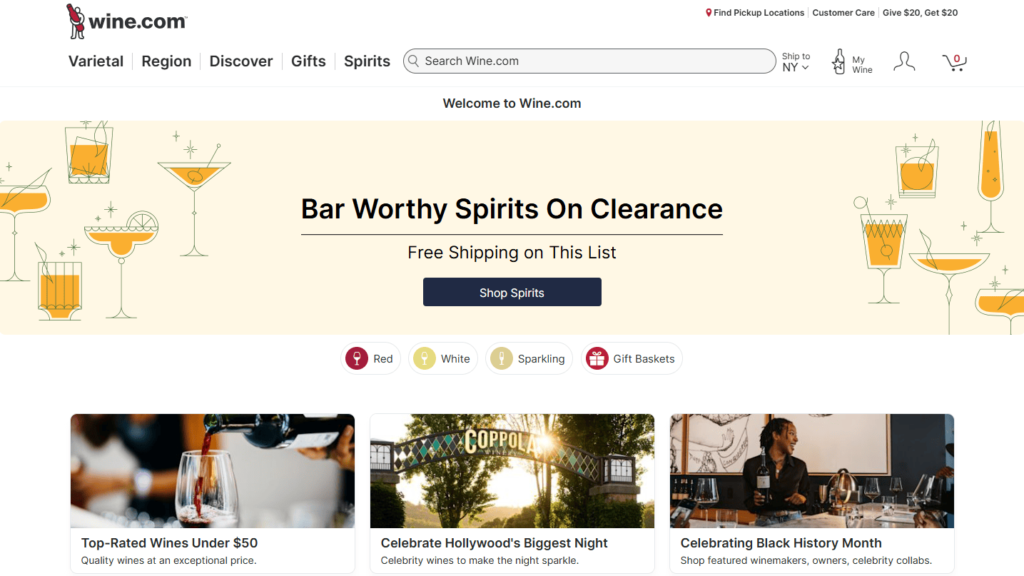
Wine.com is the largest online wine retailer in the United States. Customers can explore a selection of over 17,000 wines from around the world and connect with their wine experts to find the perfect match for their taste.
By joining the Wine.com affiliate program, you can earn a 6% commission on sales from new customers and 1% on repeat orders. The cookie period lasts 30 days from the visitor’s first click on your link.
The brand provides various professionally designed banners and logos to help make your promotions more appealing. Plus, their automated data feed will keep you up-to-date with the latest product information.
|
2. Wine Express
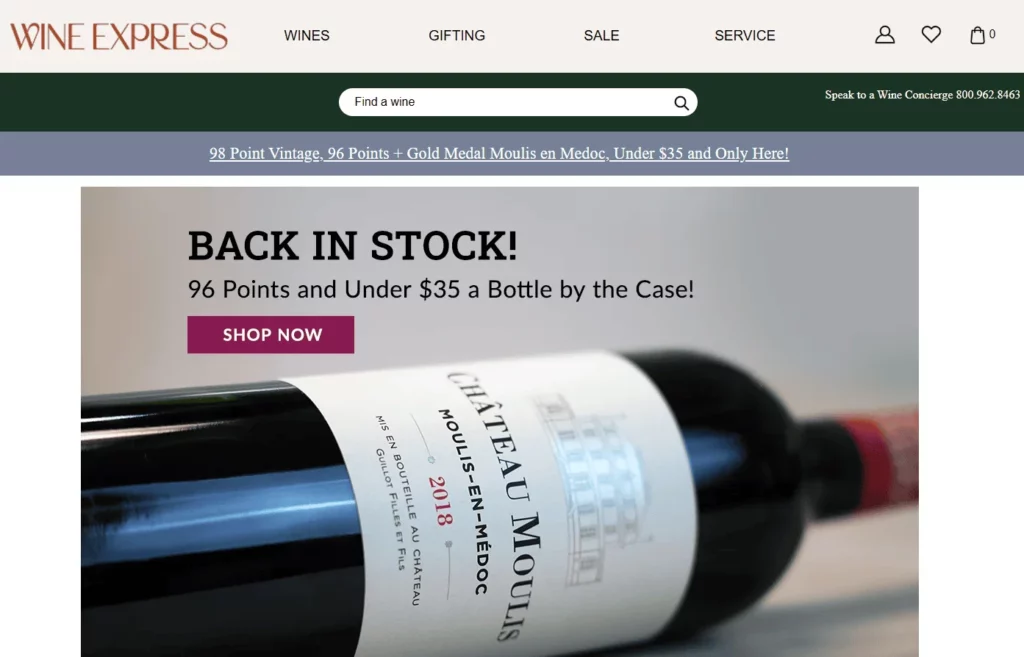
Wine Express sources high-quality wines from renowned regions like France, Italy, Spain, Australia, and more. They are the exclusive wine retail partner of The Wine Enthusiast, a trusted brand among wine lovers for over 40 years.
You can enjoy a 6% commission on each successful wine purchase and $10 for every Wine Club subscription. The cookie duration is 30 days, meaning you’ll receive credit for any referred sales within that time frame.
Their wine affiliate program is managed via Impact Radius. You can sign up for the network to join and get access to their pre-made banners, text links, and product links to start promoting right away.
|
3. WSJwine
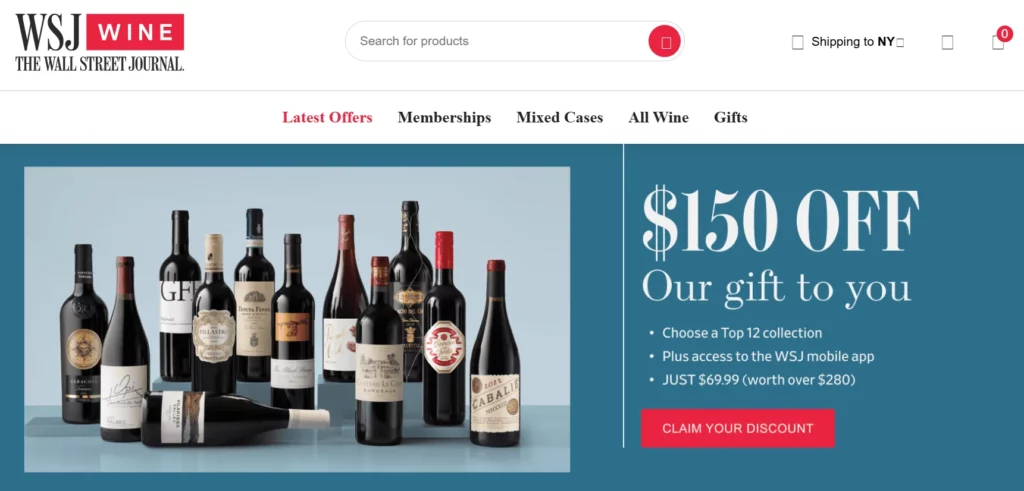
WSJwine sells a variety of red, white, and mixed case wines from renowned regions and boutique estates worldwide. Customers can join their discovery club to enjoy a new selection of wines every quarter, along with a 20% discount on all club cases.
The WSJwine affiliate program offers you $20 for each club subscription and a 5% commission on all non-club purchases. The referral window is just 7 days, so it’s important to craft persuasive messages that drive immediate action.
You can make your promotions more attractive with the brand’s visually appealing banners and text links. They also provide limited-time and exclusive promotional offers to help you attract more customers and drive quicker purchases.
|
4. Wine Enthusiast
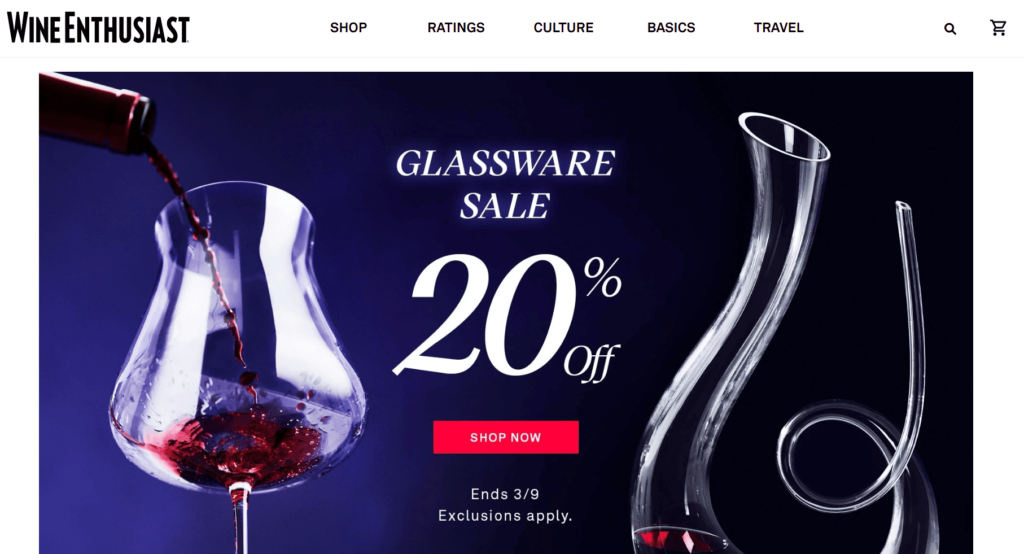
Wine Enthusiast is a leading provider of wine-related products, such as glassware, wine accessories, wine coolers, and other storage solutions. They also publish Wine Enthusiast Magazine to share expert reviews and informative articles, and to help readers stay informed about the latest wine trends.
The brand offers a 3% commission on each successful sale. That means you will earn $4.50 per sale with an average online order of $150. The referral window stays active for 30 days from the visitor’s first click on your affiliate link.
Wine Enthusiast manages their wine affiliate program through CJ Affiliate. Once approved, you’ll get access to their collection of vibrant banners and links to support your promotions.
|
5. The Claire Co.
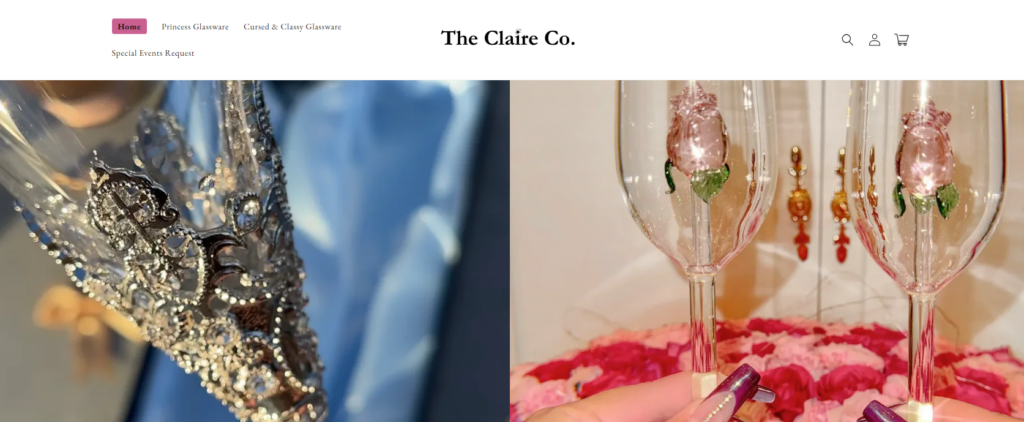
The Claire Co. makes beautiful, handmade glassware that makes drinking wine feel special. They offer a variety of glasses, like goblets and champagne flutes, for everyday use or celebrations. Each piece is made with care to add a unique and stylish touch to your experience.
The Claire Co. Ambassador Program is a great way to earn money while sharing beautiful handmade glassware with others. Ambassadors earn a 20% commission on every sale made through their unique affiliate link, with a generous 30-day cookie duration. Commissions will be sent via PayPal or bank transfer.
As an ambassador, you’ll also receive an exclusive 50% discount on personal purchases. You can experience their glassware firsthand and share it with your audience via social media or blogs. The brand is always ready to support you with any questions or issues.
|
6. Organic Wine Exchange
Organic Wine Exchange supplies a selection of biodynamic, vegan, and sustainable wines made from organically grown grapes. They also provide valuable wine education, including tips on organic wine, winemaker spotlights, and tasting reviews.
When you join the Organic Wine Exchange affiliate program, you will get a 10% commission on each successful sale with a 30-day cookie duration. Their average order is $159.74, so you can receive about $16 per referral.
You can withdraw your earnings via Zelle once your balance reaches $100. The brand provides a collection of vibrant creatives to support your promotions. They also update their newsletters regularly to keep you informed about the latest program information and exclusive offers.
|
7. The Wine Concierge
The Wine Concierge offers handcrafted wines produced by women, BIPOC, and culturally diverse winemakers. Customers can subscribe to a membership plan for monthly or quarterly wine shipments.
You will receive a 7% commission on every wine sale and $25 for each new membership sign-up. With an average order value of $145, you can expect to earn around $10 from each wine purchase. The cookie lasts 30 days from the customer’s initial click.
Once approved for The Wine Concierge affiliate program, you’ll get access to their ready-to-use, engaging creatives and start promoting. You can also share special coupons and seasonal deals with your followers to boost engagement and drive faster purchases. Plus, the brand will offer performance-based bonuses to top affiliates.
|
8. Wine On Sale
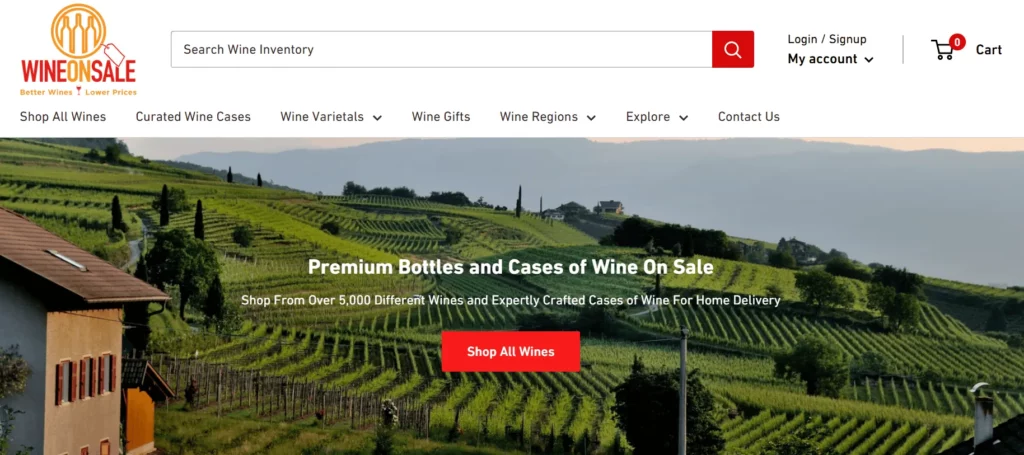
Wine On Sale offers 5,000+ wines from renowned vineyards worldwide, including red, white, rosé, sparkling, and collectible bottles. Wine lovers can enjoy great savings through the brand’s discounted case deals and sampler packs.
By joining the Wine On Sale affiliate program, you can get a 12% commission on every successful sale. With the $185 average order value, that’s about $22 per purchase. The 30-day cookie allows you to earn a commission on any order made within that period.
You can share their special coupon codes with your audience to attract more attention and drive more sales. The brand also gives you eye-catching creatives to support your promotional efforts.
|
9. Franzese Wine
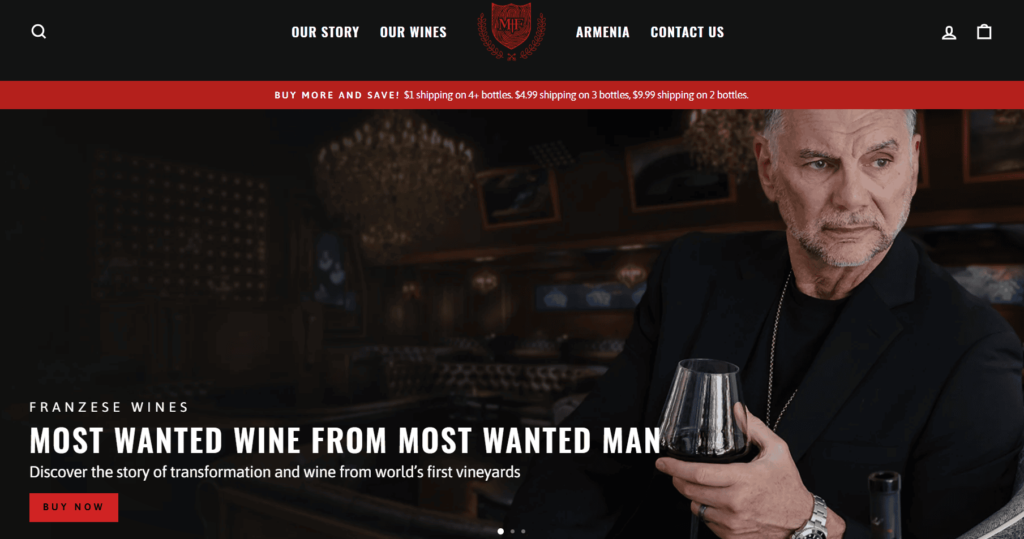
Franzese Wine offers premium Armenian wines, from popular varieties like Areni and Malbec to unique products like their Pomegranate Wine. The brand also provides a selection of non-alcoholic options to cater to different tastes.
Franzese Wine affiliate program enables you to earn a competitive commission rate of 10% per sale. The cookie remains valid for 15 days after the customer clicks on your unique link.
They regularly update their creative assets to help you promote fresh and relevant content. Their newsletters also help you stay in the loop with new offers and product news.
You’ll get exclusive access to special deals and promotions to share with your followers. Plus, their experienced affiliate managers are available to support you with tips and guidance to improve your performance.
|
10. The International Wine of the Month Club
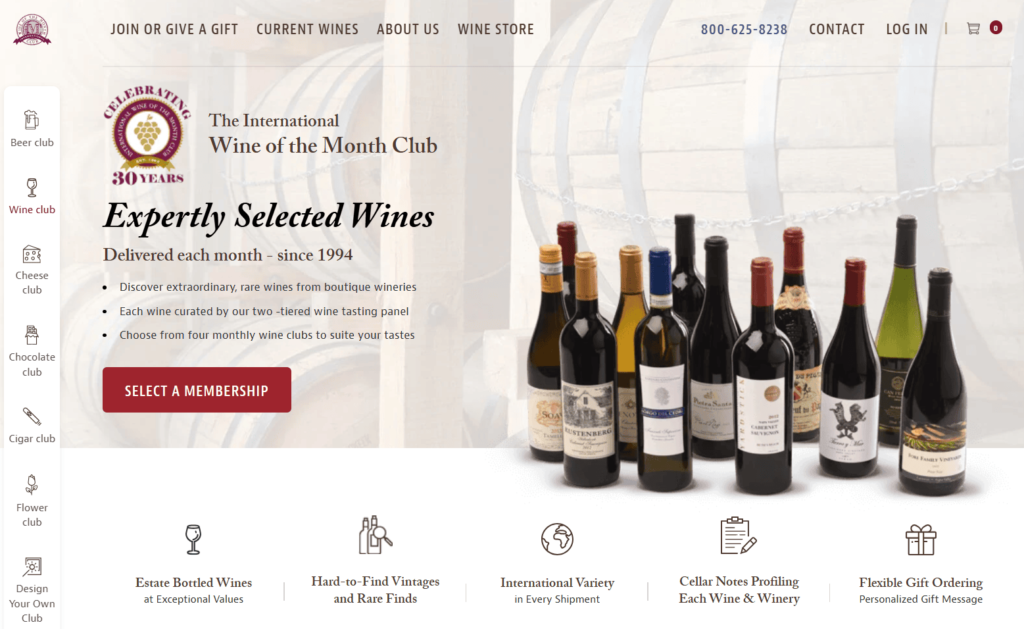
The International Wine of the Month Club is a leading US-based wine subscription service with over 2 million satisfied members. They are a part of MonthlyClubs.com, which also offers other gourmet subscription services like beer, cheese, and chocolate clubs.
You will receive $12 for each qualified membership made through your link. The 90-day cookie window gives you a long tracking period to earn commissions from the customer’s initial click.
The brand runs their wine affiliate program through the CJ network. They offer a variety of ready-to-use banners and text links to help affiliates promote their products.
|
11. Mano’s Wine
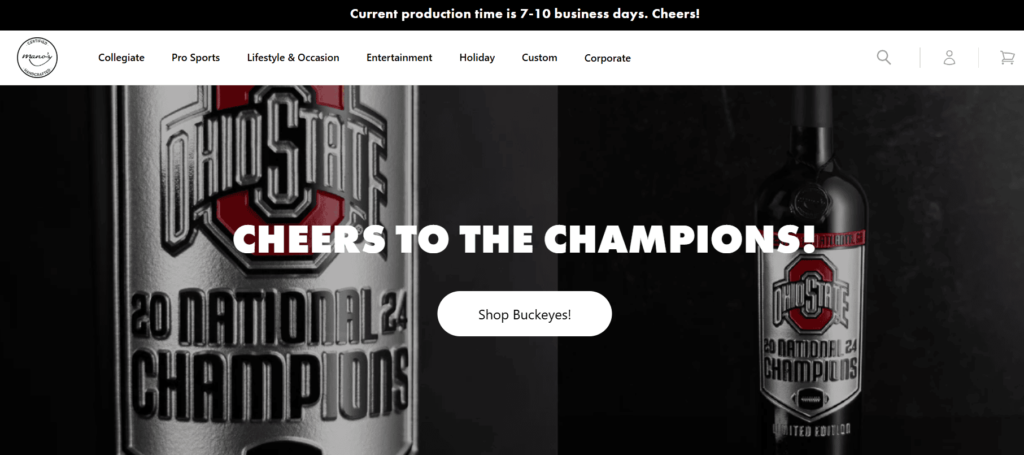
Mano’s Wine creates deep-etched and hand-painted wine bottles. The brand has worked with major organizations like the Kansas City Chiefs, Major League Baseball, Major League Soccer, and more to produce unique, customized items for special events.
Affiliates can join Mano’s Wine affiliate program and earn a 3% commission on each qualified wine purchase. The cookie stays valid for 45 days from the customer’s first click on your unique link.
Their program is managed through the CJ Affiliate network. That means you’ll need an active CJ account to join.
|
12. Total Wine
- Commission rate: 3.2%
- Cookie duration: 1 day
Total Wine is America’s largest independent retailer of fine wine, with over 260 superstores across 29 states. They offer about 8,000 different wines from around the world, along with 3,000 types of spirits and 2,500 beers.
13. Firstleaf
- Commission rate: $25
- Cookie duration: 14 days
Firstleaf is a California-based personalized wine subscription service. They source wines from renowned regions in different countries, such as the US, France, Italy, Spain, South Africa, Argentina, and Australia.
14. Cellars Wine Club
- Commission rate: 8%
- Cookie duration: 30 days
Cellars Wine Club has operated as a wine subscription service since 1999. They offer eight different wine club options, ranging from single-bottle to case clubs, giving members flexible choices tailored to their preferences and budgets.
15. Galiano Wine
- Commission rate: 10-15%
- Cookie duration: 30 days
Galiano Wine offers a range of wines, including Cabernet Sauvignon, Pinot Noir, Chardonnay, Rosé, and sparkling wines. Customers can join their Wine Club to receive monthly wine deliveries, along with exclusive discounts and member-only perks.
16. Majestic Wine
- Commission rate: 4% (New customers), 1% (Existing customers)
- Cookie duration: 30 days
Majestic Wine is the UK’s largest specialist wine retailer, with an extensive network of physical stores across the country. They also provide expert advice and personalized service to help customers find the perfect wines, beers, and spirits.
17. Maker Wine
- Commission rate: 15%
- Cookie duration: 89 days
Maker Wine delivers high-quality, award-winning wines in eco-friendly cans. Their selection includes dry, terroir-driven wines with zero sugar and fewer than 5 carbs per serving.
18. Kings Bottle
- Commission rate: 5%
- Cookie duration: 30 days
Kings Bottle sells wine coolers, beverage refrigerators, and other specialized cooling solutions. Their products help wine enthusiasts store their collections at optimal temperature and humidity for long-term enjoyment.
19. Mysa Natural Wine
- Commission rate: 10%
- Cookie duration: 7 days
MYSA Natural Wine sells natural, organic, biodynamic, and vegan wines from small producers worldwide. They also provide flexible subscription plans, including mixed wine clubs or options focused on red and orange wines, with customizable delivery frequency and bottle count.
20. Roscioli Italian Wine Club
-
- Commission rate: 10-160€
- Cookie duration: Not mentioned
Roscioli Italian Wine Club is a subscription service offering a curated selection of artisanal Italian wines, primarily from small, family-owned producers. Each shipment comes with wine notes, QR codes linking to videos about the winemakers, and pairing suggestions.
21. The Organic Wine Company
- Commission rate: 5%
- Cookie duration: Not mentioned
Established in 1983, Organic Wine Company is one of the oldest companies in the organic winemaking industry. Their vegan-friendly products are sourced from renowned wine regions in France, Italy, Spain, Portugal, and New Zealand.
22. Plonk Wine Club
- Commission rate: 15% (Subscription), 10% (Non-subscription)
- Cookie duration: Not mentioned
Plonk Wine Club is a wine subscription service offering organic, biodynamic, and sustainably produced wines from around the world. Each shipment comes with tasting notes and recipe pairings to enrich the drinking experience and help members understand each wine’s unique profile.
23. Mr.D Wine Merchant
- Commission rate: 5%
- Cookie duration: Not mentioned
Mr.D Wine Merchant offers a premium, carefully curated wine selection from prestigious French and Italian producers. Wine lovers can explore unique, artisanal, and hard-to-find bottles at accessible prices.
How to Choose Wine Affiliate Programs That Match Your Audience
As you can see, there are countless wine affiliate programs on the market. So which one should you choose?
Let’s follow the steps below to find the right program.
Step 1: Know Your Audience Profile
Before you sign up for any affiliate program, you must know exactly who you are talking to.
Imagine trying to sell a high-end wine investment platform to someone looking for a cheap $15 bottle. That is a big mistake. It wastes your time and hurts your reputation.
Marketing expert Seth Godin says something important: Don’t find customers for your products. Find products for your customers.
This is very important in the wine world. Wine drinkers are not all the same. They have different budgets, different knowledge levels, and different wants.
Here are three questions to help you understand your audience’s profile:
- Are they beginners scared of fancy words? Are they fans learning about new regions? Or are they experts looking for rare bottles?
- Do they hate spending more than $15? Or is spending $50 on a weekday bottle normal for them?
- Do they want a club to pick wines for them? Or do they want to hunt for specific bottles themselves?
Then, you use the matrix below to categorize your traffic and find the right program type:
| Audience Persona | “Wine IQ” | Primary Motivation | Ideal Program Type |
| The Budget Explorer | Low – Medium | Value & Discovery | Wine Clubs (e.g., Winc, Firstleaf) that offer significant introductory discounts. |
| The Home Host | Medium | Pairing & Gifting | Accessories & Gifts (e.g., WineEnthusiast) or curated gifting services. |
| The Connoisseur | High | Rarity & History | Specialty Retailers (e.g., Wine.com) or Investment Platforms (e.g., Vinovest). |
Step 2: Map Your Content Strategy to Suitable Program Types
Once you know who they are, look at what you are creating. Your content format sets readers up for specific types of offers.
Think of your content like a fishing lure. You wouldn’t use a fly-fishing lure to catch a deep-sea marlin.
Similarly, you shouldn’t use a “Top 10 Wine Racks” article to sell a Wine Investment portfolio. The goal doesn’t match the offer.
We suggest using the table below to ensure your affiliate offers align with the intent of your article.
📝Recipe & Cooking Blogs:
Reader Goal: “I need a wine that makes this food taste better right now.”
Best Fit: Everyday Wine Clubs or Grocery Delivery. These readers want a quick solution to the “what do I drink with this?” problem.
📝Gift Guides & Holiday Lists:
Reader Goal: “I need to look impressive without thinking too hard.”
Best Fit: Curated Gift Baskets and Merchants with “Unboxing” appeal.
Strategic Tip: Pick programs that offer gift wrapping and personal notes. Do not just chase the highest commission rate. If the unboxing experience is bad, you won’t get the referral sale.
📝Lifestyle & Entertaining:
Reader Goal: “I want my home to look beautiful and hosting to be easy.”
Best Fit: High-margin Accessories (Coravin systems, crystal glassware, electric openers). These items have high order values and people return them less often than wine.
Step 3: Calculate True Earning Potential Beyond Commission Rates
New affiliates often fall into the “high percentage trap”.
They see a program offering 15% commission and choose it over one offering 5%. They assume they will make three times the money.
One of the affiliates in the UpPromote Marketplace learned this the hard way.
Early in my career, she promoted a boutique winery offering a huge 20% commission. She ignored a major retailer offering just 5%.
It turned out to be that the boutique winery’s website was hard to use, they only shipped to 12 states, and their average order was small ($40).
The major retailer converted well and had an average order of $250. That girl made pennies on the high-paying program and missed out on thousands from the low-paying one.
That’s why you should calculate the True Revenue Per Click (RPC) before joining any program.
The True Value Formula:
(Commission Rate × Average Order Value × Conversion Rate) = Revenue Per Visitor
Let’s take a simple example:
| Program A (The “High” Commission) | Program B (The “Low” Commission) |
| 20% Commission
$60 Average Order Value (AOV) 1% Conversion Rate (Low trust/brand recognition) Math: 0.20 × 60 × 0.01 = $0.12 per click |
5% Commission
$250 Average Order Value (High trust/inventory) 6% Conversion Rate (Great user experience) Math: 0.05 × 250 × 0.06 = $0.75 per click |
Step 4: Verify Geographic Compatibility and Shipping Capabilities
In the wine industry, location is everything. Selling alcohol is much harder than selling clothes or software because of complex shipping laws.
Imagine you have a viral post about “The Best Pinot Noirs.” It gets 5,000 views a month. You link to a wonderful winery in New York. You feel great about it.
But at the end of the month, you check your reports: 1,000 clicks, but 0 sales.
Why?
If 40% of your traffic comes from states like Utah or Alabama (which have strict shipping laws), those clicks are dead on arrival. The user tries to buy, sees “We do not ship to your location,” and leaves angry.
To prevent this frustration and save your sales, you must ensure the merchant can actually reach your readers.
You can follow this three-step checklist to ensure your traffic matches the merchant’s shipping map.
📍 Audit Your Traffic Source
Don’t guess where your readers live. Go to Google Analytics → Demographics → Geo → Location. Filter by State.
Example: If 30% of your traffic is from Pennsylvania (a historically strict state), you must confirm your affiliate partner has a license to ship there.
🚚 Check the “Shipping” Page First
Before you join any program, scroll to the bottom of their website and find the “Shipping Policy.” Look for these indicators:
Good Sign: “We ship to 45+ states.”
=> This program has broad coverage and is safe to promote.
Red Flag: “We currently ship to CA, OR, and WA only.”
=> Avoid this unless you know for a fact your audience only lives in those specific states.
🌍 The International Check
If you have a global audience, a US-based wine club is useless to your readers in the UK or Canada.
Our recommendation: Always include a small note near your affiliate links: “Check shipping availability for your specific state at checkout.” That saves your reader from wasting 20 minutes browsing only to see a “Shipping Error” at the cart.
What Content Types Drive the Highest Wine Affiliate Conversions?
Wine and Food Pairing Guides: Matching Bottles to Specific Meals
When a reader searches for “what wine goes with grilled salmon,” they are looking for a solution to an immediate problem. They are hungry, and they want an answer right now.
This high level of intent makes pairing guides one of the most reliable ways to make money in the wine niche. However, simply listing a random bottle isn’t enough.
You need to organize the content to guide the reader from their hungry stomach to the checkout button.
Here are some suggestions:
The Problem-First Approach: Don’t start with the history of the grape. Start with the dish. “Serving a heavy, fatty ribeye? You need tannins to cut through that richness.”
The “Good, Better, Best” Recommendation: Give readers options based on budget.
- Good ($15): A widely available Malbec (Link to Drizly/Instacart).
- Better ($35): A structured Napa Cabernet (Link to Wine.com).
- Best (Subscription): “Want to discover more reds like this? Try [Club Name].”
Pro Tip: Don’t just link to a homepage. If you recommend a specific Sauvignon Blanc for oysters, deep-link directly to that bottle’s product page.
Gift Guides and Holiday Wine Recommendations
During the critical Q4 window (October–December), the earning potential for wine affiliates explodes.
It is common for conversion rates to double or even triple during these months.
Gift guides are the primary engine for this revenue spike. They work effectively because they target buyers who have a hard deadline (the holiday) and a defined budget in hand.
However, a generic “Best Wine Gifts” list is often too broad to be effective.
Instead of a random list of bottles, you can categorize your suggestions to solve specific gifting problems:
🥂 For the “Hostess Gift”:
Focus on presentation. Recommend visually striking labels or Magnums (1.5L bottles). These look impressive on a dinner table and act as a conversation piece.
🤔 For the “Difficult Dad”:
He is notoriously hard to shop for. Solve this problem by suggesting a 3-month subscription gift card. This removes the risk of picking a specific bottle he might hate.
🔌 For the “Gadget Geek”:
Skip the wine entirely. Focus on aerators, preservation systems, or high-tech electric openers. These items often have higher profit margins and lower return rates than fragile bottles of wine.
Wine Education Content: Building Authority That Converts Long-Term
Educational content—like “The Difference Between Syrah and Shiraz” or “Understanding Tannins”—is a slow burn.
It rarely generates an immediate click-and-buy, but it is the foundation of your authority.
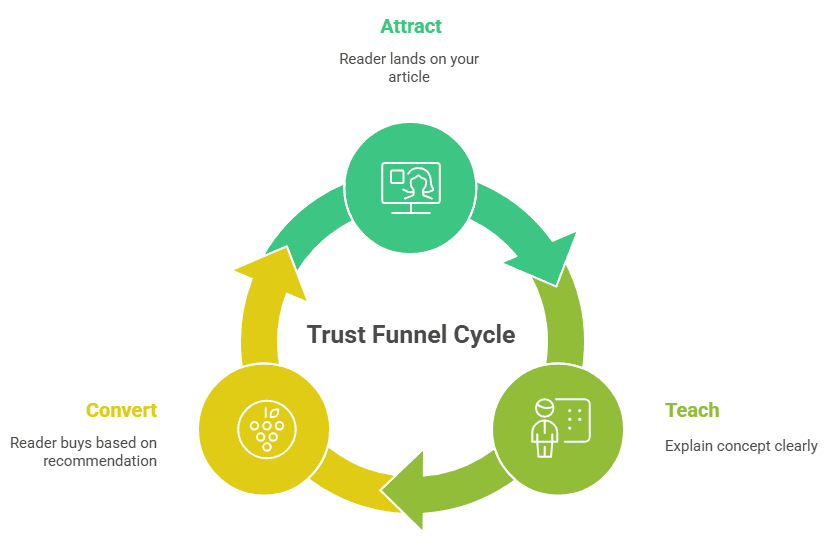
While these readers might not pull out their credit cards immediately, they are entering a crucial psychological process known as the Trust Funnel.
Attract: Reader lands on your article to learn about “Old World vs. New World wines.”
Teach: You explain the concept clearly, building trust. You are now the expert.
Convert (Later): When that same reader sees your review of a Wine Club next week, they buy because you recommended it.
However, you don’t always have to wait for a future sale. You can monetize educational posts immediately by solving the “how” behind the “what.”
Don’t treat education as charity. Treat it as a pre-sell for the tools needed to apply that education.
- Writing about French regions? Link to a “Tour of France” wine sampler pack so they can taste along.
- Explaining tasting notes? Link to a wine flavor wheel or a physical tasting journal.
- Talking about proper storage? Link to a recommended wine fridge or temperature-controlled racks.
Comparative Reviews: “Best Wine Clubs” and Product Roundups
While educational content builds trust slowly, reviews are where you harvest that trust.
Readers searching for specific terms like “Winc vs. Firstleaf” or “Best Wine Clubs for Beginners” already have their credit cards in their hands.
To maximize these high-value clicks, you need to structure your page correctly.
- Columns: Price per Bottle, Shipping Cost, Cancellation Policy, “Best For” (e.g., Beginners, Adventurous Drinkers).
- The Verdict: Give a definitive winner for specific scenarios. “If you hate shopping, pick Club A. If you want to learn, pick Club B.”
Another important thing is that you must show photos of the actual box arriving at your house.
Show the packaging. Show the broken cork if it happened. The more “unpolished” reality you show, the more they trust your “Buy Now” link.
Personal Wine Reviews and Tasting Notes: Authenticity-Driven Sales
While comparison tables target people looking for a service, single-bottle reviews target people looking for a specific taste.
This is the “long-tail” game. You likely won’t get rich reviewing one single $20 bottle of Merlot.
However, building a library of 100 reviews creates a massive net to catch search traffic from all over the web.
You need to change how you write them.
The “Contextual” Review Format
Don’t just list flavor notes like “hints of cherry and tobacco.” That is boring and technical. Instead, give the wine a context. Tell the reader exactly when and how to use it:
🎉 The Safe Bet: “This is the perfect bottle to bring to a dinner party where you don’t know the host well—it’s safe, impressive, and costs under $25.”
🥩 The Heavy Hitter: “Save this for a steak dinner. It is too heavy to drink on its own on the patio.”
🔗 Smart Affiliate Integration
The biggest problem with reviewing specific bottles is that they go out of stock quickly. To protect your income, use the “Similar Style” Strategy.
The Direct Link: Link to a major retailer (like Wine.com or Total Wine) that carries the specific bottle.
The Backup Plan: Always include an alternative option.
For example: “Can’t find this specific vintage? The [Club Name] ‘Bold Reds’ subscription specializes in this exact style.”
Wine Beginner Guides and “How to Start” Content
Not everyone is looking for a specific vintage. In fact, a huge segment of the market feels completely lost.
Wine can be scary. Many people feel silly walking into a high-end wine shop because they don’t speak the language. Your job is to be their friendly, non-judgmental guide.
You should not position a wine club merely as a delivery service. Position it as an education service.
Beginners are paralyzed by choice. They are afraid of buying a bad bottle. You can solve this fear with a simple script:
“Don’t know what you like yet? Don’t waste money guessing at the grocery store. This club’s algorithm learns your palate. It sends you only what you’ll like, complete with cards explaining why you like it.”
Moreover, you can also create content that answers the questions they are too embarrassed to ask in person:
- How to hold a wine glass (and why it matters)
- The 5 essential wines to start your home collection
- How to read a wine label without getting confused
How Do You Get Started as a Wine Affiliate?
In case you’re wondering where to start, read the simple guide below to get started.
Establish Your Wine Content Platform (Blog, Social, or Both)
Before you can sell a single bottle, you need a “storefront.”
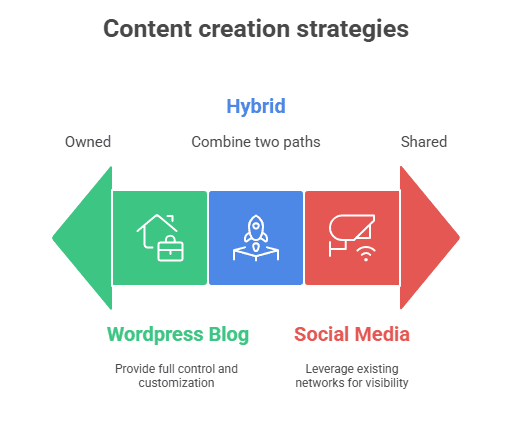
In the world of affiliate marketing, your content is your product, and your platform is your store. Generally, you have three paths to choose from:
🏠 Path 1: The “Owned Asset” (WordPress Blog)
This is the best route for long-term income. You own the platform. You control the SEO. You are not at the mercy of a sudden algorithm change.
Register a domain with a clear niche (e.g., OrganicRedWines.com, not JohnsThoughts.com).
Then, install a fast, clean theme. You can use essential plugins for SEO (like RankMath) and link management (like ThirstyAffiliates).
📸 Path 2: The “Visual” Path (Social Media)
Wine is highly visual. If you are better on camera than you are at writing, start here (Instagram, TikTok, or YouTube).
Since Instagram posts do not allow clickable links, you must optimize your bio with a “Link in Bio” tool (like Linktree) to direct traffic to your offers.
🚀 Path 3: The “Hybrid” Model (Recommended)
This is the smartest play: Use social media to drive traffic to your owned blog.
Social platforms are “rented land.” If TikTok gets banned or Instagram changes its reach, your business disappears overnight.
Never build your entire house on a landlord’s lot. Always try to move followers to your website, where you control the relationship.
Apply to Your First 3-5 Wine Affiliate Programs
With your platform established, it is time to monetize. However, resist the urge to apply for everything at once.
Don’t apply to 50 programs. You will get overwhelmed trying to keep track of the links and login details.
Instead, you’d be better off starting with a balanced portfolio of just 3-5 partners to test different angles without losing focus.
For example, you can partner with the following brands:
- One Wine Club (Recurring Revenue): Pick a mass-market club like Winc or Firstleaf. These have broad appeal and pay you every time a user renews.
- One Premium Retailer (High Order Value): Pick a store like Wine.com or a niche importer. You’ll get an option for your “Connoisseur” readers who want specific, high-end bottles.
- One Accessory Partner (The Safety Net): Pick a brand like Coravin or WineEnthusiast.
So what if you get rejected?
Don’t panic. It happens to everyone.
If a premium program rejects you, start smaller. Join a massive network like ShareASale or UpPromote Marketplace. These have much lower barriers to entry.
Set Up Proper Tracking and Disclosure Systems
Now that you have been accepted into a few programs, you might be tempted to simply copy the links and paste them into your articles. Stop.
If you handle your links incorrectly, you risk two things: losing sales because your links look spammy, or getting sued because you broke the law.
You need a system to manage both the data and the rules.
Never paste raw, ugly affiliate links (like merchant.com/?ref=28374) directly into your text. They look suspicious to readers and are a nightmare to manage.
You can use a WordPress plugin like ThirstyAffiliates or Pretty Links, which turn ugly links into clean, branded ones (e.g., yoursite.com/go/wine-club)
Because you are selling alcohol and making money, strict rules apply. You must include these two disclosures to stay safe:
The FTC Disclosure
You must place a clear statement before any affiliate links appear. Do not bury this in your website footer; it must be visible at the start of the content.
“This post contains affiliate links. If you buy through them, I may earn a commission at no extra cost to you.”
The Age Gate (Wine Specific)
Since you are promoting a controlled substance, you should add a simple safety disclaimer to your site’s footer or header.
“Content intended for readers 21+. Please drink responsibly.”
Drive Initial Traffic Through Strategic Promotion
You have a site. You have links. You are legally compliant. But a store with no customers makes zero dollars.
In the first 90 days, Google SEO will be very slow. It takes time for search engines to trust a new site. You cannot just wait for them. You need to manufacture your own traffic.
While waiting for Google, you better use these two channels to get visitors immediately.
Pinterest (The Visual Search Engine)
Pinterest is not just a social network; it is a visual search engine. Since wine is very visual, it performs perfectly here.
- Create 3-5 tall, vertical images (pins) for every article you write.
- Join “Group Boards” about food and wine. You’ll get your pins in front of established audiences instantly.
Community Helpfulness (Quora & Reddit)
Go where the people are already asking questions. Find threads like “Best wine for a wedding gift under $50?”
- Write a genuinely helpful, non-spammy answer.
- Do not link directly to the affiliate offer. You will get banned. Instead, link to your detailed blog post about wedding wines.
Track Results and Optimize What Works
Once the traffic starts flowing, you can’t just “set it and forget it.” You need to know if your hard work is actually making money.
After 60-90 days, you will have enough data to see patterns. Most beginners ignore this step and just keep writing new articles. The pros stop, look at the numbers, and fix what is broken.
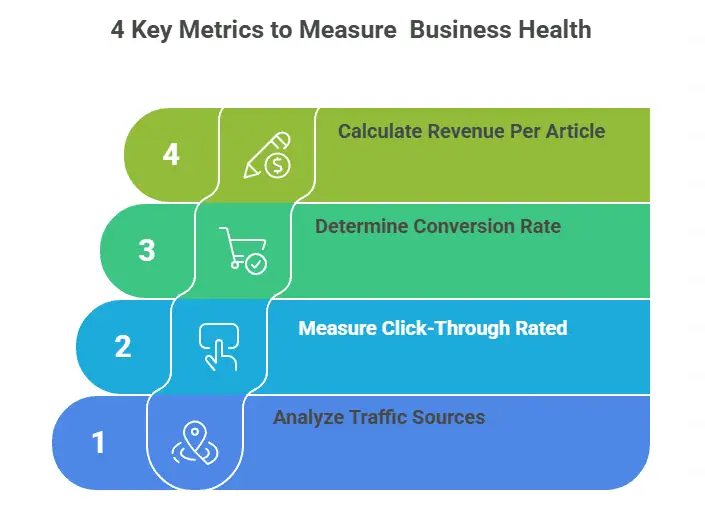
We suggest you create a simple spreadsheet to track these 4 key metrics every week. You will know where your business is healthy and where it is sick.
Traffic Sources: Where are visitors coming from? Is it Google, Pinterest, or direct traffic? You need to know which channel is working.
Click-Through Rate (CTR): Are people clicking your links?
If you have 1,000 visitors but only 5 clicks, your link placement is bad. Fix it: Move your links higher up the page or make your buttons bigger and brighter.
Conversion Rate: Are those clicks turning into money?
If you send 100 clicks to a merchant but get 0 sales, the merchant is likely the problem. Their landing page might be confusing, or their price is too high.
Revenue Per Article: Which specific blog post is making the most money? Usually, 20% of your articles will make 80% of your income.
Once you have the data, use this three-step loop to grow your income faster.
🏆 Identify the Winner
Look at your spreadsheet. Find the one article that has the highest conversion rate or revenue.
📈 Double Down What Works
Don’t just leave it alone. Create a cluster of content around it.
Example: If an article called “Best Organic Wines” is winning, write three more related posts: “Best Organic Red Wines,” “Best Organic White Wines,” and “Organic Wine Club Reviews.” Link them all together.
✂️ Cut the Losers
Be ruthless. If a program hasn’t generated a single sale after 500 clicks, stop promoting it. Swap it out for a competitor. Never be loyal to a program that doesn’t pay you
Conclusion
The global wine market is booming, and for creators with a passion for the vine, the opportunities are ripe for the picking.
This guide has uncorked 22 of the best wine affiliate programs available, from major players like Wired For Wine and Vivino to niche clubs like the California Wine Club.
Each offers a unique way to monetize your content and share your favorite vintages with an engaged audience.
By creating your own affiliate program, you empower sommeliers, bloggers, and influencers to become your digital sommeliers, driving sales and reaching new, targeted audiences.
The roadmap to success has been laid out by the top brands.
Now is the perfect time to pour your own resources into this high-growth channel and watch your brand flourish. Launch your program today and cultivate a thriving community of partners dedicated to your success.

Ellie Tran, a seasoned SEO content writer with three years of experience in the eCommerce world. Being a part of the UpPromote team, Ellie wants to assist Shopify merchants in achieving success through useful content & actionable insights. Ellie's commitment to learning never stops; she's always eager to gain more knowledge about SEO and content marketing to create valuable content for users. When she's not working on content, Ellie enjoys baking and exploring new places.