





Ever wondered if there’s an easier way to earn some extra cash online? Well, good news! With so many folks and businesses now searching for legal help right from their phones or computers, promoting these services has become a super smart move.
We’ve gone ahead and hand-picked the best legal affiliate programs just for you. In this article, we’ll break down the key details, including their commissions, cookie durations, and what makes each program stand out.
Quick Comparison
| Program Name | Commission (%) | Cookie Duration (Days) | Niche Suitable |
|---|---|---|---|
| LegalZoom | $125 per sale (tương đương ~20–25%) | 30 | Legal services, Business formation, IP, Estate planning |
| LawDepot | Up to 30% | 365 | Legal forms, DIY contracts, SMB, real estate, estate planning |
| Wolters Kluwer | 10% | 30 | Professional legal, compliance, healthcare, finance |
| Plug and Law | Up to 30% | 30 | Entrepreneurs, small businesses, legal templates |
| LegalNature | 35% | 90 | Business formation, real estate, estate planning, contracts |
| Termly | 35% | 180 | Compliance, GDPR, CCPA, policies (Privacy Policy, ToS, Cookie Policy) |
| The Legal Paige | 15% | 60 | Creatives, photographers, freelancers, service providers |
| LegalContracts | 30% | N/A | Legal templates, leases, agreements, personal legal docs |
| Destination Legal | 25% | N/A | Coaches, online entrepreneurs, health coaching, business compliance |
| Standard Legal | 25% (services) / 50% (software) | N/A | DIY legal forms, bankruptcy, wills, incorporation |
Affiliate Earnings Calculator
Estimate your affiliate income based on Traffic, CTR, AOV, and Commission rate. Drag the sliders below to explore different scenarios.
Estimated Results
These figures are for illustrative purposes – feel free to adjust them to fit your specific niche.
- Conversion Rate here is defined as the percentage of traffic that buys.
- Does not account for refunds, cancellations, or varying commission rates by product.
13 Must-Join Legal Affiliate Programs for Affiliate Marketers in 2026
1. LegalZoom

LegalZoom is an online legal technology company that provides legal document preparation services and advice to individuals and small businesses. They assist with business formation, intellectual property, legal documents, and estate planning, offering templates, self-guided tools, and access to attorneys without in-person consultations.
Their legal affiliate program offers a high commission of $125 for each acquisition. The cookie stays valid for 30 days from the customer’s first click on your unique link.
The company supports your promotion with a broad range of attractive banners and text links. Besides, they provide a landing page to help you increase conversions and drive more sales.
|
2. LawDepot
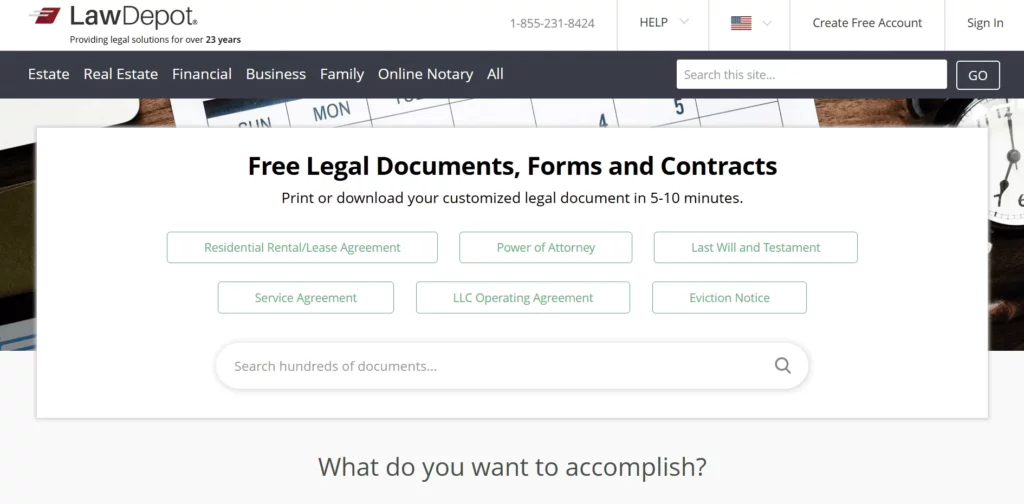
LawDepot enables individuals and small businesses to create, customize, and download a diverse range of legal forms and contracts. They offer over 150 customizable legal documents covering estate planning, real estate, business, and other areas.
The LawDepot legal affiliate program offers a competitive commission rate of up to 30% for every successful order. You have a long cookie duration of 365 days to earn commissions on any purchases made by the customer from the moment they first click on your affiliate link.
You can receive your payouts through PayPal or mail with a minimum balance of $50. Additionally, the company offers a range of banners, text links, and landing pages to support your promotional efforts.
|
3. Wolters Kluwer

Wolters Kluwer is a global provider of information services and solutions for professionals in the legal, healthcare, finance, and compliance sectors. Their trusted content and advanced software help organizations worldwide make informed decisions, boost efficiency, and comply with all necessary regulations.
Legal affiliates can enjoy a 10% commission rate for every purchase made. Their average sales value is approximately $400, so you may earn about $40 commission for each order via your affiliate link. The referral window lasts 30 days from the date the customer first clicks on your affiliate link.
You can add a variety of creatives to your website and start promoting their products. Besides, you can enjoy exclusive management and dedicated support from their affiliate managers to optimize your promotions.
|
4. Plug and Law
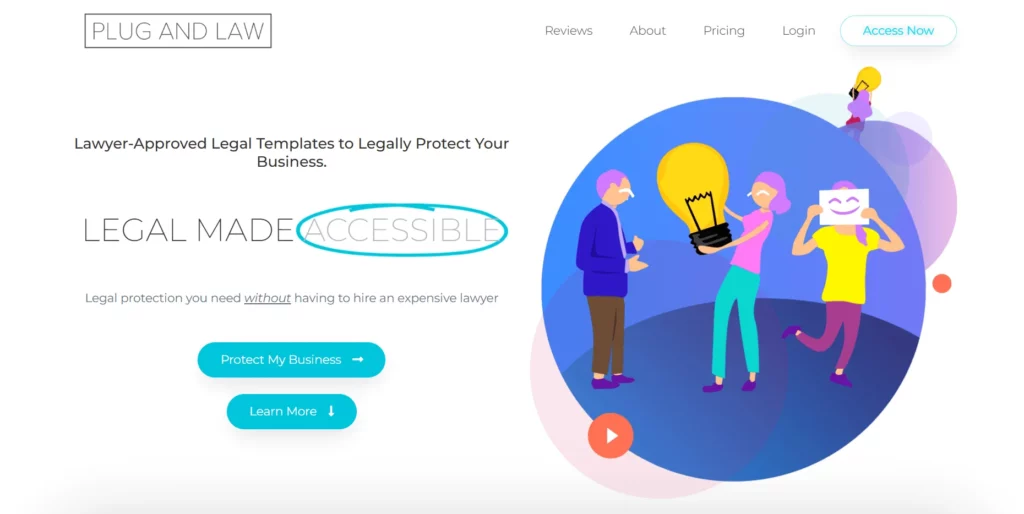
Plug and Law is a legal tech platform that offers accessible legal services for businesses, startups, and entrepreneurs. They simplify legal processes through automation, compliance tools, and professional legal support.
You may earn up to 30% commission on each successful order by joining their legal affiliate program. The referral window begins with the visitor’s initial click on your unique link and remains active for 30 days.
The brand pays commissions through PayPal, so you must first have a PayPal account before signing up as an affiliate. They will pay your commission when your balance exceeds the $160 minimum threshold.
|
5. LegalNature
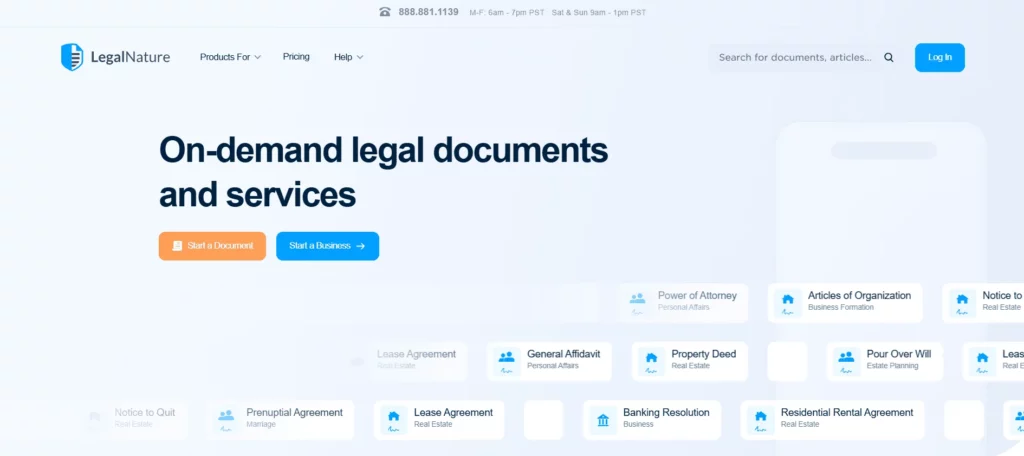
LegalNature provides customizable legal documents to help users create clear, affordable contracts and agreements without a lawyer. They offer a library of legal documents, covering Business Formation, Real Estate, Estate Planning, Family Law, and general contracts.
You can earn a 35% commission for orders placed via your unique link when joining the Legal Nature affiliate program. A 90-day cookie window allows you to earn commissions on all approved purchases made within that period.
You can take advantage of their impressive landing pages to share clear and detailed product info with your followers. Furthermore, the brand is open to customizing marketing materials based on your specific requests.
|
6. Termly
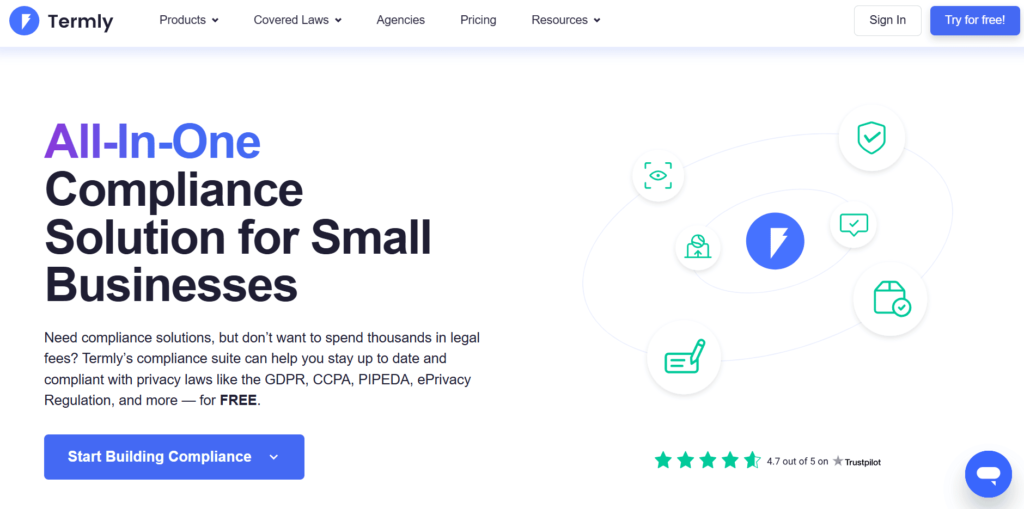
Termly focuses on helping small to medium-sized businesses create and manage legal documents. Their customizable templates comply with global data protection laws, including GDPR and CCPA.
Affiliates can enjoy a high 35% commission rate for every sale from the Termly legal affiliate program. The cookie window is 180 days long from the visitor’s first click on your affiliate link.
Their affiliate program provides a smart dashboard to help you track your promotional results in real time. On top of that, you can reach out to their affiliate manager for expert tips to help optimize your earnings.
|
7. The Legal Paige

The Legal Paige provides customizable legal templates and resources for creative entrepreneurs, online business owners, and service providers. Clients can also book one-on-one consultations with attorney Paige Griffith for expert, business-specific legal advice.
The Legal Paige affiliate program offers a 15% commission for each order placed through your affiliate link. You may earn about $75 per contract sale with their high average order value. With the 60-day cookie period, you can earn money from successful purchases made from the customer’s initial click on your link.
You can add their beautiful banners to make your website impressive and encourage more sales. Their affiliate manager will give you tips and resources to attract more audiences.
|
8. LegalContracts
LegalContracts helps individuals and businesses create professional legal documents through customizable, user-friendly templates. They offer a wide range of legal forms, including contracts, agreements, leases, and more.
Their legal affiliate program offers a 30% commission for each order placed. They pay affiliates through PayPal, so having a verified account is necessary to access your money quickly and securely.
You can place the brand’s banners and text links on your site to effectively promote their services. You can also share special deals and discounts with your audience to encourage more purchases and increase your commissions.
|
9. Destination Legal
Destination Legal helps coaches and online entrepreneurs protect their businesses and stay legally compliant. They offer tailored legal templates and contracts, including contract bundles, health coaching agreements, terms of purchase, website policies, and more.
The Destination Legal affiliate program pays affiliates a 25% commission rate for every successful sale. You must have a PayPal account with a minimum balance of $500 to receive your payouts.
Once you’re approved as an affiliate, you’ll receive a 10% discount code to share with your audience. Additionally, the brand’s dedicated affiliate manager will share marketing tips, answer your questions, and guide you in boosting your performance and sales.
|
10. Standard Legal

Standard Legal provides legal forms and software to help users handle common legal issues on their own quickly. Customers can create legally valid documents for various needs, such as Last Will and Testament, Bankruptcy, Incorporation, Lease Agreements, etc.
The Standard Legal affiliate program offers affiliates different commission rates for each type of service:
- Document preparation service: 25%
- Legal forms software: 50%
Once you join the Standard Legal affiliate program, you’ll receive your unique tracking link to begin promoting. They also offer a variety of creative assets to help make your promotions more engaging.
|
11. Creators’ Legal
- Commission rate: 25%
- Cookie duration: 90 days
Creator’s Leaga provides legal tools and customizable documents for content creators, influencers, and digital entrepreneurs. They enable creators to quickly create, personalize, and handle official contracts without hiring costly lawyers.
12. LegalWills
- Commission rate: 30%
- Cookie duration: Not mentioned
LegalWills is an independent organization that partners with U.S. lawyers to offer legal document creation services to Americans. They have assisted thousands of Americans in creating and managing their legal wills, living wills, and other estate planning documents.
13. Online Divorce
- Commission rate: $80-$100
- Cookie duration: Not mentioned
Online Divorce has helped over 500,000 people in the US and Canada complete their divorce paperwork online without the need for a lawyer. They supply a fast, affordable, and simple divorce process using a fully guided divorce questionnaire and filing service.
How Do You Choose the Right Legal Affiliate Program for Your Audience?
Finding a list of legal affiliate programs is easy. The hard part is filtering that list down to the few partners that will actually make money for your business.
Below, we’ll guide you to select the best fit for your affiliate journey.
Conducting Audience-Program Fit Analysis
You can be a great writer, but you will still fail if your product does not match your readers. In legal marketing, the right match is the most important part of your business.
You need to check if an offer fits the age, life situation, and budget of your audience before you look at the pay rate.
Age Distribution 🎂
Legal needs change as people get older. For example, promoting “how to write a will” to college students is a waste of time.
- Personal Injury law usually targets working adults (ages 35–65).
- Estate Planning is for older adults (ages 50+).
- Family Law focuses on people dealing with divorce or custody (ages 30–55).
Income Levels 💰
Does your audience have money to invest, or are they looking for help because they are broke?
- Bankruptcy services target people facing serious debt.
- Business legal services target entrepreneurs who have money to start a company.
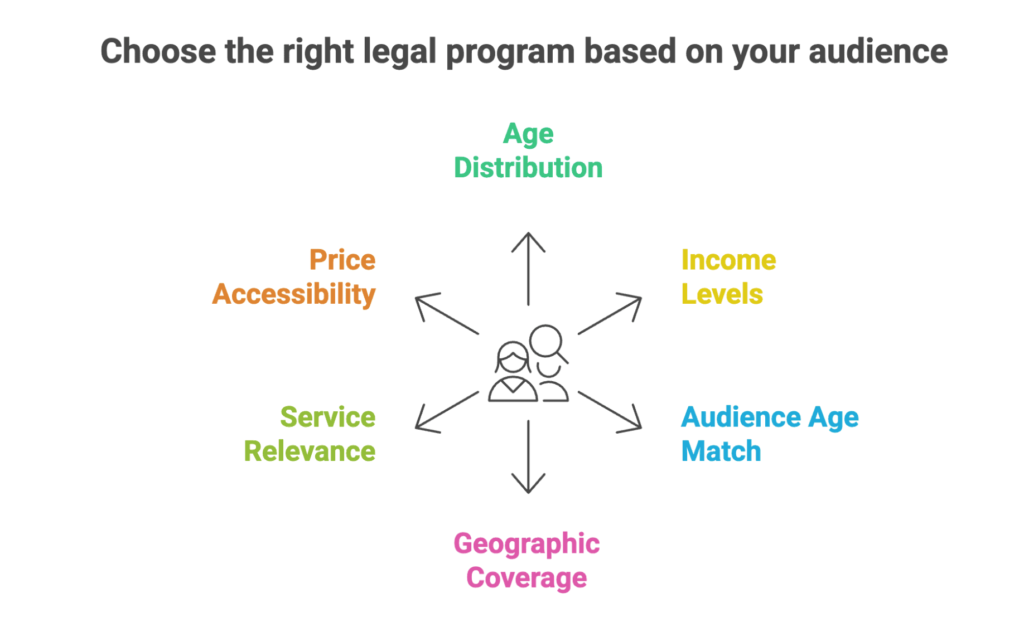
To keep this objective, we recommend grading every program on a simple 20-point scale. Give a score of 1–5 for each of these:
Audience age match: Is the offer relevant to their generation?
Geographic coverage: Can the program accept leads from where your readers live?
Service relevance: Does this solve a problem they are currently worrying about?
Price accessibility: Can they afford the fees?
Evaluating Commission Structures for Profitability
A common trap is getting blinded by the headline rate.
You see a program advertising “$500 Per Sale!” and immediately sign up. You ignore the fine print that makes earning that commission nearly impossible.
To predict your real earnings, you have to calculate the Effective Commission Rate (ECR). You need to look at five specific factors:
Base Commission Type
Is it CPL (Cost Per Lead), where you get paid for a form fill? Or is it CPA (Cost Per Action), where you only get paid if the client actually hires the lawyer?
CPL is generally safer and more consistent, even if the payouts look lower.
Lead Acceptance Rates
This is the most important number nobody talks about. If a program pays $150 per lead but only “accepts” (approves) 30% of the leads you send, your real payout is only $45 per lead.
Tip: Always ask an affiliate manager for their “average acceptance rate” before you start writing content.
Volume Bonuses
Smart programs reward growth. Look for tiered bonuses (e.g., an extra $20/lead after 50 sales). These bonuses can boost your profit margin by 20-30% without needing any extra traffic.
Cookie Duration
Legal decisions take time. A 30-day cookie often isn’t enough.
A 60-to-90-day cookie typically captures 20–40% more sales for the same traffic, simply by giving users more time to decide.
After you get all the factors, you use the following formula to compare programs:
Effective Commission = (Stated Commission × Acceptance Rate) + (Volume Bonus ÷ Monthly Target)
➡️ The bottom line: A lower commission rate that actually gets paid is always better than a “giant” commission that you never receive. You’d better chase the programs that are fair and reliable.
Assessing Affiliate Support Quality
In legal affiliate marketing, support is essential. If a company doesn’t help you educate your audience, you spend much time & effort creating marketing materials.
Therefore, when you choose a partner, you should look for these things:
Professional tools (Creative assets) 🎨
Creating your own ads takes time. A high-quality program provides:
- Mobile-friendly pages: Most people search for legal help on their phones.
- Email templates: Pre-written messages you can send to your readers.
- Social media posts: Ready-to-use graphics that are already legally approved.
Real-time tracking ⏱️
You need to see your data immediately. With a 2-day delay, you can’t tell if your ads are working. Fast data helps you spend your budget wisely and fix mistakes quickly.
A dedicated manager 👤
Having a real human to email is a game-changer.
A dedicated manager can fix technical bugs and even give you a higher commission rate once you prove your value. A generic “helpdesk” email address usually can’t do that.
Proven success stories 📚
The best programs share what is working right now. They provide case studies and guides to show you exactly how other people are making money.
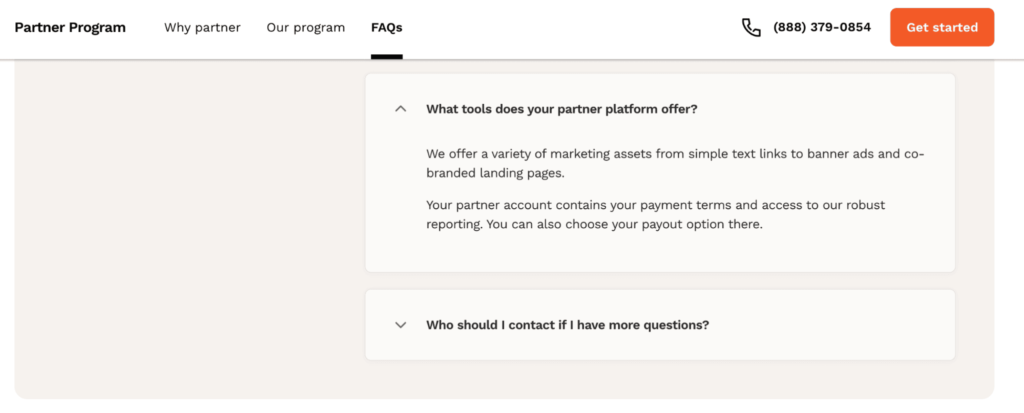
Let’s take a program like LegalZoom as an example.
The brand offers dedicated managers and a variety of marketing assets, ranging from simple text links to banner ads and co-branded landing pages.
Verifying Payment Reliability and Terms
Checking payment rules is not exciting, but it is necessary for your business to survive. Some workers earn thousands of dollars but have to wait six months to see a penny.
You need to verify that a company is reliable before you spend your valuable time working for them.
The first thing to understand is the “Net” waiting game.
Most companies do not pay you immediately. A “Net-30” schedule is the industry standard. This means you get paid about 30 days after the month ends.
However, some legal affiliate programs use “Net-60” or “Net-90” rules. Waiting three months for your money makes it very hard to pay for your website or ads.
Next, you should check the “minimum threshold” for payments.
Minimum threshold is the amount of money you must earn before the company sends you a check. A fair limit is usually between $50 and $100.
Be very careful with programs that set a high $500 minimum. This is often a trick to avoid paying smaller affiliates who might give up before they reach that big goal.
You should also do your own research to check a company’s reputation.
Do not just trust what a company says on its own website. You can search Google for the program’s name plus the word “scam” or “payment issues.”
You can also check review sites like Trustpilot to see if other workers have had their money withheld.
How Do You Promote Legal Products & Services Effectively?
Promoting legal help is different from selling everyday items because you must build deep trust first.
You need to show your audience that you understand their worries and have the right solutions. In this part, we’ll show you the best ways to share these offers with your audience.
SEO-Optimized Content Marketing
Search engine optimization is the best way to grow your income over time.
Your goal is to find “bottom-funnel” keywords. These are the specific phrases people search for when they are ready to buy right now.
Many beginners chase high-volume keywords. They write articles like “What is legal software?” (2,000 monthly searches).
Thousands of people might read it, but very few of them will actually make a purchase. These readers are just looking for general information.
Instead, you should focus on searches that show a strong intent to buy.
A phrase like “best case management software” might only get a few hundred searches a month.
However, those few hundred people are already looking for a product to solve their problems. They have their credit cards ready and just need your help choosing the right tool.
To rank and convert, your content needs depth. We recommend articles in the 2,500–4,000-word range that cover:
- Detailed Comparisons: Compare top tools directly (e.g., “Clio vs. MyCase vs. PracticePanther”).
- Problem-Solution Guides: Solve a specific pain point (e.g., “How to reduce billing time for small firms”).
- Practice Area Recommendations: Be specific (e.g., “Best CRM for immigration lawyers”).

Paid Advertising (Google Ads, Social Media)
Paid ads are the fastest way to get traffic. They are also the fastest way to lose money if you aren’t careful. The key here is precision.
Google Ads can help you find people who are ready to buy right now.
You should target keywords like “software discount” or “best legal tool.” These are the words buyers use when they are close to making a final choice.
However, legal clicks are expensive, and you might pay up to $8 for every single person who clicks your ad.
NOTE: Never send traffic directly to an affiliate link (Google often bans this).
Instead, you should send people to your own high-quality “Comparison Page.” This allows you to explain the product’s benefits and build trust before sending the reader to the store.
To make Google Ads work, you need a conversion rate of 5%+. Or, you need to promote high-ticket recurring programs (like Clio) where the long-term value covers the ad cost.
Besides Google Ads, you can consider social media ads (LinkedIn & Facebook)
LinkedIn is very expensive, but it allows you to target specific job titles, such as a law firm partner.
Facebook is cheaper, but the audience is much broader. On Facebook, the best strategy is to offer a free gift, like a “Tools Checklist,” in exchange for an email address.
Email Marketing to Legal Professionals
Email is the best way to invite people in and build a relationship that lasts for years. However, most people are too busy to sign up for a generic newsletter.
You have to offer a valuable lead magnet for free to get them to share their email address. Here are some suggestions:
- Templates: “Free Legal Intake Form Template”
- Checklists: “The Ultimate Law Firm Practice Management Checklist”
- Comparison Sheets: “Clio vs. MyCase: Feature-by-Feature Spreadsheet”
Once they are on your list, do not spam them with links. You should send four emails of pure educational value for every promotional email.
For example, you can share tips on improving communication with clients or reducing billing errors. 🎓💡⚖️
When you finally send a promotional email, it should feel like a solution.
You might ask, “Are you struggling with client intake?” Then, you can explain how a specific software brand solves that exact problem.
Let’s look at realistic math expectations
Imagine you have 2,000 subscribers. You get a 30% open rate and a 4% click rate.
If 1.5% of clicks convert, you make about 0.36 sales per email. If you send two promo emails a month, that’s roughly $70–$200/month.
That sounds small. But remember: this is free traffic. When that list grows to 10,000, that same effort generates $1,000/month on autopilot.
YouTube Tutorials and Software Demos
YouTube is the “sleeping giant” of legal affiliate marketing.
Before an attorney commits to a $100/month software subscription, they almost always go to YouTube. They want to see what the dashboard actually looks like.
If you are the person showing them that dashboard, you earn the commission.
You don’t need a fancy camera or a professional studio. You only need a way to record your computer screen.
You can consider these three types of videos:
- Walkthroughs: “Clio Manage walkthrough for personal injury attorneys” (Specific practice areas convert better).
- Comparisons: “MyCase vs. PracticePanther for solo firms”
- Feature Demos: “How to automate billing in Lawmatics”
Beyond that, you should optimize your videos to increase clicks.
Titles: Include the software name + the practice area + “Review” or “Tutorial.”
The description: Place your affiliate link in the very first line.
The verbal call-to-action: Say it out loud: “If you want to try this yourself, I’ve put a link for a 7-day free trial in the description.”
The pinned comment: Post a comment with your link and a discount code, then pin it to the top.
What Are Legal Compliance Requirements for Promoting Legal Services?
You now know how to choose programs and how to promote them. But in the legal niche, how you sell is just as important as what you sell.
Promoting legal services is different from promoting t-shirts. You are in a regulated space. One wrong claim can get you banned from a program or land you in legal trouble.
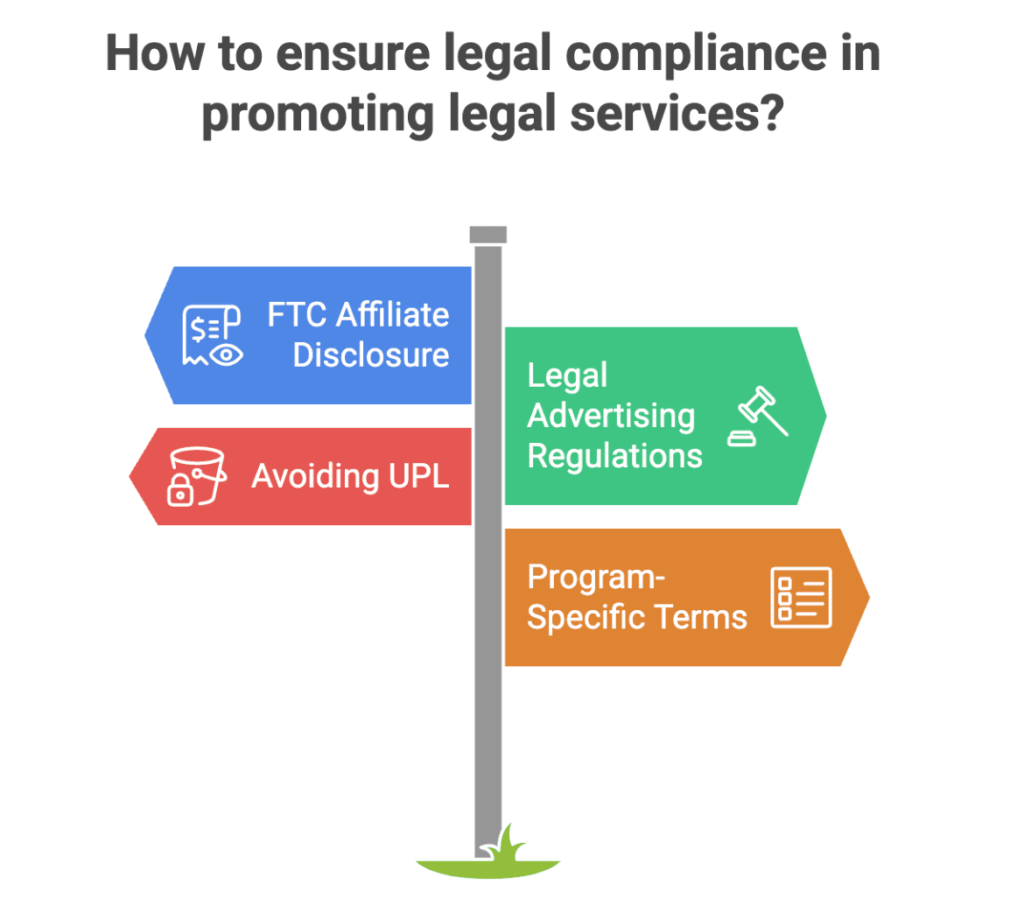
To build a safe business, you must follow four main rules: FTC disclosures, state advertising laws, avoiding the “unauthorized practice of law,” and the program’s own terms.
FTC Affiliate Disclosure Requirements
The Federal Trade Commission (FTC) has a simple rule: You cannot trick people into clicking an ad. Transparency is the law.
You must clearly state your relationship with the advertiser. If you are earning a commission, the reader has a right to know before they click.
Your message must be “clear and conspicuous.” This means it should be prominent and appear before any of your affiliate links.
You should also use plain English that anyone can understand. Avoid using complex legal words that might confuse your readers.
A good example would be: “This article contains affiliate links. If you buy through these links, I may earn a commission at no extra cost to you.”
This rule applies to every place where you share your links.
- Blog posts: Put your disclosure at the very top of the article, right under the title.
- Social media: Use hashtags like #ad or #sponsored near the top of your caption.
- YouTube: State your relationship out loud in the video and put it in the first line of the description.
- Emails: Place the disclosure at the top of your newsletter so it is the first thing people see.
Legal Advertising Regulations
Promoting legal services puts you under strict advertising standards. State Bar Associations want to protect the public. They target marketing that could mislead someone looking for help.
The biggest mistake affiliates make is promising results. In the legal world, nothing is guaranteed.
❌ Forbidden claim: “Use this software and you are guaranteed to win your case!”
❌ Forbidden claim: “The fastest way to clear your debt completely.”
✅ Safe alternative: “This software is designed to help organize case files.”
Additionally, you must never give specific legal advice. There is a fine line between “legal information” (general) and “legal advice” (specific).
Telling a specific person what they should do with their case is “legal advice,” and that is illegal for non-lawyers. You should never tell a commenter to file for a specific type of bankruptcy.
Avoiding Unauthorized Practice of Law (UPL)
This is the most dangerous trap in the legal niche.
In every state, it is illegal for non-attorneys to provide legal advice. If you cross this line, you aren’t just risking your affiliate account – you are risking a lawsuit.
The difference between “legal information” and “legal advice” is subtle but critical.
Legal information (Safe): Explaining what a tool does or stating general facts.
Legal advice (Unsafe): Applying the law to a specific person’s situation or telling them what they should do.
You can often say the same thing safely just by changing your words.
✅ Safe: “Clio offers billing features that many family law attorneys find useful for trust accounting.” (This is an observation about features).
❌Unsafe: “You should use Clio because it will ensure your trust accounting complies with your state’s rules.” (This is a promise of legal compliance).
Even if you are a retired lawyer or a law student, keep your affiliate business separate. Do not offer to “take a quick look” at a reader’s case in the comments section.
If a reader relies on your comment and loses their case, they can sue you.
If you are writing about complex topics like divorce or bankruptcy software, add a protective layer. It’s important to put a clear disclaimer in the content:
“This is not legal advice. I am reviewing this software based on features, not legal strategy. Consult an attorney for guidance on your specific situation.”
Program-Specific Terms Compliance
Even if a marketing trick is legal, the affiliate program might still forbid it.
Every program has a set of rules called the “Terms of Service.” You should think of these rules as the private laws for your partnership.
If you break them, the company can ban your account and keep all the money you earned. ⚖️📜🚫
If you violate these terms, the program can ban you instantly and keep your unpaid commissions.
Trademark Bidding (PPC): You generally cannot run Google Ads targeting the company’s own name.
Example: You cannot buy an ad for the keyword “Clio Software.” They pay for that traffic themselves; they won’t pay you to steal it.
Misleading Domains: You cannot register a domain that looks like the official site.
Example: legalzoom-discounts.com or official-rocketlawyer-review.com. This violates their trademark rights.
Unsolicited Email (Spam): Sending affiliate links to a list of lawyers who didn’t subscribe violates the CAN-SPAM Act and the program’s terms.
False Claims: Do not invent features or prices just to get the click.
Sometimes, affiliate terms can be confusing. Feel free to ask the affiliate manager first. It is much better to get permission now than to lose your entire paycheck later.
FAQs
What is a legal affiliate program?
A legal affiliate program is a marketing arrangement where affiliates earn commissions by promoting products or services that comply with applicable laws, regulations, and platform policies. Both the merchant and the affiliate operate transparently, disclose partnerships, and follow advertising, tax, and consumer-protection rules.
Are affiliate programs legal in all countries?
Affiliate marketing itself is legal in most countries, but specific rules vary by jurisdiction. Common requirements include disclosure of affiliate relationships, compliance with advertising standards, and proper tax reporting. Some niches (e.g., gambling, finance, health) face stricter regulations or regional restrictions.
Do affiliates need to disclose affiliate links?
Yes. In many jurisdictions, disclosure is mandatory. Affiliates must clearly inform users that they may earn a commission from qualifying purchases. This typically applies to blog posts, videos, emails, and social media content. Clear, visible disclosure helps maintain compliance and trust.
Can affiliate marketing be considered illegal?
Affiliate marketing becomes illegal only when it involves prohibited products, deceptive practices, false claims, spam, trademark misuse, or violation of local laws or platform terms. Ethical promotion and compliance with regulations keep affiliate marketing lawful.
Are high-commission affiliate programs legal?
High commissions are not inherently illegal. However, they often appear in regulated or high-risk niches (e.g., finance, crypto, lead generation). Affiliates should verify that the program is legitimate, transparent, and compliant with consumer and advertising laws before participating.
Is pay-per-call affiliate marketing legal?
Yes, pay-per-call affiliate marketing is legal when conducted properly. Calls must be generated ethically (no misleading ads or robocalls), and call tracking must respect privacy and consent regulations. Many pay-per-call programs operate in regulated industries, requiring extra compliance care.
Do affiliates need a business license?
This depends on local law. In many regions, affiliates earning consistent income may need to register as a business or sole proprietor and comply with tax obligations. Casual or low-income affiliates may not need formal registration, but income is usually still taxable.
Are affiliate earnings taxable?
Yes. Affiliate income is generally considered taxable income. Affiliates are responsible for declaring earnings and paying taxes according to their country’s tax laws. Some programs may require tax forms before issuing payouts.
Conclusion
These 13 legal affiliate programs highlight the promising potential of the legal services market for affiliates looking to earn commissions. By choosing the programs that best match your followers’ interests, you can start turning your legal content into a steady income stream. Just be sure to understand each program’s commission structure and cookie policies, and always disclose your affiliate link openly.

Ellie Tran, a seasoned SEO content writer with three years of experience in the eCommerce world. Being a part of the UpPromote team, Ellie wants to assist Shopify merchants in achieving success through useful content & actionable insights.Ellie's commitment to learning never stops; she's always eager to gain more knowledge about SEO and content marketing to create valuable content for users. When she's not working on content, Ellie enjoys baking and exploring new places.