











The food industry has always been one of the biggest markets in the US, with a revenue of $832.10 billion in 2024. According to USDA, US consumers spend over 11.2% of their income on food. With these fantastic numbers, this industry offers promising earning chances for you when joining a top food affiliate program.
The article below highlights the 32 best food affiliate programs, including those afocused on recipes, meal kits, and food delivery services. You can read through every program and apply for the most suitable one.
Quick Comparison
| Program Name | Commission (%) | Cookie Duration (Days) | Niche Suitable For |
|---|---|---|---|
| Spicentice | 10% | 30 days | Meal kits, weight loss, healthy cooking, spices |
| Home Chef | 10% (or $10 per sale stated) | 30 days | Meal kits, home cooking, family meals |
| Art of Tea | 10% | Not mentioned | Organic tea, wellness, premium beverages |
| Factor Meals | $20 per subscription | 14 days | Ready-to-eat meals, fitness nutrition |
| Gourmet Food World | 10% | 60 days | Gourmet food, luxury meals, high-end ingredients |
| Material Kitchen | 10% | 30 days | Kitchenware, home improvement, cookware |
| ButcherBox | $20 per sale | 30 days | Meat subscription, keto, paleo, healthy food |
| Veestro | 10% | 30 days | Vegan meals, organic diets, healthy lifestyle |
| Nuts.com | 2–8% | 30 days | Snacks, nuts, organic food, healthy eating |
| Universal Yums | $10 per subscription | 30 days | Snack boxes, food influencers, subscription boxes |
Affiliate Earnings Calculator
Estimate your affiliate income based on Traffic, CTR, AOV, and Commission rate. Drag the sliders below to explore different scenarios.
Estimated Results
These figures are for illustrative purposes – feel free to adjust them to fit your specific niche.
- Conversion Rate here is defined as the percentage of traffic that buys.
- Does not account for refunds, cancellations, or varying commission rates by product.
32 Best Food and Drink Affiliate Programs
1. Spicentice
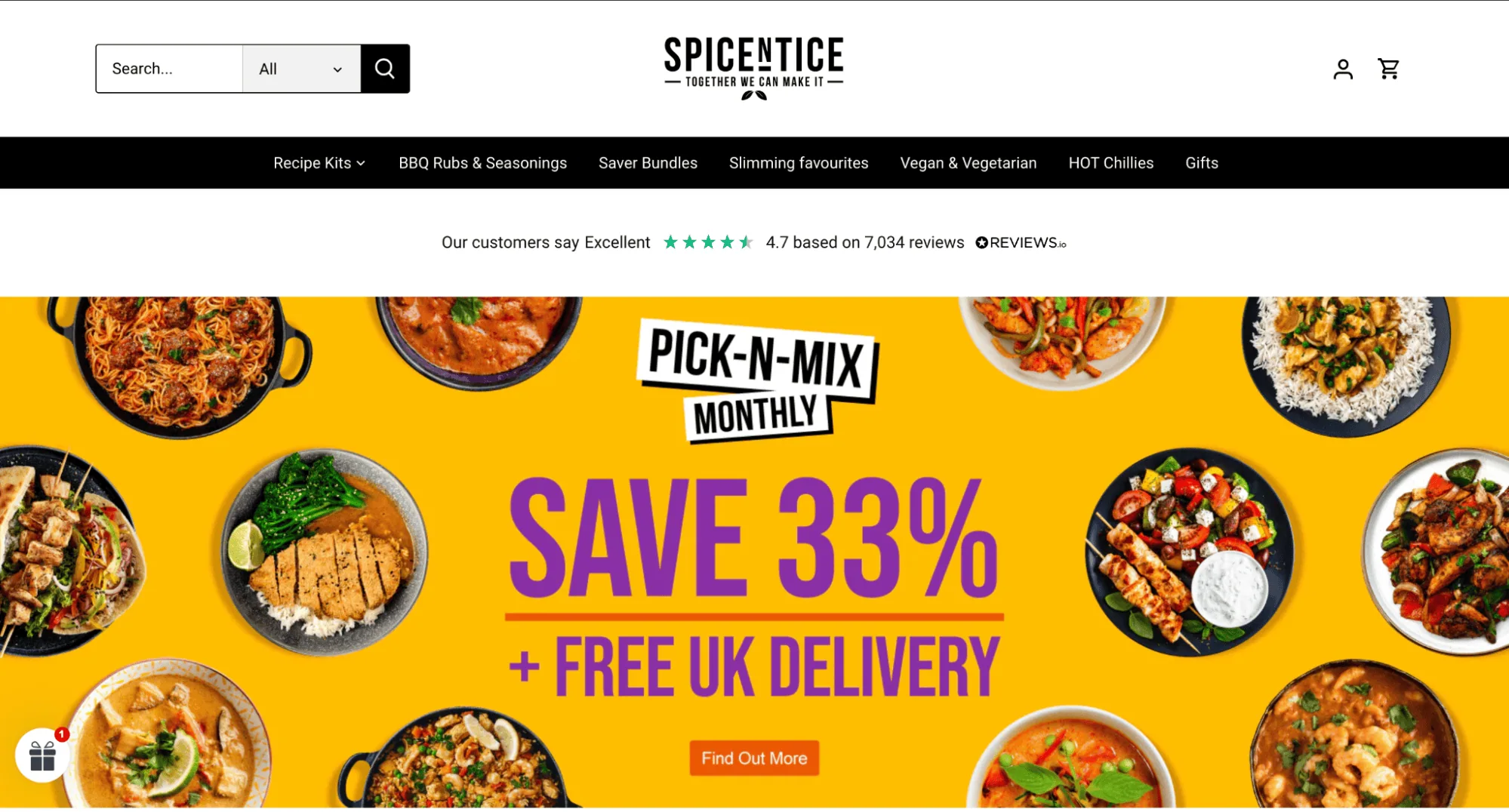
Spicentice low-calorie meal kits with special recipes help most people control weight loss. Users can also create favorite meals by following Spicentice’s instructions and using their provided spices.
You can apply for the Spicentive affiliate program via Refersion. You will enjoy a 10% commission rate for each sale through your link within a 30-day cookie duration. Spicentice will make your payout transaction via PayPal on the 1st day of each month.
At Spicentice, an in-house support team will help solve any problems with your promotions. Additionally, they will provide you with links and exclusive voucher codes to assist you in reaching a wider target audience.
|
2. Home Chef
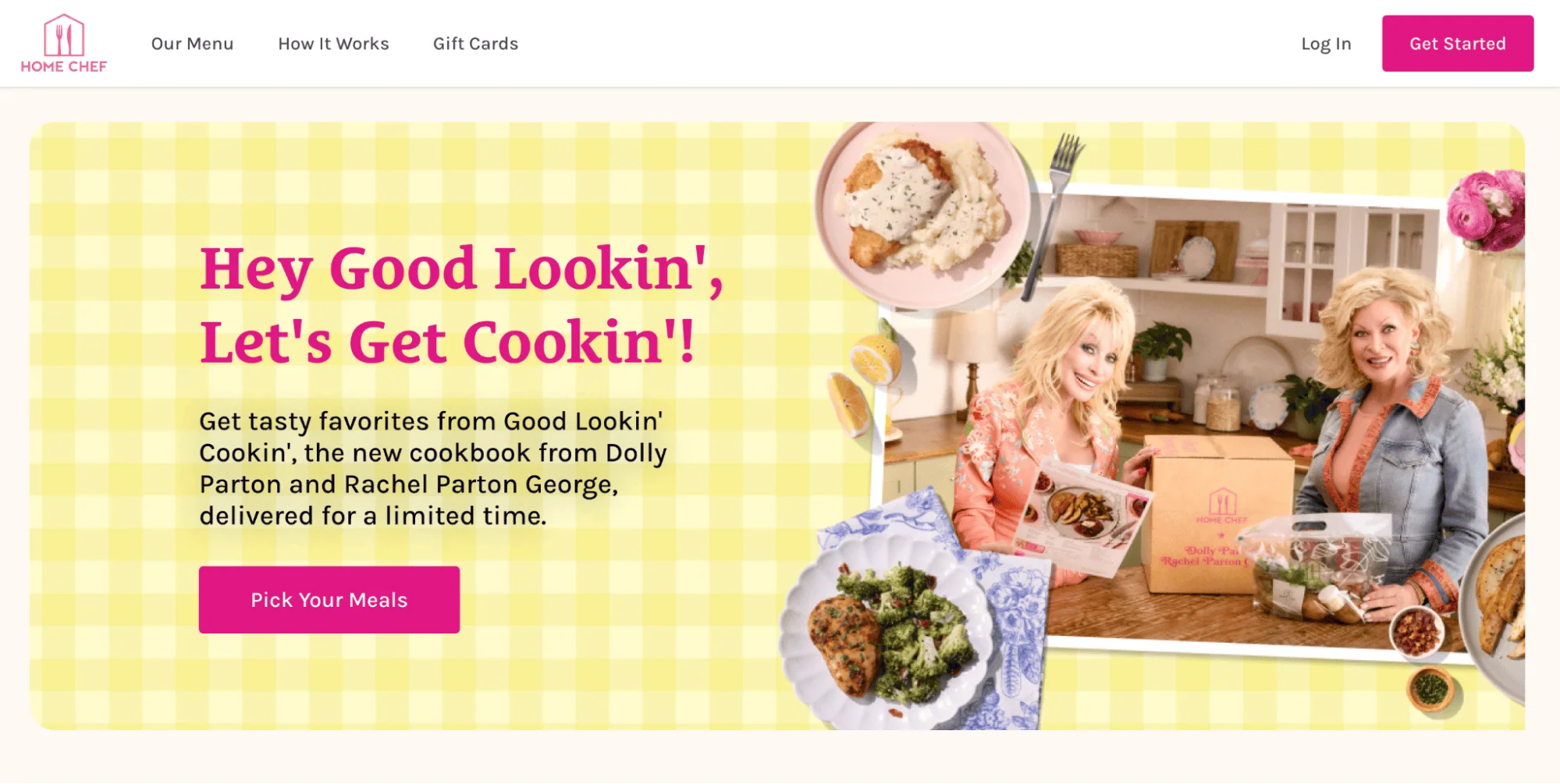
Home Chef makes cooking at home easier with their meal kit delivery service of recipes and ingredients. Their diverse options include customizable meals, calorie-conscious choices, and family-friendly recipes.
The Home Chef affiliate program allows you to earn a $10 commission per sale for each new customer you acquire. The cookie duration is 30 days, providing you with a full month from the customer’s first click to earn commissions on any purchases.
Affiliates can sign up through CJ Affiliate to access the marketing dashboard. You will see a collection of logos and banner ads to promote Home Chef on various marketing channels.
|
3. Art of Tea
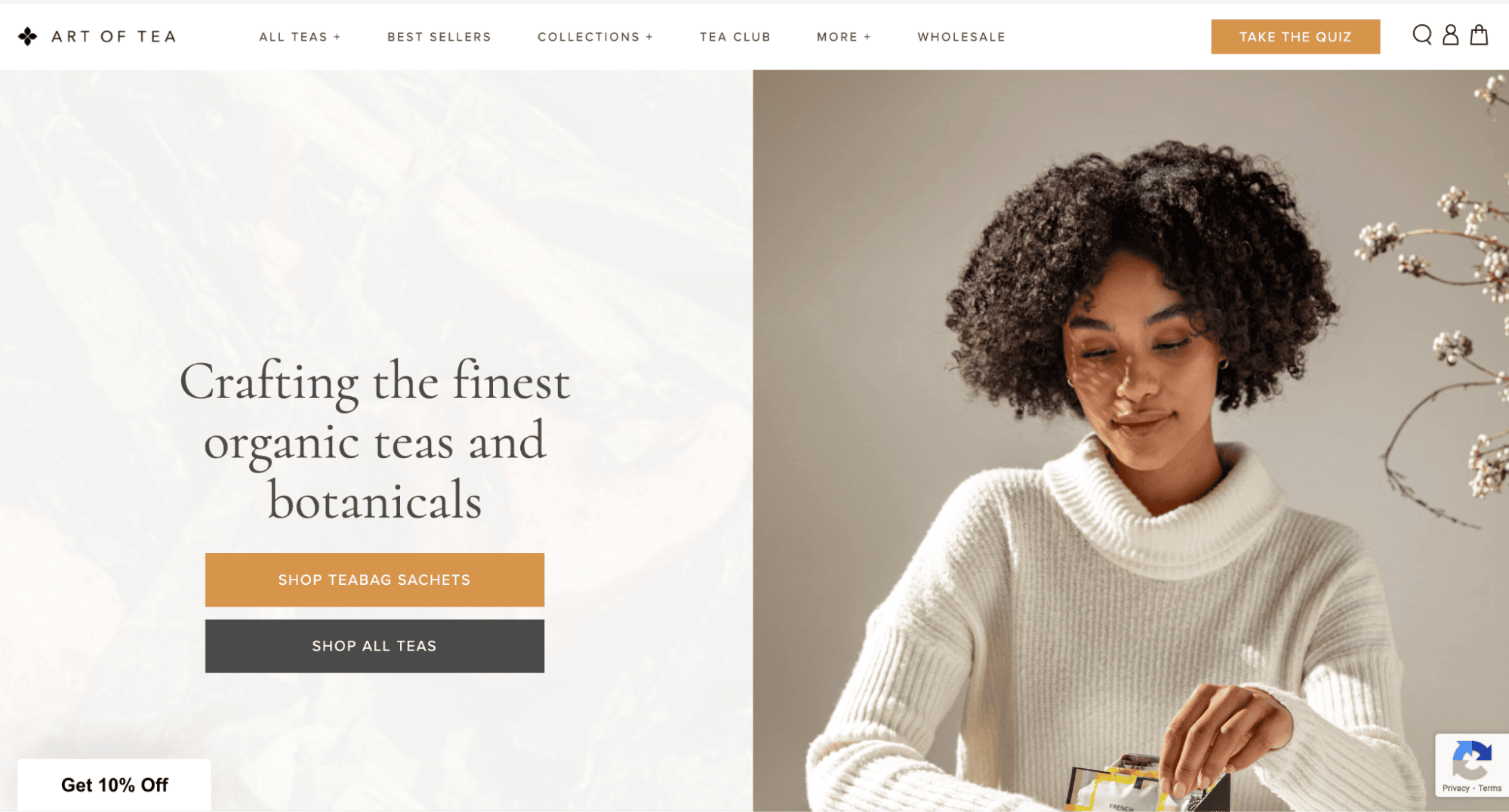
Art of Tea is a leading brand with exquisite organic teas and botanicals from California. Their diverse handcrafted product lines include Customized Tea Menus, Retail Teas, and a special Pyramid Tea Bag line.
Art of Tea runs their affiliate program through the Tune network. Art of Tea allows you to earn a 10% commission on every sale of their products via affiliate links.
The brand also updates creatives and graphics for affiliates to create better content. You will receive notifications about new product launches and special promotions to update your campaigns.
|
4. Factor Meals
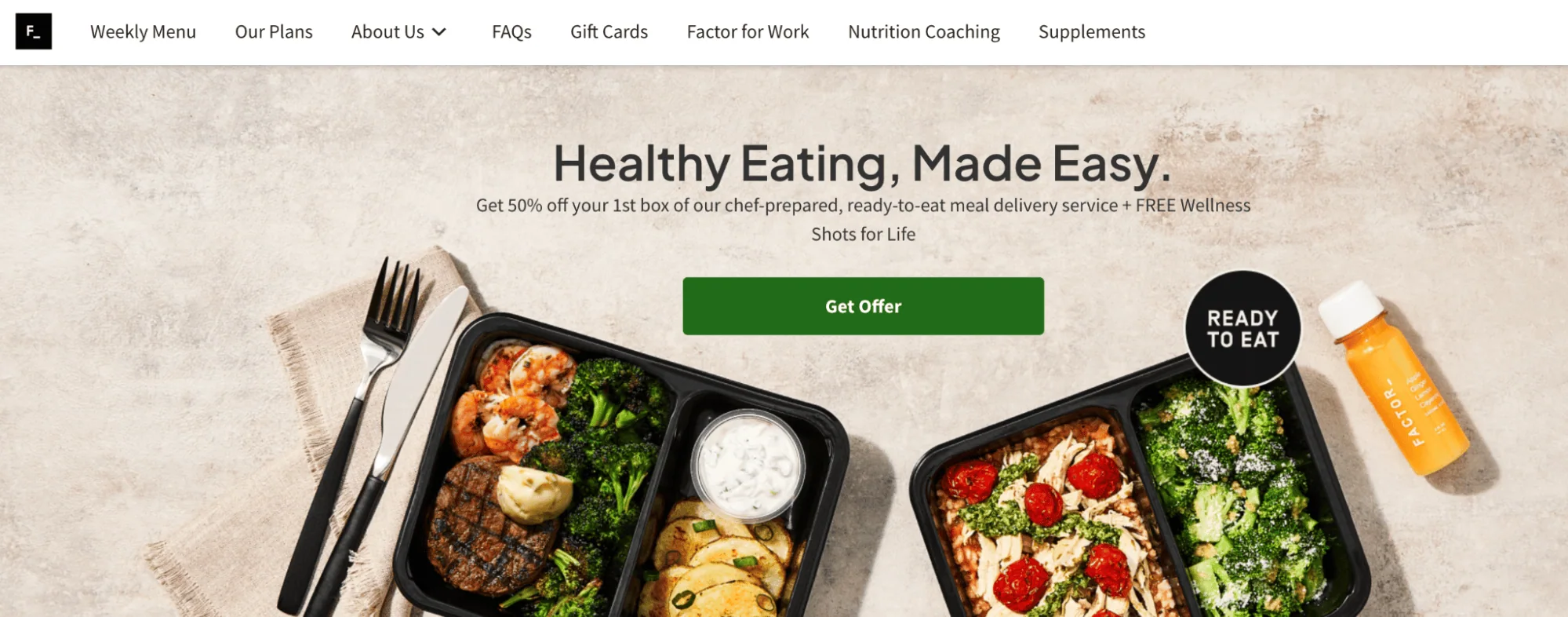
Factor Meals provides ready-to-eat meals to save users time in preparing daily meals for their families. Users can choose from a full menu of more than 35 weekly meals for a delicious and nutritious meal.
Managed through CJ Affiliate, the Factor Meals affiliate program offers you a $20 commission for each successful subscription to their meal plan. However, you need to create a publisher account at CJ Affiliate to apply for this program.
You have 14 days to receive a commission, meaning any purchase made within two weeks of the first click will count towards your earnings.
|
5. Gourmet Food World
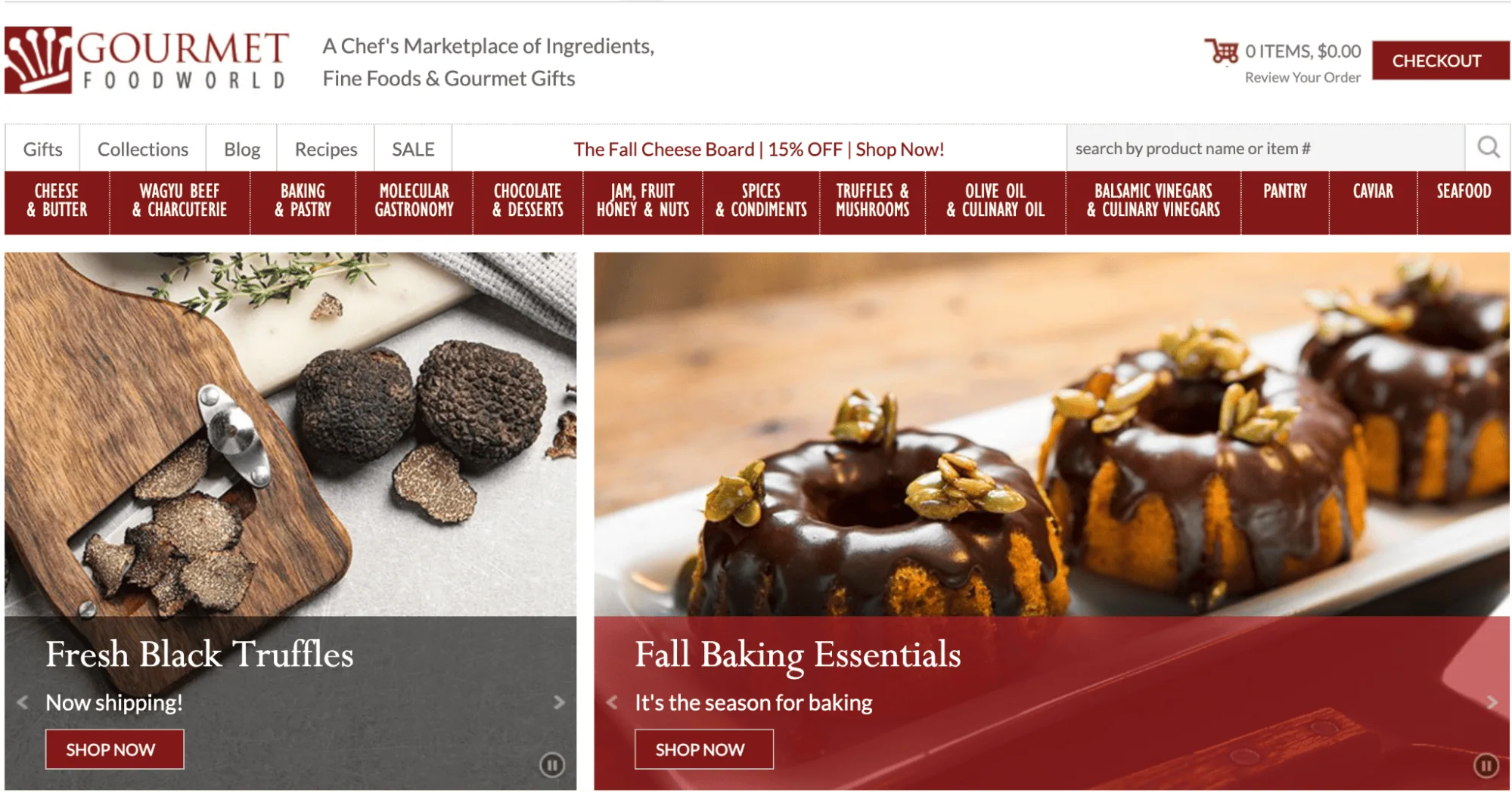
Gourmet Food World provides world-class, luxurious meals with the finest ingredients. Their expensive products include rare smoked salmon, truffles, foie gras, and over 300 delicious cheeses.
Once joining the Gourmet Food World affiliate program, you can earn a 10% commission rate for each sale via your link within a 60-day cookie duration. You can receive monthly payouts through PayPal once your account balance reaches a minimum of $25.
Gourmet Food World gives you access to their full collection of marketing tools, including text links, images, and banners. Plus, they’ll give you a custom discount code to attract more new audience.
|
6. Material Kitchen
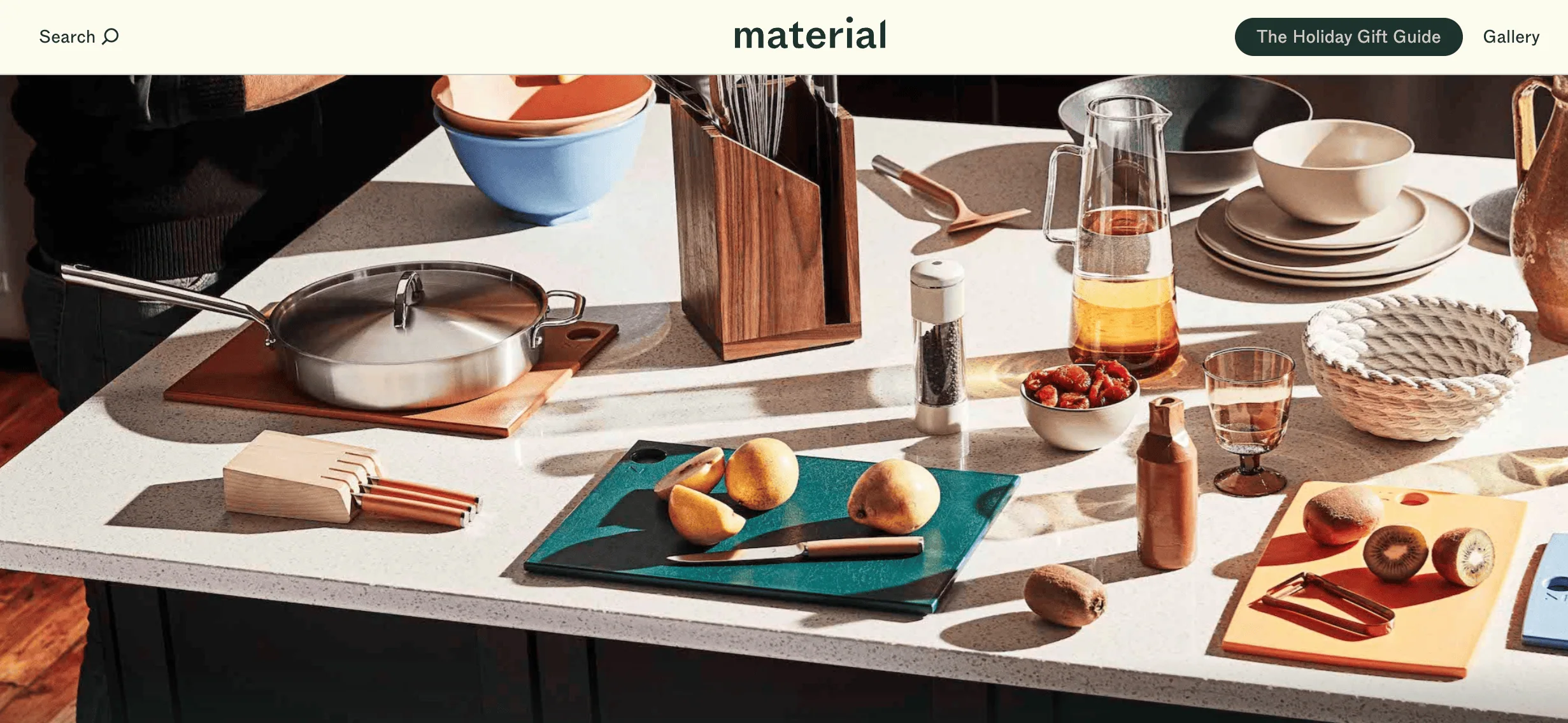
Material Kitchen redefines kitchenware with its minimalist, functional, and stylish designs. Each product is designed in-house with a focus on durability and performance, backed by a lifetime guarantee.
Managed by ShareASale, the Material Kitchen affiliate program offers a 10% commission rate for affiliates on every sale via their affiliate link. With a 30-day cookie duration, you can earn within a month after the customer’s first click.
Affiliates will have a management team to support their promotion campaigns. Moreover, Material Kitchen will send newsletters regularly to update new promotions, launches, and sales for affiliates.
|
7. ButcherBox
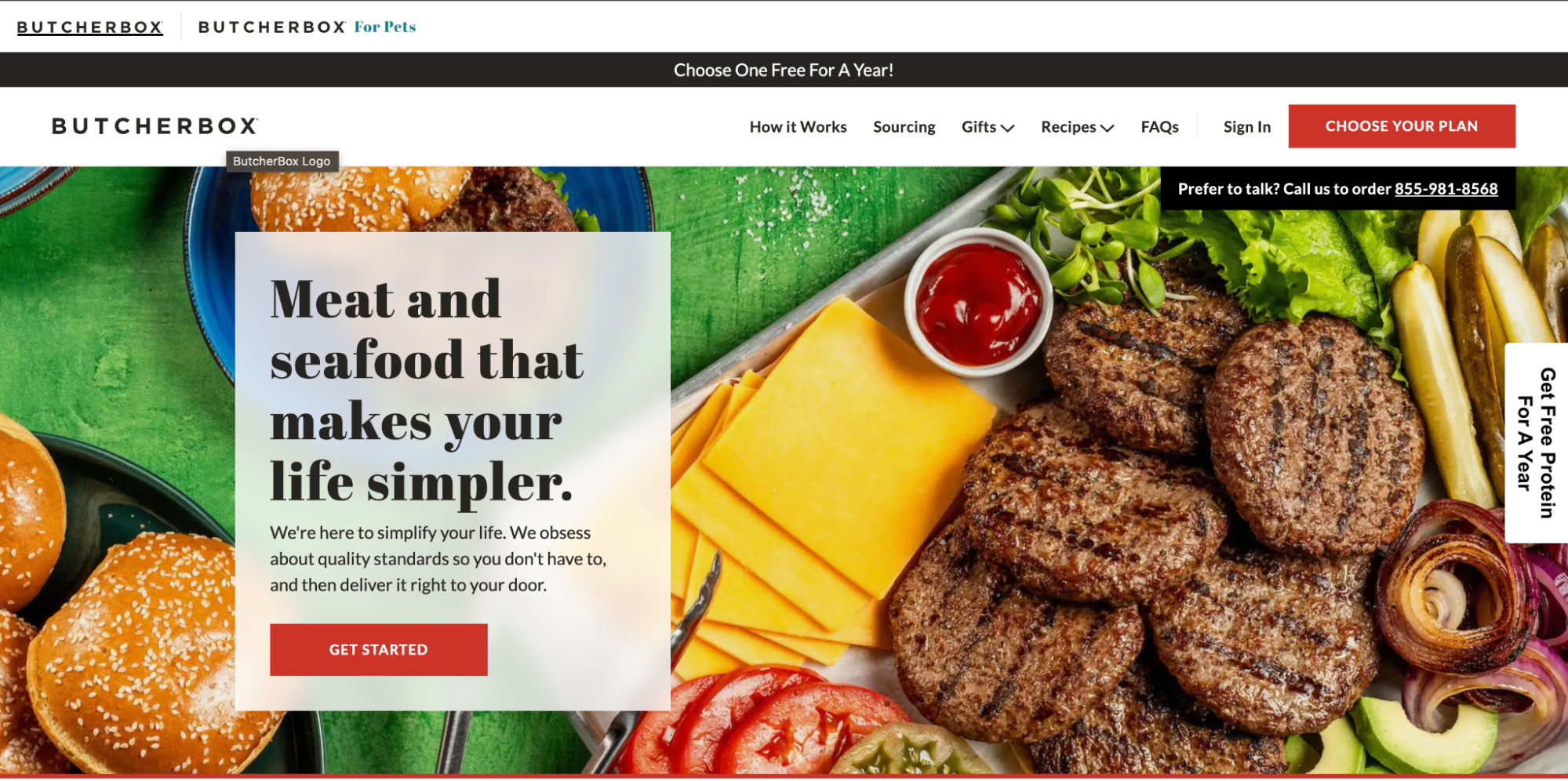
ButcherBox supplies users with their subscription box service of fresh meat and seafood. Customers can subscribe to different box options like custom selections or pre-selected bundles.
The ButcherBox affiliate program is managed by Impact Radius, a top affiliate network. The program offers a $20 commission rate on every successful sale. Plus, a 30-day cookie duration allows you to earn a commission from customers within a month.
A dedicated affiliate team will assist you during promotion and provide tips and advice to boost your marketing efforts. The brand also offers exclusive deals, banners, and landing pages to drive more potential sales.
|
8. Veestro
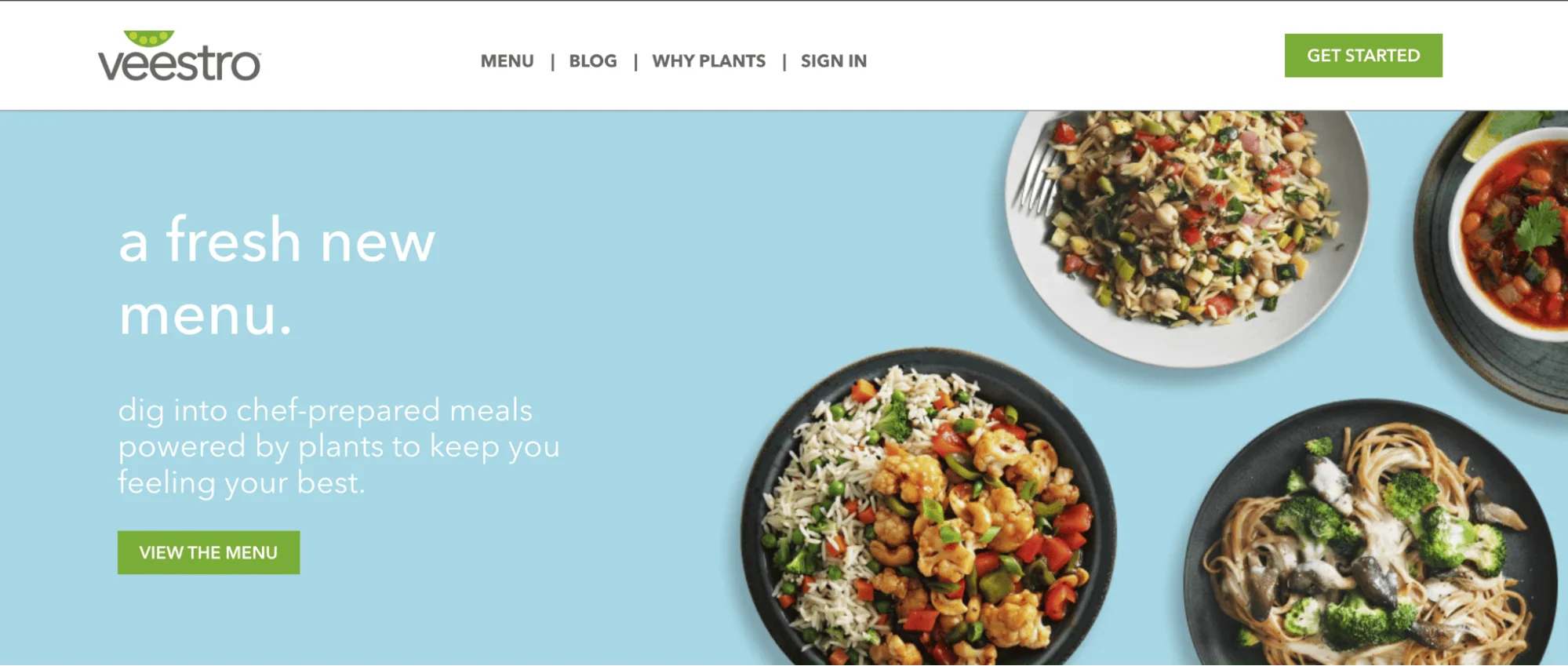
Veestro aims to enhance the health of busy people with their organic and vegan meals. Veestro also develops fast-healthy dishes for snack time, helping users get rid of harmful junk food.
The Veestro affiliate program lets you earn a 10% commission per order. With a 30-day cookie duration, you can earn a commission if customers place an order through your link within a month.
You can join this program through the Refersion network. Once becoming Veetro’s partner, you will receive unique links for promotion and access to a secure partner portal to track your sales.
|
9. Nuts.com
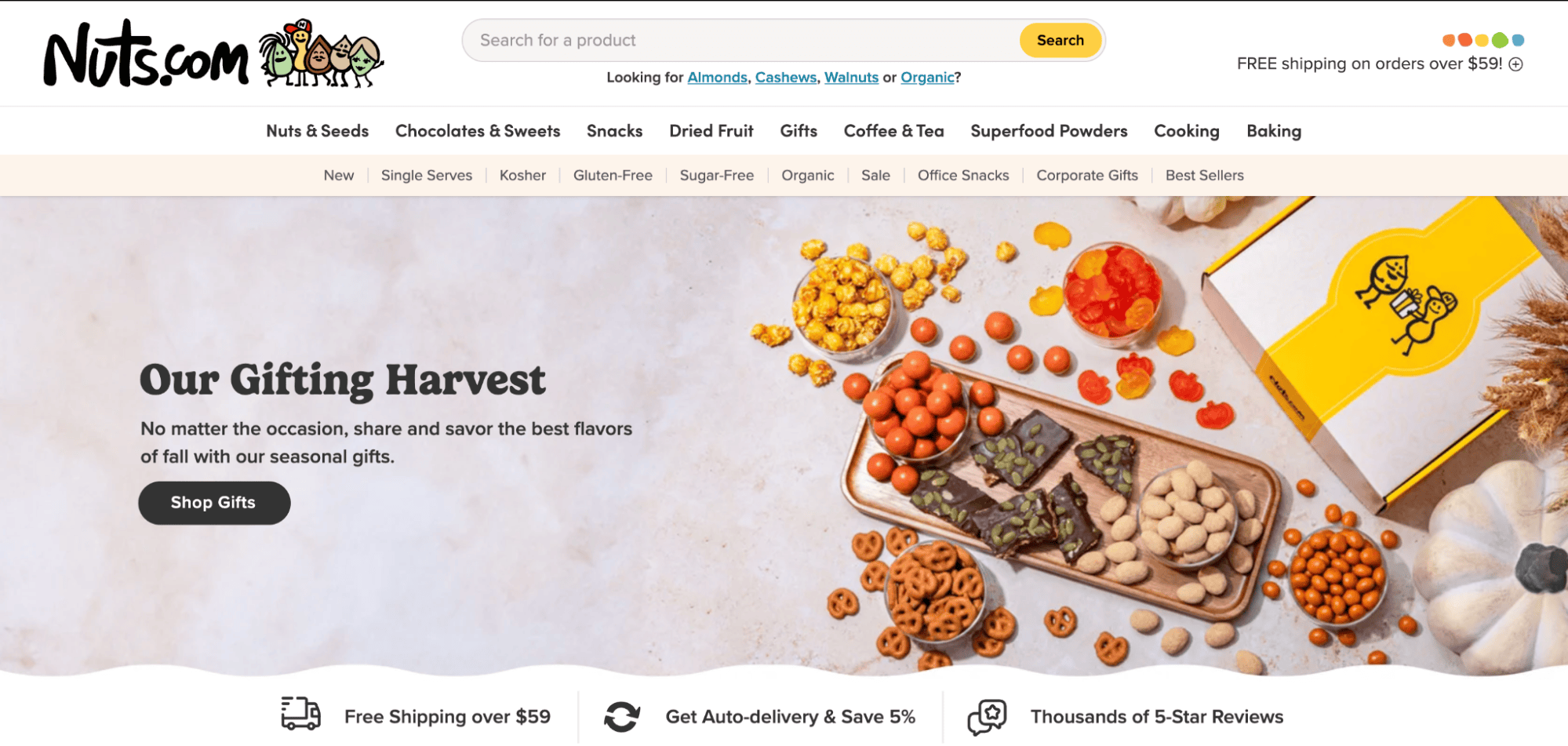
Nuts.com offers a wide selection of over 3,000 nut products in North America. They are the top provider of fresh, organic, and delicious nuts, as well as seeds, snacks, and dried fruit.
Nuts pays you an 8% commission rate on each new customer order when you join their affiliate program. If the customer returns to purchase, you’ll continue to earn a 2% commission rate. You will earn an approved commission as long as the customer purchases within a 30-day cookie duration.
Nuts process your affiliate payouts via ShareASale by check or direct deposit. However, you can only receive earnings when reaching a $50 payment threshold.
You will receive monthly newsletters, such as blog posts and unique content from Nuts. Moreover, you can contact their affiliate manager if you have problems with their affiliate program.
|
10. Universal Yums
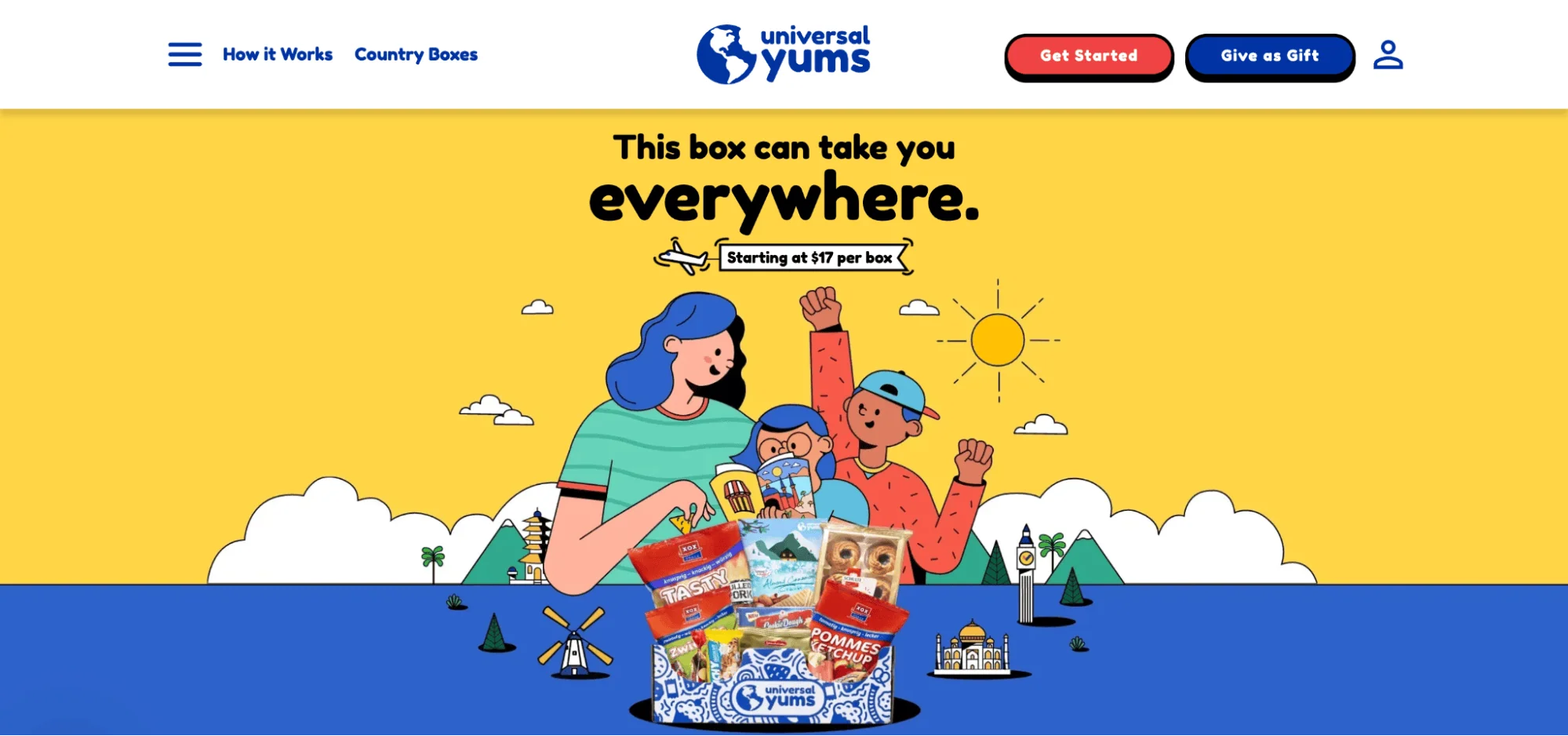
Universal Yums sends their users subscription boxes of different countries’ cuisines every month. Their boxes are full of unique snacks and candies with detailed guidelines on how to eat.
Universal Yums runs their affiliate program through ShareASale. Universal Yums gives you a $10 commission on every new subscription to their site via your affiliate link. The cookie duration lasts for 30 days from the customer’s first click.
The brand prefers food content publishers or influencers to join their programs. As an affiliate, you can receive free boxes to create more appealing food content.
|
11. Vegin’ Out
- Commission rate: 10%
- Cookie duration: Not mentioned
Vegin’ Out only provides their weekly vegan meal delivery service in the US, especially in California. Their weekly vegan menus contain oil-free, cholesterol-free, and trans-fat-free ingredients.
12. Vega
- Commission rate: 10%
- Cookie duration: 30 days
Vega offers a variety of vegan protein powders, protein bars, snacks, and supplements. Their products contain pea protein instead of traditional dairy-based whey.
13. The Fruit Company
- Commission rate: 3%
- Cookie duration: 90 days
The Fruit Company has over 22 years of supplying fresh fruit and gourmet gift baskets. Their high-quality baskets are suitable for corporate gifts, holidays, and special occasions.
14. Kettle & Fire
- Commission rate: $20
- Cookie duration: Not mentioned
Kettle and Fire’s bone broth products and soups help maximize nutrient density and flavor. Their diverse product lines also include beer, cooking broths, and keto products.
15. Eat Your Coffee
- Commission rate: 15%
- Cookie duration: 60 days
Eat Your Coffee creates energetic coffee snacks with different flavors to boost users’ energy. Their bars use high-quality and healthy ingredients such as oats, almonds, and dates.
16. Thrive Market
- Commission rate: 30%
- Cookie duration: Not mentioned
Thrive Market’s mission is to provide convenient, reliable, and affordable healthy products. Their shop features foods and supplements based on specific dietary needs.
17. Food52
- Commission rate: 12%
- Cookie duration: Not mentioned
Food52 has both kitchen tools and special recipes for users to make a perfect dish. They offer thousands of chef-approved recipes and trusted kitchenware.
18. Snake River Farms
- Commission rate: 10%
- Cookie duration: 30 days
Snake River Farms is a renowned purveyor of premium American Wagyu beef and Kurobuta pork. There is an extensive range of cuts, from classic steaks to gourmet specialties.
19. Purple Carrot
- Commission rate: $25
- Cookie duration: 30 days
Purple Carrot offers a variety of gluten-free, high-protein meal options designed for vegetarians. Customers can choose from weekly deliveries of Meal Kits, Ready Meals, and grocery products to match their preferences and dietary needs.
20. Vital Choice
- Commission rate: 3%
- Cookie duration: 7 days
Vital Choice specializes in offering premium wild-caught seafood. They also have a wide range of organic foods and nutritional supplements derived from the sea.
21. Direct Eats
- Commission rate: 5%
- Cookie duration: 90 days
Direct Eats sells healthy and non-perishable products at wholesale prices. They offer up to 20,000 health foods, from gluten-free and dairy-free to non-GMO.
22. Powbab
- Commission rate: 15%
- Cookie duration: 60 days
Powbad can improve the organs and immune systems of users with their self-developed superfood. Their best-seller product lines are diverse, such as Tart Cherry Powder, Wild Blueberry Powder, and Sambucus elderberry.
23. 1 UP Nutrition
- Commission rate: 2%
- Cookie duration: 30 days
1UP Nutrition is a premium sports nutrition brand focusing on fitness practitioners. They also build free personalized meal plans with a combination of healthy food and supplements for users.
24. Learn Cake Decorating Online
- Commission rate: Up to 50%
- Cookie duration: Not mentioned
Learn Cake Decorating Online caters to beginners with a range of baking lessons. Expert instructors provide clear step-by-step instructions and elaborate on ingredient usage in each course.
25. Food Huggers
- Commission rate: Up to 10%
- Cookie duration: 30 days
Food Huggers saves the freshness of vegetables and fruits by replacing plastic wrap with silicone kits. Their products are designed in colorful shapes and use eco-friendly materials.
26. Farmfoods
- Commission rate: 5% – 12%
- Cookie duration: 30 days
Farm Foods is a well-known food retailer of high-quality and affordable frozen products. Their stores include both in-house and renowned brands’ food at competitive prices.
27. HelloFresh
- Commission rate: 10%
- Cookie duration: 14 days
HelloFresh is among the first choices of meal kit service for Americans. They provide easy-to-prepare home-cooked meals made with farm-fresh ingredients.
28. Plonk Wine Club
- Commission rate: 10% – 15%
- Cookie duration: Not mentioned
Plonk Wine Club produces natural wines grown using organic and biodynamic methods. Their wines use no pesticides or commercial additives such as colorants, artificial sugars, or alcohol enhancers.
29. UrthBox
- Commission rate: Up to 10%
- Cookie duration: 30 days
UrBox delivers monthly health snack boxes to their subscribers with renewable food in each box. From vegan, gluten-free, and classic to protein plus box, customers can choose their favorite types and enjoy daily snacks.
30. Food Blogger Pro
- Commission rate: Up to 40%
- Cookie duration: 180 days
Food Blogger Pro empowers food bloggers to develop successful blogs and monetize their content. The platform creates various tutorials and courses in food photography, recipe development, and social media marketing.
31. bistroMD
- Commission rate: $20
- Cookie duration: 30 days
bistroMD delivers food services with doctor-designed meals for weight loss and overall health. Their fully prepared meals feature gluten-free, keto, and diabetic-friendly ingredients.
32. Little Spoon
- Commission rate: 10%
- Cookie duration: Not mentioned
Little Spoon provides fresh, organic baby food and meals for toddlers and young children. They create various junk-free food options according to the stages of a child’s development.
What Distinguishes Food Affiliate Marketing from Other Niches?
Food affiliate marketing is fundamentally different from sectors like tech or fashion.
It is sensory, not just functional. Success here isn’t about listing specs. It is about bridging the “sensory gap”—helping a reader taste, smell, and trust a product through a screen.
Tech reviews can rely on speed tests and data.
But food affiliates face four unique challenges: intense seasonal buying cycles, a high need for visual proof, distinct customer lifecycles, and a critical need for health-related trust.
The Seasonal Calendar
In the food niche, income doesn’t come in evenly. It arrives in massive, predictable waves. Understanding this rhythm is the difference between a hobby and a business.
| Season / Quarter | Primary Focus | Best Products to Promote |
| Q1 (Resolution Rush) | Health and organization (New Year goals). | Meal kits (e.g., HelloFresh), organizational tools. |
| Q2 & Q3 (Outdoor Shift) | Warmer weather and outdoor living. | Grills, smokers, outdoor entertaining gear. |
| Q4 (Holiday Window) | “Make or Break” critical retail peak. | Thanksgiving and Christmas essentials. |
Q1 (The Resolution Rush): January and February see a spike in health-conscious buying. This is prime time for meal kit subscriptions (like HelloFresh) and organizational tools as people act on New Year’s resolutions.
Q2 & Q3 (The Outdoor Shift): As the weather warms, the focus shifts to grilling gear, smokers, and outdoor entertaining. This provides a steady income through the summer.
Q4 (The “Make or Break” Window): The final eight weeks of the year are critical. This window covers Thanksgiving and Christmas.
Industry analysis suggests that high-ticket kitchenware affiliates often generate 40% to 50% of their annual revenue in November and December alone.
Because of this, you cannot wait for trends to happen. Successful affiliates operate on a 6-10 week lead time. They publish their “Best Roasting Pan” guides in early October to ensure they rank in search results before the holiday rush begins.
Visual Content Demands
The food niche has a “visual tax.” In software or finance, you can sell with good writing. In food, text tells, but visuals sell.
Data consistently shows that food reviews without high-quality visuals have much lower conversion rates. Readers need to see the texture of the bread or the sear on the steak to believe the product works.
Tech Niche: A writer can review software by taking screenshots (1-2 hours).
Food Niche: A creator must buy ingredients, cook the recipe, style the shot, and film the process.
For example, to sell a KitchenAid stand mixer, you can’t just list the motor power. You need a video showing the machine kneading stiff dough without shaking. This takes 3-8 hours per piece of content. This high workload acts as a barrier to entry for lazy affiliates.
Consumables vs. Durable Goods
Food affiliate programs offer a unique advantage: you can balance small, recurring commissions with large, one-time payments.
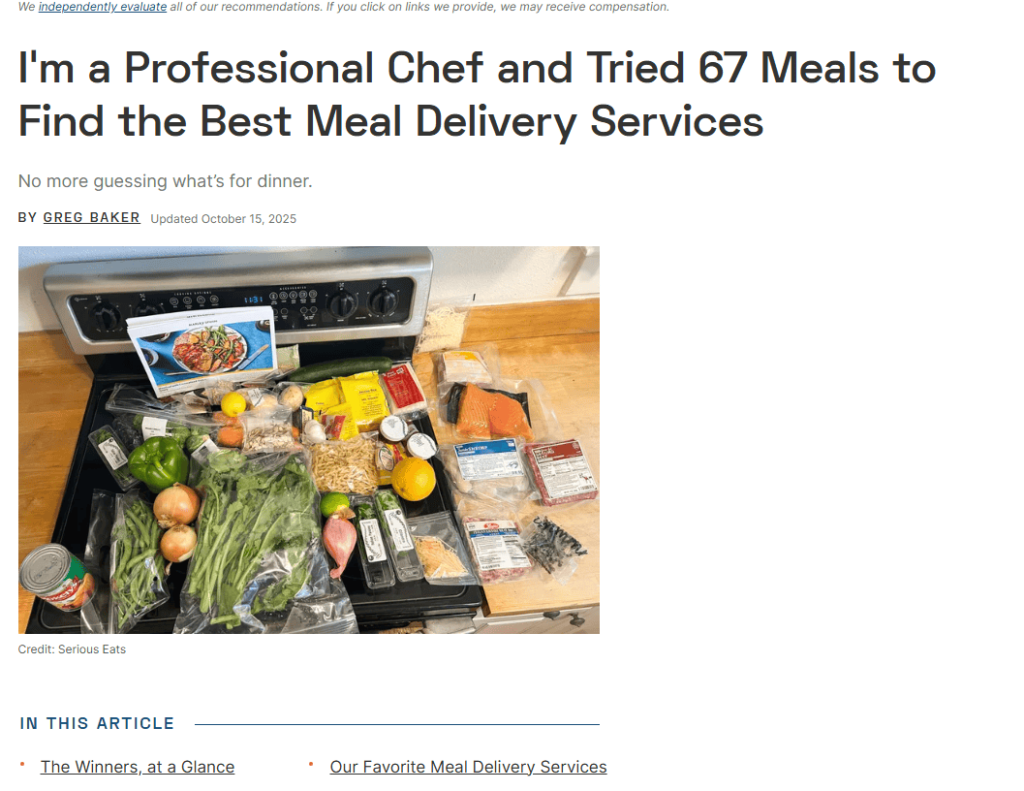
You need a strategy that targets both:
Consumables (The Passive Floor): These are items like specialty ingredients or meal kits. The commission per sale is low, but they generate recurring revenue. A reader buys a spice blend once, loves it, and reorders it five times a year.
Durable Goods (The High Ceiling): These are “buy-once” investments like a Le Creuset Dutch oven or a Vitamix blender. The single commission is high ($20-$50+), but the customer won’t buy another one for decades.
Don’t choose just one. Use consumable reviews to build a stable monthly income. Use durable good reviews to capture high-value search traffic.
Health and Safety Responsibility
This is where the food niche enters YMYL (Your Money, Your Life) territory. Unlike recommending a laptop, recommending food products carries physical risk.
When you promote products to people with specific needs—such as Celiac disease, diabetes, or severe nut allergies—accuracy is a safety requirement.
The Risk: A mistake regarding cross-contamination in a factory could send a reader to the hospital.
The Responsibility: You must verify certifications (e.g., “Certified Gluten-Free” vs. just “wheat-free”).
Successful food affiliates protect their audience and their own reputation by using precise language. They always include clear medical disclaimers. If you break this trust once, you will likely lose that audience forever.
Education First, Sales Second
Food audiences hate being sold to. They come to your content to solve a problem (e.g., “How do I get a crispy crust?”), not to shop.
If you lead with a sales pitch, they will leave. To make sales, follow the 80/20 Rule of Value:
80% Education: Teach the technique. Share the recipe. Explain the science of why it works.
20% Recommendation: Position the product as the tool needed to get the result you just taught.
Don’t write a review titled “Buy This Pizza Steel.” Write a guide on “How to Make Pizzeria Quality Crust at Home.” Teach the heat science first. Then, introduce the baking steel as the tool that makes it possible.
Price Sensitivity
Food consumers often view kitchenware as a “utility” rather than a “luxury.” A reader who drops $1,000 on a new phone might hesitate to spend $150 on a chef’s knife.
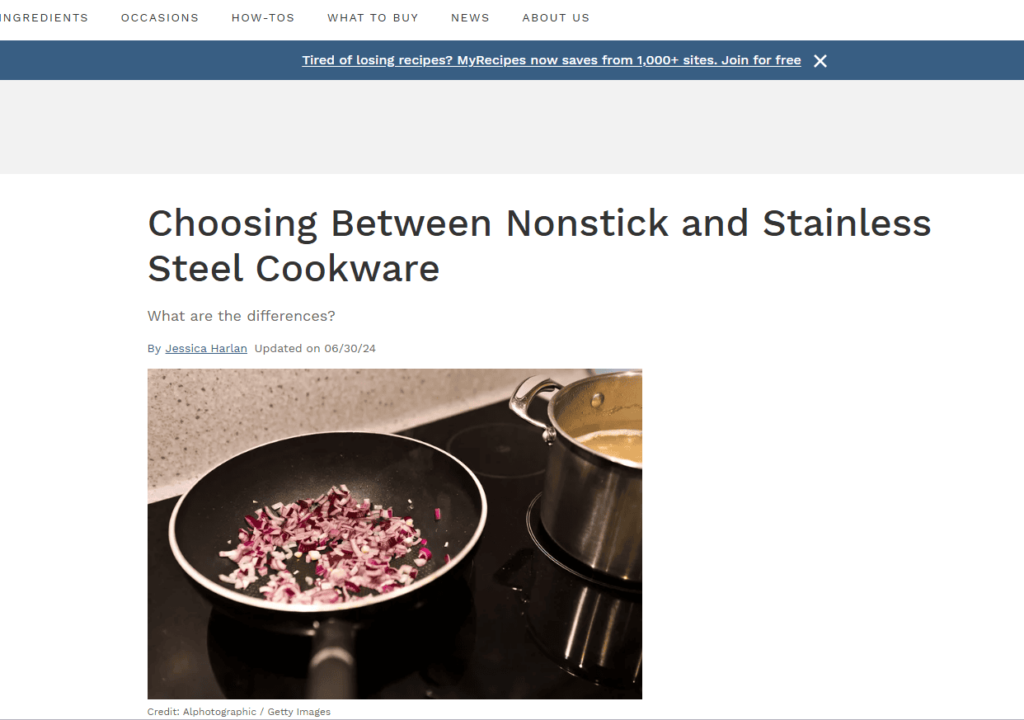
To overcome this hesitation, reframe the purchase using “Cost-Per-Use” logic.
The “Expensive” Pan: A $200 stainless steel pan seems pricey. But if it lasts 50 years, that’s only $4 per year.
The “Cheap” Pan: A $30 non-stick pan that peels and needs replacing every 18 months actually costs more over a decade.
Your job is to prove that the higher upfront cost is actually the smarter choice in the long run.
Platform Strategy and Ethics
Finally, you must treat every social platform differently. A “copy and paste” approach fails here.
The Ecosystem Approach:
- YouTube: The trust engine. Use long videos to prove a product works.
- Pinterest: The traffic engine. Use high-quality images to capture search traffic months later.
- Instagram/TikTok: The lifestyle engine. Use these to build your brand (but expect fewer direct sales).
- Newsletters: The conversion engine. This is where you sell expensive items to your most loyal readers.
Modern audiences care about sustainability and labor practices. Promoting a brand that uses unethical sourcing or excessive plastic can backfire.
You must check a brand’s supply chain just as carefully as their product quality. Your reputation is tied to the ethics of the partners you endorse.
What Are the Most Effective Ways to Promote Food Affiliate Products?
Many beginners try to paste affiliate links into every blog post and hope for the best. This “spray and pray” method rarely works.
The most successful food affiliates treat their content like a funnel. They match the format to what the reader is looking for.
The data shows a clear winner in achieving results. Detailed equipment buying guides lead the field, typically converting 8-15% of readers.
Why? These readers have their credit cards out and are actively seeking recommendations.
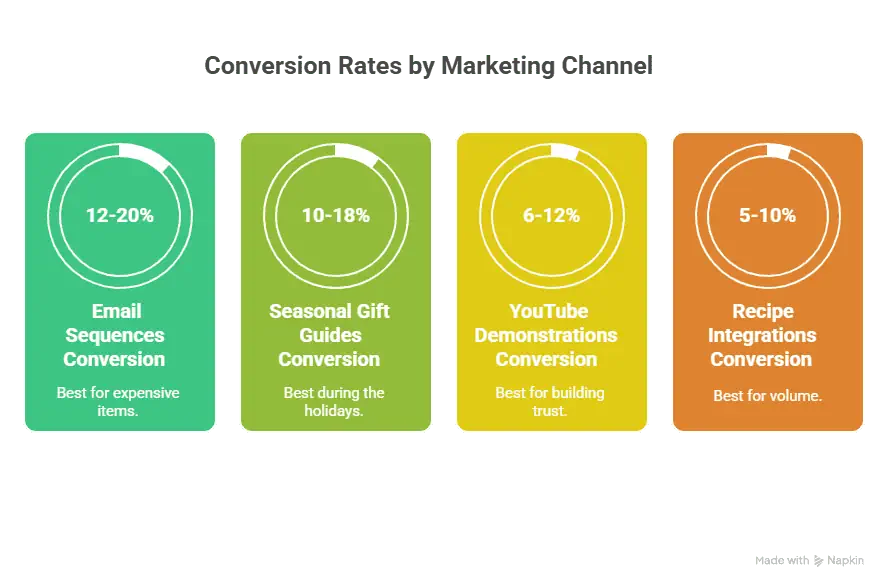
However, a strong strategy uses a mix of formats to reach readers at different stages:
Email Sequences: 12-20% conversion (Best for expensive items).
Seasonal Gift Guides: 10-18% conversion (Best during the holidays).
YouTube Demonstrations: 6-12% conversion (Best for building trust).
Recipe Integrations: 5-10% conversion (Best for volume).
Here is how to master each format.
Equipment Buying Guides
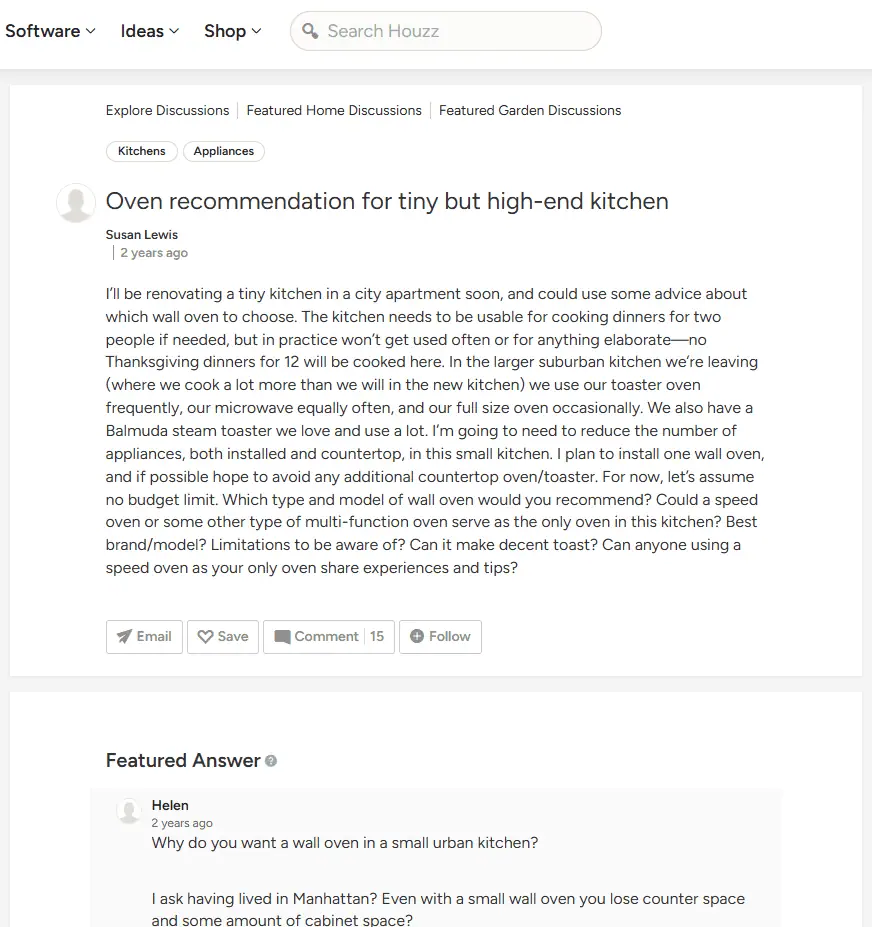
This is your “money page.” These articles target readers who are already ready to buy; they know they want a product, like a stand mixer, but simply don’t know which one to choose.
To maximize your sales, avoid writing a generic “Top 10” list. Instead, compare five to eight specific options using a structured “Best X for Y” format.
Use a “Categorization Strategy” to help readers decide faster based on their specific needs.
Your guide should clearly group winners, such as a Best Budget Option for a reliable $40 tool, a Best for Small Kitchens for compact spaces, or a “Buy It for Life” Pick for high-end durability.
Finally, apply the “Two-Link” Rule by always providing affiliate links for multiple retailers.
For a KitchenAid, link to the official site for perks and to Amazon for fast shipping. This ensures you earn the commission no matter where the user prefers to shop.
Recipe-Integrated Recommendations
This is the most natural way to sell, but it requires subtlety. If you force a link for a $300 blender into a simple smoothie recipe, it feels like spam.
The secret is to frame the product as the solution to a cooking challenge.
The Wrong Way: “Here is the link to the Dutch Oven I use.”
-> The Right Way: “To get that bakery-style crust, you need to trap steam during the first 20 minutes.
This is why I use a Lodge Dutch Oven—its heavy lid seals in moisture that a standard baking sheet simply can’t.”
When the reader understands why the tool improves the result, the link becomes a helpful resource, not an ad.
YouTube Demonstrations
Text reviews have a limit; they can’t show physics. YouTube builds trust by offering visual proof. This is critical for expensive items where performance matters.
Viewers typically spend 8 to 15 minutes watching a detailed review. By the end of that video, they are far more educated—and far closer to buying—than someone skimming a blog post.
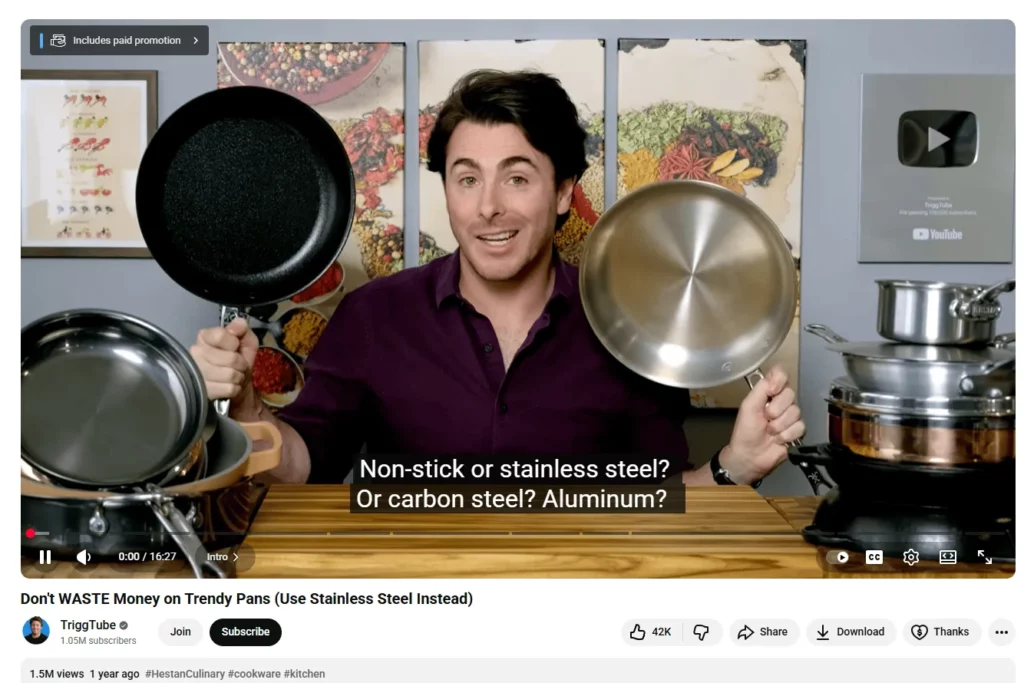
Don’t just show the successes. Show the failures. If a blender struggles to crush ice, show it. If a non-stick pan scratches easily, say it.
Honest criticism makes your final recommendation 10x more powerful.
Seasonal Gift Guides
In the food niche, the eight-week window of November and December can generate 50% of your annual revenue. Gift guides are the engine behind this spike.
However, generic guides like “Best Gifts for Cooks” are too competitive. You must get specific to capture high-intent traffic.
Here are some ideas:
“15 Gifts for Sourdough Bakers Under $50”
“Luxury Coffee Upgrades for the Espresso Snob”
“The Ultimate Grill Master Gift Guide”
Publish these guides early (late October) and update them weekly to check stock. Nothing kills a sale like a “Sold Out” link.
Email Sequences
For expensive items (like a $2,000 espresso machine) or subscriptions (like a wine club), a single blog post is rarely enough. These purchases require trust.
An automated email sequence converts at a high rate (12-20%) because it builds a relationship before asking for the sale.
A Simple 4-Day Sequence:
Day 1 (Education): “Is a home espresso machine right for you? (Pros and cons).”
Day 2 (Comparison): “Breville vs. Gaggia: A side-by-side look.”
Day 3 (Objections): “Answering the 3 biggest questions about cost.”
Day 4 (The Offer): “A limited-time deal/discount code.”
Seasonal Recipe Roundups
Roundups act as hubs. A post titled “The Ultimate Thanksgiving Pie Guide” attracts users looking for recipes, but it also creates a perfect spot for affiliate links.
You can feature the necessary equipment right at the top: the best rolling pin, the specific pie plate you use, and the weights that prevent shrinking.
Readers often realize they are missing these tools while planning their menu, leading to easy add-on purchases.
Problem-Solution Content
This is an underrated strategy. Instead of targeting product names, target frustrations.
Articles like “Why Your Cookies Keep Spreading” or “Why Your Bread Is Dense” attract readers actively seeking a fix.
The Problem: The cookies spread because the baking sheet is too thin and warps.
-> The Solution: A heavy-gauge USA Pan baking sheet.
When the product is presented as the cure to a recurring headache, people are highly motivated to buy.
Social Media Strategy
Finally, understand that social platforms are not all equal. Play to their strengths:
TikTok/Reels (Awareness): Great for viral reach, but direct sales are low because you can’t link in posts. Use these to drive traffic to your bio link or newsletter.
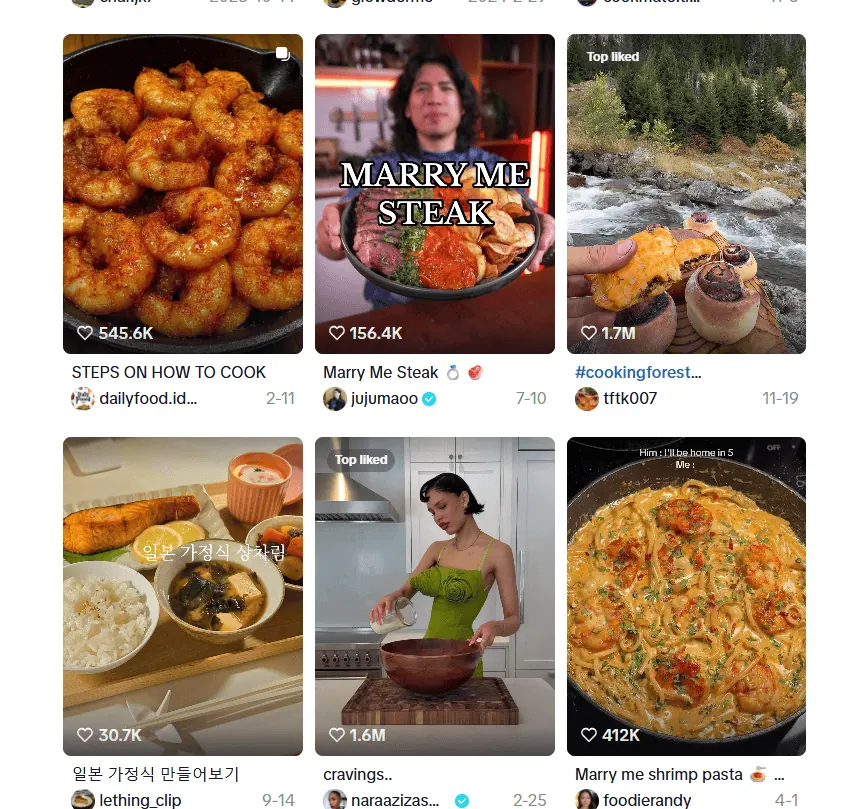
Pinterest (Discovery): This is a long-term search engine. A pin for “Christmas Cookies” can drive traffic for years.
Since Pinterest users plan months in advance, prioritize affiliate programs with long cookie windows (30-90 days). You want to get credit for the sale even if they click your pin in October but don’t buy until December.
How Do You Capitalize on Seasonal Trends in Food Affiliate Marketing?
In many niches, revenue is a flat line. In food affiliate marketing, it is a rollercoaster. If you understand the track, you can ride the momentum to massive highs. If you don’t, you’ll be left behind.
Data shows that traffic and revenue in this sector often spike by 200% to 600% during peak periods.
While the Q4 holiday season is the biggest driver (accounting for 35-45% of annual income), smart affiliates don’t starve the rest of the year. They pivot.
Predictable Revenue Patterns
The most successful food affiliates don’t just write content; they manage a calendar.
The revenue cycle is predictable:
Q4 (The Explosion): Nearly half of annual earnings happen here due to Black Friday and holiday gifting.
Q1 (The Resolution Bump): A secondary spike in January driven by health goals.
Q2 & Q3 (The Steady Burn): Consistent income driven by outdoor cooking and summer events.
By aligning your content with these waves, a site earning $50,000 annually can realistically jump to $75,000+ without creating more content—just by creating the right content at the right time.
The Q4 Holiday Rush (The “Make or Break” Window)
This is the Super Bowl of food affiliate marketing. From November 1st to December 20th, sales skyrocket.
Search volume for expensive items explodes. Searches for terms like “kitchen gifts for mom” can jump by 900%.
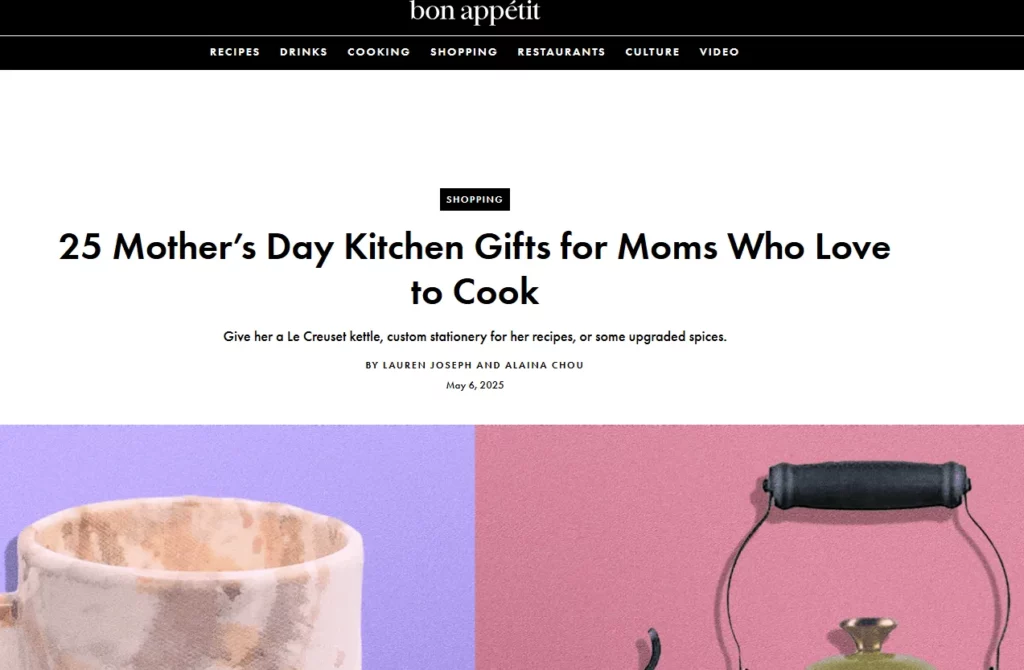
Publish your gift guides by mid-October. Do not wait until November. You need 4-6 weeks for search engines to rank your page before the shopping frenzy starts.
Focus on “high-ticket” gifts. Review stand mixers, knife sets, and espresso machines. Readers are looking to spend big money on loved ones.
The New Year’s Reset (January & February)
On December 26th, the mindset shifts instantly from “indulgence” to “discipline.”
People flood the internet looking for tools to help them eat healthier. This is the prime time to promote:
- High-Speed Blenders: (e.g., Vitamix for smoothies).
- Air Fryers: For lower-calorie cooking.
- Meal Prep Containers: For lunch organization.
- Meal Kit Subscriptions: (e.g., Green Chef or HelloFresh).
Have your “Best Meal Prep Containers” and “Healthy Kitchen Essentials” guides ready to go live on December 27th.
Spring and Summer Opportunities
As the weather warms, the kitchen moves outside.
Mother’s Day (May): This is a mini-Q4. It drives a sharp spike in premium, aesthetic gifts (like Le Creuset pots). Publish deadline: Mid-March.
Grilling Season (May–September): This is a marathon, not a sprint. From Memorial Day to Labor Day, traffic is high for smokers, grills, and pizza ovens.
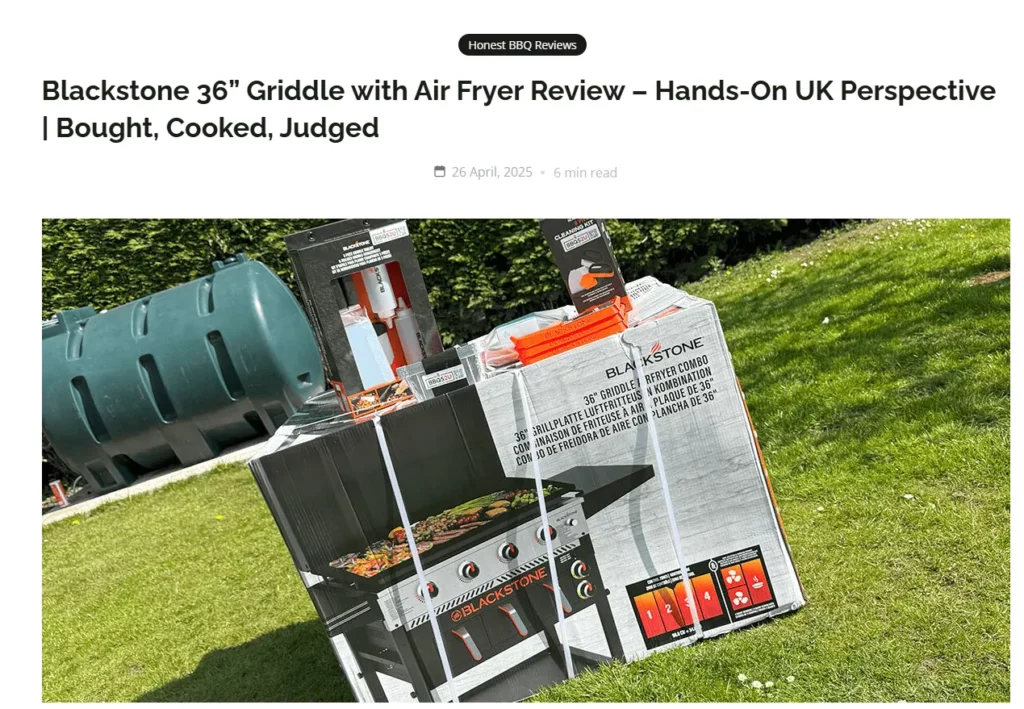
This is the best time to sell expensive outdoor gear, especially to men who are researching summer upgrades.
Back-to-School (Late August): The focus shifts to speed. Parents are frantic for time-saving solutions. Searches surge for Instant Pots, slow cookers, and lunch boxes. Promote tools that promise “dinner in 30 minutes.”
Holiday-Specific Spikes
Beyond general seasonal trends, specific holidays create intense, short-lived buying spikes. Thanksgiving is the busiest traffic week of the year for recipes, driving massive sales for roasting pans, meat thermometers, and fat separators.
However, timing is critical. If you publish a Thanksgiving guide in November, you are already too late.
To rank for these competitive terms, you need to publish your “How to Roast a Turkey” guides as early as August or September.
Other events offer similar opportunities.
The Super Bowl creates a rush for party food appliances like air fryers and slow cookers, while Easter shifts the focus to brunch essentials like waffle makers and baking sheets.
To succeed, you must stay ahead of the curve. The most profitable affiliates are the ones writing about turkeys in August and grilling gear in February.
FAQs
1. What is a food affiliate program?
A food affiliate program allows marketers to earn commissions by promoting food-related products such as meal kits, snacks, supplements, beverages, or specialty ingredients through affiliate links.
2. How much can you earn from food affiliate marketing?
Earnings vary by brand and model. Most food affiliate programs offer 5%–20% commission per sale, while some subscription-based programs pay recurring commissions.
3. Are food affiliate programs good for beginners?
Yes. Food is a universal niche with high demand, making it ideal for beginners in affiliate marketing, especially through blogs, TikTok, YouTube, and Instagram.
4. Do food affiliate programs offer recurring commissions?
Some programs, especially meal kits and subscription snack boxes, provide recurring or lifetime commissions as long as the customer stays active.
5. Can you promote food affiliate links without a website?
Yes. You can use TikTok, YouTube descriptions, Instagram bio links, or Linktree-style pages to promote affiliate offers.
6. Are food affiliate programs available worldwide?
Many programs support international affiliates, but availability depends on shipping regions and merchant policies.
7. What is the best traffic source for food affiliates?
Short-form video content (TikTok, Reels, Shorts) currently converts extremely well for food-related affiliate offers.
8. Is food affiliate marketing profitable long term?
Yes. Food is a repeat-purchase niche, which provides stable and scalable long-term income potential.
Conclusion
Ultimately, an affiliate program is about building a community. It’s a way to find people who are as passionate about your food as you are and give them a reason to share it.
These partners become your most authentic marketers, solving the challenge of earning trust online. By following these steps, you can create a thriving team of advocates who will help your Shopify food brand grow for years to come.

Ellie Tran, a seasoned SEO content writer with three years of experience in the eCommerce world. Being a part of the UpPromote team, Ellie wants to assist Shopify merchants in achieving success through useful content & actionable insights.Ellie's commitment to learning never stops; she's always eager to gain more knowledge about SEO and content marketing to create valuable content for users. When she's not working on content, Ellie enjoys baking and exploring new places.