




The total RV shipments in 2026 have increased by 17.8% compared to 2023. More people are more likely to travel with motorhomes to experience new adventures. This is a good sign for you to start affiliate marketing in this niche and boost your income.
This article has covered 17 leading RV affiliate programs for you to consider. Read through each program and review detailed information to find your best fit.
Quick Comparison
| Program Name | Commission (%) | Cookie Duration (Days) | Niche Suitable |
|---|---|---|---|
| RVshare | 4% per rental OR $7 per new listing | 30 days | RV rental, travel bloggers, family travel, outdoor lifestyle |
| RV LIFE | Up to 25% | 170 days | RV lifestyle, trip planning, camping blogs |
| RVezy | $25 per booking/listing | 30 days | RV rental, family travel, lifestyle blogs |
| TechnoRV | 5–7% | 7 days | RV accessories, GPS, tech gadgets, product reviews |
| RVT | 20% (up to 30% + bonuses) | 45 days | RV marketplace, buy/sell RV, automotive niche |
| Mobile Home Parts Store | 5% | 30 days | RV parts, repair, DIY, mobile home niche |
| RV Water Filter Store | 15% + bonuses | 10 days | RV water filtration, product review blogs |
| Tochta Custom RV Mattress | 3% | 30 days | RV comfort, mattress reviews, travel lifestyle |
| Wilderness RV Mattress | 5–10% | 90 days | RV bedding, lifestyle, comfort niche |
| Vintage Trailer Supply | 5% | 60 days | Vintage RV restoration, collectors, hobby blogs |
Affiliate Earnings Calculator
Estimate your affiliate income based on Traffic, CTR, AOV, and Commission rate. Drag the sliders below to explore different scenarios.
Estimated Results
These figures are for illustrative purposes – feel free to adjust them to fit your specific niche.
- Conversion Rate here is defined as the percentage of traffic that buys.
- Does not account for refunds, cancellations, or varying commission rates by product.
17 Best RV Affiliate Programs
1. RVshare
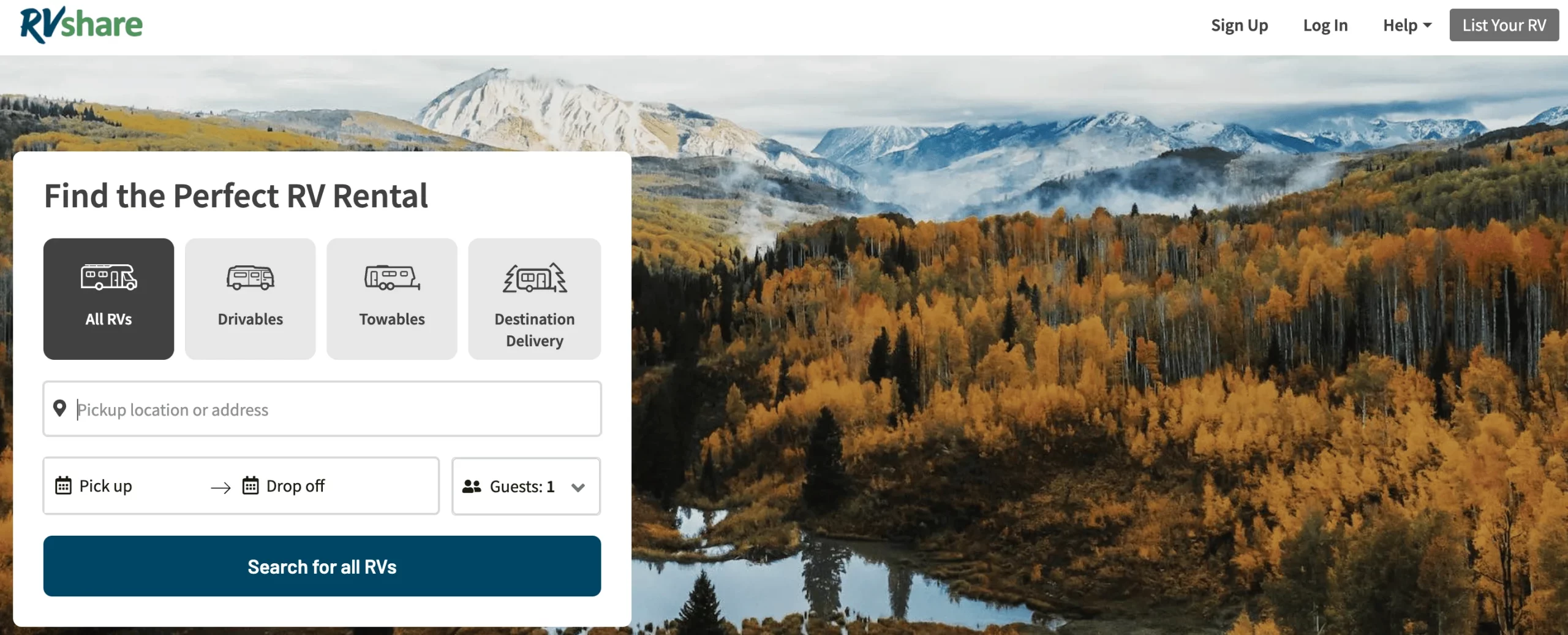
RVshare connects RV owners with renters through their online booking platform. Renters can choose a perfect RV based on specific information about sizes, amenities, prices, and destination.
You can join their RV affiliate program via CJ Affiliate and earn a 4% commission rate on each successful rental. You can easily earn up to $36 per completed customer check-in with an average order value of $900.
Plus, you will earn $7 per new RV listing on RVshare via your affiliate link. The cookie duration lasts 30 days on customers’ devices once they click on your unique link.
You can choose from a large selection of banners and text links to make your content look better. Moreover, you can access their product feed anytime to update information and choose suitable items for your promotions.
|
2. RV Life
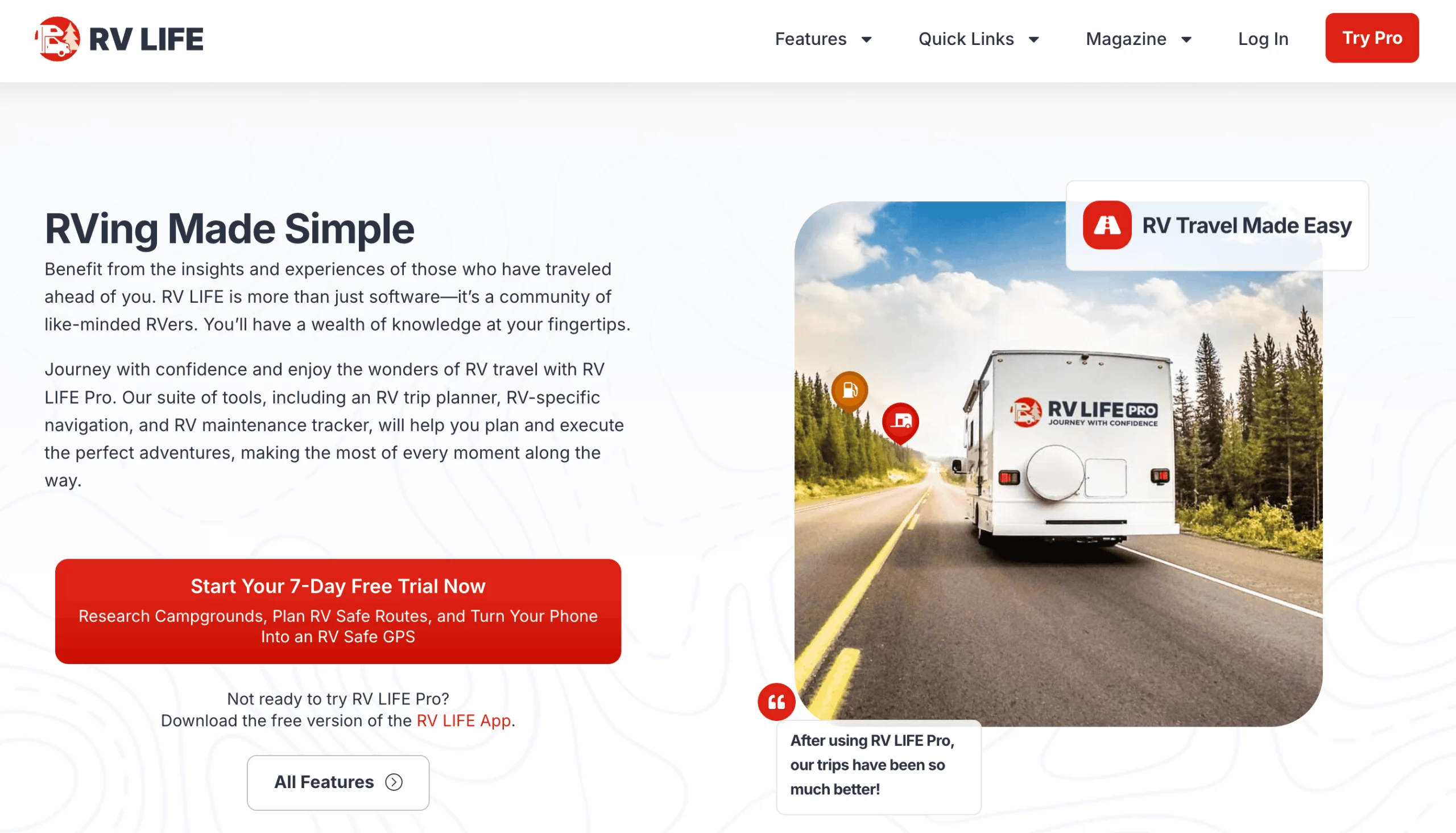
RV LIFE serves many RVers with helpful tools for planning, tracking, and enjoying family journeys. They also develop membership packages with detailed camping reviews, route planning, and exclusive discounts.
After joining their affiliate program, you can enjoy up to a 25% commission rate on each qualified sale. Their system will track every sale through your affiliate links and directly count toward your account balance.
The brand lets you earn a commission for purchases within a 170-day cookie duration. RV LIFE issues your payouts on a monthly basis via PayPal.
|
3. RVezy
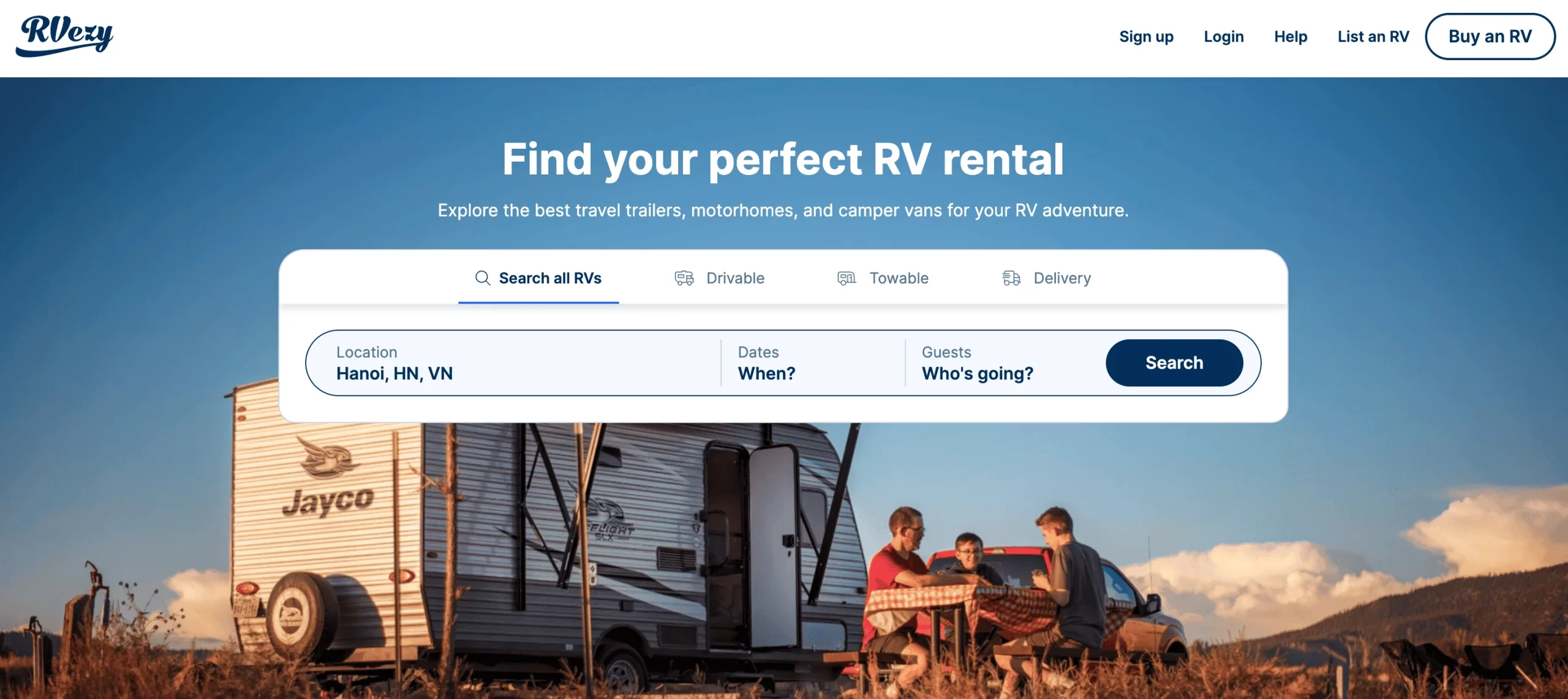
RVezy creates an all-in-one platform for buying, selling, and renting RV for family road trips. Their top RV rental includes travel trailers, motorhomes, and camper vans.
The brand allows you to earn a $25 commission on each successful listing or booking after joining the affiliate program. The cookie duration lasts for 30 days from customers’ first click on your affiliate link.
You can apply for the RVezy affiliate program via Impact Radius. Once you apply, they will review your application and contact you within 2 business days.
|
4. TechnoRV
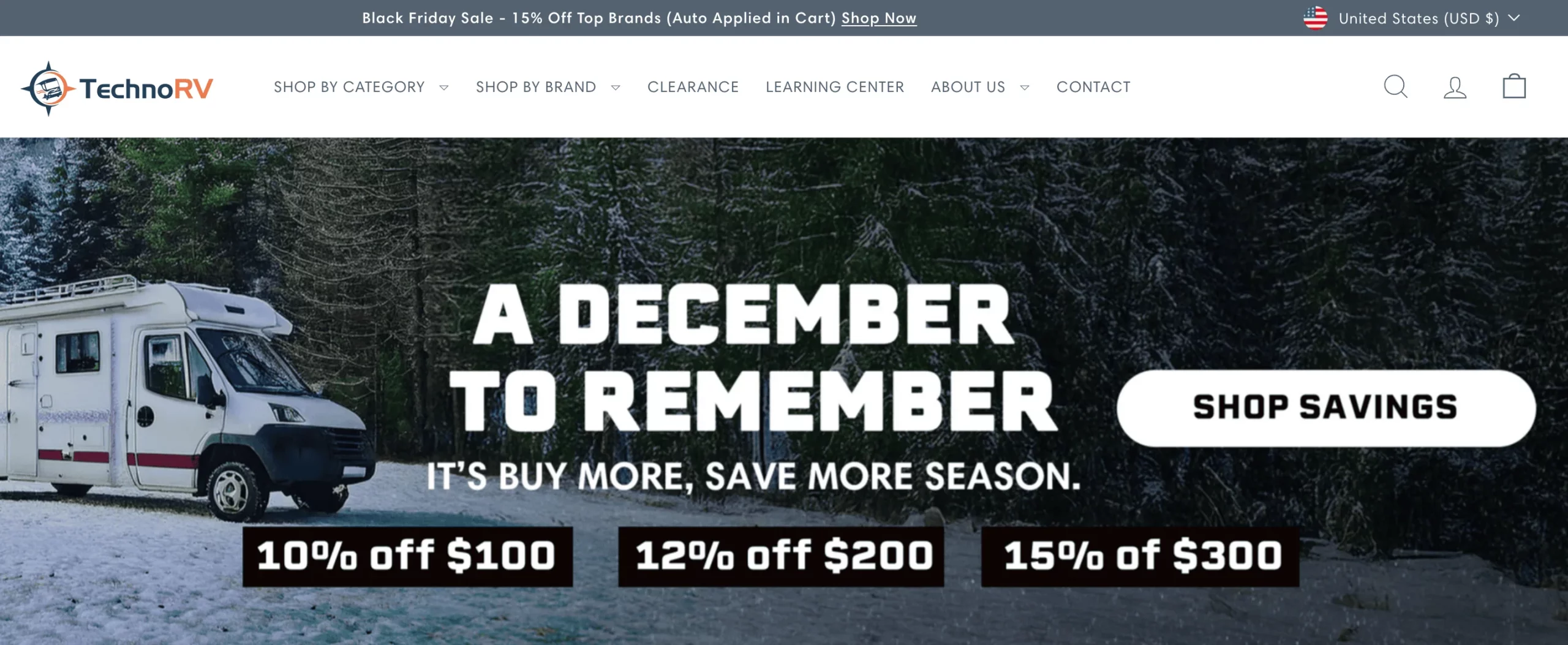
TechnoRV designs exclusive technology tools for RV enthusiasts to enhance their journeys. They integrate GPS trackers, WiFi boosters, and others into the RV system to secure connectivity and safety.
You can join their affiliate program and earn 5% to 7% on each product sale via your link. The cookie duration counts exactly a week from the moment customers click on your affiliate link.
You have all the product specs from TechnoRV to help you create better-related content. Plus, you can freely use their product images on your marketing channels to gain more trust from the audience.
|
5. RVT
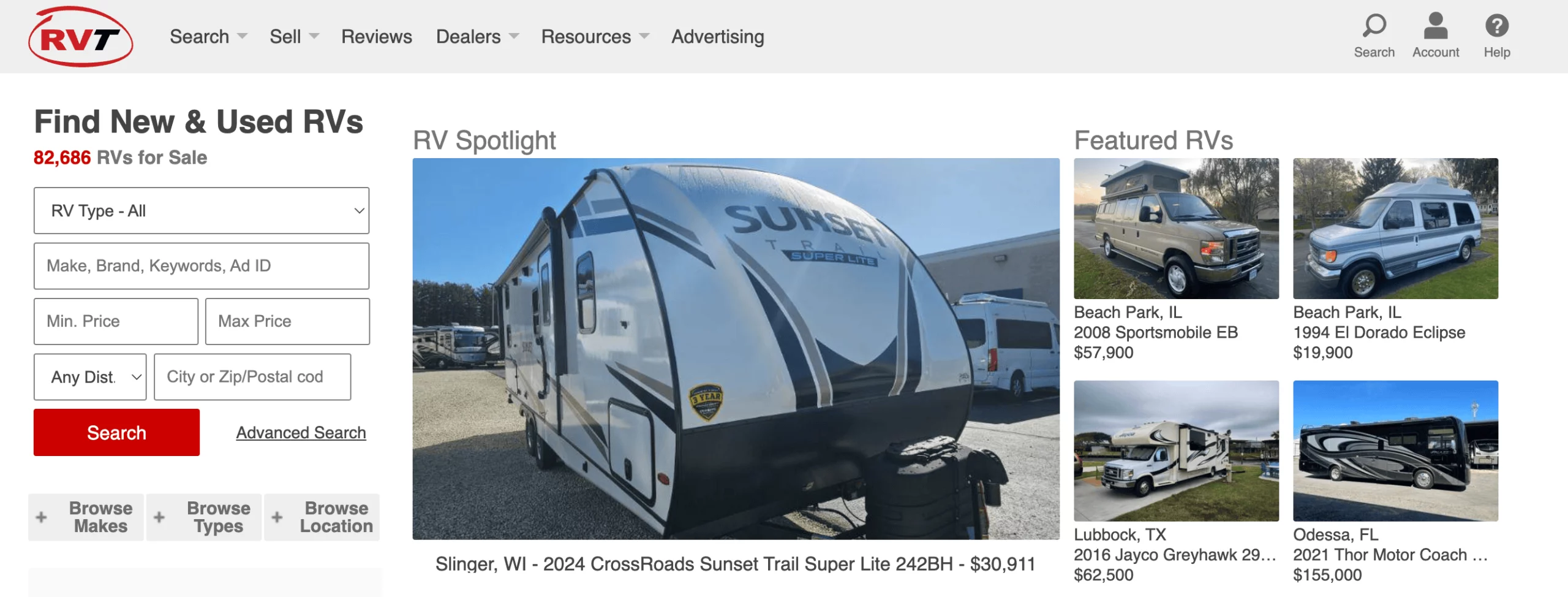
RVT is a large online marketplace for buying and selling new and used RVs in the US. Their platform displays detailed listings with images, conditions, and sellers’ contact information.
Managed by CJ Affiliate, the RVT affiliate program offers a 20% commission rate on each successful sale. If you reach higher total sales revenue, they’ll update their rate or offer cash bonuses.
- More than $500: 25% commission
- More than $1,000: 30% commission
- More than $5,000: $500 bonus
- More than $10,000: $1000 bonus
If customers purchase within 45 days of their first click, you’ll receive a commission. You can even integrate the RVT.com Search Engine and Ad Placement system into your site to enhance the audience experience.
|
6. Mobile Home Parts Store
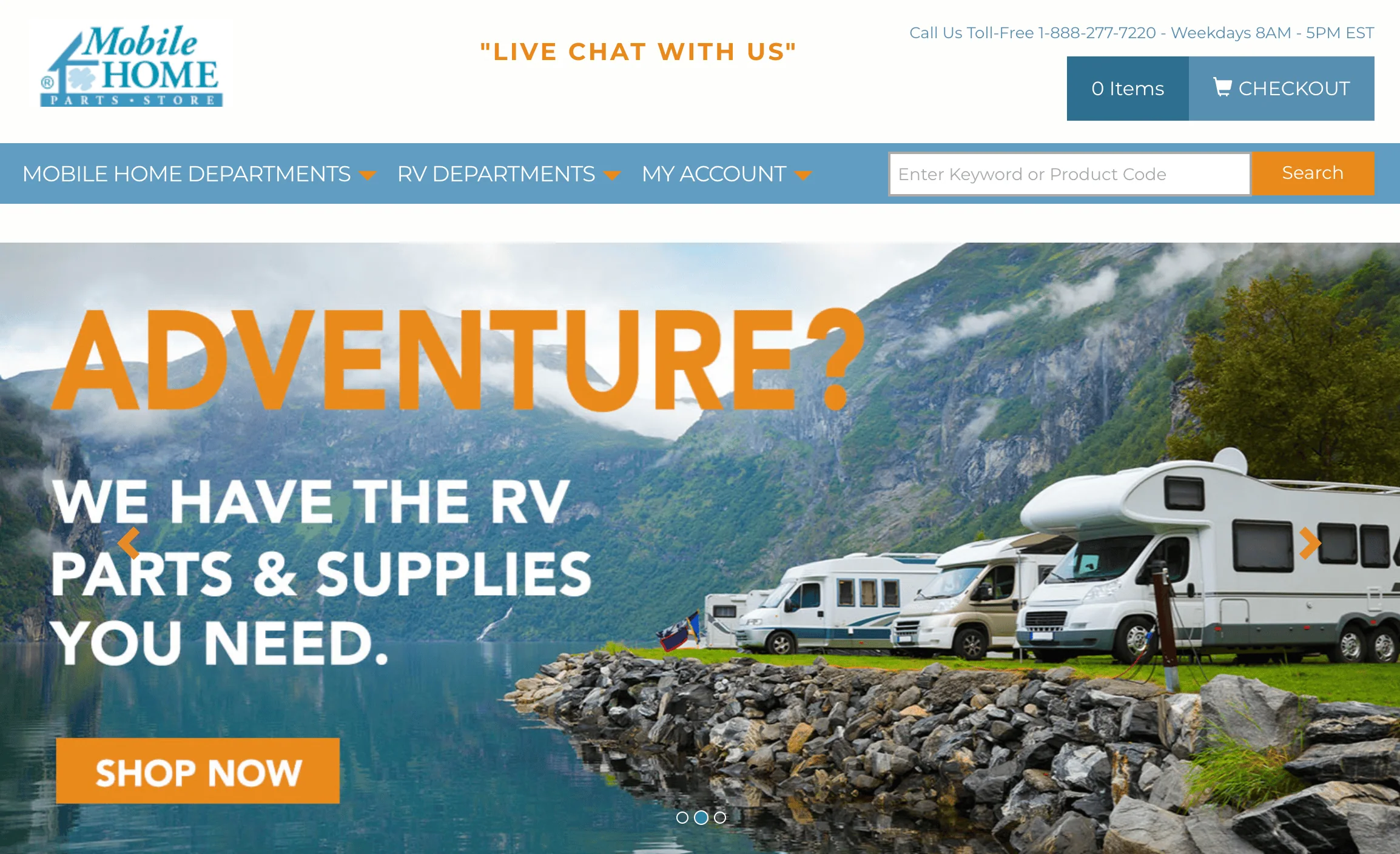
Mobile Home Parts Store has every useful and effective tool for mobile home repair and maintenance. From designed furniture to RV parts, buyers can find high-quality products at reasonable prices.
You can earn a 5% commission rate on each sale after joining their rv affiliate program. You will earn up to $10 per order with an average order value of $200. Since the cookie duration is 30 days, you’ll have a full month to get a commission for customers’ purchases.
Mobile Home Parts Store updates a variety of banner sizes to fit your marketing channels. Plus, you should check their monthly newsletter to update new assets for your promotional campaigns.
|
7. RV Water Filter Store
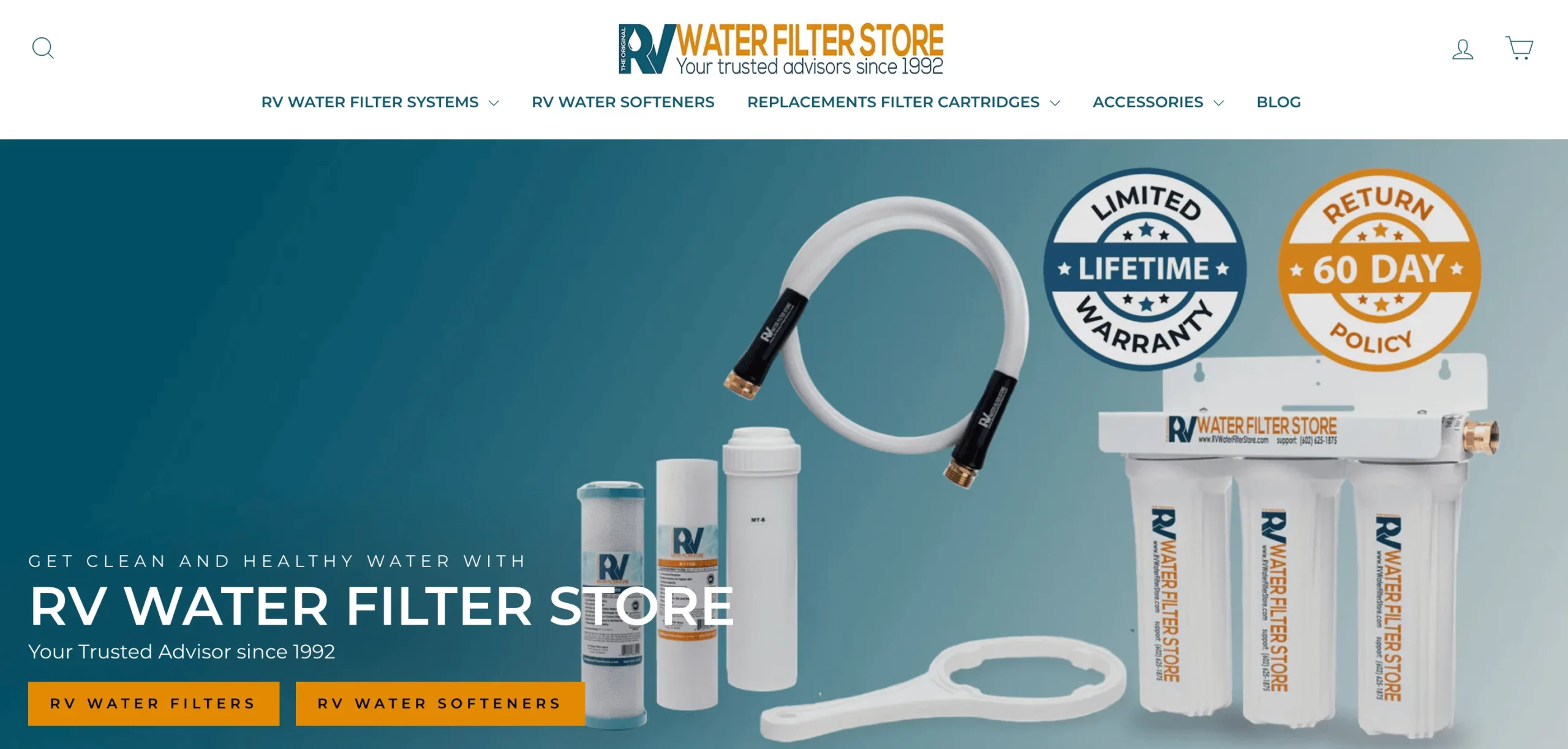
RV Water Filter Store offers premium water filtration solutions for RVs with a lifetime warranty. Their high-performance products ensure safe, clean, and great-testing water throughout the trip.
RV Water Filter Store runs their affiliate program via Impact Radius, a trusted affiliate network. The commission rate is 15% for every successful order made via your affiliate link. If you reach up to over 3 sales each month, you can receive a $25 bonus.
The cookie duration remains active for 10 days from customers’ first click. Therefore, you can earn credit for customers’ purchases within this time frame.
|
8. Tochta Custom RV Mattress
Tochta Custom RV Mattress delivers custom RV mattresses of all sizes based on customers’ interests. Their mattresses are designed to fit RV dimensions, enhancing comfort and sleep quality for travelers.
After being approved for their affiliate program, you can enjoy a 3% commission rate on each product sale. You can earn around $25 per sale with a high average order value of up to $835. With a 30-day cookie duration, you can earn a commission for purchases within this time frame.
You can utilize their banners and coupon codes across all promotional campaigns to increase engagement and drive more sales. You can access their data feeds to update product information and find suitable items for your target audience.
|
9. Wilderness RV Mattress
Wilderness RV Mattress has sold luxury RV mattresses and bedding products within 15 years. They allow customers to flexibly customize their mattresses based on different sizes and shapes.
The Wilderness RV Mattress allows affiliates to earn from 5% to 10% commission rate on each qualified sale. You can earn up to $86 per successful sale with a high average order value of $860. The cookie duration is 90 days, counting from customers’ first click on your link.
Wilderness RV Mattress only pays affiliates via PayPal, so it’s a must to have a PayPal account. You can get a 40% discount when buying at their store after achieving 25 sales.
The brand updates various banners and images for their affiliates to create attractive content. Plus, you can put their logos in any type of content to better gain trust from the audience.
|
10. Vintage Trailer Supply
Vintage Trailer Supply is among the leading suppliers of vintage parts and accessories for RV. They have all the designed products for old RVs, such as lighting, windows, hardware, and decor items.
The Vintage Trailer Supply offers a 5% commission rate for every purchase via your affiliate link. As long as customers purchase within a 60-day cookie duration, you’ll earn a commission.
Vintage Trailer Supply bans any coupon or discount sites to join their program. You must have an active website and a detailed marketing plan to get approved for their affiliate program.
|
11. Star RV
- Commission rate: 5%
- Cookie duration: 90 days
Star RV is one of the top RV rental services for modern and luxurious motorhomes. Their RVs are fully equipped with kitchens, bedrooms, and bathrooms.
12. Good Sam
- Commission rate: 15%
- Cookie duration: Not mentioned
Good Sam supports RVers and outdoor enthusiasts with accessories, repair services, and insurance. Additionally, they provide medical services and 24/7 emergency support for their members.
13. CamperDays
- Commission rate: 3%
- Cookie duration: Not mentioned
CamperDays offers campervan and motorhome rentals from a wide selection of trusted partners. They update prices daily with discounts and additional services such as tour operators and insurance.
14. RV SnapPad
- Commission rate: $10
- Cookie duration: Not mentioned
RV SnapPad develops exclusive high-quality pads for attaching RV leveling jacks. Their durable pads are made with recycled rubber, making them suitable for motorhomes, fifth wheels, and travel trailers.
15. Sprinter RV
- Commission rate: 35%
- Cookie duration: Not mentioned
Sprinter RV offers various choices for customizing and innovating a Mercedes Sprinter RV conversion. Additionally, they publish guidebooks with detailed and experienced tips on managing RV motorhomes.
16. RV Solutions
- Commission rate: $5
- Cookie duration: Not mentioned
RV Solutions innovates their unique Hubo-meter for RV wheel and tire maintenance. They also deliver in-person booking repair services for every type of motorhome.
17. Dyers
- Commission rate: 5%
- Cookie duration: Not mentioned
Dyers is an online retailer of RV parts and accessories with low prices and fast shipping. Their large selection of over 10,000 items suits every customer’s need for their RV.
How Do You Create High-Converting Content for RV Affiliate Programs?
We once worked with an affiliate running an RV accessories store who spent six months writing generic “best RV gear” promotional posts.
His affiliate conversion rate? A disappointing 0.7%.
When we helped him shift to comparison articles like “RVshare vs. Outdoorsy: Which Saves RV Owners More?” his conversions jumped to 6.4% in just 90 days.
That’s the power of specificity.
High-converting RV affiliate content prioritizes utility and depth over generic promotion.
While standard promotional posts usually convert at less than 1%, specific formats like comparison articles, detailed buyer’s guides, and problem-solution tutorials consistently achieve conversion rates of 2% to 7%.
Why?
Because they directly address what your customer is searching for.
The Power of Comparison Articles
Ready to see your conversion rates triple?
The most effective strategy for UpPromote affiliates involves direct comparison articles, such as “RVshare vs. Outdoorsy vs. Cruise America.”
These posts generate three to five times higher conversion rates (4-7%) than single-program reviews because they match search intent during the research phase.
To get the best results, these articles must feature side-by-side comparison tables that detail:
- Rental costs
- Fleet sizes
- Geographic coverage
- Insurance options
However, accuracy is critical.
This data must be updated quarterly. Outdated information can damage trust and drop conversion rates by 30-50%.
Bottom line: Comparison articles convert 3-7x higher than promotional content. If you’re opting for RV affiliate programs, focus 80% of your content budget here.
Detailed Buyer’s Guides for High-Ticket Items
What makes these guides convert so well?
For high-value purchases, specific buyer’s guides targeting terms like “best Class C RVs for families” or “fifth wheels under $50,000” attract high-intent traffic.
These convert at 2-4% for dealership programs managed through platforms.
Because shoppers are researching purchases that often exceed $50,000, they want complete information.
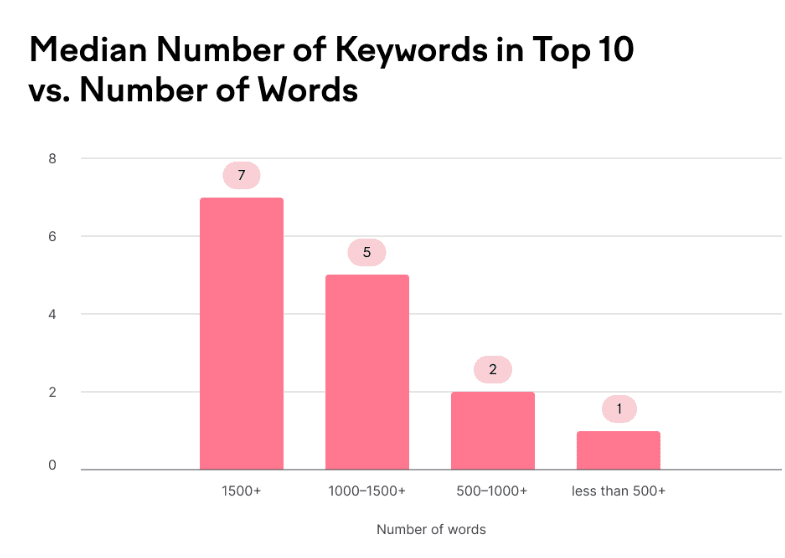
As a result, long-form content (3,500 to 5,000 words) beats shorter guides in both ranking and conversion.
These guides should include 🚐 model-specific comparisons (e.g., Winnebago View vs. Thor Quantum), ⭐ real owner reviews, and 📹 walkthrough videos to build buyer confidence.
Here’s what this means: Your affiliate content needs depth, not just product links.
Monetizing Immediate Needs via Problem-Solution Content
Now, let’s jump to how and where we will place these affiliate links.
Problem-solution articles, such as “how to fix an RV water pump” or “winterizing checklists,” capture searchers with immediate technical needs and convert at 3-6% for parts affiliate programs.
The key to success is placing specific product recommendations—such as links to your big pillar content or partner programs—directly within the instructional steps rather than grouping them at the end of the article.
Place links inside steps, not at the end.
This approach often leads to multiple purchases per visitor.
Also, adding video demonstrations provides visual proof of the solution, which can boost conversion rates by 25-40% by building authority and trust.
One UpPromote affiliate we worked with embedded product links in their “RV winterizing” tutorial.
Average order value? $127 from readers who clicked through instructional steps vs. $43 from end-of-article links.
That’s a 195% increase from smarter link placement alone.
Destination Guides and SEO Advantages
Destination-based content, like “RV camping in Yellowstone,” supports rental affiliate programs by targeting vacation planners.
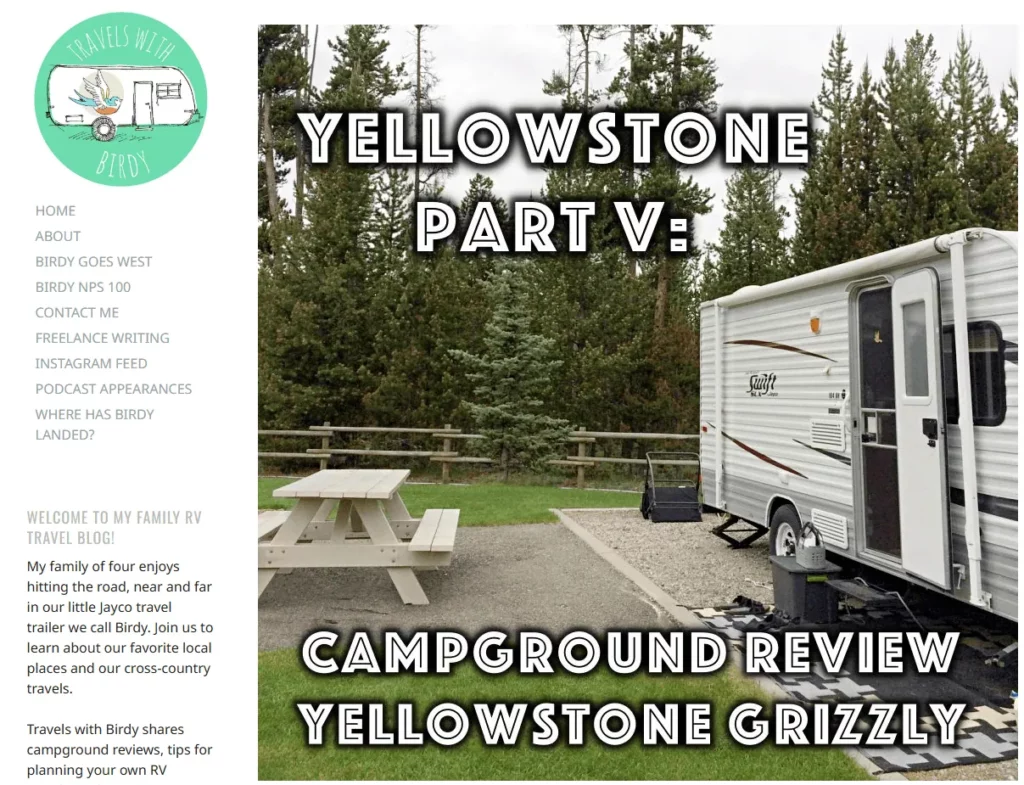
By including practical details such as seasonal timing and campground size limits, you can naturally include links to rental platforms when discussing trip planning.
This drives a 2-4% conversion rate.
But here’s the smart part: Geographic content is valuable because it has less competition than broad national topics.
These local guides often rank in the top five results within 6-12 months, compared to the 18-24 months required for more competitive terms.
The Hub-and-Spoke Model for First-Time Buyers
Finally, content aimed at first-time buyers effectively captures early-stage researchers for insurance and dealership programs.
The best approach is a “hub-and-spoke” model: a massive hub page (4,000+ words) covering general topics like types, costs, and financing.
This page then links out to deep-dive articles on specific subjects, like Class A guides or maintenance schedules.
This structure gets two to three times more organic traffic than standalone articles. It creates a natural funnel that moves readers from general research toward your specific affiliate offers.
Now let’s talk about your traffic engine.
What SEO Strategies Work Best for RV Affiliate Sites?
Fact: People are first searching online for information before buying a vehicle – 95% by Google report.
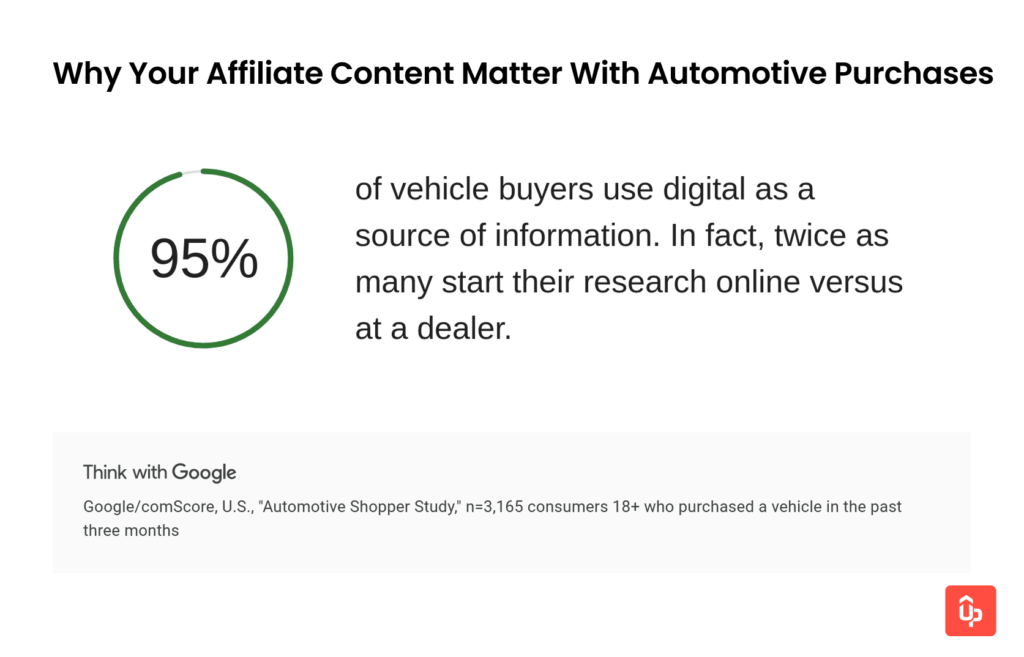
Hence, you must prioritize ranking for strategic keywords. And by strategic, we mean long-tail and specific ones.
The most successful RV affiliate sites do not rely on generic keywords. Instead, they get their best results by:
- Targeting specific long-tail searches
- Adding video to boost engagement
- Dominating less competitive local topics
When combined with a steady schedule of two to four articles per month, this approach builds sustainable traffic and higher conversion rates for your affiliate efforts.
The Long-Tail Keyword Advantage
But how do you find keywords that actually rank?
Newer affiliates should ignore broad, competitive terms like “best RV.” These terms get over 50,000 searches a month but take years to rank for.
We made this exact mistake with one of our early RV affiliates.
They targeted “best RV” for 24 months and never cracked page one.
Meanwhile, a blogger we started six months later, targeting “best Class B RV for solo traveler,s” hit page one in just eight months.
That’s when we learned: specificity beats volume every time.
A smarter strategy is to target long-tail keywords with 500 to 2,000 monthly searches.
Examples include “best Class B RV for solo travelers” or “how to install RV solar panels.”
These specific terms typically rank in the top 10 results within 6 to 12 months, compared to the 24 to 36 months required for broad terms.
More importantly, because the intent is so specific, this traffic converts at two to three times the rate of general visitors.
To find these opportunities, use tools like Ahrefs or SEMrush. Look for keywords with a Keyword Difficulty (KD) score under:
- 30 for new blog domains
- 40 for established ones
Boosting Rankings with Video Integration
Video changes everything.
Adding YouTube videos directly into your articles is one of the fastest ways to improve search performance.
Video content keeps visitors on the page longer, raising the average time-on-page from 2-3 minutes to 5-8 minutes.
This “dwell time” is a strong ranking signal; it can improve search positions by 15-30% within three to six months.
You should aim to produce 8-12 minute videos covering essential formats such as walkthroughs, problem-solving guides, and gear reviews.
For maximum SEO value, include a transcript below the video using services like Rev or Descript.
Additionally, video content attracts three to five times more backlinks than text-only articles since other websites often embed useful videos as resources.
Winning with Location-Based Content
Geographic content offers a path to quick wins because it faces much less competition than national topics.
Articles targeting specific regions, like “RV parks in Colorado” or “RV rentals in Florida,” are 50-70% easier to rank for.
To make these pages valuable, include:
- Interactive Google Maps
- Campground directories with booking links
- Seasonal advice
By building location pages that target all 50 states, you generate consistent year-round traffic.
This works because search interest spreads across different climates and locations rather than spiking only during the national peak season.
Stand Out with Schema Markup
To capture attention on search results pages, you must use schema markup.
📍 Use Product schema for RV reviews to display eye-catching details like pricing and star ratings. For example, a search for “Thor Quantum review” would show a 4.5-star rating right next to your link.
📍 Apply HowTo schema for instructional guides to feature step-by-step photos or text previews. This lets a user see the first few steps of “How to fix an RV leak” without even leaving Google.
📍 Add FAQ schema to your Q&A sections to answer common queries directly in the search list. If someone searches “Do RVs hold value?”, your answer can appear in a dropdown box right below your page title.
These technical changes help your pages earn “rich snippets.” These enhanced listings appear in up to 25% of top results.
They significantly increase visibility and can boost clicks by 20-35% without needing a higher rank.
Always verify your code with Google’s Schema Markup Testing Tool to ensure it works correctly.
Building Authority with Internal Linking
Finally, the structure of your site determines how quickly you rank. The most effective method is a “hub-and-spoke” model where you build massive “pillar” pages to cover core topics.
🔗 Focus on RV Types to give a complete overview of every category available. You can then link out to specific comparisons, such as the pros and cons of Class A versus Class C.
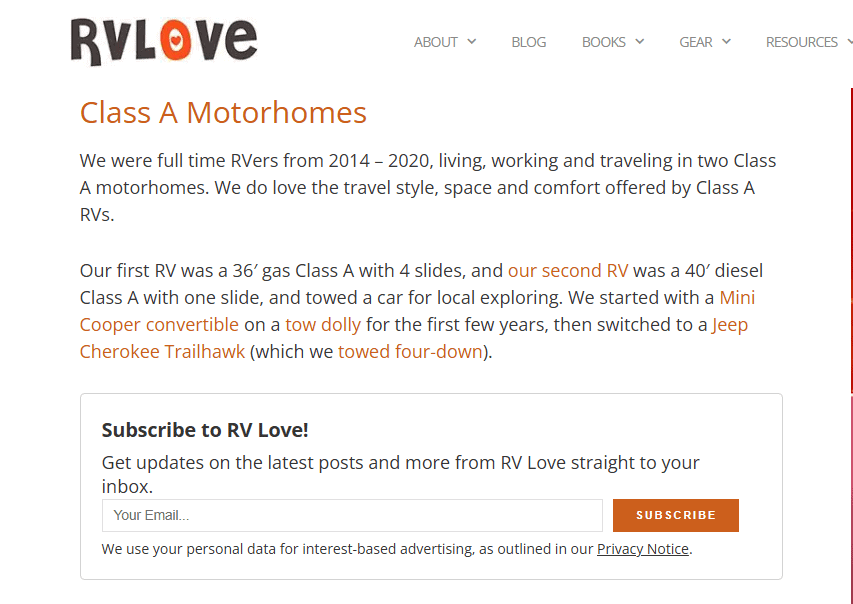
🔗 Write a Maintenance pillar to serve as the ultimate guide for repairs and upkeep. This allows you to connect to smaller support articles, like how to fix a leaky roof or check tire pressure.
🔗 Publish a Buying Guide that walks a customer through the entire purchasing process. This main page supports your individual reviews of specific models like the Winnebago View.
These pillars link to smaller articles, which then link back to the main page. This spreads authority throughout your site and helps new content rank 30-40% faster.
My take is that long-tail keywords with video are the fastest path to page one. This strategy lets new sites outrank giants in 6-12 months instead of waiting years.
You’ve got traffic. Now what?
How Should You Build an Email List for RV Affiliate Marketing?
The most effective way to build an RV affiliate email list is by offering high-value “lead magnets.”
These are downloadable tools—like checklists, guides, or calculators—that solve specific problems for your customers.
While generic sign-up forms rarely convert well, specific tools like an RV budget calculator or a free camping guide can convert 4-10% of visitors into subscribers.
This list becomes your revenue engine.
Once established, this list can generate $0.50 to $2.50 per subscriber annually through smart monthly emails promoting your affiliate offers.
Creating High-Converting Lead Magnets
Ready to turn visitors into revenue?
To capture emails, you must offer immediate value. Create downloadable assets that address specific problems, such as:
- An “Ultimate RV Packing Checklist”
- A “52-Week RV Travel Budget Spreadsheet”
- A “101 Free Camping Locations” PDF
You can easily design these as 5-15 page documents using standard templates.
While exit-intent popups are useful (converting about 2-4% of visitors), “inline content upgrades” are much stronger.
By placing a specific offer directly inside a relevant article—like offering a maintenance schedule template inside a maintenance guide—you can hit conversion rates of 5-12%.
This approach typically boosts sign-ups by 40-60% compared to a single, generic site-wide offer.
Structuring the Welcome Sequence
Once a customer subscribes, the first two weeks are critical. You should set up an automated seven-email welcome sequence sent over 14 days.
📩 Mention RV insurance services in the email to solve a boring but necessary problem. You can recommend a specific provider, like Good Sam or Roamly to earn a commission on every quote.
📩 Compare different rental platforms in email five for those looking to try before they buy. A side-by-side comparison of Outdoorsy and RVshare provides readers value while generating affiliate clicks.
📩 Suggest a list of essential gear in an email to help new owners get started. This is the perfect spot to link your top-rated hoses, surge protectors, and leveling blocks.
Because new subscribers are highly engaged, this sequence often gets open rates of 45-60%.
That is nearly double the rate of standard newsletters. A well-structured series can earn $2-$8 per new subscriber during this initial period alone.
One UpPromote affiliate even generated $4.60 per subscriber in just 30 days using this exact strategy.
Seasonal Strategy and Content Balance
For long-term retention, your promotional schedule should match the RV season. Send two to three promotional emails per month that fit the time of year:
- Spring (March-May): Highlight rental platform deals for trip planning
- Off-season (November-February): Shift focus to parts and winterizing gear
However, it is vital to balance these sales pitches with value. Aim for a 70/30 ratio where most of your emails offer genuine help, such as:
- Travel tips
- Destination guides
- Community stories
This keeps unsubscribe rates low (typically under 0.3% per email). Lists that sell too hard often see unsubscribe rates spike over 1%.
The Power of Segmentation
Finally, you can grow revenue by segmenting your audience rather than sending the same email to everyone.
Divide your list into those who own and those who rent an RV. You can further group owners by their vehicle type (such as Class A, Class C, or Fifth Wheel).
This lets you send highly relevant promotions. For example, you would send maintenance product offers to owners and rental deals to non-owners.
These targeted emails resonate more with readers. They often achieve 25-40% higher open rates and double or triple conversion rates compared to general broadcasts.
Effective segmentation can raise your average annual revenue per subscriber from $1.50 to as much as $4.50.
Key insight: Your email list isn’t a broadcast channel—it’s a relationship engine.
Maintain a 70/30 value-to-promo ratio, segment by owner vs. renter, and you’ll turn $1 subscribers into $4.50 in annual revenue.
For UpPromote affiliates, this compounds across multiple affiliate programs.
You’ve nailed content and email. But here’s the multiplier most people miss:
Which Social Media Platforms Work Best for RV Affiliate Marketing?
While many platforms offer visibility, YouTube, Instagram, and Facebook groups generate the most meaningful traffic for RV affiliates.
Among these, YouTube is the clear leader for revenue.
Why the massive difference?
YouTube generates three to five times as many affiliate clicks per follower as its competitors because its video format allows for greater depth and trust-building.
We once worked with a creator who had 40,000 Instagram followers, bringing in $620/month in affiliate commissions.
When she launched YouTube with just 12,000 subscribers, her revenue jumped to $2,850/month—over 4x more from less than one-third the audience size.
We were shocked.
That’s when we realized: follower count means nothing. Engagement is true revenue.
YouTube: The Engine of Affiliate Revenue
YouTube channels are the most powerful tool for RV affiliates. Established creators often earn between $500 and $5,000 monthly from commissions alone.
To achieve this, successful channels publish two to four videos weekly, focusing on:
- RV tours
- Product reviews
- Maintenance tutorials
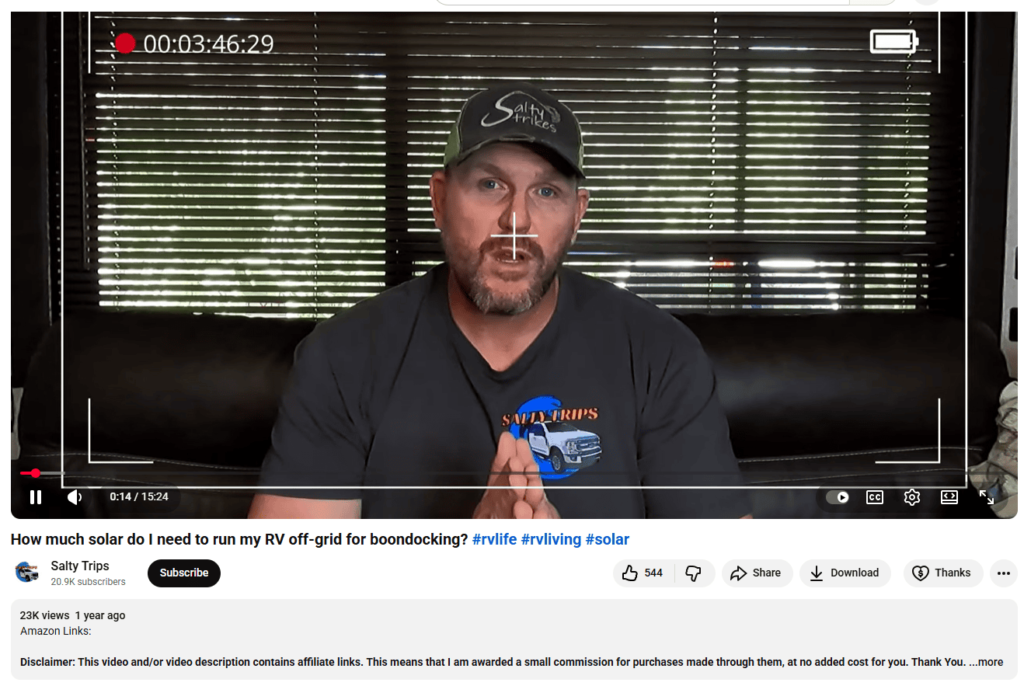
The most effective tactic is placing three to five affiliate links in the video description. Include timestamps that direct viewers to specific product mentions (e.g., “2:35 – Solar panel I use”).
Longer videos (15 to 30 minutes) beat shorter clips by 40-60% in generating clicks. Why? The extended watch time allows for detailed demos that build the trust needed for a purchase.
YouTube affiliates are your highest-value partners. They convert at 3-5x the rate of other platforms.
Instagram: Lifestyle Engagement and Stories
Instagram needs a different approach because it relies heavily on “Stories” to drive traffic. Accounts with over 10,000 followers often see 15-25% of their audience view these daily updates, making it the prime spot for affiliate links.
If you have a smaller account, simply use a “link-in-bio” tool like Linktree.
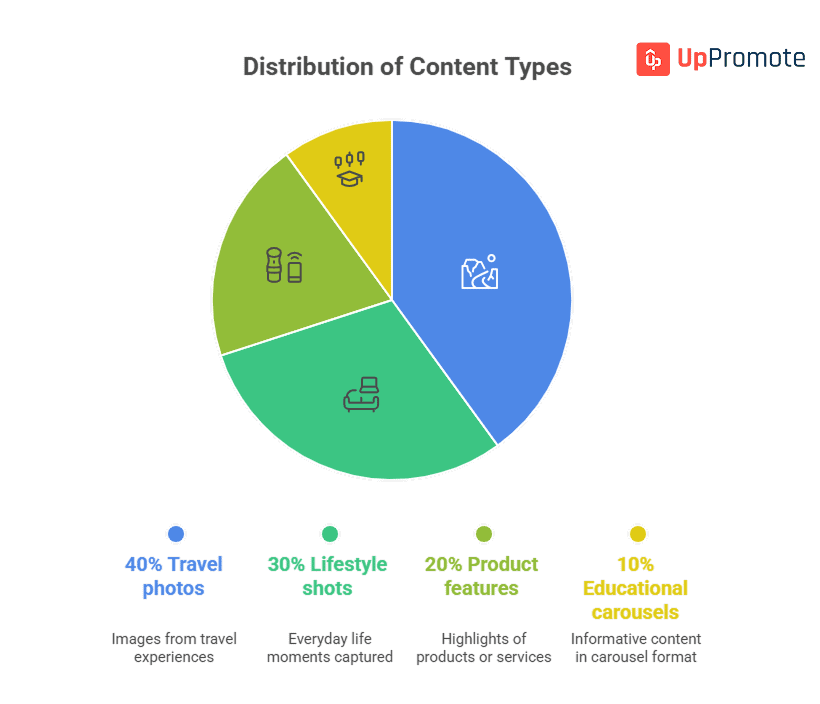
📸 Share Travel photos 40% of the time to inspire your audience with breathtaking scenery. A stunning shot of a Class C parked near Zion National Park stops the scroll instantly.
📸 Post Lifestyle shots 30% of the time to show the genuine reality of life on the road. A candid picture of your family cooking dinner in a small RV kitchen builds a personal connection.
📸 Dedicate 20% of your content to Product features that highlight gear you actually trust. You might showcase a specific water filter system and explain how it keeps your supply safe.
📸 Create Educational carousels for the final 10% to teach valuable skills. A step-by-step slide deck on “How to winterize your RV” encourages users to save and share your post.
To maximize conversion, use interactive features like poll stickers to engage viewers before recommending a product.
Asking a simple question like “Which rental platform do you prefer?” can warm up the audience and convert up to 2% of viewers into clicks.
Facebook Groups: Building Trust Through Community
Facebook works best when you join established communities rather than just posting on a page. Join large groups like “RV Living” or “RV Newbies” and focus on being helpful.
Instead of posting ads no one asked for, answer member questions with genuine advice. Include affiliate links only when relevant—such as recommending a specific water filter you personally use.
This helpful approach generates click rates of 0.3-1%, which is much higher than the 0.1-0.3% seen on direct promo posts.
Once you have a following of around 5,000 people, you should create your own branded group to build a loyal audience.
Pinterest: The Long-Term Traffic Driver
Here’s where Pinterest is different:
Unlike the fast pace of social feeds, Pinterest acts as a long-term traffic engine.
Pins link directly to your blog content and have a lifespan of 12-18 months. Compare that to just 24-48 hours for an Instagram post.
By creating 10-15 vertical pins monthly that link to your articles, you can build a steady source of traffic.
With consistent effort, a site getting 500 monthly visits from Pinterest can grow to 2,000-5,000 visits within 18 months, often without needing extra work on the older pins.
TikTok: High Volume, Lower Conversion
TikTok is best for brand awareness rather than direct sales.
Creators here can reach huge numbers—often 10,000 to 100,000 views even for new accounts—by using trending audio and hashtags like #RVLife.
However, direct links are not allowed in videos and the audience is generally younger. As a result, conversion rates are 30-50% lower than on YouTube.
The strategy here is volume.
Post three to seven short videos weekly featuring “life hacks” or quick reviews.
Then, use your bio link to funnel this traffic to your blog where the actual selling happens.
Bottom line: YouTube generates 3-5x more affiliate revenue per follower than Instagram, Facebook, or TikTok combined.
If you’re managing RV affiliate programs, recruit YouTube creators first. Master one platform before spreading thin across others.
But timing? That’s the real money multiplier.
What Are the Seasonal Trends in RV Affiliate Marketing?
Want to know the secret to consistent earnings?
RV affiliate marketing is driven by seasonal cycles. The overall peak happens between March and September, accounting for 60-75% of annual commissions.
However, success requires knowing that different sub-niches peak at different times:
- Rental bookings surge from April to June
- Parts sales dominate the winter months (November through March)
- Insurance quotes spike during the renewal period (January to March)
So when exactly should you publish?
To capture this traffic, you must publish content 60 to 90 days before these peaks happen.
Our client made a painful mistake in Year 1. They published all their winter maintenance guides in late November, thinking they were “just in time” for the season.
By the time the articles ranked in mid-January, the winterizing season was nearly over.
Revenue that quarter? A disappointing $380 instead of the projected $3,400.
That’s when our team learned the hard way: publish 60-90 days early, not when you feel ready.
The Rental Revenue Cycle
Affiliate commissions for RV rentals peak from April through September.
May through July are critical, often generating 40-60% of annual rental earnings as families finalize their summer plans.
Search volume for terms like “RV rental [destination]” jumps by 200-400% between February and May. Because of this, you cannot wait until summer to publish.
Instead, you should produce rental comparison articles and destination guides from January to March.
While the winter months (November through February) see commissions drop by 50-70%, this downtime is the ideal window to create content for the upcoming surge.
Counter-Cyclical Opportunities in Parts and Accessories
Unlike rentals, the market for parts and accessories often peaks during the off-season.
Sales are highest from November through March as owners focus on maintenance and upgrades while their vehicles are in storage.
During this period, commissions are often 30-40% higher than in summer.
To capture this, you should target maintenance keywords—like “RV water heater replacement” or “winterizing RV supplies”—in September and October.
As the weather warms, the focus shifts to travel accessories like portable grills.
These see a sales peak from April to August. Therefore, content for these items should be published between February and April.
Timing the Insurance and Warranty Market
Insurance and warranty programs run on a different schedule.
RV insurance quote requests spike from January to March, matching the annual policy renewal season.
This single quarter can generate 35-50% of your annual insurance commissions.
To rank in time for this rush, you must publish comparison guides targeting keywords like “cheap RV insurance” from October to December.
This is just before search volume jumps by 150-300%.
Extended warranties are different. Interest tends to peak from August to October as owners of older RVs look for coverage when their manufacturer warranties expire.
The Proactive Publishing Strategy
To maximize revenue, you must stick to a 60-90 day lead time for content production. Your editorial calendar should look like this:
- January – March: Rental content
- February – April: Summer gear reviews
- August – September: Maintenance guides
- October – December: Insurance articles
You should maintain a baseline of “evergreen” content (like buying guides) at a rate of two to four articles monthly.
However, you need to add two to three seasonal articles per month during these critical windows.
My take: Seasonal timing is your competitive edge in RV affiliate marketing.
Publish 60-90 days before peaks to rank when search volume explodes. Late content doesn’t just rank poorly—it misses the entire revenue window.
For UpPromote affiliates managing multiple RV programs (rentals, parts, insurance), this calendar is non-negotiable.
FAQs
What is an RV affiliate program?
An RV affiliate program allows you to earn commissions by promoting RV-related products or services—such as motorhomes, travel trailers, RV rentals, accessories, insurance, or campgrounds—using affiliate links. You earn a commission when a user completes a purchase or booking through your link.
How much can you earn from RV affiliate programs?
Earnings vary widely. Physical RV accessories often pay 4%–10% per sale, while high-ticket items like RV rentals, insurance, or memberships can pay $50–$300+ per conversion. Because RV products are expensive, even a small commission rate can generate strong revenue.
Are RV affiliate programs good for beginners?
Yes, especially for content creators who enjoy travel, van life, camping, or outdoor lifestyles. While competition exists, RV affiliates benefit from high purchase intent, long research cycles, and strong evergreen demand.
Do RV affiliate programs have long cookie durations?
Many do. Cookie durations typically range from 30 to 90 days, and some RV rental or membership programs offer even longer tracking due to the extended decision-making process.
Can you promote RV affiliate programs without owning an RV?
Yes. You can create research-based content, comparison guides, buyer’s guides, and curated lists using verified sources, user reviews, and expert insights. However, first-hand experience can significantly improve trust and conversions.
Are RV affiliate programs seasonal?
They are somewhat seasonal, with peak demand in spring and summer, but many niches—such as RV insurance, accessories, solar systems, and maintenance—generate year-round income.
Is RV affiliate marketing competitive?
Moderately competitive. Broad keywords are crowded, but there are many underserved sub-niches such as small RVs, seniors, remote work setups, boondocking gear, or family RV travel.
What should you look for before joining an RV affiliate program?
Key factors include commission rate, cookie duration, brand reputation, conversion tracking quality, and whether the program supports content creators with banners, deep links, or data feeds.
Final Thoughts
If you’re running RV affiliate programs, here’s what separates profitable affiliates from struggling ones:
Content depth beats promotional fluff. Focus on comparison articles and buyer’s guides that convert at 3-7x higher rates.
Long-tail keywords with video integration get you to page one in 6-12 months instead of 24-36 months for broad terms.
Your email list is a relationship engine, not a megaphone. Maintain 70/30 value-to-promo ratio and segment by customer type.
YouTube affiliates convert at 3-5x the rate of Instagram or Facebook. Recruit video creators first.
Publish 60-90 days before seasonal peaks. Late content is wasted content.
The RV affiliate niche is massive, seasonal, and highly profitable for who understand these patterns.
Use segmentation tools to route rental traffic to Tier 1 partners, parts buyers to Tier 2, and insurance seekers to Tier 3.
Start with one seasonal content push. Track what ranks. Then scale what works.

Ellie Tran, a seasoned SEO content writer with three years of experience in the eCommerce world. Being a part of the UpPromote team, Ellie wants to assist Shopify merchants in achieving success through useful content & actionable insights.Ellie's commitment to learning never stops; she's always eager to gain more knowledge about SEO and content marketing to create valuable content for users. When she's not working on content, Ellie enjoys baking and exploring new places.