












TL;DR
Lifetime commission means your affiliate earns on every future purchase a referred customer makes, not just the first order. The model shifts affiliate behavior from chasing clicks to referring buyers who actually stay.
- Incentive shift: Affiliates optimize for customer quality, not just volume
- Best fit: Subscription, consumable, and high-repeat-purchase products
- Safe rate range: 5–10% lifetime for most ecommerce stores
- Margin rule: Keep lifetime commission under 25–30% of gross profit per customer
- Risk control: Start with top performers only, then expand after 2–3 months of data
Standard affiliate programs pay commission once. The affiliate refers a customer, the customer buys, the affiliate earns 15 percent, and the deal is done.
If that customer comes back six more times over the next year, the affiliate sees nothing from those repeat orders.
Since nothing comes from repeat sales, the incentive tilts in one direction. Affiliates will chase volume — more clicks, more first-time buyers — no matter whether those customers ever return.
Yet lifetime commission can flip that pattern. Under this model, the affiliate earns on every purchase the referred customer makes, not just the first.
A customer who reorders every two months, for instance, would create steady income for the affiliate over the full span of the relationship. Once that link exists, the affiliate has a real reason to care whether the buyer stays.
The idea is not new. SaaS companies proved it first, and recurring commissions of 20 to 40 percent are now standard across software affiliate programs.
Ecommerce is following the same path. Subscription brands in supplements, beauty, and coffee now offer lifetime commissions to compete for stronger partners.
This guide compares four commission models and walks through the margin math. It also covers setup, rollout strategy, and five cases where lifetime commission may be the wrong choice.
What Are Lifetime Commissions? (And How They Differ from Standard)
Most affiliate programs pay commission on the first order and nothing after. Lifetime commission changes that.
The affiliate earns on every future purchase the referred customer makes, and that income can continue as long as the customer keeps buying.
In practice, though, the choice is not binary. Several models sit between pay-once and pay-forever, and each one shapes how long the affiliate stays invested in the referred customer.
| Model | How It Works | Affiliate Earns | Merchant Cost | Best For |
| First-order-only (standard) | Commission on first purchase only | 1x per customer | Lowest | Low-repeat products, one-time purchases |
| Time-limited recurring | Commission on all orders within 6–12 months | Multiple (capped) | Medium | Testing recurring model, moderate-repeat |
| Lifetime (full recurring) | Commission on all orders, no time limit | Unlimited | Highest | Subscription, consumables, high-repeat |
| Hybrid (higher first + lower recurring) | Higher rate on first order, lower rate on repeats | 1x high + ongoing low | Medium-high | Balanced acquisition + retention incentive |
Those differences might look small in a table. They compound fast in real dollars.
Let’s take an affiliate named Sarah who refers a customer to an 80 dollar skincare serum that gets reordered every two months.
| Model | Sarah Earns Year 1 | Sarah Earns Year 2 | Total (2 Years) |
| First-order-only (15%) | $12 (1 order) | $0 | $12 |
| Time-limited 12mo (10%) | $48 (6 orders × $8) | $0 | $48 |
| Lifetime (10%) | $48 | $48 | $96 |
| Hybrid (20% first + 5% repeat) | $16 + $20 = $36 | $24 | $60 |
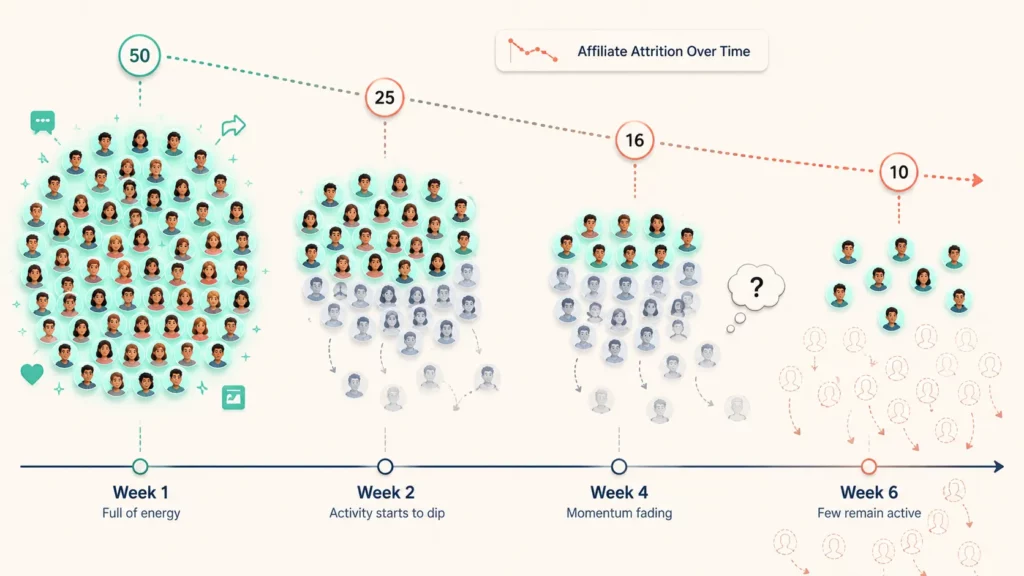
Under first-order-only at 15 percent, Sarah would earn 12 dollars on that first sale and nothing after. Lifetime at 10 percent would pay her 48 dollars in year one and another 48 in year two.
In other words, a single referral could produce 96 dollars over two years instead of 12. The math alone turns a one-time payout into a steady income stream for the affiliate.
The hybrid model sits between those two poles. Sarah would earn 20 percent on the first order and 5 percent on every repeat, landing at 60 dollars over two years. That falls below pure lifetime, yet still far exceeds first-order-only.
As a result, each model tends to drive a different behavior. First-order-only affiliates will chase clicks, since their income ends after one sale.
Lifetime affiliates, by contrast, can afford to focus on quality. They refer buyers who need the product, because every reorder adds to their earnings.
That shift goes beyond the commission math. When affiliates care whether a customer stays, they tend to build better content and avoid steep discounts that attract one-time bargain hunters.
Over time, the program draws partners who think in relationships rather than quick volume.
To support that flexibility, some affiliate tools let merchants set up both lifetime tracking and hybrid rates in one place.
UpPromote, for example, lets merchants turn on lifetime commission tracking. Once a referred customer places a first order, every future order from that buyer earns commission for the affiliate.
A separate first-order rate means you could offer 20 percent on the initial sale and 5 percent on repeats. That hybrid setup runs inside a single program with no extra manual work.
When Should You Use Lifetime Commissions? (Decision Framework)
The right commission model depends on how often your customers come back, not on what sounds generous. Lifetime commission works best when buyers reorder on a steady cycle.
Subscription boxes, skincare refills, coffee, and pet food all fit that mold. One-time purchases like furniture or electronics, meanwhile, will rarely make the ongoing cost worth paying.
That difference is why product type matters more than any other factor. Stores with high-repeat items can spread commission across many orders, whereas stores selling one-time goods would end up paying a share on a buyer who may never return.
| Store Type | Repeat Rate | Recommended Model | Why |
| Subscription (coffee, supplements, beauty box) | Very high (monthly) | Lifetime or time-limited 12mo | High LTV covers ongoing commission |
| Consumables (skincare, food, pet supplies) | High (2–6x/year) | Time-limited 6–12mo or hybrid | Repeat is steady, commission stays bounded |
| Fashion/apparel | Medium (1–3x/year) | Hybrid (higher first + lower repeat) | Some repeat, not guaranteed |
| Electronics/gadgets | Low (0–1x/year) | First-order-only | Rarely repurchase — lifetime cost with no return |
| Jewelry/accessories | Low–medium | First-order-only or hybrid | Occasion-driven, hard to predict repeat |
| Home/furniture | Very low | First-order-only | Almost never repurchase in the same category |
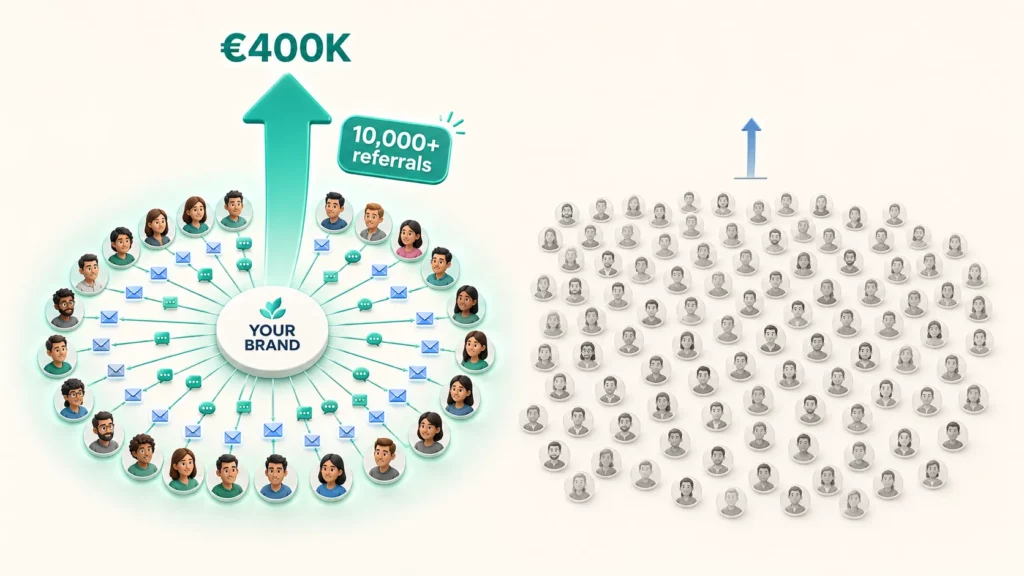
If the table leaves you between two models, three factors will usually narrow the decision.
Repeat rate carries the most weight. If your customers buy at least twice a year, the affiliate would earn across multiple orders. Lifetime or recurring commission could be worth testing.
Customer lifetime value narrows the answer further. When LTV reaches three times the first order or more, your margins can likely support an ongoing 5 to 10 percent commission.
Even if those first two factors check out, partner behavior may still tip the final decision.
Lifetime commission ties the affiliate’s income to retention, since every reorder adds to their earnings. First-order-only, by contrast, rewards the click regardless of what happens next.
If all three answers point to yes, lifetime is a strong fit. A supplement brand where customers reorder every six weeks, for instance, would clear all three.
Repeat rate is high, and LTV sits well above the first order. The product gives affiliates a reason to refer buyers who will stick around.
Two out of three may point toward a hybrid or time-limited model instead. A fashion brand with one to two purchases per year might land here. Repeat exists but stays far from certain, so hybrid could be the safer bet.
One or zero would suggest staying with first-order-only until the repeat data shifts.
Whichever group your store falls into, consider testing before you commit. A 6 to 12 month window will show whether referred customers come back, without locking you into an open-ended cost.
How to Calculate If Lifetime Commission Is Affordable (Margin Math)
Before you turn on lifetime commission, the margin math needs to check out. A useful benchmark: keep lifetime commission under 25 to 30 percent of your gross profit per customer.
Beyond that threshold, the ongoing cost may erode margins faster than the extra retention can make up for.
The calculation itself is simple. Four inputs will tell you whether lifetime works for your store: average order value, purchase frequency, gross margin, and commission rate.
Start with a customer who spends 80 dollars per order and buys four times a year. That puts 12-month revenue at 320 dollars per customer.
At a 60 percent gross margin, gross profit comes to 192 dollars. A 10 percent lifetime rate on that 320 dollars in annual revenue would cost 32 dollars per year.
Subtract the 32 from 192, and 160 dollars remains. Commission runs at about 17 percent of gross profit, well inside the safe zone.
| Gross Margin | LTV (12mo) | Commission at 5% | Commission at 10% | Commission at 15% | Commission as % of Profit |
| 40% | $320 | $16 | $32 | $48 | 12–37% |
| 50% | $320 | $16 | $32 | $48 | 10–30% |
| 60% | $320 | $16 | $32 | $48 | 8–25% |
| 70% | $320 | $16 | $32 | $48 | 7–21% |
Now compare that with first-order-only at 15 percent. The merchant would pay 12 dollars once on the first 80 dollar sale and keep 180 dollars in first-year profit. That is 20 dollars more than lifetime.
The 20 dollar annual gap might look like a point for first-order-only. It only holds, though, if both models attract the same quality of customer.
They usually do not. A lifetime affiliate has a reason to refer buyers who repurchase, since every repeat order adds income.
If a lifetime-referred customer stays two years and places eight orders, the merchant pays 64 dollars in commission on 640 dollars in revenue. Cost per dollar earned: 10 percent.
A first-order-only affiliate at a higher rate, say 20 percent, may refer a buyer who purchases once and leaves. Commission: 16 dollars on 80 dollars. Cost per dollar earned: 20 percent.
In other words, lifetime can end up costing less per dollar of revenue when the customers it brings in stay.
The higher annual spend buys a higher-quality referral.
As a guideline, rates of 5 to 10 percent lifetime will work for most ecommerce margins above 40 percent. Below that level, the math gets tight, and first-order-only or a flat fee may be the safer path.
How to Set Up Lifetime Commissions for Your Shopify Store
Getting lifetime commission live takes minutes. Deciding who should get it, and when, is the part that requires more thought.
The core setup is simple. Once a customer places a first order through an affiliate’s link or coupon, that customer becomes connected to the affiliate.
Every future purchase from that buyer earns commission, even if the customer never clicks the affiliate link again. That connection can run for as long as the customer keeps buying.
It does not have to last forever, though. You can set an auto-disconnect window, say 90 days of no activity, so the link expires if the customer stops ordering.
Affiliate software like UpPromote let you adjust that window to match your reorder cycle. A 60 day window may suit fast consumables, while 180 days could work better for slower product lines.
Subscription products add another layer. When a customer subscribes through an affiliate link, every renewal should count as a referral order.
Without the right tracking, those recurring charges may go unrecorded. The affiliate misses commission on revenue they helped create.
UpPromote handles this through built-in connections with Recharge, Bold, Appstle, Seal, and Recurpay. Each renewal gets tracked as a referral order, so the affiliate earns on every payment cycle.
With the setup in place, the rollout matters more than the config. Turning on lifetime for every affiliate on day one is the most common mistake.
A safer path is to start with your top 5 to 10 partners. These are the affiliates who have already shown they can drive steady sales.
You can offer them a lifetime as a reward, and watch the results for 60 to 90 days. During that window, check whether lifetime affiliates refer customers who come back more often than those on first-order-only.
If the data looks positive and commission stays within the 25 percent margin threshold, the model is working. You could then expand lifetime to a broader group.
3 Strategies to Maximize Lifetime Commission ROI
A flat lifetime rate for every affiliate sounds generous but bleeds margin. The fix is to shape the rate, the eligibility, and the duration so the cost stays controlled.
Adjust the Rate with a Hybrid Model
The simplest change targets the rate itself. Instead of paying the same percentage on every order, you can split commission into two layers: a higher rate on the first purchase and a lower rate on repeats.
A program might offer 20 percent on the first order and 5 percent on each one after.
On the skincare example from earlier, Sarah would earn 16 dollars up front and 4 dollars per repeat. Her two-year total lands at 60 dollars instead of 96 under flat lifetime.
That structure lowers the per-order cost. It does not, however, solve a second issue: every affiliate in the program still qualifies, including those who rarely produce results.
Limit Who Gets It with a Tiered Rollout
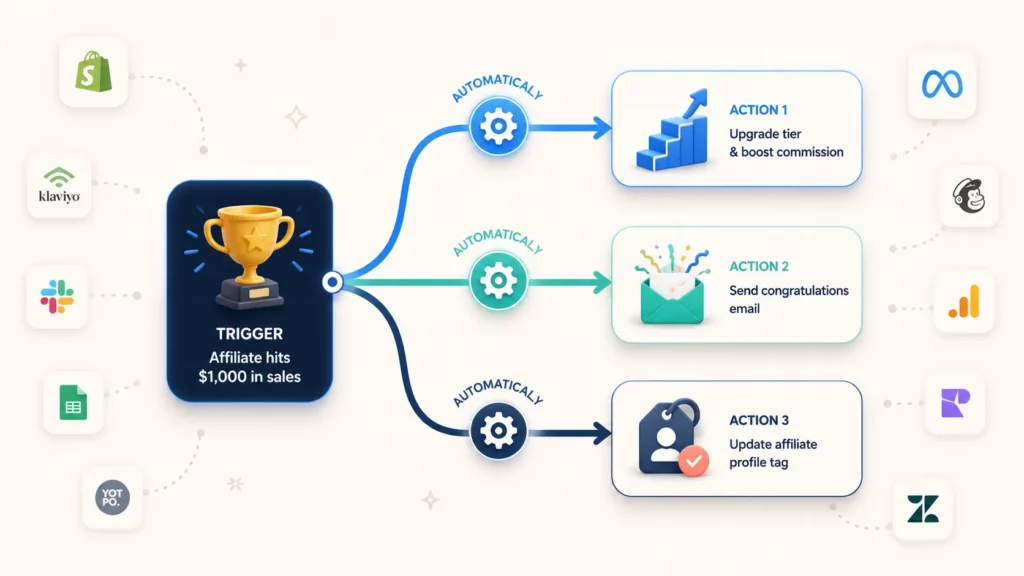
A tiered approach addresses that gap. New partners start on first-order-only, and those who cross a performance threshold graduate into the lifetime tier.
The threshold could be 50 referral sales, 5,000 dollars in total revenue, or any target that signals steady effort. Affiliates who never reach it stay on first-order-only, which still pays them per sale without the ongoing cost.
Controlling the rate and the eligibility handles most of the risk. One factor remains, though: how long the merchant keeps paying once the affiliate’s role in the relationship fades.
Cap the Duration with a Sunset Clause
A sunset clause sets a time limit on lifetime commission. The affiliate earns on every order within a fixed window, say 12 or 24 months, and nothing beyond it.
The reasoning is clear. After a year or two, the customer’s loyalty belongs to the brand, not the affiliate. That buyer would likely keep ordering whether or not the affiliate continues to promote.
For the affiliate, a 24 month window still feels generous. For the merchant, it caps total cost per referral at a figure that can be planned in advance.
All three adjustments can work on their own. Combined, they create a structure where lifetime commission rewards the right partners, at the right rate, for the right length of time.
When NOT to Use Lifetime Commissions
Lifetime commission is a retention tool, not a default setting. Forcing it where it does not belong can drain margin without improving results.
If your product rarely gets repurchased, the ongoing cost adds up with no matching revenue.
If margins sit below 40 percent, even a small lifetime rate may eat into profit faster than the referrals can grow it.
| Scenario | Why Lifetime Is a Poor Fit | Alternative |
| Low-repeat products (electronics, furniture) | Customer buys once — lifetime adds cost with no extra revenue | First-order-only at a higher rate |
| Very low margin (below 30%) | Ongoing commission erodes already thin profit on every reorder | First-order-only or a flat fee per referral |
| Coupon-site affiliates | Attract discount-seekers who shop once and leave — lifetime pays out on buyers who never return | First-order-only with a new-customer-only rule |
| Brand new program (under 6 months) | No LTV or repeat rate data yet — cannot calculate whether lifetime is affordable | Start first-order-only, revisit after 6 months of data |
| Very high commission rate (above 20%) | 20% on all future orders is rarely sustainable long-term | Lower to 8–10% if switching to lifetime, or keep 20% first-order-only |
Coupon-site affiliates present a similar mismatch. They tend to attract discount-driven buyers who shop once and leave. Lifetime commission would pay out on a customer who may never return.
First-order-only with a new-customer-only rule is often the better fit for that channel.
New programs face a different risk. Without at least six months of data, you cannot calculate LTV or repeat rate with any confidence. First-order-only gives you the baseline you need before taking on an ongoing cost.
If you scored one or zero on the three-question test from the decision framework, first-order-only is likely the right starting point. You can always add lifetime later once the data supports it.
Frequently Asked Questions
Does “lifetime” mean the affiliate earns forever?
Not exactly. Lifetime refers to the life of the customer relationship, not a calendar guarantee. If the customer stops buying, there are no orders to earn from. Merchants can also set a sunset window or require the affiliate to stay active in the program.
Is lifetime commission much more expensive than first-order?
It depends on repeat rate. If a customer buys once a year, lifetime at 10 percent costs roughly the same as first-order at 10 percent. If the customer buys six times a year, the cost multiplies. The margin calculator in this guide can help you model the difference.
Should I offer lifetime commission to all affiliates?
In most cases, no. A tiered approach works better. Start every affiliate on first-order-only and reserve lifetime for those who cross a performance threshold. That way, only proven partners earn the ongoing rate, and your cost stays tied to results.
If an affiliate leaves the program, do I still owe lifetime commission?
That depends on your agreement terms. The recommended approach is to stop lifetime commission when the affiliate account is closed. Include a clear termination clause in your affiliate agreement so both sides know what happens if the partnership ends.
What is the difference between recurring commission and lifetime commission?
The two terms overlap. Recurring usually refers to commission on subscription renewals. Lifetime covers all future purchases, including one-time add-ons. For subscription products, recurring is the more precise label. For general ecommerce, lifetime is the broader term.
Is a hybrid model better than pure lifetime?
For most ecommerce stores, yes. A hybrid model pays a higher rate on the first order and a lower rate on repeats. That gives affiliates a strong reason to drive new sales while keeping the ongoing cost predictable. Total spend often lands close to pure lifetime, but the distribution favors early acquisition.

Ellie Tran, a seasoned SEO content writer with three years of experience in the eCommerce world. Being a part of the UpPromote team, Ellie wants to assist Shopify merchants in achieving success through useful content & actionable insights.Ellie's commitment to learning never stops; she's always eager to gain more knowledge about SEO and content marketing to create valuable content for users. When she's not working on content, Ellie enjoys baking and exploring new places.

![How to Use Shopify Functions with Your Affiliate Program [2026 Guide]](https://static.uppromote.com/wp-content/uploads/2026/06/how-to-use-shopify-functions-with-affiliate-program-300x169.webp)

![How to Prevent Affiliate Fraud on Shopify: Self-Referral, Coupon Abuse & More [2026]](https://static.uppromote.com/wp-content/uploads/2026/06/how-to-prevent-affiliate-fraud-on-shopify-300x169.webp)