











TL;DR
Most affiliates ghost after month one, not because commission is too low, but because communication stops.
The fix is a system, not a bigger commission check: monthly newsletters, personal check-ins, tiered rewards, product seeding, and insider access.
When partners do go dormant, a four-step re-activation sequence brings back 10–20% or more with the right message at the right time.
- Top cause of ghosting: Content fatigue and silence, not commission
- Minimum viable effort: 1 newsletter per month (30–45 min to create)
- Gamification impact: Monthly contests can boost referral orders by 87%
- Re-activation window: Start at day 30 inactive, not day 90
- Total time investment: 3–5 hours per month for the full calendar
You recruit 50 affiliates. Month one, 15 are posting. Month three, six. By month six, three are left.
That decline isn’t unusual. Just 5% of affiliates typically generate 80% of the work and results in a given program. The drop-off is built into the model.
The difference between programs that stall and programs that grow is what happens after signup. Successful programs keep expanding that top 5% while retaining the middle 60% who are willing but need a reason to stay.
Affiliates who don’t make their first sale within 30 days are less likely to become active at all (Rewardful). The window is short, and silence from your side closes it faster than low commission ever will.
In this blog, we will introduce six engagement strategies, a four-step re-activation sequence for dormant partners, and a communication calendar you can copy and start using this month.
Why Do Most Affiliates Stop Promoting After Month One?
Most affiliates don’t leave because commission is too low. They leave because they run out of content ideas, stop hearing from you, or both.
Those two problems feed each other. When an affiliate hits writer’s block and gets no support, quitting feels like the only option.
The pattern follows a predictable arc from signup to silence.
| Phase | Timeline | Typical activity | What happens |
| Honeymoon | Week 1–2 | 60–70% active | Excited, first post goes up, dashboard explored |
| Reality check | Week 3–4 | 40–50% active | Sales slower than expected, effort feels high |
| Drop-off | Month 2–3 | 20–30% active | Motivation fades, program forgotten |
| Dormant | Month 4+ | 10–15% active | No posts, no clicks, no communication |
| Core performers | Ongoing | 5–10% active | Consistent output, growing results |
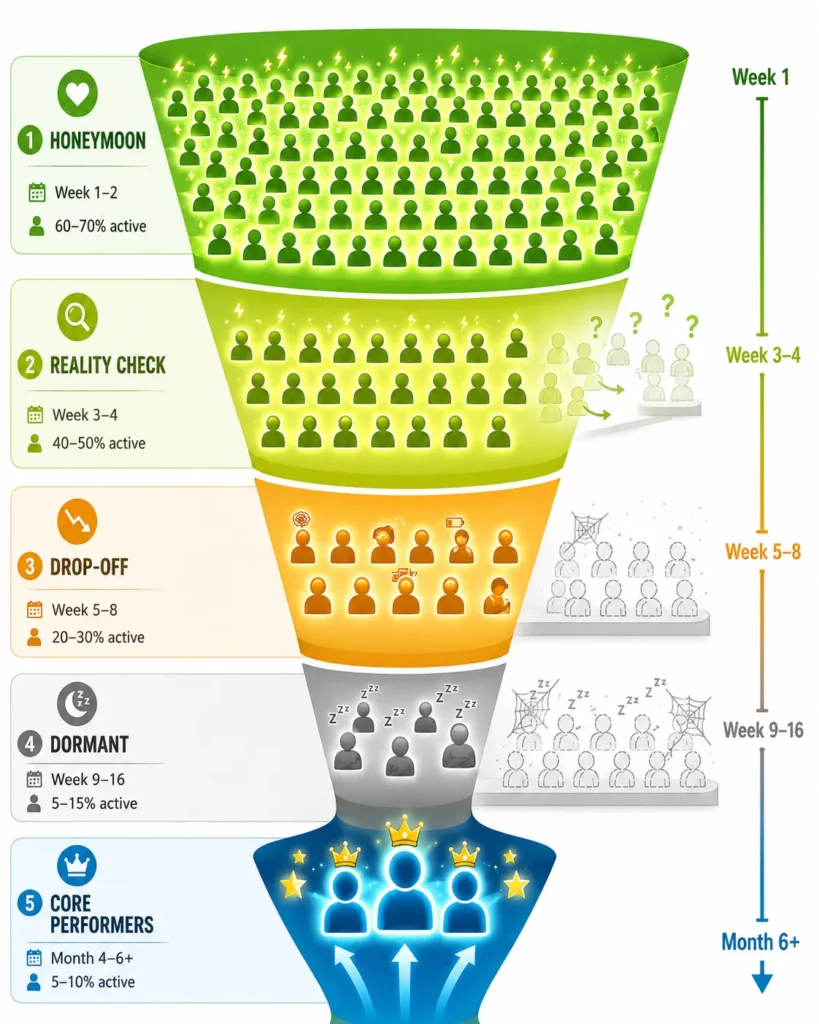
By month four, most programs run on a handful of core performers while the majority sit idle. The reasons behind that drop matter more than the numbers.
Content fatigue is the first domino. The initial post writes itself: an unboxing, a first impression, a product review.
The second and third posts take more effort. By the tenth, most affiliates have no idea what to say, and without fresh angles from you, they stop.
Silence from your side compounds the problem. An affiliate who struggles with content but receives a monthly email with new ideas still has a reason to try again.
An affiliate who hears nothing assumes the program forgot about them.
Soundbrenner addressed both problems directly. The brand supports inactive affiliates with content suggestions and updates on new products, keeping the conversation alive even when sales slow down.
What Should a Monthly Affiliate Newsletter Include?
A single monthly email is the highest-leverage habit you can build into your affiliate program. It takes 30–45 minutes to create and keeps your brand top of mind for every partner.
That same email tackles content fatigue, the top reason affiliates ghost, by handing partners fresh ideas each month.
Here is a five-section structure that works for most programs.
| Section | What to include | Why it matters |
| Top performer shoutout | Name the month’s best affiliate and their result | Public recognition motivates everyone, not just the winner |
| Product or brand update | New launches, restocks, packaging changes | Gives affiliates something new to talk about |
| Content ideas for this month | 2–3 angles tied to seasonal moments or trends | Kills content fatigue before it starts |
| Program news | Commission changes, upcoming sales, bonus offers | Keeps partners informed so they can plan ahead |
| Quick conversion tip | One tactical suggestion (e.g., “Stories with a link sticker convert 3x more than feed posts”) | Practical value that justifies opening the email |
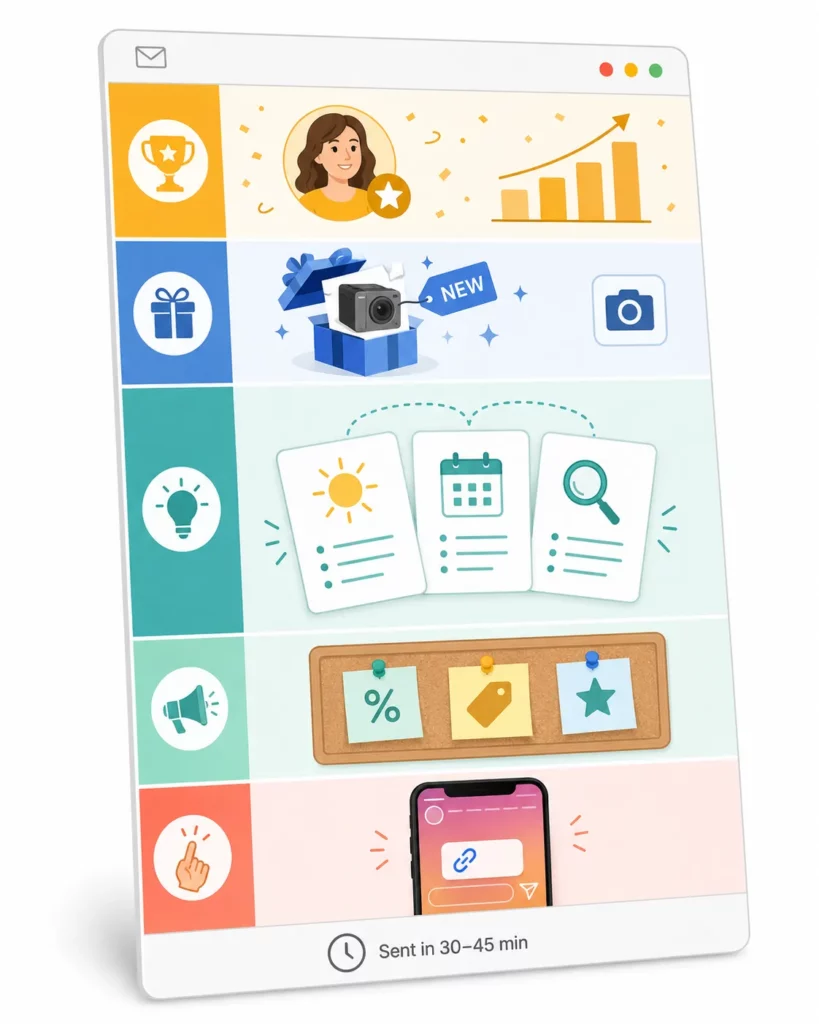
The content ideas row does the most work. Affiliates who receive a monthly list of angles tied to seasons, trends, and evergreen formats rarely run out of things to post.
A beauty brand might suggest “summer skincare essentials” in June and “honest 6-month review” in July. A fitness brand swaps in “New Year reset” and “back-to-school quick routines.”
The specifics change by niche, but the principle holds: give affiliates the angle, and they create the content.
Before major sales like BFCM or Valentine’s Day, you can send a separate campaign brief. Include sale dates, discount amounts, suggested captions, and early-access details so affiliates can prepare content in advance.
Seasonal campaign emails with promotion dates and early creative access tend to drive the single highest-revenue window of the year.
Moreover, monthly newsletters paired with dedicated support made a measurable difference for Nubeo Watches. The watch brand pairs monthly newsletters with phone-based affiliate support. In February 2025, affiliates drove 30% of total sales.
Sending that newsletter doesn’t require a separate email platform. UpPromote includes built-in bulk email on its free plan, so you can reach your full affiliate list without adding another tool.
When Should You Send Personal Check-Ins and to Whom?
A newsletter reaches everyone. A personal check-in tells one affiliate that you notice their work and care about their results.
Both matter, but check-ins build the kind of loyalty that keeps top performers from switching to a competitor’s program.
The right frequency depends on what each affiliate is doing for you.
| Tier | Who | Frequency | Format | What to say |
| Top 10% | Highest earners | Monthly | Personal email or call | “How can we help you sell more?” |
| Active middle | Posting but not top tier | Quarterly | Personal email | “Great month — here’s what top affiliates do differently” |
| New signups | First 30 days | Day 3, 7, 14, 30 | Automated sequence | Welcome tips, portal walkthrough, first-sale nudge |
| Dormant | No activity 30+ days | Triggered | Re-activation email | See the re-activation sequence later in this article |
Recognition is the other half of retention, and it costs nothing. A public shoutout in your monthly newsletter (“Congrats to Sarah — $2,400 in referral sales this month!”) motivates the winner and shows every other affiliate what’s possible.
A private thank-you when an affiliate crosses a milestone builds the kind of bond no commission rate can match. The moments worth marking: 10 sales, $500 earned, a six-month anniversary.
The highest-impact move is sharing affiliate content on your brand’s own channels.
When you repost a creator’s review on your Instagram or TikTok, they get exposure to your audience. That kind of support turns a business deal into a real partnership.
How Do Tiered Rewards and Gamification Improve Affiliate Retention?
Commission tiers give affiliates a reason to grow. Gamification gives them a reason to compete.
Together, they turn a flat payout structure into a progression system where partners see a clear path forward.
The simplest mechanic is a monthly leaderboard. Share the top 10 affiliates by referral count in your newsletter, and you create healthy competition at zero cost. No prizes needed: bragging rights alone keep many partners posting.
Small financial incentives can raise the stakes. A $50 bonus at 25 sales, $100 at 50, and $200 at 100 gives affiliates visible milestones to chase.
The amounts are modest, but the pull of being close to a threshold drives real effort. UpPromote can set those bonus targets and track each affiliate’s progress toward them automatically.
Non-monetary perks add a layer that cash alone can’t replicate. Partners who earn their way to higher tiers feel invested in the brand, not just the payout.
| Milestone | Perk |
| 10 sales | Free product every month |
| 25 sales | Early access to new launches |
| 50 sales | Exclusive affiliate-only discount for personal use |
| 100 sales | Featured on brand website and social channels |
| 250 sales | VIP invite to brand events |
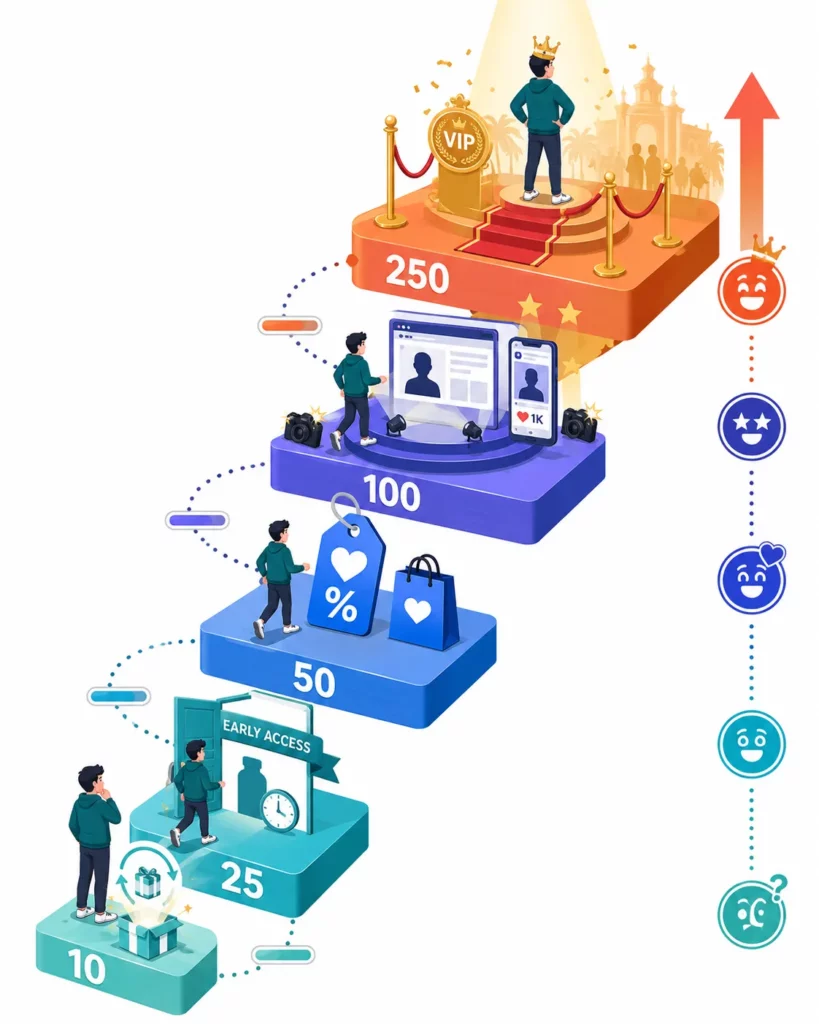
Time-limited contests bring all of these together with urgency.
A prompt like “most sales in November wins a $500 prize bundle” gives the leaderboard a deadline and every affiliate a reason to push harder during peak season.
Holbrook Pickleball runs exactly this kind of playbook. The sports brand combines monthly sales contests with product gifts for top performers.
The brand used UpPromote’s auto tier commission to move affiliates to a higher program when they cross a sales or earnings target. No spreadsheet needed.
What Makes Top Affiliates Feel Like Brand Insiders?
The highest-performing affiliates in any program share one trait: they feel like part of the team, not outside contractors paid per sale.
That sense of belonging separates a partner who promotes for years from one who drifts after a few months.
Product seeding is the most direct way to build that connection. Ship a new product before public launch. The affiliate gets an exclusive content angle and a reminder that your brand exists.
The cost is COGS only. A product that retails for $80 might cost $24 to ship. Ten packages a month runs $240, and each one is nearly guaranteed to produce a post.
The intangible perks matter just as much. Sharing behind-the-scenes content, production photos, and upcoming plans makes affiliates feel trusted with information the public doesn’t have.
You can ask for their input on packaging, product names, or campaign direction deepens that trust. A private group on Slack or WhatsApp takes it further by letting affiliates connect with each other and share tips.
How Do You Re-Activate Dormant Affiliates? (4-Step Email Sequence)
An affiliate with no clicks or sales for 30 days is dormant, not gone. They already agreed to your terms, understand your product, and opted into your communications.
That makes them warmer than any cold recruit. A structured email sequence can bring a meaningful share of them back.
The reactivation rate for affiliates dormant three to six months is often 10–20% with a well-crafted email. A four-step sequence spaced over 30 days pushes that number higher.
The escalation pattern: concern, then value, then incentive, then a respectful close.
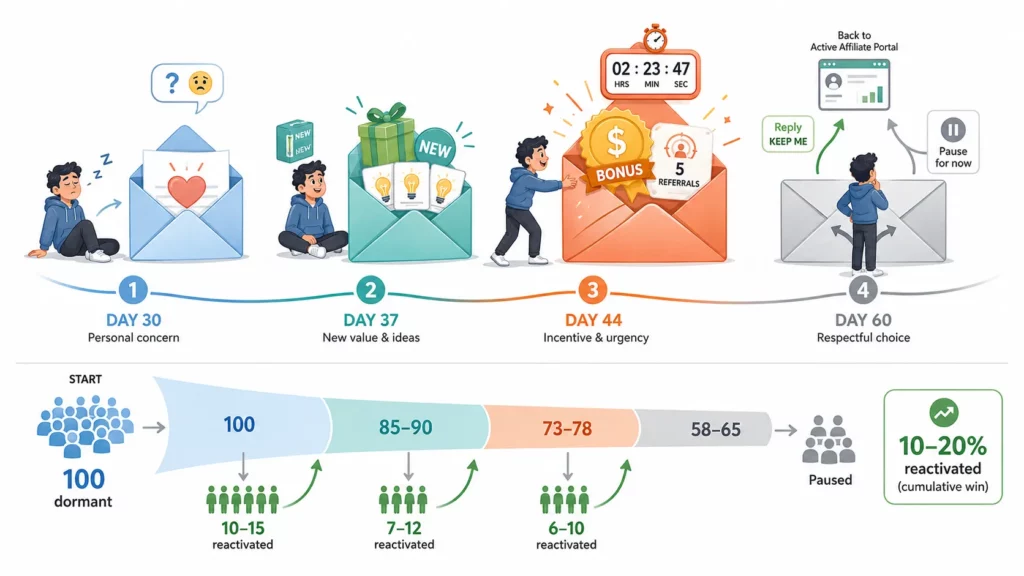
Step 1 (Day 30): Personal concern
Subject line: “[Name], everything okay?” The tone is soft. You’re checking in, not calling them out. Include a quick link back to their portal and affiliate link as a reminder.
Step 2 (Day 37): New value
Subject line: “New [product] + fresh content ideas for [month].” Share something that didn’t exist when they went quiet: a product launch, a seasonal angle, an updated asset.
If you can offer to ship a free product, this is the moment.
Step 3 (Day 44): Financial incentive
Subject line: “Bonus offer — [amount] for your next 5 referrals.” A time-limited bonus gives dormant affiliates a reason to act now. Keep the target small enough to feel reachable.
Step 4 (Day 60): Respectful close
Subject line: “Still interested in [brand] affiliate program?” Be direct: “Reply ‘keep me’ to stay active, or we’ll pause your account. You can rejoin anytime.”
That final email gives the affiliate an easy out while cleaning your roster of partners who won’t return.
The pattern matters more than the wording. Each step raises the stakes without burning the relationship. Affiliates who respond at Step 1 need no incentive.
Those who need Step 3 get one. And those who never respond get paused, not deleted, because circumstances change and some will come back months later.
What Does an Affiliate Communication Calendar Look Like?
Every strategy in this article maps to a specific timing, audience, and channel. The calendar below pulls them into one schedule you can follow month by month.
| Timing | Communication | Audience | Channel |
| 1st of every month | Monthly newsletter (5 sections) | All affiliates | |
| Day 3, 7, 14, 30 | New affiliate onboarding sequence | New signups | Automated email |
| Monthly | Top performer recognition | Top 10% | Personal email |
| Quarterly | Personal check-in | Active middle 50% | Personal email |
| Day 30–60 inactive | Re-activation sequence (4 steps) | Dormant | |
| Before major sales | Campaign brief (BFCM, Valentine’s, etc.) | All affiliates | |
| Product launch | New product announcement + content ideas | All affiliates | Email + product shipment |
| Monthly | Product seeding | Top 20% performers | Product shipment |
| Quarterly | Re-activation product package | Dormant | Product shipment |
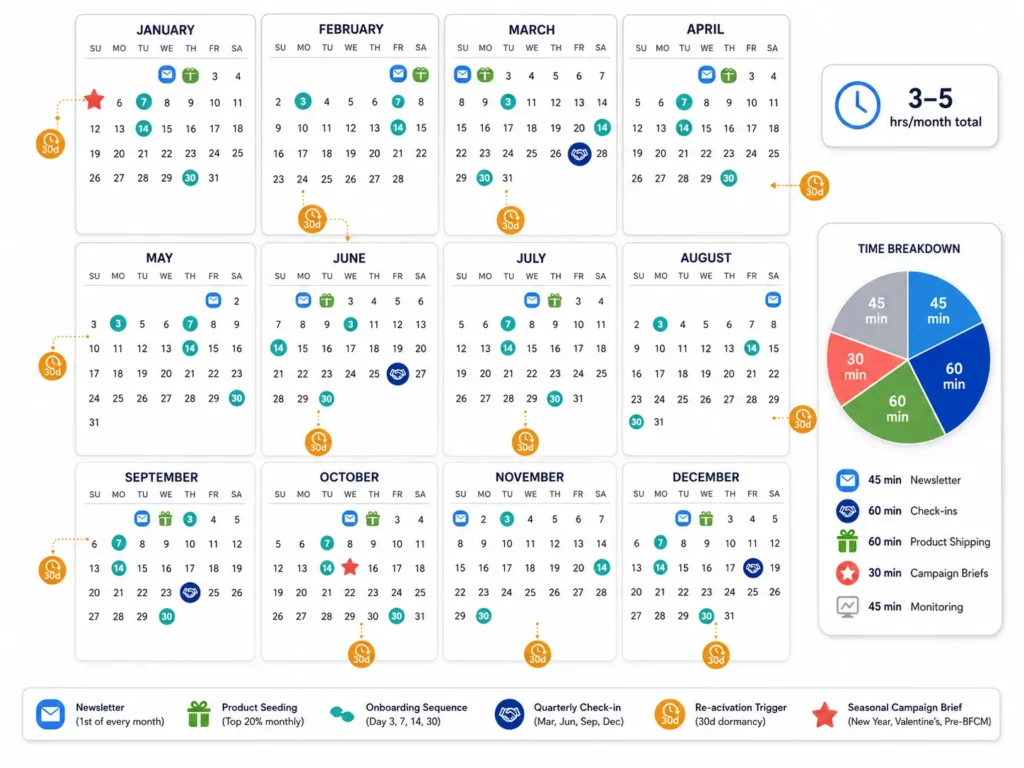
The total time runs 3–5 hours per month. The newsletter takes about 45 minutes, check-ins and recognition add an hour, and product shipping takes another hour.
Campaign briefs add 30 minutes when seasonal sales approach. Monitoring fills the rest.
What Changed in Affiliate Engagement in 2026?
The biggest shift in 2026 is not a new tool. It’s a mindset change: the industry is moving from “recruit more” to “retain the ones you have.”
One engaged partner outperforms ten inactive ones, and program managers are acting on it. Three changes reflect that shift.
The most visible change is community. Private Slack and Discord groups where affiliates share tips are now expected, not a bonus. Peer support cuts your workload and builds loyalty a rival’s higher rate can’t match.
The format of communication is shifting too. A two-minute Loom recording walks affiliates through a new product faster than a written email, and some brands report higher open rates with a video thumbnail in the subject line.
On the tools side, automation is closing the gap between spotting risk and acting on it. Platforms now send nudges when clicks drop or a milestone hits, so you can step in before a partner goes quiet.
Frequently Asked Questions
How often should you communicate with affiliates?
Monthly is the minimum. A single newsletter on the first of each month keeps your brand top of mind without overwhelming anyone. Add quarterly personal check-ins for active partners and triggered emails for new signups and dormant affiliates.
Should you remove affiliates who have been inactive for six months or longer?
Run a re-activation sequence first. If there’s no response, pause the account rather than deleting it. Paused affiliates can rejoin later, and you can remove anyone still inactive after 12 months.
How much does it cost to send free products to affiliates?
The cost is your product’s COGS, not the retail price. A product that sells for $80 might cost $24 to ship. Ten packages a month to top performers runs roughly $240, and each package is likely to generate at least one piece of content.
Do affiliate leaderboards create conflict between partners?
Rarely. Showing a top-10 list by referral count creates healthy competition. Avoid displaying exact earnings, which can cause privacy concerns. Celebrate improvement alongside absolute numbers to keep mid-tier affiliates motivated.
Should you use email or Slack for affiliate communication?
Email handles newsletters, campaign briefs, and re-activation sequences. Slack or Discord adds real-time questions and peer tips. Start email-only, then add a group chat once you have 20 or more active partners.
How should you respond when an affiliate asks for a higher commission rate?
Base it on performance data. Top performers may warrant a tier upgrade or custom rate. Mid-tier affiliates benefit from seeing the path to the next level. Inactive affiliates should focus on generating sales before discussing rates.

Ellie Tran, a seasoned SEO content writer with three years of experience in the eCommerce world. Being a part of the UpPromote team, Ellie wants to assist Shopify merchants in achieving success through useful content & actionable insights.Ellie's commitment to learning never stops; she's always eager to gain more knowledge about SEO and content marketing to create valuable content for users. When she's not working on content, Ellie enjoys baking and exploring new places.
![How to Use Shopify Functions with Your Affiliate Program [2026 Guide]](https://static.uppromote.com/wp-content/uploads/2026/06/how-to-use-shopify-functions-with-affiliate-program-300x169.webp)

![How to Prevent Affiliate Fraud on Shopify: Self-Referral, Coupon Abuse & More [2026]](https://static.uppromote.com/wp-content/uploads/2026/06/how-to-prevent-affiliate-fraud-on-shopify-300x169.webp)