











TL;DR
Zero or low affiliate sales almost always traces back to one of ten specific problems, and most are fixable within two weeks.
- Most likely cause: Not enough affiliates — under 20 is too small a sample to judge results
- Most overlooked cause: Low store conversion — affiliates send traffic, but the store doesn’t convert it
- Quickest diagnostic: A 5-minute tracking test rules out technical failures before anything else
- Fix timeline: A 2-week sprint covers foundations, reactivation, and new recruitment
- Success benchmarks: 30+ affiliates, 30%+ active, 1–3% conversion rate on affiliate traffic
You installed the app, set a commission rate, and invited a handful of partners. One month later, the dashboard reads zero sales, zero conversions, and barely any clicks.
A quiet first month doesn’t signal failure, though. Most affiliate programs need two to three months of active management before generating consistent revenue.
Zero results past the ramp-up window, however, point to a real problem. Patience may not be the issue anymore. Something specific in your program, your store, or your affiliate base could be blocking sales.
The breakdown usually falls into one of two camps. On the program side: tracking gaps, weak incentives, and low visibility. On the store side: audience mismatch and landing-page friction (ReferralCandy, 2025).
Identifying which side is broken can save you weeks, because the fixes look completely different.
This blog will showcase ten root problems ordered by likelihood, from the most common (not enough affiliates) to the most fundamental (product-market fit).
A diagnostic flowchart will help you pinpoint your specific issue in five minutes. Each problem links to a fix you can start this week.
The Diagnostic Flowchart: Find Your Problem in 5 Minutes
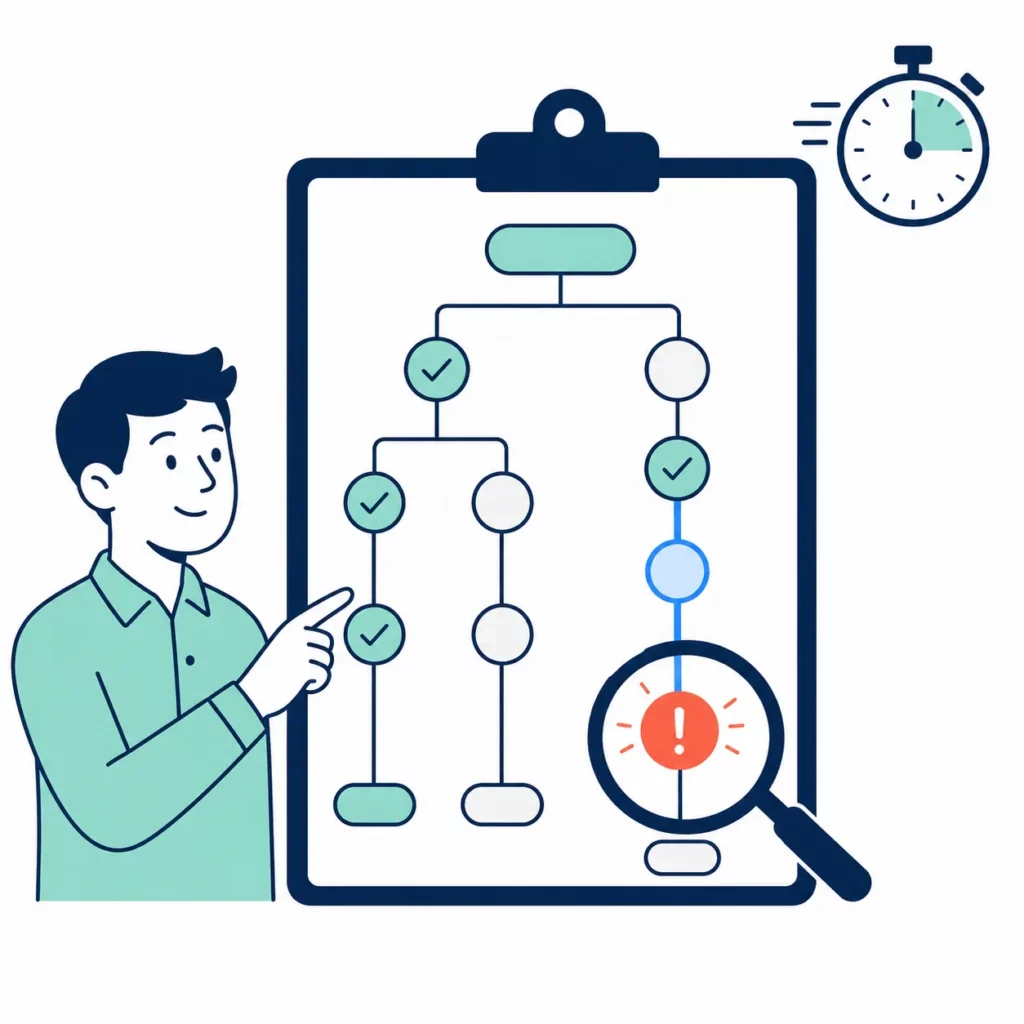
Before working through each problem on its own, you can narrow the search with nine yes-or-no questions. Your first “no” answer points to the issue most likely blocking your sales.
Answer each question based on your current dashboard data. If you are unsure about a metric, check your affiliate app’s reports before moving on.
| Step | Question | If NO | If YES |
| 1 | Do you have 20+ affiliates signed up? | → Problem #1: Not Enough Affiliates | Continue ↓ |
| 2 | Are 20%+ of them actively promoting? | → Problem #2: Affiliates Not Promoting | Continue ↓ |
| 3 | Is your commission rate at or above the industry average? | → Problem #3: Commission Too Low | Continue ↓ |
| 4 | Did you provide marketing materials and a brand guide? | → Problem #4: No Marketing Materials | Continue ↓ |
| 5 | Is tracking working? (Test: click link → buy → order appears?) | → Problem #5: Tracking Broken | Continue ↓ |
| 6 | Are affiliates generating clicks but no sales? | Continue ↓ | → Problem #6: Store Conversion Issue |
| 7 | Are your affiliates’ audiences relevant to your product? | → Problem #7: Wrong Affiliates | Continue ↓ |
| 8 | Are affiliate codes showing up on coupon sites? | Continue ↓ | → Problem #8: Coupon Leaks |
| 9 | Can potential affiliates easily find your program? | → Problem #9: Program Invisible | Continue ↓ |
| 10 | Does your product sell through any channel? | → Problem #10: Product-Market Fit Issue | All clear — revisit Problems #1–9 |
In fact, most programs stall because of one or two specific issues, not all ten.
Fixing the first “no” often clears problems below it. Recruiting more affiliates (Problem #1), for example, raises the odds of finding active promoters (Problem #2).
Once you identify your primary problem, jump to the matching section for a diagnosis and fix. After applying the fix, re-run this flowchart to check whether a second issue remains.
Problem #1: Not Enough Affiliates (Volume Issue)
The most common reason for zero affiliate sales is the simplest: not enough people are promoting. Fewer than twenty affiliates means too small a sample to draw conclusions.
| Metric | Concerning | OK | Good |
| Total affiliates signed up | <10 | 10–30 | 30+ |
| New signups per month | <3 | 3–10 | 10+ |
| Active (promoted ≥1 time) | <3 | 3–8 | 8+ |
If your numbers land in the “concerning” column, the program itself may not be the problem. Most merchants launch by inviting a handful of friends or customers, send a few emails, and stop there. The pipeline dries up fast.
The fix is opening multiple channels at once:
- Direct outreach: Send twenty to thirty short emails per week to partners in your niche.
- Marketplace discovery: List your program where affiliates browse for offers. UpPromote’s Marketplace listing, for example, puts your program in front of partners looking for brands to join.
- Post-purchase invitations: Invite recent buyers to share a referral link right after checkout, while excitement is fresh.
- Website visibility: Add an “Affiliates” link in your site footer so visitors can find and join on their own.
With steady outreach, most programs can add ten to fifteen new signups in two weeks. Once you reach thirty partners, you will have enough data to judge real performance.
Problem #2: Affiliates Signed Up But Not Promoting (Activation Issue)
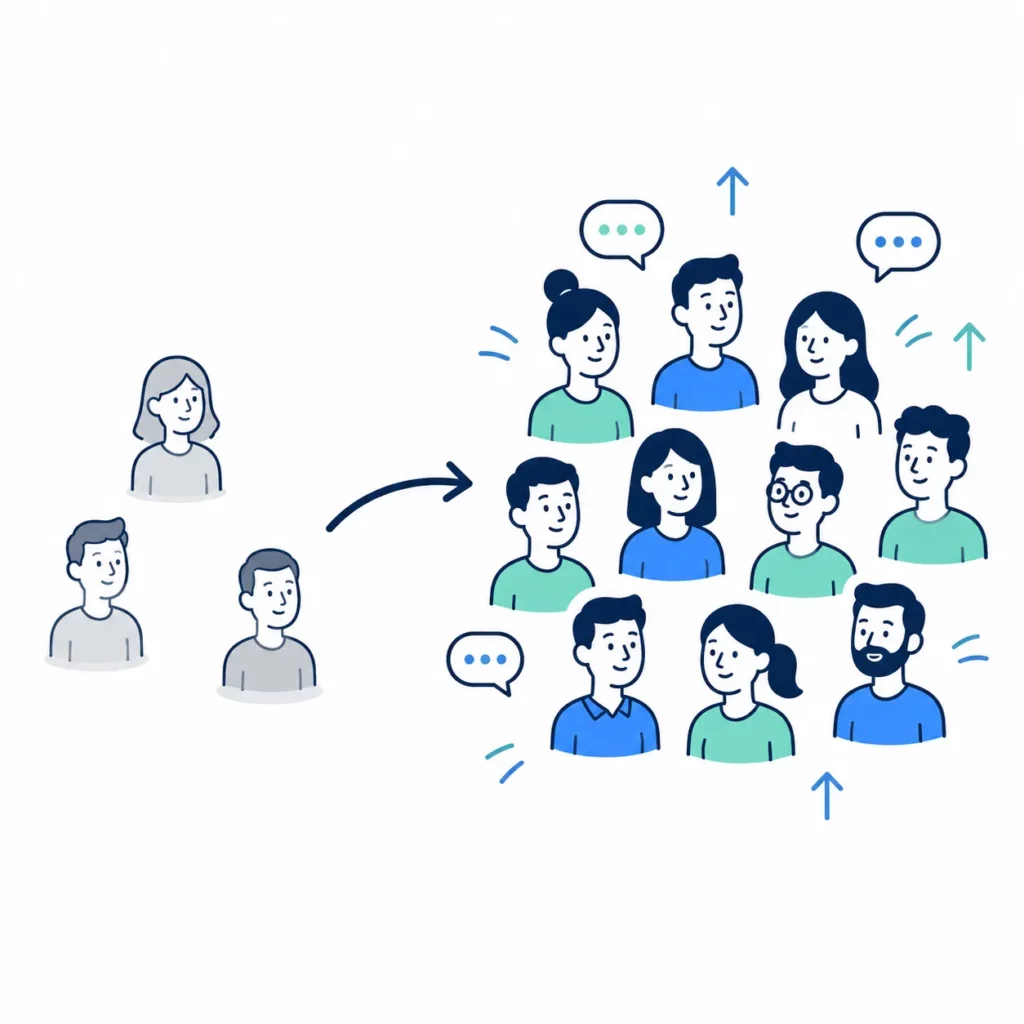
You have thirty affiliates on the roster, yet only five have posted anything.
An activation rate above fifty percent is strong. Anything below thirty percent, however, usually points to a gap in onboarding or support.
| Active Rate | Assessment | Action |
| <10% | Critical — onboarding likely broken | Overhaul welcome sequence |
| 10–30% | Below average | Improve materials and follow-ups |
| 30–50% | Average — room to grow | Optimize incentives and engagement |
| 50%+ | Strong | Reward top performers, scale |
Affiliates usually go quiet for one of five reasons, and they tend to build on each other:
- No onboarding sequence. The affiliate signs up, hears nothing, and forgets within days. A welcome email with clear next steps can prevent this.
- No marketing materials. Even motivated affiliates stall without ready-made content to post. UpPromote’s Media gallery, for instance, lets you upload images and videos that affiliates can grab and use.
- Commission too low for the effort. Five percent on a $40 product earns $2 per sale. Few people will create content for that return.
- No product in hand. Influencers who haven’t tried the product can’t promote it with real feeling. Shipping a free sample within 48 hours of approval closes this gap.
- No follow-up. A check-in email at Day 7 and Day 14 often brings quiet partners back. Tools like UpPromote include a Bulk email feature for this, sending messages to your full list without a separate platform.
In this case, a short reactivation email often does more than any incentive change:
Subject: Quick check-in — need anything, [Name]?
Hi [Name],
Just checking in! You joined [X weeks] ago and we
haven’t seen any activity yet — totally fine if
you’ve been busy.
Quick reminder:
→ Your affiliate link: [LINK]
→ Your discount code: [CODE]
→ Marketing materials: [PORTAL LINK]
If anything is blocking you, I’m here to help.
Even a quick story or post can get things rolling.
[Your name]Indeed, personal follow-up works. Soundbrenner built a habit of reaching out to inactive affiliates with content ideas and product updates. Their affiliate program now accounts for 7-15% of the brand’s total revenue.
Problem #3: Commission Rate Too Low (Incentive Issue)
Affiliates often compare programs before deciding where to spend their effort. A rate below the industry average for your niche could explain why partners sign up but never post.
If your rate falls below the niche average, that gap alone might be blocking promotion. Raising to at least the median is the first step.
You can usually spot a commission problem. Affiliates see the rate and never post, partners ask you directly to raise it, or competitors in your niche offer much better terms.
When the evidence points here, the fix usually goes beyond raising the base number:
- Match the industry median at minimum. Below-average rates lose affiliates before they start.
- Add a first-sale bonus. A one-time $25–$50 reward for the first referral creates urgency to post early, even if the base rate stays modest.
- Build a tiered structure. Affiliates who see their rate climb after hitting a milestone stay motivated longer. UpPromote’s Auto tier commission, for example, moves partners to a higher program once they cross a sales target you set.
- Offer perks beyond cash. Free products, early access, or exclusive drops add value that a percentage alone cannot match.
Problem #4: No Marketing Materials (Enablement Issue)
Even willing affiliates freeze when they open a blank page and have no idea what to post. Without product images, sample captions, or a basic brand guide, most partners will do nothing at all.
A quick check can tell you whether this is the gap:
- Do affiliates have product images to use?
- Do they have sample captions or talking points?
- Do they have a one-page brand voice guide?
- Do they have video angles or short scripts?
If two or more answers are no, materials are likely the bottleneck.
The fix takes less time than most merchants expect. Ten product images, five ready-to-use captions, and a one-page brand guide form a minimum viable kit. Building one takes about one to two hours.
Once uploaded to your affiliate portal, every partner can access and use the kit right away. The logic is simple: the easier you make an affiliate’s job, the more likely they will promote.
Problem #5: Tracking Is Broken (Technical Issue)
Affiliates say they are promoting, yet the dashboard shows zero clicks and zero sales.
Before looking at behavior or commission rates, you should rule out the technical side first. A five-minute test can settle the question.
Tracking failures happen more often than most merchants realize. A theme update, a changed checkout setting, or a missing app permission can break the link between click and sale without any warning.
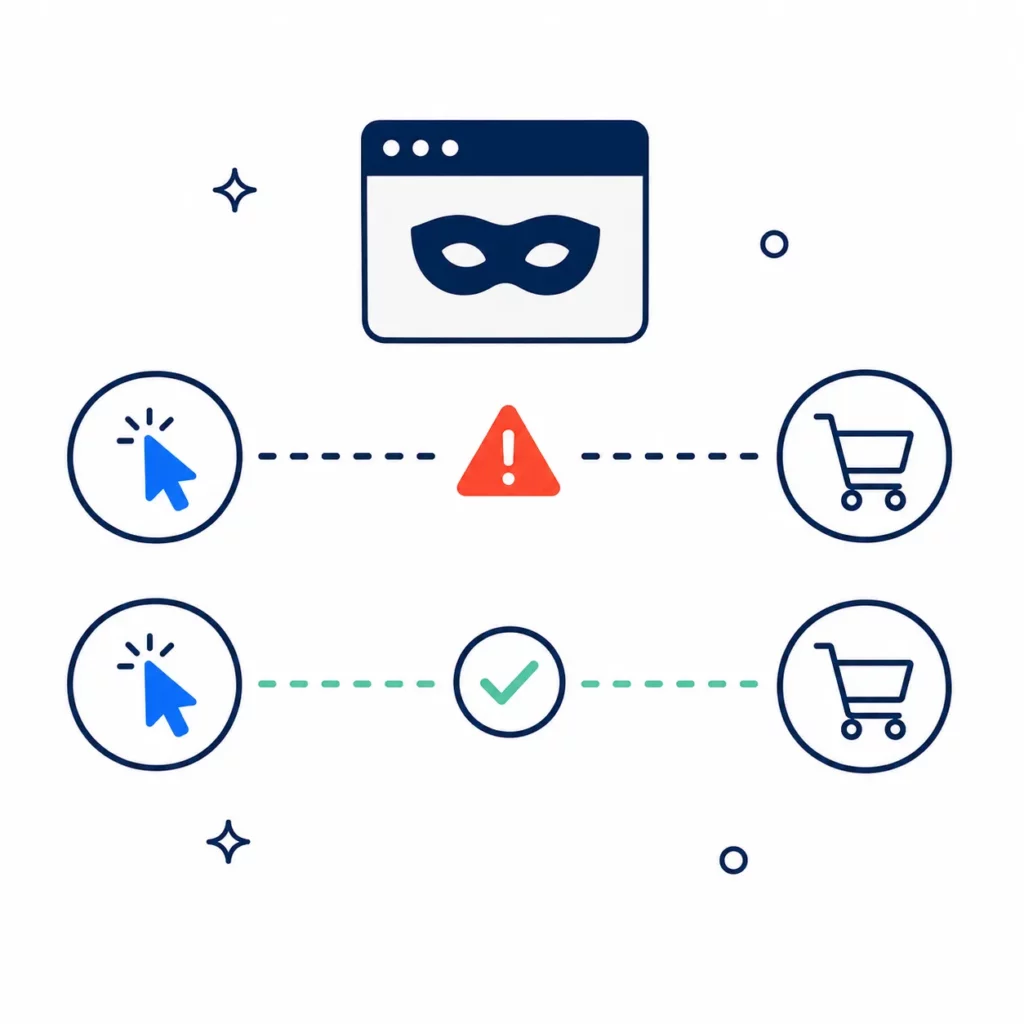
The test takes five minutes with an incognito browser:
☐ 1. Copy an affiliate test link
☐ 2. Open an incognito/private browser window
☐ 3. Click the link and land on your store
☐ 4. Add a product to cart and complete checkout
☐ 5. Check the dashboard: did the order appear?
☐ 6. Check: was the commission calculated correctly?
☐ 7. Test a coupon code separately (same steps)
ALL PASS → Tracking works. Problem is elsewhere.
ANY FAIL → Tracking broken. Fix before anything else.
If every step passes, tracking works and you should move to the next problem on this list. Otherwise, here are the most common causes and fixes:
| Issue | Symptom | Fix |
| App permissions incomplete | Zero orders syncing | Reinstall app, re-approve all permissions |
| Webhook not firing | Clicks tracked, orders not | Check Shopify Settings for active webhooks |
| Cookie blocked by browser | Link tracked, purchase not | Enable coupon tracking as backup |
| Discount code conflict | Code shows “invalid” | Verify code exists and is active in Shopify Discounts |
| Theme or checkout conflict | Partial tracking | Contact app support with your test results |
When link-based tracking fails because of cookie blocks, coupon tracking can serve as a solid fallback. Most affiliate apps support both methods, so enabling the backup usually takes just a few minutes.
Problem #6: Store Conversion Rate Too Low (Store Issue — Not Affiliate)
Affiliates are sending clicks, but those clicks are not turning into sales. When the dashboard shows traffic with near-zero conversions, the problem is usually the store itself rather than the affiliate program.
Affiliates drive visitors. Your store has to close the sale.
A quick check can confirm this. If affiliate-referred clicks sit above 200 per month while sales stay near zero, affiliates are doing their job. The conversion gap sits on your side.
| Traffic Source | Typical Conversion Rate |
| Email marketing | 4–6% |
| Organic search | 3–5% |
| Affiliate traffic | 1–3% |
| Organic social media | 0.5–2% |
| Paid social (cold traffic) | 0.5–1.5% |
Affiliate traffic converting below 0.5% is a strong signal that the store needs work, not the affiliate program.
Five store-side issues account for most of these lost sales:
- Landing page mismatch. The affiliate promises a discount, but the link lands on the homepage. Affiliate links should point to the product page with the discount already applied.
- No social proof. Visitors arriving through an affiliate link have no prior trust in your brand. Reviews, customer photos, and trust badges can reduce that barrier.
- Broken mobile experience. Most ecommerce traffic now comes from phones, yet many stores still deliver a slow or clunky mobile checkout that loses visitors before they buy.
- Price surprise at checkout. An unexpected shipping fee at the final step drives cart abandonment. Transparent pricing or a free shipping threshold reduces this drop-off.
- Checkout friction. Required account creation or extra form fields push buyers toward the exit. Guest checkout and express payment options like Shop Pay keep the process moving.
While you work on these fixes, keep affiliates informed. A short heads-up like “improving checkout this month, expect better conversions soon” goes a long way toward keeping good partners patient.
Problem #7: Wrong Affiliates for Your Product (Fit Issue)
High clicks with near-zero sales often point to audience mismatch rather than a weak offer.
Affiliates may be promoting to the wrong crowd, for example, fashion influencers pushing B2B software, or pet bloggers linking to baby products. The traffic arrives, but it was never going to convert.
You can spot this pattern fast. Affiliate traffic bounces without exploring product pages, conversion stays below 0.3% despite steady clicks, or orders arrive from regions that do not match your target buyer.
The root cause is usually the same: affiliates were approved without vetting. When every applicant gets a green light, the roster fills with partners whose audiences have no overlap with your buyer profile.
Tightening both the front door and the current roster is the fix:
- Vet before approving. Check each applicant’s content, audience, and niche fit before granting access.
- Audit existing partners. Affiliates with zero sales after 60 or more days of activity may not be reaching the right people. A soft removal frees up focus for better-fit partners.
- Recruit from your niche. Targeted outreach to creators who already cover your product category yields stronger results than waiting for random signups.
Kess Berlin proved the point. Forty-four influencers, not four thousand — and over 44,000 referrals. The beauty brand got there by screening every applicant for genuine product fit rather than follower count.
Problem #8: Coupon Leaks Stealing Attribution (Leak Issue)
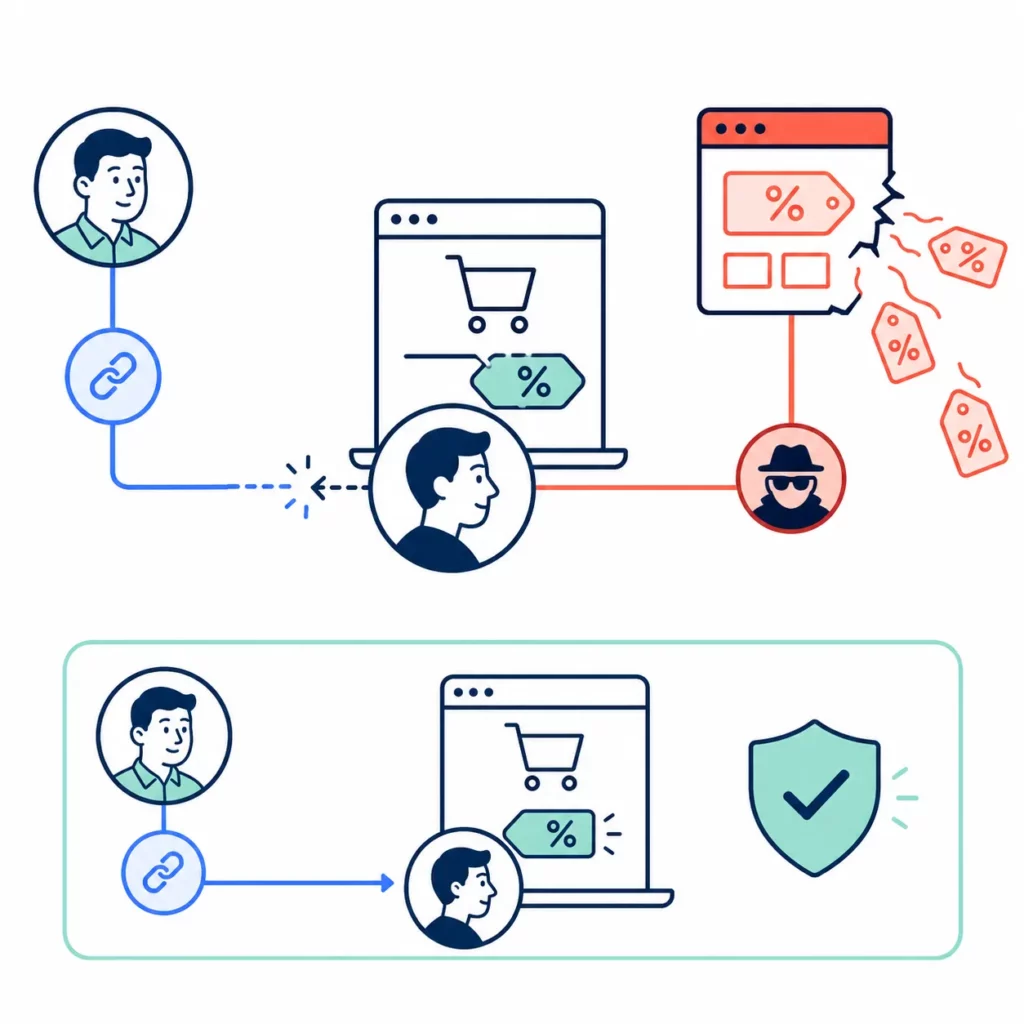
An affiliate drives a real customer to your store.
Before checking out, the customer opens a new tab and searches “[your brand] coupon code.” A leaked code appears, the customer enters it, and the original affiliate loses credit.
You can usually spot a leak. Affiliates report missing credit, or one partner suddenly shows far more volume than the rest. Or a quick Google search for your brand plus “coupon code” confirms it if leaked codes appear on sites you never approved.
Leaks do more than cost money. More importantly, they push away the genuine affiliates who did the real work of sending the customer. When attribution feels unreliable, good partners stop promoting.
The cleanest fix removes the coupon code from the process entirely. UpPromote’s Auto-discount can help trigger the discount through the affiliate link itself, so the customer never sees a coupon field.
Problem #9: Program Is Invisible (Discoverability Issue)
A well-built affiliate program can still fail if potential partners cannot find it. No footer link, no marketplace listing, no outreach, no social mention — the program might as well not exist.
A quick visibility check can show you how discoverable your program is right now:
☐ “Affiliates” or “Partners” link in your website footer?
☐ Listed on at least one affiliate marketplace?
☐ Post-purchase referral invitation enabled?
☐ Mentioned in your email newsletter?
☐ Mentioned on social media in the past month?
☐ Active outreach happening (20+ emails per week)?
If four or more boxes are unchecked, the program is effectively invisible.
The good news: enabling every touchpoint on this list takes roughly one hour. A footer link takes two minutes. A marketplace listing takes ten. A social post takes five.
Stacking all of them creates a steady stream of discovery rather than relying on any single source.
Problem #10: Product-Market Fit Issue (Fundamental Issue)
If you have fixed the first nine problems and sales still sit at zero, the question shifts. The issue may no longer be the affiliate program at all.
A simple test can tell you which side the problem falls on. Check whether your store converts traffic from other sources: organic search, paid ads, email.
If those channels convert at two percent or higher while affiliate traffic stays flat, the problem is still affiliate-specific. Rechecking Problems #1 through #9 may surface the real cause.
If no channel converts above 0.5%, the gap is bigger than the affiliate program. Pricing, product demand, reviews, or the store experience itself may need work first.
Affiliate marketing amplifies what already works. It cannot create demand for a product that does not sell through any channel.
A store with strong organic and paid conversion will almost always see affiliate results once the program runs correctly. By contrast, a store where nothing converts needs to fix the foundation before adding another traffic source.
Once your store converts through at least one other channel, the foundation is ready. Relaunch the affiliate program and re-run the diagnostic flowchart at the top of this guide.
The 2-Week Fix Plan: Prioritized Action Steps
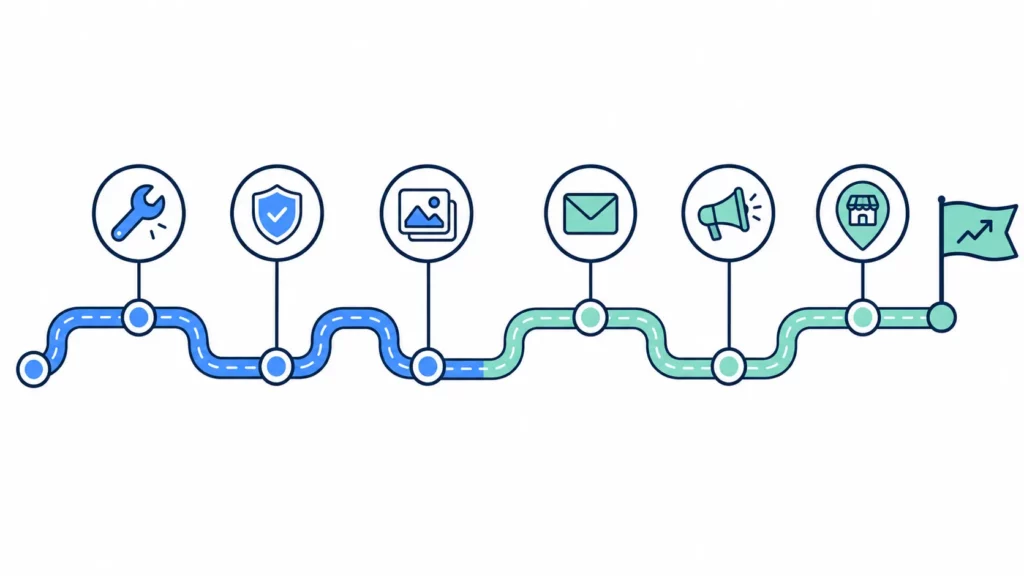
You have identified your primary problem from the flowchart. The next step is a focused two-week sprint that covers the most common fixes in order of impact.
The plan runs one action per day. If a step does not apply to your situation, skip it and move to the next.
WEEK 1: FOUNDATIONS
───────────────────
Day 1: Run the diagnostic flowchart — identify primary problem
Day 2: Test tracking (5-minute incognito test) — fix if broken
Day 3: Run coupon leak audit — enable auto-discount if needed
Day 4: Review commission rates vs industry benchmarks — adjust
Day 5: Build minimum viable marketing kit (images + captions + guide)
Day 6-7: Upload materials to affiliate portal — send to partners
WEEK 2: ACTIVATION + GROWTH
────────────────────────────
Day 8: Send reactivation email to all inactive affiliates
Day 9-10: Outreach 20-30 new niche-relevant potential partners
Day 11: Enable post-purchase referral invitation + add footer link
Day 12: List program on an affiliate marketplace
Day 13: Personal check-in with your top 5 existing affiliates
Day 14: Review Week 1-2 data — identify next improvement
AFTER 2 WEEKS: Re-run the diagnostic flowchart.
Expected: 1-3 problems resolved. Continue fixing
remaining issues in Weeks 3-4.
Above all, the pace matters more than perfection. Completing even half of these steps can put you ahead of most programs that stall after diagnosis. With consistent effort, here is what the timeline typically looks like:
| Timeframe | Expected Result |
| Week 1–2 | Tracking confirmed, materials live, 10–15 new signups |
| Week 3–4 | First affiliate-driven sales, 5–8 active promoters |
| Month 2 | 15–20 active affiliates, $500–$2,000 in affiliate revenue |
| Month 3 | 20–30 active, $1,000–$5,000 revenue, repeatable pattern |
Estimates assume a store earning $10K+/month with roughly 15% commission and a $65 average order value.
These numbers assume steady weekly effort, not a single burst. The programs that hit Month 3 targets are the ones that kept recruiting and following up every week, not only during the sprint.
Frequently Asked Questions
My program is three months old with zero sales — should I give up?
Not yet. Run the diagnostic flowchart first. In most cases, one or two specific problems explain the silence, usually low affiliate volume or missing materials. Fix those and allow two to four weeks before judging results. Only consider stopping if the product does not sell through any channel.
Should I switch to a different app or fix my current program?
Fix the current program first. Switching apps means starting from zero. You lose affiliates, tracking history, and relationships. Most problems come from program setup, not app limits. Switch only if the app lacks a feature critical to your fix, like auto-discount or tiered commissions.
How long does it typically take to see the first affiliate sale?
Most programs see the first sale within two to six weeks after launching with twenty or more partners. Some see results in the first week if they recruit the right affiliates. If six weeks pass with active promotion and zero sales, check tracking first, then store conversion.
What is a normal conversion rate for affiliate traffic?
One to three percent is healthy for affiliate traffic. Below 0.5 percent signals a store issue rather than an affiliate problem. Above three percent is strong. For context, affiliate traffic converts lower than email but higher than cold social ads.
Affiliates are promoting but clicks are very low — what is wrong?
Low clicks usually mean the affiliate’s audience is not engaging with the content. Three causes are most common: the audience does not match the product, the content lacks a compelling angle, or the affiliate has a low engagement rate. Reviewing audience fit is the best starting point.
Should I remove underperforming affiliates?
After sixty to ninety days of activity with zero sales, a soft removal is reasonable. Send a reactivation email first. Some inactive partners come back after a single check-in. Focus your energy on affiliates who show signs of effort rather than carrying a large inactive roster.
My top affiliate suddenly stopped promoting — why?
Five reasons cover most cases: a competitor offered a higher commission, personal life changes, content burnout, a missed payout, or a product quality concern. Reach out with a direct personal message and ask what changed. One message can often uncover the issue and reopen the door.
What does a successful affiliate program look like at month six?
A well-managed program at month six typically has fifty to one hundred total affiliates, with fifteen to thirty promoting each month. Affiliate revenue should account for five to ten percent of total store sales. If your numbers fall well below those ranges, re-run the diagnostic flowchart.

Ellie Tran, a seasoned SEO content writer with three years of experience in the eCommerce world. Being a part of the UpPromote team, Ellie wants to assist Shopify merchants in achieving success through useful content & actionable insights.Ellie's commitment to learning never stops; she's always eager to gain more knowledge about SEO and content marketing to create valuable content for users. When she's not working on content, Ellie enjoys baking and exploring new places.

![How to Use Shopify Functions with Your Affiliate Program [2026 Guide]](https://static.uppromote.com/wp-content/uploads/2026/06/how-to-use-shopify-functions-with-affiliate-program-300x169.webp)

![How to Prevent Affiliate Fraud on Shopify: Self-Referral, Coupon Abuse & More [2026]](https://static.uppromote.com/wp-content/uploads/2026/06/how-to-prevent-affiliate-fraud-on-shopify-300x169.webp)