












TL;DR:
Most Shopify affiliate programs stall because of execution, not the app you chose. Almost all of it traces back to ten fixable mistakes:
- Below-market commission
- No structured onboarding
- No marketing materials
- Ignoring top performers
- Coupon leaks
- No recruitment pipeline
- Weak tracking
- Late payments
- No vetting
- A set-and-forget habit
Diagnose which ones apply to your program, then fix the highest-impact one first.
You launched your affiliate program three months ago, and thirty affiliates signed up.
Yet today, only five are active, revenue sits flat near $500 a month, and no new affiliate has joined in four weeks.
In other words, the program has stalled. Even so, you rarely need to rebuild from scratch, because the app itself is almost never the problem.
Far more often, it comes down to execution, and a 2026 Foursixty review of Shopify affiliate apps points to the same thing.
In practice, brands skip onboarding and leave new affiliates to “figure it out.” On top of that, they set up confusing commission rules and neglect fraud prevention. As a result, these gaps separate the programs that scale from the ones that fade.
The clearest sign of all this is a single number: revenue share.
A well-run affiliate program can drive 10–20% of total online sales (Madrivo), whereas a stalled one contributes only a fraction of that.
So this guide will walk you through the ten mistakes that stall most programs, ranked by impact. Each one comes with a quick diagnostic check and a specific fix. The order still matters, though: diagnose first, then fix.
How to Use This Article (Self-Diagnosis Framework)
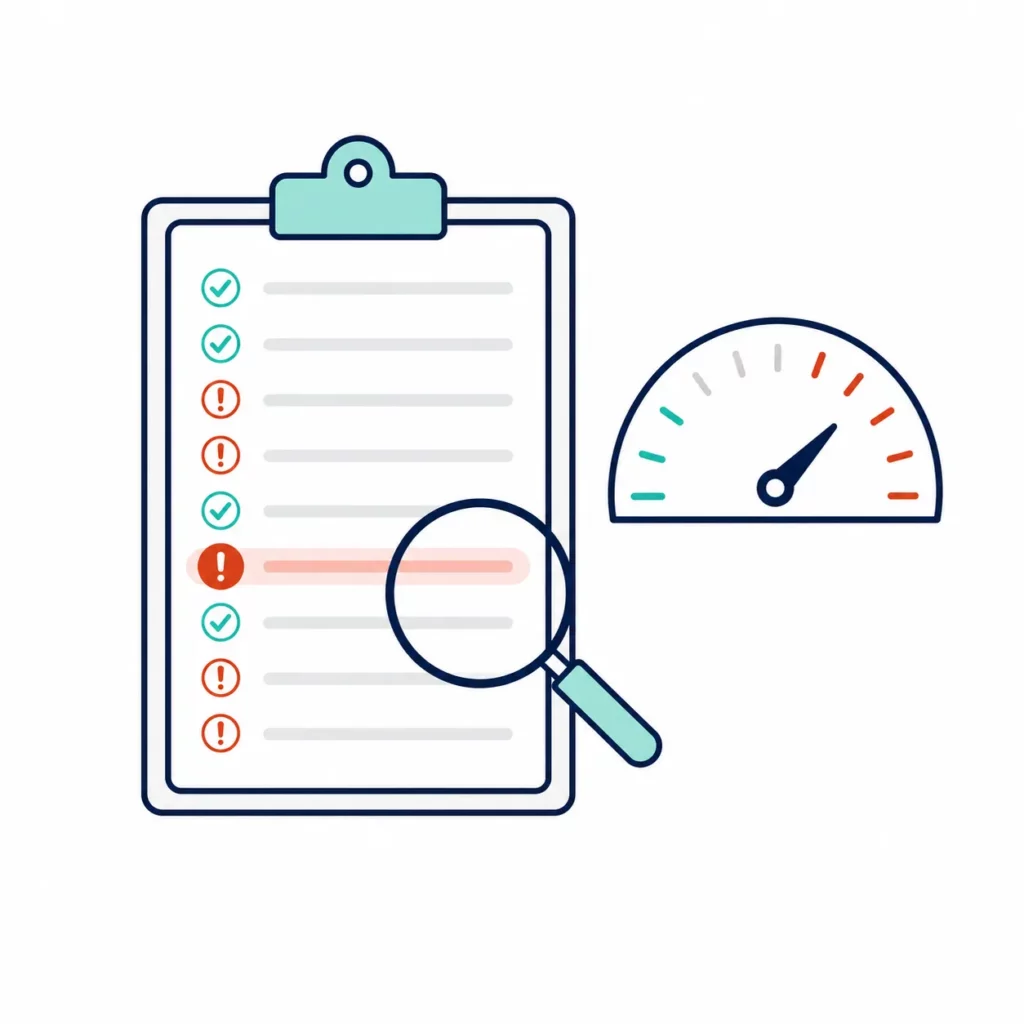
Reading ten mistakes back to back can feel overwhelming, and trying to fix all of them at once only makes it worse. So treat the list as a diagnostic rather than a to-do list.
After all, most stalled programs trip on just two to four of these mistakes, not all ten. Once you know which ones apply to you, you can start with the one that costs you the most.
Each check below maps to a single mistake, so tick the ones that describe your program right now.
| # | Mistake | Diagnostic check | Your program? |
| 1 | Low commission | Is your rate below the industry median? | ☐ |
| 2 | No onboarding | Do new affiliates get a welcome + materials within 48 hours? | ☐ |
| 3 | Zero materials | Do affiliates have images, captions, and a brand guide? | ☐ |
| 4 | Ignoring top performers | Did you thank or reward your top 3 affiliates this month? | ☐ |
| 5 | Coupon leaks | Search “[your brand] coupon code” — do affiliate codes appear? | ☐ |
| 6 | No recruitment | Did you send 10+ outreach messages this month? | ☐ |
| 7 | Broken tracking | Click an affiliate link, buy, then check: does the order show up? | ☐ |
| 8 | Late payments | Were all payouts processed within 24 hours of the due date? | ☐ |
| 9 | No vetting | Do you approve every applicant without a review? | ☐ |
| 10 | Set-and-forget | Have you logged into your program this week? | ☐ |
Your score then points to the size of the job ahead.
If you ticked one or two boxes, a minor tune-up should be enough, and fixing them can restart growth.
Three to five ticks, by contrast, mean real issues are stacking up, so you should prioritize the top two by impact.
Six or more, however, points to a structural problem, and at that scale a full launch checklist will serve you better than piecemeal fixes.
From there, the work becomes a simple loop: fix the highest-impact mistake first, re-assess in 30 days, and then move to the next one on your list.
Mistake #1 — Commission Rate Below Industry Benchmark
Before an affiliate joins, they compare your commission against everyone else competing for their audience.
If your rate sits below the median for your category, you become easy to skip. Does yours keep pace with the market, or fall behind it?
Rate matters more for recruitment than for retention. Existing affiliates may tolerate a lower number when the relationship is strong.
A new prospect, though, will rarely sign up for a rate that looks uncompetitive. As ReferralCandy notes, your rate is the headline offer that decides who joins.
Benchmarks vary by category. Beauty and fashion programs tend to pay on the higher end, while electronics and other thin-margin goods sit lower (Shopify).
To find your own ceiling, you can start from profit rather than revenue. Net margin times 30–50% gives a rate you can sustain.
From there, the move depends on your margin. If your rate falls below the median and the margin allows, you can raise it to at least that median.
If the margin is tight, you could compete on perks instead. Free product, early access to launches, or a longer cookie window all attract affiliates without cutting per-order profit.
GoldieLocks shows what a competitive structure can unlock. The beauty brand pays a 15% base rate and lifts top performers to 25%.
The approach helped the brand build a base of 2,900 active affiliates, and their best affiliate has driven more than 1,000 orders at the 25% tier.
A commission change will not show up overnight. Even so, it tends to move within 30 to 60 days as new applicants arrive and existing affiliates push harder.
👉 Deep-dive: Shopify Affiliate Commission Rates — 2026 Industry Guide
Mistake #2 — No Structured Onboarding (The Silent Killer)
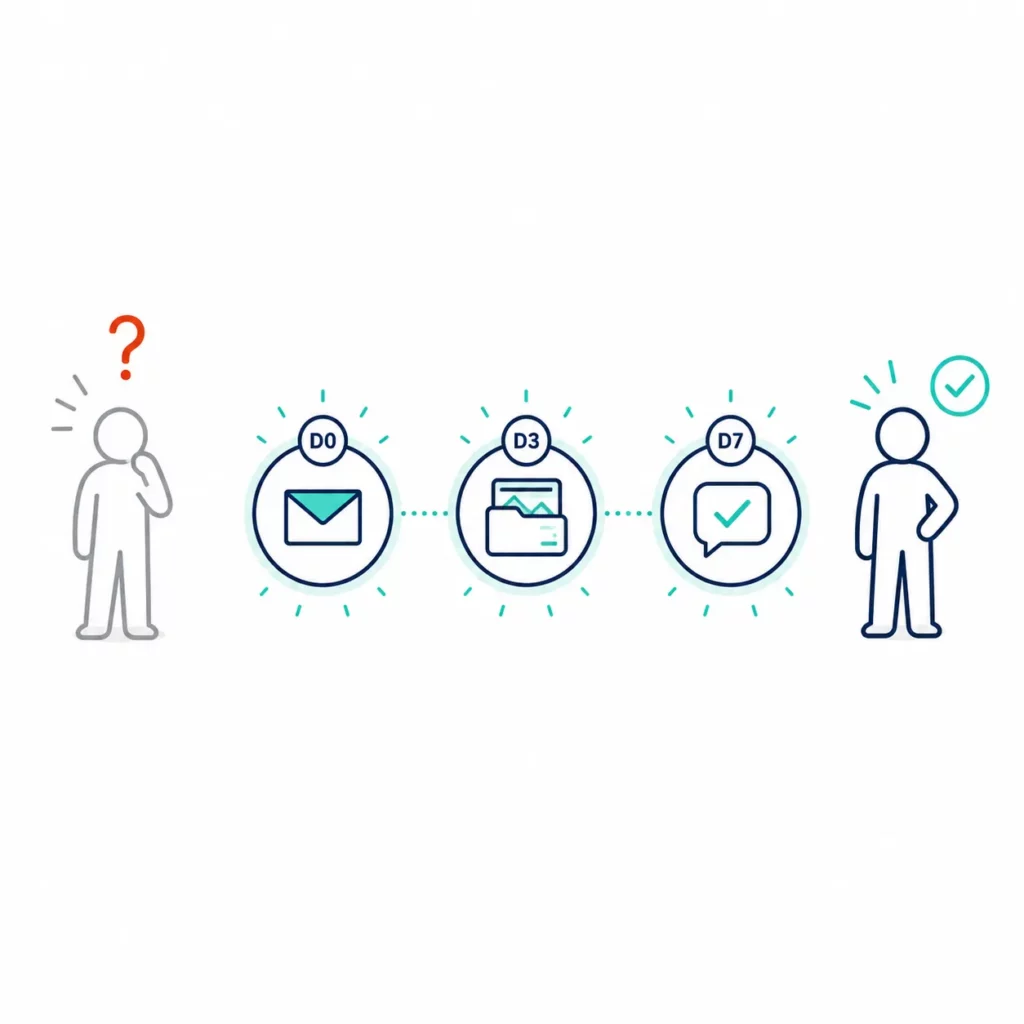
Most signups never turn into a single sale, and the cause is almost always silence right after they join.
Hearing nothing back, a new affiliate never learns what to promote or where the link is, so they quietly drift away.
The good news is that onboarding is easy to test.
Does every new affiliate get a welcome and some materials within 48 hours? If not, the gap is here.
It matters because the early days carry more weight than they look. Rewardful finds the first 30 days after signup decide whether someone becomes active or fades.
Skip that window, and the inactive rate can climb toward 95% (Matt McWilliams). In other words, most of your signups never post at all.
The repair is a short, repeatable sequence, not a training course. It starts with a Day 0 welcome that hands over the link and one clear first step.
Then, around Day 3, send a content kit with images and captions, and by Day 7, a quick check-in asks whether they are stuck.
None of this needs to go out by hand. As soon as an affiliate is approved, affiliate software like UpPromote can drop them into Klaviyo, Omnisend, or Mailchimp, so the sequence runs itself.
Mistake #3 — Zero Marketing Materials
Affiliates can only promote with what you hand them.
So when you ask one to post today and there are no images, no approved claims, and no caption to start from, nothing gets posted.
You can see the cause in your own gallery. If it holds nothing an affiliate could use, the silence makes sense.
After all, these are promoters, not graphic designers. Even eager ones stall when every asset has to be built from scratch.
Onboarding tells them what to do, while materials give them something to post. Without both, the welcome sequence leads nowhere.
Stocking a shared gallery removes the excuse. Aim for 10 to 15 product images, a mix of lifestyle and plain-background shots.
Then add five sample captions for Instagram and TikTok, plus a one-page brand guide covering the dos and don’ts. Together, these cover most of what an affiliate needs to start.
A media gallery, like the one in UpPromote, keeps all of it in one spot. You upload brand assets such as images, banners, videos, and logos, and affiliates pull them down to post on-brand.
Best of all, the whole job takes an afternoon, and you only do it once. After that, every new affiliate starts with the assets they need.
Mistake #4 — Ignoring Top Performers

A small core of your affiliates will always carry most of the revenue.
So the first question is simple: can you name your top three from memory? If not, or if you can’t recall the last time you thanked them, they are already at risk.
They are at risk because the concentration is so steep. Industry analysis finds top performers drive 60 to 80% of program revenue, and losing just one can cost a program 5 to 8% overnight ([Track360).
Indeed, Kess Berlin shows the pattern at full stretch: 44,000+ referrals from just 44 active influencers.
Ignore that core, and the risk only compounds. A top performer who feels unnoticed is the easiest for a competitor to poach with more attention and a better rate.
Worse, replacing one of them takes many average affiliates to match. By contrast, a little recognition keeps them loyal and producing.
So holding on to them is cheap but deliberate. Each month, pick your top three by revenue and send a real, personal thank-you rather than an automated blast.
Then back it with something tangible, such as a tier upgrade, a bonus, free product, or early access. It also helps to ask what would let them sell more, since their answer becomes your roadmap.
Holbrook Pickleball leaned into this, rewarding its best affiliates with gift products, and their affiliate revenue rose 86%.
Protecting your top affiliates, in short, is the cheapest growth you will find. It costs a few messages a month and shields the majority of your revenue.
Mistake #5 — Coupon Leaks Eroding Margins

A leaked coupon never announces itself. Instead, it drains margin in the background.
In practice, an affiliate’s code lands on Honey or a discount site, an extension auto-applies it at checkout, and you pay commission on a sale the affiliate never influenced.
Checking takes seconds: type your brand name and “coupon code” into Google, then see whether discount sites and affiliate codes fill the results.
If they do, the drain adds up. Leaked codes trim margins by 4 to 15% (Veeper), and at scale the numbers turn serious.
Worse, the damage compounds. Thinner margins make the program look expensive, so you invest less, and it withers from there.
The strongest defense, then, removes the public code altogether. With UpPromote’s Anti-leak discount, the offer applies through the affiliate’s link, so there is no code to scrape or paste into an extension.
Codes already in the wild still need watching, though, and a monthly brand-plus-coupon search catches them early.
On top of that, an agreement clause that bars posting on coupon sites sets the expectation up front.
Together, these steps drive leak-driven commission close to zero, and the margin you save shows up right away.
Mistake #6 — No Active Recruitment Pipeline
Launch week feels great. You recruit fifteen affiliates in a few days, and the program looks alive.
Then the outreach stops. By month three, no one new has joined, and growth flatlines, because recruitment was an event, not a habit.
So one number tells the story: how many outreach messages went out this month? Fewer than ten, and new affiliates arrive by luck rather than by plan.
The reason is simple: programs grow on a steady inflow of partners. A single launch push fades, and without fresh recruitment the active count only shrinks.
Recruitment, then, has to work as a pipeline, not an event. The active layer is a weekly target of 20 to 30 personalized messages to creators who fit your niche.
Underneath it, keep a few passive channels always on.
A Marketplace listing on UpPromote lets affiliates find and apply to your program on their own. A customer-referral option invites recent buyers to refer friends, and an “Affiliates” footer link catches the rest.
With both layers running, the math is forgiving.
As a rough guide, twenty messages might bring a few replies, a couple of signups, and one steady seller, and that repeats every week.
Mistake #7 — Broken or Poorly Configured Tracking
Every other fix in this guide assumes one thing: that your tracking works at all.
If clicks, coupons, and orders go unrecorded or land on the wrong affiliate, nothing downstream holds up: not your payouts, not your reports, not your decisions.
There is only one honest test. Place an order through an affiliate link yourself, then check that it lands in your reports, credited to the right person.
When tracking fails without warning, affiliates stop getting credit. Disputes follow, trust erodes, and your best partners drift to programs they can rely on.
A subtler failure is misattribution: the wrong affiliate gets the credit. The data still looks fine, so you keep deciding on numbers that are wrong.
Tracking is something you verify, not something you assume. Run an end-to-end test that covers link tracking, coupon tracking, the cookie window, attribution priority, and refunds.
Fix anything that fails, then repeat the test monthly and after every change to your setup.
Once the test passes, the rest of your program rests on solid ground. Affiliates trust their numbers, disputes fade, and your decisions rest on data you can rely on.
Mistake #8 — Late or Inaccurate Payments
Affiliates run on trust.
They promote now and get paid later, so payment is the one promise the whole relationship rests on.
Last month’s payouts are the test. Were they all on time, and did anyone question the amount they received?
Break that promise once, and word travels. Affiliates compare notes, a late-payment reputation spreads, and recruitment gets harder.
Foursixty‘s review of affiliate apps lists reliable payouts and responsive support among the things that decide whether a program grows or stalls.
Payment should be the most boring, predictable part of your program. Pick a fixed payout date, then let scheduled auto-payouts handle the rest.
UpPromote can help merchants send recurring PayPal payouts on a set frequency, so commissions go out on time without manual work. A short confirmation email each cycle closes the loop.
Affiliates who are paid on time and in full promote harder than those left guessing. Reliability is cheap, and it compounds.
Mistake #9 — No Vetting = Low-Quality Affiliates
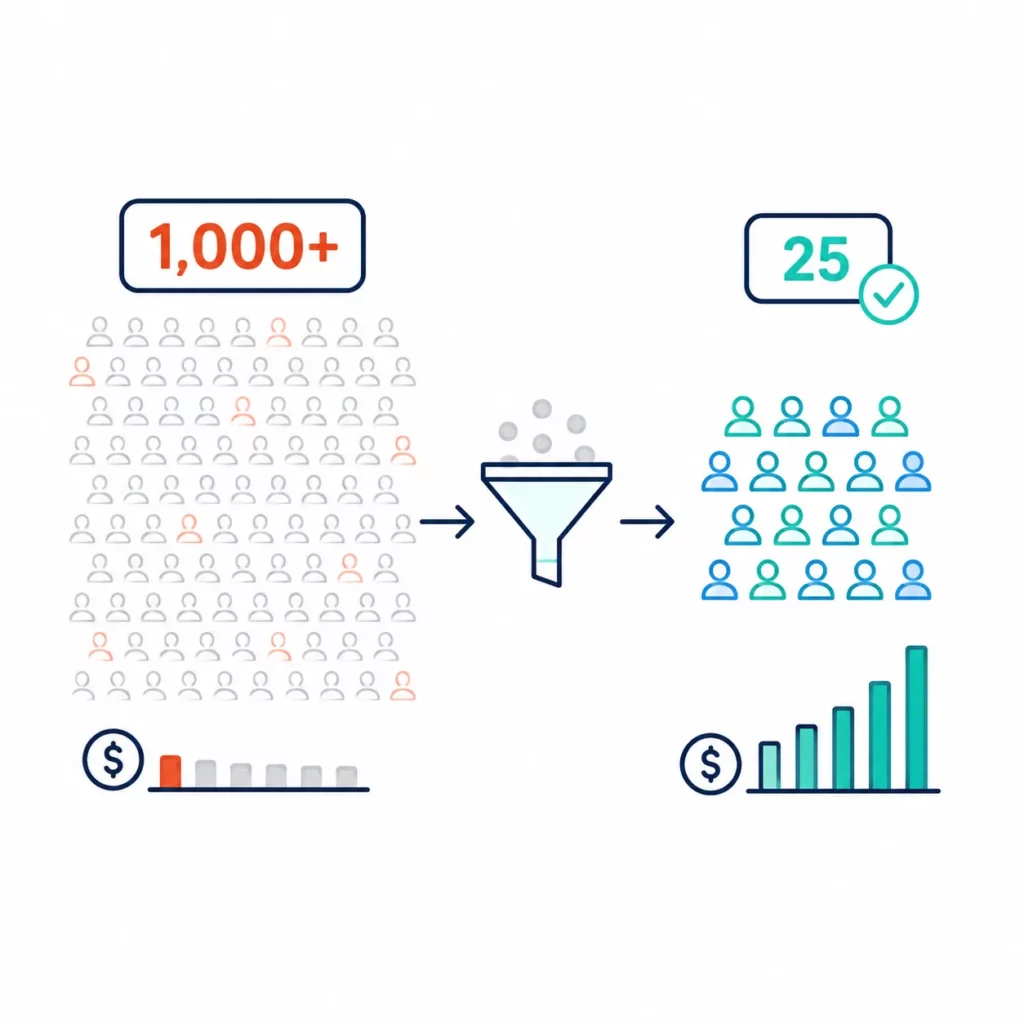
A program with 500 affiliates and 12 who sell is not a big program. It is a small one wearing a big number.
The gap comes from one habit: approving every applicant on sight. It pads the headcount while actual sales stay flat.
You can see the habit in your own last ten approvals. How many of those profiles did you open before clicking approve?
When the answer is none, the program fills with coupon-site accounts, spam signups, and applicants with no audience. They add nothing to revenue but plenty to your totals.
Worse, coupon-site affiliates are the ones who leak codes, so weak vetting feeds the margin problem from Mistake #5. The big number then hides a stalling program.
So quality has to start with a willingness to say no.
In practice, that means reviewing each application for a real profile, genuine engagement, content quality, and a fitting niche. Decline the mismatches with a polite note.
On top of the human check, UpPromote’s free fraud detection flags spam signups, self-referrals, and odd order patterns, so the obvious bad actors never get through.
Freewell Gear shows the payoff of this discipline. By handpicking affiliates for product expertise and reviewing every applicant by hand, the brand earned $350,000 in affiliate revenue in two months from about 700 vetted creators.
The pattern holds across programs: a lean, vetted base outproduces a bloated one every time. Fifty affiliates who fit your brand beat five hundred who do not.
Mistake #10 — “Set and Forget” Mindset
An affiliate program is not passive income, at least not yet.
Early on, it behaves more like a small team that needs managing than a machine that runs itself.
So the simplest gauge is your own calendar. If more than two weeks have passed since you reviewed the program or messaged an affiliate, you have drifted into set-and-forget.
Left alone, a program decays out of sight. Applications pile up unreviewed, top performers go unthanked, and commissions drift out of line with the market.
Yet active management is lighter than it sounds, and it runs on a simple rhythm.
It starts with a weekly check of new applications, pending payouts, and recent sales, which takes about half an hour.
Once a month, review your top and bottom performers and send a batch of outreach. Once a quarter, revisit commission rates, benchmark competitors, and adjust strategy.
Over time, the load does ease. Past about 100 active affiliates and a dedicated manager, the program edges toward semi-passive.
Until then, the attention is the job.
In the end, thirty minutes a week separates a program that compounds from one that fades into the background. Consistency, not intensity, keeps it alive.
What Changed in 2026?
The tools have matured, so in 2026 the app is rarely what makes or breaks a program. Execution is the differentiator now.
As a result, the bar has risen. Affiliates now expect fast onboarding, ready creatives, and clear communication.
Programs that offer thin materials or slow replies watch their best partners walk to someone who does it better (Indoleads).
What once set a program apart has become the baseline. Structured onboarding, a stocked gallery, and on-time payouts read as table stakes, not extras (Udonis).
The newest shift is AI. Most affiliate marketers now lean on AI tools (Affiverse), and the stronger platforms use them for fraud detection, attribution, and predicting which partners will perform.
For merchants, the takeaway is plain. The ten mistakes above are no longer hidden problems.
The data, and now the software itself, will surface them, and the edge goes to whoever fixes them first.
Frequently Asked Questions
Is it normal for an affiliate program to be unprofitable after three months?
In most cases, yes. The first months go to recruiting, onboarding, and testing, so breakeven often lands around month three to six. If month six passes with no growth, the mistakes above show what is blocking it.
Should I restart my affiliate program or fix the existing one?
Fix it in almost every case. Even inactive affiliates are assets you would lose in a restart. The exception is a broken setup or the wrong platform, and even then you should migrate your affiliates across rather than start over.
Which affiliate program mistake should I fix first?
Start with tracking, since every other number depends on it. Then make your commission competitive, add onboarding so new affiliates activate, and keep recruitment running. Fixing them in that order builds each step on a foundation that already works.
How long until I see improvement after fixing these mistakes?
It varies by fix. Tracking and coupon-leak repairs show almost at once, while commission and recruitment changes take 30 to 60 days to land. Address the top two or three issues, and expect measurable improvement within 60 to 90 days.
What is a normal affiliate active rate?
Active rate is the share of affiliates making at least one sale a month. A healthy program often sits near 15 to 25%, while under 10% tends to signal weak onboarding or thin materials. Quality matters more than the raw count.
Do these mistakes apply if I only have 10 affiliates?
Yes, though priorities shift. With a small base, focus on commission, onboarding, materials, recruitment, and tracking, since those grow and activate the affiliates you have. Vetting and top-performer programs matter more once you pass thirty active affiliates.

Ellie Tran, a seasoned SEO content writer with three years of experience in the eCommerce world. Being a part of the UpPromote team, Ellie wants to assist Shopify merchants in achieving success through useful content & actionable insights.Ellie's commitment to learning never stops; she's always eager to gain more knowledge about SEO and content marketing to create valuable content for users. When she's not working on content, Ellie enjoys baking and exploring new places.
![How to Use Shopify Functions with Your Affiliate Program [2026 Guide]](https://static.uppromote.com/wp-content/uploads/2026/06/how-to-use-shopify-functions-with-affiliate-program-300x169.webp)

![How to Prevent Affiliate Fraud on Shopify: Self-Referral, Coupon Abuse & More [2026]](https://static.uppromote.com/wp-content/uploads/2026/06/how-to-prevent-affiliate-fraud-on-shopify-300x169.webp)