




Search “how much to pay influencers” and you’ll get rate tables: so much for a nano creator’s Instagram post, more for a TikTok video, a lot more for YouTube.
Those tables answer a different question. They tell you what a creator might ask for a post. They don’t tell you what a sale costs you, and if you run a store, that’s the number you need.
So we looked at what Shopify stores on UpPromote actually pay the creators who sell for them, per sale, over a full year. Below you’ll see what that comes to, what it costs your store, and how to set up pay that rewards the creators who bring in orders.
How much should you pay an influencer?
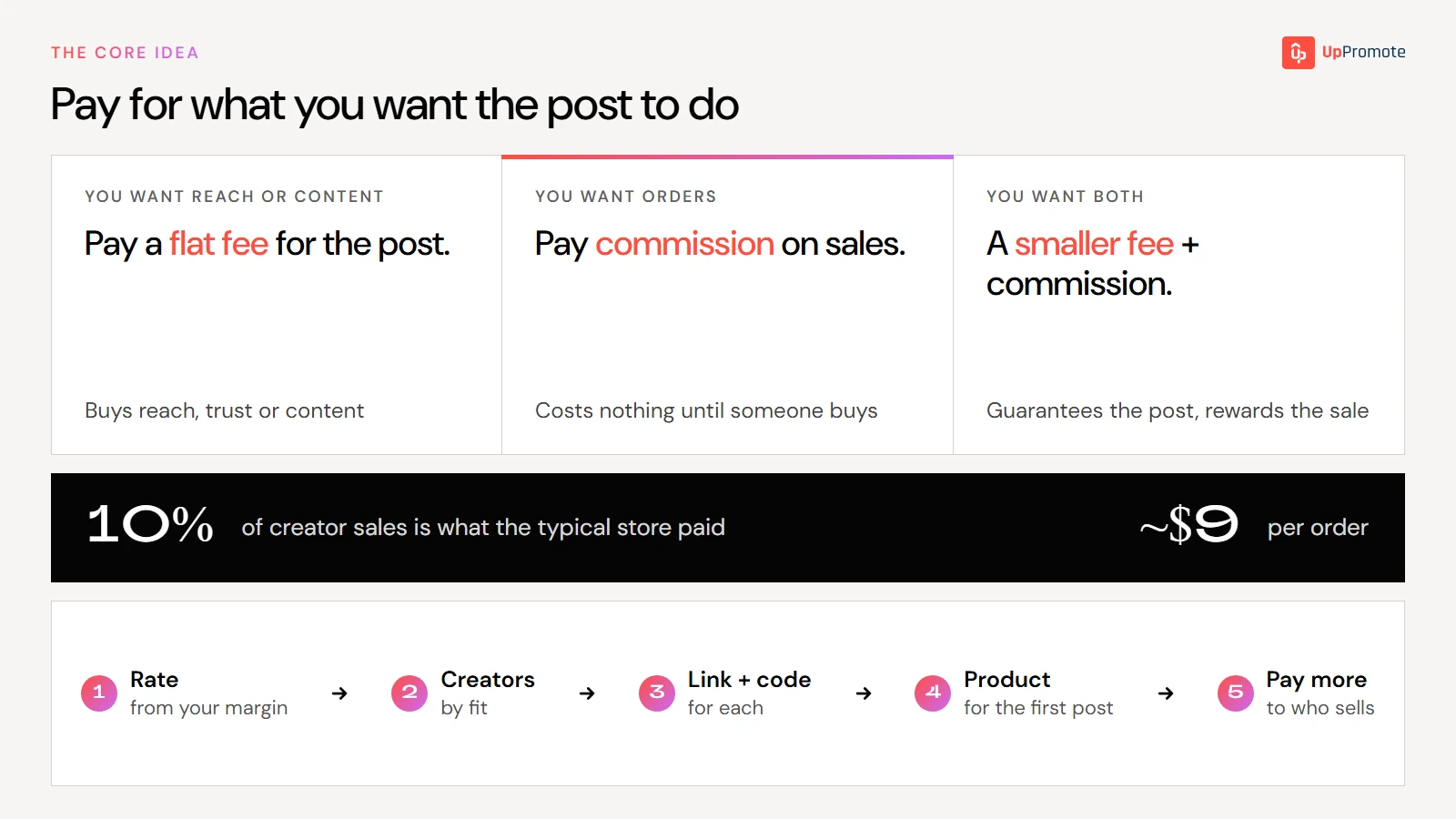
It depends on what you want from the post.
- If you want reach or content, pay a flat fee for the post.
- If you want orders, pay commission on the sales the creator brings in.
- If you want both, pay a smaller fee plus commission.
For the sales part, here’s what stores actually pay. Across Shopify stores on UpPromote, the typical store paid its creators about 10% of the sales they brought in, or about $9 per order.
Plenty of stores pay more:
| Store type | Commission as % of creator sales | Commission per order |
| Typical store | 10% | About $9 |
| Top quarter of stores | 15% or more | About $15 or more |
| Top 10% of stores | 20% or more | About $29 or more |
Treat the 10% as what stores pay in practice, not as your rate. Your rate should come from your margin: what you can give away on an order and still make money on it. How to work that out, product by product and for new customers, is in our guide to influencer commission rates.
How we counted: Shopify stores on UpPromote with at least five selling creators over 12 months. “Creators” are affiliates who list an Instagram or TikTok handle; customers who refer friends aren’t counted.
What do influencer rate cards price?
A rate card is a creator’s price list for posts. It prices the post, not what the post sells. Most rate cards are built from a mix of these:
| What drives the price | Why it matters |
| Followers | Bigger accounts ask more, which is why rate guides sort creators into tiers from nano to mega |
| Platform and format | A Story, a feed post, a Reel and a YouTube video are each priced differently |
| Expected views | Some creators quote a price per 1,000 people expected to see the post (CPM) |
| Expected engagement | Others price by the likes, comments and shares a post usually gets |
| Extras | Ad rights, exclusivity, rush delivery and extra revisions all raise the price |
Because every creator builds their card differently, per-post prices vary widely, even between creators of the same size. That’s why this guide focuses on something you can measure: what a sale actually costs you.
Ad rights are usually quoted on top of the post itself. What they cover is in influencer usage rights, and what creators ask for them in what whitelisting costs.
What does a fee per post actually buy?
Reach, trust or content you can use again. When you pay a creator per post, you’re paying to be seen by their audience, to be talked about by someone those people listen to, or for a piece of content you’ll keep. What you’re not paying for is orders: the creator is paid for posting, whether anyone buys or not.
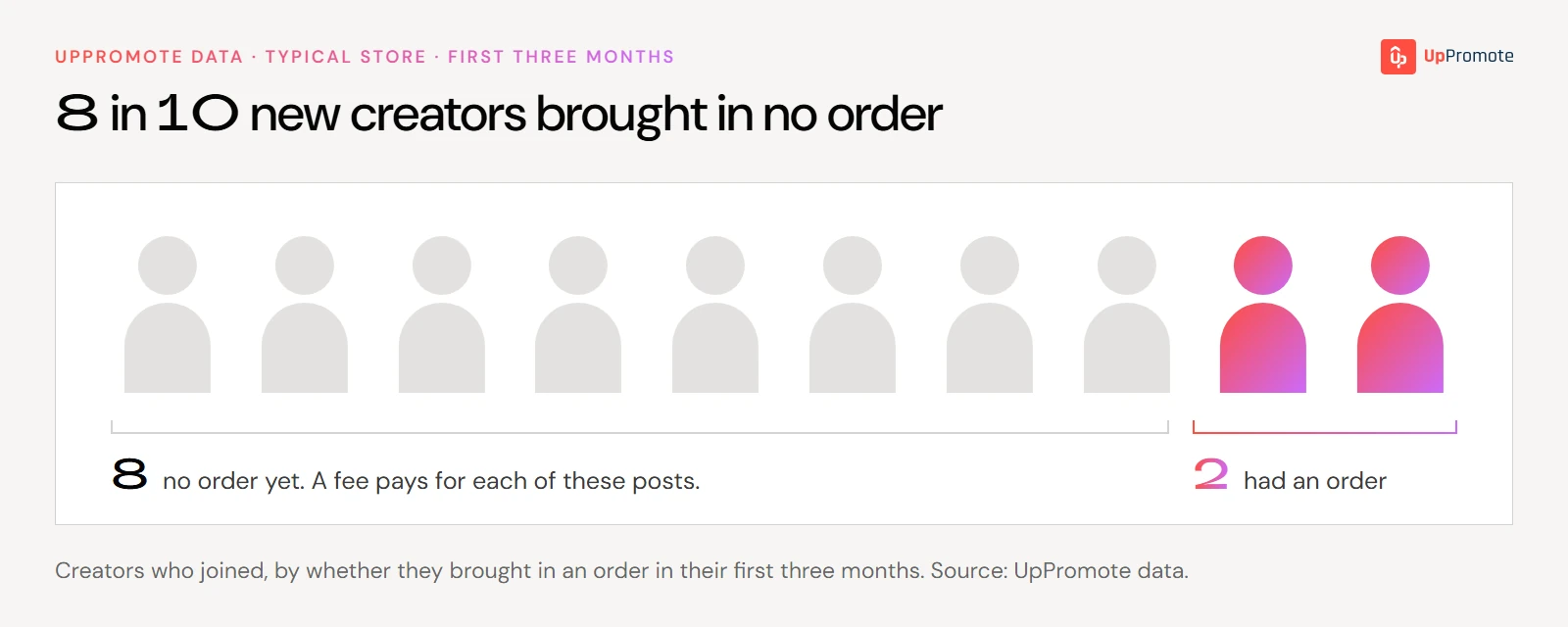
That would matter less if most creators sold. But in a typical store on UpPromote, about 8 in 10 creators who joined didn’t bring in a single order in their first three months. A fee pays for each of those posts. Commission costs you nothing until someone buys.
Naughty Nuts, a peanut butter brand, saw that risk when it started its affiliate program. Paying influencers up front didn’t fit a startup budget when a post might bring few or no sales. So it pays a fixed 10% on every sale, gives each influencer a 10% discount code for their followers, and adds a €50 gift card each month to spend on its products. Its program has tracked over 8,000 referrals.
If you’re weighing a fee against commission for one creator, run the numbers with our comparison of flat fees and commission.
What does an influencer sale cost your store?
Your cost of sale: everything you pay for creator sales, divided by those sales. It’s the number to compare against what a sale costs you on your other channels, like ads.
Here’s one order worked through. A customer uses a creator’s 10%-off code on a $75 order:
| Cost item | Amount |
| Discount for the customer (10% of $75) | $7.50 |
| Commission for the creator (10% of the $67.50 the customer pays) | $6.75 |
| Total cost of the order | $14.25 |
| Cost as % of what the customer paid | About 21% |
We picked $75 because that’s about the size of a typical creator order on UpPromote.
Two costs aren’t charged per order. Any product you gift is a one-off cost per creator. And most affiliate apps add a monthly fee, and sometimes a small performance fee on referral sales, so add those to get your full cost.
Returns won’t push the cost up much. Only about 3 in 100 creator orders end up refunded. Hold commission until your return window closes, and you won’t pay on those orders at all.
To track cost of sale across your whole program, use influencer marketing ROI; to set the total spend, start from influencer marketing budget.
Do Instagram and TikTok influencers cost different amounts?
On a rate card, yes. Per sale, stores paid them about the same.
| Typical store | Instagram creators | TikTok creators |
| Commission as % of creator sales | About 10% | About 10% |
| Commission per order | About $9.60 | About $7.60 |
| Orders per selling creator | About 8 | About 9 |
So whichever platform your customers spend time on, a commission deal costs you about the same per sale. TikTok creators earned a little less per order, likely because of smaller orders.
We compared creators who list only one of the two platforms. We didn’t measure YouTube.
If you’re starting on one platform, our guides to Instagram, TikTok and YouTube influencer marketing cover working with creators there.
How much do micro influencers charge?
On a rate card, less than bigger creators, because rate cards price by followers. On commission, there’s no tier price to look up. You set the rate from your margin, and a small creator who sells earns it the same way a big one does.
Where nano ends and micro begins is set out in types of influencers.
Why do so many influencers ask for a fee?
Because a fee is guaranteed and commission isn’t. A fee is paid whether or not the post sells. Commission depends on things the creator doesn’t control: whether their audience wants your product, your price, your product page, your stock.
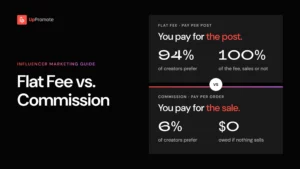
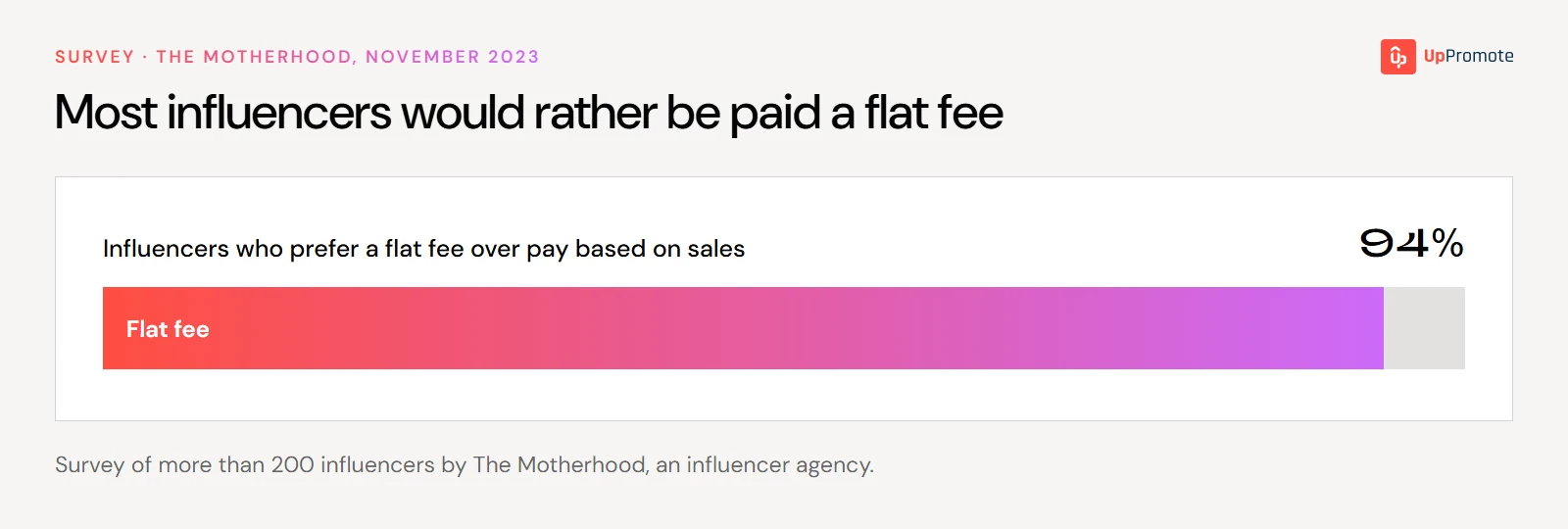
In a November 2023 survey of more than 200 influencers by The Motherhood, an influencer agency, 94% said they prefer a flat fee. The agency puts that down to how creators see commission-only pay: as undervaluing the time they spend making and sharing their content.
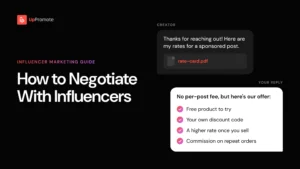
Paying the full fee doesn’t solve that for you; it just moves the risk onto your store. What works is giving creators product to start, so the first post costs them nothing, a smaller fee where you need a guaranteed post, and a clear path to higher commission for the ones who sell. That’s also the offer to bring when you negotiate with a creator who asks for a fee.
How to set up influencer pay that rewards sales
Here’s how to pay creators so that you pay for sales and keep your best sellers, in the order you’ll do it.
1. Set a commission rate from your margin
Start from what you can afford to give away on an order, not from what other brands pay. The 10% above tells you where most stores sit; your margin tells you where you should.
You can pay a percentage of the sale, or a fixed amount per order or per item. A “flat rate” commission is still paid per sale. It isn’t a fee per post.
2. Choose creators by fit, not follower count
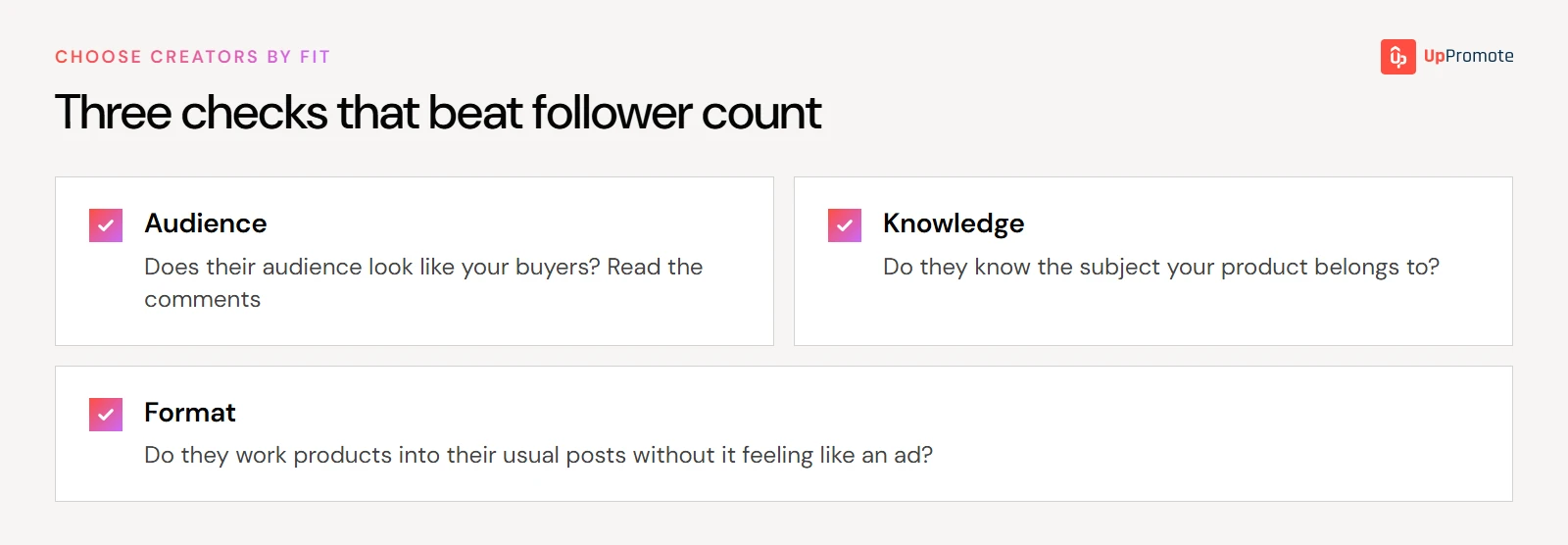
Rate cards price followers. Sales come from fit. Brand and agency managers who run creator programs say follower count tells them little about who will actually sell, so they check three things instead:
- Audience. Does the creator’s audience look like your buyers? Read their comments, not their follower count.
- Knowledge. Does the creator know the subject your product belongs to?
- Format. Do they work products into their usual posts without it feeling like an ad?
Vetain, a plant-based supplement brand, sets a floor of 5,000 followers, then looks past that number at engagement, content and fit with its niche. As founder Philipp Riedl put it:
Follower count alone doesn’t tell the whole story. Many influencers have large audiences, but if their engagement is low or their content isn’t good, it’s not worth it.
Philipp Riedl, Founder at Vetain
Where to look for creators like this is in how to find influencers; how to check them before you reach out, in how to vet influencers.
3. Give each creator their own link and code
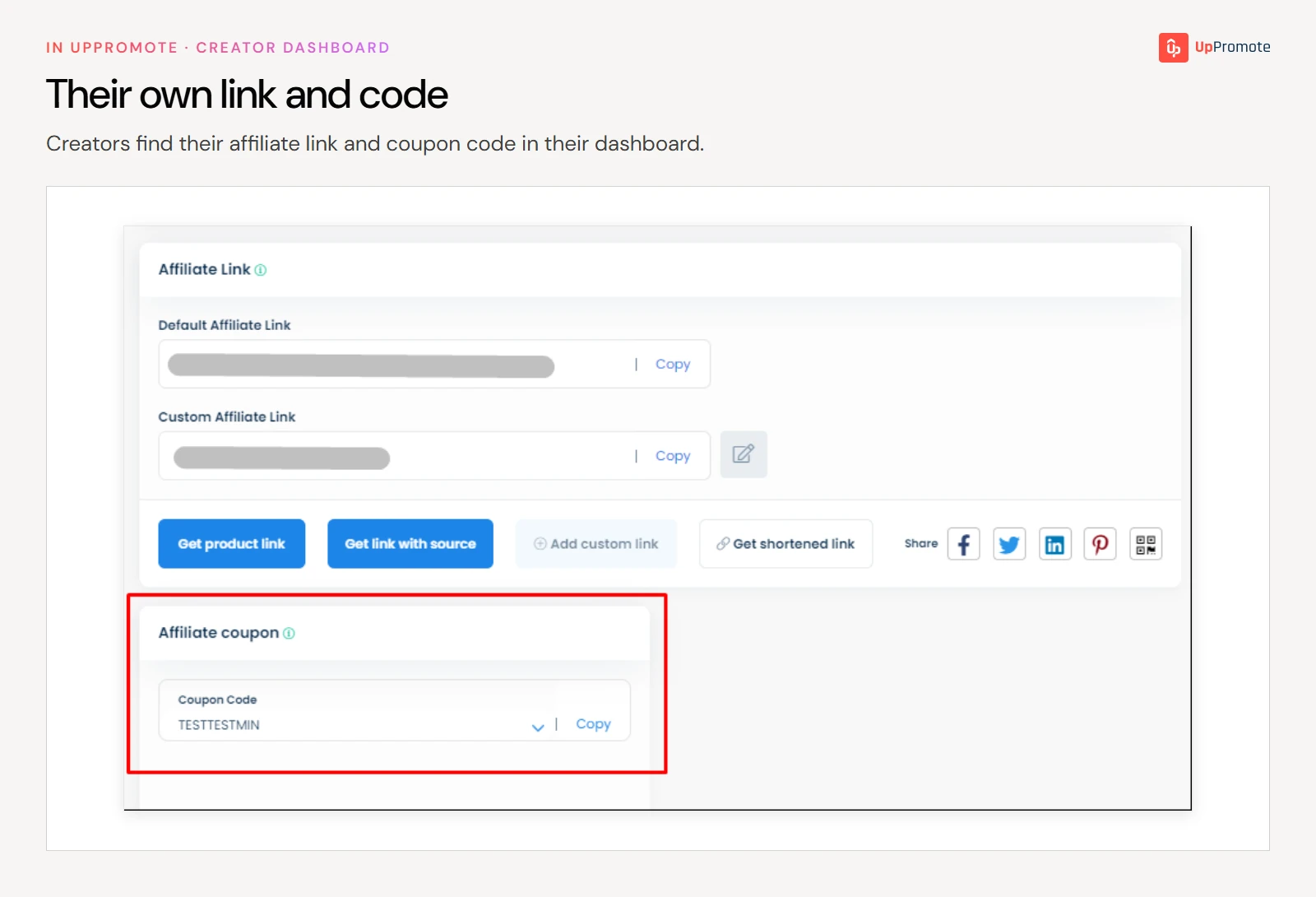
Commission only works if every sale is credited to the creator who drove it. Give each creator a link and a discount code of their own, so you can pay on sales from either.
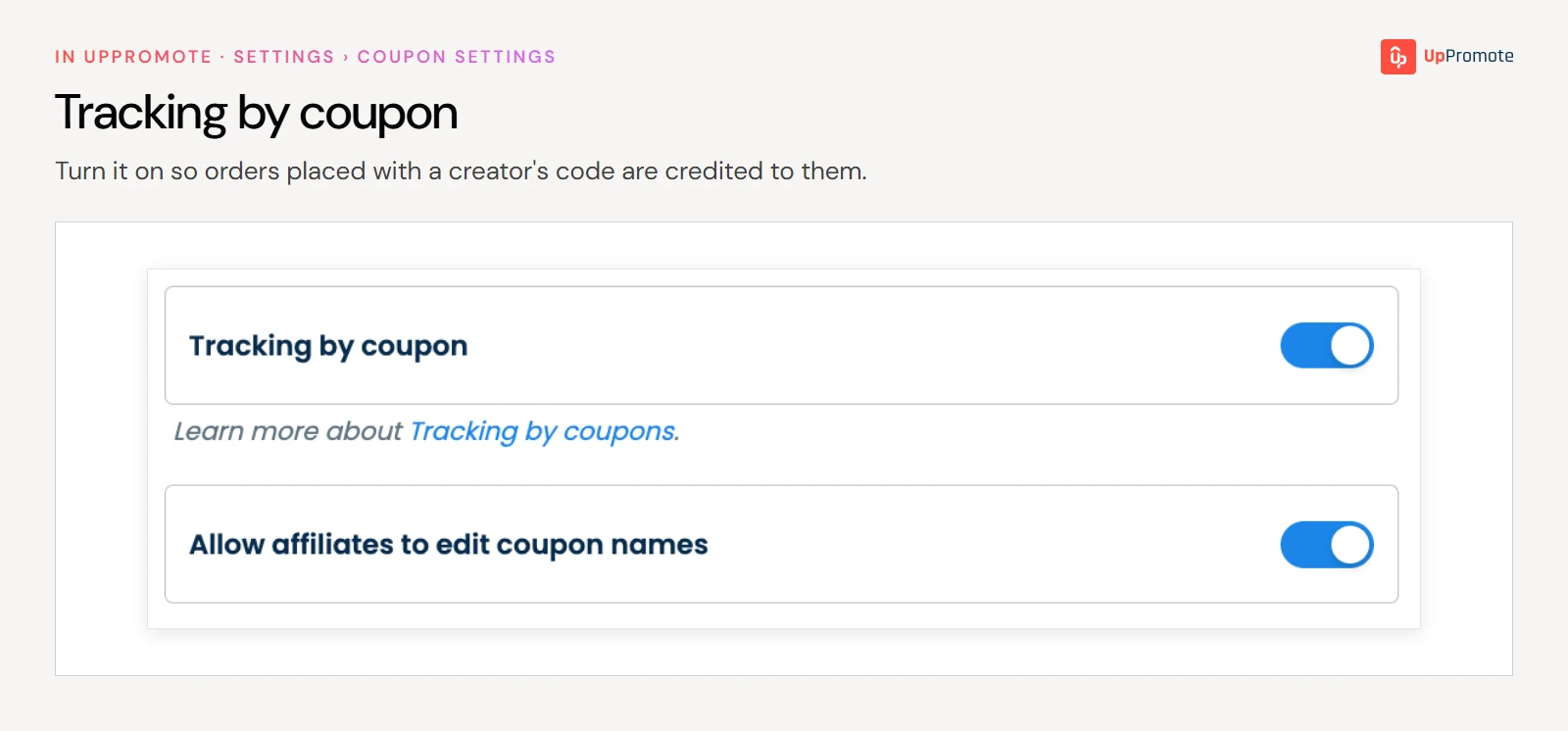
In UpPromote, codes don’t credit anyone until you turn on Tracking by coupon under Settings > Link & coupon > Coupon settings. It’s off by default, so turn it on before you create or assign codes.
4. Send product for the first post
A creator who’s never heard of you has no reason to post on commission alone. Free product gives them one, and it costs you the product, not a fee.
Be choosy about who gets it. Send to small creators whose audience looks like your customers, not to everyone who joins.
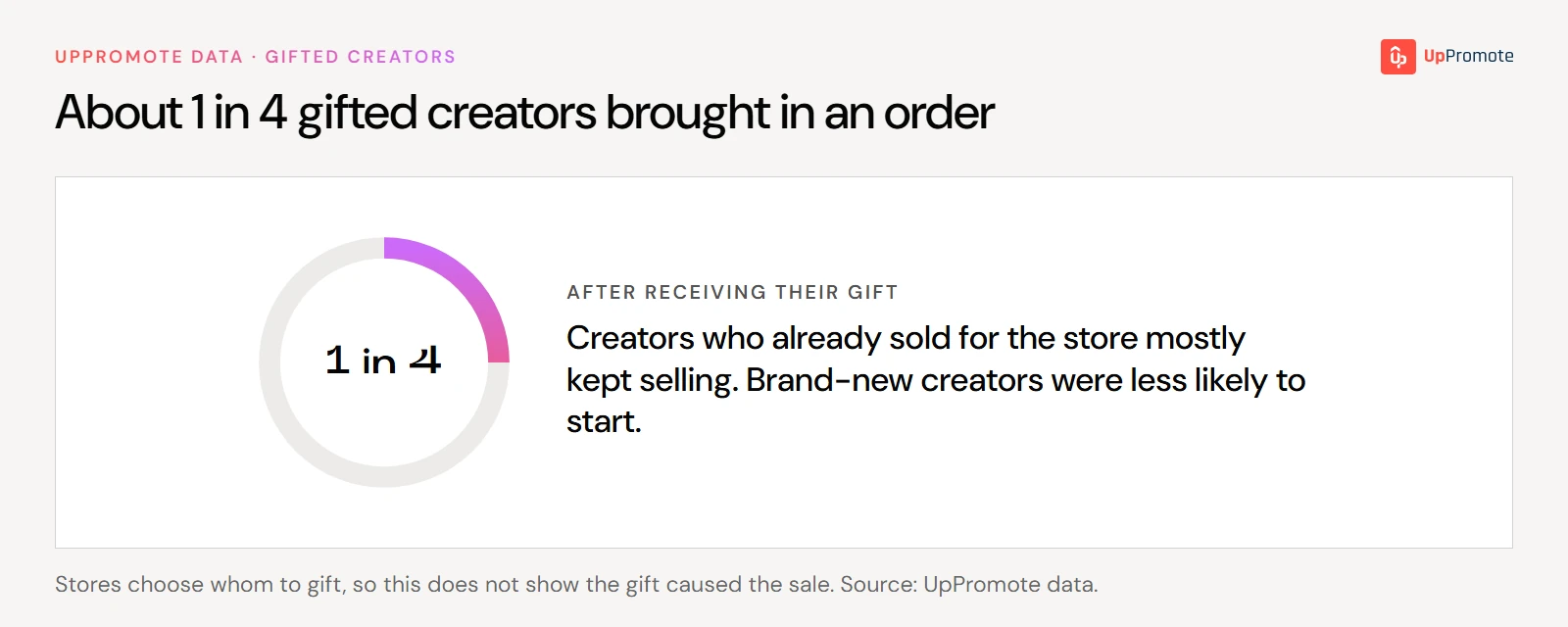
In UpPromote’s data, about 1 in 4 gifted creators brought in an order after receiving their gift. Creators who already sold for the store mostly kept selling; brand-new creators were less likely to start. (Stores choose whom to gift, so we can’t say the gift itself caused the sale.)
The Carnivore Bar works this way. It sends free product first, then invites creators who love it to join the program, which keeps out deal hunters. It also trades product, like a box of bars, for content. Its affiliate program grew from 50 to 500 members in just over a year.
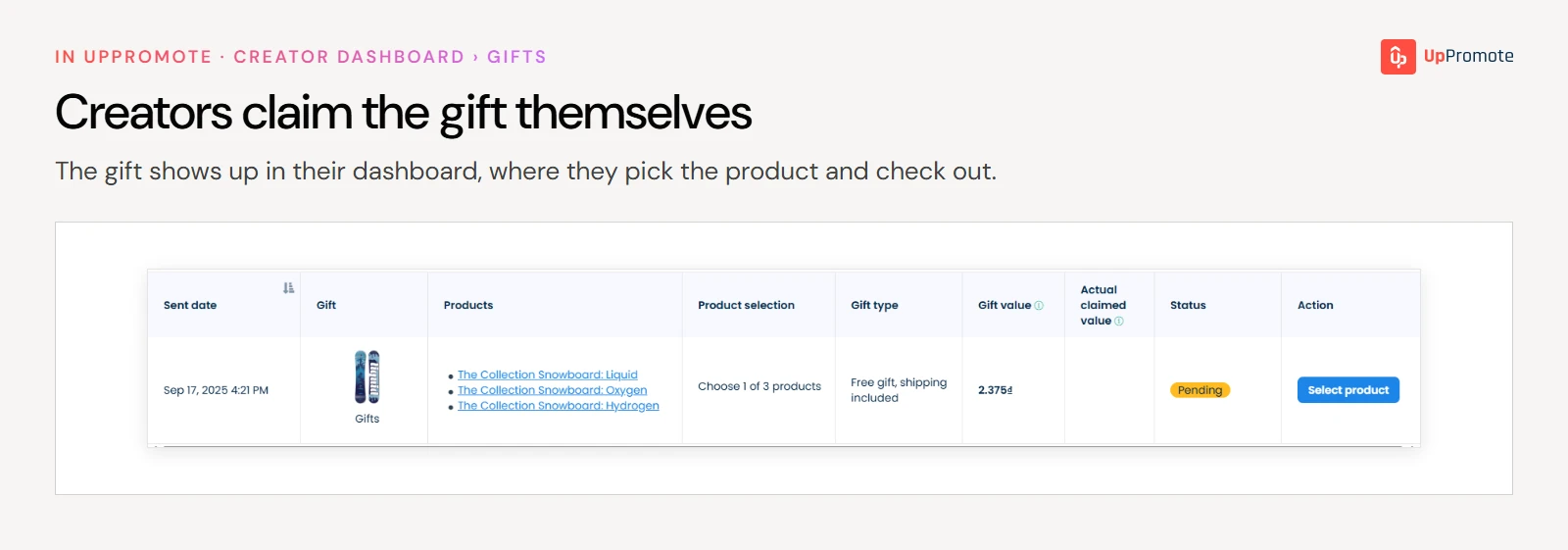
On UpPromote’s Professional plan and above, Gifts lets creators pick and claim a free product from their dashboard, sent when they join or whenever you choose.
However you send it, the creator has to tell their followers about the gift. The FTC counts free products as a connection with the brand, so make disclosure part of every gift.
To run gifting step by step, see influencer gifting.
5. Pay more to the creators who sell
This is where your money should go: to the few creators who sell, not to everyone who posts.
There are three ways to do it:
- Higher rates as they sell more. Tiers move a creator to a higher rate once their sales pass a level.

- Bonuses at targets. A fixed amount or a percentage when a creator hits a sales or order target.

- Lifetime commission. The creator keeps earning on their customers’ later orders, not only the first.

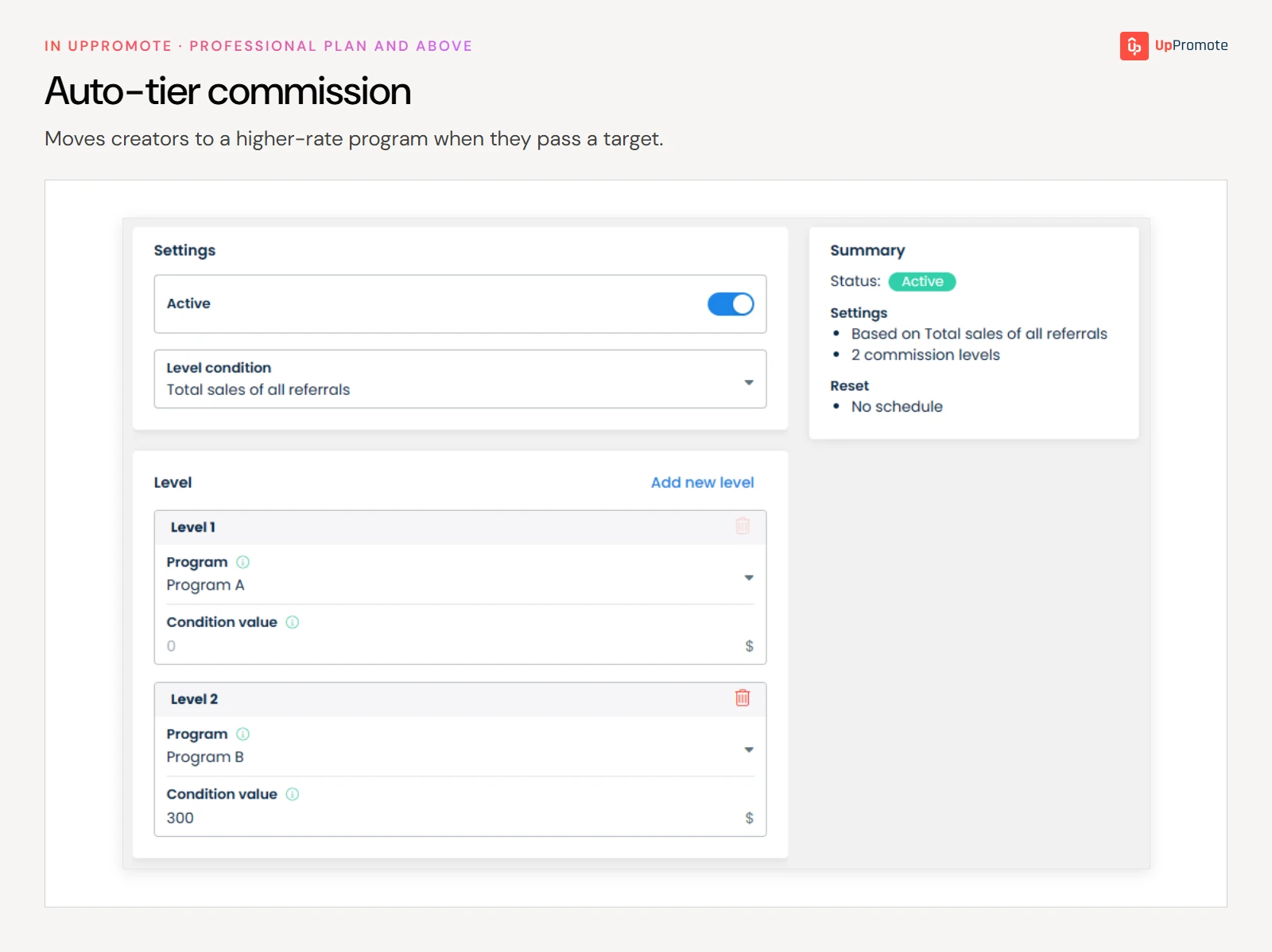
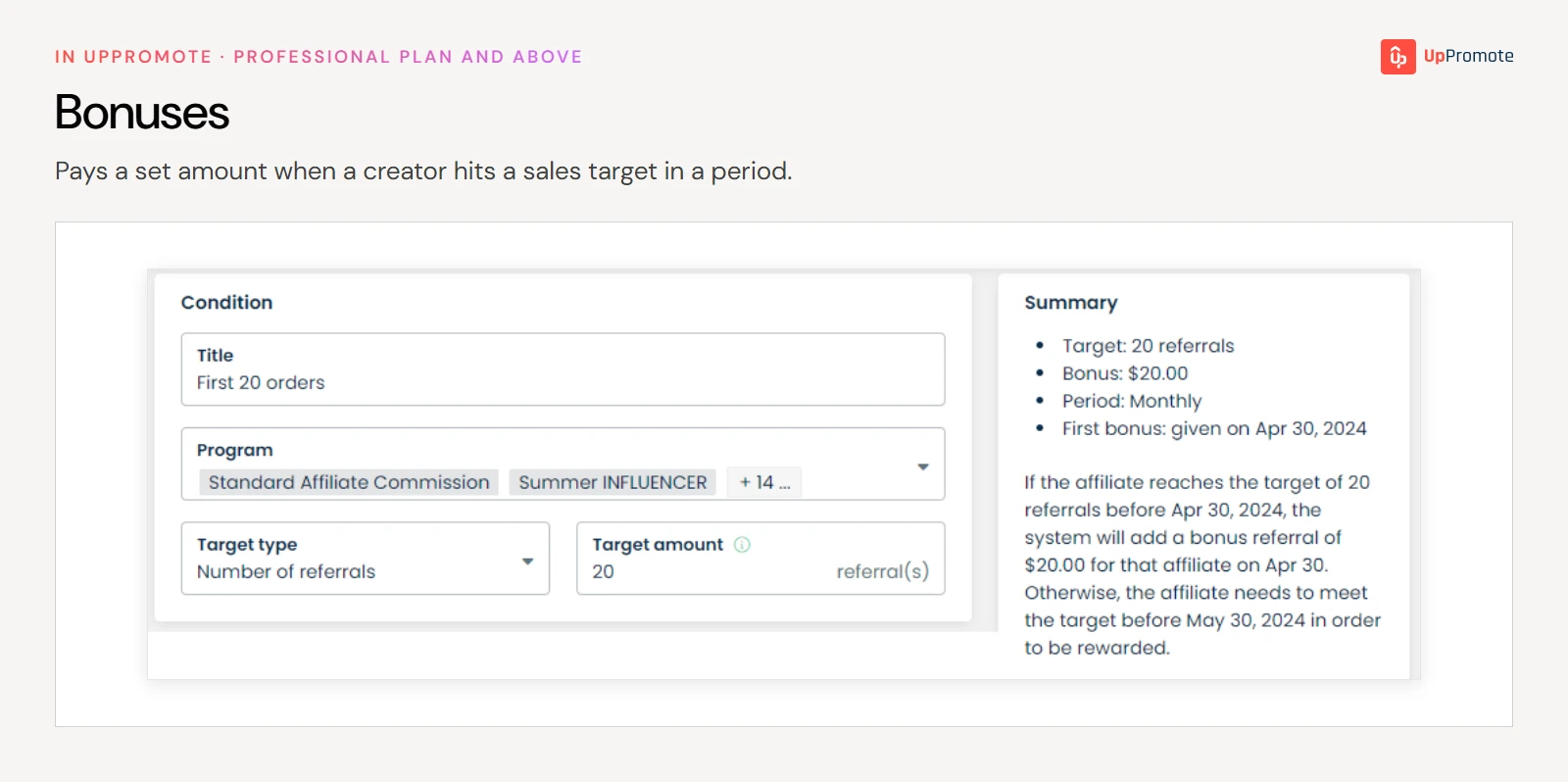
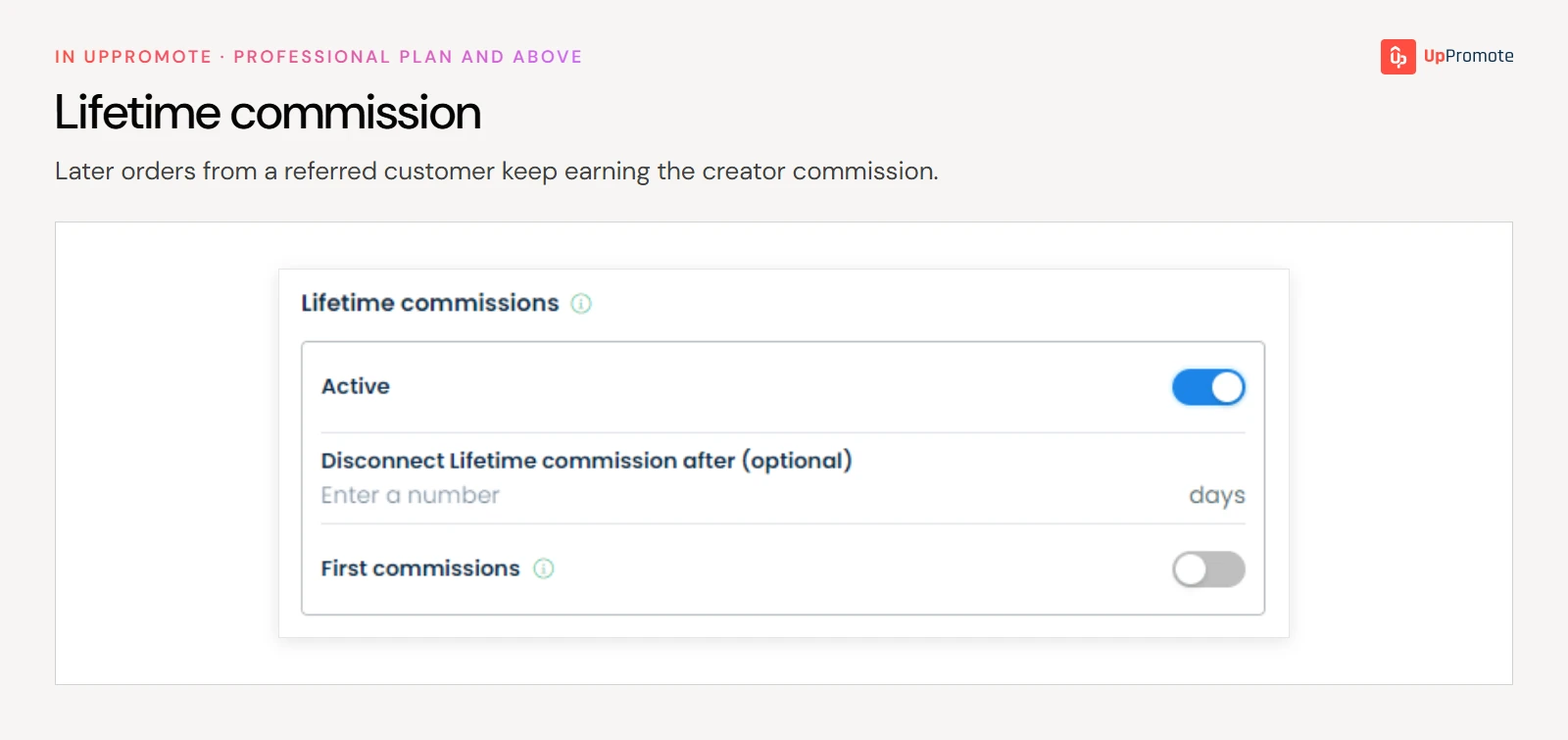
In UpPromote, auto-tier commission, bonuses and lifetime commission are on Professional and above. A bonus needs a target of at least one sale, so it can’t pay a creator just for posting. Lifetime commission isn’t retroactive: it covers customers who buy through the creator after you turn it on.
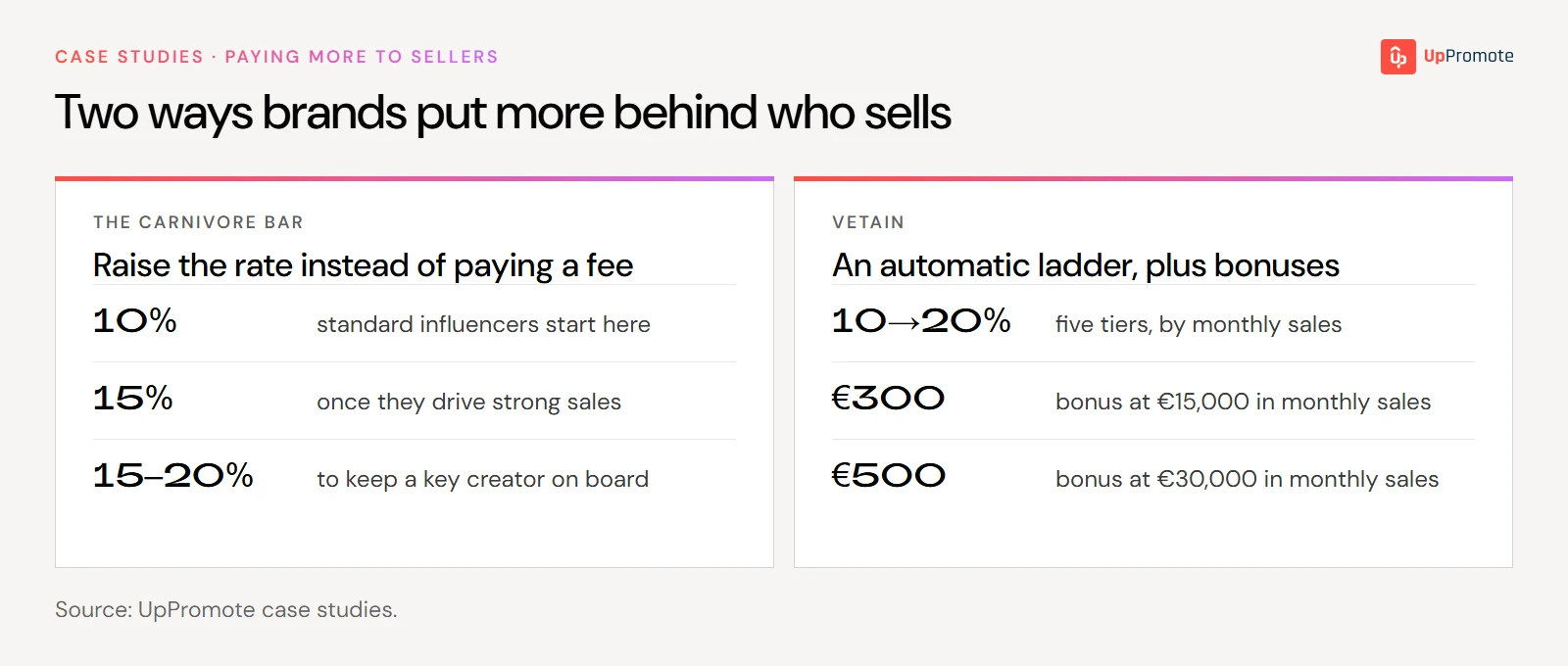
The Carnivore Bar shows how far a higher rate can go in place of a fee. It runs several programs at different commission rates: standard influencers start at 10% and rise to 15% once they consistently drive strong sales. When a key creator might leave, the brand raises the rate instead of paying upfront fees. As Marketing Director Joshua Perrault put it:
As a small business, we don’t have a big budget… we usually raise the commission to 15% or 20% to keep the affiliate or influencer on board.
Joshua Perrault, Marketing Director at The Carnivore Bar
Today its affiliates drive about 40% of total revenue.
Vetain shows the ladder run by itself. Creators move automatically through five tiers, from 10% up to 20%, based on their monthly sales. On top, it pays monthly bonuses to its biggest sellers, not the average creator: €300 for a creator who reaches €15,000 in monthly sales, rising to €500 at €30,000.
When you’re ready to test creators in batches and put more behind the winners, how to scale influencer marketing lays out the process.
Final thoughts
Rate cards answer what a creator charges for a post. For a store, the better question is what a sale costs, and what you want the post to do.
If you want reach or content, a fee buys that. If you want orders, pay commission: the typical store on UpPromote pays creators about 10% of their sales, or about $9 an order.
For most stores, the best setup combines the two: product to get the first post, a smaller fee where you need a guaranteed post, and commission set from your margin. Then save the bigger money, higher rates and bonuses, for the few creators who actually sell.