




Micro-influencers are known for engaged, trusting followers in a clear niche, and for costing less than big names. That’s why they’re the size Shopify stores pick most when they search for creators on UpPromote.
But a mid-sized following on its own won’t bring you sales. In our data, follower count told us little about which creators would sell. What made the difference was whether the creator fit the store, and how the store ran its program around them.
This guide covers what a micro-influencer is, why stores work with them, and how to run a micro-influencer program step by step, with what our store data shows along the way.
What is a micro-influencer?
A micro-influencer is a creator with a mid-sized following, most commonly 10,000 to 100,000 followers, who usually posts about one subject to an audience that trusts their recommendations.
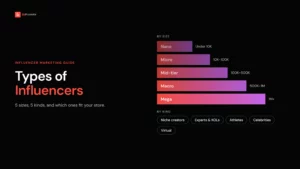
There’s no official cut-off, and guides draw the edges a little differently. The most common bands look like this:
| Tier | Followers |
| Nano | About 1,000 to 10,000 |
| Micro | About 10,000 to 100,000 |
| Macro | About 100,000 to 1 million |
| Mega | 1 million or more |
For every band side by side, see types of influencers.
Don’t spend long on the exact edges, though. The band is useful as a search filter, but as you’ll see below, it tells you little about who will sell.
What is micro-influencer marketing?
Micro-influencer marketing is a brand working with creators in that band to put its products in front of their audiences, usually many creators at once rather than one big name.
For a Shopify store, it usually looks like this: the creator gets the product, posts about it in their own style, and their followers buy through the creator’s link or discount code. Most creator orders on UpPromote come through the code, so give every creator one.
Why do stores work with micro-influencers?
The usual case for them rests on four reasons:
- Engagement: their followers like, comment and reply more.
- Cost: they ask for less than big creators, and many will work for product plus commission.
- A niche audience: their followers share one interest.
- Trust: their followers believe what they recommend.
Here’s what the evidence shows.
Do micro-influencers get more engagement?
Than the biggest creators, yes. Than everyone smaller, not necessarily.
A study of more than 1,700 influencers and 800 Instagram sponsored campaigns, published in the Journal of Marketing, found that engagement with sponsored posts doesn’t keep rising with follower count. It peaks at a middle size and then falls. And when creators made original content in their own style, smaller and larger creators closed much of that gap.
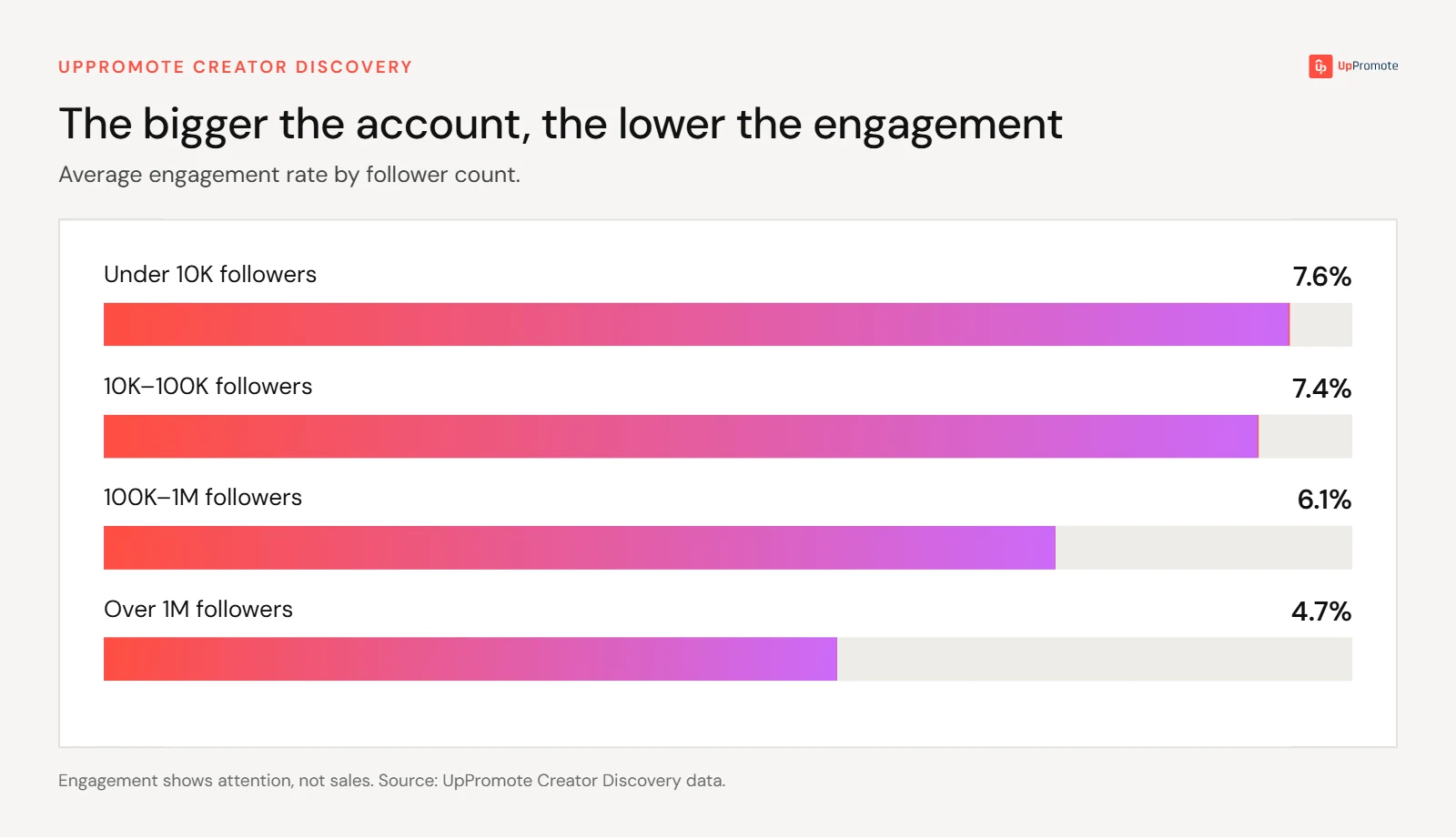
UpPromote’s Creator Discovery data shows a similar pattern for overall engagement: the bigger the account, the lower the engagement rate.
| Followers | Average engagement rate |
| Under 10K | 7.6% |
| 10K–100K | 7.4% |
| 100K–1M | 6.1% |
| Over 1M | 4.7% |
Engagement still isn’t sales, though. It tells you people are paying attention, not that they’ll buy.
Micro is the size stores pick most
When Shopify stores search for creators in UpPromote’s Creator Discovery, they lean micro. More than half of the creators stores saved had 10K–100K followers, and far more stores saved a micro creator than a creator of any other size.
That tells you what stores choose, not that it works. For that, you need sales.
Size doesn’t decide who sells
Here’s where the “micro converts better” claim runs out of evidence. When we matched creators in UpPromote programs to their follower counts, no size was consistently more likely to make a sale. Micro creators did a little better on Instagram, and a little worse on TikTok.
So use the follower band as a filter, not a verdict. Tribal Chimp, a hair care brand, scouts Instagram for nano creators (1K–10K) or micro creators (10K–50K) depending on the campaign.
Naughty Nuts, a German nut butter startup, ran Instagram ads aimed at German creators with 3,000 to 30,000 followers, then screened the ones who applied. Each applicant needed a mainly German audience and at least 5,000 organic followers, with no bought followers.
Whether a given creator sells for you comes down to the creator. Nutriland, a Romanian supplement store, built its program on micro-influencers, many of whom already used its products in their own fitness routines. Its 27 micro-influencers have brought in over 10,000 referrals and €400,000 in revenue, each promoting with their own coupon code.
What are the drawbacks of micro-influencer marketing?
Micro-influencers come with three costs, and all three shape how the program should run.
Each creator reaches fewer people. One post from a 30K creator won’t move a store. You need many of them posting over time.
Many creators means more work. Recruiting, shipping product, handing out codes and following up all grow with the number of creators. Your creators can carry some of that load themselves. Kakao Mischa, a premium ceremonial cacao brand, runs a WhatsApp community where its affiliates help each other, and that peer support lets a single team member manage more than 6,000 affiliates.
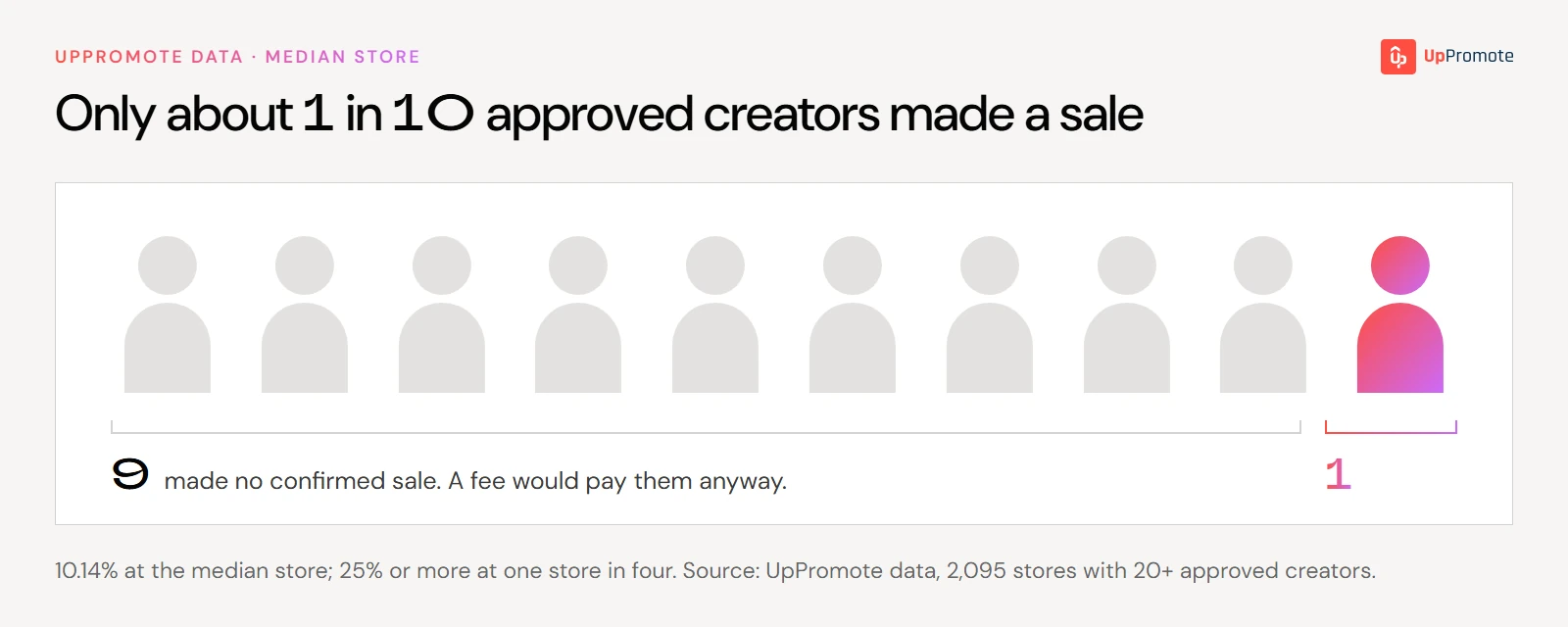
Most creators won’t sell. At a typical store on UpPromote, only about 1 in 10 approved creators made a sale. And the sales that do come in are lopsided: the top creator alone often brings in about a quarter of all creator sales.
| Pros | Cons |
| Engaged followers in a clear niche | Each creator reaches fewer people |
| Affordable, and often happy to work on commission | You need many creators, which means more work |
| Content that feels genuine | Most creators won’t sell |
That’s why a micro-influencer program works better as a standing program than as a one-off campaign. You recruit many well-matched creators, let the product and the commission do the sorting, and reward the few who sell.
Altenew, a craft supplies brand, shows the pattern: creators with up to 10,000 followers start in a default tier and move up by hand as they sell, with performance bonuses and 30 to 35 gifts a month.
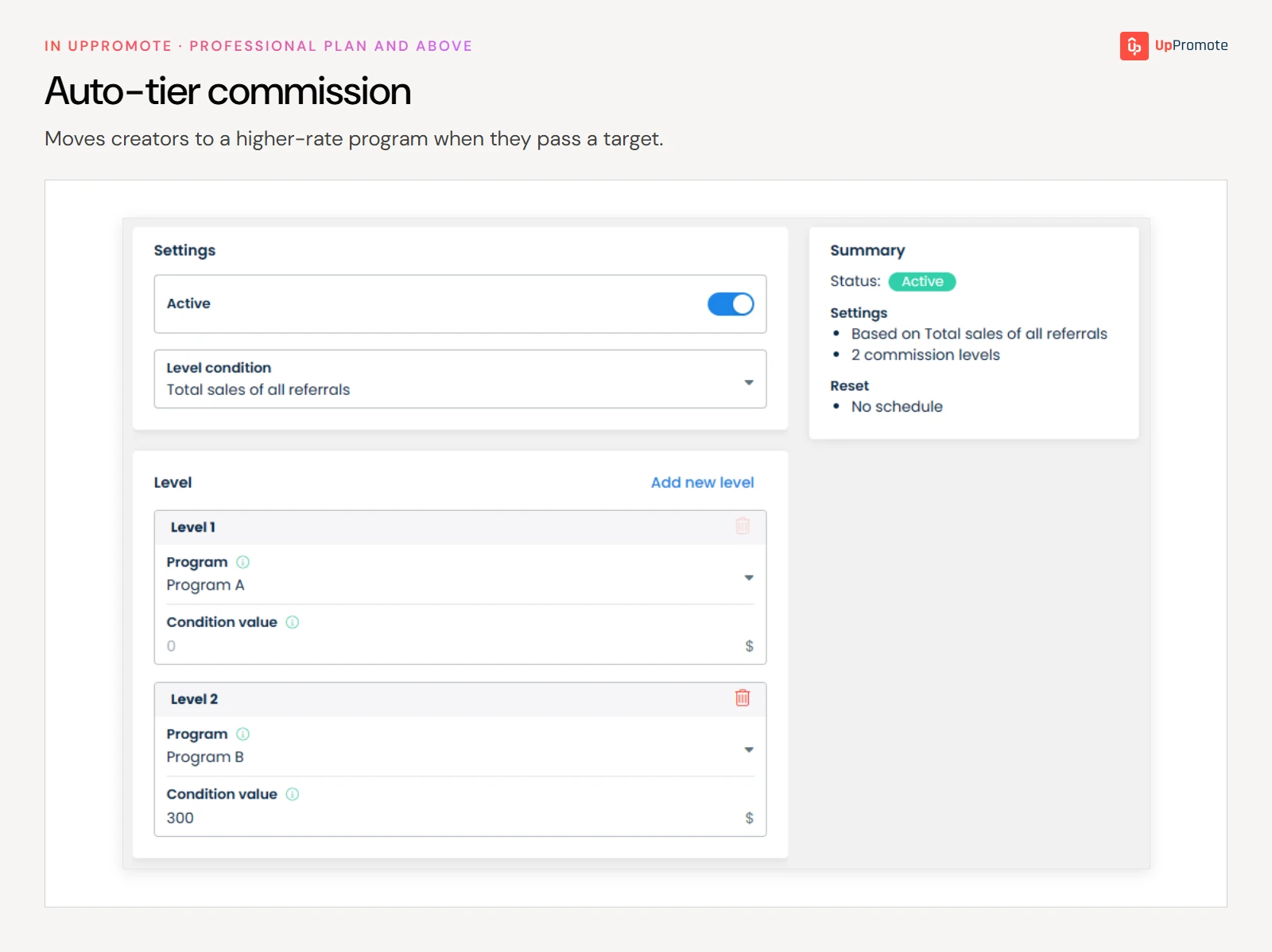
Pitstop Nutrition, a sports nutrition store, automates it. Its athlete micro-influencers start on 3.5% commission plus a £50 product voucher, and move automatically to 5% plus a £150 voucher after they pass a monthly sales threshold. Affiliate marketing now brings in about 60% of its daily orders.
How to run a micro-influencer program
Here’s the process, from setup to paying the creators who sell.
1. Set up a separate program for creators
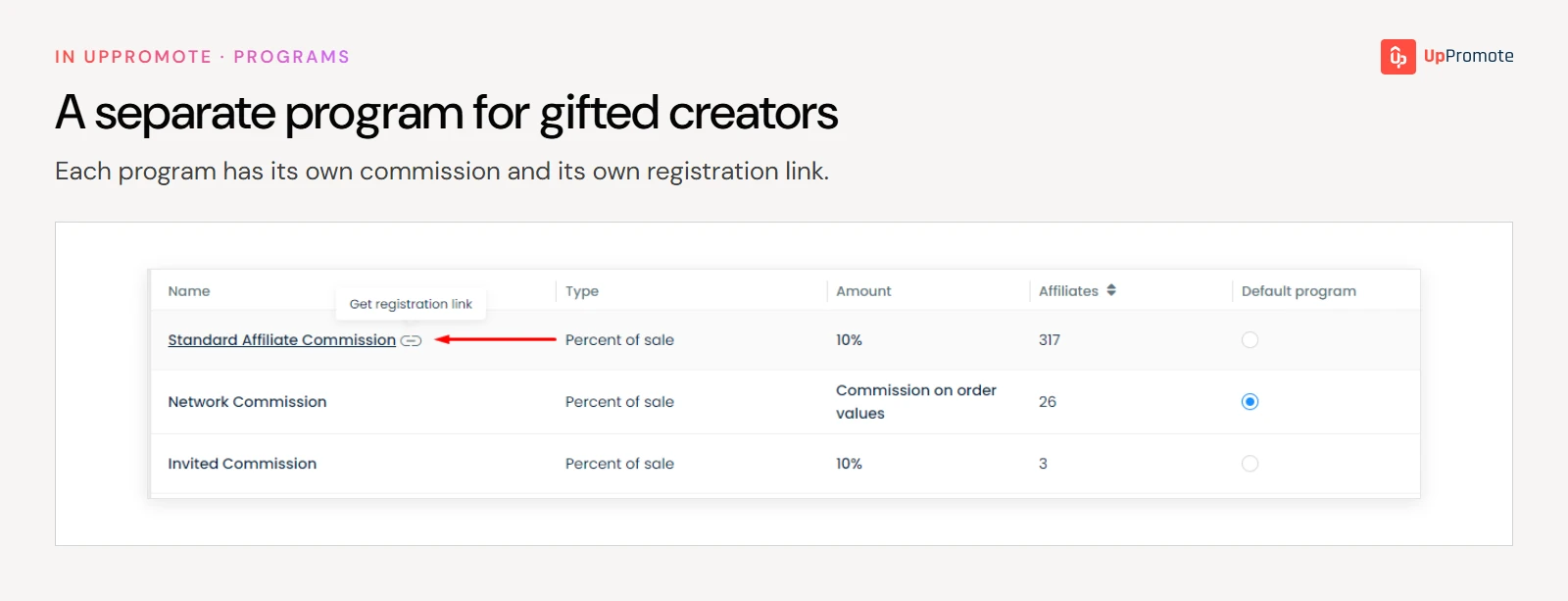
Creators need a different offer from customers who refer friends: a different rate, a gift, sometimes manual approval. Give them their own program.
In UpPromote, each program has its own registration form and signup link. That lets you, for example, auto-approve a customers program and approve creators by hand. Add custom questions to the creators’ form so every application arrives with what you need to judge it:
- their Instagram, TikTok or YouTube handle
- their follower count
- what they post about
2. Find creators who already fit
The easiest micro-influencers to sign are the ones already using your product, like many of Nutriland’s.
Beyond your customers, search for creators in your niche. UpPromote’s Creator Discovery searches Instagram, TikTok and YouTube creators by niche and size, so you can build a list without leaving the app.
You can also bring creators to you, as Naughty Nuts did with Instagram ads.
How many? More than feels necessary, because only about 1 in 10 will sell. In UpPromote’s data, about 4 in 5 new stores that approved 20 or more creators in their first three months had a creator sale by day 90, against about 1 in 5 of those that approved five or fewer. Start with as many as you can ship to and follow up with. For every finding method, see how to find influencers.
3. Choose by fit, not follower count
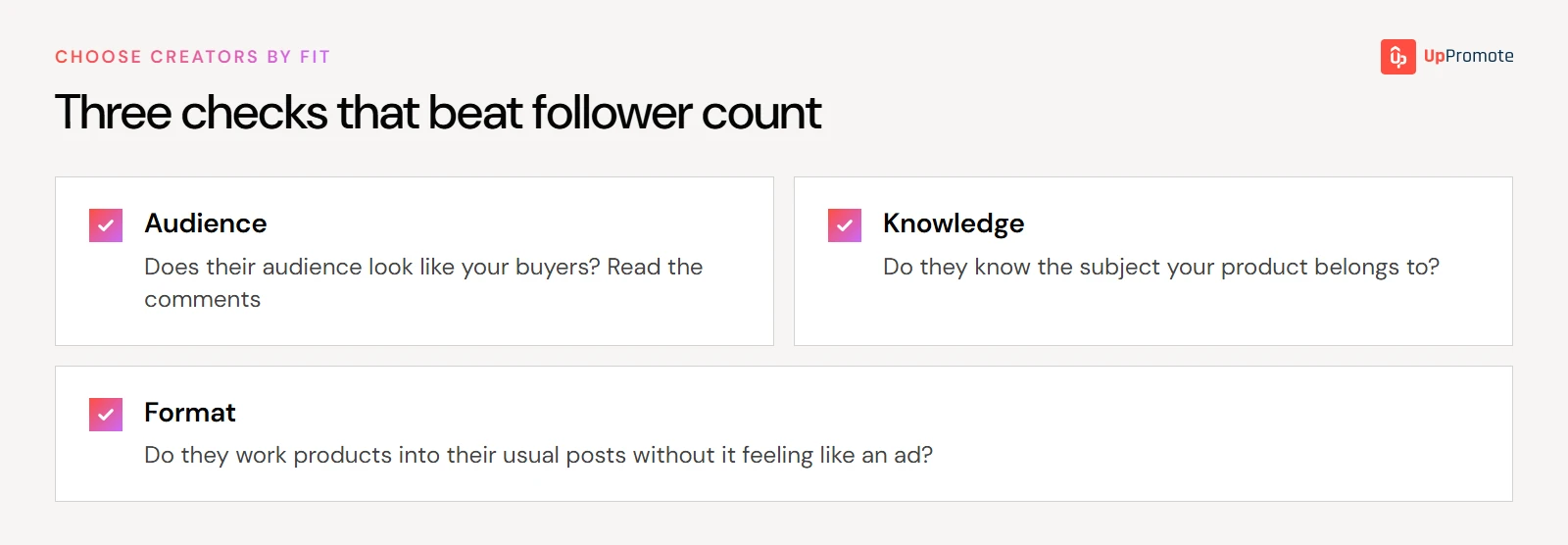
Use the follower band only to narrow the search, then judge each creator on these three things:
- Their audience looks like your customers. Read the comments, not the follower count. Who’s talking, and where do they live?
- They know the subject. A creator who trains, cooks or crafts every day recommends products differently from one who reviews whatever arrives.
- They work products into their own posts. Look at past sponsored posts. Do they sound like the creator, or like a script?
To confirm an applicant owns the account they list, turn on social identity verification at Settings > General > Affiliate review. The creator pastes a code into their Instagram or TikTok bio before they can finish signing up. It doesn’t tell you whether their followers are real; for that, read their comments and check how engagement compares with their follower count.
4. Gift product for the first post
Send each creator you approve the product, so the first post costs them nothing. Don’t expect every gift to turn into sales, though. In UpPromote’s data, about 1 in 5 brand-new creators who got a gift went on to bring in an order, while creators who already sold for the store mostly kept selling.
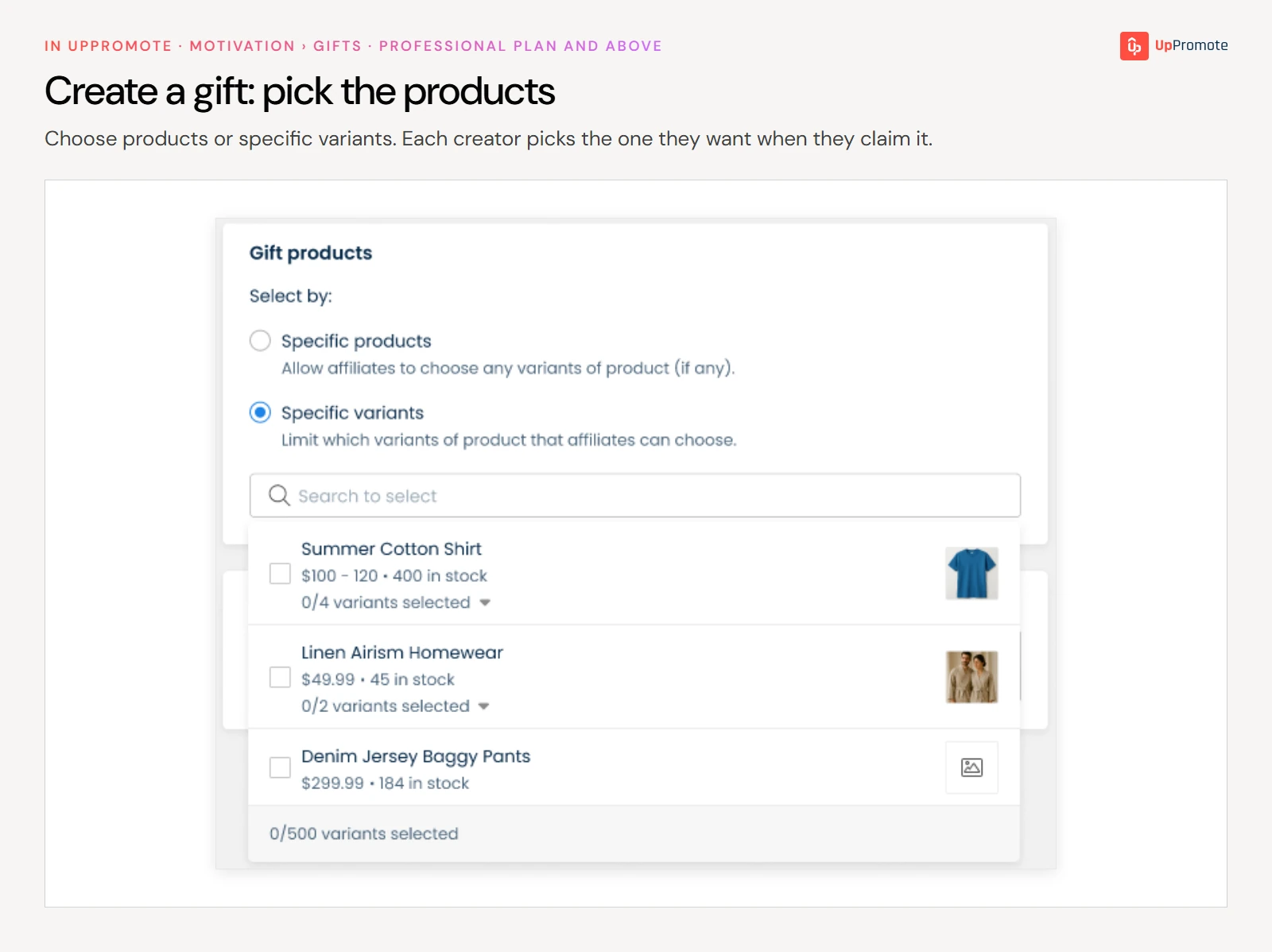
In UpPromote, Gifts can send product automatically when a creator joins the program, and let them pick the variant they want. It’s on Professional and above; on lower plans, ship the product yourself. The full process is in influencer gifting.
A free product counts as a material connection. The FTC says the creator must disclose it with the post, and the brand should tell them to and check what they post.
5. Pay commission on sales
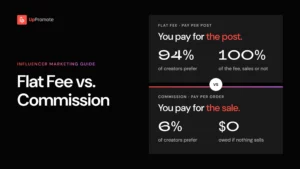
For micro-influencers, commission on sales is usually the best fit. Many of them are happy to work for product plus commission, and you only pay when a post brings in orders. If a creator you really want asks for a fee, offer a smaller fee plus commission rather than a full fee.
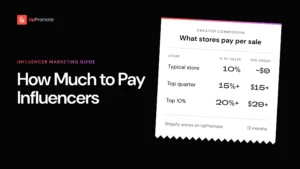
For a sense of the rate, the typical store on UpPromote pays creators about 10% of the sales they bring in, and micro creators earn about the same.
Commission doesn’t have to be cash. Nutriland pays its micro-influencers 5% of their coupon sales as store credit, with a bonus at 25 referrals.
For amounts and how to set yours, see how much to pay influencers.
6. Give each creator a link and a code
Most creator orders come through the code, so give every creator one as well as a link.
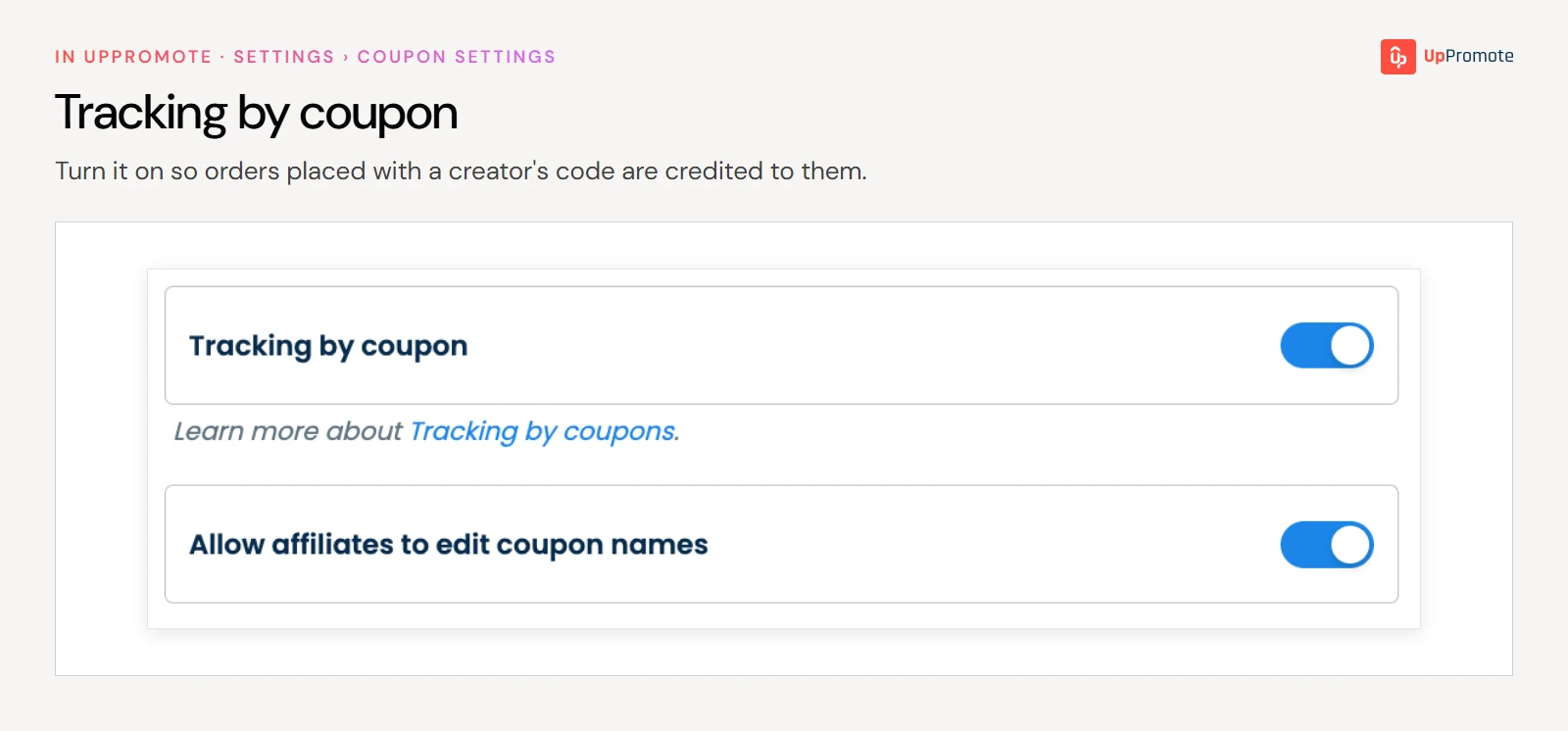
Codes need one setting first, because coupon tracking is off by default:
- Go to Settings > Link & coupon > Coupon settings and turn on Tracking by coupon.
- Create or assign each creator’s code. On Free and Growth, you assign one code per creator by hand. On Professional and above, Auto-generate coupon creates a code for each creator when they join, and can let them pick their own.
- Share the link and code with the creator.
Turn tracking on before you create or assign codes, or orders placed with them won’t be credited.
7. Measure each creator by sales
Judge creators the way you pay them: by orders. With a link and a code per creator, you can see each one’s referred orders and revenue, and spot who sells and who doesn’t.
For the program as a whole, use cost of sale: what you pay creators (commission, bonuses and gifts), divided by the revenue they brought in. Likes and views tell you who’s reaching people; sales tell you who to keep.
8. Pay more to the few who sell
Once you know who sells, reward them. Higher rates, bonuses and lifetime commission all raise what a seller earns without paying anyone ahead of results:
- Auto-tier moves a creator into a higher-paying program once they reach a level of sales, commission or referrals.
- Bonuses pay a fixed amount or a percentage when a creator hits a target in referrals, sales or commission. The target needs at least one sale, so a bonus can’t become a flat monthly fee.
- Lifetime commission ties each customer a creator brings to that creator, so they earn on repeat orders too. It isn’t retroactive: it only connects customers who order after you turn it on.
All three need Professional or above. On Growth, you can pay a one-off bonus by adding a manual fixed-amount referral.
For how to test new creators and grow the program from there, see how to scale influencer marketing.
Which niches suit micro-influencers?
Any niche with a community that buys on the word of people who actually use the product. That usually means products people try, use often and talk about:
- Supplements and sports nutrition: Nutriland and Pitstop Nutrition
- Food: Naughty Nuts
- Beauty and hair care: Tribal Chimp
- Hobbies and crafts: Altenew
In each, the best creators are people who already use products like yours every day, and whose followers come to them for exactly that kind of advice.
Final thoughts
Micro-influencers are the size stores pick most, and for good reason: engaged followers, a clear niche and a willingness to work on commission. But follower count alone won’t tell you who will sell.
So pick creators who fit your customers, send them product, pay them on sales with a link and a code, and give more to the few who come through.