




Most guides to running an influencer campaign give you the same list: set a goal, find creators, brief them, track the results.
What they leave out is the clock. When should the first sale come in? How many creators do you need before one of them sells? When is it fair to look at the numbers and decide?
Data from new stores on UpPromote gives a clear answer to all three:
- The first creator sale takes about a month. For a typical new store, it came around 5 weeks after setting up the program.
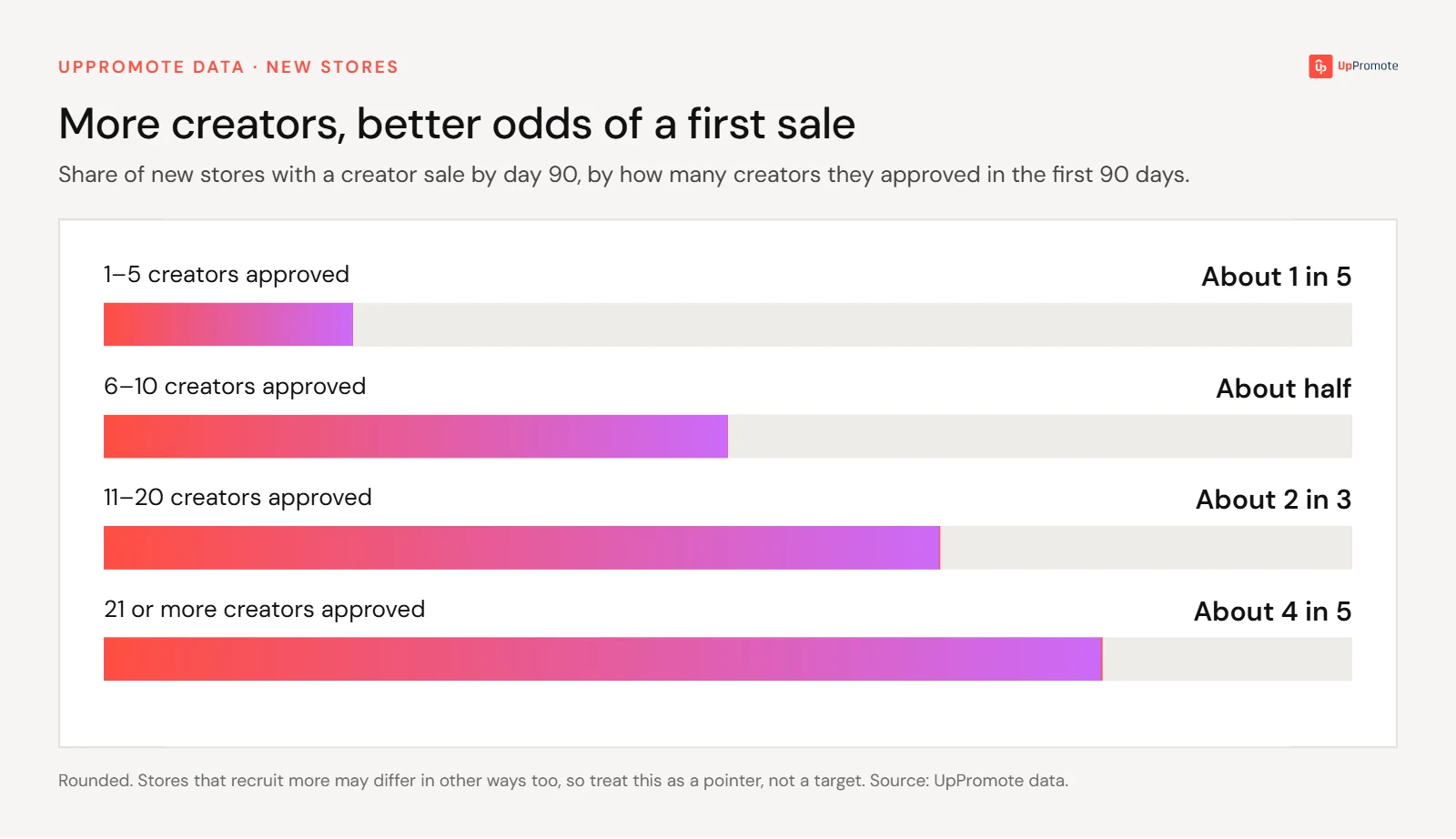
- More creators means better odds. Stores that approved only a handful of creators in their first three months mostly had no creator sale yet. Stores that approved 20 or more mostly did.
- Judge at about 90 days, not 30. At day 30, most new programs had no creator sale yet. By day 90, the picture is much clearer.
The rest of this guide takes a first campaign in order, from the goal to that first review at about day 90, with what the data shows at each step. After that: how to plan the year around it, and how to take it to a new country.
What is an influencer campaign?
An influencer campaign is a set stretch of time in which you work with creators to show your product to their audience.
The goal can be different from one campaign to the next:
- Awareness: getting your brand in front of a new audience, for example at a product launch.
- Content: getting photos and videos from real people that you can reuse in ads and on your site.
- Sales: orders you can trace back to each creator through their code or link.
This guide focuses on campaigns that aim for sales, because that’s where most Shopify stores start and where results are easiest to measure. Most of the steps work for the other goals too.
How to run an influencer marketing campaign
Here are the steps, in the order you’ll do them:
- Pick one goal and decide how you’ll measure it.
- Set up the offer, the program and tracking before you launch.
- Invite more creators than feels necessary.
- Send the product and a short brief.
- Launch, then follow up on a schedule.
- Hold the first review at about day 90.
- Keep the creators who sold.
1. Pick one goal and decide how you’ll measure it
A first campaign works best with one clear goal. Decide it before you pick a single creator, because it shapes who you invite, what you offer and what the brief asks for.
| Goal | What to measure |
| Awareness | Reach, views, new followers, branded searches |
| Content | Number of usable posts and videos, and rights to reuse them |
| Sales | Orders through each creator’s code or link, and cost of sale |
For a sales campaign, decide now what you’ll count when you review:
- Orders that came through each creator’s code or link.
- Cost of sale: what you paid creators (commission, plus any fee), divided by the revenue those orders brought in. Keep the cost of gifts as a separate line, since you pay for them before anyone sells.
Cost of sale is the number that tells you whether to keep going. A creator who brings orders at a cost you can accept is worth more than one whose post got plenty of views and no orders.
2. Set up the offer, the program and tracking before you launch
Three things need to be in place before the first creator says yes: what you offer, where creators sign up, and how their sales get tracked.
The offer
For a sales campaign, the simplest offer is product for the first post, then commission on every sale the creator brings in through their own code and link.
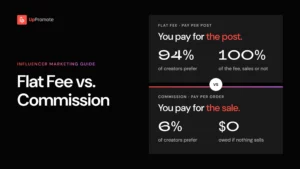
That ties what you pay to what you want. A flat fee buys reach, a post on your timing or content you can reuse, but not orders. If a creator you really want won’t post without a fee, offer a smaller fee plus commission rather than a full fee.
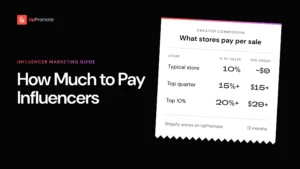
For a sense of the rate, the typical store on UpPromote pays creators about 10% of the sales they bring in. To set your own rate from your margin, see how much to pay influencers.
So a first campaign costs you the product and shipping for each gift, commission on the sales that actually happen, any fees you agree, and your affiliate app.
A program of their own
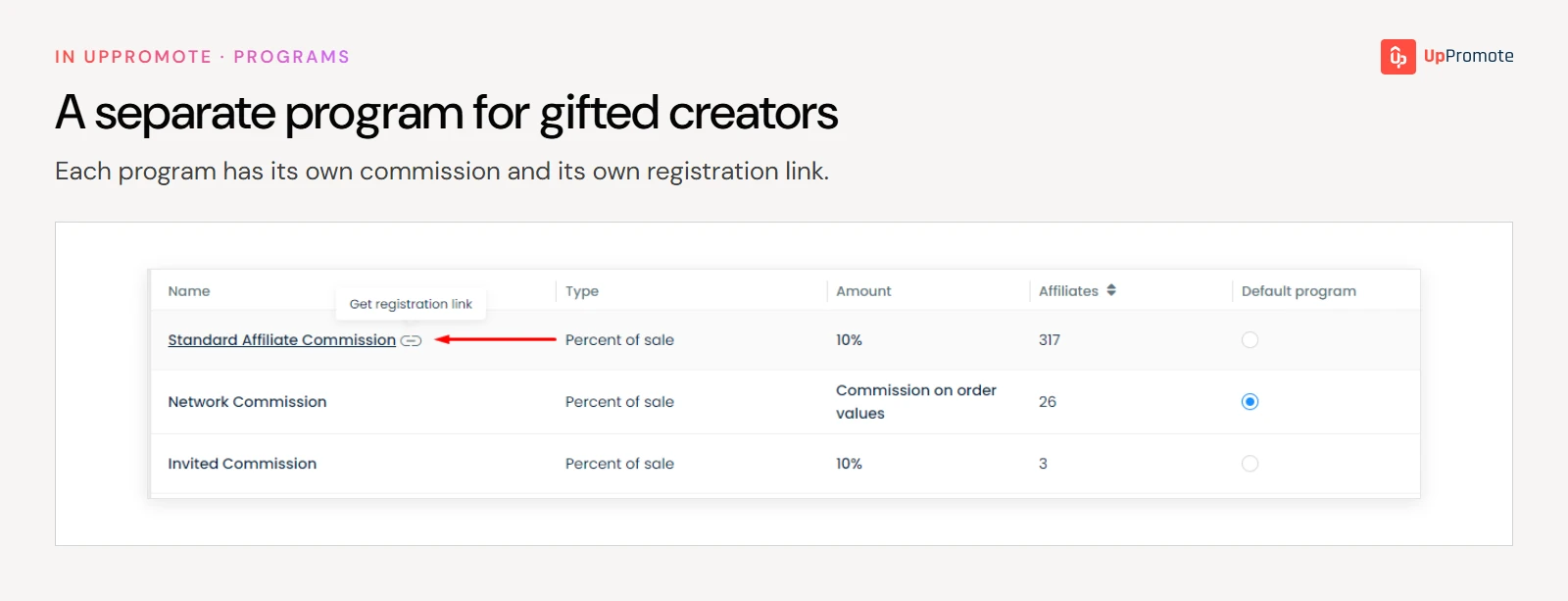
Put creators in a program of their own, apart from customers who refer friends, with its own commission and sign-up form. That way you can set a rate that makes sense for creators and see their results on their own.
It seems to help. In UpPromote’s data, stores that put most of their creators in a separate program saw a bigger share of them make a sale than stores that left everyone in one default program. (Stores chose this themselves, so treat it as a pointer, not proof.)
How to set it up is covered in influencer affiliate marketing.
Tracking, with coupon tracking turned on
Give every creator both a code and a link, but expect the code to do most of the work. In a typical store on UpPromote, about 8 in 10 creator sales came through the creator’s code, and only about 1 in 10 through their link.
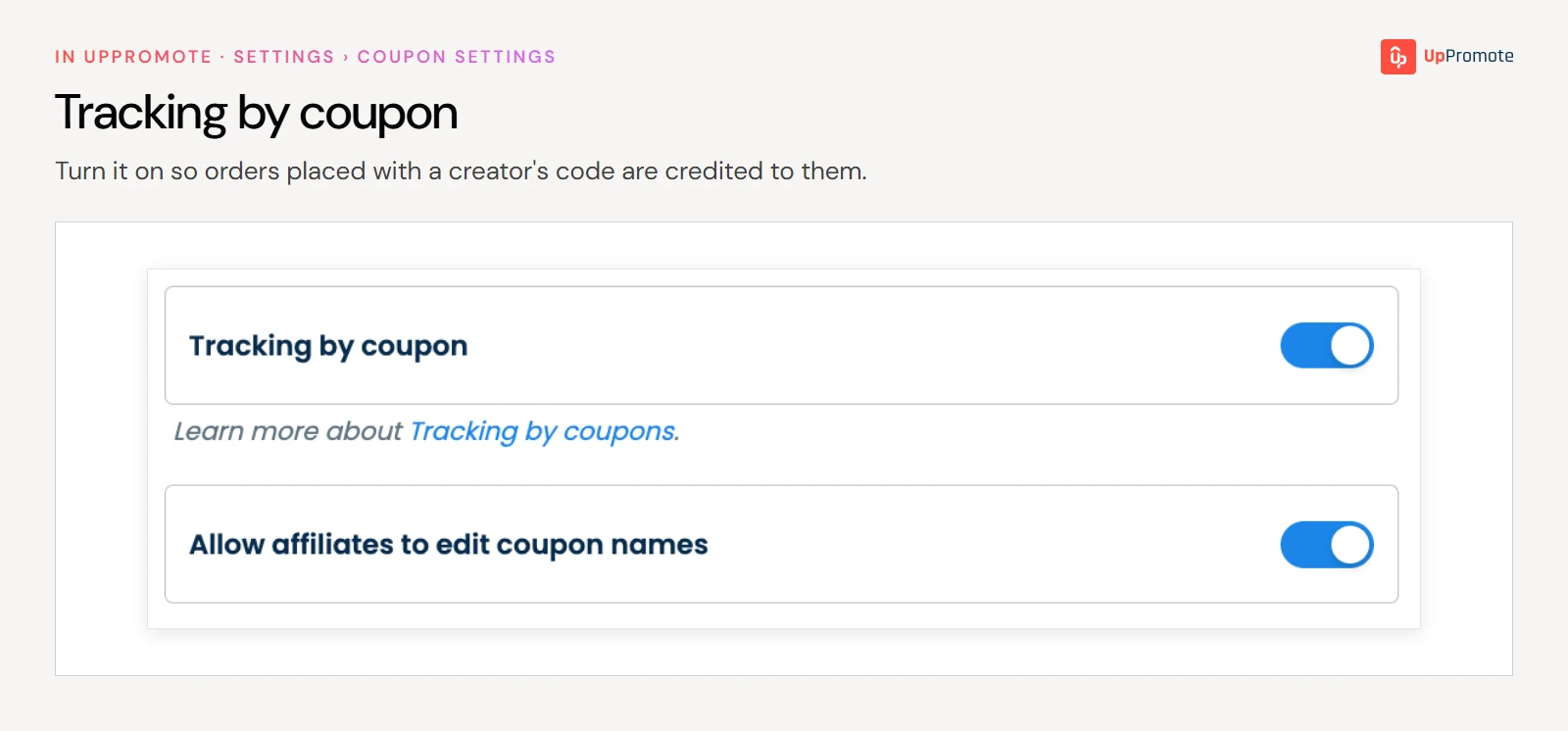
In UpPromote, code tracking is off by default. Turn it on before you create any codes:
- Go to Settings > Link & coupon > Coupon settings.
- Turn on Tracking by coupon.
- Then create or assign each creator’s code.
Everything else about links, codes and the size of the discount is in how to track influencer sales and influencer discount codes.
3. Invite more creators than feels necessary
Don’t wait for creators to find you. Very few will. A typical store on UpPromote gets only a handful of creator applications over six months, so a program that only opens its doors and waits can expect a trickle at best.
The Carnivore Bar didn’t wait. It sent product to creators first, then invited the ones who loved it to join its program. Its affiliates grew from 50 to 500 in just over a year.
Recruiting matters because only a few of the creators you approve will sell: about 1 in 10 at a typical store. So the number you recruit in your first campaign makes a big difference:
| Creators approved in the first 90 days | Stores with a creator sale by day 90 |
| 1–5 | About 1 in 5 |
| 6–10 | About half |
| 11–20 | About 2 in 3 |
| 21 or more | About 4 in 5 |
Stores with more creators didn’t get better creators. They just gave themselves more chances. (Those stores may differ in other ways too, so there’s no magic number. The point is to recruit more than feels necessary.)
Who you invite matters as much as how many. Pick creators by fit, not follower count:
- Their audience is your customer. Read the comments on their posts, not just the follower number.
- They know the subject. A creator who already uses products like yours explains them better.
- Your product fits their format. They can work it into what they already post without it looking like an ad.
The full process for finding and vetting them is in how to find influencers.
4. Send the product and a short brief
The gift is how a creator gets to try the product before saying anything about it. Send it to the creators you’ve approved, not to everyone who applies. How to choose and send gifts is covered in influencer gifting.
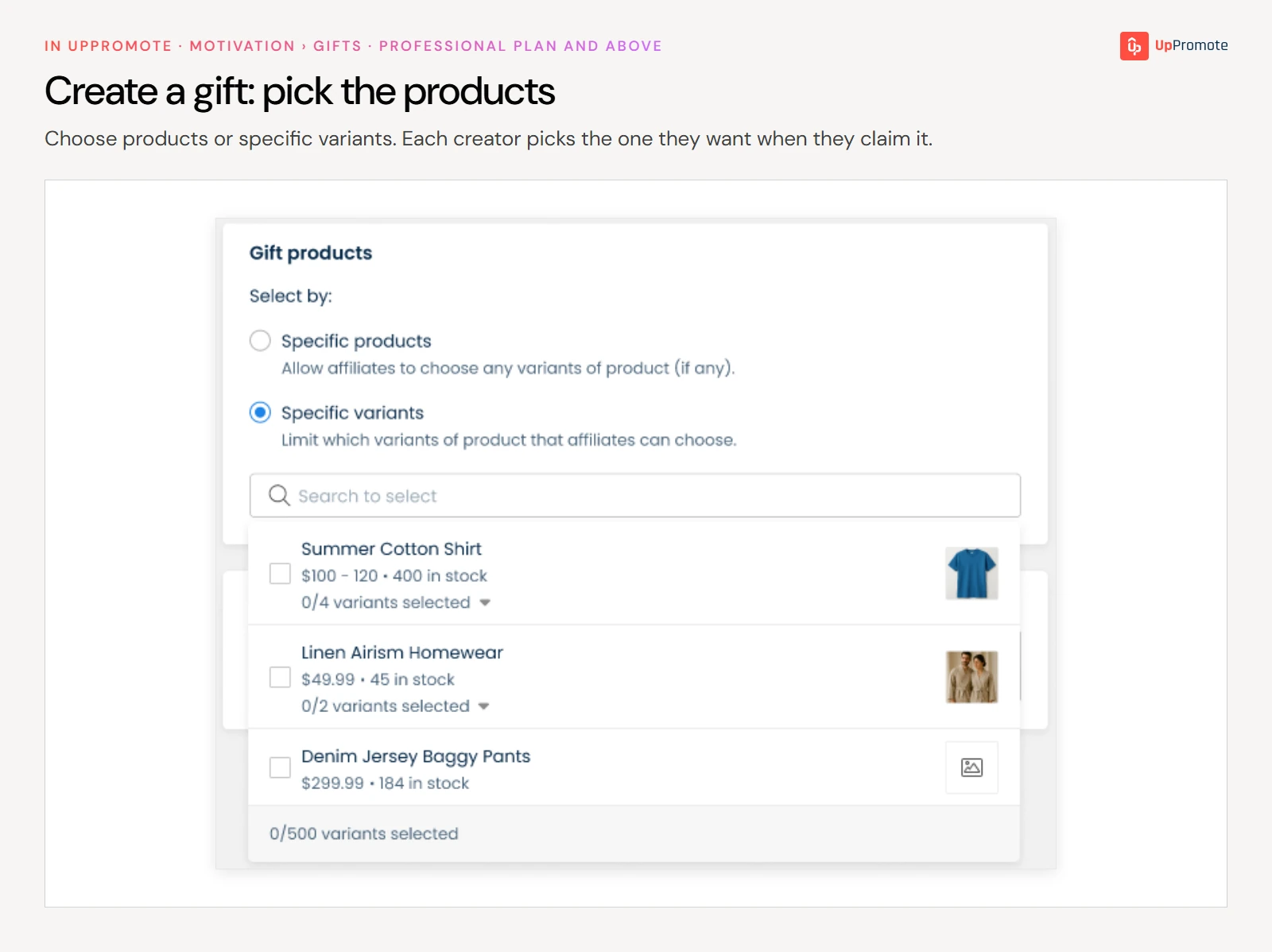
Expect only some of them to sell. In UpPromote’s data, about 1 in 5 brand-new creators who got a gift went on to bring in an order.
Freewell Gear does this with care: it reviews each creator application by hand and sends free samples only to creators it trusts. Its program has recorded as many as 270 referrals in a single month.
Send a short brief with the product. Say what the product is for and what the post must include (the code, the link). Leave the rest to the creator: they know what their audience responds to, and a script reads like one.
The brief also needs the disclosure rule: under the US Federal Trade Commission’s guidance for influencers, free product is a relationship the creator has to disclose, in the post itself.
5. Launch, then follow up on a schedule
Once the gifts go out, sales come in slowly. In UpPromote’s data, about a third of the first orders from gifted creators came within two weeks of the gift, more than half within a month, and three quarters within two months. Plan your follow-ups around that:
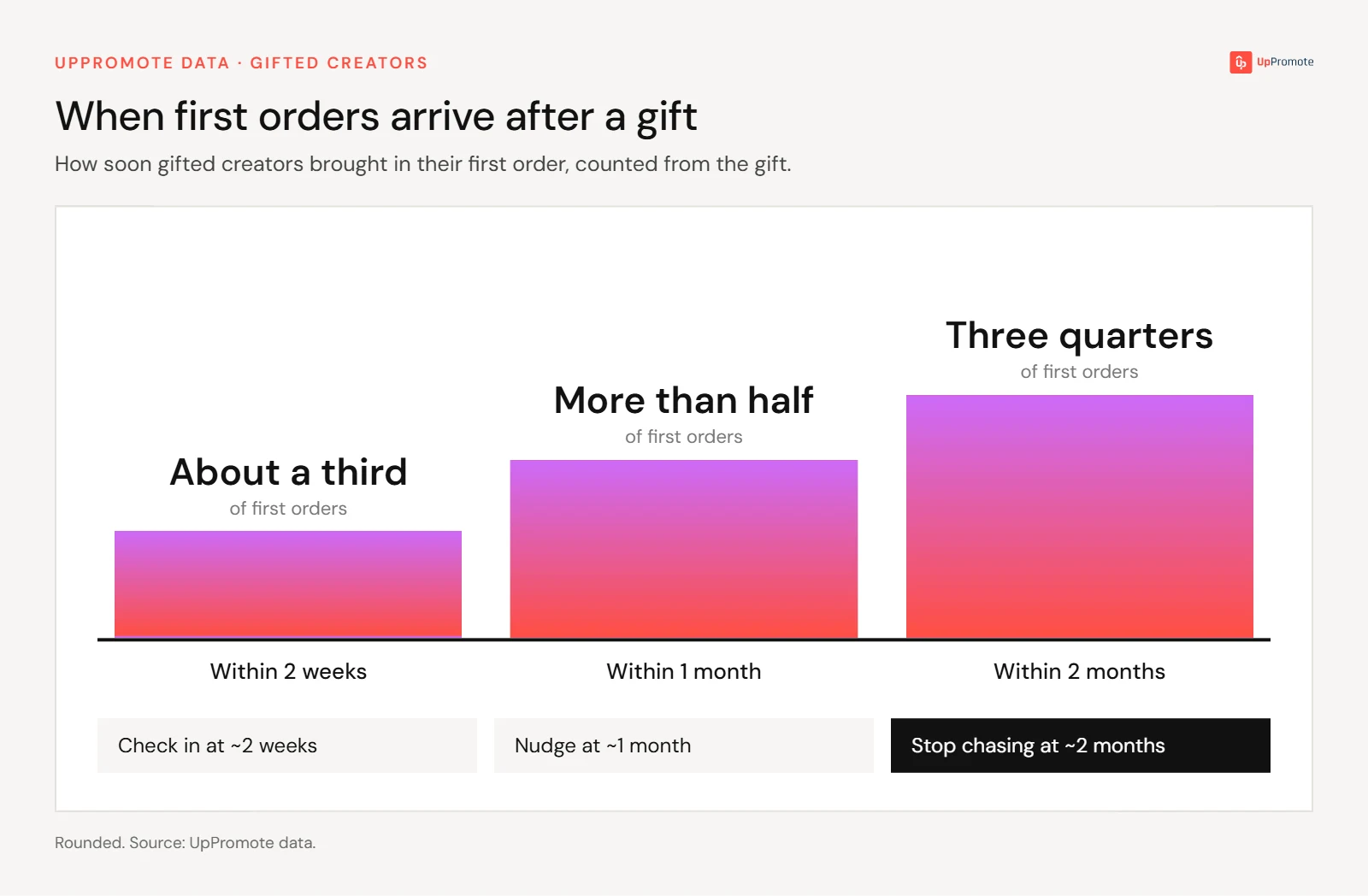
- About two weeks after the gift arrives, check in. Did it arrive? Any questions? Do they have their code?
- At about a month, send a second nudge if nothing has gone up, with a reminder of the code and what each sale earns them.
- After about two months, stop chasing. Most of the orders that will come from that gift already have.
6. Hold the first review at about day 90
Day 90 is when your first campaign has had a fair chance. Earlier than that, you’re mostly looking at creators who haven’t got round to posting yet.
In UpPromote’s data, most new programs had no creator sale at all by day 30. And of the creators who ever made a sale, about 3 in 4 had made their first one within three months of joining. So a review at about three months already sees most of the creators who will sell at all.
At the review, look at what you decided to count in step 1:
- Orders per creator. Expect most creators to have none. At a typical store, about 1 approved creator in 10 sells.
- Who brought them. A handful of creators usually bring a large share of the sales. In a typical store, the top creator alone brought in about a quarter of all creator sales.
- Cost of sale. Compare what you paid creators against the revenue they brought in, and against your margin.
A first campaign that ends day 90 with a few sellers and a cost of sale you can live with has done its job. One that ends with no seller after only a handful of creators hasn’t really been tested yet: recruit more before deciding. How to measure return in more depth is in influencer marketing ROI.
7. Keep the creators who sold
The review sorts your creators into two groups, and they behave very differently afterwards. In UpPromote’s data, about half of the creators who sold in their first three months sold again in the next three. Of the creators who hadn’t sold, almost none started.
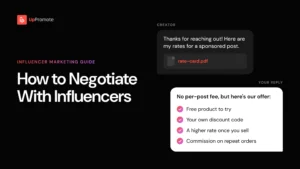
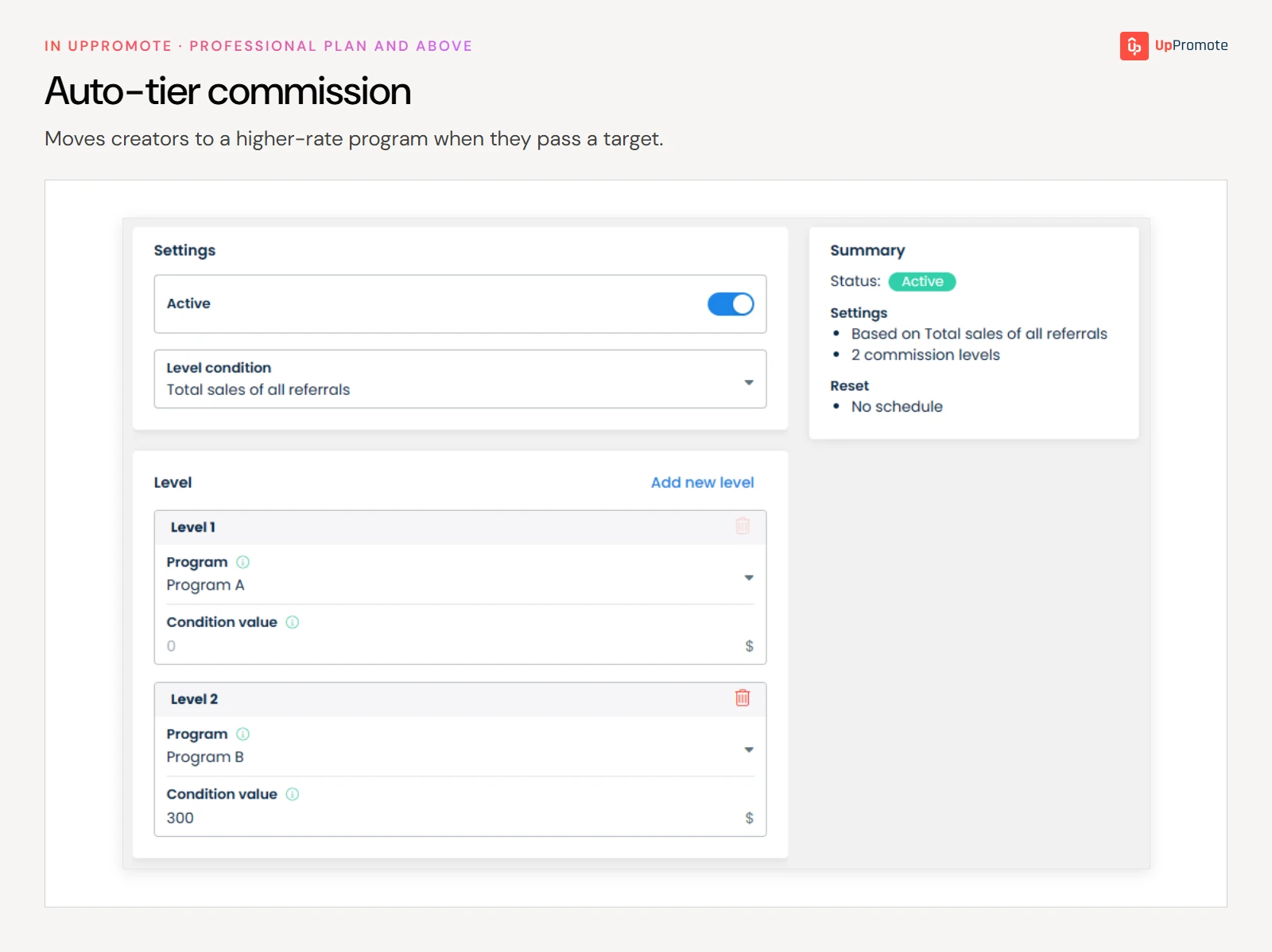
So put your effort behind the sellers. Pay them well when they sell: a higher rate, a bonus for hitting a target, or lifetime commission so they earn on their customers’ repeat orders. On UpPromote, bonuses, automatic tier upgrades and lifetime commission are on Professional and above.
Pitstop Nutrition does this with two programs. Athletes start at 3.5% commission plus a £50 product voucher, and those who hold £3,000 in monthly referral sales over several months move up to 5% plus a £150 voucher automatically. Its affiliates now bring in about 60% of its daily orders.
How to raise a seller’s rate is covered in how to negotiate with influencers. Testing new batches of creators and growing from there is in how to scale influencer marketing.
How long does an influencer campaign take?
Plan on about three months from launch to the first real review, plus the set-up before it:
| When | What you do | Why |
| Before launch | Set the goal, offer, creator program, coupon tracking and codes | So the first post can already be tracked |
| Weeks 1–2 | Invite and approve creators, send gifts and the brief | Most creators won’t sell, so start with plenty |
| Weeks 3–4 | First check-in with each creator | About a third of first orders come within two weeks of the gift |
| Around day 45 | Second nudge to creators who haven’t posted | More than half of first orders come within a month |
| Around day 75 | Stop chasing creators who haven’t posted | Three quarters of first orders have come by two months |
| Day 90 | First review: orders, who sold, cost of sale | Most creators who will sell have done so by now |
| After the review | Reward the sellers, test a new batch | Creators who sold once are likely to sell again |
Later campaigns move faster, because you start with creators who’ve already sold.
How to plan influencer campaigns over the year
Plan the year around your own store’s busy months, not a generic marketing calendar.
In UpPromote’s data, creators didn’t have a holiday peak of their own. Their sales rose and fell with the store’s other affiliate sales, so a store that’s busy in November sees creators sell more in November, and a store that’s busy in summer sees it in summer.
That gives you a simple way to plan:
- Find your own peak months in your store’s order history. For some stores that’s Black Friday; for others it’s summer, back-to-school or a product’s season.
- Recruit and gift well ahead of each peak. Most gifts that lead to an order do so within two months, so gifts for a peak should go out about 4–8 weeks before it, to creators who have already joined.
- Recruit in the quieter months, so new creators have had their 90 days before the next peak arrives.
How to run influencer campaigns in a new country
Run each new country as its own first campaign: its own program, local creators and its own codes.
One Shopify store can already sell to several countries through Shopify’s international sales tools. The creator side needs the same split:
- A program per country. Each one gets its own commission, sign-up form and link, so you can set the rate from that market’s margin.
- Local creators. A creator’s audience needs to be in the country you’re selling to.
- Codes per creator, made with coupon tracking on, as in step 2.
UpPromote’s regional limit can restrict which countries an affiliate can sign up from. It says nothing about where their followers live, so you still have to check each creator’s audience yourself.
cfab runs its creators this way. From one Shopify Plus store, it has a separate program for each country it sells in (Germany, the US, France and the Netherlands), each with its own commission. Its US program launched with around 60 active creators.
Frederica, a Portuguese brand, keeps its creators local on purpose: it works only with influencers based in Portugal, because they reach the audience it wants. Each influencer promotes with either an affiliate link or a coupon code. In under a year, its program of around 200 influencers came to drive up to 25% of overall revenue.
Then run the same seven steps in the new country, and give it its own 90-day review.
A first-campaign checklist
Before launch:
- One goal, and how you’ll measure it (for sales: orders and cost of sale).
- The offer decided: product for the first post and commission on sales, with a smaller fee only where a creator you want needs one.
- A creator program of its own, with its own rate and form.
- Tracking by coupon turned on, then a code for each creator.
- A list of creators picked by fit, longer than feels necessary.
- A short brief with the code, the link and the disclosure rule.
After launch:
- Gifts sent and tracked.
- A check-in about two weeks after each gift arrives, a nudge at about a month.
- A review at about day 90: orders per creator, who sold, cost of sale.
- Better pay for the creators who sold, and a new batch to test.
Final thoughts
A first influencer campaign is mostly a search. Set one goal, get the offer and tracking right before anyone posts, invite more creators than you think you need, and give them about 90 days before you judge.
Most of your creators won’t sell. That’s normal. The campaign’s job is to find the few who do, and the rest of the year is built on them.