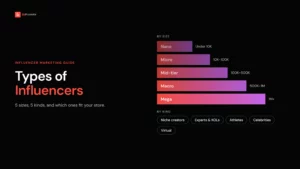












Micro-influencers have roughly 10,000 to 100,000 followers. Macro-influencers have more: from 100,000 up to around a million.
The usual advice is that micro-influencers win on engagement and trust, and macro-influencers win on reach. That’s fair as far as it goes. But if you pay creators on the sales they bring in, it answers the wrong question.
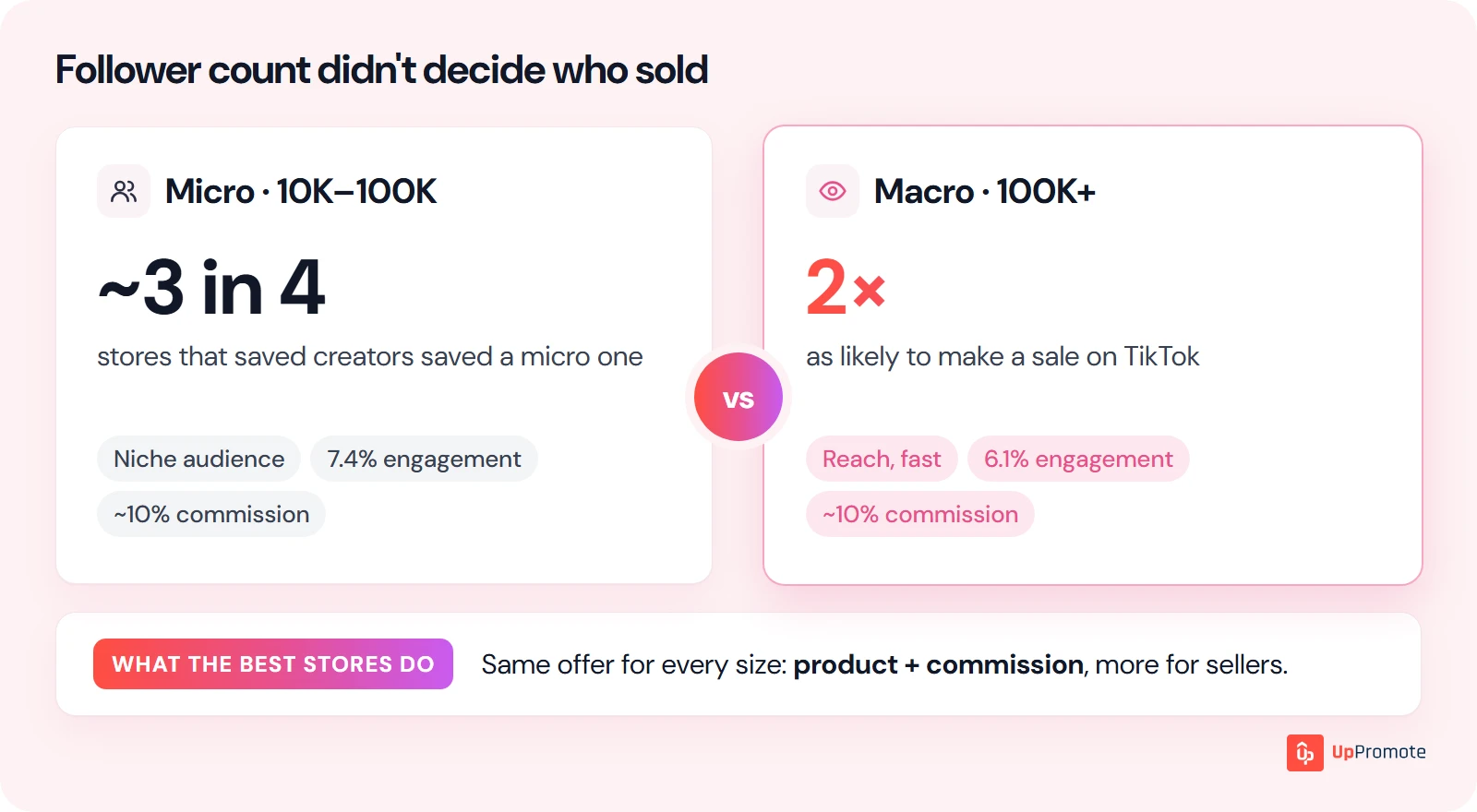
We matched creators in UpPromote stores’ affiliate programs to their follower counts and looked at what they sold. Follower count didn’t decide who sold: neither size sold consistently more often, and the typical big creator who did sell brought in fewer orders than the typical smaller one.
So here’s our answer: pick creators by fit, not size. If you want sales, offer every size the same deal: product, then commission on the orders they bring in, and more for the ones who sell. If you want reach from a big account, a fee can buy it; for a macro creator you really want, a smaller fee plus commission is the usual middle ground.
Let’s start with the differences, then get to what the sales data says.
What’s the difference between micro and macro influencers?
The difference is the size of the audience, and what comes with it. A micro-influencer talks to a smaller, often niche group of people. A macro-influencer talks to a lot of people at once.
Here’s how the two compare:
| Micro-influencers | Macro-influencers | |
| Followers | About 10K–100K | 100K+ (most definitions stop at about 1M) |
| What you get | A smaller, closer, often niche audience | Reach: many people, fast |
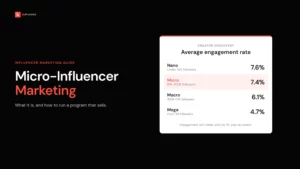
| Engagement | Higher (about 7.4%) | Lower (about 6.1%) |
| Who makes a sale | About 1 in 3 on Instagram, about 1 in 5 on TikTok | About 1 in 3 on Instagram, about 2 in 5 on TikTok |
| Orders from a typical seller | More | Fewer |
| Typical commission rate | About 10% | About 10% |
Is 100K followers a micro-influencer?
It’s right on the line. Most definitions start macro at 100,000 followers. Some lists add a mid-tier band from 100K to 500K and start macro at 500K; in this guide, “macro” means everyone from 100K up. Our guide to types of influencers covers every tier.
Which size do merchants usually look for?
Mostly micro. About 3 in 4 stores that saved creators in UpPromote’s Creator Discovery saved at least one micro creator, against about 1 in 5 that saved a macro one.
That’s a reasonable instinct, and our guide to micro-influencer marketing covers running a program built on it. The question is whether the bigger accounts are worth a second look, and that comes down to two things merchants usually weigh: engagement and sales.
Do micro-influencers get more engagement?
Yes, as a rule. Smaller audiences tend to like and comment more per follower.
A study in the Journal of Marketing, covering more than 1,700 Instagram influencers and 800 sponsored campaigns, found engagement rises with follower count up to a point and then falls. The sweet spot was neither the smallest nor the biggest accounts.
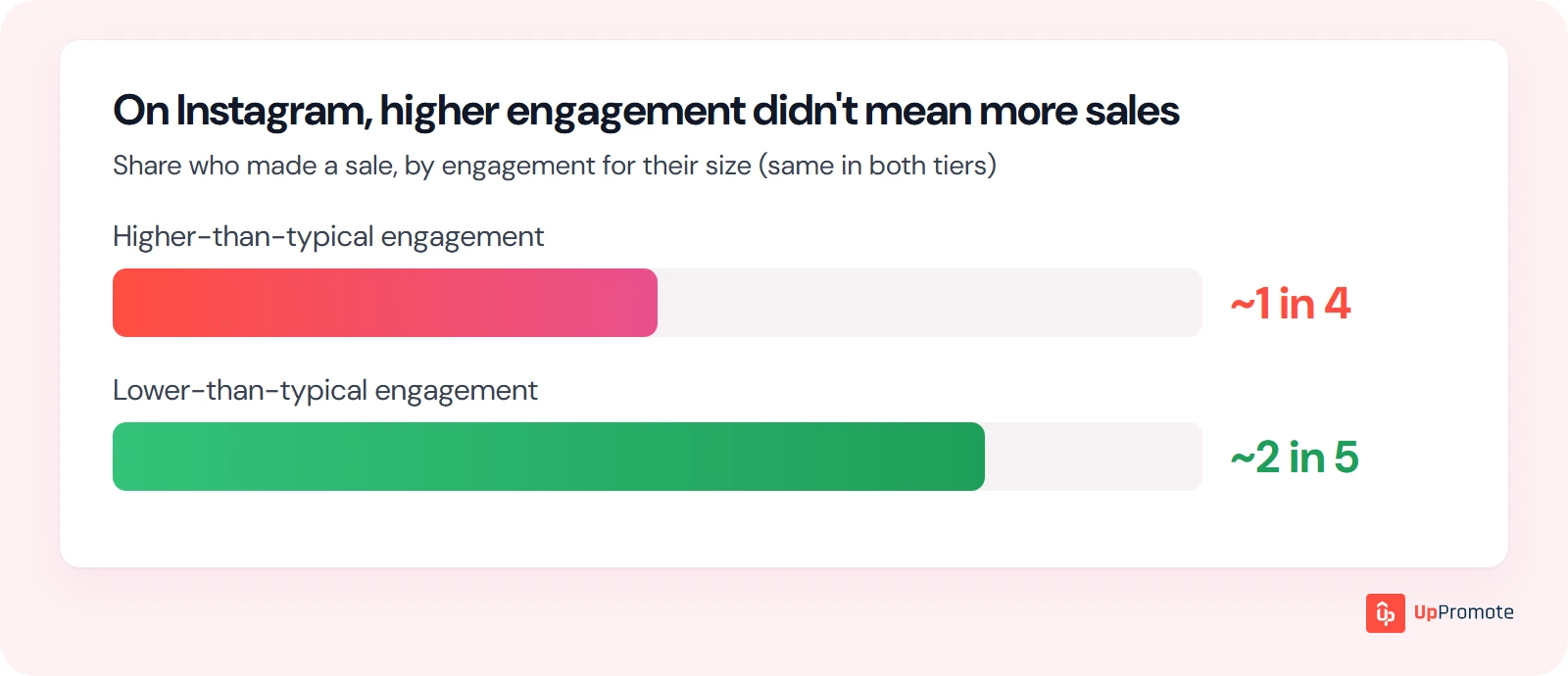
Our data shows the drop from micro to macro too. But engagement isn’t sales: on Instagram, creators with higher-than-typical engagement for their size were less likely to make a sale than those below it, about 1 in 4 against about 2 in 5, in both tiers.
That doesn’t mean low engagement sells. It means that on Instagram, a high engagement rate didn’t predict who would bring in orders, so it’s a weak reason to pick micro over macro, or one creator over another.
Do micro or macro influencers sell more?
Not consistently. Big accounts were about as likely to make a sale as smaller ones on Instagram, and more likely on TikTok.
Here’s the share of the creators in our data who made at least one sale:
- Instagram: about 1 in 3 for both micro and macro creators.
- TikTok: about 1 in 5 micro creators, against about 2 in 5 macro creators.
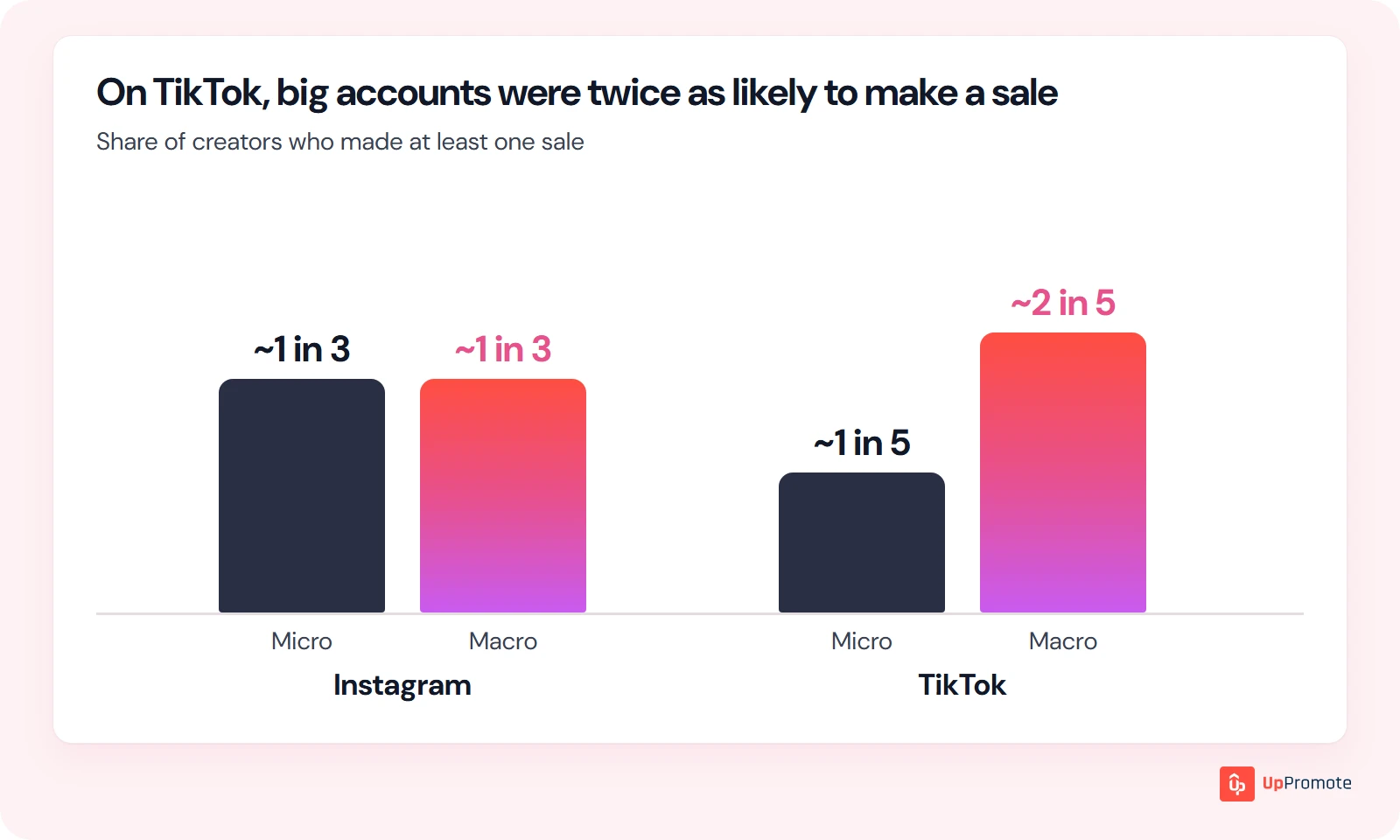
On Instagram it’s a tie. On TikTok, big accounts were about twice as likely to make a sale. The sample is small, so treat it as a reason not to filter out TikTok creators with 100,000+ followers, not as a rule.
Making a sale isn’t the same as selling a lot, though. What about the creators who did sell? The typical macro seller didn’t bring in more orders than the typical micro seller. It brought in fewer, on Instagram and on TikTok.
The totals tell a different story, because a handful of sellers carry each tier. Among the creators we matched, one standout account brought in about half of all macro orders on Instagram, and about two thirds of each tier’s orders on TikTok. A big account that takes off can sell a lot. A typical one sells about what a smaller creator does, or less.
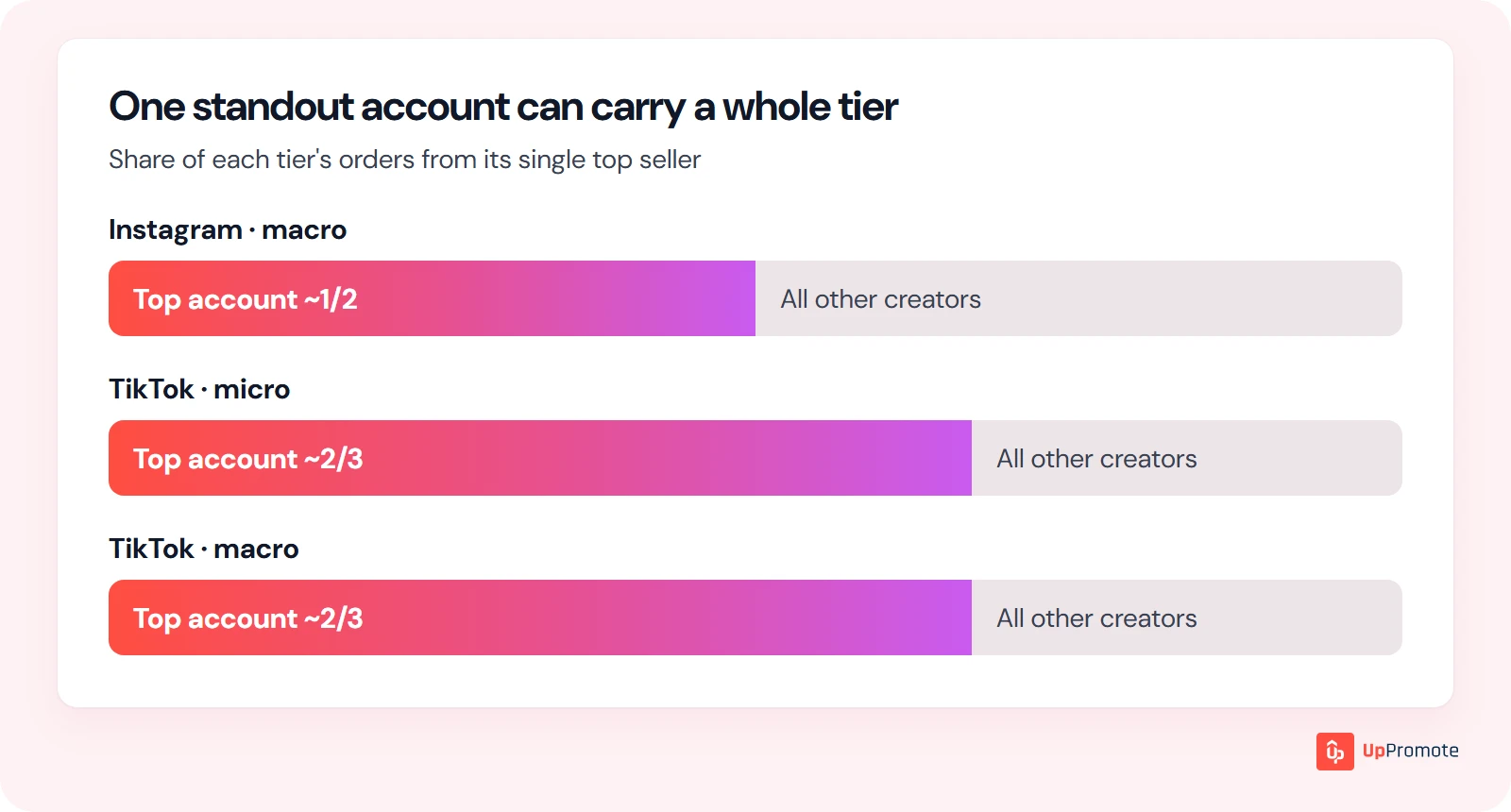
On TikTok, then, well-matched big creators are worth adding to the creators you try, because more of them made a sale. They aren’t a replacement for the smaller ones, because most of their orders came from a single account.
You can see the same pattern in Altenew, a craft supplies brand that works with creators “from nano to mega.” Most of its affiliates have 4,000 to 50,000 followers, but its highest-performing affiliate has more than 100,000. Follower count only sets where a creator starts in its program. Sales decide where they go from there.
So the useful question isn’t “micro or macro?” It’s “which creators will sell for my store?” And you only find that out by giving product to a good number of well-matched creators and seeing who brings in orders.
Which is cheaper, micro or macro influencers?
If you pay on commission, it’s close to a tie: the typical rate stores paid was about 10% for both sizes, on Instagram and on TikTok. What creators charge per post is a different question, answered in our guide on how much to pay influencers. That’s commission paid through the app; fees paid outside it don’t show up in our data.
At the same rate, a macro creator’s order cost a dollar or two more, which probably means slightly bigger orders (around $6–9 in commission per order for both). With fewer orders apiece, though, the typical macro seller earned less in total.
Here’s what one sale costs on commission, whoever makes it: a $60 order at 10% costs you $6. A creator who sells nothing costs you the product you sent. That’s true at 20,000 followers and at 400,000.
What if a macro influencer wants a fee?
Some will. One brand told our team it pays its bigger creators fixed fees, because those creators wouldn’t work through an affiliate tool. Another merchant told us about a creator with about 400,000 followers who’s paid 20% commission plus a fixed sum.
What a fee buys is reach, trust or content. It doesn’t guarantee orders. The post goes live and you’ve paid, whether it sells one order or a hundred.
If a creator you want asks for one, you have three moves:
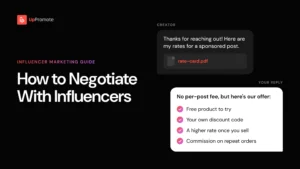
- Try to bring them onto commission. Our guide on negotiating with influencers covers how.
- Offer a smaller fee plus commission, so the post is guaranteed and part of the pay still follows orders.
- Judge the full fee on its numbers: how many orders it would need to match commission, and whether this creator is likely to sell that many. The flat fee vs. commission break-even walks through it. If what you want is reach or content rather than orders, a fee can still be worth it.
When is a macro influencer worth it?
When you need reach.
Reach is the clearest edge a macro creator has. A single post puts your product in front of a lot of people at once, which counts most when you’re launching something or need your brand seen fast. A fee pays for that reach whether or not anyone buys. If a macro creator agrees to work for product and commission instead, or a smaller fee plus commission, more of what you pay follows the orders it brings.
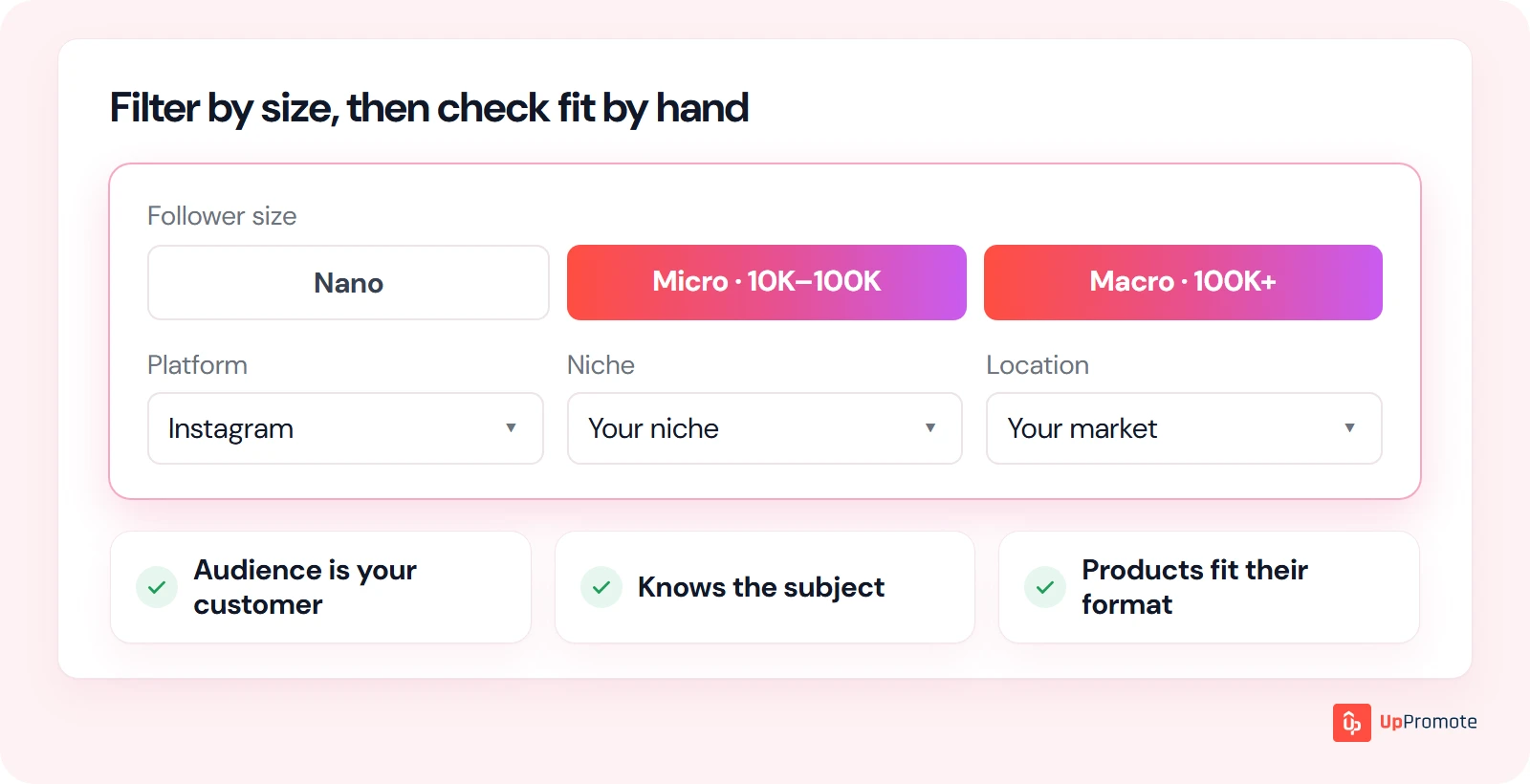
Fit matters more than size at every tier. Before you reach out to anyone, check three things:
- Their audience is your customer. Read the comments, not the follower count. Are these people who’d buy what you sell?
- They know the subject. A skincare creator who explains ingredients is a likelier fit for a skincare brand than a lifestyle account that mentions it once.
- They work products into their own format. If a sponsored post looks nothing like the rest of their feed, their followers will notice.
A macro creator who passes those checks is worth the same offer you’d make a micro creator: product, plus commission on their own link and code. The gift isn’t wasted on bigger accounts, either: in our data, gifted macro creators referred orders about as often as gifted micro ones.
What you can offer a big creator that a fee can’t is upside. Tell them at the start that pay rises with sales, and show them how far it can go. A creator confident in their audience has a reason to say yes.
If they’d rather have a guaranteed fee, weigh it against what you want from them. Your program doesn’t depend on any one creator, and the well-matched micro creators you’re already recruiting are on the same offer.
Can you work with both micro and macro influencers?
Yes, and some stores already do, but having both sizes doesn’t mean both sell. Each creator still has to sell.
German peanut butter brand Naughty Nuts shows one way to set up a mix. It built its program on micro-influencers, each paid a fixed 10% commission on every sale, with a personal 10% discount code for followers and a €50 gift card every month to buy its products. It also works occasionally with macro-influencers of up to 500,000 followers. Those deals are handled differently, often through story posts and formal contracts.
That works for a brand that does a macro deal only now and then and agrees each one separately. It does mean running two kinds of deal side by side. If you’d rather keep one, put every creator in one creator program with one starting offer, and pay more to whoever sells, whatever their size. Then a macro creator is judged by the same tracked orders as everyone else.
How to work with micro and macro influencers on commission
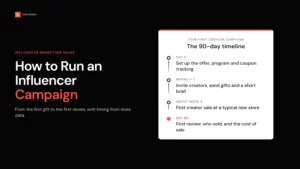
Here’s the process, start to finish:
- Find creators by size and fit. UpPromote’s Creator Discovery lets you filter Instagram, TikTok and YouTube creators by follower size, niche, location and audience. Set the follower filter to the band you want, then check fit by hand. More in our guide on how to find influencers.

- Set up a creator program. Give creators their own program and registration form, separate from your customer affiliates (Growth and above, since Free allows one program).
- Turn on coupon tracking before you create any codes. Tracking by coupon is off by default. Turn it on in Settings > Link & coupon > Coupon settings first, or orders paid with a creator’s code won’t be credited to them.
- Recruit creators and give each a link and code. Each creator gets their own link. On Professional and above, the app can create each creator’s code automatically when they join. On lower plans you assign each code by hand, and Free and Growth allow one code per affiliate.
- Send product. A gift is your chance at a first post without paying a fee. On Professional and above, the app can send a gift automatically when a creator joins, or you can send one by hand. The app’s gifts go to creators who’ve joined, so if you want to send product before someone signs up, ship it from your store yourself. More on influencer gifting.

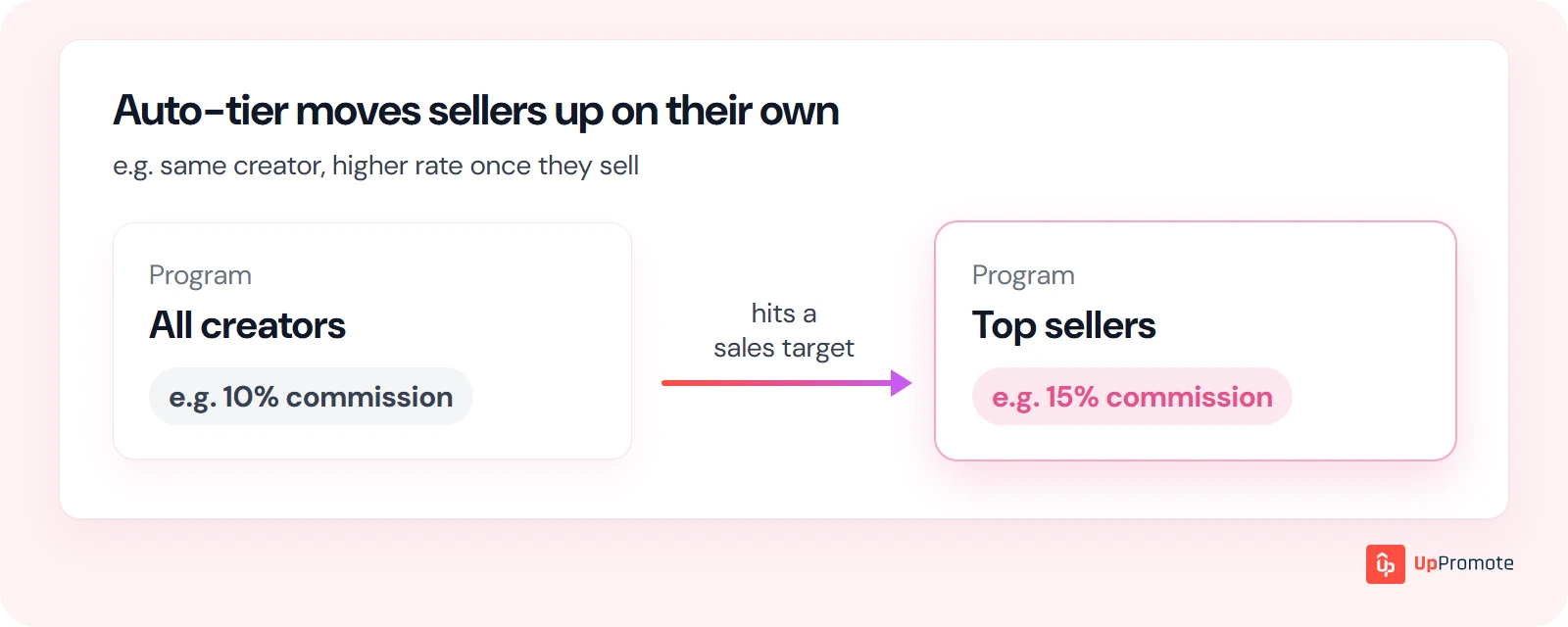
- Pay more to the ones who sell. On Professional and above, you have three ways to do it:
- Auto-tier moves a creator to a higher-commission program when they hit a sales target.
- A bonus pays out when they reach a target.
- Lifetime commission pays them on repeat orders from customers they referred.

- Judge each creator by tracked orders. Not followers, not likes.

Final thoughts
Micro or macro is a question about audience size. For a store that pays on sales, size didn’t tell us in advance who would sell, and on Instagram neither did engagement.
Pick creators whose audience is your customer, at any size. For sales, offer product and commission and pay more to the ones who prove they sell. For reach from a big account, a fee or a smaller fee plus commission can make sense. Either way, judge every creator by the orders they bring in.