











An influencer is a creator you work with for their audience: people who look like your customers but may never have heard of your product. A brand ambassador is someone who already buys your product, talks about it and sells it, and whom you keep on a separate, always-on commission track.
So the real difference isn’t follower count or the title on the contract. It’s the job the person does for your store: reach new buyers, or turn existing fans into steady sales.
What is an influencer?
An influencer is a creator whose audience is your customer. They often don’t know your product yet, and that’s the point: you work with them to put it in front of people who haven’t seen it.
How you pay depends on what you want from the post:
- If you want sales, send product first, give the creator their own code and link, and pay commission on the orders they bring in. Our influencer gifting guide covers the first step, and you can run the rest inside the affiliate program you already have, as our guide to influencer affiliate marketing explains.
- If you want reach or content you can reuse, a fee buys that.
- If a creator you really want asks for a fee, a smaller fee plus commission is the usual middle ground.
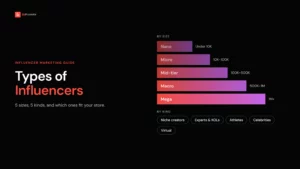
Who you pick matters more than how big they are. Read the comments under their posts: if they’re full of people who’d buy from you, the audience fits. Then check that the creator knows the subject and can work a product into their usual posts without it reading like an ad. (Follower bands such as nano, micro and macro have their own guide.)
What is a brand ambassador?
A brand ambassador is a partner who already sells your product and is kept on a separate commission track that runs all year. In your affiliate app, that track is simply its own program, with its own sign-up form, approval setting and commission. It usually comes with the ambassador’s own code, commission or store credit on what that code sells, and often tiers and a community of other ambassadors.
Don’t read too much into the word itself, though. “Ambassador” can mean a celebrity who fronts a brand, event staff handing out samples, or simply the name a store gives its open affiliate program. What decides the deal is who is in the program and what it pays, not what it’s called.
Where do brand ambassadors come from?
Mostly from your customers and fans: people who already buy the product and recommend it to friends. They need no follower minimum, and a small creator who sells steadily belongs on the track just as much as a loyal customer does.
They join your open program like anyone else, and the ones who sell move up into a separate ambassador program. An influencer who keeps selling can move up the same way. Who earns the ambassador track, and on what evidence, is covered in brand ambassador vs. affiliate.
Brand ambassador vs. influencer: the key differences
Here’s how the two compare:
| Influencer | Brand ambassador | |
| Job | Reach people who don’t know your product | Turn fans who already recommend you into steady orders |
| Who they are | Creators whose audience matches your customer | Customers and fans who already buy and recommend you |
| How they get in | You pick them by fit and send product | They join your open program and move up once they sell, as influencers who keep selling can |
| Knows the product | Usually not yet | Yes, they already use it |
| Deal length | Usually a campaign or a launch | Always-on, reviewed on sales |
| Pay | Depends on the goal: product and commission for sales, a fee (or smaller fee plus commission) for reach or content | Commission or store credit on their own code, often with tiers |
When sales are the goal, you judge both by the orders their code or link brings in.
The deal-length row is how the two roles are usually defined, not a rule. Nothing stops an influencer deal from running for years.
Do ambassador programs work better than influencer programs?
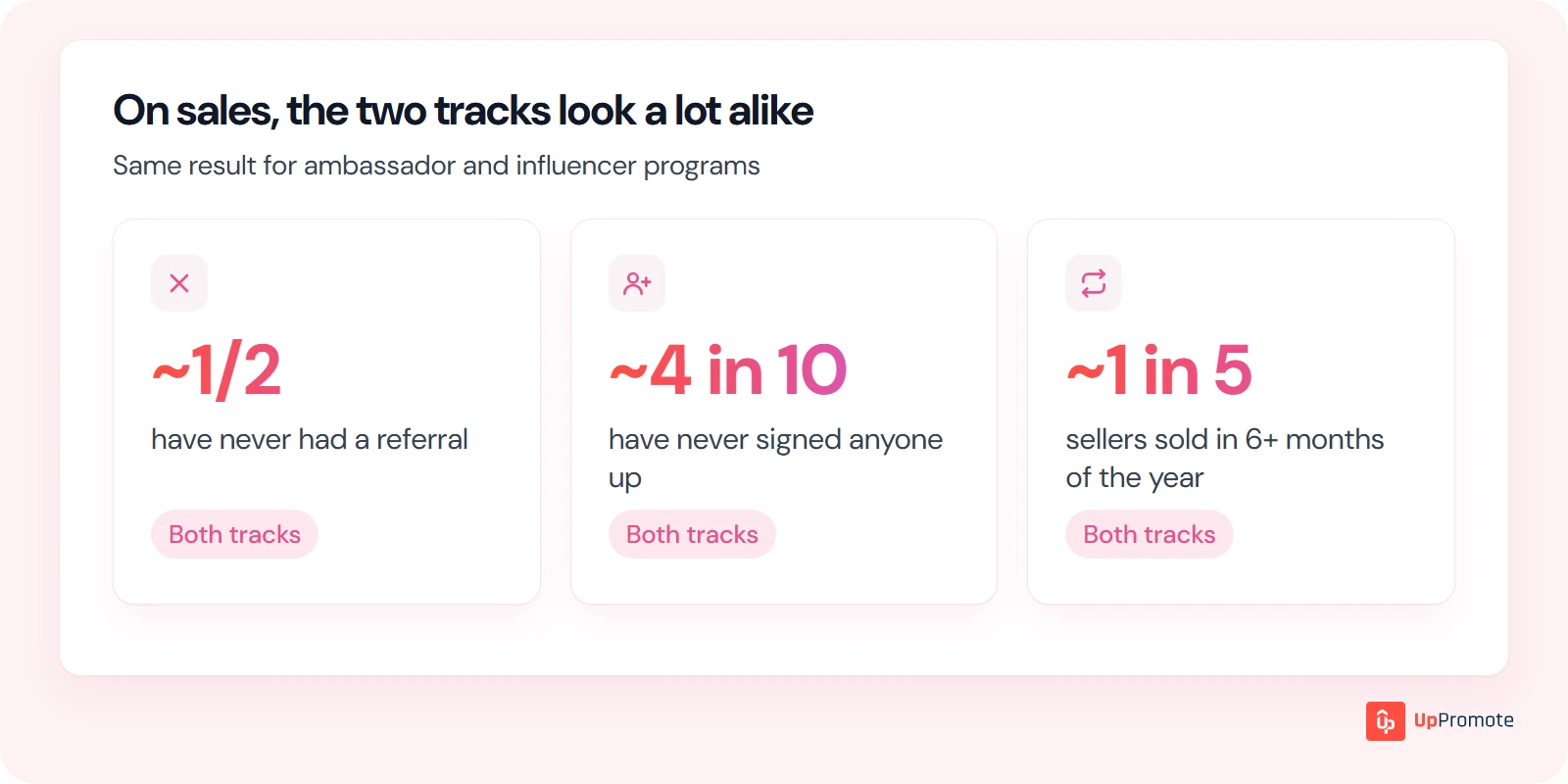
On paper, the two tracks look different. In store data, they look a lot alike:
- Many never get going: about half of each kind have never had a referral, and around 4 in 10 have never signed anyone up.
- The ones that have signed people up stay small, with a handful of partners each.
- Neither keeps its sellers busier: the typical seller in either kind of program made sales in only a couple of months a year, and only about 1 in 5 sold in six months or more.
A separate track doesn’t bring sales just by existing, and calling someone an ambassador doesn’t make them stick around longer than an influencer. The people on it do the work.
Brand ambassador or influencer: which should your store work with?
Pick by the job you need done.
Work with influencers when you need new people to see your product. A launch, a move into a new audience, or a young store with few customers all call for reach. Choose creators whose audience is your customer, send product, and decide up front whether you’re paying for reach or for orders.
Build an ambassador track when you already have customers who love the product. Existing buyers know exactly what they’re recommending, so bringing them in costs little. The track turns that word of mouth into tracked orders and gives the people who sell a reason to keep going.
Run both when you need both. A store with loyal customers usually still wants to reach new ones. That’s fine, as long as each track runs as its own program with its own form and rate. More on that below.
Can you run an ambassador program and influencer partnerships at the same time?
Yes, though fewer stores do it than run either track alone. The key is keeping them apart, because each program lets people in differently and pays them differently.
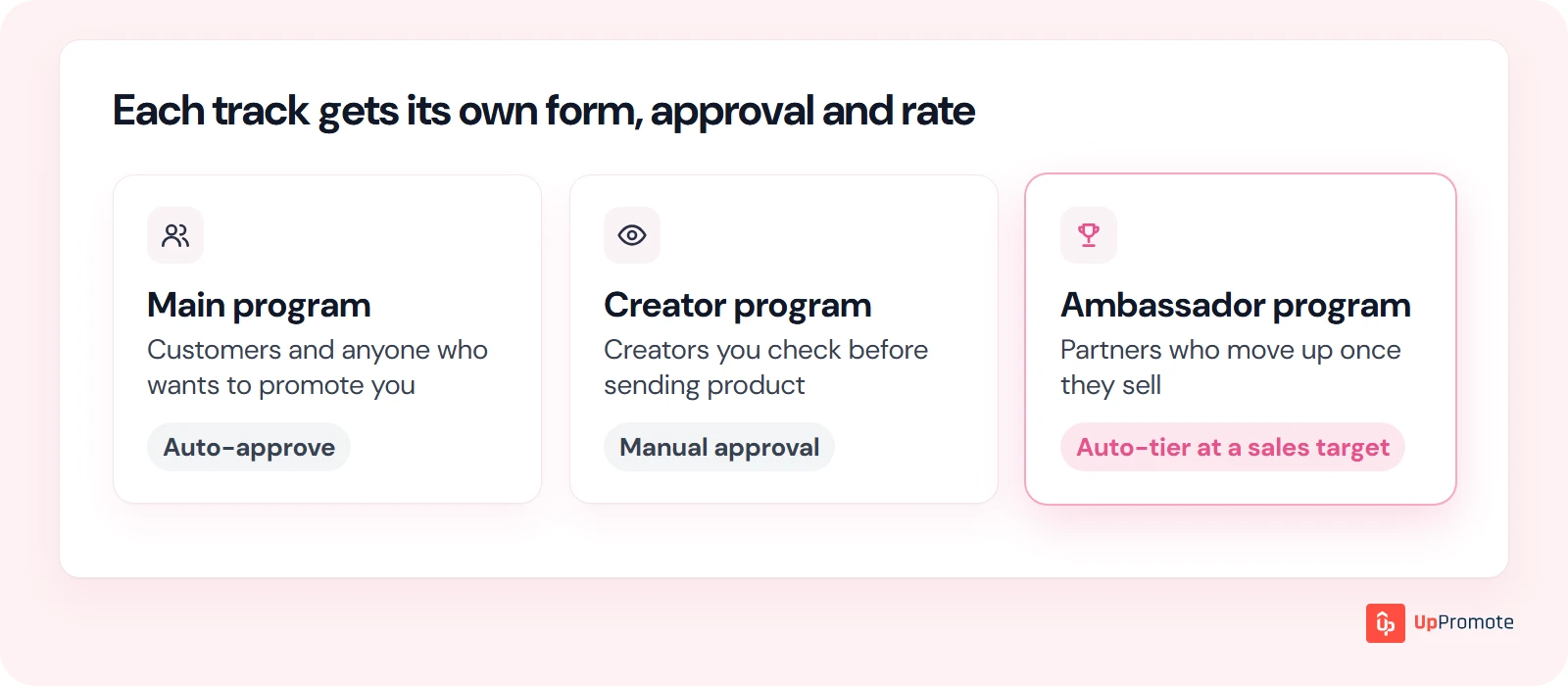
In UpPromote, each program has its own registration form and link, its own approval setting and its own commission. A common setup looks like this:
- Your main program, open to customers and anyone else who wants to promote you, on auto-approve.
- An influencer or creator program, on manual approval, so you can check each creator’s audience before you send product.
- An ambassador program that people move into once they sell, either by hand or automatically with auto-tier, which moves affiliates between programs when they hit a sales target you set.
The Free plan includes one program, so running separate tracks needs Growth or above, and auto-tier needs Professional. See pricing for details.
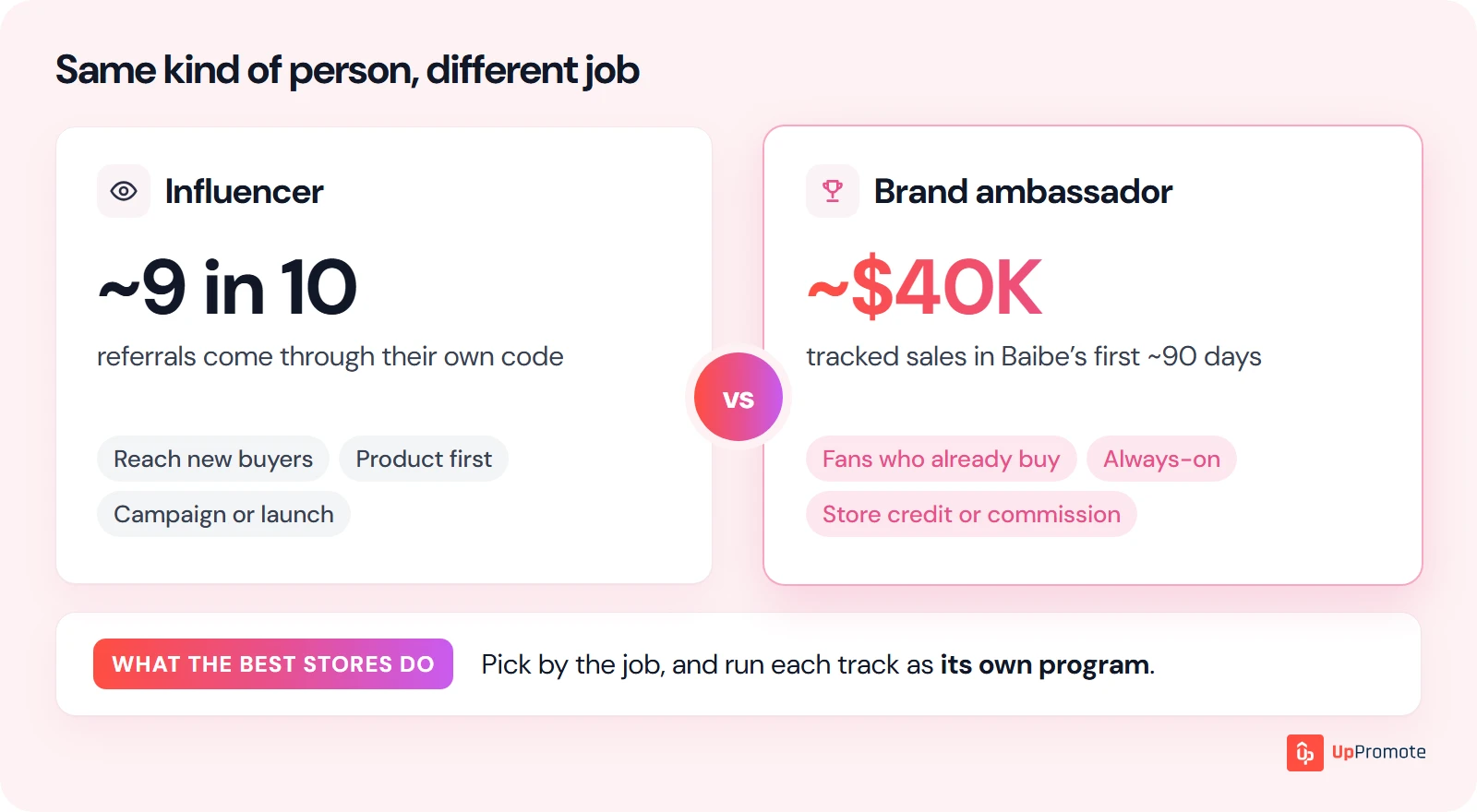
Stores draw the lines their own way. Baibe Official, a luxury hair brand, recruits partners almost entirely from its existing customers, so even its Influencer program, the one open to the public, centers on people who have bought. Its Ambassador program is reserved for customers who buy consistently and promote the brand on their own, and its Creator program gives members a gift card to buy product in exchange for content. And instead of mailing free hair, Baibe gives its ambassadors store credit up front.
In roughly its first 90 days, Baibe’s program drove close to $40,000 in tracked affiliate sales, and its top ambassador earned about $1,500 on a 7% commission. Affiliate marketing now accounts for around 10% of Baibe’s overall sales.
Can an influencer become a brand ambassador?
Yes. What makes someone an ambassador is the job, not their follower count or how they first met you. A creator who keeps bringing in orders after the first campaign is already doing that job, so move them into the ambassador program on the strength of their tracked sales. The same goes for a “micro-influencer brand ambassador”: a small creator belongs in your ambassador program once they sell, whatever the size of their audience.
Pitstop Nutrition, a sports supplements brand, does it the other way round: it invites creators onto a starter ambassador deal first and lets sales decide who gets the better one. It personally invites a small group of athlete micro-influencers who share its values. Everyone starts in Program 1, on 3.5% commission plus a £50 gift voucher for the store’s products. Athletes who drive £3,000 in monthly referral sales over several months move up to 5% plus a £150 voucher, and auto-tier makes the move for them. Affiliate marketing now brings Pitstop about 60% of its daily orders.

How do you pay brand ambassadors and influencers?
When sales are the goal, both on commission plus product. The difference is mostly in the order things happen:
- Influencers get product first, because they need to try it before they can post about it. Then they earn commission on the orders their code or link brings in.
- Ambassadors already have the product. They earn commission or store credit on their own code, often with tiers that raise the rate as they sell more.
Store credit can only be spent in your store, so it brings ambassadors back as customers. In UpPromote, you can pay store credit by hand from the Growth plan, and automatically from Professional.
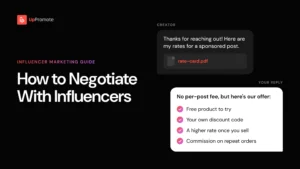
Some creators will ask for a flat fee instead. A fee buys reach, trust or content; it doesn’t guarantee orders. If orders are what you want, offer the usual deal: product to try, their own code, and commission on what it sells, with a better rate once the code proves itself. If a creator you really want insists, offer a smaller fee plus commission rather than a full fee.
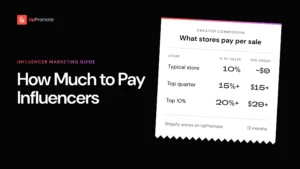
For what rate to offer, see our guide to influencer commission rates.
Why a few sellers decide what each track is worth
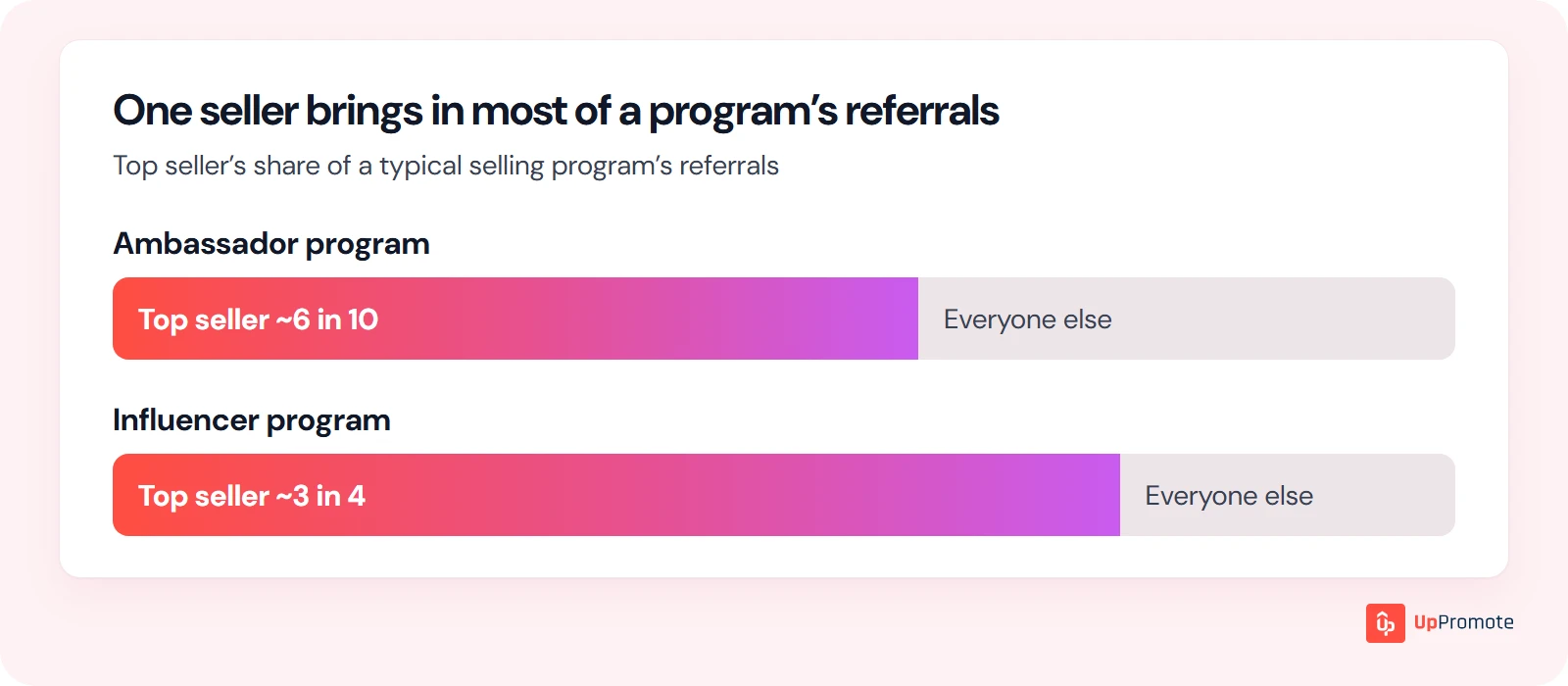
On either track, a handful of people do most of the selling. In a typical selling program, the top seller alone brings in about 6 in 10 of an ambassador program’s referrals and about 3 in 4 of an influencer program’s.
Over a full year, the few partners who sold in six or more months brought in most of each track’s sales.
So whichever track you run, most of the work is finding those few sellers and keeping them. Pay them more as they prove it, with a higher rate, a tier or a bonus. Our guide on how to negotiate with influencers walks through each of those.
How do you track brand ambassadors and influencers?
By tracked orders per partner, on both tracks.
Codes do most of the tracking: about 7 in 10 referrals in ambassador programs and about 9 in 10 in influencer programs come through a code. Affiliate links still count, but on both tracks most referrals come through a code.
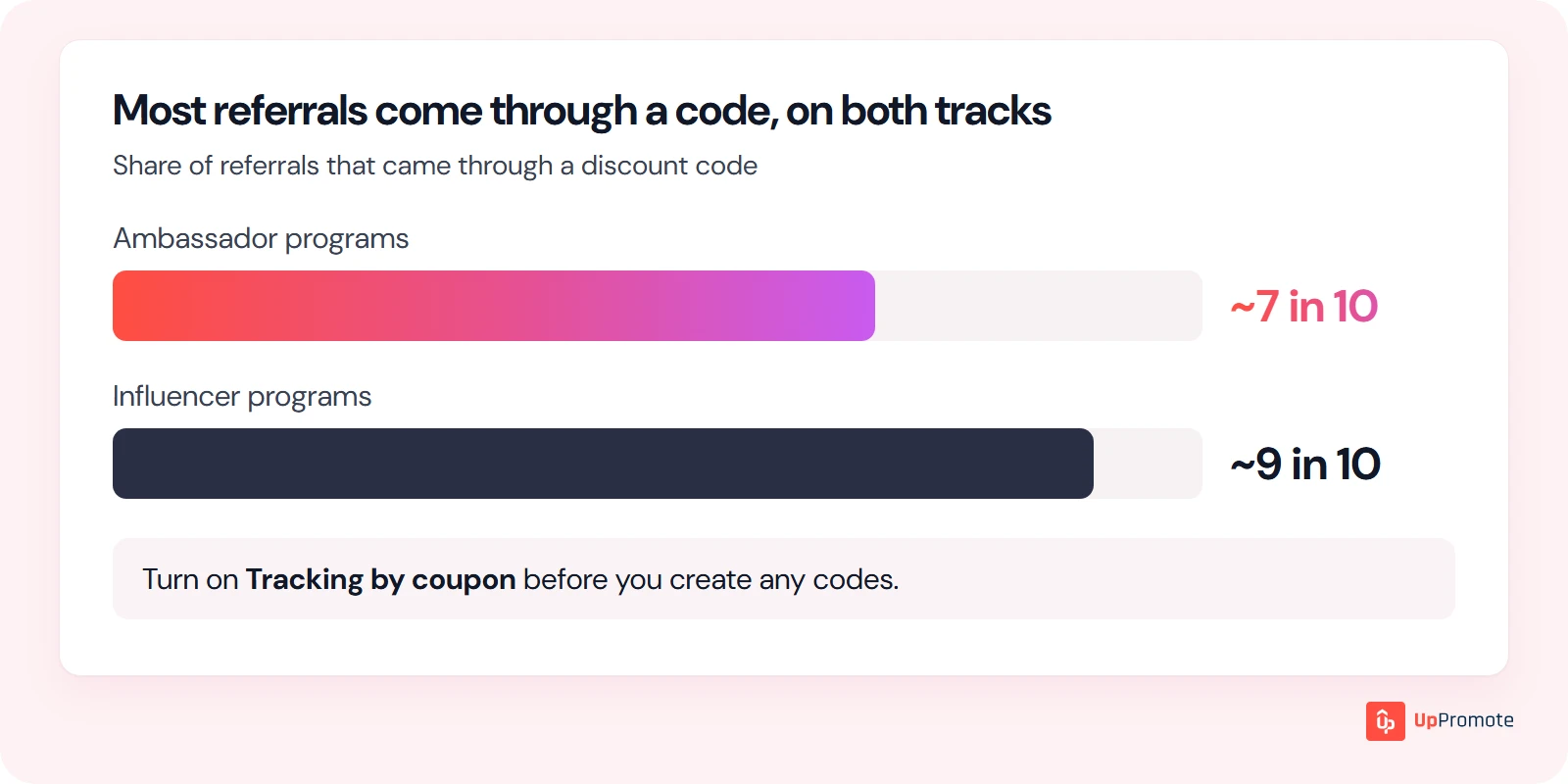
So give every partner on either track their own code. In UpPromote, tracking by coupon is off by default, and it has to be on before you create or assign any codes: if you assign codes first, orders paid with them won’t be credited to the partner. Set it up in this order:
- Go to Settings > Link & coupon > Coupon settings.
- Turn on Tracking by coupon.
- Then create or assign each partner’s code.
Do brand ambassadors and influencers both need to disclose?
Yes. The FTC’s Endorsement Guides FAQ treats free product, discount codes and affiliate commission as a connection the person has to disclose, and every partner in either program gets at least one of those. It also expects the brand to train and monitor the people who promote it, so your disclosure rules should go to both programs.
Final thoughts
An ambassador and an influencer can be the same kind of person. What differs is the job: one brings you an audience that doesn’t know you yet, the other keeps people who already love the product selling it.
Start with the job you need done. Send product to creators who reach your next customers, open your program to the fans who already recommend you, and move whoever sells into the ambassador program. Pay on sales where sales are the goal, add a smaller fee only for a creator you really want, and spend your effort on the few partners who prove they can sell.